Why Your CV Matters So Much as a Caribbean IMG in Neurology
As a Caribbean IMG aiming for neurology residency in the U.S., your CV is not just a formality—it’s one of your strongest tools to counteract bias, differentiate yourself from other Caribbean medical school residency applicants, and show program directors you’re ready for a demanding, rapidly evolving specialty.
Neurology is increasingly competitive. Many programs receive hundreds of applications for a small number of positions. In that context, your CV becomes a quick “risk–benefit” snapshot:
- Are you likely to pass boards and in-service exams?
- Can you thrive in a cognitive, detail-oriented specialty?
- Have you shown genuine sustained interest in neurology (not just a last-minute choice)?
- Do you demonstrate professionalism, reliability, and growth?
For Caribbean IMGs, the CV is especially important because program directors may know less about your school than about U.S. MD/DO programs. That means your individual record—USMLE performance, neurology exposure, scholarly work, and leadership—carries more weight.
This article walks you through how to build a CV for residency in neurology step by step, with a focus on the realities of Caribbean graduates at schools like SGU, AUC, Ross, Saba, and others. You’ll learn residency CV tips that are tailored to Caribbean IMG neurology applicants, including those targeting the SGU residency match and similar pathways.
Core Principles of a Strong Neurology Residency CV for Caribbean IMGs
Before diving into the sections and formatting, it helps to understand how neurology program directors generally read your CV and what they’re hoping to see.
What Neurology PDs Look For on a CV
Across programs, reviewers tend to scan for:
Evidence of academic strength
- USMLE Step 1 and Step 2 CK (or COMLEX) scores
- Any honors in clerkships, especially neurology, internal medicine, psychiatry
- Strong clinical evaluations and sub-internship experiences
Sustained interest in neurology (“neuro story”)
- Neurology-related electives (U.S. and home-country)
- Neurology observerships or externships
- Neurology research, QI projects, or case reports
- Involvement in neurology or neuroscience student groups
Professionalism and work ethic
- Long-term commitments (not just many short one-off activities)
- Leadership roles and responsibility
- Evidence of teamwork and communication skills
- Clear organization and error-free writing on the CV itself
Scholarly activity
- PubMed-indexed publications are ideal, but:
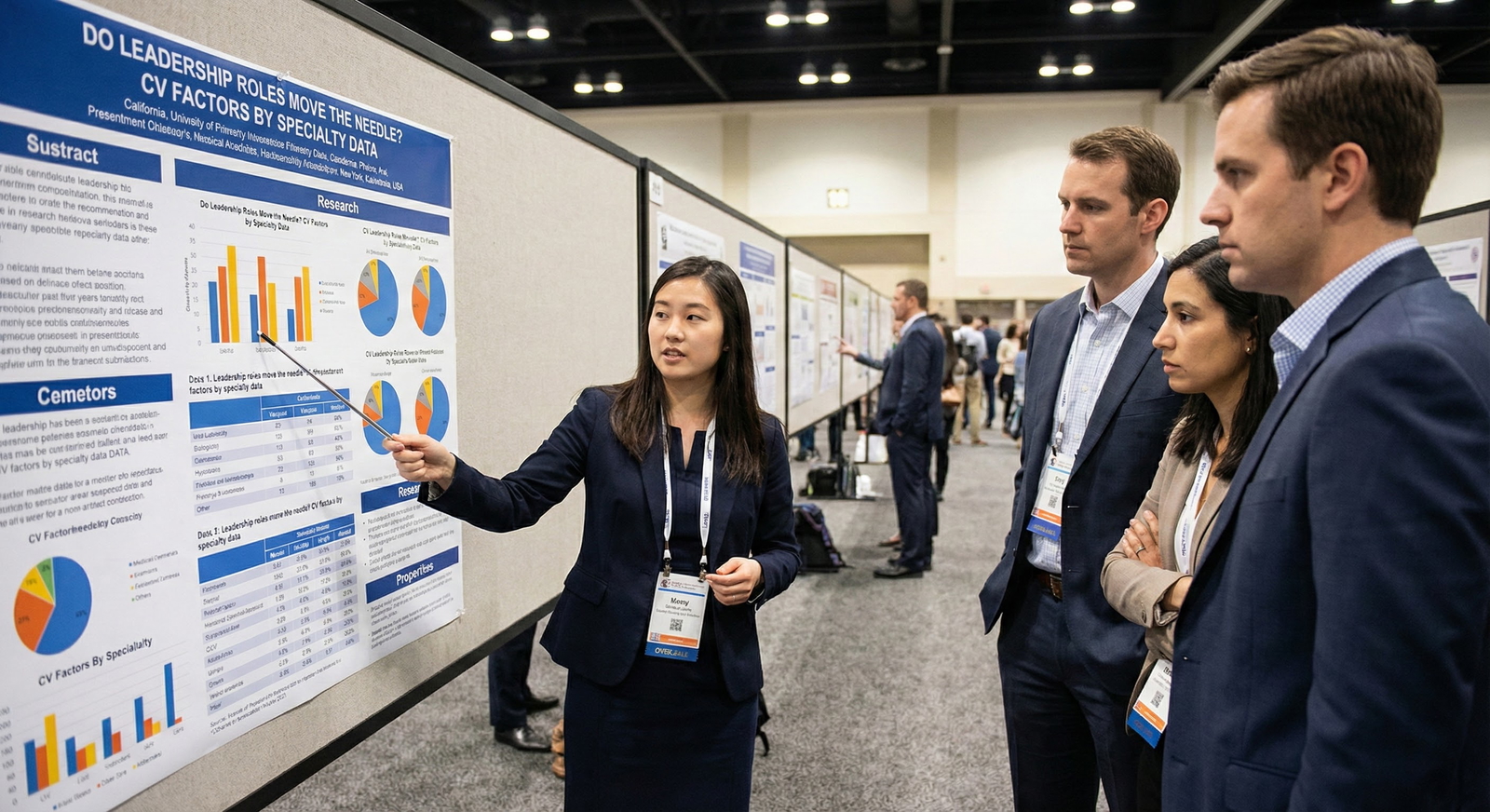
- Case reports, poster presentations, QI projects, and clinical audits also matter
- Participation in research, even if not yet published
Fit with neurology residency culture
- Curiosity, attention to detail, comfort with uncertainty
- Experience with complex patients (e.g., stroke, epilepsy, ICU rotations)
- Volunteer work that shows empathy and patient-centered values
CV Strategy for Caribbean IMGs
As a Caribbean IMG, aim to make your CV:
- Structured: Easy to skim quickly
- Selective: Prioritize impact over sheer volume of items
- Neurology-centered: Build a coherent narrative of “I belong in neurology”
- US-ready: Include U.S. clinical experience and references wherever possible
Think of your CV as the data table, and your personal statement as the storytelling around that data. They must align.
Structure and Formatting: How to Present Your Residency CV
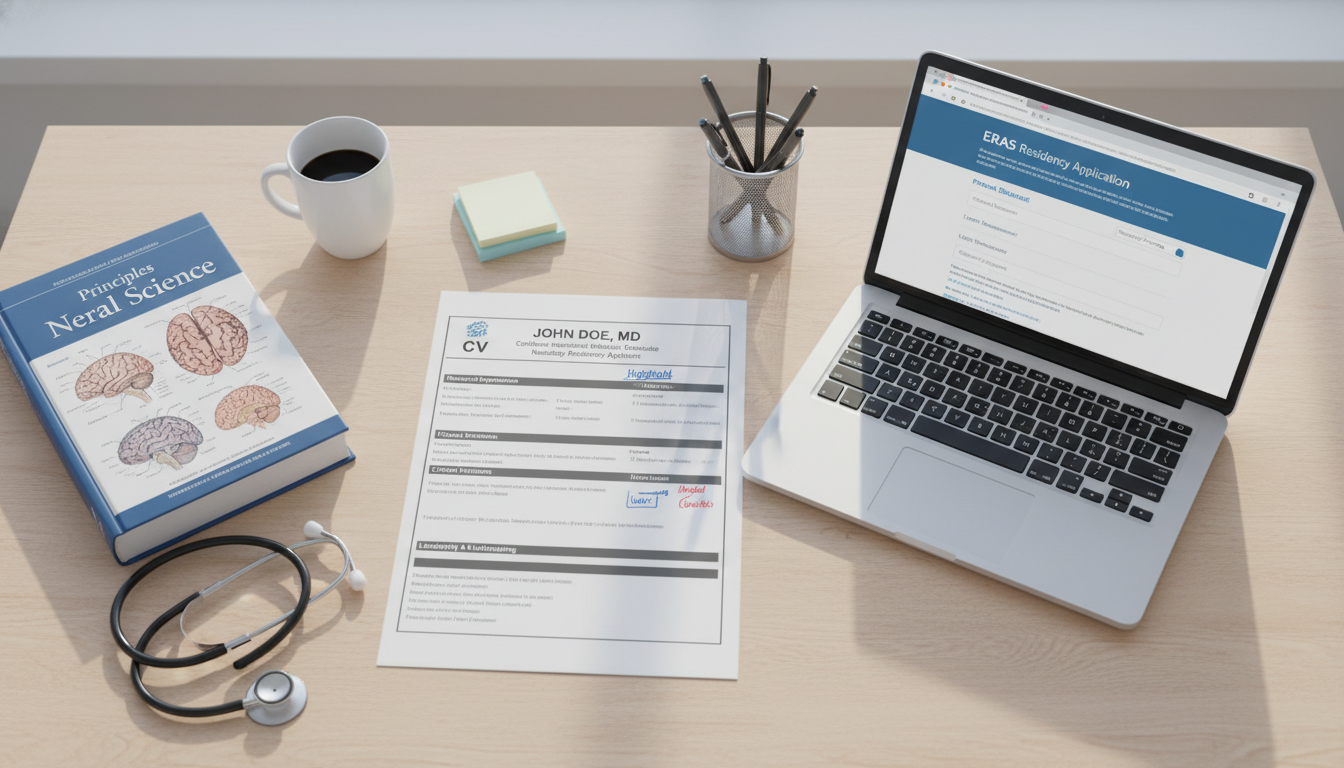
Your CV should be clean, consistent, and professional. For residency applications, most of your data will go into ERAS, but you should also maintain a polished CV document (PDF) for networking, emailing faculty, and non-ERAS opportunities.
Recommended CV Sections for a Neurology Residency Applicant
A standard structure for a Caribbean IMG neurology applicant might be:
- Contact Information
- Education
- Examination Scores & Certifications
- Clinical Experience
- Research & Scholarly Activity
- Teaching & Mentoring
- Leadership & Extracurricular Activities
- Volunteer & Community Service
- Honors & Awards
- Professional Memberships
- Skills & Additional Information
You can adjust the order to showcase your strengths. For example, if you have strong neurology research, bring “Research & Scholarly Activity” higher up. If your main strength is extensive clinical exposure, emphasize clinical experience early.
Key Formatting Rules
- Length: 2–4 pages is typical for a residency CV; don’t artificially compress important content.
- Font: Professional, readable (e.g., Times New Roman, Calibri, Arial; 10–12 pt).
- Spacing: Use consistent spacing, alignment, and indentation.
- Tense & Style:
- Current activities: present tense (“Lead weekly…”).
- Past activities: past tense (“Coordinated patient follow-up…”).
- Bullet points: start with strong action verbs (“Developed,” “Analyzed,” “Presented”).
- Consistency:
- Date format: use the same throughout (e.g., “Jul 2022 – May 2023”).
- Location format: City, State, Country (if outside U.S.).
- Use either American or British spelling—but be consistent.
Poor formatting silently hurts your application because neurology requires precision. A chaotic CV might lead a PD to question your clinical documentation and attention to detail.
Section-by-Section Guide: What to Include and How to Optimize
1. Contact Information
Keep this simple at the top of the first page:
- Full name (as used in applications)
- Email (professional address; avoid nicknames)
- U.S. phone number (if available; consider Google Voice)
- Current address (U.S. or home country)
- Optional: LinkedIn profile (if well-maintained and professional)
Avoid adding personal info such as photo, age, marital status, citizenship, or visa status to the CV itself—ERAS captures what’s needed. If you include visa status, do it briefly at the bottom under “Additional Information.”
2. Education
List in reverse chronological order:
- Medical school (Caribbean)
- Undergraduate degree
- Any prior graduate degrees (e.g., MPH, MSc in Neuroscience)
For each entry:
- Institution name, location
- Degree and major (if applicable)
- Dates of attendance or graduation date
- Honors (e.g., Dean’s List, Beta Kappa, with brief explanation if non-U.S.)
Example:
Doctor of Medicine (M.D.)
St. George’s University School of Medicine, Grenada
Aug 2019 – May 2023
Relevant coursework: Neuroscience, Neuroanatomy, Behavioral Science
If your Caribbean medical school residency track included a clinical center in the U.S. or UK, you can clarify that under clinical experience rather than cluttering education.
3. Examination Scores & Certifications
Neurology residencies are academically demanding. Clear presentation of exam performance reassures PDs about your ability to handle board exams.
Include:
- USMLE Step 1 (Pass/Fail; if numeric, include only if strong and allowed)
- USMLE Step 2 CK (score and date)
- Step 3 (if taken)
- ECFMG certification status (if applicable)
- Any neurology-specific certification (e.g., NIH Stroke Scale Certification)
Example:
United States Medical Licensing Examination (USMLE)
Step 1: Pass, Jun 2021
Step 2 CK: 247, Aug 2022
Step 3: Scheduled for Apr 2025Certifications
ECFMG Certification: Anticipated Aug 2024
NIH Stroke Scale Certification, American Heart Association, 2023
If your scores are borderline, you don’t need to highlight them in bold—but remember they will still be visible in ERAS. Use other parts of your CV to offset weaknesses: neurology research, strong LORs, and excellent neurology rotations.
4. Clinical Experience (Core of Your Neuro Match Strategy)
For neurology residency, this section is crucial. Many Caribbean IMGs succeed in the neuro match by showcasing robust, well-documented clinical exposure, especially in U.S. settings.
Subdivide this section for clarity:
- Core Clinical Rotations
- Neurology-Specific Rotations & Electives
- Sub-Internships / Acting Internships
- Observerships / Externships (especially U.S. neurology)
Core Clinical Rotations
List your standard third-year rotations:
- Internal Medicine
- Surgery
- Pediatrics
- Psychiatry
- OB/GYN
- Family Medicine
Include:
- Hospital name and location
- Dates
- A line or two if something stands out (e.g., “Completed neurology consult exposure during internal medicine rotation”)
Neurology-Specific Rotations & Electives
This is where you build your neurology identity. For each neurology-related experience, include:
- Type: “Clinical Elective in Neurology,” “Inpatient Neurology Sub-Internship,” etc.
- Setting: Academic vs community; stroke center; epilepsy monitoring unit
- Brief bullet points on your role and what you handled
Example Neurology Rotation Entry:
Inpatient Neurology Elective
XYZ University Hospital, Level 1 Stroke Center, City, State
Aug 2023 – Sep 2023
- Managed daily follow-up of 8–10 inpatients with attending supervision, including stroke, seizure disorders, demyelinating disease, and neuromuscular disorders
- Performed focused neurologic examinations and presented cases on rounds
- Participated in acute stroke codes and interdisciplinary stroke conferences
For a neuro ICU or stroke rotation, highlight:
- Acute decision-making
- Exposure to thrombolysis / thrombectomy
- Multidisciplinary coordination
Observerships and Externships in Neurology
For Caribbean IMGs, U.S. clinical experience (USCE) is often essential. If you have neurology observerships or externships:
- Clearly label them as “Observer” if you had no direct patient care.
- Focus on what you learned and skills you developed.
Example:
Neurology Observership
ABC Neurology Associates, City, State
Jan 2023 – Feb 2023
- Observed outpatient management of epilepsy, migraine, and movement disorders
- Attended EMG/nerve conduction studies and EEG readings
- Participated in case discussions and literature review with attending neurologist
These experiences can significantly strengthen your neuro match prospects, particularly if the supervising neurologist writes you a strong letter of recommendation.
5. Research & Scholarly Activity (Your Academic Edge)
Neurology is a highly academic field; a strong research section greatly enhances your Caribbean medical school residency profile.
Include:
- Peer-reviewed publications
- Case reports
- Abstracts and posters
- Oral presentations
- Quality improvement (QI) projects and audits
Organize in reverse chronological order and use a standard citation format (APA or Vancouver). Label clearly whether something is:
- Published
- Accepted (in press)
- Submitted
- In preparation (be cautious; only include if substantial work has been done)
Example Citation
Smith J, Doe A, [Your Name]. A rare presentation of autoimmune encephalitis in a young adult. Journal of Neurology Case Reports. 2024;11(2):123–127.
If your name is lost in a long author list, bold your name to make it easy to find.
Neurology-Focused Scholarly Involvement
If your research is not strictly neurology, you can still frame it in a way that supports your neuro match story, especially if it involves:
- Cognitive outcomes
- Stroke risk factors
- Neuropsychology
- ICU outcomes
For example:
Research Assistant, Stroke Outcomes Project
XYZ Medical Center, Department of Neurology, City, State
Jan 2023 – Present
- Collected and analyzed data on functional outcomes after ischemic stroke
- Assisted in building REDCap database and conducting preliminary statistical analyses
- Co-authored abstract presented at American Academy of Neurology Annual Meeting
Even if you don’t yet have publications, posters and local presentations demonstrate scholarly engagement, which is valuable for neurology residency.

Building Competitive Content: Experiences That Strengthen a Neurology CV
6. Teaching & Mentoring
Neurology residents frequently teach medical students, nurses, and patients. Demonstrating teaching experience can tip the scales in your favor.
Examples to include:
- Small-group facilitator for neuroanatomy or clinical skills
- Peer tutor for first- and second-year students
- Teaching assistant for neuroscience course
- Leading board review sessions (e.g., neuroanatomy, behavioral science)
Sample Entry:
Peer Tutor, Neuroscience and Neuroanatomy
St. George’s University School of Medicine
Sep 2021 – May 2022
- Provided weekly small-group tutoring for 8–10 first-year students
- Created review materials focusing on cranial nerve exams and localization
- Received positive feedback and recognition from the Department of Medical Education
Teaching experiences show communication skills and mastery of content—both critical in the cognitive-heavy field of neurology.
7. Leadership & Extracurricular Activities
Leadership signals maturity, initiative, and the ability to work with a team—traits residencies want.
For Caribbean IMG neurology applicants, relevant leadership might include:
- Neurology or Neuroscience Interest Group officer
- Student government positions
- Committee roles (e.g., curriculum, wellness, diversity)
- Organizing neurology case conferences or journal clubs
Example:
President, Neurology and Neuroscience Interest Group
Caribbean Medical School, City, Country
Aug 2021 – May 2022
- Organized monthly neurology case presentations and faculty lectures
- Coordinated virtual shadowing and Q&A sessions with neurology residents and attendings in the U.S.
- Led a student-run mini-symposium on “Careers in Neurology and Neurosurgery” with 80+ attendees
Avoid listing too many minor roles; choose 3–6 activities where you had real responsibility and describe concrete outcomes.
8. Volunteer & Community Service
Neurology often involves long-term patient relationships and management of chronic conditions. Service experiences can illustrate empathy, patience, and cultural competence.
For Caribbean IMGs, especially those coming from SGU and similar campuses, strong service activities might include:
- Health fairs with stroke risk screening and education
- Volunteering with patients with disabilities (e.g., stroke survivors, Parkinson’s)
- Community mental health support groups (neurology overlaps with psychiatry)
- Telehealth or hotline support roles
Sample Entry:
Volunteer, Stroke Education and Screening Initiative
Community Health Organization, City, State
May 2022 – Aug 2022
- Conducted blood pressure and glucose screenings at community events
- Educated participants on stroke warning signs (BE FAST) and risk factor modification
- Helped develop bilingual educational materials for high-risk populations
These activities help demonstrate you are more than just a test score—you are a future neurologist who can connect with real patients.
9. Honors, Awards & Distinctions
Even small recognitions can help, especially if they relate to academic performance, professionalism, or neurology interest.
Include:
- Medical school academic honors (e.g., Dean’s List, honor society)
- Clerkship honors (particularly neurology, internal medicine, psychiatry)
- Research awards or poster prizes
- Teaching awards
- Community service recognition
Example:
Honors in Neurology Clerkship, XYZ Hospital, 2023
Outstanding Tutor Award, Department of Medical Education, Caribbean Medical School, 2022
If you’ve been recognized by your Caribbean medical school or clinical sites, this reassures PDs considering you in the SGU residency match or similar pathways that local faculty strongly endorse your performance.
10. Professional Memberships
Show engagement with professional communities:
- American Academy of Neurology (AAN) – Student or trainee membership
- American Clinical Neurophysiology Society (ACNS)
- American Stroke Association
- Local neurological societies
Listing membership alone is modest value—but if you attend conferences, present posters, or join committees, emphasize that under research or leadership.
11. Skills & Additional Information
Keep this section targeted and honest. For neurology applicants, especially Caribbean IMGs, relevant items might include:
- Languages (especially if fluent in Spanish, French, or languages common in your training region)
- Technical skills: REDCap, SPSS, R, basic EEG/EMG interpretation experience (with clarity it’s at trainee level)
- Certifications: BLS, ACLS, NIHSS, Telestroke training, GCP (Good Clinical Practice)
- Publications in non-medical fields (if significant)
- Hobbies that show depth and resilience (e.g., long-distance running, music, debate)
Avoid generic or unprofessional items such as “watching Netflix” or “social media.” Instead, choose hobbies that complement neurology traits: pattern recognition (e.g., chess), fine motor skills (e.g., musical instruments), or patience and long-term dedication.
Practical CV-Building Strategies for Caribbean IMG Neurology Applicants
Start Early and Build Intentionally
Ideally, start consciously building your neurology-focused CV by the beginning of your clinical years (or even earlier):
- 1st–2nd year: Neuroscience interest group, basic science research, peer tutoring.
- 3rd year: Target neurology electives, seek neurology mentors, join stroke or neuro research projects.
- 4th year: U.S.-based neurology electives and sub-internships, present research, finalize CV.
If you’re already late in the process, focus on high-yield additions:
- A strong U.S. neurology elective with potential for a LOR.
- A fast but meaningful case report or small QI project with a committed mentor.
- Participation in a neurology-related conference (poster or even just attendance).
Tailor Your CV for Neurology Without Being Dishonest
Even if your background is broad (internal medicine, emergency, etc.), highlight neurology-relevant aspects:
- In internal medicine rotations, emphasize cases involving stroke, delirium, seizure.
- In research, highlight cognitive, cerebrovascular, or neuro-psych components.
- In leadership, frame your interest group work as fostering neurology education.
But never misrepresent your role or title. Program directors and faculty cross-check details during interviews and red flags can be fatal to your application.
How Caribbean IMGs Can Offset Perceived Disadvantages
Strengthen U.S. Exposure
- Prioritize neurology rotations in recognized U.S. centers.
- Secure LORs from U.S.-trained neurologists familiar with residency expectations.
Show Longitudinal Commitment to Neurology
- Multiple neurology-related entries across your CV: electives, research, interest group, teaching.
Demonstrate Academic Maturity
- Solid Step 2 CK score.
- Timely ECFMG certification.
- Research or QI involvement.
Network Strategically
- Attend virtual neurology grand rounds and AAN student events.
- Ask mentors to introduce you to neurology faculty and residents at target programs.
Your CV should reflect all of this clearly; if it’s not on your CV, it doesn’t exist to the program.
Common Mistakes to Avoid on a Neurology Residency CV
Overstuffing with Low-Impact Items
Listing every minor webinar or one-hour workshop dilutes the importance of major experiences.Vague Descriptions
Bullet points like “Assisted with patient care” are unhelpful. Be specific: “Performed focused neurologic exams under supervision.”Inconsistent or Unverified Dates
Overlapping or impossible timelines raise concerns. Neurology PDs are detail-oriented—errors here are damaging.Unprofessional Email or Typos
An email like “drfuturebrainz@gmail.com” or repeated typos can undermine an otherwise strong application.Misrepresenting Observerships as Hands-On Experience
Be transparent. Saying you “managed” patients when you only observed is a major red flag.Not Aligning CV and Personal Statement
If your personal statement emphasizes a passion for epilepsy, but your CV shows no epilepsy or neurology-related work, this inconsistency looks disingenuous.
Putting It All Together: Using Your CV Strategically in the Neuro Match
During neurology residency interviews, your CV frequently becomes the roadmap for conversation:
- Interviewers pick bullet points to ask about (“Tell me about this stroke project.”).
- They assess your depth of involvement and honesty.
- They gauge how your experiences fit their program’s strengths (e.g., stroke-heavy vs. epilepsy-heavy).
Use your CV as a script for your story:
- Be ready with 1–2 detailed examples from each major section (clinical, research, leadership, volunteer).
- Practice concise, reflective explanations of your neurology experiences.
- Highlight growth: how your Caribbean training shaped resilience and your commitment to neurology.
For Caribbean IMGs, especially those aiming for programs with a history of SGU residency match success and other Caribbean medical school residency placements, a carefully crafted CV can be a deciding factor that shifts you from “maybe” to “interview invite.”
FAQs: CV Building for Caribbean IMG in Neurology
1. How is a residency CV different from a regular job CV?
A residency CV is academic and clinical-focused. It emphasizes:
- Education and exam performance
- Clinical rotations (especially neurology)
- Research and teaching
- Leadership and service
Unlike many job CVs, it does not focus on generic “skills sections” or unrelated work experiences. It must align closely with the neurology residency competencies.
2. I’m a Caribbean IMG with limited neurology research. Can I still match into neurology?
Yes, you can still match if other parts of your application are strong. To compensate:
- Secure high-quality neurology electives with strong clinical performance.
- Get excellent letters from neurologists.
- Try to complete at least one neurology-related project—even a case report or a small QI project with a neurologist.
- Emphasize neurology interest through teaching, interest groups, and electives.
Research enhances your application but is not an absolute requirement for every neurology program, especially at community-based or smaller academic programs.
3. Should I include non-medical jobs or degrees on my neurology residency CV?
Include them if they:
- Demonstrate significant responsibility or leadership (e.g., teacher, engineer, nurse, IT specialist).
- Show skills relevant to neurology or medicine (e.g., data analysis, communication, teaching).
If they’re minor or unrelated (e.g., brief part-time retail positions), you can omit them or mention them briefly under “Additional Information,” especially if space is tight.
4. How can I make my CV stand out as a Caribbean IMG among many applicants?
Focus on clarity, coherence, and neurology identity:
- Build a clear neurology narrative: rotations, research, teaching, and service that all align with your future in neurology.
- Show consistent academic performance and strong Step 2 CK.
- Obtain neurology LORs from U.S. faculty when possible.
- Present your experiences clearly and specifically, avoiding vague language.
- Let your CV reflect qualities valued in neurologists: attention to detail, intellectual curiosity, and compassion for patients with complex, often life-changing conditions.
If your CV tells a compelling, honest story of a Caribbean IMG who has deliberately prepared for neurology, you give yourself the best chance in the neuro match—regardless of where you started your medical education.