
Crafting a strong residency CV is one of the most high‑yield steps you can take as an MD graduate aiming for an emergency medicine residency. Your curriculum vitae is often the first contact a program has with you; it frames how program directors, faculty, and coordinators interpret everything else in your application. For the EM match, where programs review hundreds of files quickly, a clear, well‑organized, and targeted CV can be a powerful differentiator.
Below is a comprehensive guide on how to build a CV for residency in emergency medicine, with practical residency CV tips tailored to MD graduates from allopathic medical schools.
Understanding the Role of the CV in the EM Match
Your CV is not just a list of accomplishments; it is a strategic document that:
- Summarizes your training, experiences, and skills
- Highlights your “EM readiness” and fit for emergency medicine
- Guides interviewers’ questions and conversation
- Supports (and sometimes rescues) your overall allopathic medical school match application
How EM Programs Use Your CV
In the context of an emergency medicine residency, program leadership and selection committees typically use the CV to:
- Screen for preparedness: Have you completed solid EM experiences, sub‑internships, or electives?
- Assess trajectory: Does your activity list show growing responsibility and leadership over time?
- Identify red flags or gaps: Unexplained time off, minimal clinical exposure, or weak engagement may raise questions.
- Find alignment with program strengths: Toxicology, ultrasound, EMS, global health, simulation, community EM, etc.
- Generate interview questions: Unique experiences, research, or leadership roles become talking points.
Because many MD graduate residency applicants from allopathic medical schools follow similar pathways, your CV needs to be both standardized in structure and personalized in content to stand out.
Core Structure of a Strong Emergency Medicine Residency CV
The format can vary slightly by institution, but for the EM match, the following structure is widely accepted and easy to skim:
- Contact Information & Professional Summary (optional but helpful)
- Education
- USMLE/COMLEX and Certifications
- Clinical Experience (particularly EM-related)
- Research & Scholarly Work
- Teaching & Mentorship
- Leadership & Service
- Professional Activities & Memberships
- Honors & Awards
- Skills (procedural, language, technical)
- Interests (brief, purposeful)
Below is a detailed breakdown with residency CV tips for each section.
1. Contact Information & Optional Summary
Contact information should be clean and professional:
- Full name with degree (e.g., Jane A. Smith, MD)
- Preferred email (professional, not casual)
- Phone number
- City/State (full address optional)
- LinkedIn (optional, only if maintained and polished)
An optional 2–3 line professional summary can work well for EM applicants:
MD graduate from an allopathic medical school with strong emergency medicine clinical experience at high-volume academic and community EDs. Particular interests in ultrasound, resuscitation, and medical education. Seeking emergency medicine residency training in a program with diverse patient populations and strong critical care exposure.
Use this carefully; it should be concise, non‑generic, and aligned with what your CV will demonstrate.
2. Education
List in reverse chronological order:
- Medical School (allopathic medical school)
- Undergraduate degree(s)
- Additional degrees (MPH, MSc, MBA, etc.)
Include:
- Institution name and location
- Degree and field (e.g., MD, BS in Biology)
- Dates (year–year)
- Honors (e.g., AOA, Gold Humanism) – or move to Honors section if more visible there
Example:
Doctor of Medicine (MD)
XYZ University School of Medicine, City, State
2019 – 2023
- Allopathic medical school graduate
- Gold Humanism Honor Society (2022)
For MD graduate residency applications, this section should be clean and straightforward—avoid cluttering with too many bullet points.
3. USMLE Scores & Certifications
Some programs prefer USMLE/COMLEX scores only in ERAS, not on the CV. Check your school’s or program’s guidance. If you include them:
- List exam name and step, with Pass and optionally the score
- Include test dates
Also include:
- Basic Life Support (BLS)
- Advanced Cardiovascular Life Support (ACLS)
- Pediatric Advanced Life Support (PALS)
- Advanced Trauma Life Support (ATLS), if obtained (a plus for emergency medicine residency)
Example:
Certifications
- BLS, American Heart Association, Expires 06/2026
- ACLS, American Heart Association, Expires 06/2026
- PALS, American Heart Association, Expires 06/2026
This section subtly communicates that you’re clinically ready for the ED environment.
Showcasing EM Readiness: Clinical & EM‑Specific Experiences
For an emergency medicine residency application, clinical experience is the heart of your CV. Program directors want evidence that you know what EM is and that you’ve thrived in it.
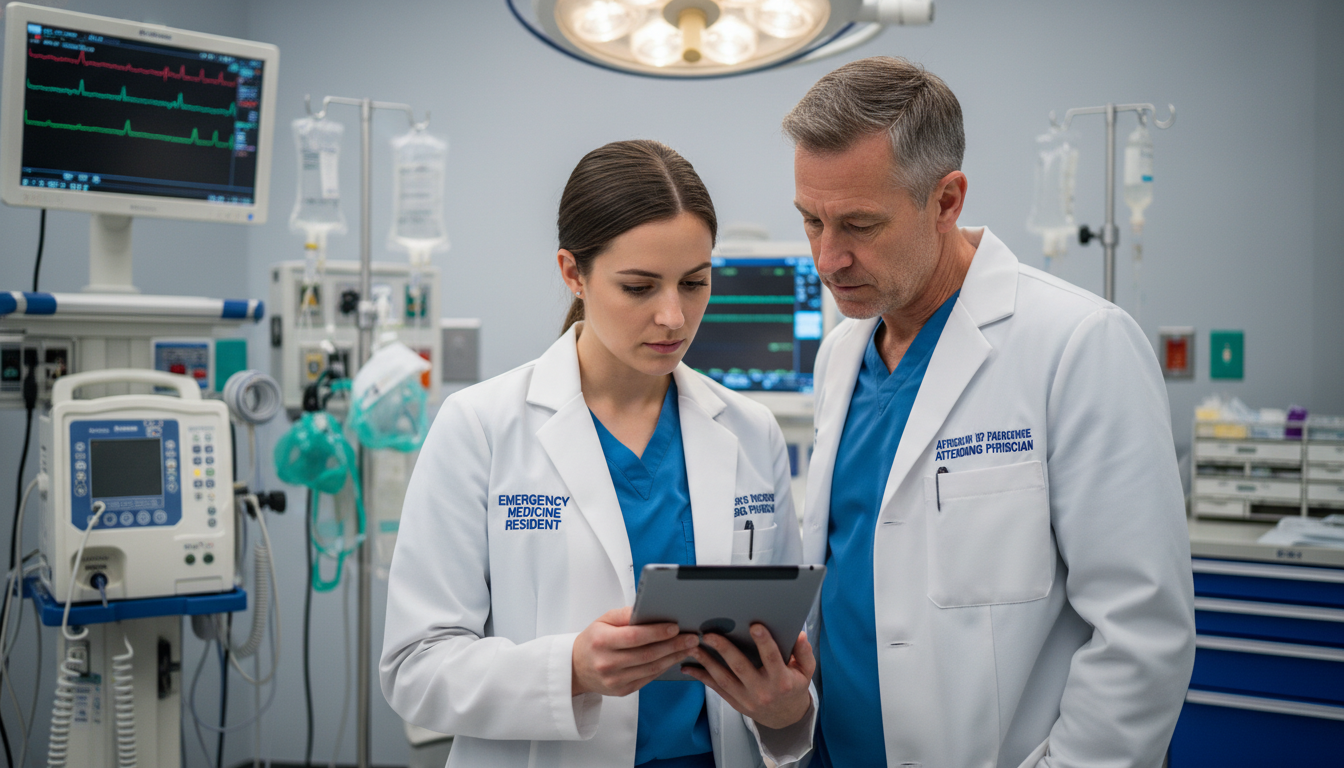
4. Clinical Experience (Core Rotations, Sub‑Internships, and EM Rotations)
For MD graduates, especially those pursuing EM, this section can be titled:
- “Clinical Experience”
- “Clinical Clerkships and Sub‑Internships”
- Or split into “Emergency Medicine Experience” and “Other Clinical Experience”
List in reverse chronological order, focusing on experiences most relevant to emergency medicine.
Include:
- Rotation name
- Institution and location
- Dates (month/year – month/year)
- Brief description with 2–4 bullet points emphasizing:
- ED volume and setting (urban, community, academic, trauma level)
- Your responsibility level
- Exposure to critical care, resuscitation, procedures
- Any distinctive elements (ultrasound curriculum, EMS ride‑alongs, toxicology, etc.)
Example (Sub‑I):
Emergency Medicine Sub‑Internship
Big City University Hospital, Level I Trauma Center – City, State
July 2023 – August 2023
- 4‑week sub‑internship in a high‑volume academic ED (~85,000 annual visits)
- Managed 6–7 patients simultaneously under supervision; developed and presented diagnostic and management plans
- Regularly participated in resuscitations, including sepsis, trauma activations, and cardiac arrests
- Performed and documented procedures including laceration repairs, splinting, abscess drainage, and bedside ultrasounds
What EM Programs Look For Here
- Evidence you’ve done at least one or more EM rotations, preferably at institutions with strong EDs
- Experience across different settings (academic vs. community, trauma vs. non‑trauma)
- A gradual increase in autonomy and complexity
- Concrete skills and team‑based ED experience
5. EM‑Relevant Non‑Traditional Clinical Experience
If applicable, include:
- ED scribe work (before or during medical school)
- EMT/paramedic experience
- Flight medic/EMS work
- Urgent care or ED technician experience
Label these under “Clinical Experience” or “Additional Clinical Experience” and clearly separate pre‑MD vs. MD‑level work.
Example (Pre‑MD but highly relevant):
Emergency Department Scribe
Regional Medical Center – City, State
2016 – 2018
- Documented patient charts for attending physicians in a busy community ED (~50,000 annual visits)
- Observed triage processes, rapid patient turnover, and interprofessional team communication
- Gained early exposure to emergency medicine workflows, differential diagnosis in undifferentiated patients, and acute care decision‑making
Experiences like these help programs see a longstanding commitment to EM, which is attractive in the EM match.
Building and Presenting Scholarly Work, Leadership, and Teaching
A strong residency CV for emergency medicine doesn’t need dozens of publications, but it should show engagement beyond the bare minimum rotations.
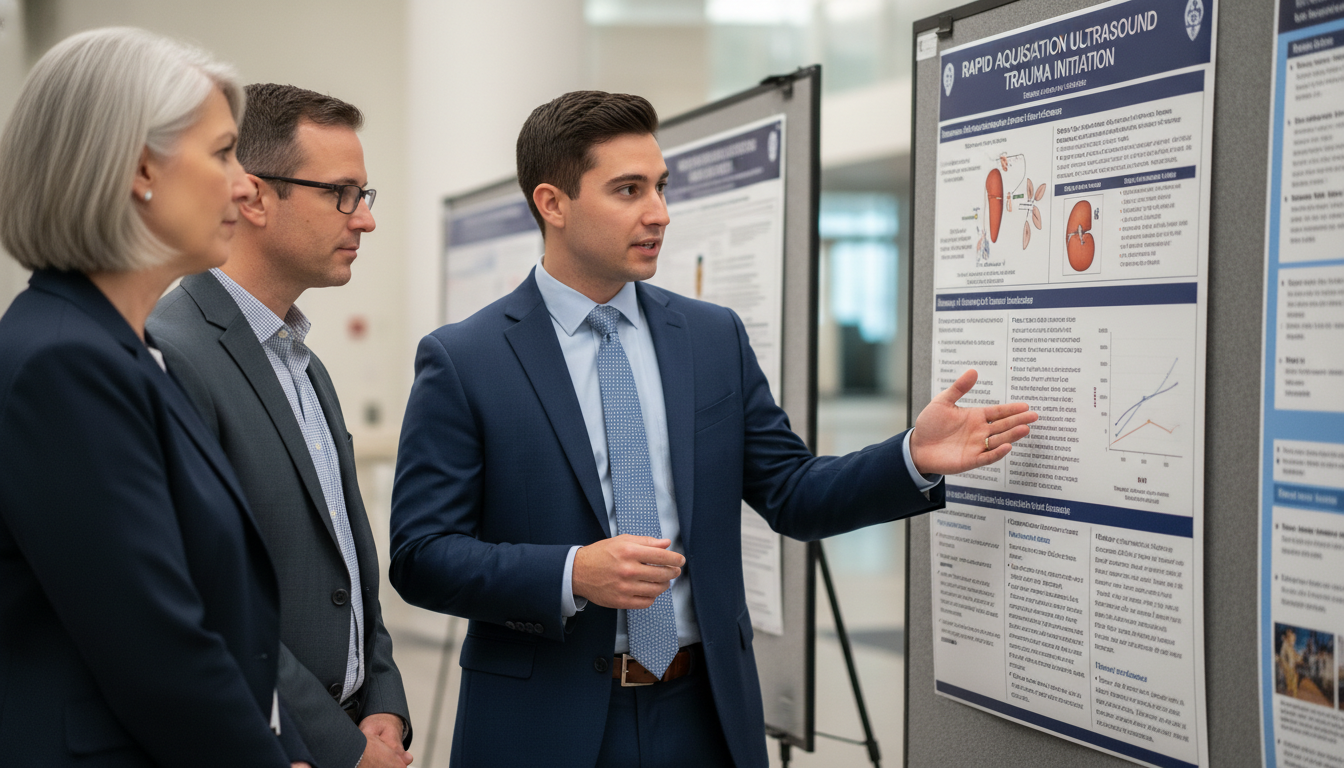
6. Research & Scholarly Activity
Programs in emergency medicine appreciate scholarship, even if your interests are primarily clinical. You don’t need EM‑only projects; any well‑executed research shows you can think critically and complete long‑term work.
Organize as:
- Peer‑Reviewed Publications
- Abstracts and Presentations
- Posters
- Quality Improvement Projects
List items in standard citation format, consistent throughout. Indicate:
- Your role (especially if first or second author)
- Whether work is published, in press, or submitted
- Meeting names, locations, and dates for presentations/posters
Example citation:
Smith JA, Lee R, Patel N. Implementation of a sepsis checklist to reduce ED time‑to‑antibiotics. Ann Emerg Med. 2023;72(4):555‑562.
If you have EM‑specific scholarly work (ultrasound, EMS, trauma, toxicology, resuscitation, QI projects in the ED), highlight it; these align particularly well with emergency medicine residency priorities.
If you have limited research:
- Include case reports, M&M presentations, or departmental QI you’ve been involved in.
- Note curriculum development (e.g., simulation sessions, procedure workshops), especially if EM‑focused.
The primary goal is to demonstrate the ability to ask questions, analyze data, and contribute to improvement.
7. Teaching & Mentorship
Emergency medicine is a teaching‑heavy specialty—residents constantly educate medical students, nurses, paramedics, and patients. Programs look favorably on evidence that you already enjoy teaching.
Include activities such as:
- Small‑group facilitator for pre‑clinical courses
- Peer tutor for anatomy, physiology, pharmacology, etc.
- Simulation instructor or assistant (especially EM‑relevant sim)
- Skills workshops (suturing, ultrasound, airway basics)
- OSCE standardized patient debriefing, if you facilitated
- Mentoring younger medical students, undergrads, or pre‑meds
Example:
Small‑Group Facilitator, Clinical Skills Course
XYZ School of Medicine – City, State
2021 – 2022
- Led weekly small groups of 6–8 first‑year medical students practicing history‑taking, physical exam, and oral presentations
- Provided formative feedback and modeled effective communication with standardized patients
Tie EM relevance when appropriate, such as teaching a suture workshop or introduction to point‑of‑care ultrasound.
8. Leadership, Service, and Professional Involvement
Emergency medicine relies heavily on teamwork, leadership under pressure, and service orientation. This section is your chance to showcase these attributes.
Potential subsections:
- Leadership Roles
- Volunteer and Community Service
- Professional Memberships and Committees
Leadership examples:
- EM Interest Group (EMIG) officer or president
- Class officer or student government role
- Committee roles (curriculum, wellness, diversity and inclusion)
- Captain of sports teams (especially pre‑MD) if clearly meaningful
Volunteer/Service examples:
- Free clinic volunteering (particularly urgent/acute clinics)
- Street medicine or mobile health units
- Disaster response or public health outreach
- EMS standby for events, if clinically relevant and supervised
Memberships:
- American College of Emergency Physicians (ACEP) – especially EMRA (Emergency Medicine Residents’ Association) student membership
- Society for Academic Emergency Medicine (SAEM)
- Local or national medical associations
This part of your medical student CV demonstrates your alignment with EM values: service, advocacy, leadership in chaos, and commitment to vulnerable populations.
Skills, Interests, and Polishing the Overall CV
9. Skills Section: Make It EM‑Relevant and Honest
A skills section is particularly useful in emergency medicine residency CVs if it is:
- Specific
- Verifiable
- Appropriate for your training level
Consider subcategories:
Clinical/Procedural Skills (appropriate for an MD graduate):
- Basic airway management (BVM, oral/nasal airways)
- Laceration repair (simple and intermediate)
- Abscess incision and drainage
- Splinting and basic fracture management
- Arthrocentesis (if supervised experience)
- Bedside ultrasound (FAST, aorta, cardiac, first‑trimester pregnancy)
- ECG interpretation (basic arrhythmias, ischemia patterns)
Be careful not to overstate proficiency; consider phrases like “familiar with” vs. “proficient in,” or specify approximate numbers if helpful (e.g., “Performed approximately 30 supervised laceration repairs”).
Technical/Software Skills:
- EMR systems (Epic, Cerner, etc.)
- Data analysis tools (SPSS, R, Excel) if used in research
- Presentation tools (PowerPoint, Keynote)
Language Skills:
- List languages with realistic fluency levels: “native,” “fluent,” “conversational,” “basic medical.”
Programs appreciate language skills in the diverse, high‑volume ED environment.
10. Interests: Small but Strategic
This should be a short section (2–4 bullet points or a simple list), but it can humanize you and generate interview conversation.
Choose:
- Genuine interests that you can speak about comfortably
- Items you’d be okay discussing with senior faculty
- Interests that hint at traits valued in EM (team sports → teamwork; endurance activities → resilience; music → attention to detail; languages → cultural competency)
Example:
Interests
- Trail running and half‑marathons
- Playing jazz piano
- Wilderness medicine and backcountry travel
Avoid generic fillers like “reading” unless you can be specific (e.g., “contemporary nonfiction on health policy”).
Formatting, Style, and Strategy: Residency CV Tips for EM Applicants
Beyond content, presentation quality has a direct impact on how your MD graduate residency CV is perceived.
11. Formatting Principles
- Length: For MD graduates, 2–4 pages is typical and acceptable.
- Font: Professional, readable (Calibri, Arial, Garamond, Times New Roman), 10–12 pt.
- Consistency: Uniform heading styles, bullet formats, date formats, and spacing.
- Reverse Chronological Order: Newest first in each section.
- No Colors or Graphics: Keep it clean and printer‑friendly unless a specific institution requires a template.
Use bolding and italics sparingly to emphasize positions, institutions, or your role in publications.
12. Common Pitfalls in Emergency Medicine Residency CVs
Avoid:
- Overcrowded text: Programs skim quickly. Use bullet points, short phrases, and white space.
- Inflated descriptions: Don’t claim advanced procedural skills or leadership you don’t truly possess; they may test this at interview or expect it on day one.
- Redundancy: If you list a role, you don’t need to repeat identical bullet points under multiple sections.
- Informal language: No slang, no first‑person narrative (“I did…”). Use professional, concise statements.
- Typos and inconsistencies: These signal inattention to detail—exactly what EM programs do not want in a chaotic ED.
13. Tailoring Your CV to Emergency Medicine
While your CV should remain accurate and comprehensive, you can emphasize certain elements to match what EM programs value:
- Emphasize EM rotations first in clinical experiences.
- Pull EM‑related QI or research projects into a separate subsection titled “Emergency Medicine‑Focused Projects.”
- Highlight any exposure to:
- Trauma care
- Critical care and ICU rotations
- EMS and prehospital medicine
- Point‑of‑care ultrasound
- Simulation and resuscitation training
- Show sustained engagement with EM via:
- EMIG leadership
- Attendance at EM conferences
- EM‑specific workshops
This is how to build a CV for residency that clearly communicates: “I am serious about emergency medicine, and I’ve prepared accordingly.”
14. Integrating Your CV With the Rest of Your Application
Your CV should align with:
- ERAS application entries
- Personal statement
- Letters of recommendation
- Interview answers
Use the CV as a master document from which you extract or cross‑check ERAS entries. Consistency across all components strengthens your credibility.
Your CV can also be a source of talking points:
- Unique leadership roles → leadership and teamwork questions
- EM research → “Tell me about your project…”
- Community service → “Why is service important in EM to you?”
Before the EM match, review your CV and ask, “What questions would I ask this applicant?” Then prepare clear, thoughtful responses.
Practical Timeline: When and How to Build Your EM Residency CV
Pre‑Clinical Years (M1–M2 or Earlier)
- Create a baseline CV as soon as you start medical school.
- Track everything in real time—roles, dates, hours, mentors.
- Join EM interest groups, early shadowing, or EM‑related volunteering if possible.
Clinical Years (M3–M4)
- After each rotation, update:
- Rotation names, locations, and unique experiences
- Procedures and skills you practiced
- Evaluations that highlight strengths (may guide what to emphasize)
- As EM rotations and sub‑internships occur, give them prominent placement and strong bullet descriptions.
- Update research and scholarly work as abstracts are accepted or posters presented.
Application Season (Before and During the EM Match)
- Do a thorough polish: standardize formatting, fix typos, check dates.
- Ask:
- A faculty mentor in EM
- A senior resident
- A career advisor to review your CV specifically from an EM program director’s perspective.
- Export your final CV as a PDF for professionalism, unless a program specifies otherwise.
Frequently Asked Questions: CV Building for EM Residency
1. How is a residency CV different from a regular job CV?
A residency CV for the allopathic medical school match, especially in EM, is:
- More academic and training‑focused (education, rotations, research, teaching)
- Structured to align with medical training chronology
- Designed to complement ERAS rather than replace it
Unlike a corporate resume, it does not need to be restricted to one page and should capture your entire medical education history.
2. Do I need a lot of research to match into emergency medicine?
No. Many successful EM match applicants have minimal formal research. However:
- Having some scholarly activity (QI projects, case reports, educational projects) is beneficial.
- EM programs care more about clinical performance, EM rotations, and SLOEs than a long publication list.
- If you’re aiming for an academic or research‑heavy EM program, research becomes more important.
Focus on well‑executed, meaningful projects rather than high volume.
3. Should I include non‑medical jobs or experiences on my residency CV?
Yes, selectively. Include:
- Jobs or roles that show leadership, resilience, teamwork, or service (e.g., military service, teaching, management roles)
- Pre‑medical clinical roles (scribe, EMT, tech) as they are directly relevant to emergency medicine
For unrelated short‑term jobs (e.g., brief retail work), you can either omit or list them briefly under a single “Prior Employment” entry if they reflect important personal circumstances (e.g., working to support yourself through school).
4. How much detail should I include about procedures on my CV?
Be honest and measured:
- You don’t need to list every procedure you have ever done.
- Emphasize procedures most relevant to EM (airway skills, laceration repair, splinting, abscess I&D, ultrasound).
- Avoid implying unsupervised or independent practice beyond your level of training.
- If you quote numbers (e.g., “Performed ~40 supervised laceration repairs”), ensure they are accurate and credible.
Program directors understand the typical scope of an MD graduate’s procedural experience; they are looking for exposure and interest, not full expertise.
By building a clear, honest, and EM‑focused CV, you position yourself as a prepared, thoughtful MD graduate ready for the challenges of an emergency medicine residency. Use your CV to tell a coherent story: consistent interest in EM, growth through clinical experiences, and the skills and attributes that will make you an effective emergency physician.