Understanding the Purpose of Your CV as an MD Graduate in Global Health
As an MD graduate aiming for global health–oriented training, your CV must do more than list credentials. It needs to tell a coherent story: how your education, experiences, and values align with a career dedicated to international medicine and health equity.
Residency programs—especially those with a global health residency track—quickly scan hundreds of applications. A clear, well-structured CV helps them recognize you as:
- Academically capable (able to handle residency training)
- Professionally prepared (organized, reliable, accountable)
- Genuinely committed to global health (through concrete actions, not just interest)
- A good “fit” for their program culture and patient population
While ERAS has a standardized application format, you should still maintain a stand-alone, polished CV. You’ll need it for:
- Away/audition rotations
- Scholarships and global health fellowships
- Research positions and global health projects
- NGO or international electives
- Conferences and networking
- Backup non-residency roles (public health, research assistant, etc.)
Your goal is to design a residency CV that quickly answers three questions for a program director or global health faculty:
- Can this MD graduate succeed clinically in my program?
- Do they have credible, hands-on exposure to global health or underserved care?
- Are they committed, reflective, and likely to grow into a leader in international medicine?
This article will walk you through how to build a CV for residency that does exactly that, with residency CV tips tailored to MD graduates pursuing global health pathways.
Core CV Structure for MD Graduates Targeting Global Health
A global health–focused CV follows the general structure of any strong residency application, but it emphasizes international medicine and health equity–related content.
A recommended order:
- Contact Information and Professional Summary (optional but helpful)
- Education
- Medical Licensure and Exams
- Global Health and International Experience
- Clinical Experience
- Research and Scholarly Activity
- Teaching and Leadership
- Volunteerism and Service
- Awards and Honors
- Professional Skills (including languages)
- Professional Memberships and Extracurriculars
1. Contact Information and Professional Summary
Contact block (top of first page):
- Full name (MD included)
- Current address (city, state, country)
- Phone number
- Professional email (e.g., firstname.lastname@gmail.com)
- LinkedIn profile (optional, if polished and up to date)
- (Optional) Citizenship/visa status if relevant for international positions
Professional Summary (3–4 lines, optional but powerful for global health):
A concise, targeted statement that sets your global health narrative.
Example:
MD graduate from an allopathic medical school with sustained engagement in global health, including a year-long research fellowship in maternal health in Kenya and leadership in a student-run free clinic. Seeking an internal medicine residency with a global health residency track to further develop skills in longitudinal international medicine, implementation science, and care for underserved populations.
This summary helps readers immediately see that your global health focus is not an afterthought; it defines your trajectory.
2. Education
List in reverse chronological order.
Include:
- Degree, institution, location, dates
- Honors (Alpha Omega Alpha, Gold Humanism, distinction in global health, etc.)
- Thesis or concentration if related to global health
Example:
Doctor of Medicine (MD)
Allopathic Medical School, City, State, Country
2019 – 2023
- Global Health Scholarly Concentration: “Primary Care Delivery in Rural Guatemala”
- Honors in Medicine and Pediatrics Clerkships
If you completed a relevant graduate degree (e.g., MPH, MSc in Global Health), highlight it prominently:
Master of Public Health (MPH), Global Health Track
School of Public Health, University X, City, State
2017 – 2019
- Capstone: “Barriers to Antenatal Care Utilization in Rural Nepal”
3. Medical Licensure, Exams, and Certifications
For residency programs, clarity on your exam status and eligibility is non-negotiable—especially if you’re interested in international rotations that may have additional requirements.
Include:
- USMLE/COMLEX scores and dates (if appropriate and comfortable including)
- ECFMG certification status (for international medical graduates)
- Licensure (if any)
- BLS/ACLS, PALS, ATLS certifications
- Any travel medicine, tropical medicine, or global health–related certificates
Example:
Examinations
- USMLE Step 1: Pass (Completed 03/2021)
- USMLE Step 2 CK: 245 (Completed 06/2022)
Certifications
- ECFMG Certified, 2023 (if applicable)
- BLS & ACLS, American Heart Association, current through 2026
- Certificate in Tropical Medicine (ASTMH), expected 2025
If you’re not including scores on the CV for strategic reasons, at least list pass status and completion dates.

Highlighting Global Health and International Medicine Experience
For an MD graduate pursuing a global health residency track, this is your signature section. It should be clearly labeled and placed high enough on the first or second page that it won’t be missed.
4. Global Health and International Experience
Create a dedicated section such as:
- “Global Health & International Experience”
- “Global Health, International Medicine & Underserved Care Experience”
This section can include:
- International clinical electives
- Longitudinal global health programs or tracks
- Work with NGOs or international organizations
- Refugee/immigrant health clinics at home that mirror global health contexts
- Field research abroad
- Health systems strengthening projects
- Telehealth initiatives in low-resource settings
Format each entry with:
- Role/title
- Organization/institution
- Location (city, country)
- Dates
- 2–4 bullet points focusing on scope, skills, and outcomes
Example Entry:
Global Health Research Fellow
Partners In Health, Butaro, Rwanda
07/2022 – 06/2023
- Conducted mixed-methods research on barriers to continuity of HIV care among rural patients, enrolling 200 participants and analyzing clinic data across three districts.
- Collaborated with local clinicians and Ministry of Health officials to design a simplified appointment tracking system, contributing to a 10% improvement in 6‑month follow-up rates.
- Co-developed and delivered a training module on HIV stigma reduction for community health workers, integrating patient feedback and local cultural context.
Another example for a domestic experience with global relevance:
Volunteer Physician Assistant (Pre-Residency Role)
Refugee Health Clinic, City, State, USA
09/2023 – Present
- Provided supervised primary care to refugees and recent immigrants from Syria, Afghanistan, and DR Congo, focusing on chronic disease management and mental health screening.
- Utilized professional interpreters and cultural brokers to address linguistic and cultural barriers in care.
- Assisted with quality-improvement project to standardize screening for tuberculosis, hepatitis B, and parasitic infections.
What Programs Look for in Global Health Experience
Residency directors in global health tracks often look for:
- Depth over “voluntourism”: Sustained engagement (months to years) is more compelling than a single 1–2 week trip focused on observation or superficial interventions.
- Partnership and humility: Evidence that you worked with local teams and respected local leadership—avoid language that implies “saving” or “fixing” another country.
- Concrete outcomes: Skills gained, measurable impact, or contributions (even small-scale), rather than generic descriptions like “volunteered in a rural clinic.”
- Reflection and growth: Experiences that changed how you think about health systems, equity, or your own practice.
If you had multiple short-term trips, frame them thoughtfully:
- Combine them under one entry (e.g., “Short-Term Global Health Electives, Various Sites”).
- Emphasize cumulative learning and longitudinal partnerships rather than “medical tourism.”
Presenting Clinical Experience with a Global Health Lens
Residency programs must first ensure you can manage day-to-day inpatient and outpatient care. As an MD graduate, your core clinical rotations will already reflect that. Your task is to subtly highlight aspects that align with global health.
5. Clinical Experience
This section includes:
- Sub-internships and acting internships (AI)
- Away/audition rotations
- Special electives (e.g., immigrant health, rural health, HIV primary care)
- Pre-residency clinical work (e.g., junior doctor roles in other countries, hospitalist extender, etc.)
Tips:
- Emphasize experiences with diverse, underserved, or resource-limited populations.
- Highlight adaptability, systems thinking, and interprofessional collaboration.
Example Entry:
Sub-intern, Internal Medicine
County Safety-Net Hospital, City, State
07/2022 – 08/2022
- Managed a panel of 6–8 complex inpatients daily under supervision, including uninsured and undocumented patients with limited access to follow-up.
- Coordinated care with social work and community organizations to address housing insecurity and medication affordability.
- Developed interest in the interface between health systems, social policy, and clinical outcomes.
If you completed an away rotation at a program with a global health residency track:
Visiting Student, Global Health Internal Medicine Rotation
University Y Medical Center, City, State
09/2022 – 10/2022
- Participated in a global health track rotation focusing on care of refugee and immigrant populations, tuberculosis, HIV, and tropical diseases.
- Attended weekly global health seminars on implementation science and health systems strengthening.
- Presented a case-based discussion on schistosomiasis in recent immigrants from sub-Saharan Africa.
Integrating International Medicine Without Overstating
Be scrupulously accurate. Do not:
- Exaggerate your role in international settings (e.g., never say you “independently managed” patients if you were a student).
- Imply that you practiced beyond your scope.
Use language that conveys both responsibility and supervision:
- “Participated in supervised outpatient care…”
- “Assisted with history-taking and physical examinations…”
- “Co-facilitated health education sessions alongside local nurses…”

Research, Leadership, and Service: Showing You’re More Than a Traveler
Residency programs in global health want future leaders, not just well-traveled clinicians. This is where your research, leadership, and service can distinguish you.
6. Research and Scholarly Activity
This is especially important for academic programs and competitive global health tracks.
Include:
- Peer-reviewed publications
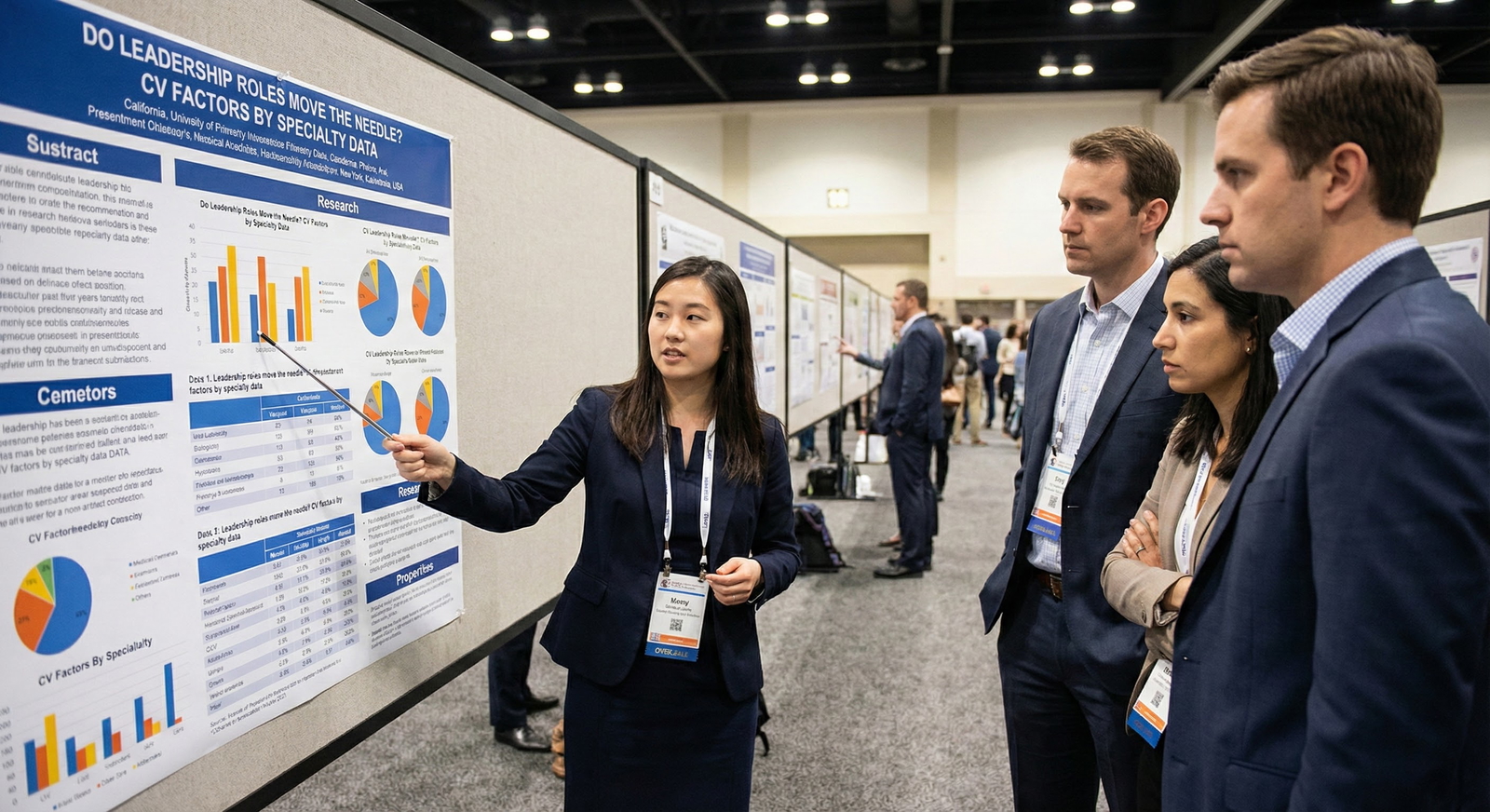
- Abstracts, poster presentations, oral presentations
- Quality improvement projects
- Capstone or thesis projects related to international medicine or public health
Format consistently:
Smith J, YourLastName A, et al.
“Task-Shifting in HIV Care: Outcomes of Nurse-Led Clinics in Rural Malawi.” Journal of Global Health, 2022.
Poster Presentation
“Improving Childhood Vaccination Coverage in an Urban Slum in India: A Community Health Worker–Led Intervention.”
Global Health Conference, Boston, MA, 11/2021.
If your research isn’t directly global health–related, still include it—it shows intellectual rigor and scholarly potential. You can briefly connect it to themes of systems, equity, or epidemiology in your personal statement and interviews.
7. Teaching, Leadership, and Quality Improvement
Global health work often requires teaching and capacity-building. Highlight:
- Peer-teaching roles (e.g., anatomy tutor, Step 1 tutor)
- Leadership in student organizations (AMSAs, global health interest groups)
- Leadership in free clinics, health fairs, etc.
- Global health curriculum development
Example Entry:
Co-Director, Student-Run Free Clinic
Allopathic Medical School, City, State
08/2021 – 05/2023
- Led a team of 25 volunteers providing weekly primary care to uninsured patients, including many Spanish-speaking immigrants.
- Implemented a standardized workflow for chronic disease monitoring, leading to a 15% increase in follow-up visit attendance.
- Collaborated with pharmacy and social work students to integrate medication assistance and social resource referrals.
8. Volunteerism and Service
Volunteerism is central to your global health narrative, but programs are wary of “checkbox” service. Emphasize sustained, mission-aligned commitments.
Examples:
- Mentoring underrepresented minority students
- Long-term involvement in refugee resettlement services
- Local public health outreaches that mirror global health challenges (e.g., vaccine campaigns, STI education, harm reduction)
Aim for:
- 2–4 bullet points per role
- Focus on responsibilities, populations served, and skills gained (communication, cultural humility, teamwork)
Strategic Skills, Languages, and Formatting for a Global Health–Focused Residency CV
This is where many strong MD graduate residency CVs underperform: they don’t make it easy for readers to see practical skills relevant to global health.
9. Skills and Languages
Include a dedicated section such as “Skills and Languages” or “Global Health–Relevant Skills.”
Languages:
Specify proficiency honestly using standard terms:
- Native / Fluent
- Professional working proficiency
- Intermediate
- Basic / Conversational
Example:
Languages
- Spanish – Professional working proficiency (conducts patient interviews with occasional interpreter support)
- French – Intermediate (reading and basic conversational ability)
Technical / Global Health Skills:
- Data analysis tools: Stata, R, SPSS, REDCap
- EHRs used (Epic, Cerner, etc.)
- Public health tools: Epi Info, DHIS2 (if applicable)
- Grant writing or IRB application experience
- Qualitative methods: focus groups, key informant interviews, thematic coding
- Program monitoring & evaluation basics
Cultural and Systems Skills:
You can briefly list attributes like:
- Cross-cultural communication in low-resource settings
- Working in interprofessional/ multidisciplinary teams
- Experience with community health worker models
- Familiarity with WHO guidelines, national treatment protocols, or implementation science frameworks
10. Professional Memberships and Extracurriculars
List memberships that reinforce your global health brand:
- American College of Physicians (ACP) or relevant specialty societies
- Consortium of Universities for Global Health (CUGH)
- American Medical Association (AMA) Global Health groups
- Local global health or international medicine societies
If you served on committees, task forces, or working groups, include that to show deeper engagement.
Practical Residency CV Tips and Common Pitfalls for MD Graduates in Global Health
Drawing everything together, here are concrete residency CV tips on how to build CV for residency with a global health focus:
A. Be Consistent, Clean, and Easy to Scan
- Use a simple, professional font (e.g., 11–12 pt Calibri, Times New Roman, Arial).
- Maintain consistent formatting for dates, locations, and headings.
- Use reverse chronological order in each section.
- Keep page margins reasonable (0.5–1 inch) and avoid dense blocks of text.
For MD graduate residency applicants, a 2–3 page CV is typical; going beyond 3 pages usually signals unfocused content.
B. Tell a Coherent Global Health Story
Your CV should support a clear narrative you’ll reinforce in your personal statement and interviews:
- Show progression from early interest → structured learning → hands-on experience → leadership or scholarship.
- If you “pivoted” to global health later, show intensity and thoughtfulness in recent experiences.
Programs with an allopathic medical school match process will compare you to peers with robust experiences. Depth, reflection, and alignment matter more than sheer volume.
C. Avoid the “Tourist” Trap
Common red flags on global health CVs:
- Many very short international trips with generic descriptions.
- Language that exoticizes patients or countries.
- Overclaiming your role or autonomy.
Instead:
- Group similar short experiences.
- Highlight sustainable, partnership-based work.
- Acknowledge your role as a learner and collaborator.
D. Quantify When Possible
Numbers make your contributions more concrete:
- “Cared for 6–8 inpatients daily…”
- “Screened 200+ patients for latent TB…”
- “Coordinated a team of 15 volunteers…”
- “Increased follow-up rate from 40% to 55%…”
E. Tailor for Different Uses
Maintain a master CV, then create tailored versions:
- Residency CV (core focus): Education, exams, clinical experience, global health, research, leadership.
- Research fellowship CV: Emphasize publications, methods, and research experience.
- NGO/fieldwork CV: Emphasize cross-cultural, language, logistical, and project management skills.
Even within residency applications, you can adjust slightly when sending to:
- Programs with a strong global health residency track (highlight international medicine more).
- Programs with local underserved focus but limited international work (emphasize domestic underserved care).
F. Align CV with Other Application Components
Your CV does not exist in isolation. To avoid mixed messages:
- Ensure your personal statement highlights the same key global health experiences.
- Ask letter writers who know your global health work well to emphasize it.
- Make your ERAS experiences consistent with your stand-alone CV (same dates, roles, descriptions).
Frequently Asked Questions (FAQ)
1. How important is global health experience for matching into a global health residency track?
Having some documented exposure to global or underserved health is very helpful, but it does not have to be extensive international travel. Programs want to see:
- Genuine interest and sustained engagement (e.g., local refugee clinics, free clinics, research in international medicine).
- Thoughtful reflection on structural determinants of health and equity.
- A realistic understanding of global health as long-term partnership work, not short-term missions.
A strong general residency application with a few well-chosen, deep global health experiences is better than a superficially packed international portfolio.
2. Should I include non-medical international experience on my residency CV?
Yes, if it’s relevant and framed correctly. Examples:
- Peace Corps service
- Humanitarian or development work
- Long-term volunteer or teaching roles abroad
- Work in international policy or NGOs
Place these in sections like “Global Health & International Experience” or “Professional Experience,” and clearly describe transferable skills (language, cross-cultural communication, systems thinking). Avoid overloading your CV with unrelated travel or tourism.
3. How do I list global health–related certifications or online courses?
Include substantial certificates (e.g., recognized global health institutions, multi-week courses) under “Certifications” or “Additional Training.” Brief online modules (e.g., 1–2 hour MOOCs) are usually not necessary unless they’re highly relevant and substantial. Focus on quality, not quantity, and avoid making your CV look padded with minor certificates.
4. Should I list every short global health trip or just the most meaningful ones?
For short experiences (1–2 weeks), avoid listing every trip separately, especially if they are similar. You can:
- Group them: “Short-Term Global Health Electives, 2019–2022, Guatemala and Honduras”—then summarize in 2–3 bullets.
- Emphasize longitudinal components (returning to the same site, working with the same partners).
- Focus on how the cumulative experience influenced your perspective and skills.
Residency programs value depth, reflection, and sustainability more than the number of passport stamps.
By organizing your experiences thoughtfully and framing them through the lens of equity, partnership, and professionalism, your CV can clearly signal to programs that you are ready to grow into a capable clinician and responsible global health practitioner.