Understanding the Role of Your CV in the Internal Medicine Match
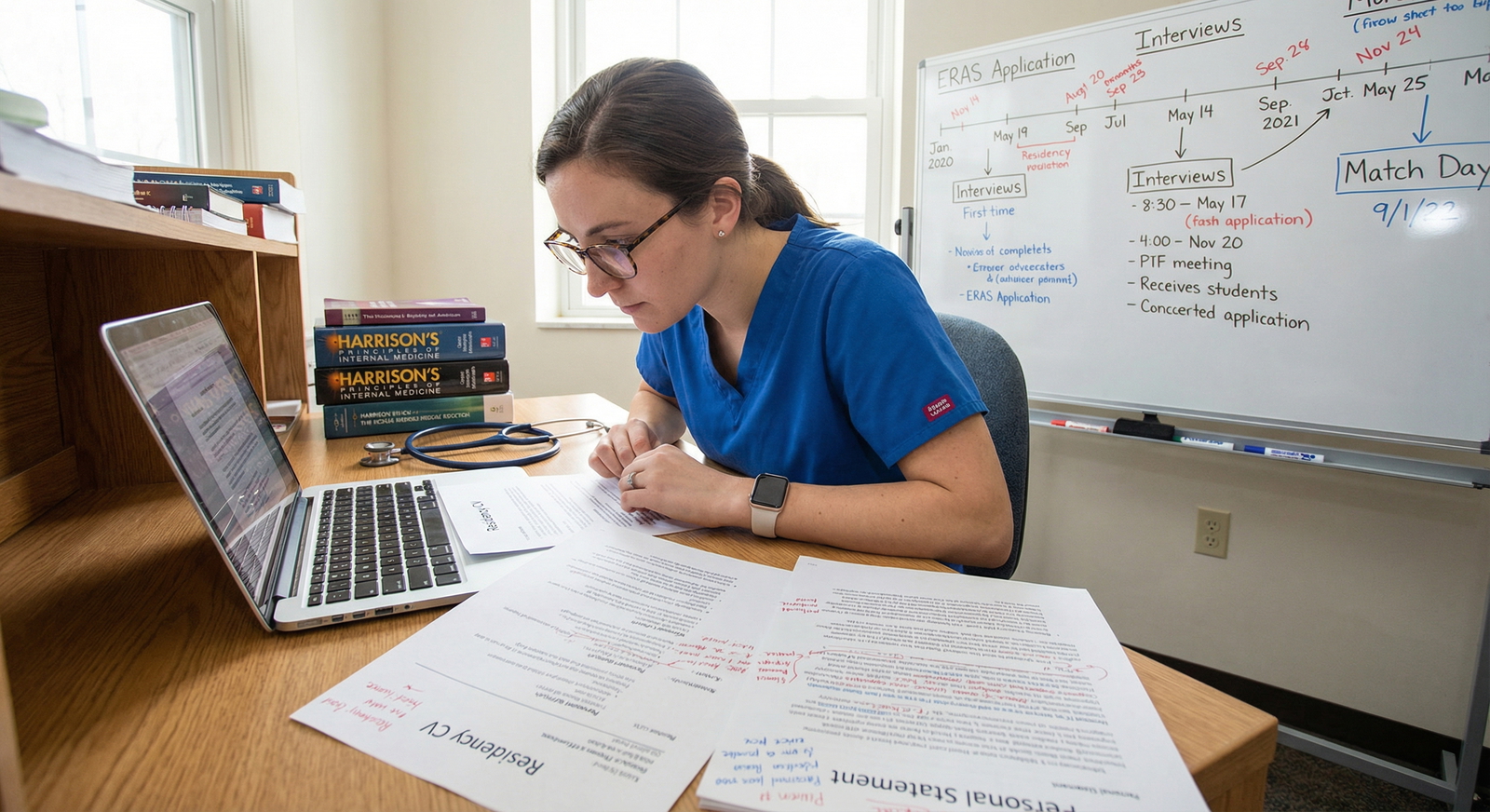
For an MD graduate pursuing an internal medicine residency, your CV is more than a list of experiences—it is a strategic marketing document. It tells program directors, “This is who I am as a clinician, learner, and colleague, and this is why I fit your internal medicine residency.”
In the allopathic medical school match, particularly for internal medicine, programs often review hundreds or thousands of applications. Your CV—along with your ERAS application—helps:
- Provide a quick, structured overview of your training and achievements
- Highlight strengths that align with internal medicine (IM) values: clinical reasoning, continuity of care, professionalism, and teamwork
- Guide interview conversations and shape first impressions
- Demonstrate your trajectory from medical student to future internist
Even though ERAS has standardized forms, a well-structured, standalone CV is still important for:
- Emailing to mentors and letter writers
- Away or audition rotations
- Research positions or fellowships
- Job opportunities (moonlighting, teaching roles, consulting)
- Program websites or alumni profiles later on
This guide focuses on how to build a strong CV for residency as an MD graduate targeting internal medicine, with concrete residency CV tips and specialty-specific examples.
Core Structure: What Every Internal Medicine CV Must Include
A strong residency CV for an MD graduate is clear, consistent, and easy to scan. Use a clean, professional format (no graphics, no colors, no fancy fonts). Stick with:
- Font: Times New Roman, Calibri, or Arial (11–12 pt)
- Margins: ~1 inch
- Length: Usually 2–4 pages for an MD graduate
Essential Sections and Order
For an internal medicine residency applicant, a logical order is:
- Contact Information
- Education
- Medical Licensure & Certifications
- Clinical Experience (if separate from education)
- Research Experience
- Publications & Presentations
- Teaching & Leadership
- Honors & Awards
- Professional Memberships
- Volunteer & Community Service
- Skills & Additional Information
You don’t need all of these sections; include only what is relevant and substantial. But the more medically oriented and longitudinally involved the experience, the better.
1. Contact Information
Place this at the top, clearly visible:
- Full name (as used in ERAS)
- MD (e.g., “Jane A. Smith, MD”)
- Current location (city, state, country if international)
- Professional email (not a casual address)
- Phone number with country code if needed
- LinkedIn profile (optional, but ensure it’s polished and consistent)
Avoid including:
- Date of birth, photo, marital status, religion, or any demographic detail not relevant to residency.
2. Education
In the context of MD graduate residency applications, the education section is high yield and should be near the top.
List in reverse chronological order:
Example format:
MD, Allopathic Medical School Name
City, State, Country — Month Year (Expected/Graduated)
- Class rank (if available and strong)
- GPA (only if reported and favorable)
- Distinctions (e.g., “Graduated with Honors,” “Alpha Omega Alpha”)
Then list earlier degrees:
BSc in Biology, University Name
City, State, Country — Month Year
Tips:
- Use the official name of your allopathic medical school and specify if it is LCME-accredited (for U.S./Canada) or recognized by national authorities (for international MD graduates).
- If you transferred or completed a post-baccalaureate, mention it if relevant.
- If you did a preliminary year or transitional year (e.g., as a re-applicant), include that clearly.
3. Medical Licensure & Certifications
For internal medicine residency, program directors want to quickly see if you have:
- USMLE Step scores (if comfortable listing; otherwise leave for ERAS fields)
- ECFMG certification (for international MD graduates)
- BLS/ACLS certifications
Example:
Licensure & Certifications
- ECFMG Certified, Month Year (Certification ID Available Upon Request)
- USMLE Step 1: Pass (Month Year)
- USMLE Step 2 CK: 24X (Month Year)
- Basic Life Support (BLS), American Heart Association, valid through 06/2026
- Advanced Cardiac Life Support (ACLS), American Heart Association, valid through 06/2026
If applying only within ERAS, it is optional to list scores on the CV, but including pass status or strong scores can be beneficial, especially for an IM match in competitive regions.
Crafting High-Impact Experience Sections for Internal Medicine
This is where your CV moves from generic to compelling. When thinking about how to build a CV for residency in internal medicine, prioritize experiences that demonstrate:
- Patient-centered care
- Longitudinal follow-up or continuity
- Teamwork with multidisciplinary teams
- Interest in complex, multi-morbid patients
- Evidence-based practice and quality improvement

4. Clinical Experience
As an MD graduate, much of your clinical experience will be embedded within your medical education. You can structure it in one of two ways:
- Include clinical details under “Education” (e.g., sub-internships, acting internships, away rotations), or
- Create a separate “Clinical Experience” section, especially if you have additional roles like hospitalist assistant, externship, or research with patient contact.
Example entry:
Sub-Intern, Internal Medicine
University Hospital, City, State — 07/2024–08/2024
- Managed 6–8 patients daily on the general medicine service under supervision, including admissions, daily notes, and discharge planning.
- Participated in multidisciplinary rounds (nursing, PT/OT, social work) and contributed to disposition decisions for complex medical patients.
- Presented 3 evidence-based medicine mini-talks on heart failure management, COPD exacerbations, and anticoagulation in atrial fibrillation.
For clinical experiences outside formal rotations (e.g., observerships, externships), be accurate:
Clinical Extern, Internal Medicine (Hands-On)
Community Hospital, City, State — 01/2024–03/2024
- Performed focused histories and physicals on 4–6 patients per day, presenting findings to attending physicians.
- Assisted in formulating differential diagnoses and management plans for patients with diabetes, hypertension, and chronic kidney disease.
- Participated in quality-improvement discussions on reducing 30-day readmissions in heart failure patients.
Avoid over-selling observerships as hands-on if they were observational only. Use honest phrasing like “observed,” “shadowed,” or “attended rounds.”
5. Research Experience
Internal medicine programs value applicants who understand evidence-based practice and may contribute to scholarly work during residency. Even if you are not pursuing a physician-scientist track, having research on your CV strengthens your profile in the IM match.
Example format:
Research Assistant, Division of General Internal Medicine
Allopathic Medical School, City, State — 06/2022–05/2023
Mentor: John Doe, MD
Project: “Hospital readmission predictors in patients with heart failure”
- Collected and managed data on 350 heart failure admissions, performing chart review and data abstraction using REDCap.
- Conducted statistical analysis with SPSS, identifying associations between medication adherence and 30-day readmission rates.
- Co-authored an abstract presented at the American College of Physicians (ACP) regional meeting.
Tips:
- Emphasize your role (data analysis, patient recruitment, literature review, IRB submissions).
- Highlight internal medicine–relevant topics (chronic disease management, health disparities, quality improvement, hospital medicine).
- One or two substantial projects with clear contributions are better than a long list of minimal involvement.
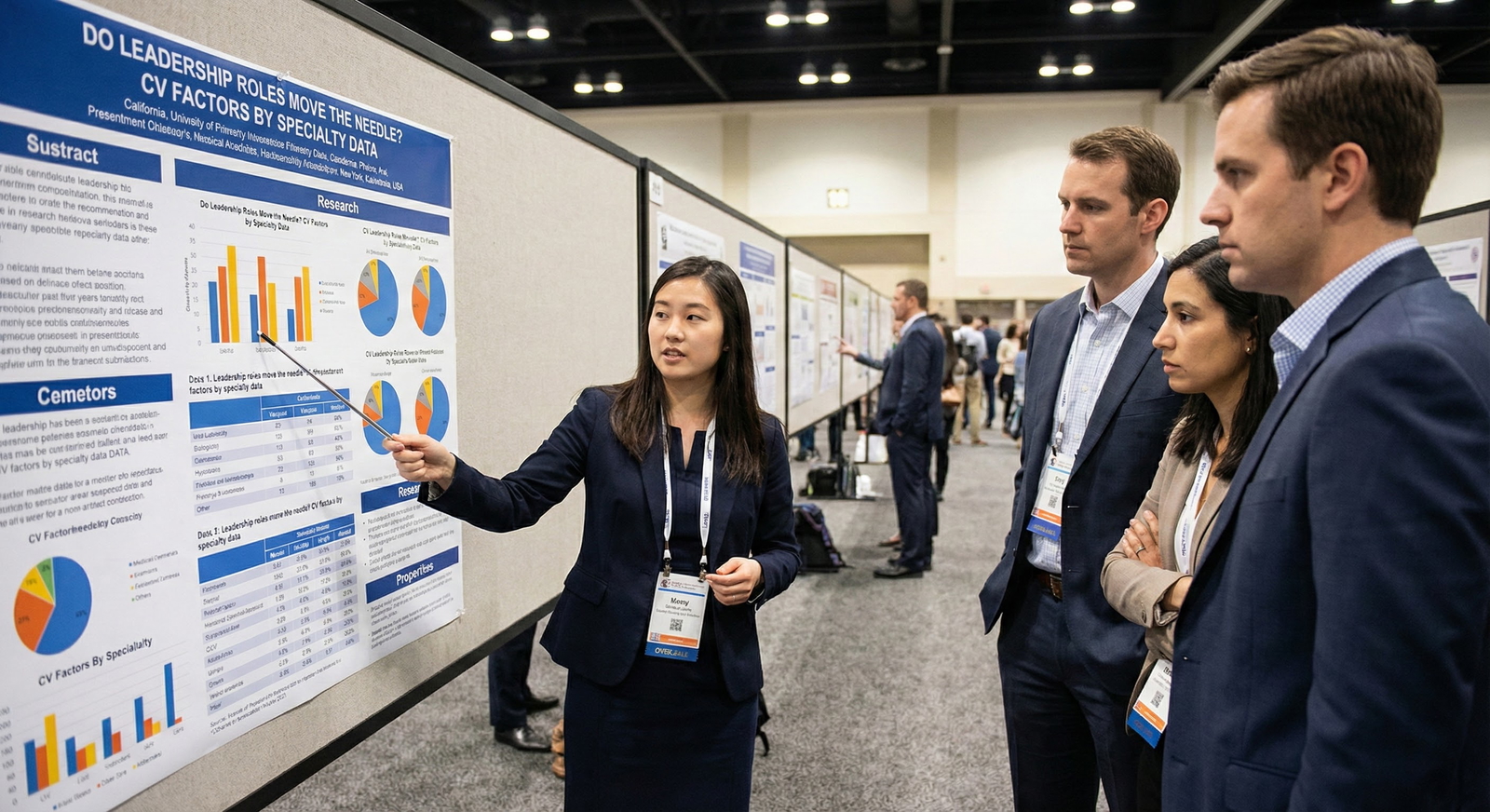
6. Publications, Abstracts, and Presentations
This section provides objective evidence of your academic productivity. Divide it by type if you have several items:
- Peer-Reviewed Publications
- Abstracts & Posters
- Oral Presentations
Use a consistent citation style (e.g., AMA). If you have limited output, a single combined section is fine.
Example AMA-style entry:
Smith JA, Lee R, Patel N. Predictors of 30-day readmission in patients with decompensated heart failure. J Hosp Med. 2024;19(4):210–216.
For items still in progress:
- “Submitted” or “Under Review” can be listed, but clearly labeled.
- “In preparation” should be used sparingly and only if near submission.
Example:
Smith JA, Nguyen T. Improving diabetes control in a resident continuity clinic using a nurse-led telephone intervention. Abstract presented at: ACP California Regional Meeting; October 2023; San Diego, CA.
Be sure your ERAS entries match your CV for credibility.
7. Teaching, Leadership, and Service: Show Your IM “Team Fit”
Internal medicine residency involves heavy emphasis on teaching, leadership on ward teams, and service to vulnerable populations. This is where your CV can clearly show “fit.”
Teaching Experience
If you tutored, served as a pre-clinical TA, or taught peers or juniors, include these roles:
Peer Tutor, Physiology
Allopathic Medical School, City, State — 09/2021–05/2022
- Led weekly small-group review sessions (6–8 students) on cardiovascular and renal physiology.
- Developed problem-based learning cases emphasizing clinical application of physiologic principles.
Clinical Skills Teaching Assistant
— Supervised MS1–MS2 students performing cardiac and pulmonary exams, providing feedback on technique and communication.
This signals to IM programs that you will be comfortable teaching as a PGY-2/PGY-3.
Leadership Roles
Program directors want residents who can organize teams, communicate, and take initiative.
Examples:
- Student Interest Group Leader (Internal Medicine, Cardiology, Hospital Medicine)
- Class representative
- Committee roles (curriculum committee, wellness committee)
Example entry:
Co-President, Internal Medicine Interest Group
Allopathic Medical School — 05/2022–04/2023
- Organized 8 faculty-led sessions on career paths in general internal medicine, hospital medicine, and subspecialties.
- Coordinated a longitudinal mentorship program connecting 30 students with IM faculty and residents.
Volunteer and Community Service
Internal medicine values advocacy and care for underserved communities. Include:
- Free clinics
- Health fairs
- Community education initiatives (e.g., blood pressure screening, diabetes education)
- Telehealth outreach to rural or vulnerable populations
Example:
Volunteer Physician Assistant, Student-Run Free Clinic
City, State — 09/2021–06/2023
- Evaluated and counseled uninsured adults with chronic conditions, including diabetes, hypertension, and hyperlipidemia, under physician supervision.
- Implemented a follow-up protocol for patients with uncontrolled A1c, improving follow-up rates from 55% to 78% over six months.
Tailoring Your CV Specifically for Internal Medicine
A residency CV is strongest when it tells a coherent story. For an IM match, the story should be: “I am a clinically grounded, evidence-minded, collaborative physician who will thrive in an internal medicine residency.”

Emphasize Internal Medicine-Relevant Themes
Across your experiences, highlight:
- Longitudinal care or follow-up (clinic experiences, continuity clinics, free clinics)
- Complex multi-morbidity (e.g., patients with CHF, CKD, COPD, diabetes)
- Quality improvement and systems-based practice
- Communication with other disciplines and families
- Professionalism and reliability (e.g., leadership roles, mentoring)
You can incorporate this with concise bullet points:
- “Followed a panel of 25 patients with chronic diseases over 12 months, tracking adherence, control metrics, and follow-up appointments.”
- “Collaborated with case management and social work to address barriers to medication adherence.”
Choosing What to Leave Out or Condense
For MD graduate residency applications, not every pre-med job needs space, especially if unrelated to medicine or leadership.
You can:
- Remove or dramatically shorten high school activities
- Condense minor, short-term college jobs unless they show important skills (e.g., language, leadership, service)
- Avoid listing every shadowing experience once you have robust clinical rotations
Focus on depth over breadth.
Aligning CV with Personal Statement and ERAS Application
Program directors notice inconsistencies. Use your CV, ERAS experiences, and personal statement to reinforce the same themes:
- If your personal statement focuses on chronic disease management and health equity, make sure your CV highlights related research, clinic volunteer work, or QI projects.
- If you emphasize interest in academic medicine, your CV should show teaching or research experiences.
Consistency strengthens your narrative in the allopathic medical school match for internal medicine.
Practical Formatting & Content Tips: Making Your CV Easy to Read
Here are targeted residency CV tips to increase clarity and impact:
Use Strong, Specific Verbs
Weak:
- “Helped with patient care”
- “Assisted with research”
Stronger:
- “Performed initial assessments and presented management plans for 4–6 patients per shift under supervision.”
- “Conducted literature review, designed data collection instruments, and performed multivariable regression analysis.”
Quantify When Possible
Numbers make experiences more concrete:
- Number of patients, clinics, or teaching sessions
- Duration (e.g., “over 18 months,” “for 6 consecutive semesters”)
- Outcomes if available (e.g., “increased screening rates from 40% to 65%”)
Keep Formatting Consistent
- Use the same date format throughout (e.g., MM/YYYY–MM/YYYY).
- Align locations and dates in the same place in every entry.
- Standardize bullet style and spacing.
Avoid Redundancy with ERAS
Your CV and ERAS will overlap, but the CV can:
- Provide a cleaner, printable format for quick review
- Show your professionalism in design and organization
- Offer slightly more context than ERAS’s character-limited boxes
Ensure no contradictions in dates, titles, or responsibilities.
Strategies for MD Graduates with Gaps or Limited Experience
Not every MD graduate applying for internal medicine will have numerous publications or leadership positions. You can still present a compelling CV with thoughtful curation.
If You Have Limited Research
- Emphasize strong clinical and service experiences.
- Include small scholarly activities: case presentations, journal club presentations, or quality improvement projects.
- Ask mentors whether small projects can be developed into abstracts or case reports before application season.
If You Took Time Off or Have a Gap
Do not leave multi-month or multi-year holes unexplained. Include constructive activities:
- Research fellowships
- Extended clinical observerships or externships
- Graduate degrees (e.g., MPH)
- Dedicated USMLE study periods (briefly and honestly, if needed)
You can frame these entries with focus on skills developed, such as:
- “Engaged in full-time clinical research in hospital medicine, learning advanced data management and quality-improvement methodology.”
If You Are Reapplying to the IM Match
Highlight growth:
- New clinical experiences
- Step score improvements (if relevant)
- Additional research or QI work
- Strengthened teaching and leadership
Make sure your CV reflects an upward trajectory, not stagnation.
Putting It All Together: Example Outline of an Internal Medicine Residency CV
Below is a summarized outline you can adapt:
- Name & Contact Information
- Education
- MD, Allopathic Medical School
- Undergraduate degree(s)
- Licensure & Certifications
- ECFMG, USMLE, BLS/ACLS
- Clinical Experience
- Internal Medicine Sub-Internship
- Acting Internship in ICU
- IM electives (cardiology, nephrology, hospital medicine)
- Externships/observerships (if applicable)
- Research Experience
- General internal medicine research project(s)
- Outcomes research or epidemiology projects
- Publications & Presentations
- Peer-reviewed articles
- Posters at ACP, SGIM, subspecialty meetings
- Teaching & Mentorship
- Peer tutoring
- Clinical skills teaching assistant
- Leadership & Professional Activities
- IM interest group roles
- Committee positions
- Conference organizer or event coordinator
- Volunteer & Community Service
- Free clinic
- Community health outreach
- Professional Memberships
- ACP, AMA, specialty societies
- Skills & Additional Information
- Languages
- Technical skills (SPSS, R, REDCap)
- Hobbies (brief, professional, potentially conversation-starting)
Use this structure as a template, adjusting the emphasis based on your strengths and goals in internal medicine.
FAQs: CV Building for MD Graduates Applying to Internal Medicine
1. How is my CV different from my ERAS application for internal medicine residency?
Your ERAS application is a standardized form required for all applicants. Your CV is a flexible document you control completely. While both contain overlapping content, the CV:
- Is easier for mentors and letter writers to scan
- Can be emailed directly to programs or used for non-ERAS opportunities
- Shows your professionalism in formatting and organization
- Can be tailored slightly to emphasize internal medicine–specific strengths
Ensure consistency between the two, but use the CV to present a more polished, narrative-friendly view of your background.
2. How long should my residency CV be as an MD graduate?
For most MD graduate residency applicants in internal medicine, 2–4 pages is typical:
- 2 pages: Common for recent graduates without extensive research or prior careers
- 3–4 pages: Common for applicants with multiple publications, higher degrees, or substantial prior work
Do not inflate length with low-yield details. Strong, relevant experiences tailored to internal medicine are more impressive than sheer volume.
3. Should I include my Step scores on my residency CV?
This is optional, especially since programs see your USMLE scores directly in ERAS. Consider including them if:
- Your scores are strong and support your competitiveness for internal medicine programs you’re targeting.
- You are sharing your CV with mentors, research supervisors, or for non-ERAS positions that may not have direct access to ERAS.
If you prefer, you can simply state “USMLE Steps: Passed” without listing numeric scores.
4. What are the most important sections for an internal medicine residency CV?
For an IM match, program directors often focus first on:
- Education (your allopathic medical school and performance indicators)
- Clinical experience in internal medicine (sub-internships, electives, externships)
- Research and scholarly activity relevant to internal medicine
- Teaching, leadership, and service experiences that show you are a team-oriented, reliable future resident
If you must prioritize space, make sure these sections are clear, detailed, and easy to find.
By approaching your CV as a strategic, internal medicine–focused narrative—rather than a simple list of activities—you position yourself strongly in the allopathic medical school match. Your CV should convincingly answer: “Why will this MD graduate become an excellent internal medicine resident and colleague?” Each section is a chance to reinforce that answer.