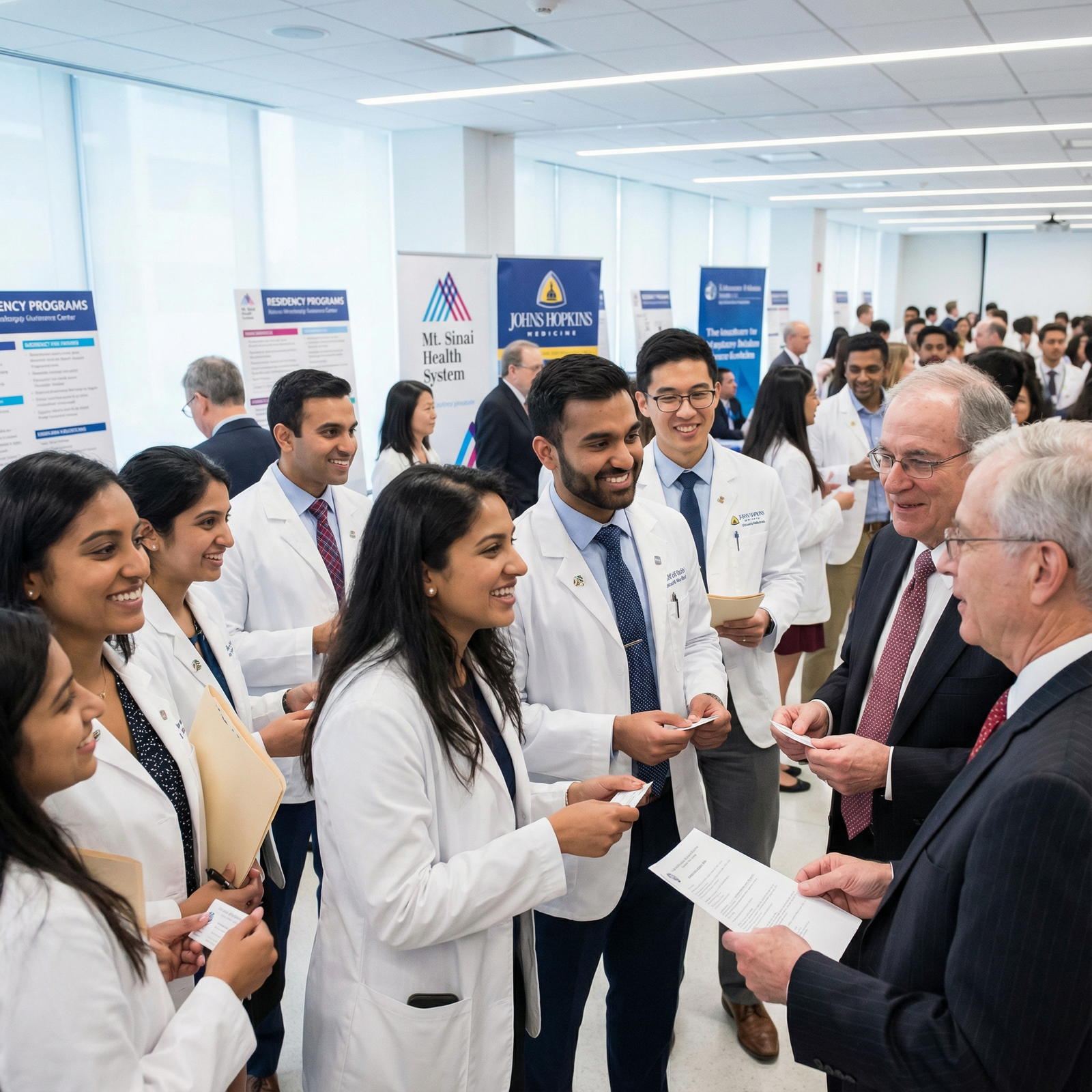
Understanding the Role of Your CV in the Radiation Oncology Match
For an MD graduate targeting a radiation oncology residency, your curriculum vitae (CV) is not just a timeline of your training—it is a strategic document that tells program directors who you are as a future academic clinician, researcher, and teammate.
Radiation oncology is a small, highly specialized field with a historically competitive landscape and a strong emphasis on academic productivity. Even with evolving match trends and changing competitiveness, programs still expect a polished, focused, and well-structured CV that aligns with the realities of modern practice: multidisciplinary care, evidence-based medicine, and rapidly advancing technology.
Before thinking about formatting and word choice, it helps to understand what a radiation oncology residency program director is looking for when they glance at your CV:
- Clear evidence of academic rigor (strong medical school performance, meaningful research, presentations, publications)
- Sustained interest in oncology and radiation oncology specifically
- Progressive responsibility and leadership
- Professionalism and longitudinal commitment
- Fit with an academic, research-oriented specialty
Your job is to design your CV so those qualities are obvious within 30–60 seconds of scanning.
In this guide, we’ll go step-by-step through how to build a strong CV for residency as an MD graduate aiming for radiation oncology, including structure, content, and strategy—plus practical residency CV tips specific to rad onc.
Core Structure: How to Organize an MD Graduate Residency CV
CV vs. Resume: What’s the Difference for Residency?
For residency applications, programs expect a CV, not a one-page corporate-style resume. A CV is:
- Comprehensive: Includes all relevant educational and scholarly work
- Chronological: Typically reverse chronological within each section
- Academic-centered: Emphasizes research, teaching, and scholarship
ERAS will generate a standardized application, but you should still maintain your own well-formatted PDF CV. It is useful for away rotations, faculty mentors, letters of recommendation, non-ERAS programs, and future fellowships or jobs.
Recommended Section Order for a Radiation Oncology Residency CV
For an MD graduate residency application, a logical, rad onc–friendly structure is:
- Contact Information & Professional Identity
- Education
- USMLE/COMLEX and Licensing (optional section header but often included)
- Honors & Awards
- Research Experience
- Publications & Abstracts
- Presentations & Posters
- Clinical Experience (including radiation oncology–relevant experiences)
- Teaching & Mentoring
- Leadership & Service
- Professional Memberships
- Skills (language, technical, software relevant to medicine)
- Interests (brief, refined)
The exact order can be tailored, but for a radiation oncology residency, research and scholarly activity should appear high on the first page if possible.
General Formatting Guidelines
- Length: 2–4 pages is typical for an MD graduate residency CV; more is acceptable if you have extensive research.
- Font: Simple, professional (e.g., Times New Roman, Calibri, Arial 10–12 pt).
- Consistency: Dates, headings, bullet styles, citation formats uniform throughout.
- File name: “LastName_FirstName_CV_2025.pdf” – professional and easy to identify.
Consistency and clarity are more important than any particular template style.

Section-by-Section Guide: How to Build a CV for Radiation Oncology Residency
1. Contact Information & Professional Identity
At the top of the first page:
- Full name (as used in ERAS)
- MD degree designation
- Current location (city, state)
- Professional email address (ideally university or institution-affiliated)
- Phone number
- Optional but helpful: LinkedIn profile or professional website (if polished and up to date)
Avoid including:
- A photo (not standard on US residency CVs)
- Personal identifiers like date of birth, marital status, or nationality (not necessary and sometimes discouraged)
2. Education
List your education in reverse chronological order:
- Medical School (Allopathic medical school)
- Institution, city, state
- Degree: MD, Graduation year
- Honors: AOA, Gold Humanism, class rank (if available and favorable)
- Undergraduate
- Degree, major, institution, honors (summa/magna/cum laude, Phi Beta Kappa)
- Additional degrees (MPH, MS, PhD) with thesis titles if relevant to oncology
For an MD graduate residency in radiation oncology, call out anything oncologic in this section:
Doctor of Medicine, XYZ Allopathic Medical School, 2024
Scholarly Concentration in Oncology and Palliative Care
This gives an early signal of your interest in oncology.
3. Licensing Exams and Certifications
Radiation oncology is academically demanding, so program directors often glance here quickly:
- USMLE Step 1, Step 2 CK (include scores only if strong or if your advisor recommends)
- Step 3 (if taken)
- State limited/temporary licenses (if applicable)
- BLS/ACLS certification
You do not need to list every BLS expiration date, but mentioning active certification is fine.
If you are concerned about lower scores or a failure attempt, focus on showing upward trajectory elsewhere in your CV (research productivity, strong clinical evaluations, etc.) and discuss strategy with a mentor rather than overemphasizing scores in the CV itself.
4. Honors, Awards, and Scholarships
This section reassures programs about your academic potential. Examples:
- AOA membership
- Gold Humanism Honor Society
- Dean’s List, academic scholarships
- Research awards (poster awards, travel grants, young investigator awards)
- Leadership awards, community service recognitions
For each item:
- Name of award
- Institution/organization
- Year
- Very brief descriptor if the award is not self-explanatory
Radiation oncology is a field where academic awards and research recognition stand out, especially if the award is cancer-related.
5. Research Experience (Critical for Rad Onc Match)
For the rad onc match, your research experience is one of the most scrutinized parts of your CV. Even as the specialty evolves, many programs are university-based with a strong academic mission.
Organize by project or position in reverse chronological order. For each entry:
- Position title (e.g., “Research Assistant,” “Student Investigator”)
- Institution and department (e.g., Department of Radiation Oncology)
- Supervisor’s name and credentials (e.g., “Mentor: Jane Doe, MD, PhD”)
- Dates (month/year – month/year)
- 2–4 concise bullet points describing:
- Your specific role and responsibilities
- Techniques and methods used
- Outcomes (publications, abstracts, QI implementation)
Example (strong) entry:
Student Researcher, Department of Radiation Oncology
ABC Cancer Center, City, State | Mentor: John Smith, MD, PhD | 2022–2024
- Conducted retrospective chart review of 300 patients with oropharyngeal cancer treated with IMRT to evaluate predictors of long-term xerostomia.
- Performed data extraction, database management in REDCap, and basic statistical analyses in R under supervision.
- Contributed to abstract preparation for ASTRO 2023 and a manuscript submitted to the International Journal of Radiation Oncology • Biology • Physics.
This shows:
- Direct radiation oncology exposure
- Concrete methods and skills
- Tangible scholarly outcomes
If you lack direct rad onc research, emphasize oncology-adjacent work (medical oncology, surgical oncology, radiology, physics, or outcomes research) and clearly describe the cancer relevance.
6. Publications and Abstracts
For radiation oncology residency, how you list publications matters. Use a standard citation format (e.g., AMA) and separate into:
- Peer-reviewed publications
- Manuscripts accepted/in press
- Manuscripts submitted
- Abstracts (if not later published)
- Book chapters (if any)
Be honest and precise about the status of each item. Do not list “in preparation” manuscripts unless they are truly near submission and better discussed in your personal statement or interviews rather than cluttering your CV.
Strong practices:
- Bold your name in each author list.
- Use consistent journal abbreviations.
- Include PMIDs if available.
Example:
Peer-reviewed publications
- Doe J, Smith A, Lee R, et al. Long-term quality-of-life outcomes after hypofractionated radiotherapy for early-stage breast cancer. Int J Radiat Oncol Biol Phys. 2024;110(3):456–464. PMID: 12345678.
Abstracts
- Doe J, Nguyen P, Ramirez L, et al. Predictors of treatment interruption during chemoradiation for cervical cancer at a safety-net hospital. Poster presented at: ASTRO Annual Meeting; October 2023; San Diego, CA.
When PDs quickly scan for evidence of scholarship in a rad onc match, ASTRO, ASCO, RSNA, and discipline-specific journals stand out, but any peer-reviewed work shows capability.
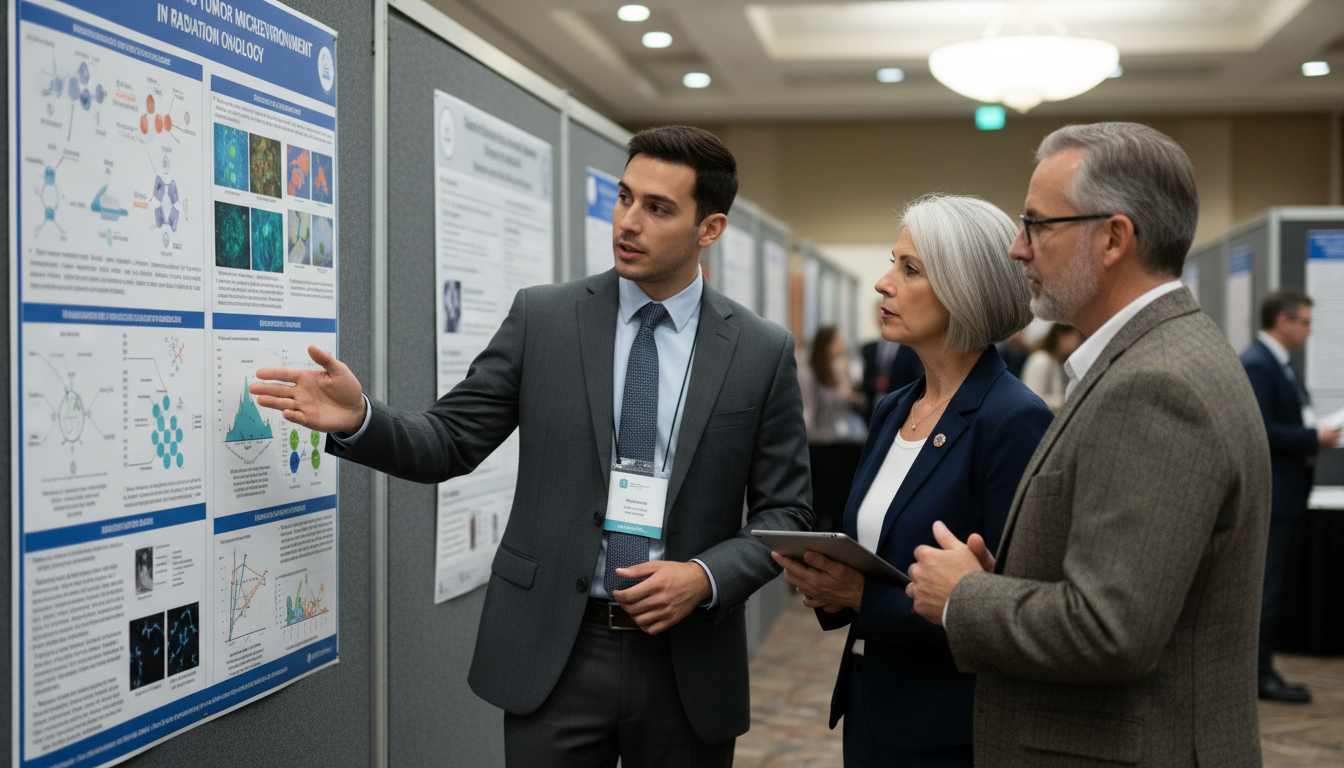
7. Presentations and Posters
If not already captured under publications, presentations deserve their own section because they showcase communication skills—critical in a multidisciplinary specialty.
Include:
- Oral presentations (local, regional, national, international)
- Posters (especially at oncologic or radiation oncology meetings)
- Invited talks (student grand rounds, tumor board presentations, etc.)
List in reverse chronological order, with:
- Your role (oral presenter, first author poster)
- Title of presentation
- Event name and location
- Date (month/year)
Clearly distinguishing national vs. local venues can highlight the scope of your work.
Clinical, Teaching, and Leadership Experience: Demonstrating Fit for Radiation Oncology
8. Clinical Experience
ERAS captures your clerkships, but your standalone CV can still highlight clinical depth and specialty exposure.
Subsections to consider:
- Radiation Oncology Electives & Sub-internships
- Institution, dates, supervising attendings
- Notable experiences or projects (e.g., QI initiatives, case presentations)
- Oncology-Related Rotations
- Hematology/Oncology, Surgical Oncology, Palliative Care
- Brief bullet points on meaningful contributions
- Other Significant Clinical Roles
- Student-run free clinics (especially if cancer screening or survivorship services)
- International oncology electives (if applicable)
Example:
Radiation Oncology Sub-internship
DEF Cancer Institute, City, State | July 2023
- Participated in daily contouring and treatment planning for head and neck and CNS malignancies under attending supervision.
- Presented a case-based talk on stereotactic radiosurgery for brain metastases at the department’s resident teaching conference.
This shows concrete exposure and initiative, which is invaluable to an MD graduate residency applicant in this field.
9. Teaching and Mentoring Experience
Radiation oncology is an academic specialty with frequent teaching of medical students, residents, physicists, and dosimetrists. Demonstrate that you:
- Enjoy teaching
- Have experience communicating complex concepts clearly
- Can mentor and support trainees and peers
List:
- Small group facilitation (e.g., anatomy lab TA, physiology tutor)
- Peer tutoring
- Curriculum development contributions
- Workshops or sessions you helped lead (e.g., evidence-based medicine, journal club)
Use brief bullets to describe your role and impact:
- Co-led weekly oncology problem-based learning sessions for pre-clinical students; received consistently high teaching evaluations (mean 4.8/5).
10. Leadership and Service
Radiation oncology values physicians who participate in multidisciplinary teams, committees, and advocacy. Leadership and service entries should reflect:
- Roles in student interest groups (e.g., Oncology Interest Group, Women in Medicine)
- Community cancer screening or survivorship programs
- Quality improvement committees
- School governance roles (curriculum committee, student senate)
When possible, quantify impact:
- Organized annual cancer survivorship panel for 120+ medical students, coordinating with oncology faculty and patient speakers.
Leadership experiences can offset more limited research or moderate exam scores by highlighting professional maturity and teamwork skills.
11. Professional Memberships
List memberships relevant to your field, for example:
- American Society for Radiation Oncology (ASTRO)
- American Society of Clinical Oncology (ASCO)
- American Medical Association (AMA)
- Specialty-interest student sections (if you were active)
If you held committee roles or positions within these organizations, indicate them.
12. Skills: Technical, Research, and Languages
This section is especially valuable in a technologically intense field like radiation oncology.
Include:
Technical/Research Skills
- Statistical software: R, STATA, SPSS
- Data tools: REDCap, Excel
- Imaging/physics: familiarity with contouring software (e.g., Eclipse, RayStation) if meaningful
- Coding or data science if relevant to research
Languages
- List languages with proficiency level (native, fluent, conversational, basic)
- Bilingual skills are important for patient communication in many centers.
Do not overstate skills. Listing “Eclipse contouring – basic observational experience” is more honest than implying independent proficiency.
13. Interests
A short, authentic interests section can make you memorable and help interviewers connect with you. Keep it:
- Brief (1–3 lines)
- Specific (“long-distance running” rather than “sports”)
- Appropriate (no controversial or overly personal topics)
Radiation oncology attends often scan this for common ground (e.g., music, travel, languages, technology, health policy).
Strategic Residency CV Tips for the Radiation Oncology Applicant
Tailor Your CV for Radiation Oncology, Not Just “Generic Oncology”
When thinking about how to build a CV for residency, avoid the trap of making your document so broad that your rad onc interest is vague. Program directors should finish page one feeling: “This applicant is serious about radiation oncology.” You can accomplish this by:
- Prioritizing rad onc or radiation-related entries earlier in each section.
- Highlighting rad onc mentors and departments.
- Including any experience with:
- Treatment planning
- Contouring
- Stereotactic body radiation (SBRT)
- Proton therapy
- Quality of life and survivorship projects
- Health disparities in radiation or access to radiotherapy
Emphasize Longitudinal Commitment
Because radiation oncology is a niche field, programs are wary of last-minute interest. Show longitudinal engagement:
- Multiple rad onc or oncology rotations over time
- Research projects spanning more than one year
- Repeated attendance at ASTRO or oncology meetings
- Continued involvement in an oncology interest group throughout medical school
A strong MD graduate residency CV in this field looks like a coherent story rather than disconnected experiences.
Use the CV to Complement, Not Duplicate, ERAS
ERAS entries can be structured and limited. Your CV allows:
- More flexible grouping of experiences
- Better representation of multi-year projects
- Cleaner research and publication lists
Still, ensure consistency: dates, titles, authors, and statuses must match across ERAS and your CV. Discrepancies raise red flags.
Avoid Common Pitfalls
Common problems that weaken a radiation oncology residency CV:
- Inflated authorship roles: Overstating contributions or authorship order is easily spotted.
- Too much irrelevant detail: High school achievements, non-medical summer jobs (unless uniquely relevant).
- Formatting chaos: Inconsistent date formats, fonts, or alignment.
- “Laundry list” bullets: Bullets that repeat job descriptions without highlighting your specific impact.
Instead, focus each bullet on what you did and why it matters:
- “Assisted with patient consent” → “Obtained informed consent for participation in prospective quality-of-life study for patients undergoing SBRT, improving enrollment rate by 20% over 6 months.”
If You Have Gaps or Weak Spots
For an MD graduate residency applicant who may have:
- Fewer publications
- Limited direct rad onc exposure
- A gap year for personal or academic reasons
Use your CV strategically to:
- Emphasize ongoing efforts: research you joined during a gap year, new skills acquired, additional oncology exposure.
- Highlight non-research strengths: teaching excellence, leadership roles, service in underserved communities, or strong performance in complex clinical environments.
Discuss the context of these gaps or transitions in your personal statement or, if needed, in an advisor-reviewed addendum—not in your CV itself.
Putting It All Together: A Practical Action Plan
For an MD graduate from an allopathic medical school targeting radiation oncology residency, here is a concrete, staged approach:
1. Draft the framework now
- Create section headings as outlined above.
- Fill in all dates, positions, and titles before worrying about bullet wording.
2. Prioritize rad onc and oncology elements
- Move radiation-related research and experiences higher within each section.
- Ensure “Radiation Oncology” appears prominently enough that a quick scan reveals your focus.
3. Write impact-focused bullets
- Start each bullet with an action verb: led, coordinated, analyzed, implemented, presented.
- Include metrics or outcomes where feasible (number of patients, percentage improvements, conference names).
4. Standardize citations
- Choose a consistent reference style (e.g., AMA).
- Bold your name and verify journal names, years, and statuses.
5. Optimize for readability
- Use whitespace, sensible margins, and bullet points instead of dense paragraphs.
- Make sure page 1 clearly communicates:
- Education
- Research/Scholarly output
- Oncologic orientation
6. Get specialty-specific feedback
- Ask a radiation oncology mentor, resident, or research supervisor to review your CV.
- Specifically request feedback on:
- Whether your rad onc interest is obvious
- Whether your academic potential comes through strongly
- Any red flags or unclear entries
7. Keep an evolving “master CV”
- Track all activities in a longer internal document.
- From this, generate tailored versions for:
- ERAS upload
- Away rotations
- Research fellowships or post-doc positions (if you pursue them)
- Future job or fellowship searches in radiation oncology
FAQs: Radiation Oncology Residency CV for MD Graduates
1. How many pages should my radiation oncology residency CV be as an MD graduate?
Most MD graduate residency CVs range from 2–4 pages. For a radiation oncology residency applicant with multiple research projects and publications, going slightly beyond 4 pages is acceptable as long as it’s well organized and free of filler content. Focus on clarity and relevance rather than hitting a strict page limit.
2. Do I need radiation oncology–specific research to match into rad onc?
Radiation oncology–specific research is ideal and strengthens your rad onc match profile, but it is not absolutely required. Oncology-related work (e.g., medical oncology, surgical oncology, radiology, outcomes research) can still be very valuable if you:
- Clearly state the oncologic relevance
- Demonstrate meaningful contributions
- Show longitudinal commitment to cancer care
If you lack rad onc research, consider seeking a project (even a small retrospective or QI study) to add some field-specific experience to your CV.
3. Should I include my USMLE scores on my CV?
Practices vary. Many applicants do not list USMLE scores on their CV because they are already visible in ERAS. If your scores are strong and you are applying in contexts outside of ERAS (e.g., research fellowships, non-ERAS programs), you may include them in a small “Examinations” section. When in doubt, seek advice from a mentor familiar with the current allopathic medical school match environment for radiation oncology.
4. How can I strengthen my CV if I’m applying to radiation oncology late in medical school?
If you decided on radiation oncology later in training:
- Add a radiation oncology elective or sub-internship as soon as possible.
- Seek short-term but intensive research or QI projects in a radiation or oncology department.
- Attend ASTRO or a local radiation oncology meeting, and list this under “Professional Development” or “Conferences Attended.”
- Emphasize transferable experiences (e.g., imaging, procedural skills, oncology clinic work) and connect them to your interest in rad onc in your personal statement and interview discussions.
Over time, your CV should evolve from a general oncology profile into a clearly radiation oncology–focused narrative, aligned with your long-term goals as a physician-scientist or academic clinician.