Understanding the Medicine-Psychiatry CV Landscape
For an MD graduate targeting a med psych residency, your CV is more than a list of activities—it is a narrative that proves you can thrive at the intersection of internal medicine and psychiatry. Programs need to see that you are clinically solid, emotionally intelligent, and truly committed to a dual-discipline career.
Unlike a generic MD graduate residency application, a strong Medicine-Psychiatry CV must:
- Demonstrate sustained interest in both medicine and psychiatry
- Highlight adaptability and resilience (5-year programs are demanding)
- Show evidence of interdisciplinary thinking (e.g., psychosomatic medicine, CL psychiatry, integrated care, population health)
- Align with your personal statement and ERAS experiences without contradictions
You are competing in the allopathic medical school match with applicants who may have strong single-specialty applications. What differentiates you is your clear, credible, and well-documented commitment to medicine psychiatry combined training.
Before you start editing, keep these overarching principles in mind:
- Clarity beats creativity: Use standard section headings and formatting that program directors can scan quickly.
- Consistency with ERAS: Your CV and ERAS application must match in dates, titles, and descriptions.
- Quality over quantity: A few deeply meaningful experiences beat a long list of superficial ones.
- Relevance is key: Emphasize anything that bridges medicine and psychiatry, even if indirectly.
Core Structure of a Strong Medicine-Psychiatry CV
Most applicants ask how to build CV for residency as if there’s a single correct template. In reality, there is a standard core structure with customizable emphasis depending on your strengths. A typical med psych residency CV for an MD graduate should include:
- Contact and Demographic Information
- Education and Training
- USMLE/COMLEX Scores (optional on the CV but often helpful)
- Clinical Experience (Rotations and Additional Clinical Work)
- Research and Scholarly Activity
- Publications, Presentations, and Posters
- Leadership, Teaching, and Mentoring
- Work Experience (Non-clinical, if relevant)
- Volunteer Activities and Service
- Professional Memberships and Honors
- Skills and Additional Information (languages, certifications, etc.)
1. Contact and Demographic Information
Keep this concise and professional:
- Full name, including middle initial (matching ERAS/USMLE exactly)
- Email (school or professional)
- Phone number
- City and state (full address not essential)
- Optional: LinkedIn URL, professional website (if well maintained and relevant)
Avoid:
- Personal details (marital status, photo, age, immigration status) unless required by a specific program or country.
- Casual email addresses (e.g., nicknames, non-professional handles).
2. Education and Training
For an allopathic medical school match, this section must be clean and accurate:
Include:
- Medical school: name, city, state/country, degree (MD), dates (month/year)
- Undergraduate institution: degree, major, honors, graduation date
- Additional graduate degrees (MPH, MSc, etc.), if any
- Notable distinctions: Alpha Omega Alpha (AOA), Gold Humanism Honor Society (GHHS), or equivalent
Example:
Doctor of Medicine (MD) – University of X School of Medicine, City, State
Aug 2020 – May 2024- Gold Humanism Honor Society
- Psychiatry Interest Group Co-President
Bachelor of Science in Biology, magna cum laude – University of Y, City, State
Aug 2016 – May 2020
For a med psych residency CV, if your school offers a Designated Track or Concentration (e.g., Behavioral Health, Global Health, Primary Care), list it clearly—this signals longitudinal commitment.
Showcasing Dual Clinical Strength: Medicine and Psychiatry
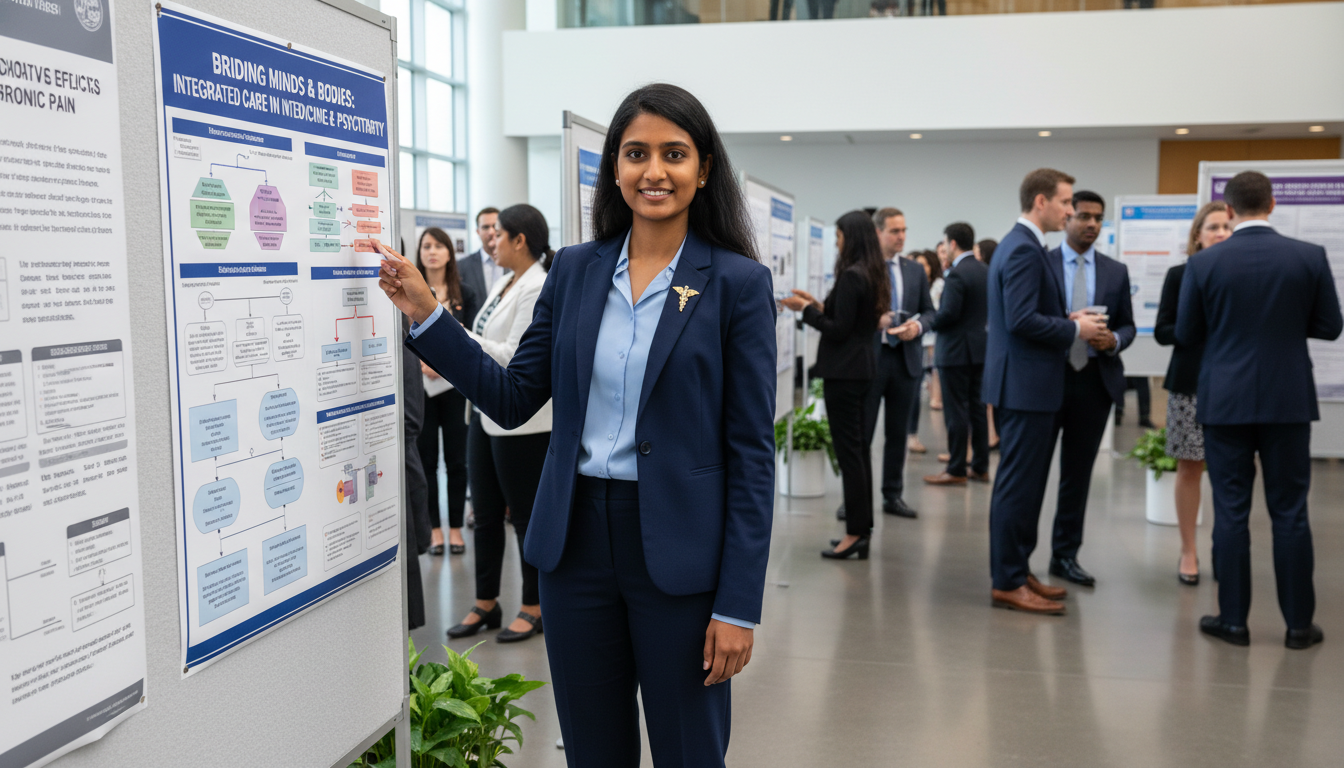
Your clinical section is where program directors look for evidence that you will function well as both an internist and a psychiatrist. This is especially critical for medicine psychiatry combined programs, which expect strong performance on general medicine services as well as psychiatric units.
3. Clinical Experience: Rotations and Beyond
Most MD graduates list only core rotations as part of ERAS, but on your residency CV you can selectively highlight:
- Sub-internships (Sub-Is) in Internal Medicine, Psychiatry, or related specialties
- Acting Internships in Consultation-Liaison (CL) Psychiatry, addictions, or psychosomatic medicine
- Electives bridging medicine and psychiatry (e.g., pain medicine, palliative care, sleep medicine, HIV psychiatry, geriatric med/psych, primary care mental health)
Format suggestion:
Clinical Clerkships (Selected)
Sub-internship in Internal Medicine, University Hospital – City, State | July – Aug 2023
- Managed 6–8 patients daily with complex multisystem disease
- Frequent collaboration with psychiatry for delirium, capacity evaluations, and substance use disorders
Consultation-Liaison Psychiatry Elective, Academic Medical Center – City, State | Oct 2023
- Performed psychiatric consultations on medically ill patients (ICU, oncology, cardiology)
- Presented cases in interdisciplinary rounds with medicine and surgery teams
Addiction Medicine Elective, VA Medical Center – City, State | Jan 2024
- Managed inpatient detox and outpatient MAT (buprenorphine, naltrexone)
- Integrated medical management (hepatitis C, HIV, COPD) with psychiatric care
When deciding how to build CV for residency, choose 4–7 key rotations (rather than all) that highlight:
- Breadth of internal medicine exposure
- Depth of psychiatric experience
- Direct relevance to integrated care
4. Additional Clinical and Work Experiences
If you worked as a:
- Clinical research coordinator
- Psychiatric technician
- Medical assistant
- Crisis hotline volunteer
- Scribe in ED, primary care, or psychiatry
…these experiences are extremely valuable on a med psych residency CV, particularly if they involve multidisciplinary teams.
Emphasize:
- Patient populations (e.g., serious mental illness with metabolic syndrome, medically complex patients with depression/anxiety)
- Interfacing across specialties (e.g., coordinating between PCP and psychiatrist)
- Skills that bridge medicine and psychiatry (motivational interviewing, risk assessment, chronic disease counseling)
Example entry:
Clinical Research Coordinator, Integrated Primary Care Clinic, City, State
Jan 2021 – June 2022
- Coordinated a collaborative care trial for depression in patients with uncontrolled diabetes and hypertension
- Administered PHQ-9 and GAD-7, tracked HbA1c and BP outcomes, and facilitated communication between internists, psychiatrists, and social workers
This kind of experience directly illustrates medicine psychiatry combined thinking and is stronger than generic “shadowing” statements.
Research, Scholarship, and Your Academic Story
Med psych residency programs often sit in academic centers that value scholarship. You do not need a long publication list, but you should demonstrate curiosity, follow-through, and ideally some connection to dual-discipline topics.
5. Research and Scholarly Projects
When building a medical student CV or MD graduate residency CV, organize research entries by relevance and status:
- Peer-reviewed Publications
- Manuscripts in Preparation or Under Review
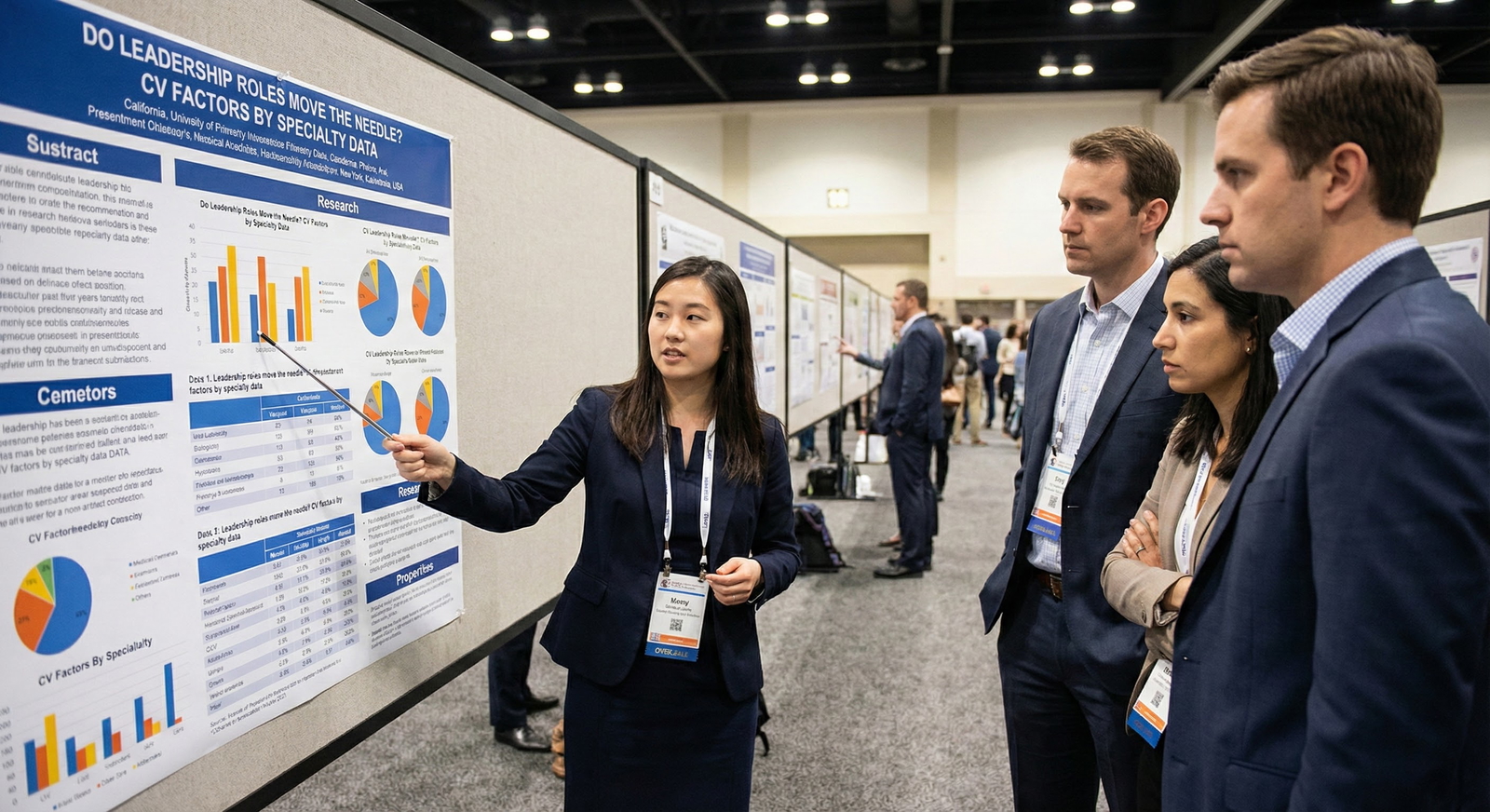
- Conference Presentations and Posters
- Quality Improvement (QI) and Scholarly Projects
For med psych residency, a QI project on improving metabolic monitoring in patients on antipsychotics may be as compelling as a basic science paper, if presented clearly.
Format example:
Research Experience
- Research Assistant – Psychosomatic Medicine Lab, Department of Psychiatry, University of X
May 2022 – Present
Mentor: Dr. A. Smith- Studied the impact of depression and anxiety on heart failure readmission rates
- Conducted chart reviews on 400+ patients, extracted data on PHQ-9 scores, BNP, ejection fraction
- Co-authored abstract accepted to the Academy of Psychosomatic Medicine annual meeting
Selected Presentations and Posters
- Doe J, Smith A. Depression Severity and 30-day Readmissions in Patients with Heart Failure. Poster presented at: Academy of Consultation-Liaison Psychiatry Annual Meeting; Nov 2023; Location.
If you have limited research, focus on:
- Case reports bridging medicine and psychiatry (e.g., delirium, catatonia, neurocognitive disorders, somatic symptom disorder with medical comorbidity)
- QI/QA projects (monitoring antipsychotic side effects, improving screening for depression in primary care, reducing ED boarding of psychiatric patients)
6. Aligning Research with Your Med-Psych Narrative
Your research does not have to be exclusively in psychiatry or internal medicine. However, connect it to your interests:
- A cardiology project? Emphasize the role of depression or adherence.
- A neurology project? Highlight cognition, behavior, or functional impact.
- Public health research? Stress population-level integration of behavioral and medical care.
In your residency CV and later in your personal statement, explicitly articulate how these projects informed your decision to pursue a med psych residency and shaped your clinical approach.

Leadership, Service, and Interdisciplinary Impact
Program directors look closely for leadership and service experiences that indicate resilience, teamwork, and a commitment to vulnerable populations—core traits for a medicine psychiatry combined physician.
7. Leadership and Teaching
In a dual-discipline field, leadership is not only about titles; it is about bridging communities and disciplines. Relevant roles might include:
- Psychiatry Interest Group or Internal Medicine Interest Group leadership
- Founder or coordinator of a mental health initiative in a primary care clinic
- Peer tutor for pharmacology, neuroanatomy, behavioral science, or clinical skills
- M1–M2 small group facilitator, standardized patient coordinator
Example:
Leadership and Teaching
Co-President, Medicine-Psychiatry Interest Group, University of X School of Medicine
Aug 2022 – May 2024- Organized joint case conferences featuring internists and psychiatrists discussing medically complicated psychiatric patients
- Coordinated mentorship between students and faculty in combined med-psych and CL psychiatry
Peer Tutor, Clinical Skills (Interviewing and Physical Exam)
Jan 2022 – Dec 2023- Taught M1 students integrated approaches to history-taking, including mental status assessment and substance use history
These experiences reassure programs that you can teach, supervise, and collaborate—skills essential for a 5-year med psych residency where seniors often guide teams across services.
8. Volunteer Experience and Service
When developing residency CV tips for med psych programs, the most impactful volunteer experiences are those involving:
- Homeless populations
- Substance use disorders
- Severe and persistent mental illness
- Chronic medical illness with psychosocial complexity
- Correctional populations
Format example:
Volunteer Experience
Volunteer, Street Medicine Outreach, City, State
Sept 2021 – Present- Provided basic medical screening (BP checks, blood glucose, wound care) to unhoused individuals
- Partnered with mental health teams to connect patients with addiction treatment and psychiatric care
Crisis Line Volunteer, Community Mental Health Center, City, State
Jan 2020 – Aug 2021- Completed 40 hours of training in crisis intervention and suicide risk assessment
- Managed calls involving both acute psychiatric distress and chronic medical comorbidities
Emphasize how these experiences strengthened:
- Your comfort with severe distress and complexity
- Your understanding of social determinants of health
- Your motivation for an integrated med psych career
Technical Polish: Format, Content Choices, and Common Pitfalls
A strong CV is not just what you include—it’s how you present it. MD graduate residency applications are often decided under time pressure, and program directors may scan your CV in under 60 seconds before deciding to read more.
9. Formatting Essentials for a Med-Psych Residency CV
- Length: Typically 2–4 pages for an MD graduate; aim for substance without padding.
- Font: Professional (Times New Roman, Arial, Calibri), 10–12 pt.
- Headings: Clear, bolded, consistent.
- Dates: Right-aligned or consistently placed; always use month/year format.
- Order: Reverse chronological within each section (most recent first).
Keep style consistent:
- Use the same name format on CV, ERAS, publications, and test registration.
- Standardize punctuation and tense (past tense for completed roles, present tense for ongoing roles).
- Avoid colorful graphics, headshots, and unusual formatting—professional and plain reads best.
10. Customizing Your CV for Medicine-Psychiatry Programs
Most MD graduates send the same CV to every program. For med psych residency, a mild level of customization can help:
- Reorder sections to place Medicine/Psychiatry experiences higher
- Bring up rotations, electives, and projects that most strongly reflect integrated care
- Tailor your personal statement and ERAS experiences to match the emphasis in your CV
You do not need a totally different document for each program, but you can have:
- A standard CV
- A med psych-focused version where integrated activities, CL psychiatry, addictions, and psychosomatic work are more prominent
11. Common Mistakes to Avoid
Unclear or inflated roles
- Avoid vague terms like “helped with,” “involved in” without specifics.
- Be concrete: “abstracted data for 180 charts,” “independently managed 6 patients under supervision.”
Overloading with non-relevant detail
- Your high school sports or random part-time jobs rarely help unless directly tied to resilience or patient care.
- Mention non-medical work selectively if it demonstrates leadership, hardship, or unique skills.
Inconsistency with ERAS
- Program directors cross-check your CV with ERAS; mismatched dates and titles can raise concerns about attention to detail or honesty.
Typos and formatting errors
- These signal carelessness—and in a 5-year demanding med psych residency, that can be a red flag.
Not highlighting why med-psych specifically
- A generic internal medicine or psychiatry CV that doesn’t show integrated interests may make programs question your commitment to dual training.
Putting It All Together: Strategy and Timeline for MD Graduates
If you are an MD graduate preparing for the allopathic medical school match in Medicine-Psychiatry, use this timeline-oriented approach:
12. M3 Year (or Early Clinical Phase)
- Track experiences as they happen—keep a running document with dates, roles, supervisors, and specific tasks.
- Seek electives that bridge medicine and psychiatry: CL, addictions, geriatrics, primary care mental health.
- Start a small scholarly project (case report, QI, or short retrospective chart review) in a med-psych-relevant area.
13. M4 Year / Application Year
- Choose sub-internships strategically: at least one in internal medicine, one in psychiatry or CL psychiatry if possible.
- Finalize and format your med psych residency-focused CV by late summer.
- Cross-check your CV with ERAS entries for consistency.
- Share your CV with:
- A med psych faculty or mentor
- A general medicine or psychiatry attending
- A peer who has successfully matched
Ask specifically: “Does this CV clearly communicate that I am a strong candidate for Medicine-Psychiatry combined training?”
14. After Graduation (MD Graduate Gap Time)
If you are applying after graduation:
- Include any post-graduate clinical work (e.g., research fellow, hospitalist scribe, mental health counselor, telehealth coordinator).
- Maintain recent clinical exposure to avoid large gaps; even part-time relevant work strengthens your application.
- Update your CV regularly with ongoing teaching, volunteering, or certifications (e.g., buprenorphine X-waiver if available, mental health first aid, motivational interviewing workshops).
FAQs: CV Building for Medicine-Psychiatry MD Graduates
1. How should I balance medicine vs psychiatry content in my med psych residency CV?
Aim for a roughly equal or slightly medicine-heavy balance, since you will need strong internal medicine skills to succeed. However, ensure there is unmistakable evidence of sustained psychiatry interest: electives, research, volunteering, or leadership specifically in mental health. The key is that both sides feel robust, not that they are numerically identical.
2. Do I need research to be competitive for Medicine-Psychiatry programs?
Research is helpful but not mandatory. Many successful applicants have limited research but strong clinical and service records showing integrated interest. If you have little research, emphasize QI projects, case reports, or sustained clinical involvement with complex medically and psychiatrically ill populations. If you do have research, even in other areas, show its relevance to your med-psych interests where possible.
3. Should I list all of my clinical rotations on my residency CV?
No. ERAS already captures your core clerkships. On your CV, selectively highlight sub-internships, electives, and experiences that are most relevant to med psych residency—particularly those involving integrated care, CL psychiatry, addiction, geriatrics, or chronic medical illness with psychiatric comorbidity.
4. How is a medical student CV different from the CV I submit as an MD graduate for residency?
The core structure is similar, but an MD graduate residency CV should be more polished, strategically organized, and explicitly aligned with your target specialty. For medicine psychiatry combined programs, your CV should no longer be a generic medical student CV—it must clearly signal your fit for dual training through your choice of experiences, their descriptions, and the way you frame your academic and service trajectory.
By approaching your CV as a coherent narrative of your path toward integrated care, you transform it from a static list into a compelling case for why you belong in a Medicine-Psychiatry residency. Focus on relevance, clarity, and authenticity, and ensure every section reinforces your readiness for the unique challenge of med psych training.