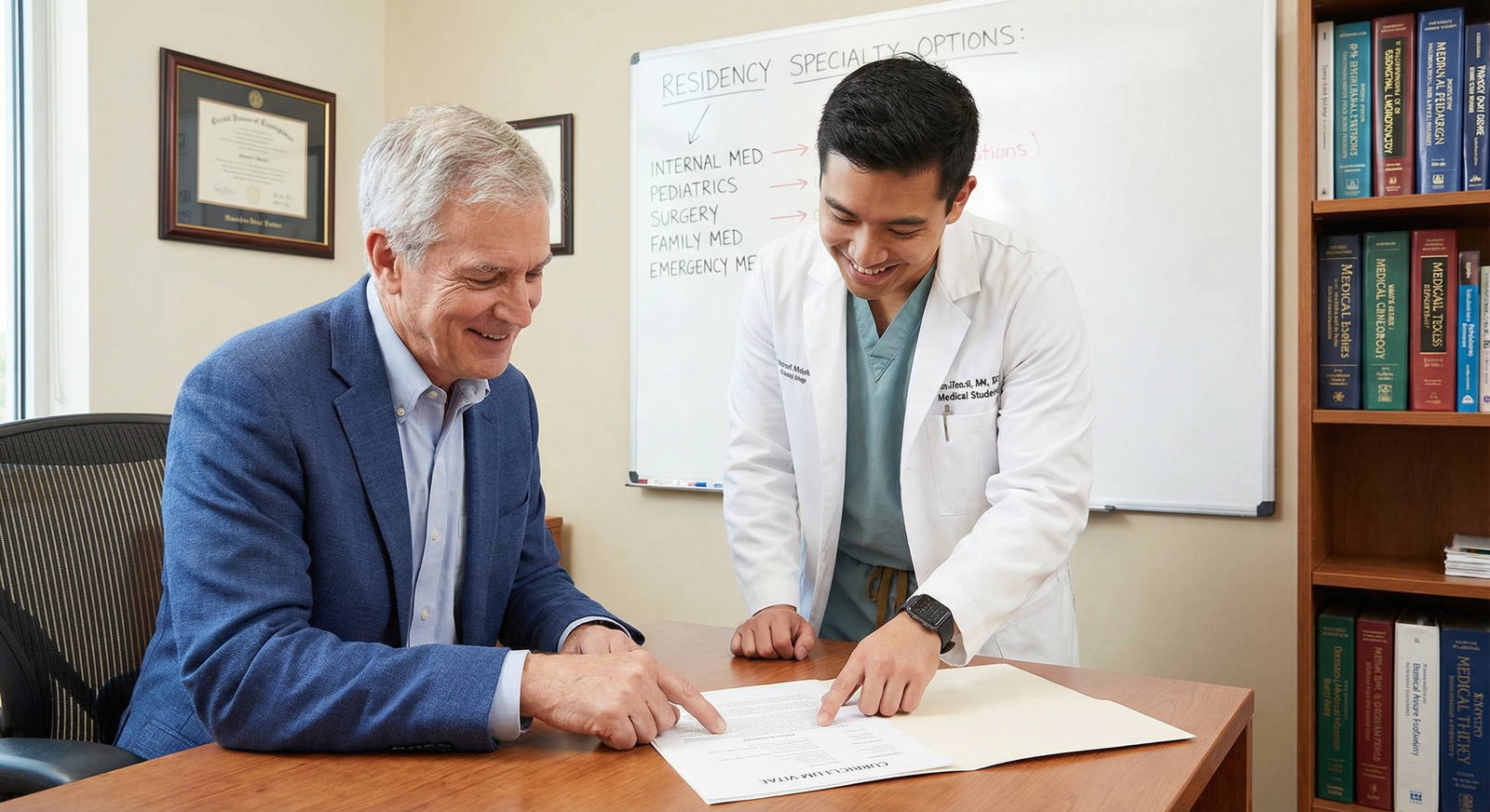
Understanding the Role of Your CV in the IM Match as a Non-US Citizen IMG
For a non-US citizen IMG aiming for an internal medicine residency, your CV is more than a list of experiences—it’s a strategic document that shapes how program directors perceive you in seconds. Unlike US graduates, foreign national medical graduates are often evaluated with closer scrutiny: visa needs, training background, and perceived readiness for the US healthcare system all come into play.
Your CV needs to:
- Communicate that you are clinically ready for an internal medicine residency
- Demonstrate that you understand the expectations of US training
- Highlight a clear and consistent interest in internal medicine
- Show that any “gaps” in your trajectory are explained and productive
- Support your ERAS application, not contradict or dilute it
In competitive environments, programs often skim CVs quickly, especially during pre-interview screening. A well-structured, targeted CV increases your chances of getting to the next step: an invitation to interview.
Key differences for non-US citizen IMGs:
- You are often compared to applicants with US clinical experience and US medical school training.
- Visa status (J-1 vs H-1B) may influence which programs consider you; your CV should show you are worth the additional paperwork.
- Any non-linear path (e.g., working, research years, exam delays) needs to be framed as deliberate and growth-oriented.
Your goal is to transform your CV from “just another IMG document” into a clear, polished proof that you will be a reliable, teachable, and productive internal medicine resident.
Core Structure: How to Organize Your Residency CV Effectively
Your medical student CV for residency should be clear, consistent, and easy to scan. While ERAS has its own structured format, you should still maintain a full CV document (PDF) for:
- Emailing to potential research mentors or letter writers
- Networking with faculty, program coordinators, and alumni
- Uploading for observerships, externships, or preliminary screening
- Backup documentation if requested by a program
A typical, well-organized internal medicine residency CV for a non-US citizen IMG should follow this order:
- Contact Information & Identification
- Education
- USMLE/Exams
- Clinical Experience
- Research & Publications
- Teaching & Leadership
- Quality Improvement / Audit Projects
- Honors & Awards
- Conferences, Presentations & Courses
- Volunteer & Community Service
- Skills (Clinical, Technical, Language, IT)
- Professional Memberships
- Personal Interests (optional but recommended)
1. Contact Information & Identification
Include:
- Full name (as on official documents)
- Email (professional: firstname.lastname@…)
- Phone number (with country code)
- Current location (city, country)
- Citizenship / Visa status (for IM match relevance, optional but often helpful)
- LinkedIn profile (if complete and professional)
Example (good):
- Ahmed Khan, MD
- Email: ahmed.khan.med@gmail.com
- Phone: +971-50-XXXXXXX
- Current Location: Dubai, United Arab Emirates
- Citizenship: Pakistan | Seeking J-1 sponsorship
- LinkedIn: linkedin.com/in/ahmedkhanMD
Avoid adding:
- Date of birth, marital status, religion, photo (unless specifically requested by a program or institution, which is rare in the US system).
2. Education
List in reverse chronological order:
- Medical school name, city, country
- Degree (e.g., MBBS, MD), months/years attended
- Graduation date (or expected date)
- Class rank or GPA if strong and clearly understandable
- Thesis title (if you had one)
Example:
- MBBS, King Edward Medical University, Lahore, Pakistan
2015 – 2021
Graduated with Distinction in Internal Medicine (Top 5%)
If you have another degree (e.g., MSc, MPH), place it above your medical degree if it’s more recent.
3. USMLE and Other Exams
As a foreign national medical graduate, exam performance significantly shapes how programs perceive your academic readiness.
Include:
- USMLE Step 1, Step 2 CK, Step 3 (if taken)
- Test date (month/year) and score (if strong and helpful)
- ECFMG certification status
Example:
- USMLE Step 1 – Passed, May 2022, 3-digit score: XXX
- USMLE Step 2 CK – Passed, January 2023, 3-digit score: XXX
- USMLE Step 3 – Scheduled for March 2026
- ECFMG Certification – Anticipated June 2025
You may omit scores if they are below typical IM match cutoffs, but be consistent with what you share in ERAS.

Clinical Experience: The Heart of an Internal Medicine Residency CV
For an internal medicine residency, your clinical section is often the most important for program directors. It answers: “Can this applicant function safely and effectively in a busy inpatient and outpatient setting?”
4. Core Clinical Experience
Start with your core medical school rotations:
- Internal medicine, surgery, pediatrics, OB/GYN, psychiatry, family medicine, etc.
- Include duration, site, and any notable responsibilities.
However, avoid listing every single rotation as separate long entries; summarize them concisely. Highlight internal medicine-related rotations in slightly more detail.
Example (concise core rotations):
Clinical Clerkships – King Edward Medical University Teaching Hospitals, Lahore, Pakistan (2018 – 2020)
- Internal Medicine (16 weeks): Managed patient histories, daily progress notes, and supervised physical exams; participated in morning reports and case presentations.
- Cardiology (8 weeks): Assisted with pre- and post-procedure assessments; observed echocardiograms and catheterizations.
- Pulmonology (4 weeks): Evaluated patients with COPD, asthma, and TB; participated in multidisciplinary rounds.
- Other rotations: General Surgery (12 weeks), Pediatrics (12 weeks), Obstetrics & Gynecology (12 weeks), Psychiatry (4 weeks).
5. US Clinical Experience (USCE)
For a non-US citizen IMG in internal medicine, US clinical experience can be a major differentiator, especially hands-on experience (sub-internships, externships) versus observational (observerships).
Create a separate subheading:
US Clinical Experience – Internal Medicine
For each experience, include:
- Position (e.g., Extern, Sub-intern, Observer, Research Intern)
- Specialty and setting (e.g., Internal Medicine – Inpatient, Outpatient)
- Institution, city, state
- Dates (month/year)
- 3–5 bullet points emphasizing responsibilities relevant to internal medicine residency
Example:
Clinical Extern, Internal Medicine – Inpatient Service
St. Mary’s Hospital, New Haven, CT, USA | July – September 2024
- Performed supervised history and physical examinations on 10–12 patients per day, focusing on common internal medicine diagnoses (CHF, COPD, pneumonia, diabetes complications).
- Wrote daily progress notes and admission orders in the EMR (Epic) under attending supervision.
- Presented new admissions during morning rounds and participated in clinical decision-making with residents and attendings.
- Assisted in medication reconciliation and discharge planning with pharmacists and case managers.
For observerships, be honest about your role:
Observer, Internal Medicine – Outpatient Clinic
XYZ Medical Center, Chicago, IL, USA | October – December 2023
- Observed internal medicine attendings during high-volume outpatient clinics (18–22 patients/day).
- Participated in case discussions focusing on hypertension, diabetes, and hyperlipidemia management.
- Reviewed patient charts and lab results with preceptor to strengthen understanding of chronic disease follow-up.
6. Non-US Clinical Experience After Graduation
If you practiced as a physician in your home country before applying for residency:
- Frame your role clearly (e.g., House Officer, Medical Officer, Resident in Internal Medicine).
- Emphasize continuity of internal medicine exposure.
- Highlight teaching, leadership, and QI responsibilities.
Example:
Medical Officer, Internal Medicine
National Hospital, Lagos, Nigeria | January 2022 – June 2023
- Managed 20–25 inpatients daily under consultant supervision, including patients with sepsis, heart failure, and diabetic emergencies.
- Conducted admissions, wrote daily orders, and coordinated multidisciplinary care with nursing staff and specialty teams.
- Supervised medical students during bedside rounds and clinical skills teaching.
- Led a small QI project to improve adherence to DVT prophylaxis protocols on the medical ward.
Research, Leadership, and “Academic Fit” for Internal Medicine
Internal medicine programs value academic curiosity, attention to evidence-based practice, and a habit of lifelong learning. Your CV should reflect this mindset.
7. Research and Scholarly Work
You do not need multiple first-author PubMed-indexed papers to match internal medicine, but you do need to show engagement with scholarly activity. Organize research into:
- Peer-reviewed publications
- Abstracts and posters
- Ongoing projects
Format each entry consistently:
Publications Example:
Khan A, Smith J, Patel R. “Outcomes of Heart Failure Patients Readmitted Within 30 Days: A Community Hospital Cohort Study.” Journal of Community Cardiology. 2023; 15(2): 123–130.
If your role was minor, still clarify it honestly in a bullet when needed (not in the citation, but possibly in the description of the project):
- Assisted with data collection, chart review, and initial statistical analysis.
Abstracts & Posters Example:
Khan A, Lee M. “Impact of Early Ambulation on Length of Stay in Pneumonia Patients.” Poster presented at the American College of Physicians (ACP) Illinois Chapter Meeting, Chicago, IL, 2023.
If you have ongoing research:
Ongoing Research Projects:
- “Evaluation of Telemedicine Follow-Up in Diabetes Management in a Low-Resource Setting” – Data collection completed; manuscript in preparation.
Be careful not to inflate or misrepresent your role. US programs are sensitive to authenticity, especially for IMGs.
8. Quality Improvement (QI) and Audit Projects
Internal medicine is heavily oriented toward systems-based practice and continuous improvement. QI projects are particularly valued.
Example QI Entry:
Quality Improvement Project – DVT Prophylaxis Compliance
Internal Medicine Ward, National Hospital, Lagos, Nigeria | 2022
- Led a 3-member team to audit DVT prophylaxis prescription patterns in 100 admitted medical patients.
- Identified a 35% under-utilization of prophylaxis in moderate-risk patients.
- Implemented checklist reminders during admission; repeat audit showed 20% relative improvement.
Frame QI with:
- Problem identified
- Intervention implemented
- Measurable outcomes (even if small-scale)
9. Teaching, Mentoring, and Leadership
Internal medicine is a teaching-heavy specialty. Residents are expected to mentor students, lead work rounds, and eventually supervise juniors.
Include:
- Teaching assistant roles
- Peer-tutoring for underclassmen, especially in medicine
- Leading journal clubs, case presentations
- Organizing exam review sessions or OSCE prep
Example:
Small Group Tutor – Clinical Skills & Internal Medicine
King Edward Medical University, Lahore, Pakistan | 2019 – 2020
- Led weekly 2-hour sessions for 8 third-year medical students focusing on cardiovascular and respiratory physical examination.
- Designed and graded short clinical scenario quizzes to reinforce diagnostic reasoning.
Leadership roles can include:
- Class representative
- Student association leadership
- Committee membership for curriculum or exam reform
- Organizer of health camps or conferences

Tailoring Your CV Specifically for Internal Medicine (Not Just “Any Residency”)
Many non-US citizen IMGs create a generic CV that could be used for any specialty. Internal medicine program directors, however, are looking for specific signals.
10. Emphasize Long-Term Interest in Internal Medicine
Scatter internal medicine–oriented experiences throughout your CV:
- Elective rotations in cardiology, endocrinology, nephrology, geriatrics
- Projects dealing with chronic disease management, hospital medicine, or primary care
- Research in cardiology, pulmonology, general internal medicine, or epidemiology
- Volunteer work related to non-communicable diseases (diabetes, hypertension, etc.)
Weak approach:
“Clinical rotations: internal medicine, surgery, pediatrics, etc.”
Stronger approach:
“Focused internal medicine exposure through multiple rotations in cardiology, pulmonology, and endocrinology; led a QI project on heart failure readmissions and completed a research project on diabetes follow-up.”
11. Quantify Your Impact
Residency CV tips often ignore one crucial element: numbers. Quantification makes your contributions more credible.
Examples:
- “Managed 15–20 inpatients per day under supervision.”
- “Reduced door-to-antibiotic time by 15 minutes in sepsis protocol audit.”
- “Taught weekly sessions for a group of 10–12 students for 6 months.”
- “Screened more than 300 adults for hypertension and diabetes during community outreach.”
12. Explain Gaps and Transitions Proactively (But Briefly)
Non-US citizen IMGs often have:
- Gaps after graduation due to exam preparation
- Periods of non-clinical work or research
- Moves between countries
Address them in your CV by framing them as purposeful intervals:
Example:
Independent Study and USMLE Preparation
Lahore, Pakistan | July 2021 – April 2022
- Dedicated full-time period to preparation for USMLE Step 1 and Step 2 CK.
- Completed >1,500 practice questions in UWorld; participated in online case discussion groups focusing on internal medicine.
This helps programs see that your “gap” was structured and relevant, not passive or unexplained.
Practical Steps: How to Build Your CV for Residency from Now On
If you are still a medical student or early graduate, you can deliberately build experiences that strengthen your residency CV over time.
13. Year-by-Year Strategy (Example)
If you are pre-final year (clinical years just starting):
- Seek more exposure to internal medicine subspecialties (cardiology, nephrology, infectious disease).
- Volunteer in hospital-based or community programs focusing on chronic disease.
- Start tracking your activities now in a simple spreadsheet (dates, roles, contact persons, what you did).
If you are final year / recent graduate:
- Secure at least 1–2 strong internal medicine rotations (home country or US if possible).
- Look for structured observerships or externships in the US.
- Join or start a small QI or audit project in an internal medicine ward.
- Attend local or online internal medicine / ACP / specialty conferences, even if only as a participant.
If you are 1–3 years post-graduation:
- Make sure you are clinically active or in research, not idle.
- If clinical job opportunities are limited, emphasize any part-time clinical work, telemedicine, or supervised systems.
- Actively seek mentors—consultants or attendings—who could later write detailed letters and validate your CV entries.
14. Formatting and Style: Making Your CV Look Professional
Your content is crucial, but presentation also matters. Many strong IMGs lose ground because their CV is cluttered or unpolished.
Key formatting rules:
- Use a clean, readable font (e.g., Times New Roman, Calibri, 11–12 pt).
- Maintain consistent dates format (e.g., “June 2022 – August 2023” everywhere).
- Use reverse chronological order within each section.
- Avoid large paragraphs; use bullet points for responsibilities and achievements.
- Keep length around 2–4 pages for most IM applicants (more is okay if you have substantial research, but avoid padding).
Language tips:
- Start bullet points with strong action verbs: “Led, Managed, Conducted, Analyzed, Coordinated, Initiated.”
- Avoid vague phrases: “helped with,” “was involved in.” Replace with specific tasks.
- Use American English spelling if applying to US programs (e.g., “anemia” not “anaemia”).
Example transformation:
Weak: “I was involved in taking histories and examining patients.”
Strong: “Conducted supervised history-taking and physical examinations on 8–10 new internal medicine admissions per week, focusing on cardiovascular and respiratory complaints.”
15. Aligning Your CV With ERAS and Your Personal Statement
Programs will see your ERAS application first. Your standalone CV should:
- Match dates and positions exactly with ERAS (no contradictions).
- Use similar language for key experiences but you can expand slightly in the CV.
- Reinforce, not copy, the themes in your personal statement (interest in IM, continuity of care, academic mindset).
If your personal statement emphasizes a passion for hospital medicine and QI, your CV should clearly show projects, roles, and experiences that support that narrative.
Frequently Asked Questions (FAQ)
1. How is a residency CV different from a regular job CV?
A residency CV for the IM match focuses on academic and clinical readiness, not general job skills. It emphasizes medical education, clinical experience, research, QI, teaching, and leadership. It is structured to match what internal medicine programs value: evidence of safe clinical practice, teachability, reliability, and interest in lifelong learning. Non-medical jobs or unrelated skills should be included only if they demonstrate transferable strengths (e.g., leadership, communication), and even then, kept brief.
2. As a non-US citizen IMG, do I need US clinical experience on my CV to match internal medicine?
US clinical experience is not an absolute requirement for every internal medicine program, but it significantly increases your chances, especially in community and university-affiliated programs. Hands-on roles (externships, sub-internships) are the most valued, followed by observerships. If you lack USCE, your CV must be strong in home-country clinical work, research, and recommendations from recognized internal medicine faculty. You should clearly frame your prior practice and show familiarity with evidence-based internal medicine.
3. How many pages should my internal medicine residency CV be?
For most non-US citizen IMGs, 2–4 pages is appropriate. If you have substantial research, publications, or several years of clinical practice, going slightly longer is acceptable, but avoid unnecessary repetition or listing extremely minor activities. Quality and clarity are more important than length. Program directors often skim quickly, so well-organized headings and concise bullet points matter more than the total page count.
4. What are the biggest CV mistakes non-US citizen IMGs make when applying to internal medicine?
Common mistakes include:
- Using a generic, non-specialty-focused CV that doesn’t highlight internal medicine interests.
- Poor formatting, inconsistent dates, and typos that give an impression of carelessness.
- Overstating roles (especially in research or USCE), which can be exposed during interviews or by letter writers.
- Leaving unexplained gaps without framing them as purposeful preparation or study time.
- Failing to quantify impact or responsibilities, making experiences sound vague and unimpressive.
Avoid these by being honest, precise, and deliberate in how you present your trajectory, with a clear emphasis on internal medicine.
By building your CV thoughtfully—highlighting internal medicine–relevant experiences, quantifying your impact, and maintaining impeccable consistency—you strengthen your position as a non-US citizen IMG in a competitive internal medicine residency landscape. Your CV becomes not just a document, but a clear, logical story: where you started, how you have grown, and why you are ready to contribute meaningfully to an internal medicine residency program in the United States.