Understanding the Unique CV Needs of a US Citizen IMG in Clinical Informatics
US citizen IMGs occupy a distinctive space in the residency and fellowship landscape, and that uniqueness is even more pronounced in a niche field like clinical informatics. You’re navigating at least three overlapping identities:
- US citizen (no visa issues, but still competing with US grads)
- International medical graduate (training abroad, variable school reputation)
- Aspiring informatician (tech-leaning, systems-focused, often non‑traditional)
Because of this, your CV must do more than present a list of experiences. It needs to:
- Neutralize concerns about international training.
- Demonstrate readiness for US clinical practice.
- Show clear alignment and sustained interest in clinical informatics.
- Translate any “non-traditional” tech or data experiences into recognizable value for residency programs and, eventually, a clinical informatics fellowship.
In other words, your medical student CV is not just a historical document; it is a targeted marketing tool designed to show residency and informatics faculty that you are:
- Clinically competent
- Technologically fluent
- System‑oriented and data‑literate
- Able to function in US healthcare and health IT environments
This article walks you through how to build a CV for residency with a specific focus on clinical informatics, tailored to the perspective of a US citizen IMG or American studying abroad.
Core Principles of a Strong Residency CV for Clinical Informatics
Before diving into sections, formats, and bullet phrasing, anchor your strategy to a few core principles that matter to program directors in informatics-friendly programs and future clinical informatics fellowship directors.
1. Clarity and Structure Over Creativity
Clinical informatics is about clean data, logical structure, and interoperability. Your CV should reflect those same values:
- Use clear headings (Education, Clinical Experience, Research, Quality Improvement, Teaching, Leadership, Technical Skills, etc.).
- Keep formatting consistent (same bullet style, dates aligned, same font size).
- Avoid graphics, tables, or creative layouts that can break in ERAS or PDF viewers.
Residency CV tips: If a busy program director can skim your CV in 60–90 seconds and leave with a clear story of who you are and why you fit clinical informatics, you’ve done it correctly.
2. Show a Coherent Narrative
You are competing with applicants whose path may look more straightforward. As a US citizen IMG, the best way to compete is through narrative coherence:
- You studied abroad → you sought US‑based clinical exposure
- You’re interested in informatics → you took roles related to health IT, data, or workflows
- You see yourself in a clinical informatics fellowship → your projects, electives, and leadership experiences clearly build toward that goal
Your CV should read like a consistent, step‑wise progression toward becoming a physician who improves healthcare through data, technology, and systems thinking.
3. Translate Technical & International Experiences into Clinical Language
US program directors might not immediately recognize the value of certain foreign or technical roles. Use bullet points that translate those experiences into:
- Patient outcomes
- Workflow improvement
- Safety and quality metrics
- Education and communication
Example transformation:
- Weak: “Worked on SQL database for hospital.”
- Strong: “Developed SQL queries to generate weekly reports on antibiotic usage across 4 inpatient units, supporting antimicrobial stewardship decisions for ~150 beds.”
This translation shows relevance to clinical informatics and to front-line clinical work.

Essential Sections of a Strong Clinical Informatics–Focused CV
Below is a recommended structure for a US citizen IMG CV targeting informatics‑friendly residencies and, down the line, a clinical informatics fellowship. Adjust section order based on your strengths, but keep the flow logical.
1. Contact Information and Professional Summary (Optional but Powerful)
Contact Info:
- Full name (as it appears in ERAS and legal documents)
- Email (professional, e.g., firstname.lastname@)
- US phone number (ensure voicemail is professional)
- Current location (city, state; can be US or overseas)
- LinkedIn and/or personal website (only if curated and up‑to-date)
Professional Summary (2–3 lines, optional)
Not always necessary, but for a US citizen IMG with a clinical informatics interest, this can quickly orient readers.
Example:
US citizen IMG and final-year medical student with extensive experience in EHR optimization, clinical data analysis, and quality improvement. Completed multiple US clinical rotations and contributed to a multi‑site informatics project on medication safety dashboards. Seeking internal medicine residency with strong health IT training and opportunities in clinical informatics.
2. Education
List in reverse chronological order:
- Medical school: name, country, degree, expected/actual graduation date
- Undergraduate: major(s), minor(s), institution, degree, graduation date
- Relevant graduate degrees (e.g., MS in Biomedical Informatics, MPH, MS in Data Science)
For Americans studying abroad, include brief clarifiers when helpful:
MD Candidate, 2026
University of X, School of Medicine, City, Country
(US citizen IMG; ECFMG certification in progress)
Include honors, thesis titles, or informatics‑oriented coursework if they add clear value:
- Honors: “Dean’s List (3 semesters)”
- Selected coursework (only if meaningful to informatics): Health Informatics, Biostatistics, Clinical Epidemiology, Data Science for Health
3. US Clinical Experience and International Clinical Rotations
As a US citizen IMG, your US clinical experience is scrutinized carefully. Separate it clearly:
A. US Clinical Experience
Create a dedicated subsection such as: United States Clinical Experience (USCE)
For each rotation:
- Site name, city, state
- Type (Elective/Sub-internship/Observership/Externship)
- Dates
- Specialty and team description
- Brief bullets emphasizing: responsibility level, EHR use, workflows, and any informatics exposure
Example entry:
Internal Medicine Sub‑Internship
University Hospital, Boston, MA — 09/2024–10/2024
- Managed 5–7 patients daily under supervision, including admission H&Ps, order entry, and progress notes in Epic EHR.
- Participated in daily multidisciplinary huddles focusing on discharge planning and readmission metrics.
- Collaborated with an informatics liaison to optimize flowsheets for sepsis screening on the teaching service.
B. International Clinical Rotations
List similarly, but emphasize aspects that translate well to US practice:
- Volume, acuity, exposure to diverse pathology
- Responsibility level
- Any digitization, EHR, or telemedicine exposure
- System challenges you navigated (e.g., resource limitations, workflow redesign)
Example:
Clinical Clerkship, Internal Medicine
Teaching Hospital, City, Country — 01/2024–03/2024
- Performed focused histories and physicals on ~10 patients/day with high burden of chronic disease.
- Assisted with transition from paper to hybrid electronic record system; helped develop structured note templates that reduced documentation time for interns.
4. Research, Quality Improvement, and Informatics Projects
This is where your interest in clinical informatics should stand out. Combine traditional research, QI, and informatics under one heading or use subheadings:
- Research Experience
- Quality Improvement and Patient Safety Projects
- Clinical Informatics and Health IT Projects
A. Research Experience
Prioritize:
- Projects with data analysis, EHR-based cohorts, predictive modeling, or outcomes research.
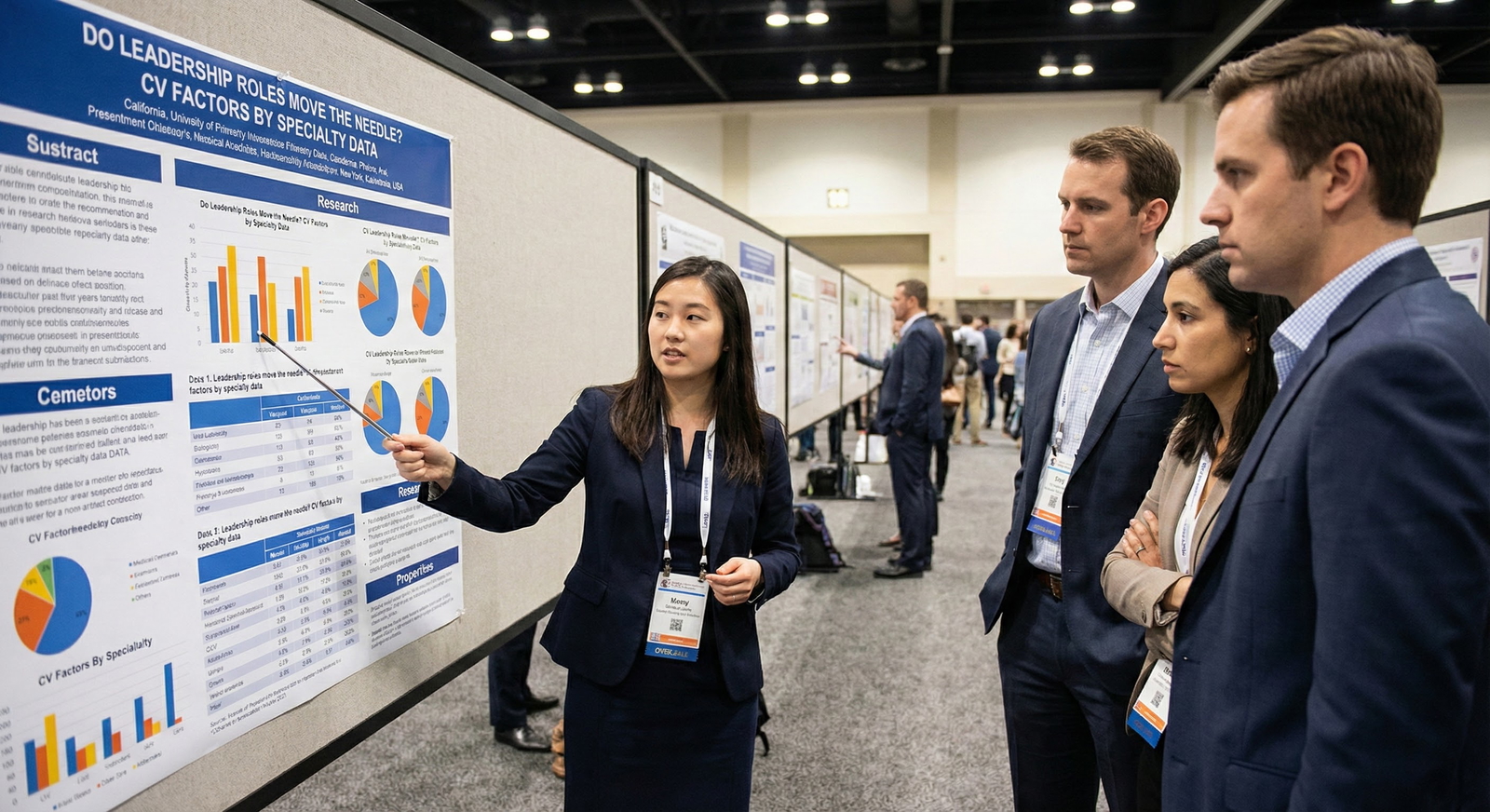
- Works that resulted in abstracts, posters, or publications.
Bullet phrasing:
- Focus on your role: data cleaning, analysis, protocol design, EHR data extraction, etc.
- Mention tools (R, Python, SQL, REDCap, Excel, Tableau) very briefly.
- Show impact: what question did you answer and why it mattered.
Example:
Research Assistant, Sepsis Outcomes Study — 07/2023–03/2024
Department of Medicine, University Hospital, City, Country
- Extracted and curated EHR data on 1,200 adult sepsis admissions using SQL queries.
- Performed logistic regression analysis in R to identify factors associated with delayed antibiotic administration.
- Co‑authored abstract accepted to the Society of Critical Care Medicine Annual Congress 2024.
B. Quality Improvement & Patient Safety
For clinical informatics, QI often overlaps with data, workflow redesign, and dashboards. Present QI projects with:
- Problem statement
- Intervention
- Measured outcome
Example:
QI Project: Reducing Missed Lab Results in Outpatient Clinic — 02/2023–09/2023
- Implemented EHR‑based notification rules and a standardized results inbox workflow for attending physicians.
- Created a weekly report of unacknowledged labs >72 hours.
- Reduced unacknowledged labs from 14% to 4% over 6 months.
C. Clinical Informatics and Health IT Projects
This section is critical if you aspire to a clinical informatics fellowship and health IT training. Include:
- EHR optimization work (order sets, note templates, CDS tools)
- App development for patient education or workflow support
- Data visualization dashboards for clinicians or administrators
- Interoperability or data migration tasks
- Participation in hospital informatics committees
Example entry:
Clinical Informatics Student Volunteer — 06/2023–12/2023
Community Hospital, New Jersey (Remote & On‑site)
- Worked with the hospital’s clinical informatics team to map current admission workflows and identify EHR pain points.
- Developed mock-ups for redesigned order sets for heart failure admissions using Figma, reducing clicks per admission by ~25% in pilot testing.
- Assisted with user acceptance testing (UAT) for a new medication reconciliation interface.
This kind of experience powerfully signals that you are serious about informatics and understand the real-world clinical context.
Highlighting Technical Skills and Health IT Experience
The line between “too technical” and “appropriately technical” can be tricky. Residency programs are not hiring software engineers; they are training clinicians with strong system literacy. Focus on:
- Tools that physicians reasonably encounter in a clinical informatics fellowship
- Skills that improve data-driven decision-making and system improvement
- Experiences that show you can bridge clinicians and IT teams
1. Technical Skills Section
Create a short, focused subsection such as Technical and Informatics Skills. Avoid long lists of buzzwords.
Organize by category:
Programming & Data Analysis:
- Python (pandas, NumPy, basic visualization), R (ggplot2), SQL
Data & Visualization Tools:
- Excel (advanced functions, pivot tables), Tableau, Power BI, REDCap
EHR and Clinical Systems:
- Experience using Epic, Cerner, or local EHR systems
- Familiarity with order entry, documentation templates, flowsheets, and reporting
Other Health IT Exposure (if applicable):
- Basic understanding of HL7/FHIR concepts
- Experience with clinical decision support logic or rule-building (even in a shadow/learning context)
Avoid overstating expertise. Use realistic descriptors such as “basic,” “intermediate,” or “working knowledge.” Overclaiming can hurt you in interviews.
2. Show How Tech Skills Were Used Clinically
Instead of just listing “Python” or “SQL,” show in your experiences how you applied them:
- “Used Python to clean and analyze a dataset of 2,000 ED encounters to study admission prediction factors.”
- “Wrote simple SQL queries to retrieve data from our hospital’s data warehouse for a QI project on ED wait times.”
This bridges the gap between a medical student CV and a health IT training trajectory.
Leadership, Teaching, and Extracurriculars with an Informatics Lens
Programs want physicians who can lead multidisciplinary projects, teach others, and drive change. For someone eyeing clinical informatics, leadership and communication are essential.
1. Leadership Roles
Include:
- Class representative, academic society leadership, student informatics or tech clubs.
- Roles in committees related to curriculum, quality improvement, or IT transitions.
Example:
Co‑Founder & President, Medical Informatics Student Group — 09/2022–Present
- Organized a 4‑part workshop series on EHR usability, clinical decision support, and data literacy attended by 60+ students.
- Partnered with hospital IT to host shadowing opportunities with clinical informaticians.
- Led a team of 6 to coordinate a hackathon focused on digital solutions to medication adherence.
2. Teaching and Mentoring
As future clinical informaticians frequently teach clinicians about new systems:
- Highlight any teaching roles (anatomy TA, peer tutor, OSCE facilitator).
- Emphasize any sessions you led on EHR use, data interpretation, or digital tools.
Example:
Peer Tutor, Evidence-Based Medicine & Biostatistics — 01/2023–06/2023
- Tutored 8 first-year students in basic statistics, critical appraisal, and interpretation of clinical research data.
- Developed simple R scripts and Excel templates to help students calculate confidence intervals and odds ratios.
3. Extracurricular Activities and Non-Clinical Work
For a US citizen IMG or American studying abroad, non-clinical roles may be especially important in showing your connection to US healthcare or technology:
- Work as a medical scribe, EHR trainer, IT support in a clinical setting, or data analyst.
- Remote roles with US hospitals or telehealth groups.
- Freelance or volunteer projects building simple clinical tools, dashboards, or educational resources.
Example:
Medical Scribe (Remote; US-based Telehealth Group) — 06/2022–12/2022
- Documented 15–20 telehealth visits/day in the EHR for internal medicine providers.
- Collaborated with the lead physician to standardize documentation templates for chronic disease follow-up visits.
Tailoring Your CV to Informatics-Friendly Residencies and Future Fellowships
Your CV is not static. For informatics, strategic tailoring is essential.
1. Align with Program Strengths
If a residency emphasizes quality improvement, population health, or EHR projects:
- Move QI and informatics projects higher in your CV.
- Emphasize any experience using data to drive change.
If a program has a known clinical informatics fellowship:
- Highlight your informatics projects, technical and EHR skills, and leadership in related groups.
- Consider adding a one-line objective: “Long-term goal: pursue a clinical informatics fellowship and lead EHR-based quality initiatives.”
2. Anticipate the Clinical Informatics Fellowship Trajectory
Even if you are only applying to residency now, future clinical informatics fellowship directors will ask:
- Have you demonstrated sustained interest in informatics over time?
- Have you engaged with health IT training, even informally?
- Have you produced any scholarship (abstracts, posters, small publications) related to data, systems, or digital health?
To support that trajectory, your CV should:
- Show progression: first informatics exposure → small projects → more complex roles
- Include any informatics-related talks, workshops, or teaching you’ve done
- Showcase at least some scholarly output anchored in data or digital systems
3. Common Pitfalls for US Citizen IMGs and How to Avoid Them
Pitfall 1: Overloading the CV with non-clinical tech projects that lack a clear healthcare link.
Solution: Emphasize work with direct or indirect patient care relevance (e.g., decision support, patient portals, reporting, clinician workflows).
Pitfall 2: Not clearly labeling US clinical experience.
Solution: Use a bold, dedicated heading: “United States Clinical Experience.” This matters both for residency reviewing committees and for later fellowship applications.
Pitfall 3: Weak or vague bullet points.
Solution: Use active verbs and specifics: “Created,” “Implemented,” “Analyzed,” “Reduced,” “Improved,” along with numbers when possible.
Pitfall 4: Confusing CV and personal statement roles.
Solution: The CV provides evidence and structure; the personal statement weaves motivation and reflection. Let your CV show what you’ve done; let your statement explain why.
Putting It All Together: Sample CV Strategy for a US Citizen IMG in Clinical Informatics
Imagine you are an American studying abroad, graduating in 2026, aiming for Internal Medicine with eventual clinical informatics fellowship. How might you structure your medical student CV?
Contact Info + Short Professional Summary
- Frame yourself as a US citizen IMG with strong informatics and QI interest.
Education
- MD abroad (clearly noted), BA/BS in Computer Science (or another quantitative field) if applicable.
United States Clinical Experience
- Internal Medicine sub‑I at an academic center using Epic; highlight EHR use and QI involvement.
- Outpatient clinic rotation where you used data to track chronic disease metrics.
International Clinical Rotations
- Clerkships showing volume, responsibility, and any system-level exposure.
Research & Informatics Projects
- EHR data analysis in sepsis.
- QI project using EHR alerts for high-risk medications.
- Participation in a digital health pilot (e.g., remote monitoring).
Leadership & Teaching
- Founder of a student informatics group.
- Biostatistics tutor; workshop on interpreting EHR-based risk scores.
Technical & Health IT Skills
- Python/R/SQL with brief examples in experience sections.
- EHR familiarity: Epic, Cerner, local system.
Additional Experience & Volunteering
- Medical scribe or remote telehealth documentation in the US.
- Volunteer data analyst role at a health nonprofit.
Publications, Presentations, and Posters
- Even small abstracts show productivity and commitment.
This structure helps reviewers quickly see: (1) you are safe and competent clinically; (2) you are serious about clinical informatics; and (3) you’ve already taken concrete steps toward that path.
FAQs: CV Building for US Citizen IMGs in Clinical Informatics
1. How is a CV for residency different from a standard resume, and does that change for clinical informatics?
A residency CV is more detailed and academically oriented than a typical 1-page resume. It includes full education history, all clinical experiences, research, teaching, leadership, and presentations. For clinical informatics, the difference is in emphasis, not structure: you add more detail on health IT training, EHR work, data projects, and informatics-related leadership. But you still follow a standard academic CV format that program directors recognize.
2. Should I include non-medical tech jobs (e.g., software development, IT support) on my residency CV?
Yes, especially if you aim for a clinical informatics fellowship. Place them under Professional Experience or Additional Experience, and clearly connect them to transferable skills: systems thinking, data analysis, teamwork with developers, project management. However, avoid letting non-medical roles overshadow your clinical and academic experiences; emphasize the healthcare relevance in your bullet points.
3. How many pages is acceptable for a US citizen IMG CV with informatics interests?
For most medical student CVs, 2–4 pages is typical and acceptable, especially if you have substantive research, QI, and technical experience. Prioritize clarity and relevance over length. If you are applying through ERAS, follow ERAS formatting, but when sending a CV directly to mentors, program coordinators, or potential research supervisors, a 3–4 page detailed CV is reasonable.
4. What if I don’t have formal informatics projects yet—can I still signal interest?
Yes. Start by:
- Taking online courses (Coursera/edX) in health informatics, data science, or EHR implementation and listing them under Additional Training.
- Joining or founding a student group that explores digital health and EHR topics.
- Seeking small, focused QI projects where you work with existing EHR reports or dashboards.
- Shadowing your hospital’s IT or informatics team and documenting specific roles or observations.
Even modest experiences, clearly described, show authentic interest and help your residency CV stand out as aligned with clinical informatics and health IT training.
By thoughtfully organizing and curating your experiences, you can transform your background as a US citizen IMG or American studying abroad into a compelling, informatics‑ready profile that appeals both to residency programs and to the clinical informatics fellowships you may pursue in the future.