
Understanding the Role of Your CV in the EM Match
As a US citizen IMG and American studying abroad, your residency CV is more than a list of activities—it’s a strategic document that answers two questions for program directors:
- Can you do the job? (clinical readiness, knowledge, work ethic)
- Will you fit with our team? (communication, reliability, commitment to emergency medicine)
In emergency medicine residency, where programs review hundreds to thousands of applications, your CV needs to:
- Present your trajectory clearly (why EM, why you, why now)
- Demonstrate progressive responsibility and reliability
- Highlight EM-relevant skills: acute care, teamwork, communication under pressure
- Mitigate typical US citizen IMG concerns: limited US clinical exposure, unfamiliar schools, perceived variability in training
Your CV works together with your ERAS application, personal statement, and letters of recommendation, but many programs (and especially faculty interviewers) still print or scan a CV-style summary. Treat it as a critical professional document, not an afterthought.
This guide will walk through how to build, organize, and optimize a medical student CV specifically for an emergency medicine residency applicant who is a US citizen IMG.
Core Principles of an Outstanding Emergency Medicine CV
Before diving into sections, keep these core principles in mind. They apply to every part of your document and to every “how to build CV for residency” strategy.
1. Clarity and Readability Beat Fancy Design
Program directors often skim in 30–90 seconds. Make that time count.
- Use a clean, professional format:
- 11–12 point standard font (e.g., Times New Roman, Calibri, Arial)
- Consistent spacing and margins
- Clear section headings in bold or slightly larger font
- Avoid tables, graphics, images, or colors that may render poorly in ERAS or printing.
- Use reverse chronological order (most recent first) within each section.
2. EM-Relevance Front and Center
Everything you’ve done may be valuable, but not everything deserves equal space.
For emergency medicine residency:
- Prioritize:
- US clinical experience (especially EM rotations, Sub-Is, and electives)
- Emergency or acute care–related research, QI, and projects
- Leadership in high-stakes/operational roles (EMS, sports, military, ED tech roles)
- Teaching and communication roles (tutoring, simulation, small groups)
- De-emphasize or briefly list:
- Remote, unrelated experiences with no clear competencies or impact
- Very short-term activities (1-day events) unless truly exceptional
3. Quantify, Contextualize, and Show Impact
Instead of vague descriptions, make your bullet points concrete:
- Poor: “Participated in research project about sepsis.”
- Better: “Co-authored retrospective study of 250 ED sepsis patients assessing time-to-antibiotics; abstract accepted to ACEP regional conference.”
Use metrics when possible: number of patients, events, participants, hours, or outcomes.
4. Translate IMG Experience into US Terms
As an American studying abroad, you must help US reviewers understand your context:
- Briefly clarify grading systems or rankings (if strong)
- Emphasize US clinical rotations and where they were done
- Use US-equivalent terms for roles and responsibilities (e.g., “intern-level” if appropriate and honest)
- Highlight any exposure to US-style EM environments: high-acuity ED, trauma bays, EMS ride-alongs, etc.
5. Consistency Across ERAS and CV
Your stand-alone CV should always match what appears in ERAS:
- Same dates and titles for positions
- Same order of degrees and training
- No “extra” experiences that don’t appear in your ERAS application
Programs are very sensitive to inconsistencies; they can signal disorganization or exaggeration.
Essential Sections of a Strong EM Residency CV
Below is a recommended structure for a medical student CV targeted to emergency medicine programs. You can adapt the order slightly, but keep it logical and predictable.
1. Contact Information and Personal Data
At the top, include:
- Full name (consistent with ERAS and official documents)
- Professional email (e.g., firstname.lastname@…)
- US phone number (if possible, especially for a US citizen IMG)
- City/State (or country if currently abroad)
- Optional: LinkedIn profile or professional website (only if polished and up to date)
Avoid photos, personal identifiers (age, marital status), or anything that could introduce bias and is not standard in US applications.
2. Education
For a US citizen IMG, this section is critical. It reassures programs about your training path.
Include in reverse chronological order:
- Medical school (Full official name, city, country)
- Degree (MD/MBBS/etc.), start and expected graduation dates
- Honors, distinctions, or class rank if clearly favorable and verifiable
- e.g., “Top 10% of class (8/90), based on cumulative exam scores”
- Undergraduate institution
- Degree, major, graduation year
- Honors (cum laude, Dean’s List, Phi Beta Kappa, etc.)
- Any prior graduate degrees (MPH, MS, etc.)
If your medical school is lesser-known in the US:
- Consider a one-line descriptor if allowed (often better for personal statement than CV), or let your school’s performance metrics and USMLE scores speak for themselves.
- You can mention affiliated US hospital systems where official rotations occurred in the “Clinical Experience” section.
3. US Clinical Experience (Emphasized for US Citizen IMG)
As an American studying abroad, residency programs want to know:
- Have you functioned successfully in a US clinical environment?
- Do US faculty support you as a strong EM candidate?
Create a dedicated section such as:
US Clinical Experience (Core & Elective Rotations)
List each rotation with:
- Rotation name (e.g., Emergency Medicine Sub-Internship, Internal Medicine Core Clerkship)
- Institution, city, state
- Dates (month/year – month/year)
- Brief bullet(s) only for high-impact or EM-related rotations:
- Examples:
- “Completed 4-week EM Sub-I at Level I trauma center; managed 10–15 patients per shift under supervision; experience with trauma activations, stroke codes, and sepsis resuscitation.”
- “US Internal Medicine core at academic center; responsible for pre-rounding, daily progress notes, and presenting on 6–8 patients on ward teams.”
- Examples:
Prioritize:
- EM core or elective rotations
- Off-service rotations that are EM-relevant: ICU, anesthesia, trauma surgery
- Rotations done at institutions with EM residency programs (especially where you hope to match)
If you have limited US clinical experience, consider:
- Short-term observerships or externships in ED settings
- EM shadowing with documented hours and responsibilities (but label honestly as “observer”)
4. Clinical Experience (Non-US and Other)
Following US experience, list other clinical work:
- Core rotations in your home country
- Significant clinical roles (ED scribe, EMT, nurse, paramedic, ED tech) before medical school
- Community clinics, urgent care, or telemedicine experiences (if clinically substantive)
Again, highlight EM-relevant responsibilities:
- Working night shifts or in high-acuity settings
- Managing multiple simultaneous patients
- Exposure to procedures (suturing, splinting, airway skills, etc.)
5. Research, Quality Improvement, and Scholarly Work
Emergency medicine is increasingly academic, and many programs value scholarly productivity.
Create subsections if needed:
- Publications (Peer-Reviewed)
- Abstracts and Presentations
- Quality Improvement and Projects
For each item:
- Authors (last name, initials; your name bolded if allowed)
- Title of article/abstract/project
- Journal or conference name, year
- Status (Published, In Press, Under Review, or “Submitted” – be honest)
- Your role (especially if not first author): “data collection,” “analysis,” “project design”
EM-relevant topics stand out:
- ED flow and crowding
- Sepsis, trauma, cardiac arrest, acute stroke
- Ultrasound in EM
- Toxicology, disaster medicine, EMS
But non-EM research still counts if it shows:
- Persistence
- Ability to complete long-term projects
- Comfort with data and evidence-based medicine
Example bullets:
- “Co-investigator on QI project reducing door-to-antibiotic time for ED sepsis patients by 20% through protocolized triage order sets.”
- “First author of case report describing hyperkalemic cardiac arrest successfully resuscitated with ECPR; presented as poster at regional EM conference.”
Experiences that Matter Most for EM—and How to Present Them
Beyond the formal sections, certain experiences are particularly influential for the EM match. This is where focused residency CV tips become highly practical.
1. Emergency Medicine–Specific Activities
Create a section such as:
Emergency Medicine–Related Experience or Emergency Medicine Engagement
Include:
- EM interest group leadership or membership
- EM shadowing/observerships (especially in US settings)
- EMS or prehospital experience
- Disaster response, mass casualty drills, event medicine (sports stadiums, concerts)
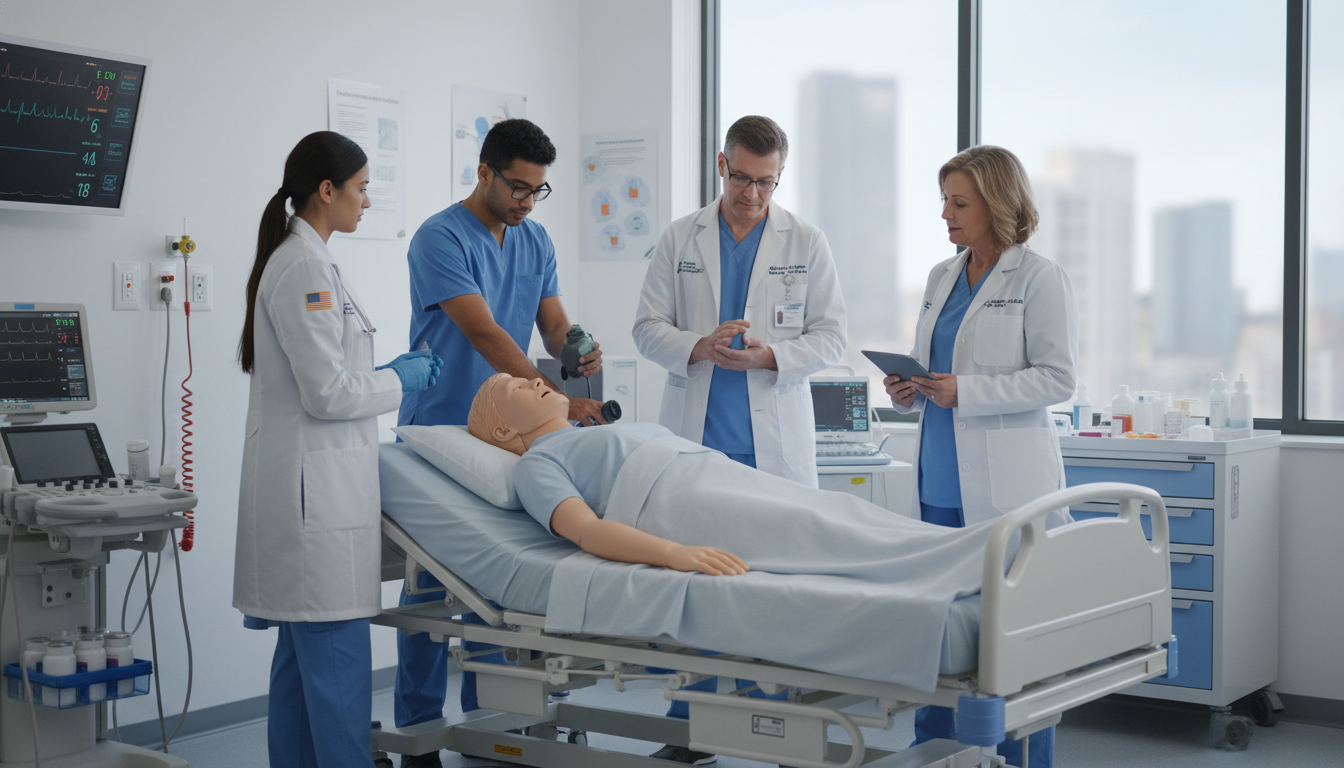
- EM simulation facilitation or teaching roles
For each, emphasize:
- Leadership and initiative: founding a committee, organizing events, coordinating volunteers
- Operational skills: triage, logistics, communication between services
- Exposure to EM culture: teamwork, shifts, interdepartmental collaboration
Example entry:
Vice President, Emergency Medicine Interest Group
[Medical School], [City, Country] | 2022–2023
- Organized monthly EM case conferences with US-based EM faculty via Zoom, attended by 40–60 students per session.
- Coordinated 3 hands-on skills workshops (airway basics, splinting, EKG interpretation).
This tells programs you’re not only interested in EM, you’ve invested time and effort in the field.
2. Leadership and Teamwork
Emergency departments function as high-performance teams. EM program directors look for evidence you can:
- Lead under pressure
- Communicate clearly
- Work with diverse professionals
Create a Leadership & Professional Involvement section that might include:
- Student government roles
- Committee work (curriculum, wellness, diversity)
- Leadership in sports teams, military service, or major organizations
- Project leadership (even outside medicine) with real responsibility
Aim for 2–4 of your strongest leadership roles with strong descriptions:
- “Led a team of 10 volunteers to coordinate community CPR training for 400 participants; developed station flow that increased throughput by 30% compared to prior year.”
- “Captain of university soccer team; responsible for organizing practice schedules, conflict resolution, and coordinating with athletic trainers.”
3. Teaching and Mentoring
Teaching is central to EM culture, especially in academic programs.
In a Teaching Experience section, include:
- Peer tutoring (anatomy, physiology, USMLE prep)
- Small-group facilitator roles
- Simulation teaching assistant
- Community health education (CPR, first aid, overdose response)
Highlight:
- Audience size (e.g., 20 first-year students)
- Frequency (weekly, monthly)
- Materials you created (handouts, checklists, presentations)
Example:
- “Peer tutor for first- and second-year medical students in physiology and pathophysiology; led weekly 2-hour review sessions; consistently rated 4.8/5 by participants.”
4. Work Experience Before or During Medical School
Many US citizen IMGs bring prior US work experience that can strengthen their EM application:
- ED scribe
- EMT/paramedic
- Nurse, respiratory therapist, or medical assistant
- Military or law enforcement roles with operational decision-making
- Corporate or tech roles tied to problem-solving and communication
Create a Work Experience section and emphasize transferrable skills:
- Comfort in fast-paced environments
- Multitasking and prioritization
- Documentation and communication
- Service orientation and customer/patient interaction
Example:
Emergency Department Scribe
[Hospital], [City, State] | 2018–2019
- Documented real-time ED encounters for 4–6 physicians per shift, including history, exam findings, orders, and ED course.
- Gained exposure to high-acuity cases and EM workflow in a 70,000-visit/year ED.
These experiences can significantly offset concerns about limited US clinical exposure for an American studying abroad.
5. Awards, Honors, and Distinctions
EM programs look for signs of excellence and consistency.
Include:
- Medical school academic awards
- USMLE or NBME performance-related honors (if official)
- Leadership or service awards
- National or regional recognition for research or community work
Avoid listing minor internal “participation certificates” unless truly competitive.
Example:
- “Recipient, Outstanding Clinical Student Award (top 3 of 80 students), based on clerkship evaluations and faculty nominations.”
6. Skills, Certifications, and Languages
For emergency medicine residency, this section can be very relevant if done correctly.
Include:
- Certifications: BLS, ACLS, PALS, ATLS (if truly completed), EMS certifications
- Note issuing body and expiration if known.
- Technical skills: basic ultrasound familiarity, suturing, splinting, airway workshops (label as “exposure” or “training” if not independent)
- Languages: especially Spanish or languages common in your target region
Be honest about your level of proficiency:
- Native / Fluent / Professional working / Conversational
For US citizen IMGs who grew up bilingual or multilingual, this can be a strong differentiator in urban and diverse EM settings.
Formatting, Length, and Style: Practical Residency CV Tips
Now that you know what goes into your medical student CV, here’s how to ensure it looks polished and professional.
1. Ideal Length for an EM Residency CV
- For most medical students and US citizen IMGs: 2–4 pages is typical.
- It is better to have a dense, well-curated 3 pages than a sparse 1 page that looks unimpressive.
- Avoid padding with low-yield entries (e.g., every single one-day volunteer event).
Ask yourself: “If a program director reads only this page, does it improve their estimation of me?” If not, cut or consolidate.
2. Bullet Point Best Practices
Use bullet points to:
- Begin with strong action verbs: led, organized, co-authored, implemented, developed, facilitated.
- Keep them concise: 1–2 lines per bullet.
- Focus on your role and impact, not just what the group did.
Weak bullet:
- “Participated in student-run free clinic.”
Stronger bullet:
- “Coordinated weekly operations for student-run free clinic serving 40–60 uninsured patients per month; implemented triage checklist that decreased patient wait times by 20%.”
3. Tense, Person, and Consistency
- Use past tense for completed roles, present tense for ongoing roles.
- Avoid “I” or first-person pronouns in bullets.
- Maintain consistency in date formats and punctuation throughout.
4. Tailoring Without Misrepresenting
You can’t send a different CV to each program through ERAS, but you can:
- Emphasize EM-relevant experiences and move them higher on the page.
- Remove very tangential experiences that distract from your EM narrative.
- Ensure your top half of page 1 screams: “EM-ready, clinically strong, reliable team player.”
Your personal statement and program-specific communications can then further tailor your story.
5. Proofreading and Feedback
Before finalizing your residency CV:
- Run a spell check and grammar check.
- Ask:
- An EM faculty mentor (ideally US-based)
- A recent EM resident or senior who matched as a US citizen IMG
- A non-medical friend for clarity and readability
Ask them specific questions:
- “What three impressions do you get about me from this CV?”
- “Is there anything that seems confusing or inflated?”
- “What would you cut or move to page 1?”
Strategic Advice for US Citizen IMGs Targeting EM
Finally, some higher-level strategy on how to build CV for residency in emergency medicine as a US citizen IMG.
1. Start Early and Build Longitudinally
Even in your first or second year of medical school abroad:
- Join or create an EM interest group.
- Seek remote mentorship from US-based EM physicians (alumni networks, national organizations).
- Engage in small, manageable research or QI projects—case reports, chart reviews, literature reviews.
Longitudinal involvement looks better than last-minute activities piled on just before application season.
2. Plan US Clinical Exposure Strategically
Because EM is competitive and many programs prefer candidates with US experience:
- Aim for 2–3 EM rotations in the US if possible:
- At least one Sub-I/Acting Internship at a site with an EM residency.
- Consider off-service electives relevant to EM (ICU, trauma, ultrasound).
- Use these rotations to:
- Earn strong SLOEs (Standardized Letters of Evaluation) from EM faculty.
- Demonstrate your ability to thrive in a US ED environment.
- Gather concrete accomplishments you can list on your CV.
3. Use Your “American Studying Abroad” Story Wisely
Your US citizen IMG status can be framed positively:
- You understand US culture and healthcare context.
- You chose to study abroad but intend to practice and train in the US.
- You often bring bilingual or multicultural perspectives that help in diverse ED settings.
On your CV, this emerges through:
- US work or volunteer history
- US clinical rotations
- Activities showing integration into both systems (home country and US)
4. Align Your CV with Your EM Narrative
Everything should point toward:
- Genuine interest in emergency medicine
- Ability to handle pressure and uncertainty
- Commitment to lifelong learning and teamwork
If a role doesn’t support your story and isn’t particularly prestigious or impactful, consider omitting or minimizing it.
FAQs: CV Building for US Citizen IMG in Emergency Medicine
1. How different should my CV be from my ERAS application?
Your CV and ERAS should be consistent in content (dates, titles, roles), but the CV allows more organized, specialty-focused presentation. You may group experiences differently (e.g., “EM-related activities” section) and use more polished bullet points, but don’t add roles that don’t appear in ERAS.
2. As a US citizen IMG, how important is US clinical experience on my CV for EM?
For emergency medicine, US clinical experience—especially EM rotations and Sub-Is—is crucial. It reassures programs that you can succeed in US systems and provides SLOEs and concrete achievements to list on your CV. Without it, it’s much harder to convince EM programs you’re ready for residency.
3. I don’t have much EM-specific research. Will that hurt my EM match chances?
EM-specific research helps but is not mandatory. Programs value any high-quality research that shows perseverance, critical thinking, and scholarly ability. Highlight EM-relevant clinical performance, leadership, teaching, and US rotations. A strong, well-structured CV with good SLOEs often outweighs limited EM research.
4. Should I include non-medical jobs and activities on my residency CV?
Yes—if they show meaningful responsibility, leadership, or transferrable skills. Jobs like ED scribe, EMS, military service, teaching, or roles demanding communication and teamwork are valuable, especially for emergency medicine. Brief, low-impact or short-term non-medical activities can be omitted to keep your CV focused and professional.
By approaching your medical student CV purposefully—highlighting EM-relevant strengths, clarifying your US citizen IMG background, and presenting your experiences with clarity and impact—you significantly strengthen your emergency medicine residency application and improve your chances in the EM match.