As a US citizen IMG interested in a preliminary surgery year, your CV is more than a list of experiences—it is your strategy document. Program directors often spend less than a minute on first review, and for prelim surgery residency programs, they are looking for specific signals: work ethic, resilience, technical curiosity, and the ability to integrate quickly into a demanding team.
This guide walks you through how to build a CV for residency as an American studying abroad with a specific focus on preliminary surgery. You’ll get targeted residency CV tips, concrete examples, and practical steps tailored to your situation as a US citizen IMG.
Understanding the Role of the CV in Preliminary Surgery Applications
Your CV is read differently for a prelim surgery residency than for categorical positions. You’re being evaluated for:
- Reliability and work ethic in a high-intensity environment
- Ability to function on day one with minimal hand-holding
- Academic potential and professionalism
- Fit with the team and likelihood of finishing the year successfully
For a US citizen IMG, a strong CV should:
- Reduce perceived risk: Show that you’re dependable, mature, and accustomed to US culture and health systems where possible.
- Show direction and realism: Even if your long-term goal is a categorical position (in surgery or another specialty), your CV should make the prelim year seem intentional, not a backup panic move.
- Highlight readiness: Demonstrate concrete preparation for surgical training: procedures, clinical exposure, call experience, research, and teamwork.
Think of your CV as answering four silent questions for the selection committee:
- Can this applicant work hard and safely under pressure?
- Can they hit the ground running on July 1?
- Are they serious about training and not likely to quit mid-year?
- Are they professional and easy to work with?
Every section of your CV should contribute to answering these questions with evidence.
Structuring a High-Impact CV for a Preliminary Surgery Year
A clear, logical structure makes it easy for a reader to find what they care about. A standard, program-friendly order is:
- Heading / Contact Information
- Education
- Examinations & Certifications
- Clinical Experience
- Research & Publications
- Presentations & Posters
- Leadership & Teaching
- Honors & Awards
- Professional Memberships
- Volunteer & Community Service
- Skills & Interests
1. Heading and Contact Information
Use a clean, professional heading:
- Full name (no nicknames)
- Email (professional, e.g., firstname.lastname@)
- US phone number (if available)
- Address (you can list a US address if you have a stable one—family, etc.)
- LinkedIn (optional but helpful if polished)
Avoid:
- Photos (not standard in US applications)
- Overly styled formatting, colors, or graphics
- Multiple email addresses or phone numbers
2. Education
As an American studying abroad, the education section is crucial. Program directors need to understand your path quickly.
Include:
- Medical school name, city, country
- Degree and expected/actual graduation date
- Class rank or decile (if available)
- US equivalence if the grading system is non-standard (briefly, not an essay)
Example entry:
MD Candidate, June 2025
University of XYZ Faculty of Medicine, City, Country
– US citizen IMG; curriculum taught in English
– Top 20% of class; GPA 3.6/4.0 equivalent
Also list:
- Undergraduate degree (major, institution, honors)
- Any graduate degrees (e.g., MPH, MS)
For a preliminary surgery year, highlight anything surgery-adjacent:
- Surgery track, if your school has it
- Mentored surgical projects
- Thesis related to surgical outcomes, anatomy, or procedural topics
Examinations, Clinical Experience, and US Exposure
For a US citizen IMG pursuing prelim surgery, your testing record and hands-on experience signal readiness and reliability.
3. Exams & Certifications
Include:
- USMLE Steps (or COMLEX, if applicable)
- Test name, date (month/year), score, and pass/fail status
- ECFMG certification status (if applicable)
Example:
USMLE Step 1 – Pass, 2023
USMLE Step 2 CK – 245, 2024
ECFMG Certification – Anticipated June 2025
If scores are modest, don’t overemphasize them visually. Let the strength of clinical experience and research carry you.
Also add:
- BLS / ACLS (with expiration dates)
- ATLS (if completed; this is a strong plus for prelim surgery)
- Any procedural or ultrasound courses (e.g., basic surgical skills workshops, FAST ultrasound course)
4. Clinical Experience: Making Your Rotations Work for You
This is the core of your CV for prelim surgery. Programs want proof you can survive and perform in a busy hospital.
Separate your experiences into:
- Core Clinical Rotations (Medical School)
- US Clinical Experience (USCE)
- Surgical Electives / Sub-internships
- Observerships (clearly labeled as such)
Highlighting Surgical Rotations
For preliminary surgery, don’t just list “General Surgery – 8 weeks.” Add brief, targeted bullets that show responsibility, independence, and volume:
General Surgery Core Rotation – 8 weeks (Honors)
University of XYZ Hospital, City, Country – 2023
– Participated in daily pre-rounding on 6–10 patients, writing notes and presenting plans to residents
– Assisted in >30 surgeries (laparoscopic cholecystectomy, appendectomy, hernia repair), performing suturing and simple wound closure under supervision
– Took overnight calls 1–2 times per week, assisting with admissions, trauma evaluations, and post-op complications
For US clinical experience, emphasize:
- Exposure to US health systems
- Supervising attendings and residents
- EMR use and interdisciplinary teamwork
Example:
Sub-internship, General Surgery – 4 weeks
ABC Medical Center, New York, NY – 2024
– Functioned at the level of an acting intern: pre-rounded, wrote detailed progress notes, and presented on daily rounds
– Managed 5–7 patients with supervised responsibility for post-op care, fluid management, and basic pain control plans
– Participated in emergency department surgical consults and initial trauma assessments
Observerships vs. Hands-On Experience
Programs know the difference, so label accurately:
- “Observership in General Surgery” is acceptable but weaker than a hand-on elective.
- Emphasize what you actually did: case discussions, clinic participation, teaching conferences.
If your US hands-on time is limited, increase its weight by:
- Including quality bullets about learning, feedback, and case mix
- Integrating it with letters of recommendation from those rotations

Research, Scholarly Work, and Academic Potential
Even for prelim spots, many surgery departments value research as a marker of academic discipline and follow-through. As a US citizen IMG, strong scholarly activity can offset skepticism about your training environment.
5. Research Experience
You do not need a PhD-level research career, but you do need to present your research clearly and honestly.
For each project:
- Title, institution, location
- Dates (month/year – month/year)
- Supervisor (especially if they are a surgeon or US-based)
- 2–4 bullet points summarizing your role and outcomes
Prioritize:
- Surgical research (outcomes, trauma, perioperative care, surgical education)
- Clinical research in other specialties still shows rigor and productivity
- Quality improvement (QI) projects related to operating room efficiency, infection control, pre-op screening, etc.
Example:
Research Assistant, Department of General Surgery
University of XYZ, City, Country – 2022–2023
Supervisor: Dr. Jane Doe
– Collected and analyzed data on 250 patients undergoing laparoscopic cholecystectomy to evaluate factors associated with post-op complications
– Conducted chart reviews and maintained REDCap database
– Co-authored an abstract accepted for presentation at the National Surgical Conference 2023
Even if a project is ongoing, include it, labeled as such:
– Manuscript in preparation: “Predictors of Prolonged Length of Stay After Emergency Appendectomy”
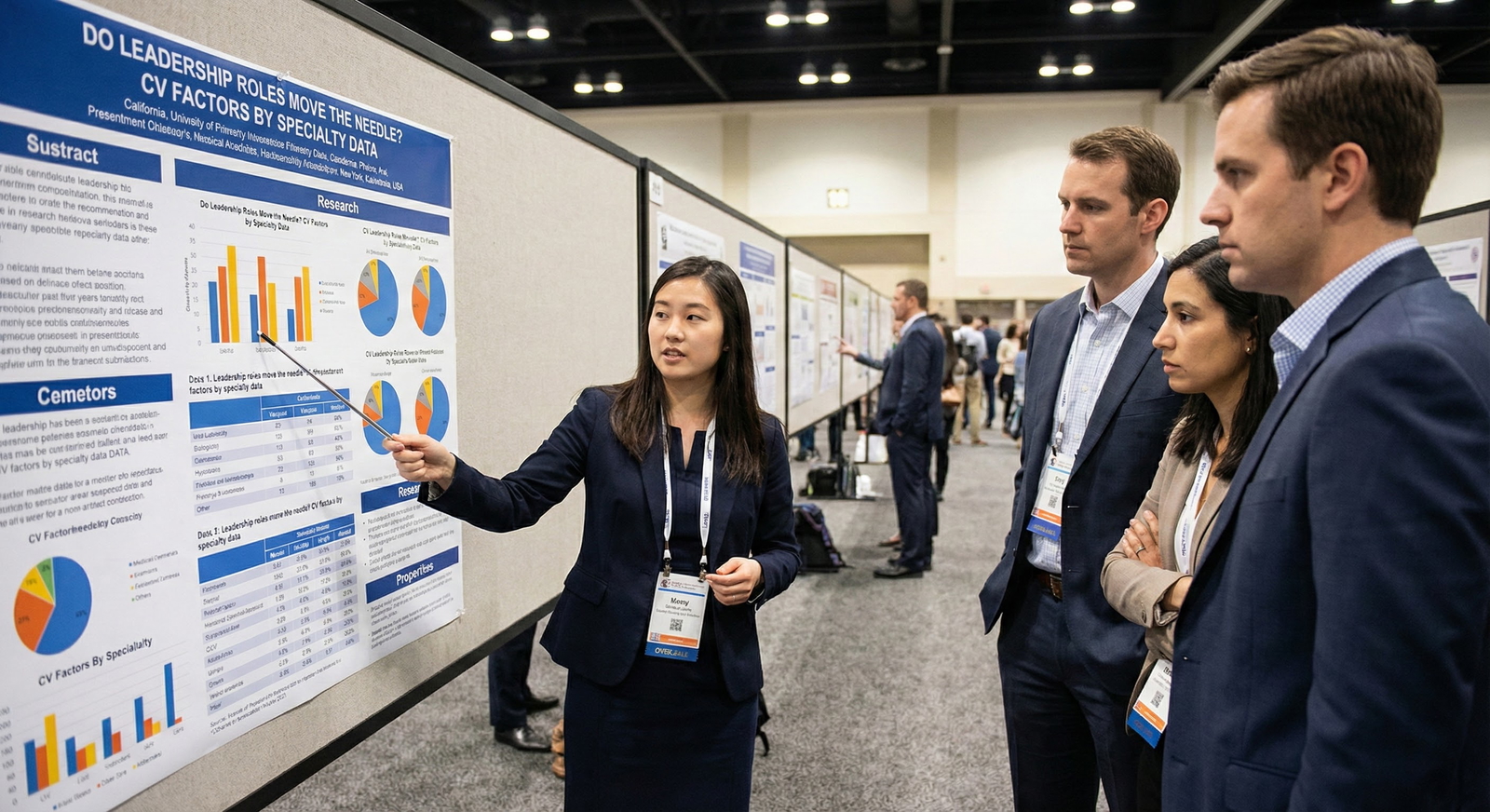
6. Publications, Presentations, and Posters
This section translates your effort into products. Separate clearly:
- Peer-reviewed publications
- Abstracts and posters
- Oral presentations (conferences, departmental talks)
Use consistent citation style (e.g., AMA). For an IMG, quality is more important than quantity. Highlight if:
- The journal is indexed (PubMed, Scopus)
- Presentation is at a recognized national/regional meeting
Example:
Publications
- Smith J, YourLastName A, Lee K. Risk factors for wound infection after emergency appendectomy. J Surg Res. 2024;XXX:XX–XX.
Posters & Presentations
- YourLastName A, Doe J. “Postoperative Complication Patterns in Elderly Appendectomy Patients.” Poster presented at the XYZ International Surgical Congress, 2023.
For a prelim surgery application, having any surgical-themed presentation is a strong plus.
Leadership, Teaching, and Professionalism: Differentiating Yourself
Prelim surgery programs want residents who function as part of a large, hierarchical team. Your non-clinical experiences help them picture you as a future resident.
7. Leadership and Teaching Experience
Leadership isn’t only about titles; it’s about responsibility and initiative.
Relevant roles:
- Class representative or student council positions
- Founder or officer in a surgery interest group
- Organizer of skills workshops, journal clubs, or QI initiatives
- Teaching assistant roles (anatomy lab, OSCE prep, clinical skills)
Example:
Co-founder & President, Surgical Society
University of XYZ, 2022–2024
– Established a student-run surgical interest group with >60 members
– Organized monthly talks by faculty surgeons on careers, research, and residency preparation
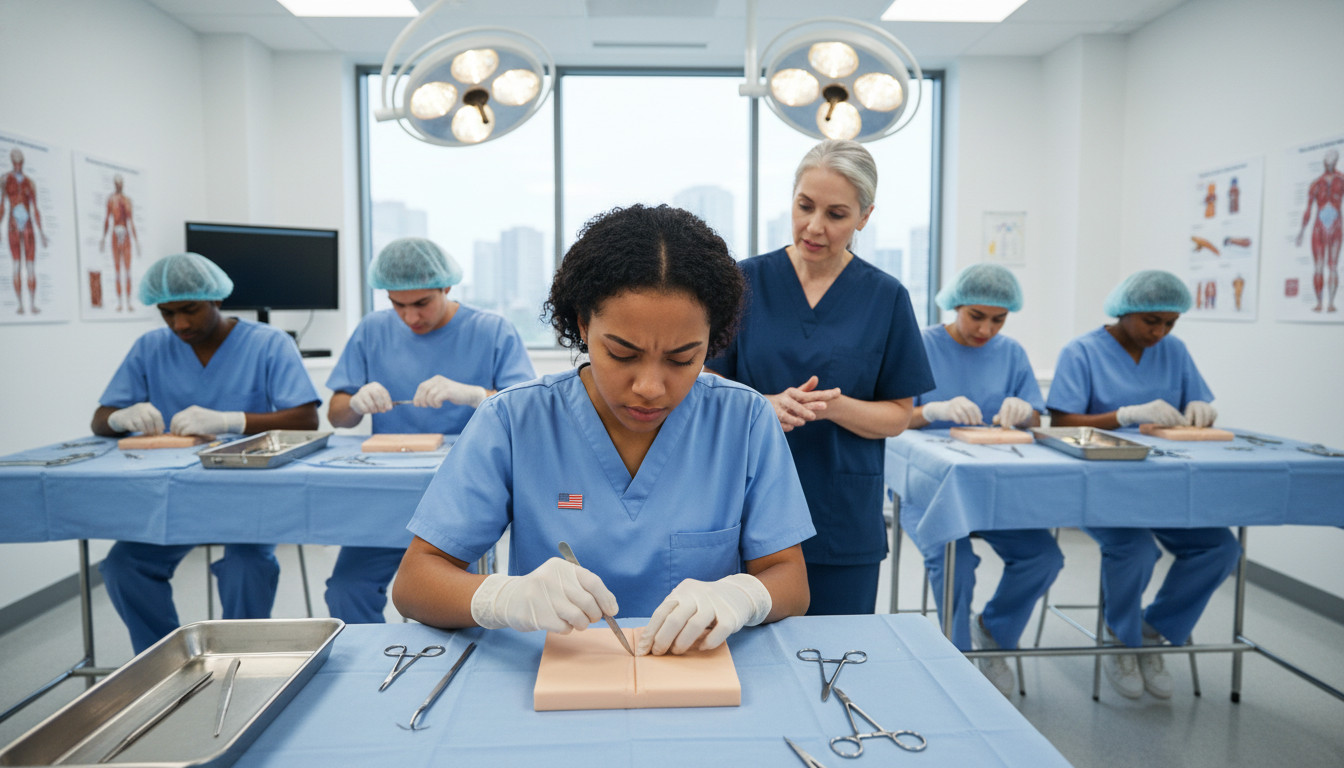
– Coordinated basic surgical skills workshop (knot-tying, suturing) attended by >40 students
Teaching experience suggests you can:
- Help junior colleagues
- Communicate clearly with patients and team members
List:
- Peer tutoring (e.g., anatomy, physiology, clinical skills)
- OSCE coaching
- TBL or PBL facilitator roles
8. Honors, Awards, and Distinctions
As a US citizen IMG, any objective recognition can help offset concerns about unknown grading systems or schools.
Include:
- Dean’s list
- Scholarships
- Top performance awards on rotations (especially surgery, emergency medicine, ICU)
- Research prizes
Example:
Best Medical Student in Surgery Award – University of XYZ, 2023
Dean’s List (Top 10% of Class) – 2021, 2022, 2023
Explain briefly if the award name is not self-explanatory:
– “Awarded to the single highest-performing student during the core general surgery clerkship.”
Volunteer Work, Extracurriculars, and Presenting the Whole Person
Prelim surgery is demanding; programs want residents who are resilient and grounded. Thoughtfully chosen activities demonstrate character and stamina.
9. Volunteer and Community Service
For residency CVs, it’s better to have a few sustained commitments than many superficial ones.
Strong examples for surgery:
- Free clinics, especially if you managed wound care or minor procedures
- EMS/first responder volunteering
- Health education programs for underserved communities
- Global surgery or outreach trips (be precise about your role)
Example:
Volunteer, Free Surgical Screening Clinic
City, State – 2022–2023
– Assisted in pre-op screening for hernia and gallbladder patients; obtained histories, vital signs, and provided patient education under supervision
– Helped coordinate referrals and follow-up appointments for 200+ patients
10. Professional Memberships
This can be a compact section that still carries weight.
Include:
- American College of Surgeons (ACS) – Medical Student Member
- Local or national surgical societies
- AMA or state medical society
Briefly highlight involvement if beyond passive membership:
– Participated in ACS medical student webinars on residency preparation and surgical careers
11. Skills and Interests
This section is often undervalued but can be memorable if crafted well.
Technical & Professional Skills
Relevant for prelim surgery:
- EMR systems you’ve used (Epic, Cerner, etc.)
- Languages (with proficiency level)
- Basic surgical skills (suturing, knot-tying; don’t exaggerate)
- Data/analysis tools (SPSS, R, Excel)
Example:
Languages: English (native), Spanish (conversational – used in clinic)
Technical: Epic, REDCap, SPSS, Microsoft Office
Personal Interests
Programs often discuss your interests in interviews. Choose:
- Specific (not just “travel” or “music”)
- Sustainable (something you can discuss naturally)
- Healthy/stress-relieving hobbies (running, cooking, hiking, team sports, photography)
Example:
Interests: Distance running (completed 3 half-marathons), home coffee roasting, medical education podcasts
Practical CV Tips Specifically for US Citizen IMGs Aiming for Prelim Surgery
Beyond content, presentation and strategy matter. Here are targeted residency CV tips for your situation.
A. Format and Length
- Target 2–3 pages for a medical student CV—long enough to show depth, not bloated.
- Use a consistent font (e.g., 11–12 pt), clear headings, and bullet points.
- Avoid dense paragraphs; program directors skim.
B. Emphasize US Connections and Readiness
As a US citizen IMG:
- Make US clinical experience easy to spot (consider a subheading “US Clinical Experience”).
- Show that you understand US systems (EMRs, team-based care, QI).
- Highlight any US-based mentors (particularly surgeons) in research or clinical sections.
C. Align Your CV With a Preliminary Surgery Narrative
Even if your ultimate goal is another specialty or a categorical surgery spot, frame the prelim year as:
- A deliberate step to gain intense clinical exposure
- Time to strengthen procedural skills, acute care experience, and professional maturity
- An opportunity to contribute meaningfully to a surgical team
You don’t have to spell this out on the CV (that’s for your personal statement), but choose experiences that support this story.
D. Quantify Whenever Possible
Numbers make your experiences concrete:
- “Assisted in >40 cases, including…”
- “Cared for 5–8 inpatients daily during sub-internship…”
- “Coordinated 3 student-led surgical skills workshops with 50+ participants…”
E. Avoid Common Pitfalls for IMGs
Overstuffed CVs
- Avoid listing every short online course or irrelevant conference. Prioritize what matters for a prelim surgery role.
Unclear roles
- Don’t just write “Involved in research.” Clarify what you did.
Inflated claims
- Do not claim “first assist” or “independent procedure” if not accurate; you must be able to defend every line in an interview.
Inconsistent dates
- Make sure timelines of school, exams, and activities are coherent and without unexplained long gaps (or be ready to explain them).
F. Tailor, Then Standardize
You don’t need a different CV for every program, but you can:
- Maintain a master CV with all details
- Use a slightly condensed version for ERAS entries and upload
- Keep structure consistent with how ERAS collects information (education, experiences, etc.), but your PDF CV can be more visually organized
Putting It All Together: A Sample Flow for a US Citizen IMG Prelim Surgery CV
Here is a streamlined layout you can mirror:
- Name & Contact Info
- Education
- Medical school (US citizen IMG noted)
- Undergraduate degree
- Examinations & Certifications
- USMLEs, ECFMG, BLS/ACLS/ATLS
- Clinical Experience
- Core rotations (with emphasis on surgery, EM, ICU)
- US clinical experience (clearly separated and highlighted)
- Surgical electives/sub-Is
- Research Experience
- Surgical and clinical research
- Publications & Presentations
- Leadership & Teaching
- Honors & Awards
- Volunteer & Community Service
- Professional Memberships
- Skills & Interests
As you update your CV, ask:
- Does this line show readiness for a demanding surgical environment?
- Would a program director think, “This person will work hard and not complain”?
- Can I confidently explain each item during an interview?
If the answer is yes, you’re building exactly the right kind of CV for a prelim surgery residency.
FAQs: CV Building for US Citizen IMGs in Preliminary Surgery
1. How is a prelim surgery CV different from a categorical surgery CV?
The structure is similar, but the emphasis can differ:
- Prelim CVs should strongly highlight reliability, adaptability, and immediate clinical usefulness, even if long-term academic goals are evolving.
- Categorical CVs often lean more heavily into long-term research productivity and leadership in surgery specifically.
- For prelim positions, programs are often trying to fill high-service roles quickly; they value signs you can plug into the team smoothly and manage workload from day one.
2. As a US citizen IMG, do I need a lot of US clinical experience for prelim surgery?
More is helpful, but you don’t need an excessive number of rotations. Aim for:
- At least one strong US surgical elective or sub-internship, ideally with a letter of recommendation.
- Additional US clinical time in related areas (ICU, ED, internal medicine) is a plus.
- If your USCE is limited, focus on quality: detailed responsibilities, strong mentors, and clear documentation in your CV and letters.
3. How much research do I need to match a prelim surgery position?
Prelim programs are often less research-focused than categorical positions, but research still helps:
- Having some research (especially in surgery or acute care) strengthens your academic profile and signals commitment.
- A few well-described projects, posters, or one publication can be more than enough for many prelim programs.
- If you lack research, emphasize clinical strength, work ethic, and teaching/leadership instead—and consider a small QI or chart-review project you can complete before application season.
4. Should I mention that I’m a US citizen on my CV as an IMG?
Yes—this is an important detail for many programs:
- You can note “US citizen” in your education section near your medical school entry or briefly in the heading or personal statement, but avoid overemphasizing it.
- The advantage is clarity: programs will understand there are no visa requirements, which can make you more attractive compared to non-US citizen IMGs.
- Keep it professional and factual; do not frame it as a “selling point” by itself but as a logistical clarification.
By building a clear, honest, and focused CV that highlights clinical readiness, surgical interest, and professional maturity, you can stand out as a US citizen IMG seeking a preliminary surgery year—and turn that year into a powerful bridge toward your long-term residency goals.