Understanding the CV Landscape for a US Citizen IMG in Urology
Urology is one of the more competitive surgical subspecialties in the US, and for a US citizen IMG (American studying abroad), the bar is even higher. Your medical student CV isn’t just a list of accomplishments—it’s a strategic marketing document that needs to:
- Compensate for the perceived disadvantage of training abroad
- Highlight strengths unique to you as an American studying abroad
- Demonstrate clear, sustained commitment to urology
- Match the expectations of academic, surgical, and research-focused programs
Your goal is to build a CV that makes a program director think:
“This applicant looks like our residents: research-minded, clinically capable, and serious about urology.”
This article will walk you step-by-step through how to build a CV for residency, tailored specifically for US citizen IMG urology applicants, and provide practical residency CV tips you can start using today—whether you’re in pre-clinicals, clinical years, or already near the urology match.
Core Principles of a Strong Urology Residency CV
Before diving into sections and formatting, you need to understand how program directors quickly “screen” residency CVs, especially for competitive fields like urology.
What Program Directors Look for in Urology
For a urology residency, the CV should clearly show:
Sustained Urology Interest
- Urology research (clinical or basic science)
- Urology electives, sub-internships, away rotations
- Urology-related presentations or posters
- Membership/leadership in urology-interest groups or surgical societies
Academic & Research Productivity
- Publications (especially PubMed-indexed)
- Abstracts, posters, oral presentations
- QI projects or clinical audits related to surgery/urology
- Evidence of scientific curiosity and follow-through
Technical & Surgical Aptitude
- Surgical skills courses, skills labs, simulation
- Basic procedural experience (even from general surgery, OB/GYN, etc.)
- Participation in skills workshops (laparoscopy, endoscopy, robotics if available)
Professionalism & Teamwork
- Leadership in student organizations
- Teaching, peer mentoring, or tutoring
- Long-term volunteer or community service commitments
For a US citizen IMG, there is an extra layer:
- Evidence You Can Thrive in the US System
- US clinical experience (USCE), especially in urology or surgery
- Strong letters from US urologists or surgeons
- Clear explanation of your path as an American studying abroad
- No unexplained gaps or red flags on your CV
Structuring Your Medical Student CV for the Urology Match
The way you organize information matters almost as much as the content. You want your urology-relevant strengths to be impossible to miss.
A typical, well-structured urology residency CV for a US citizen IMG should include:
- Contact Information & Professional Header
- Education
- US Clinical Experience (USCE) & Electives
- Research & Publications
- Presentations & Posters
- Clinical Experience (Home Country / International)
- Leadership & Extracurricular Activities
- Teaching & Mentoring
- Honors & Awards
- Volunteer & Community Service
- Professional Memberships
- Skills & Additional Information
You don’t have to follow this order exactly, but:
- Put your strengths early (e.g., if you have strong research, move Research higher).
- Group urology-related experiences together and label them clearly.
Contact Information & Professional Header
Keep it clean and professional:
- Full name (as used for applications)
- Email (professional; avoid casual usernames)
- US phone number (Google Voice or similar if not currently in US)
- City, State (for US address; can also add current international location in parentheses)
- LinkedIn (optional) and/or personal professional website (if you host a portfolio or list of publications)
Avoid photos, date of birth, marital status, or any personal identifiers not standard in US applications.
Education Section for American Studying Abroad
For a US citizen IMG, your Education section should de-emphasize “foreignness” and emphasize quality, performance, and context.
Example formatting:
Doctor of Medicine (MD equivalent)
International University of Medicine, Country
Expected Graduation: June 2026
- US Citizen IMG; pre-clinical curriculum taught in English
- GPA: 3.8/4.0 (if strong and meaningful)
- Ranking: Top 10% of class (if available)
- Thesis: “Early Detection of Bladder Cancer in High-Risk Populations”
Include prior degrees (BS/BA) if relevant, especially if they’re from a US institution—that can reassure programs you understand US academic norms.

Building Urology-Relevant Content: Section by Section
1. US Clinical Experience (USCE) & Electives
For US citizen IMGs, US clinical experience is arguably the most critical CV section after education. For urology, it’s even more important.
Break this into:
- Urology-Specific USCE
- Other US Surgical or Clinical Rotations
Example entry:
Clinical Elective in Urology
XYZ University Hospital, Department of Urology – City, State, USA
August 2025 (4 weeks)
- Observed and assisted with outpatient urology clinics, including BPH, nephrolithiasis, and prostate cancer follow-ups
- Participated in OR for TURP, ureteroscopy, and robotic prostatectomy (observational role)
- Completed a mini-QI project on improving post-operative catheter care instructions for day surgery patients
Try to secure at least:
- 1–2 urology electives or sub-internships (sub-I) in the US
- Additional general surgery, surgical oncology, or surgical subspecialty rotations in the US
If you don’t yet have urology electives, list any surgical rotation that showcases operative exposure, teamwork, and performance feedback.
Actionable tips:
- Target US hospitals with urology residency programs for electives.
- Ask early about letters of recommendation; choose supervisors who actually saw you work.
- Document any mini-projects, QI work, or case write-ups you initiate—they go straight to your CV.
2. Research & Publications: Making Your CV “Urology-Fluent”
In a competitive field like urology, research is a major differentiator—especially for a US citizen IMG.
You don’t need dozens of papers, but you do need:
- Clear evidence of scholarly activity
- Preferably at least 1–2 urology-related projects
- Ability to talk in-depth about any project listed
Organize your research into:
- Peer-Reviewed Publications
- Manuscripts Under Review or In Preparation (clearly labeled)
- Book Chapters
- Research Projects / Roles (even if not yet published)
Example publication entry:
Doe J, Smith A, Your Name, et al.
“Predictors of Postoperative Urinary Retention After TURP: A Multi-center Analysis.”
Journal of Urology Research, 2024; 18(3): 145–152. PubMed PMID: XXXXXXXX
If you don’t yet have publications, list:
- Research projects with clear description of your role
- Abstracts submitted to conferences
- Data collection or database work (e.g., REDCap, retrospective chart review)
Example research project entry:
Research Assistant – Kidney Stone Outcomes Study
Department of Urology, ABC Medical Center – City, State, USA
June 2024 – Present
- Assisted in retrospective chart review of 450 patients undergoing ureteroscopy for nephrolithiasis
- Collected data on operative time, stone-free rates, and complication profiles
- Co-authored abstract accepted for presentation at the Southeastern Section of the AUA (pending conference)
Strategic tips:
- Start early: even a small project in your second or third year can turn into a poster or abstract.
- Reach out to urology departments at US institutions where you plan to rotate; ask if you can join ongoing projects.
- If urology projects aren’t available, do research in surgery, oncology, radiology, or nephrology—then gradually pivot toward urology.
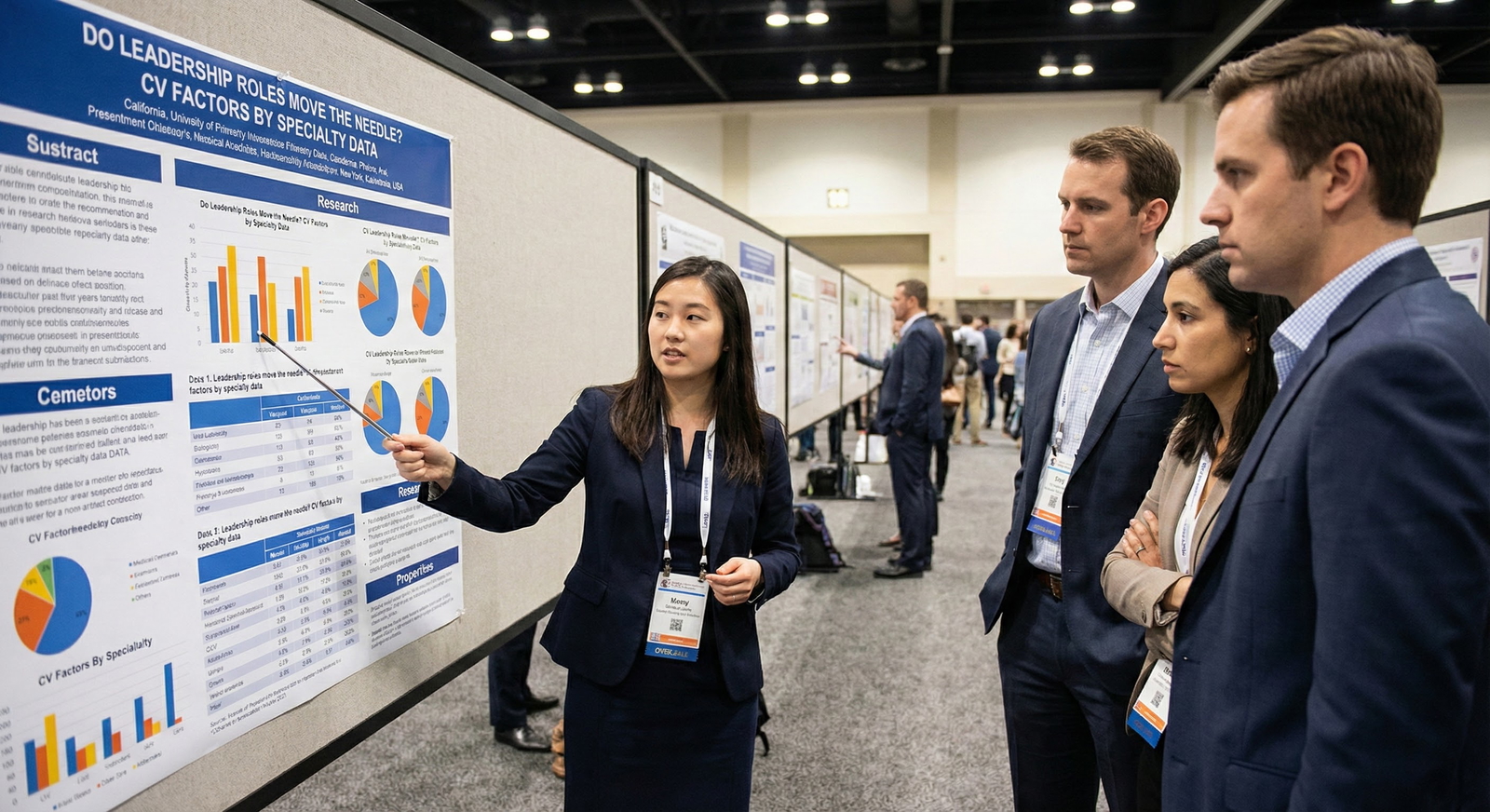
3. Presentations & Posters: Showcasing Communication Skills
This is where you highlight your ability to communicate scientific information and engage with the academic community—a huge plus for urology programs.
Separate by type:
- Oral Presentations
- Poster Presentations
- Local / Student Conferences (label clearly if not national-level)
Example:
Oral Presentation – Regional Conference
“Trends in PSA Screening Among Men Under 50: A Retrospective Review.”
Midwest Student Urology Symposium – City, State, USA, March 2024
Poster Presentation – National Meeting
“Impact of Delayed Presentation on Renal Function in Obstructive Urolithiasis.”
American Urological Association (AUA) Annual Meeting – Virtual/City, May 2025
If you only have local or school-based presentations, that’s fine—list them clearly and succinctly.
Actionable advice:
- Convert coursework, thesis, or small audits into posters.
- Submit to student research days, local surgical society meetings, or urology section meetings.
- Ask senior residents or mentors to help refine your abstracts—good mentorship often leads to repeat opportunities.
4. Clinical Experience (Home Country / International)
This section is particularly important for IMGs because it:
- Demonstrates your clinical maturity
- Shows familiarity with a variety of patient populations
- Highlights any procedural skills or surgical exposure
Format by rotation:
Clinical Clerkship in General Surgery
International University Hospital – City, Country
January – March 2024 (12 weeks)
- Participated in inpatient ward management and daily rounds
- Assisted with minor procedures (suturing, wound care, drain removal) under supervision
- Completed 2 case presentations related to acute urinary retention and bladder trauma
For each rotation, emphasize:
- Responsibility level (e.g., wrote notes, presented on rounds)
- Procedural involvement (if any)
- Urology-relevant cases you encountered (stone disease, prostate pathology, hematuria)
Programs understand that clinical roles vary internationally; be honest and precise without overstating your independence.

Leadership, Teaching, and Service: Differentiating Yourself Beyond Scores
Strong urology candidates aren’t just technically capable—they’re leaders, teachers, and team players. As a US citizen IMG, this is where you can stand out.
Leadership & Extracurricular Activities
Highlight roles that demonstrate:
- Initiative (starting a club, creating a new project)
- Responsibility (president, coordinator, committee chair)
- Longevity (multi-year commitment beats one-off roles)
Examples:
Founder & President – Urology Interest Group
International University of Medicine
September 2023 – Present
- Organized monthly case-based discussions with visiting urologists from the US and local institutions
- Coordinated virtual shadowing sessions with US-based urology residents
- Led a team of 8 officers to plan a “Urology Career Night” attended by >70 students
Vice President – Surgical Skills Club
International University of Medicine
January 2023 – December 2024
- Helped design and run suturing and knot-tying workshops for pre-clinical students
- Collaborated with local hospital to use simulation lab for laparoscopic skill introductions
Teaching & Mentoring
Programs value residents who can teach juniors and students. Include:
- Peer tutoring
- Teaching assistant roles
- Anatomy lab demonstrator
- Mentoring younger IMGs navigating US exams or match prep
Example:
Peer Tutor – Anatomy and Physiology
International University of Medicine
September 2022 – June 2023
- Conducted weekly small-group review sessions for 10–12 first-year students
- Developed practice questions and diagrams; improved test performance for attendees by an average of 15%
Volunteer & Community Service
Service doesn’t have to be medically related to be meaningful, but medical or urology-adjacent activities are especially valuable.
Examples:
- Health screening events (prostate cancer awareness, men’s health fairs)
- Free clinics or outreach to under-served communities
- Non-medical community involvement (food banks, tutoring, refugee support)
Example CV entry:
Volunteer – Men’s Health Awareness Campaign
City Community Health Center – City, Country
November 2023 – April 2024
- Participated in community education sessions on BPH, erectile dysfunction, and urinary incontinence
- Distributed educational materials and helped coordinate free PSA testing days
Consistency matters more than volume; long-term commitments are more impressive than brief, scattered experiences.
Presentation, Style, and Strategy: Residency CV Tips That Matter
Knowing how to build a CV for residency is as much about style and strategy as it is about content—and this is where many US citizen IMGs unintentionally weaken otherwise strong CVs.
Formatting Essentials
- Limit to 2–4 pages for a medical student CV (longer if you have extensive research; shorter if early in training).
- Use clear section headings, consistent fonts, and bullet formatting.
- Keep tense consistent (past roles in past tense; ongoing roles in present tense).
- Avoid icons, colors, or complex design; stay professional and simple.
Tailoring Your CV for Urology
Even if ERAS has standardized fields, your supplemental CV (for networking, mentors, or emails) should be urology-centric:
- Put Urology Experience and Research up front
- Use urology-specific keywords: urolithiasis, BPH, PSA, bladder cancer, endoscopy, laparoscopy, robotic surgery
- Connect your non-urology experiences back to surgery or urology skills (e.g., OR teamwork, crisis management, anatomy)
Example transformation:
Instead of:
“Volunteer – General Health Fair”
Use:
“Volunteer – Men’s Health and Prostate Cancer Awareness Fair (General Health Fair)”
Now it’s clearly urology-relevant.
Avoiding Common IMG CV Mistakes
Common pitfalls for American IMGs applying to urology:
Overcrowding with non-relevant details
- Keep hobbies to 2–3 bullet points at most.
- Skip high school achievements unless truly exceptional or nationally recognized.
Inconsistent or unclear dates and locations
- Use month/year; ensure no unexplained gaps.
- If there’s a gap (exam prep, personal reasons), briefly explain in another part of your application or personal statement.
Overstating roles or responsibilities
- Never claim unsupervised performance of procedures you didn’t actually perform.
- Program directors can and do verify with letter writers.
Weak descriptions of impact
- Don’t just say “participated”; describe what you actually did and learned.
- Quantify when possible (numbers of patients, events, attendees).
Strategic Planning by Training Stage
If you are early (pre-clinical or early clinical):
- Join or start a urology interest group.
- Seek remote or local research with a urologist, even if just data entry at first.
- Get involved in surgical skills clubs.
If you are in clinical years:
- Prioritize electives/sub-Is in urology at US institutions.
- Solidify 1–2 strong US letters from urologists.
- Convert existing projects into posters, abstracts, or manuscripts.
If you are 1 year from applying:
- Do a CV audit: identify gaps in urology exposure, research, or leadership.
- Focus on finishing ongoing projects rather than starting too many new ones.
- Align your personal statement, letters, and CV to tell a consistent story.
Final Checklist for US Citizen IMG Urology CVs
Before you send your CV to mentors, letter writers, or upload to ERAS, ask:
- Is it obvious that I’m serious about urology?
- Do I have at least some urology research, electives, or projects?
- Does my CV demonstrate that I can function well in the US system?
- USCE clearly listed, with US-based supervisors and urology exposure
- Have I minimized IMG-related concerns?
- No unexplained gaps, clear academic performance, English-medium education noted
- Do my leadership, teaching, and volunteer experiences portray me as a future urology resident?
- Evidence of teamwork, resilience, work ethic, and communication skills
- Is the formatting clean, professional, and error-free?
- No typos, consistent dates, aligned bullet points, and accurate descriptions
Your CV is not static; it should evolve as you accumulate more experiences. Revisit and revise it every 3–6 months, especially after each major rotation, research project, or conference.
FAQs: CV Building for US Citizen IMG in Urology
1. How many publications do I need for a competitive urology residency as a US citizen IMG?
There is no strict number, but for a competitive urology match as a US citizen IMG, having:
- At least 1–2 urology-related publications or abstracts, plus
- Additional research experiences in surgery, oncology, or related fields
will significantly strengthen your application. Quality, relevance to urology, and your ability to discuss the work in detail matter more than raw quantity.
2. Does non-urology research still help my urology residency CV?
Yes. Non-urology research (e.g., nephrology, oncology, public health, general surgery) still demonstrates:
- Scientific thinking
- Ability to complete projects
- Familiarity with data, statistics, and academic writing
However, you should aim to eventually add at least one urology-focused project to show clear specialty commitment.
3. How important is US clinical experience for a US citizen IMG applying to urology?
For a US citizen IMG, US clinical experience is essential, especially in a competitive surgical subspecialty like urology. Ideally, you should have:
- 1–2 US urology electives or sub-internships
- Additional US general surgery or surgical subspecialty rotations
These rotations not only strengthen your CV but also provide critical letters of recommendation from US surgeons or urologists.
4. Should I include non-medical jobs or hobbies on my urology residency CV?
Yes—briefly. Non-medical jobs (e.g., working through college, customer service, teaching) can demonstrate:
- Work ethic
- Communication skills
- Real-world responsibility
Hobbies can humanize you and serve as talking points. List 2–4 concise entries under an “Interests” or “Hobbies” section, focusing on activities that show dedication, teamwork, or long-term commitment (e.g., competitive sports, musical instruments, endurance events).
By approaching your medical student CV as a targeted, strategic document rather than a simple list, you can significantly improve your chances in the urology match—even as a US citizen IMG and American studying abroad. Start building now, update often, and make every new experience work for you on paper and in person.