Understanding the CV Needs of an MD Graduate Aiming for Preliminary Surgery
For an MD graduate, residency is the critical bridge between allopathic medical school and independent practice. When you’re targeting a preliminary surgery year—whether as a stepping stone to categorical general surgery, another surgical specialty, or as a year of intensive clinical training—your CV becomes a strategic tool, not just a list of credentials.
This article focuses on CV building for MD graduates applying to preliminary surgery programs. We’ll walk through:
- How a prelim surgery residency CV differs from a categorical surgery CV
- What program directors actually look for in an allopathic medical school match for prelim spots
- Concrete residency CV tips and structure
- How to highlight your strengths even if your metrics (scores, grades, or publications) aren’t perfect
- Practical examples you can adapt immediately
Throughout, keep one principle in mind: the best answer to “how to build CV for residency” is to tell a coherent, compelling professional story that matches what preliminary surgery programs need—reliability, work ethic, and technical curiosity—within the constraints of ERAS and standard CV formats.
Core Strategy: What Preliminary Surgery Programs Want to See
A prelim surgery residency has distinct characteristics:
- One-year positions (PGY-1), often filled by:
- Future categorical general surgery applicants
- Future competitive subspecialty applicants (e.g., ortho, ENT, urology, radiology, anesthesia)
- Applicants needing a year of clinical experience (e.g., to strengthen applications or fulfill visa requirements)
Because of this, program directors focus heavily on three attributes your medical student CV must communicate clearly:
Reliability and Stamina
- Can you handle the high-volume, early-morning, late-evening workload?
- Will you show up, follow through, and function on a surgical team?
Technical and Procedural Interest
- Are you genuinely interested in procedural work, anatomy, and OR culture?
- Even if you plan a non-surgery specialty, do you value and respect surgical training?
Professionalism and Adaptability
- Do your experiences show you can take feedback, work in teams, and communicate under stress?
Your MD graduate residency CV should therefore:
- Emphasize clinical strength and responsibility
- Highlight surgical exposure (rotations, sub-internships, electives)
- Show team-based, time-critical roles (e.g., ED, EMS, ICU, leadership roles)
- Demonstrate follow-through (longitudinal projects, consistent volunteering, progression of responsibility)
You are not just listing what you did; you are curating experiences to answer: “Why will this person be an excellent, dependable preliminary surgery intern?”
Structuring Your CV for a Preliminary Surgery Year
While ERAS has defined sections, you should maintain a comprehensive residency CV document (PDF or Word) for programs that request it and for networking. The structure below works for both:
- Contact Information
- Education
- Examination Scores & Licensure (optional on CV; mandatory in ERAS)
- Clinical Experience (including clerkships and sub-internships)
- Research Experience
- Publications, Presentations & Posters
- Leadership & Teaching
- Work Experience (non-clinical)
- Volunteer & Service Activities
- Honors & Awards
- Skills & Certifications
- Professional Interests
Let’s break down residency CV tips section-by-section with preliminary surgery–specific advice and examples.
Education and Core Background: Positioning Yourself as a Prepared MD Graduate
1. Contact Information
Include:
- Full name (as used in ERAS)
- Professional email
- Phone number
- City/State (you can omit full address)
- Optional: LinkedIn profile (only if updated and professional)
Bad example:
John Smith, “Future Surgeon”
johnsmith88@gmail.com
Better example:
John A. Smith, MD
Email: john.a.smith.md@gmail.com | Phone: (555) 555-5555
Location: Chicago, IL
LinkedIn: linkedin.com/in/johnasmithmd
2. Education
List in reverse chronological order:
- Medical school (with city, state, country if international)
- Degree (MD) and graduation date
- Thesis or concentration if applicable
- Undergraduate institution and major(s)
Preliminary surgery–focused tip:
If your medical school had honors in surgery, anatomy, or surgical clerkships, mention them here or in a dedicated “Honors & Awards” section.
Example:
Education
- Doctor of Medicine (MD), Allopathic Medical School, New York, NY
Graduation: May 2024- Senior Surgery Honors Track
- B.S. in Biology, Minor in Biomedical Engineering
State University, Los Angeles, CA – Magna Cum Laude, May 2019
3. Exam Scores & Licensure (Optional on CV)
ERAS will display USMLE or COMLEX results, but some programs may review a separate CV. You can add a brief section:
- USMLE Step 1: Pass
- USMLE Step 2 CK: 242 (first attempt)
- ECFMG Certification (if applicable)
If your scores are weaker, you can omit them on the standalone CV (they’ll still see them in ERAS), focusing the CV on your experience and strengths.

Highlighting Clinical & Surgical Experience Effectively
For a prelim surgery residency, clinical experience is your core currency. Many MD graduates underestimate how powerful their routine clerkships appear when described clearly.
4. Clinical Experience (Clerkships, Sub-Internships, Externships)
Separate core clerkships from surgical sub-internships / electives:
A. Surgery-Focused Experiences (list first)
Include:
- Sub-internships (Sub-I) in General Surgery or surgical subspecialties
- Acting internships (AI), away rotations, or visiting student rotations
- ICU rotations with heavy procedural involvement (SICU, Trauma ICU)
- ED rotations with trauma/surgical exposure
Format example:
Clinical Experience – Surgery-Focused
Sub-Internship, General Surgery – University Hospital, Boston, MA
July–August 2023- Completed 4-week sub-internship on acute care surgery service
- Managed 6–10 patients daily under resident supervision
- Participated in pre-operative evaluation, intraoperative assistance, and post-operative care
- Assisted with basic procedures: suturing, wound care, drain removal, staple removal
Rotation, Surgical Intensive Care Unit (SICU) – Allopathic Medical School, New York, NY
March 2023- Participated in care of critically ill post-operative patients
- Took part in multidisciplinary rounds, ventilator management discussions, and goals-of-care conversations
- Observed and assisted with central line placement and arterial line set-up
Residency CV tip:
Use specific responsibilities and volumes: “managed 6–10 patients daily,” “performed x number of suture removals,” etc. This signals readiness for intern-level workload.
B. Other Clinical Experience
You can summarize:
- Internal Medicine, Pediatrics, OB/GYN, Psychiatry
- Electives (e.g., Anesthesia, Radiology)
Even if your eventual goal is a non-surgical field (e.g., Anesthesia, Radiology), for a prelim spot you must show you can function in broad, inpatient, team-based settings.
Showcasing Research, Scholarship, and Quality Improvement
Research is not always mandatory for a preliminary surgery year, but it can differentiate you—especially if you come from a strong allopathic medical school or aim to transition to a categorical surgery or another competitive specialty.
5. Research Experience
Group by project; list in reverse chronological order:
Research Experience
Clinical Research Assistant, Department of Trauma Surgery
City Medical Center, Chicago, IL – June 2022 – Present- Worked on retrospective review of outcomes in patients undergoing emergent laparotomy for trauma
- Performed data extraction from electronic medical records for 150+ patients
- Assisted with data cleaning, variable coding, and preliminary descriptive statistics
- Presented preliminary findings at departmental surgery conference
Research Student, Vascular Surgery Lab
Allopathic Medical School, New York, NY – Sept 2021 – May 2022- Contributed to project evaluating outcomes of endovascular vs. open repair for popliteal aneurysms
- Helped draft IRB amendment, maintain REDCap database, and prepare abstract for submission
Preliminary surgery emphasis:
Even if you plan another specialty, surgery-adjacent projects (trauma, vascular, critical care) support your credibility for a prelim surgery residency.
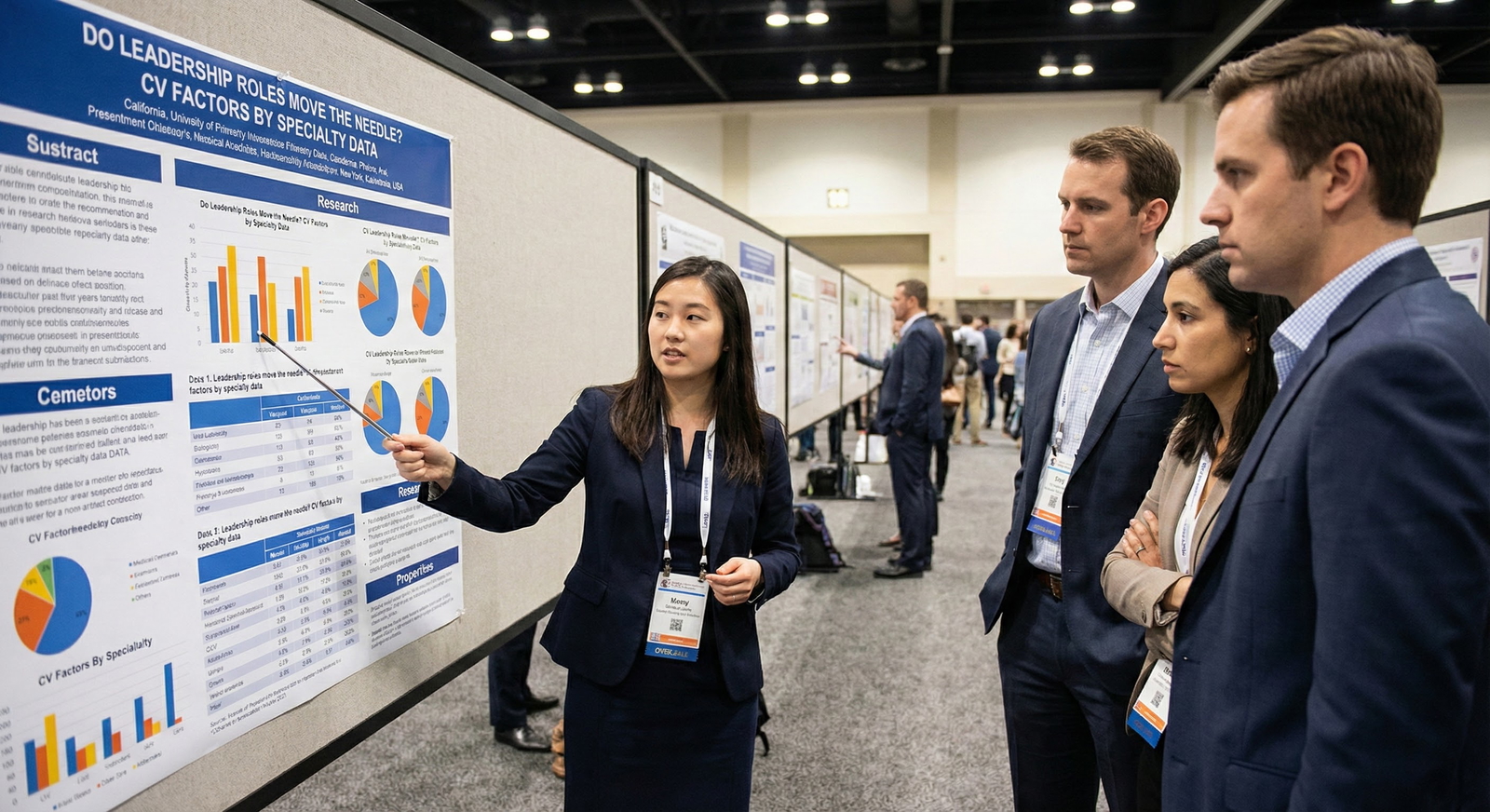
6. Publications, Presentations & Posters
Divide into subsections:
- Peer-reviewed publications
- Abstracts and posters
- Oral presentations
- Book chapters (if any)
Use a consistent citation format (e.g., AMA). Bold your name.
Example:
Publications
- Smith JA, Lee R, Patel A. Outcomes after emergent laparotomy in trauma patients at an urban academic center. J Trauma Surg. 2024;56(3):210–218.
Presentations & Posters
- Smith JA, Gomez L. “Predictors of ICU length of stay after emergent laparotomy.” Poster presented at: Annual Regional Surgery Conference; March 2023; Boston, MA.
If your research is not yet accepted, label clearly as:
- Manuscript in preparation
- Abstract submitted
- Data collection in progress
Leadership, Teaching, and Work Experience: Demonstrating Reliability and Team Fit
Programs trust MD graduates who have taken responsibility for others—whether in teaching, leadership, or employment.
7. Leadership & Teaching
These experiences show:
- Ability to supervise or coordinate
- Communication skills
- Initiative and follow-through
Examples tailored to prelim surgery:
Leadership & Teaching
Surgery Interest Group Co-President
Allopathic Medical School – 2021–2023- Organized 10+ events annually, including suturing workshops and panel discussions with residents and attending surgeons
- Coordinated shadowing placements for 20+ pre-clinical students
- Increased member engagement by 30% through new peer-mentoring program
Clinical Skills Tutor, First-Year Medical Students
Allopathic Medical School – 2020–2022- Led small-group sessions on physical examination and basic procedural skills
- Received consistently high evaluations for clarity, patience, and professionalism
Residency CV tip:
Use results and impact, not just titles: “increased member engagement by 30%,” “coordinated X students.”
8. Work Experience (Non-Clinical)
Paid work, especially in high-responsibility or time-sensitive roles, reassures programs that you can handle workload and stress.
Examples:
- EMT or paramedic
- Scribe in ED or surgery clinic
- Nursing assistant or phlebotomist
- Lab manager or coordinator
- Military service
Sample entry:
Work Experience
- Emergency Department Scribe
County General Hospital, Phoenix, AZ – 2017–2019- Documented patient encounters for ED physicians in a high-volume hospital (150+ patient visits/shift)
- Gained exposure to trauma care and surgical consults
- Developed strong time management and multitasking skills
For a prelim surgery residency, ED and acute-care roles align well with the demands of surgical care.
Volunteer Work, Honors, Skills, and Professional Interests
These sections refine your “professional brand” and add texture to your profile.
9. Volunteer & Service Activities
Programs notice applicants who care about service and can handle non-OR, patient-centered work.
Examples:
- Free clinic work
- Community health fairs
- Pandemic-related service (COVID testing or vaccination)
- Surgical mission trips (describe scope carefully and ethically)
Sample entry:
Volunteer & Service
- Volunteer, Student-Run Free Clinic
Allopathic Medical School – 2020–2023- Assisted with history taking, vitals, and patient education under faculty supervision
- Co-led quality improvement initiative to improve post-visit follow-up rates, increasing follow-up success from 60% to 80%
Residency CV tip:
Highlight longitudinal service (1+ years) rather than a list of brief one-off events.
10. Honors & Awards
This is where you include:
- Alpha Omega Alpha (AOA), if applicable
- Gold Humanism Honor Society
- Clerkship honors (especially surgery, IM, ICU)
- Research or teaching awards
- Scholarships
Example:
Honors & Awards
- Surgery Clerkship Honors – Allopathic Medical School (2022)
- Gold Humanism Honor Society – Inducted 2023
- Dean’s List, State University – 2015–2019
For MD graduate residency applicants, even a few well-chosen honors can strengthen your trajectory, especially toward a prelim surgery year where reliability and teamwork are prized.
11. Skills & Certifications
Include relevant, not generic, skills:
- Certifications:
- ACLS, BLS (with expiration dates)
- ATLS (if applicable)
- Languages: with proficiency level (Basic, Conversational, Fluent, Native)
- Technical / Research:
- Statistical software (R, SPSS, Stata)
- REDCap
- ImageJ, etc.
- Surgical-Adjacent Skills:
- Basic suturing and knot-tying (preclinical workshop leader, etc.)
Example:
Skills & Certifications
- ACLS, BLS – Certified through 2026
- Conversational Spanish
- REDCap, SPSS (basic statistical analysis)
- Comfortable with basic suturing and knot-tying from multiple simulation workshops
12. Professional Interests
A brief section can align your CV narrative with your plans:
Example:
Professional Interests
- Acute care surgery, trauma surgery, surgical critical care
- Medical education and procedural skills teaching
- Quality improvement in perioperative care
Even if you ultimately aim for anesthesia or radiology, you could phrase it as:
Interests in perioperative care, critical care, and imaging-guided procedures.
This reassures programs that you will engage meaningfully during your preliminary surgery year.

Tailoring and Polishing: Turning a Good CV into a Strong Application
Once the content is in place, elevate your CV with these high-yield residency CV tips.
1. Align the CV With Your Overall Application Strategy
For an MD graduate residency applicant targeting a prelim surgery residency, ensure the following are consistent across ERAS, your CV, and personal statement:
- Your timeline (graduation date, research years, work gaps)
- Your narrative (why prelim surgery, how it fits your long-term plan)
- Your strengths (work ethic, teamwork, clinical responsibility)
Example alignment:
- ERAS Experiences: Emphasize surgery, ED, ICU, trauma, leadership.
- CV: Mirrors and slightly expands the same experiences with quantifiable details.
- Personal Statement: Explains how a preliminary surgery year will prepare you for your long-term goals, whether that is categorical surgery or another specialty.
2. Quantify Impact and Responsibility
Turn vague bullet points into objective signals of your capabilities:
Instead of: “Participated in surgery rotation”
Use: “Managed daily care of 6–10 inpatients on the general surgery service under supervision, including pre-rounding, write-ups, and presentations on morning rounds.”Instead of: “Helped with research”
Use: “Extracted and entered data for 150+ patient records into REDCap, ensuring >95% data completeness.”
Numbers give busy reviewers quick evidence that you’re ready for intern responsibilities.
3. Maintain Clean, Professional Formatting
- Use consistent fonts, sizes, and spacing
- Keep margins reasonable (0.5–1.0 inches)
- Use bold for section headers and positions; italics for dates
- Align dates on the right or within the line, but consistently
- Aim for 2–3 pages for an MD graduate (not one-page like a business resume; not 10 pages like a senior academic CV)
4. Address Gaps and Non-Standard Paths Strategically
If you:
- Took time off for research or a master’s
- Needed extra time to complete medical school
- Have a prior career (e.g., RN, paramedic, engineer)
These can strengthen your CV if framed correctly:
- Highlight maturity and added skills
- Show continuity (you remained involved in healthcare, research, or service)
- Clarify transitions (e.g., “Transitioned from engineering to medicine to focus on patient-centered problem-solving at the bedside.”)
For the allopathic medical school match process, prelim positions often serve as a second chance or bridge—for example, a preliminary surgery year followed by a re-application to categorical spots. Your CV should reflect a forward-looking, growth-oriented trajectory, not defensiveness about past gaps.
5. Get Targeted Feedback Early
Before finalizing your CV:
- Ask a surgery resident or fellow to review it
- Ask your surgery advisor or student affairs dean for specialty-specific feedback
- If possible, ask someone who serves on your school’s residency selection committee
Provide them with:
- Your CV draft
- Your ERAS common application (if ready)
- Your personal statement draft
Ask them: “Does this CV make sense for someone applying for a preliminary surgery residency? What’s missing, what seems out of place, and what can be cut or emphasized?”
Putting It All Together: An Example CV Snapshot for a Prelim Surgery Applicant
Below is a condensed outline of what a strong medical student CV for a prelim surgery year might look like (structure only, not a full document):
Contact Information
Education
- MD, Allopathic Medical School, 2024 (Surgery Honors Track)
- B.S., Biology, Magna Cum Laude, 2019
Examinations & Licensure
- USMLE Step 1: Pass
- USMLE Step 2 CK: 240
Clinical Experience – Surgery-Focused
- Sub-Internship, General Surgery (managed 6–10 patients/day, assisted in OR)
- SICU Rotation (critical care of post-op surgical patients)
Clinical Experience – Other
- Internal Medicine, Pediatrics, OB/GYN, Psychiatry
- ED Rotation (trauma exposure, surgical consults)
Research Experience
- Trauma surgery outcomes project, data collection and analysis
- Perioperative QI project (reduced post-op follow-up no-shows)
Publications & Presentations
- 1 first-author poster, 1 co-author abstract
Leadership & Teaching
- Co-President, Surgery Interest Group
- Clinical skills tutor for first-year students
Work Experience
- ED Scribe (exposure to acute and trauma care)
Volunteer & Service
- Student-run free clinic (3 years)
Honors & Awards
- Surgery Clerkship Honors
- Gold Humanism Honor Society
Skills & Certifications
- ACLS/BLS, conversational Spanish, REDCap, SPSS
Professional Interests
- Acute care surgery, trauma, perioperative medicine
This “story” shows someone clearly aligned with a prelim surgery residency, with sufficient clinical readiness and a record of responsibility, even if not a superstar researcher.
FAQs: CV Building for MD Graduates in Preliminary Surgery
1. How is a CV for a preliminary surgery year different from a categorical surgery CV?
The content is very similar, but the framing differs:
Preliminary surgery CV:
- Emphasizes reliability, clinical readiness, and willingness to work hard for one intensive year
- May show interest in multiple possible long-term paths (e.g., anesthesia, radiology, IM subspecialties) while still demonstrating respect and enthusiasm for surgical training
Categorical surgery CV:
- Leans more heavily into a long-term commitment to general surgery or a surgical subspecialty
- Often includes more robust research, especially in surgery
In both cases, strong clinical and team-based experiences remain crucial.
2. What if I don’t have much surgical research—can I still build a competitive prelim surgery CV?
Yes. For a prelim surgery residency, research is helpful but not always required. You can compensate by:
- Highlighting strong clinical evaluations, especially in surgery and ICU
- Demonstrating leadership and teaching commitments
- Emphasizing ED, acute care, and high-acuity experiences
- Showing professionalism, continuity, and reliability in your activities
If you have non-surgical research, frame it to emphasize transferable skills: data analysis, critical appraisal, teamwork, and perseverance.
3. How long should my residency CV be as a recent MD graduate?
For an MD graduate residency applicant:
- 2–3 pages is typical and appropriate.
- Do not compress important content just to hit one page; this is not a business resume.
- Avoid bloating with every minor activity. Prioritize depth, impact, and relevance to preliminary surgery.
Program directors should be able to scan and understand your trajectory in a few minutes.
4. How do I list a prior career (e.g., engineer, nurse, EMT) without overshadowing my medical training?
Include prior careers under Work Experience, and highlight how they:
- Built skills relevant to surgery (teamwork, critical thinking, systems knowledge)
- Show a pattern of responsibility and maturity
- Provide a unique lens you’ll bring to your preliminary surgery year
Ensure your medical school and clinical experiences remain the central focus. Think of your prior career as a supporting strength, not the headline.
By approaching your CV as a strategic narrative—not just a checklist—you can present yourself as a strong, dependable candidate for a preliminary surgery year, whether your destination is categorical surgery or another field. Each section of your CV is an opportunity to answer a simple question: “Why will I be an excellent prelim surgery intern that this team can trust from day one?”