Understanding the Role of the CV for a Non‑US Citizen IMG in Anesthesiology
For a non-US citizen IMG aiming for anesthesiology residency in the United States, your CV is more than a list of accomplishments—it is a strategic marketing document that must bridge multiple gaps at once:
- You trained in a different healthcare system
- You may not have US clinical experience yet
- Program directors may be unfamiliar with your school, grading system, or titles
- You are competing in a moderately competitive specialty (anesthesiology) with many strong US graduates
Your CV must therefore:
- Present your background in a format familiar to US program directors
- Highlight clear evidence that you understand modern perioperative and critical care medicine
- Demonstrate excellence, reliability, and maturity suitable for anesthesia practice
- Anticipate visa concerns by showing stability, commitment, and long-term planning
Think of your CV and ERAS application as a single, integrated professional profile. While ERAS has standardized sections, having a strong underlying “master CV” helps you:
- Complete ERAS more efficiently and accurately
- Tailor your content for anesthesiology
- Keep information consistent across personal statement, letters, and interviews
The advice below focuses on how to build a robust master medical student CV (and how to adapt it) as a foreign national medical graduate specifically aiming for anesthesiology residency in the US.
Core Structure: What Your Anesthesiology CV Must Include
Even though ERAS is the official format for the anesthesia match, you should maintain a well-organized, traditional CV in parallel. It is useful for:
- Networking emails (to program directors, researchers, anesthesiology faculty)
- Scholarship and observership applications
- Backup applications in other systems (Canada, UK, research positions)
Here is the recommended structure with residency CV tips tailored to a non-US citizen IMG in anesthesiology.
1. Contact Information and Professional Identity
What to include:
- Full name (matching your passport and USMLE registrations)
- Current address (US address if you are currently in the US; otherwise home country)
- Phone (with country code)
- Professional email (e.g., firstname.lastname@gmail.com – avoid nicknames)
- LinkedIn URL (optional but increasingly helpful)
Anesthesiology-specific tip:
Consider a concise “Professional Headline” line under your name, such as:
- “International medical graduate with critical care exposure seeking anesthesiology residency”
- “Non-US citizen IMG with perioperative research experience applying to anesthesiology residency”
Not required, but acceptable on a stand-alone CV (not on ERAS) to give instant context.
2. Education and Training
List in reverse chronological order:
- Medical school (full official name, city, country)
- Degree earned and expected/actual graduation date
- Any prior degrees (e.g., BSc, pharmacy, nursing, biomedical engineering)
Clarify for US readers:
- Explain grading style briefly if unusual:
- “Graduated with Distinction (top 10% of class)”
- “Ranked 3rd of 120 students (2.5%ile)”
- Convert unclear titles: instead of “House Physician,” use “Intern (equivalent)” in parentheses.
For a foreign national medical graduate, it is helpful to add:
- ECFMG status: “ECFMG Certified” or “USMLE Steps in progress” (you can include this either in an ‘Exams’ section or in education)
- Planned graduation/visa status if still a student
3. Licensure and Examinations (Crucial for IMGs)
This section matters more for a non-US citizen IMG than for most US graduates because it reassures programs about readiness and commitment.
Include:
- USMLE Step 1 – score (if numeric), date taken, “Pass” for pass/fail format
- USMLE Step 2 CK – score and date
- USMLE Step 3 – if taken (advantageous for visa-requiring applicants in anesthesiology)
- ECFMG Certification – date obtained or anticipated
You may also add:
- IELTS/TOEFL scores (if taken), especially if English is not your first language and you are applying to programs that value objective evidence of communication skills.
Residency CV tips specific to anesthesiology:
- Programs value quick decision-making and precise communication. Strong Step 2 scores and clear, error-free English in your CV help emphasize this.
- If Step 1 was pass/fail, emphasize Step 2 CK performance as an objective academic metric.
4. Clinical Experience and Rotations: Highlight Perioperative Exposure
For anesthesiology, your clinical exposure is one of the most important sections. US program directors want reassurance that you understand:
- Perioperative medicine
- Acute care and resuscitation
- Critical care and pain management
- Teamwork in the OR/ICU setting
A. Core Clinical Rotations (Home Country)
List your main rotations with:
- Specialty, institution, city/country, dates
- Optionally: number of weeks or months
Example:
- “Internal Medicine – University Hospital, Cairo University, Cairo, Egypt – 8 weeks (2023)”
Keep this section concise. The details matter more for US-based experiences.
B. Electives and Subinternships (US and Abroad)
For a non-US citizen IMG in anesthesiology, this is a key differentiator. If you have any of the following, they deserve bullet-level detail:
- Anesthesiology electives or observerships
- ICU rotations (medical, surgical, cardiac, neuro ICU)
- Emergency medicine rotations with resuscitation exposure
- Pain medicine or perioperative medicine electives
For each experience, include:
- Institution, department (e.g., Department of Anesthesiology), city, state
- Role: “Visiting medical student,” “Observer,” “Extern,” “Subintern”
- Dates
- 3–5 concise achievement-focused bullets
Examples tailored to anesthesia:
- “Observed and assisted in preoperative evaluations of ASA I–IV patients under supervision.”
- “Participated in daily OR lists involving general, regional, and monitored anesthesia care.”
- “Presented a case-based talk on multimodal analgesia for total knee replacement.”
- “Assisted residents in post-anesthesia recovery unit (PACU) assessments, focusing on airway, analgesia, and hemodynamic stability.”
These signal that you understand the scope of practice and culture of anesthesiology in the US setting.
C. Gap or Non-Clinical Time
If you had a period out of clinical training (preparing for USMLE, research, family, relocation), include it as:
- “Dedicated USMLE Preparation and Research – Full time, 01/2023–09/2023”
Then add 2–3 bullets describing productive activities during that time (research, observerships, courses). This is essential for any foreign national medical graduate with non-linear timelines.
Research, Quality Improvement, and Academic Output for Anesthesia Applicants
Anesthesiology is a data-driven specialty that values evidence-based practice, quality improvement (QI), and patient safety. You do not need to be a PhD-level researcher, but your medical student CV should show some academic curiosity and initiative.
1. Research Experience
Structure each research entry with:
- Project title or brief description
- Institution, department (ideally anesthesia, ICU, EM, surgery, or pain)
- Mentor/supervisor
- Your role (clearly specify your contribution)
- Dates
- 2–4 bullets emphasizing outcomes and skills
Example (strong entry):
Prospective Study of Postoperative Nausea and Vomiting in Laparoscopic Cholecystectomy
Department of Anesthesiology, XYZ University Hospital, [City, Country]
Role: Research assistant, 06/2022–02/2023
- Collected perioperative data on 160 adult patients under general anesthesia including demographic factors, anesthetic regimens, and postoperative outcomes.
- Performed preliminary statistical analysis in SPSS to identify independent risk factors for PONV.
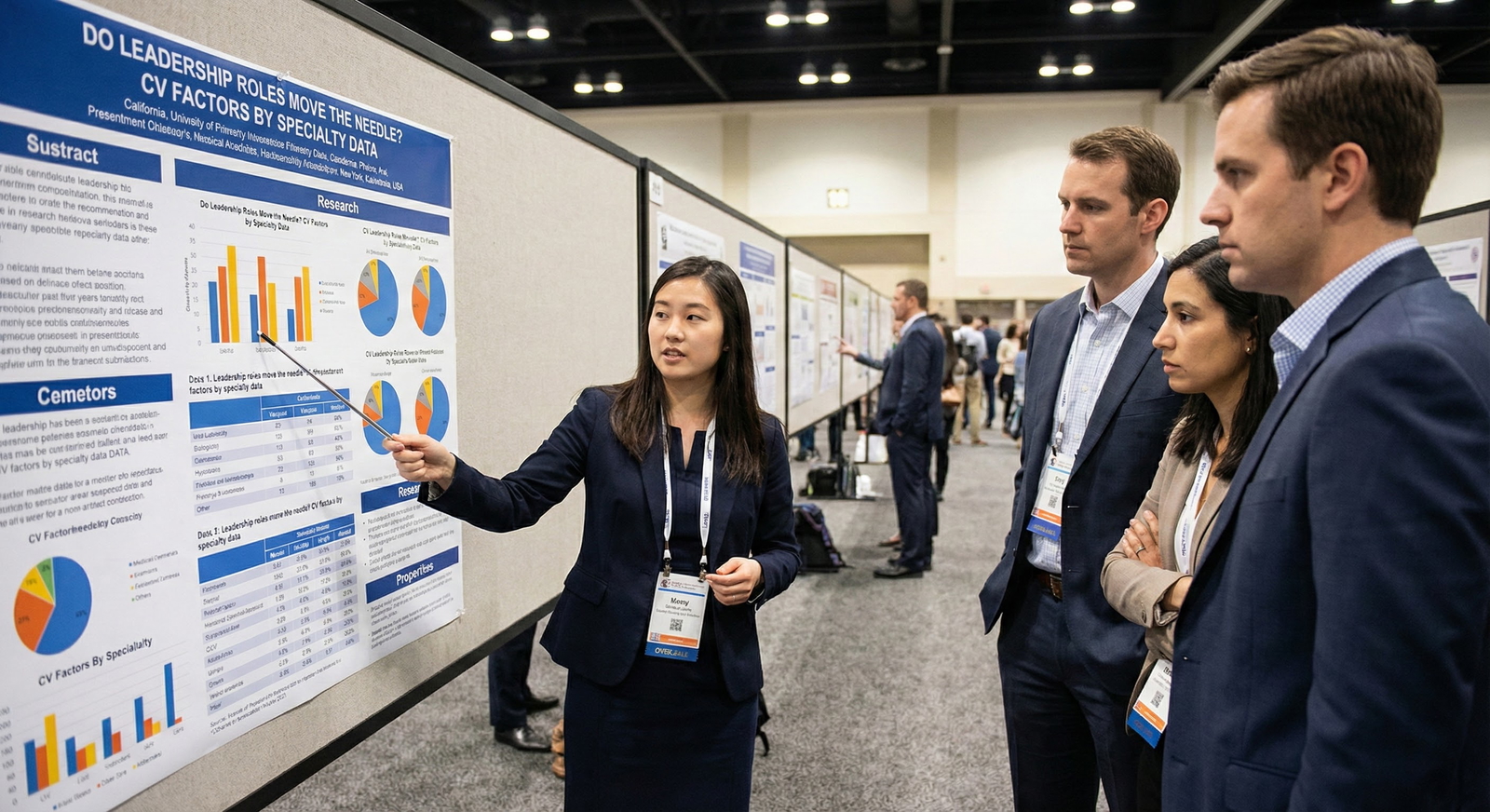
- Co-authored abstract accepted for presentation at the National Anesthesiology Congress (2023).
Residency CV tips:
- If your research is in another field (e.g., cardiology), emphasize skills transferrable to anesthesiology: hemodynamics, perioperative care, critical care, statistics, etc.
- If you lack formal research, consider targeting short anesthesia-related projects (chart reviews, case reports, QI projects) even 6–9 months before application.
2. Publications, Abstracts, and Presentations
Create subsections if you have enough content:
- Peer-reviewed publications
- Conference abstracts
- Oral and poster presentations
- Book chapters or online educational content
Use standard citation format (e.g., AMA). For a non-US citizen IMG, this demonstrates familiarity with academic norms.
Highlight anything clearly connected to anesthesia, intensive care, surgery, or pain. Example:
- “Kumar P, et al. Predictors of Difficult Intubation in Emergency Department Patients. Poster presented at Society for Academic Emergency Medicine Annual Meeting; 2024; Austin, TX.”
If anesthesiology-specific content is limited, that is okay—still list other specialties, but be ready to connect them to perioperative care during interviews.
3. Quality Improvement and Patient Safety
This is high-yield for anesthesiology, which strongly values safety culture.
Examples of QI-type activities:
- Implementing a surgical safety checklist
- Developing a perioperative pain protocol
- Reducing OR start-time delays
- Improving handoff communication between OR and PACU or ICU
When describing QI, use outcome-oriented bullets:
- “Co-led implementation of a standardized preoperative checklist in general surgery ORs, reducing incomplete documentation from 28% to 7% over 3 months.”
Even if done in your home country, QI experience is highly translatable to US anesthesia programs.
Non-Clinical Strengths That Matter in Anesthesiology
Certain competencies are deeply valued in anesthesia and should be reflected strategically in your CV:
- Calmness under pressure
- Teamwork and communication
- Attention to detail
- Technical aptitude and comfort with technology
- Ethical judgment and professionalism
1. Leadership and Teaching Experience
Program directors want residents who can grow into chief residents, fellows, and faculty.
Strong examples for your CV:
- Class representative or student government positions
- Founder or coordinator of an Anesthesia or Critical Care student interest group
- Organizer of skills workshops (airway management, BLS/ACLS, simulation sessions)
- Tutor for junior students in physiology, pharmacology, or clinical skills
Format:
Role Title – Organization, Institution, City, Country, Dates
- 2–4 bullets focusing on measurable impact
Example:
Coordinator – Anesthesiology and Critical Care Student Interest Group, ABC Medical College, 10/2022–07/2023
- Organized monthly lectures by anesthesiology faculty on perioperative fluid management, airway assessment, and pain control.
- Designed simulation-based OSCE preparation sessions that improved pass rates among junior students by 18%.
This signals leadership, organizational ability, and authentic interest in anesthesia.
2. Volunteering and Service
Use this section to show humanism and service—core to anesthesiology, especially pain, palliative, and critical care.
Relevant examples:
- Health camps with preoperative assessments or emergency triage
- Community CPR / BLS teaching
- Volunteering in hospital wards or emergency services
- Participation in disaster or mass casualty drills
Describe briefly but highlight:
- Responsibility
- Continuity (long-term volunteering > one-time events)
- Any connection to acute care or perioperative settings
3. Skills, Certifications, and Courses
This is an ideal place to showcase directly relevant skills for an anesthesiology residency applicant.
Consider including:
Certifications:
- BLS, ACLS, PALS (American Heart Association preferred or equivalent)
- ATLS (if available)
- “Difficult Airway Management Workshop”
- “Ultrasound-guided procedures course”
Technical Skills:
- Basic airway management (bag-mask ventilation, oral/nasal airway, supraglottic airway) – only if actually performed and supervised
- IV cannulation, arterial blood gas sampling, central line observation/assistance (describe level honestly)
- Basic ultrasound skills (IV access, FAST, lung ultrasound), if applicable
Software and Data Skills:
- SPSS, R, Python (for research)
- Basic familiarity with electronic health records
Languages:
- List languages with proficiency level (e.g., “English – fluent; Spanish – intermediate; Arabic – native”).
For a foreign national medical graduate, English proficiency and additional languages can be a plus in diverse patient populations.

How to Build and Strengthen Your CV Over Time as a Non‑US Citizen IMG
If you are still early in medical school or 1–2 years away from applying to the anesthesia match, you can strategically plan how to build a stronger CV for residency.
1. Map Your Timeline Backwards
Working backward from your intended match year, identify key windows:
24–30 months before Match:
- Start or join research or QI projects (at least one related to perioperative or critical care medicine).
- Begin leadership roles in student groups or interest groups.
18–24 months before Match:
- Apply for US clinical electives or observerships in anesthesiology, ICU, or EM.
- Focus on strong performance in core rotations, especially internal medicine, surgery, and emergency medicine.
12–18 months before Match:
- Submit abstracts and aim to present at national or regional meetings (even virtual).
- Obtain advanced life support certifications.
- Finish Step 1/2 CK and consider Step 3 if timing allows (particularly helpful for visa-requiring applicants).
6–12 months before Match:
- Polish CV and ERAS entries.
- Obtain targeted letters of recommendation from anesthesiologists who know you well.
- Finalize your personal statement aligned with your CV narrative.
2. Choosing Activities That “Signal” Anesthesiology Interest
If you have limited time, prioritize activities that send a clear, consistent signal that anesthesiology is your path:
High-yield for anesthesia CV:
- Anesthesiology or critical care electives/observerships (home and US)
- Research/QI in OR efficiency, perioperative outcomes, ICU care, airway management, pain control
- Leadership in anesthesia/critical care interest groups
- Simulation activities involving resuscitation, crisis resource management, and airway skills
Moderate-yield:
- General clinical volunteering, especially in emergency or inpatient settings
- Research in areas like cardiology, pulmonology, surgery, or neurology (connect to perioperative physiology)
Low-yield (but still valuable for personal growth):
- Activities unrelated to medicine, if they consume large time without clear leadership or achievements
- Overly generic volunteering with no sustained involvement
3. Adapting Your CV for Different Uses
You will likely need multiple versions of your CV:
Master CV:
- Detailed, comprehensive (includes everything, all dates, all roles).
- Internal document for you only.
Residency-Focused CV (for anesthesiology):
- 2–4 pages, well-structured.
- Emphasizes clinical, research, and leadership experiences relevant to acute and perioperative care.
- Used for networking emails, direct program contact, and scholarship opportunities.
Research-Focused CV:
- Emphasizes research experience, publications, and presentations.
- May be requested for anesthesia research positions or fellowships before residency.
When preparing ERAS, ensure that all entries match the details on your tailored residency CV, including dates, titles, and descriptions.
Common Mistakes Non‑US Citizen IMGs Make on Anesthesiology CVs (and How to Avoid Them)
1. Using a Non-US Style Format
Mistakes:
- Including a photo, marital status, religion, or national ID number
- Overly decorative templates, colors, or graphics
- Listing high school details prominently
Solutions:
- Use a clean, text-only, US-style CV: 11–12 point font, consistent headings, no photo, no personal demographic information.
- Keep high school out unless there is a major, unique achievement (international medal, Olympiad, etc.).
2. Overcrowded or Vague Descriptions
Mistakes:
- Long paragraphs, unclear responsibilities, or generic descriptions like “Helped in patient care.”
- Listing every minor course or webinar, creating noise.
Solutions:
- Use concise, targeted bullets starting with action verbs (“led,” “implemented,” “collected,” “analyzed,” “taught”).
- Highlight impact and numbers when possible (“trained 40 students,” “reduced delays by 15%”).
- Group minor online courses under one bullet if needed.
3. Unclear Timeline or Gaps
For a foreign national medical graduate, program directors pay close attention to gaps.
Mistakes:
- Leaving months or years unaccounted for.
- Not explaining periods dedicated to exam preparation or research.
Solutions:
- Label gap periods honestly: “Full-time USMLE preparation and observerships (Month/Year–Month/Year).”
- Highlight productive activities during that time.
4. Overstating Clinical Skills
Mistakes:
- Claiming independence in procedures performed only under supervision.
- Using US-sounding titles (e.g., “Resident”) when your role was different (“House officer,” “Intern”).
Solutions:
- Clearly indicate your level of involvement (observer, assistant, performed under supervision).
- Add clarifying notes for international titles: “House Officer (equivalent to rotating intern).”
- Remember that integrity is critical; anesthesiology heavily emphasizes trust and professionalism.
Putting It All Together: A Strategic CV Narrative for the Anesthesia Match
Your goal is not just to “fill sections” but to tell a cohesive story of who you are and why you are a strong, reliable future anesthesiologist.
For a non-US citizen IMG, an effective narrative often looks like:
- Solid medical training with strong performance in foundational sciences and clinical rotations
- Clear interest in perioperative and critical care medicine backed by electives, research, or QI
- Evidence of resilience and discipline through USMLE achievements and adaptation to a new system
- Leadership and teamwork experience that suggests you will contribute positively to the residency program
- Stable long-term plan for practicing anesthesiology in the US, with visa needs clearly understood but not overshadowing your strengths
If your medical student CV is built and maintained with this narrative in mind, adapting it to ERAS and other application formats becomes straightforward—and your application stands out in a crowded anesthesia match.
Frequently Asked Questions (FAQ)
1. How many pages should my CV be as a non‑US citizen IMG applying to anesthesiology?
For residency applications, a 2–4 page CV is usually appropriate. If you have substantial research or prior degrees, 3–4 pages is acceptable. Focus on relevance and clarity: anesthesiology-related experiences, leadership, research, and US clinical exposure should stand out, while less relevant details can be summarized.
2. I have no anesthesia research. Will that hurt my chances?
Not necessarily. Many successful anesthesia residents never did anesthesiology-specific research. However, any research in critical care, emergency medicine, cardiology, pulmonology, or surgery can be positioned as relevant to perioperative care. If time allows, consider starting a small project (case report, chart review, or QI project) related to anesthesia or ICU to show targeted interest.
3. How should I list observerships vs. hands-on electives?
Be transparent and accurate:
- For hands-on electives: use “Visiting medical student” or “Clinical elective” and describe direct responsibilities.
- For observerships: explicitly use “Observer” or “Observership,” and focus on what you observed and learned, plus any presentations or academic work you produced.
Program directors appreciate honesty more than inflated titles.
4. Do I need to include non-medical jobs or activities on my CV?
Include non-medical jobs if they demonstrate significant responsibility, leadership, or skills relevant to anesthesiology, such as teamwork, stress management, or communication (e.g., teaching, IT, aviation, engineering). Describe them briefly and focus on transferrable skills. Avoid cluttering the CV with minor part-time roles unless they add meaningful value to your professional story.
By intentionally shaping your CV around anesthesiology-relevant strengths and the expectations of US program directors, you transform your experience as a non-US citizen IMG from a perceived disadvantage into a clear, compelling asset for residency selection.