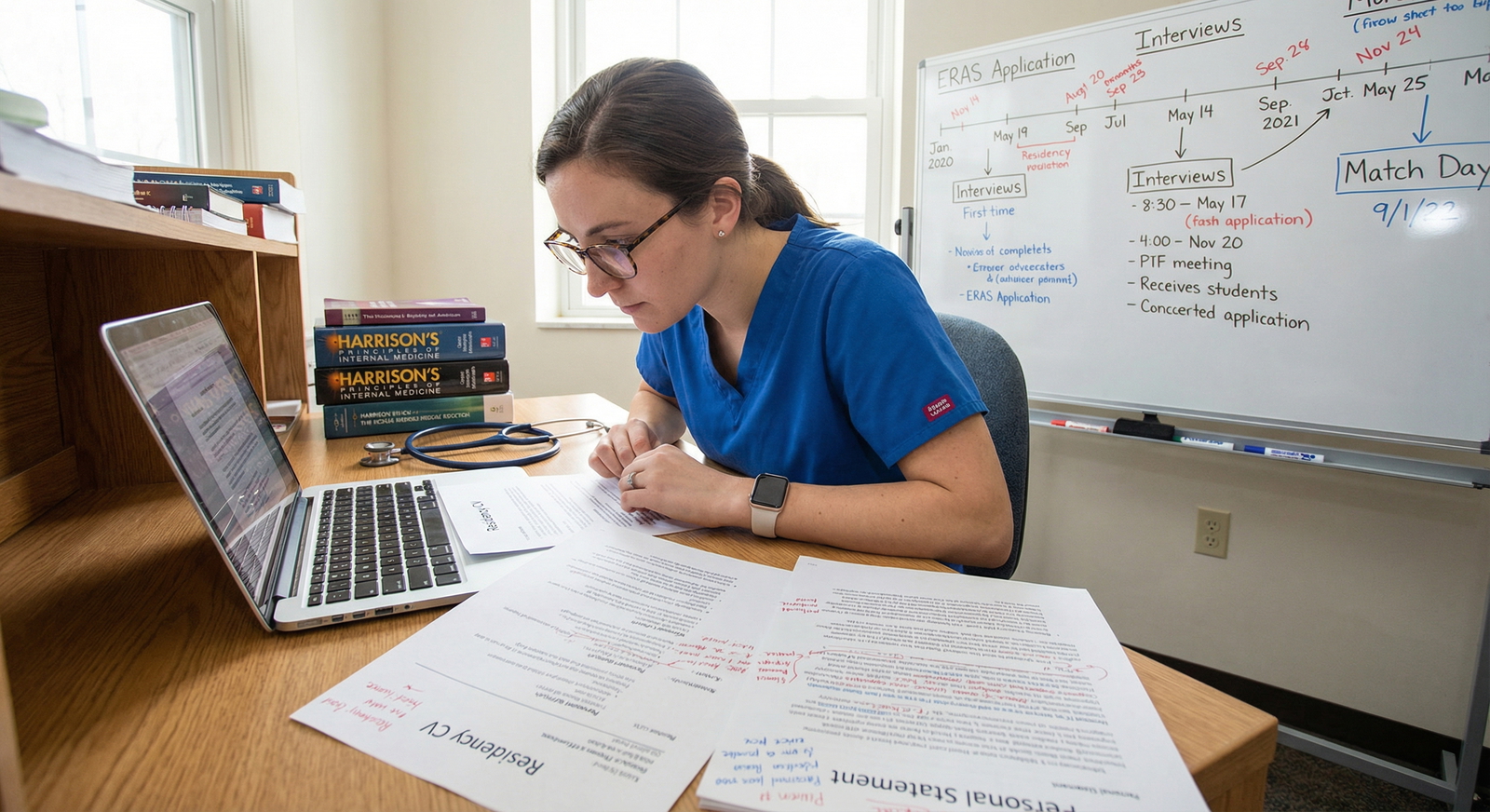
A strong, well-structured CV can turn a difficult Family Medicine (FM) match into a realistic, achievable goal—especially if you are a non-US citizen IMG or foreign national medical graduate. Program directors often review hundreds of applications in a short time. Your CV is your first chance to communicate, clearly and quickly, that you are prepared, focused on Family Medicine, and ready to thrive in US residency training.
This guide focuses on how to build a CV for residency as a non-US citizen IMG targeting Family Medicine residency positions. It covers what to include, what to avoid, and practical steps to strengthen your profile over time.
Understanding the Role of the CV in the FM Match
Your CV is not just a list of activities—it is a strategic document that supports your ERAS application, personal statement, and letters of recommendation.
How Program Directors Use Your CV
For Family Medicine residency, program directors typically use your CV to:
- Confirm that your training path makes sense (no major unexplained gaps)
- See if you have genuine, sustained interest in Family Medicine
- Evaluate your clinical readiness (US clinical experience, continuity clinics, broad exposure)
- Identify red flags (large gaps, frequent job hopping, vague or inflated activities)
- Spot strengths that differentiate you from other IMGs (community service, leadership, language skills, global health)
For a non-US citizen IMG, your CV also helps answer additional questions:
- Have you adapted to US healthcare systems and communication style?
- Do you understand primary care concepts such as continuity, prevention, and population health?
- Are you dependable and stable enough for a 3-year FM residency, given visa and relocation challenges?
CV vs. ERAS Application
You may wonder: “If ERAS already has all my details, why do I need a separate CV?”
Many programs download or print CV-style summaries from ERAS, and some still ask for an attached CV via email or at interview time. A polished, consistent CV:
- Makes you look organized and professional
- Helps faculty quickly scan your trajectory
- Provides a portable document you can use for observerships, externships, research, and networking
Think of your CV as the master document from which your ERAS entries are derived.
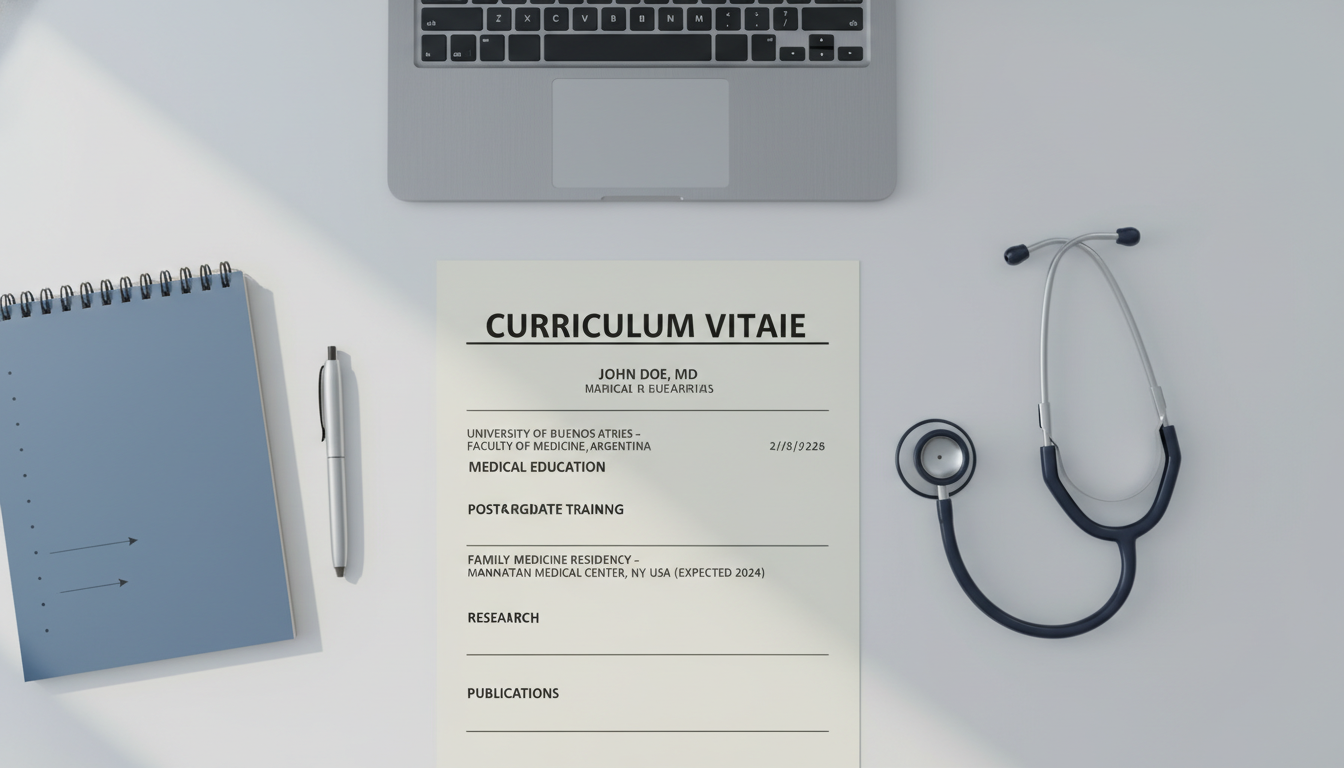
Core Structure: How to Organize Your Residency CV
The exact format varies, but non-US citizen IMGs applying to Family Medicine should generally follow this order:
- Contact Information
- Professional Summary (optional but helpful)
- Education
- Medical Licensure & Exams
- Clinical Experience (US and home country, with priority on recent)
- Research & Scholarly Activity
- Teaching & Leadership
- Volunteering & Community Engagement
- Certifications, Skills, and Languages
- Professional Memberships
- Awards & Honors
- Hobbies & Personal Interests (brief)
1. Contact Information
Keep this simple and professional at the top of your CV:
- Full name (consistent with ERAS and passport)
- Email (professional: firstname.lastname, no nicknames)
- Phone number (include country code if outside the US)
- Current address (US address if available; if abroad, still list)
- Optional: LinkedIn profile (only if it is complete and consistent)
Avoid:
- Photos (unless specifically requested by a program, which is uncommon in the US)
- Personal data not relevant in US context (marital status, religion, national ID number)
Professional Summary: A Powerful Tool for Non-US Citizen IMGs
While not mandatory, a 2–4 line professional summary can help position you quickly—especially as a foreign national medical graduate.
Example tailored to Family Medicine:
International medical graduate from India with 2 years of primary care experience and recent US observerships in urban Family Medicine clinics. Strong interest in chronic disease management, women’s health, and preventive care. Seeking a Family Medicine residency position where I can serve diverse, underserved populations and contribute in multiple languages (English, Hindi, Urdu).
Use your summary to highlight:
- Country of training (briefly)
- Specific Family Medicine interests (e.g., geriatrics, women’s health, underserved care, behavioral health)
- US clinical experience (if any)
- Language strengths and cross-cultural background
Avoid:
- Generic statements like “Hard-working doctor seeking residency”
- Mentioning visa needs here; save that for ERAS, not your CV header
Education, Exams, and Clinical Experience: The Core of Your Story
2. Education
List your medical school and any additional degrees in reverse chronological order:
- Degree (e.g., M.B.B.S., MD)
- Institution name, city, country
- Dates (month/year – month/year)
- Honors (if significant and understandable to US audience)
Example:
Bachelor of Medicine, Bachelor of Surgery (M.B.B.S.)
All India Institute of Medical Sciences, New Delhi, India
Aug 2014 – Mar 2020
- Graduated with Distinction in Internal Medicine and Community Medicine
If you have gaps in training, do not hide them. You will eventually need to explain them in ERAS and interviews. On the CV, keep dating accurate; explanations are reserved for interviews or a separate short statement if needed.
3. Medical Licensure & Exams
For FM match in the US, programs look closely at exam completion and timing. Include:
- USMLE Step 1 (score if you choose to share, or just “Pass”)
- USMLE Step 2 CK (score or “Pass”)
- OET/IELTS (if relevant for other countries)
- ECFMG certification status (if applicable)
Example:
Licensure & Examinations
- USMLE Step 1 – Pass, 2022
- USMLE Step 2 CK – 243, 2023
- ECFMG Certified – 2024
If you have not yet taken a step exam, do not list it as if completed. You can simply omit it from the CV and indicate status in ERAS.
4. Clinical Experience: US and Home-Country
For a non-US citizen IMG, the Clinical Experience section is often the most important part of the residency CV. Organize it so that program directors can quickly see:
- You have recent, relevant clinical exposure
- You understand Family Medicine and primary care
- You can function in a US clinical environment, if you’ve had that experience
Structuring Clinical Experience
Create two subheadings if applicable:
- US Clinical Experience (USCE)
- International Clinical Experience
Within each, list experience in reverse chronological order:
Each entry should include:
- Role (e.g., Observership, Externship, Clinical Assistant, Resident, House Officer)
- Specialty and setting (e.g., Outpatient Family Medicine Clinic, Rural Primary Care Center)
- Institution, city, country
- Dates (month/year – month/year)
- 2–4 bullet points with specific, concrete responsibilities
Example – Strong USCE Entry
Clinical Extern, Family Medicine – Outpatient Clinic
Community Health Family Medicine Center, Chicago, IL, USA
Mar 2024 – May 2024
- Participated in 30–40 patient encounters per week under direct supervision, focusing on chronic disease management (diabetes, hypertension, COPD).
- Conducted focused history and physical exams, presented cases to attending physicians, and documented notes in the EMR (Epic) under supervision.
- Counseled patients on lifestyle modification, preventive screenings, and vaccination schedules, using teach-back methods for health literacy.
- Observed interprofessional team huddles with nurses, social workers, and behavioral health specialists for comprehensive care planning.
Example – International Experience Relevant to FM
Medical Officer, Primary Care Clinic
Rural Health Center, Punjab, Pakistan
Jan 2022 – Dec 2023
- Managed 25–30 patients per day independently, providing acute and chronic care services including diabetes, hypertension, asthma, and prenatal visits.
- Organized weekly maternal-child health day focusing on antenatal visits, immunizations, and nutrition counseling.
- Coordinated with local public health workers for follow-up of high-risk patients and vaccine defaulters.
- Implemented a simple hypertension registry using Excel to track blood pressure and medication adherence.
What FM Programs Want to See in This Section
Family Medicine program directors particularly value:
- Continuity of care: Any experience with long-term follow-up of patients
- Breadth of exposure: Adults, children, women’s health, geriatrics
- Outpatient primary care: Community clinics, health centers, general practice
- Teamwork and communication: Interprofessional work, patient counseling
- Adaptability: Transferring skills across different systems and cultures
Common Mistakes to Avoid
- Listing only inpatient ICU/ER rotations without primary care experience
- Using vague bullets like “Saw many patients and learned a lot”
- Exaggerating responsibilities (e.g., implying independent prescribing authority in the US when you were an observer)
- Crowding all clinical experience into one block without separating USCE
Research, Teaching, and Leadership: Making Your CV Stand Out
Not all Family Medicine applicants will have extensive research, but as a non-US citizen IMG, even modest scholarly or leadership activity can strengthen your residency CV.
5. Research & Scholarly Activity
For Family Medicine, research does not need to be highly specialized. What matters is:
- You understand basic research concepts
- You can work on a team, complete projects, and present or publish
- Your topics connect logically to primary care when possible
Include:
- Peer-reviewed publications
- Conference presentations (oral or poster)
- Quality improvement projects
- Case reports, especially if presented formally
Example:
Research Assistant – Diabetes Quality Improvement Project
Department of Family Medicine, University Hospital, Boston, MA, USA
Jun 2023 – Dec 2023
- Collected and analyzed data on HbA1c control in 200 patients with type 2 diabetes enrolled in a group visit program.
- Assisted in developing a patient education handout tailored for low-health-literacy populations.
- Co-authored abstract accepted for presentation at the State Academy of Family Physicians Annual Conference (2024).
When listing publications, use a standard citation style and indicate “Epub ahead of print” or “Submitted” only when accurate.
6. Teaching & Leadership
Family Medicine values physicians who can educate, collaborate, and lead within communities and teams.
Include:
- Teaching roles (tutor, mentor for junior students, skills workshops)
- Leadership positions (class representative, committee member, organization officer)
- Initiative-based roles (starting a clinic program, organizing a health fair)
Example:
Peer Tutor – Physical Examination Skills
ABC Medical College, Lagos, Nigeria
Aug 2018 – May 2019
- Conducted weekly small-group review sessions for 10–12 pre-clinical students focusing on cardiovascular and respiratory exams.
- Developed checklists and feedback forms that were later adopted by the department as teaching tools.
Highlight outcomes or impact, not just titles.
Volunteering, Skills, and Personal Interests: Showing Your Family Medicine Fit
As a non-US citizen IMG, your broader life experience can be a strong asset, especially in a specialty like Family Medicine that values empathy, cultural competence, and community service.
7. Volunteering & Community Engagement
This section is especially important for FM, which is rooted in community-oriented primary care.
Examples of valuable activities:
- Health fairs (BP checks, diabetes screening, vaccination drives)
- Work with underserved populations (refugee clinics, free clinics, mobile health units)
- Public health campaigns (smoking cessation, maternal health, contraception education)
- Mental health or social services volunteering
Structure:
- Role/Activity
- Organization, city, country
- Dates
- 2–3 bullets describing what you did and the population served
Example:
Volunteer Physician – Free Community Clinic
Hope for All Free Clinic, Houston, TX, USA
Sep 2023 – Present
- Assisted attending physicians in providing primary care services to uninsured and undocumented adults and children.
- Conducted focused histories and basic physical exams, documented findings under supervision, and helped with patient education on chronic disease management.
- Collaborated with social workers to connect patients with financial assistance programs and community resources.
Try to show:
- Consistency: Long-term commitment is more impressive than brief or one-day volunteering.
- Relevance: Activities that mirror Family Medicine themes (prevention, continuity, underserved care).
8. Certifications, Skills, and Languages
This section is particularly important for IMGs:
Certifications
- BLS (Basic Life Support)
- ACLS (Advanced Cardiovascular Life Support)
- PALS (if you have pediatric interest)
- Any recognized vaccination or public health certifications
Technical Skills
- EMR systems used (e.g., Epic, Cerner; only if you truly used them)
- Office procedures (if actually performed under supervision: Pap smears, joint injections, I&D, suturing)
- Data analysis tools (SPSS, R, Excel) if used in research/QI
Languages
Being multilingual is a real advantage in many Family Medicine programs.
Example:
Languages
- English – Fluent
- Spanish – Conversational (used in clinic to assist with basic communication)
- Arabic – Native
Be honest about your level; overclaiming fluency can backfire during interviews or in clinic settings.
9. Professional Memberships
Show that you are engaged in the profession:
- American Academy of Family Physicians (AAFP) – International or student membership
- Local or national Family Medicine societies in your home country
- IMG organizations related to Family Medicine
Example:
Professional Memberships
- Student Member, American Academy of Family Physicians (AAFP), 2023 – Present
- Member, Nigerian Association of Family Physicians, 2022 – Present
Formatting and Style: Residency CV Tips That Matter
Beyond content, format and clarity strongly influence how your CV is perceived.
Length and Layout
- Aim for 2–4 pages for an IMG residency CV; avoid going beyond 4 pages unless you have a very extensive research background.
- Use clear section headings with consistent formatting.
- Use bullet points, not dense paragraphs.
- Choose a clean, professional font (e.g., Calibri, Arial, Times New Roman, 10.5–12 pt).
Dates and Chronology
- Use reverse chronological order within each section.
- Ensure there are no unexplained date gaps. If you took time for exams or family reasons, keep the dates accurate; you will explain in ERAS or interviews if needed.
Language and Tone
- Use action verbs and concrete descriptions: “coordinated,” “implemented,” “developed,” “counseled,” “analyzed.”
- Avoid exaggeration or ambiguous terms: “helped many patients,” “improved many processes” – be specific instead.
- Keep tone professional and factual; avoid emotional or subjective statements (“I am the most dedicated student”).
Consistency With ERAS
Your CV should match your ERAS application:
- Same dates
- Same titles (e.g., “Clinical Extern” vs “Observer” – choose one)
- Same locations and descriptions, even if shorter on the CV
Misalignment can raise concerns about accuracy and honesty.
Tailoring for Family Medicine
You do not need a completely different CV for each specialty, but if you are focused on Family Medicine, emphasize:
- Outpatient experiences
- Continuity care and chronic disease management
- Community service and prevention
- Cross-cultural communication and language skills
De-emphasize activities that are not aligned (e.g., purely procedural surgical observerships) by placing them later or shortening their descriptions.
Step-by-Step Plan: How to Build CV Strength Over 6–18 Months
If you are still early in preparation, here’s a strategic plan tailored to a non-US citizen IMG targeting Family Medicine residency.
Months 1–3: Foundation and Documentation
- Draft a baseline CV using your current experiences.
- Ensure all dates and details are accurate.
- Start or complete USMLE Step 1/Step 2 CK planning.
- Begin looking for US clinical experience opportunities (observerships, externships, research in FM).
Months 4–9: Add FM-Relevant Experience
- Secure at least 1–2 US Family Medicine observerships/externships if possible.
- Engage in community volunteering, especially in primary care or underserved populations.
- Join AAFP or your local FM society as a student/IMG member.
- Seek out a small research or QI project in primary care if accessible.
Months 10–18: Consolidate and Polish
- Complete Step exams and obtain ECFMG certification if eligible.
- Request strong, FM-focused letters of recommendation from US or primary care mentors.
- Update your CV every 2–3 months, refining bullet points and structure.
- Ask a mentor familiar with the US system to review your CV for clarity and relevance.
Frequently Asked Questions (FAQ)
1. How is a residency CV different for a non-US citizen IMG?
As a non-US citizen IMG or foreign national medical graduate, your CV must:
- Clarify your training trajectory across countries.
- Demonstrate adaptation to US clinical culture (if you’ve had USCE).
- Show sustained interest in Family Medicine, not a last-minute specialty choice.
- Highlight strengths like multilingual abilities, cultural competence, and global health exposure, which align closely with Family Medicine values.
Programs also carefully look at the recency of your clinical experience and evidence that you can transition effectively into US residency.
2. How many pages should my Family Medicine residency CV be?
For most IMGs:
- 2–4 pages is appropriate.
- If you have minimal research and work experience, 2–3 pages are usually enough.
- If you have many publications or several significant work roles, 3–4 pages are acceptable.
Focus on relevance and clarity rather than hitting a specific page number. Do not pad your CV with minor or repetitive items just to increase length.
3. Should I include non-medical jobs or activities?
Include non-medical experiences if they:
- Show leadership, responsibility, or long-term commitment (e.g., tutoring, managerial roles).
- Demonstrate skills valued in Family Medicine: communication, teamwork, service to diverse communities.
For example, a part-time job as a community health worker, translator, or teacher can be very relevant. A short-term unrelated job (e.g., retail) can be listed briefly if it explains a time period and shows work ethic, but should not dominate your CV.
4. How can I make my CV stand out if I don’t have much research?
You can still create a strong FM-focused CV by emphasizing:
- US clinical experience in Family Medicine or primary care
- Consistent volunteering in community and preventive health activities
- Teaching and peer mentoring roles
- Quality improvement or audit projects, even small-scale
- Language skills and cultural competence, especially if you can serve local patient populations
In Family Medicine, humanistic qualities, community involvement, and broad clinical exposure often carry as much weight as traditional research, especially for residency-level positions.
By developing a clear, honest, and Family-Medicine-focused CV, you give program directors a compelling reason to see you as a strong fit—despite the additional challenges you may face as a non-US citizen IMG. Start early, refine regularly, and always think in terms of how each experience demonstrates readiness for community-oriented, patient-centered primary care in the US.