Understanding the Residency CV Landscape as a Caribbean IMG
For a Caribbean medical school graduate, your CV is more than a list of experiences—it is a strategic document that must overcome common bias and quickly communicate that you are ready for US residency training. Program directors may not know your school well; your CV becomes the “proof” of your clinical competence, professionalism, and trajectory.
Three realities shape how you should approach CV building as a Caribbean IMG:
You have to demonstrate equivalence and reliability.
Program directors want to know: “Can I trust this applicant to function at the same level as a US grad?” Your CV must clearly show strong clinical exposure, robust evaluations, consistency, and progression.You must fight assumptions about weaker preparation.
Caribbean medical school residency applicants can be overlooked if their CV looks thin, disorganized, or generic. A well-structured, achievement-oriented CV counters these assumptions.You need earlier and more deliberate planning.
Because you are often geographically and institutionally further from major academic centers, you must plan your clinical experiences, research, and leadership roles more intentionally than many US students.
This article walks you through how to build a strong CV for residency as a Caribbean IMG, with specific residency CV tips, practical examples, and strategies tailored to SGU, AUC, Ross, Saba, and other Caribbean medical school graduates.
Core Principles of a Strong Residency CV
Before we get into line-by-line guidance, it’s important to understand what program directors look for when scanning a medical student CV:
Clarity and structure
- Easy to skim in 30–60 seconds
- Logical sections: Education, Clinical Experience, Research, Work/Leadership, Publications/Presentations, Service, Skills
- Consistent formatting and dates
Evidence of clinical readiness
- US clinical experience (especially core clerkships and sub-internships)
- Strong roles and responsibilities during rotations
- Progression in responsibility over time
Academic and professional maturity
- Stable timeline (no unexplained long gaps)
- Increasing leadership, teaching, or initiative
- Activities that align with your target specialty
Impact, not just involvement
- Bullet points that show outcomes (“reduced errors,” “increased clinic efficiency,” “created new protocol”) rather than just tasks performed
- Quantified contributions wherever possible
Honesty and verifiability
- Nothing exaggerated or fabricated
- Every listed experience can be described fluently and in detail at interview
If you build your CV with these principles in mind, you will stand out even in a competitive SGU residency match or any Caribbean medical school residency application cycle.
Structuring Your Medical Student CV for Residency
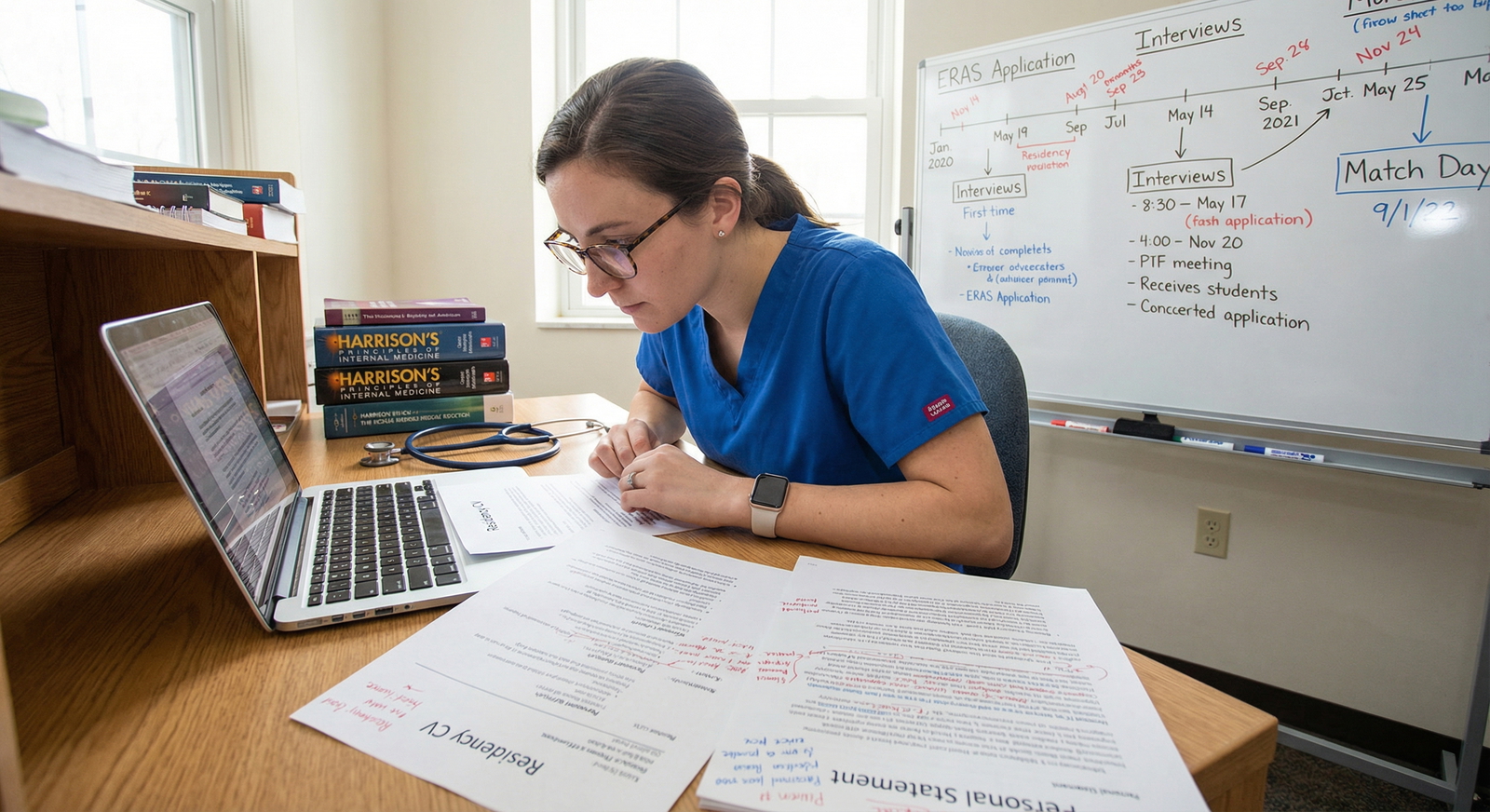
Your residency CV should complement—not duplicate—your ERAS application. Think of ERAS as a database and your CV as a polished, readable narrative of your journey.
Essential CV Sections
Here is a typical structure for a Caribbean IMG residency CV:
- Contact Information & Identifiers
- Education
- USMLE / Licensing Exams
- Clinical Experience (Core Clerkships & Electives)
- Research & Scholarly Activities
- Work Experience & Leadership
- Volunteer Experience & Community Service
- Publications, Presentations & Posters
- Honors & Awards
- Skills (Languages, Technical, Teaching)
- Professional Memberships
Each section should be reverse chronological (most recent first).
1. Contact Information & Identifiers
Include:
- Full name (exactly as it appears in ERAS and on USMLE documents)
- Email (professional address)
- Phone number (US number if possible, with voicemail set up)
- Current location (city, state/country)
- LinkedIn URL (optional but increasingly useful if professional)
Avoid including date of birth, marital status, photo, or immigration status on the PDF CV. Those are handled elsewhere in the application process.
2. Education
For Caribbean medical school residency applicants, the medical education section is scrutinized closely.
Include:
- Medical School: Full name, location (city, country)
- Degree: MD (or equivalent)
- Dates: Start month/year – expected or actual graduation month/year
- Class ranking or GPA if strong and available (e.g., “Top 15% of class,” “Honors in 8/10 core clerkships”)
- Pre-med / undergraduate degree: Major, institution, graduation date, honors
Example entry:
Doctor of Medicine (MD)
Saint George’s University School of Medicine, Grenada
Aug 2020 – May 2024
- Clinical rotations completed in affiliated hospitals in New York and New Jersey
- Honors in Internal Medicine, Pediatrics, and Psychiatry
Bachelor of Science in Biology, Magna Cum Laude
University of the West Indies, Mona, Jamaica
Sept 2016 – May 2020
If you are still in school, clearly label as “Expected Graduation: Month Year.”
3. USMLE Scores & Licensing Exams
You don’t need to list actual scores if you prefer not to, but for many Caribbean IMGs:
- Strong USMLE performance is a key credibility factor.
- If your scores are above the average for your target specialty, list them.
Example:
Licensing Exams
- USMLE Step 1: Pass (First Attempt; 3-digit score available on request)
- USMLE Step 2 CK: 245, First Attempt (June 2024)
If you have a fail, do not hide the exam; it will show in ERAS. Instead, address it later in your application, not in the CV bullets.
Showcasing Clinical Experience as a Caribbean IMG
For residency program directors, clinical experience is where you prove readiness. As a Caribbean IMG, you must be especially strategic in highlighting your US rotations and the level of responsibility you held.

4. Core Clerkships & Electives
Organize this section to emphasize:
- US-based clinical experience (USCE)
- Rotations at teaching hospitals or known academic centers
- Rotations aligned with your target specialty
You can group clerkships by core vs. elective, or simply list all clinical rotations with key details:
Core Clinical Rotations
Internal Medicine Clerkship
Brooklyn University Hospital, Brooklyn, NY
Jul 2023 – Sep 2023 (12 weeks)
- Managed 4–6 inpatients daily under supervision; developed assessment and plan for complex medical conditions
- Presented multiple case-based discussions at morning report
- Participated in multidisciplinary rounds with nursing, PT, and social work
Pediatrics Clerkship
Jersey City Medical Center, Jersey City, NJ
Oct 2023 – Dec 2023 (8 weeks)
- Performed focused pediatric histories and physicals in inpatient and outpatient settings
- Counseled families on vaccination schedules and asthma action plans
- Assisted with care coordination for children with chronic conditions
For electives or sub-internships, especially in your target specialty, highlight increased responsibility:
Sub-Internship in Internal Medicine
Community Medical Center, Newark, NJ
Apr 2024 – May 2024 (4 weeks)
- Functioned at intern level under supervision: wrote daily progress notes, placed orders (co-signed), and followed up on results
- Led bedside presentations on new admissions and participated in cross-coverage
- Developed and presented a quality improvement project on discharge medication reconciliation
Residency CV Tips for Clinical Experience
- Avoid listing “observer” roles as equivalent to hands-on experience. If it was observership only, label it clearly.
- Use action verbs (managed, coordinated, presented, led, developed).
- Tailor bullet points to your target specialty (e.g., emphasize ICU, wards for IM; continuity clinic for FM; procedures for surgery).
- If you rotated in US community programs that resemble your target residency programs, make sure program names are clearly visible.
Research, Leadership, and Service: Differentiating Your CV
A strong Caribbean medical school residency application often hinges on what you did beyond the minimum requirements. Because your school name may not carry the same weight as US schools, your activities are your brand.
5. Research & Scholarly Activities
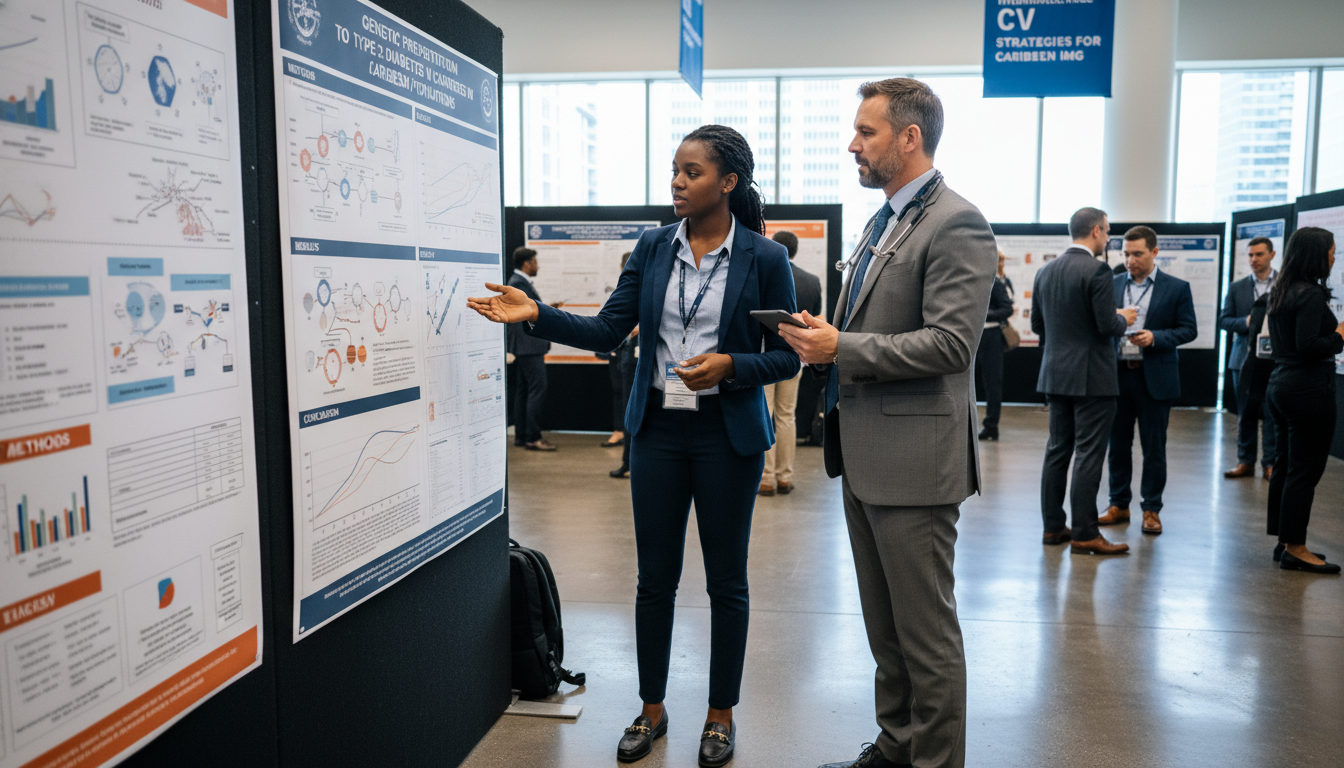
Not all Caribbean schools offer the same research infrastructure, but you can still build a solid research section.
Include:
- Clinical or basic science research projects
- Quality improvement (QI) initiatives
- Chart reviews, case reports, systematic reviews
- Outcomes: publications, abstracts, posters, presentations
Example:
Research Assistant, Department of Internal Medicine
Brooklyn University Hospital, Brooklyn, NY
Jan 2023 – Present
Mentor: John Smith, MD
- Conducted retrospective chart review of 300 patients with heart failure to analyze readmission predictors
- Collected and cleaned data in REDCap; performed basic statistical analysis (Chi-square, logistic regression) under supervision
- Co-authored abstract accepted for presentation at the 2024 American College of Physicians (ACP) regional meeting
If you lack publications, emphasize process and responsibilities:
- Data collection, IRB submission support, literature review
- Poster preparation, patient recruitment, protocol development
Caribbean IMG strategy:
If your campus has limited research, proactively:
- Email faculty at US rotation sites asking to assist with ongoing projects
- Offer help writing case reports on interesting patients seen on rotation (with appropriate permissions)
- Use remote opportunities (systematic reviews, database analyses) that can be done from anywhere
6. Work Experience & Leadership
Residency programs value professionalism, reliability, and leadership, which can be demonstrated through:
- Pre-med or pre-clinical jobs (scribe, medical assistant, tutor, nursing assistant)
- Leadership roles in student organizations (e.g., SNMA, AMSA, specialty interest groups)
- Peer mentoring or teaching
Example:
President, Internal Medicine Interest Group
SGU School of Medicine
Aug 2022 – May 2023
- Organized 10 faculty lectures and 3 residency panels attended by 50+ students each
- Coordinated clinical skills workshops on EKG reading and SOAP note writing
- Established mentorship program pairing pre-clinical students with upper-year clinical students
Medical Scribe (Part-Time)
Urgent Care Clinic, Miami, FL
Jun 2019 – Jul 2020
- Documented patient encounters in real-time for attending physician, improving throughput and chart accuracy
- Gained exposure to common urgent care presentations and EMR systems
Emphasize transferable skills: communication, time management, multitasking, team collaboration.
7. Volunteer Experience & Community Service
Caribbean IMGs often have powerful stories of service—both in their home countries and in US communities. Programs value a track record of altruism and commitment to underserved populations.
Example:
Volunteer, Community Health Fair Organizer
St. George’s Community Outreach, Grenada
Jan 2021 – May 2021
- Organized monthly blood pressure and diabetes screening events in rural villages
- Educated over 200 community members on lifestyle modifications and medication adherence
- Collaborated with local nurses and physicians to refer high-risk patients to follow-up care
If you are interested in Family Medicine, Internal Medicine, Pediatrics, or Psychiatry, such longitudinal community work is particularly valuable.
Translating Experiences into Strong CV Bullets
Many residency CVs fail not because applicants lack experiences, but because their descriptions are generic and task-based. To strengthen every part of your medical student CV, use the “Action + Context + Impact” formula.
Weak vs Strong Bullet Examples
Weak:
- “Assisted with patient care on the internal medicine ward.”
Strong:
- “Managed daily care of 4–5 inpatients under supervision, including writing SOAP notes, presenting on rounds, and updating families on clinical progress.”
Weak:
- “Participated in research on diabetes.”
Strong:
- “Reviewed 150 patient charts to identify risk factors for diabetic foot ulcers; contributed to manuscript draft submitted to Journal of General Internal Medicine.”
Weak:
- “Volunteered at health fairs.”
Strong:
- “Conducted blood pressure screenings and lifestyle counseling for 80+ underserved adults during monthly community health fairs, identifying several patients needing urgent follow-up.”
Quantify When Possible
Any time you can add a number, it becomes more concrete:
- “Organized 5 workshops attended by 40–60 students each.”
- “Screened 120 patients over 3 days.”
- “Reviewed 300 charts over 4 months.”
Align with Your Target Specialty
When thinking about how to build a CV for residency, especially as a Caribbean IMG, always ask:
- “Does this bullet support the type of resident I want to be?”
For example:
- Applying to Internal Medicine: emphasize complex inpatient cases, chronic disease management, research, QI.
- Applying to Surgery: highlight procedural exposure, OR responsibilities, manual dexterity, fast-paced environments.
- Applying to Psychiatry: underscore communication skills, mental health volunteering, patient counseling.
You do not need to hide other interests, but your high-yield bullets should all point toward your desired field.
Practical CV-Building Strategy: First Year to Match
To move beyond theory, here is a timeline-based strategy for Caribbean medical students (including SGU, Ross, AUC, etc.) preparing for residency.
Pre-Clinical Years (Years 1–2)
Goal: Build foundation and start your CV early.
- Join one or two key student organizations and aim for a leadership role by Year 2.
- Seek a research project (even small) with a campus or remote mentor; aim for at least a poster or abstract.
- Begin community service that you can continue longitudinally (health education, outreach, tutoring).
- Start a simple CV document now; update each semester.
Transition to Clinical Years
Goal: Position yourself for strong US clinical experiences.
- Identify US hospital sites with strong reputations via your school’s clinical placement office.
- If you’re thinking about SGU residency match or similar, plan rotations in regions where you want to match (e.g., Northeast vs. Midwest).
- Contact potential research mentors at upcoming rotation sites 3–6 months in advance.
Clinical Years (Core & Electives)
Goal: Convert rotations into impactful CV entries.
- Treat each clerkship like an extended audition: show up early, be prepared, ask to take on responsibilities.
- After seeing interesting cases, ask attendings if they are open to case reports or QI projects.
- Request letters of recommendation soon after strong rotations; note the details on your CV while fresh.
- Look for leadership on the wards (teaching junior students, organizing study sessions).
Final Year and Application Season
Goal: Polish and align your CV with your residency goals.
- Do sub-internships in your intended specialty.
- Finalize any pending abstracts or posters.
- Update your CV after each new accomplishment.
- Ask mentors to review your CV specifically for content strength and specialty alignment.
Formatting and Presentation Details That Matter
Even strong content can be undermined by poor formatting. For Caribbean IMGs, polish signals professionalism and helps counter bias.
Length and Layout
- For a medical student CV, 2–3 pages is acceptable if you have substantial experiences.
- Avoid font sizes below 10.5–11 pt (11–12 pt is ideal).
- Use one professional font family (e.g., Calibri, Arial, Times New Roman).
- Maintain consistent date and location formatting.
Common Mistakes to Avoid
- Spelling errors or inconsistent tense (past vs present).
- Long paragraphs instead of bullets.
- Listing every minor workshop or irrelevant pre-med club.
- Overuse of bold/italics; keep them for section titles and headings.
- Inflating minor roles into leadership positions; interviewers will notice.
Tailoring for Email vs ERAS vs Handout
- ERAS: Has its own entries; still upload your CV as a PDF if allowed.
- Email to programs or mentors: Use a clean PDF named professionally (e.g.,
Lastname_Firstname_MedStudent_CV_2025.pdf). - Interviews: Bring a few printed copies on good-quality paper; programs occasionally ask.
Special Considerations for Caribbean IMGs
Addressing Gaps or Non-Linear Paths
If you had:
- Time off for illness, family reasons, financial constraints, or exam retakes
- A career change or previous degree
You can still have a strong Caribbean medical school residency application:
- Always list timelines accurately.
- Use brief, neutral descriptions in your CV if needed (e.g., “Leave of absence for personal reasons,” dates).
- Provide more context in your personal statement or a designated ERAS section, not in the CV bullets.
Leveraging International Background
Your Caribbean or international background can be a unique asset, especially for primary care fields and diverse communities.
Highlight:
- Multilingual abilities
- Experiences in resource-limited settings
- Cross-cultural communication skills
Example:
- “Fluent in English and Haitian Creole; provided medical interpretation during clinical encounters for Creole-speaking patients in Brooklyn clinic.”
SGU Residency Match and Other Caribbean Programs
Programs know SGU, Ross, and a few other schools relatively well, but individual performance still matters more than school name.
To maximize SGU residency match or similar outcomes:
- Aim for honors in core clerkships.
- Seek US-based letters from academic faculty.
- Build a CV that clearly shows clinical readiness, initiative, and alignment with your chosen specialty.
Frequently Asked Questions (FAQ)
1. Do I really need a separate CV if I’m applying through ERAS?
Yes. While ERAS captures most information, a polished CV is useful for:
- Networking with faculty and research mentors
- Emailing programs or coordinators
- Having a concise, readable summary for interviewers
- Applying to non-ERAS positions (prelim years, research fellowships, observerships)
Think of your CV as your portable professional snapshot.
2. How important is research for a Caribbean IMG applying to residency?
It depends on the specialty:
- For competitive fields (Dermatology, Radiology, Orthopedics), research is very important.
- For Internal Medicine, Pediatrics, Psychiatry, and Family Medicine, research is helpful but not mandatory—especially QI, case reports, and clinical projects.
As a Caribbean IMG, research on your CV can help differentiate you and demonstrate academic engagement, but strong clinical performance and letters are still the foundation.
3. Should I include non-medical jobs on my residency CV?
Include non-medical work if it:
- Shows significant responsibility or leadership (e.g., manager, supervisor, teacher)
- Explains a gap in your timeline
- Demonstrates skills relevant to residency: teamwork, communication, resilience
For example, “Customer Service Supervisor at a busy call center” can highlight conflict resolution, time management, and stress tolerance—all valuable in residency.
4. How often should I update my CV during medical school?
Update your medical student CV:
- At the end of every semester or rotation
- After each significant milestone (publication, presentation, new leadership role)
- Definitely before sending it to any mentor, program, or research opportunity
Frequent small updates are easier and more accurate than reconstructing everything right before residency applications.
Building a strong residency CV as a Caribbean IMG is not about having a “perfect” record; it’s about presenting your real journey in the clearest, most impact-focused way possible. Start early, be strategic, and continuously refine your document so that when program directors glance at your CV, they immediately see a capable, prepared, and motivated future resident.