Building a standout residency CV as a DO graduate applying to nuclear medicine requires more than just listing experiences. Nuclear medicine is a small, highly specialized field with a strong imaging, physics, and research orientation. Your CV must show that you understand the field, can handle complex multidisciplinary work, and bring the strengths of osteopathic training—whole-person care, communication skills, and systems thinking—to a high-tech environment.
Below is a detailed guide on how to build a CV for residency—specifically optimized for the osteopathic residency match and the nuclear medicine match—with practical, step-by-step residency CV tips tailored to a DO graduate.
Understanding the Nuclear Medicine Residency Landscape as a DO
Nuclear medicine is a niche but evolving specialty centered on diagnostic imaging and targeted molecular therapies. For a DO graduate, competing in this environment means understanding what program directors look for and how to signal fit through your CV.
What Program Directors in Nuclear Medicine Look For
Most nuclear medicine residency directors (and related tracks such as diagnostic radiology with nuclear medicine emphasis) tend to prioritize:
- Strong clinical foundation (especially in internal medicine, radiology, cardiology, oncology, or surgery rotations)
- Quantitative/technical aptitude (comfort with physics, radiation safety, quantitative imaging)
- Research interest (even small projects or QI showing curiosity and follow-through)
- Teamwork & communication (because nuclear medicine interfaces with many specialties)
- Consistency of interest in imaging and molecular medicine over time
As a DO graduate, you also need to communicate:
- That you’re comfortable in ACGME-accredited environments (if not from a university hospital)
- How your osteopathic principles translate to nuclear medicine practice (e.g., whole-patient thinking in oncology imaging or theranostics)
- Any bridging experiences that show comfort with high-tech medicine (e.g., radiology electives, informatics projects, image analysis research)
Your residency CV is the core place to convey this—clearly, concisely, and strategically.
Overall CV Structure for a Nuclear Medicine Applicant (DO Graduate)
A clear and predictable structure makes it easier for program directors to find what they’re looking for quickly. Below is a recommended order tailored to DO graduates targeting nuclear medicine residency.
- Contact Information & Professional Header
- Education
- Examinations & Certifications (COMLEX, USMLE, other exams)
- Clinical Training & Relevant Rotations
- Research, Publications & Presentations
- Nuclear Medicine & Imaging-Specific Experience
- Leadership, Teaching & Professional Involvement
- Honors, Awards & Scholarships
- Volunteer & Community Service
- Technical Skills & Languages
- Professional Interests (Optional, brief)
DO-Specific Considerations in Layout
- Clearly identify your degree as DO in the header.
- Include both COMLEX scores and, if taken, USMLE scores.
- If your school changed names or merged, use the current official name plus note at first mention (to avoid confusion).
- If you applied or will apply to both osteopathic residency match and ACGME nuclear medicine match, maintain one master CV and adapt as needed.
Section-by-Section Breakdown: How to Build CV for Residency in Nuclear Medicine
1. Contact Information & Professional Header
This should be concise and professional—no personal statements or quotes here.
Include:
- Full name (with DO after your name)
- Current city/state (no full address needed)
- Phone number (direct, reliable)
- Professional email (FirstName.LastName@…)
- LinkedIn (optional but increasingly common)
- ERAS AAMC ID / NRMP ID (if known and if space allows, typically for application systems more than PDF CVs)
Example:
Jordan M. Patel, DO
Nuclear Medicine Residency Applicant
Chicago, IL • (555) 555-1234 • jordan.patel@medmail.com
LinkedIn: linkedin.com/in/jordanpateldo
Residency CV tip: Avoid casual email addresses; create a dedicated professional email for applications.
2. Education: Highlighting Your DO Background
List education in reverse chronological order. For a DO graduate residency applicant, your osteopathic medical school deserves prominence.
Format:
- Degree, Institution, Location
- Dates (month/year – month/year or expected graduation)
- Key items (class rank, GPA, major academic distinctions if notable)
Example:
Doctor of Osteopathic Medicine (DO)
Midwestern University Chicago College of Osteopathic Medicine, Downers Grove, IL
2019 – 2023
- Graduated with Honors
- Top 15% of Class
If you completed a transitional year, preliminary year, or prior residency (common for those applying to nuclear medicine after an internship):
Transitional Year Residency
XYZ Community Hospital, Internal Medicine Track, Cleveland, OH
2023 – 2024
3. Examinations & Certifications: COMLEX and USMLE
For DO graduates, a key residency CV tip is to clearly and cleanly present both COMLEX and USMLE scores (if you have them), because nuclear medicine programs often compare applicants across both pathways.
Include:
- COMLEX Level 1, 2 CE, 2 PE, 3
- USMLE Step 1, 2 CK, 3 (if applicable)
- State licenses (if already completed an internship)
- Certification in BLS/ACLS; consider including Radiation Safety courses if taken
Example Presentation:
Licensure & Board Examinations
- COMLEX-USA Level 1: Passed, 2021
- COMLEX-USA Level 2-CE: 6xx/800, 2022
- COMLEX-USA Level 2-PE: Passed, 2022
- USMLE Step 1: 23x, 2021 (if taken)
- USMLE Step 2 CK: 24x, 2022 (if taken)
- ACLS & BLS Certified, American Heart Association, Valid through 2026
You don’t need to include percentile ranks unless they’re provided and particularly strong.
4. Clinical Training & Nuclear Medicine-Relevant Rotations
Program directors want to see depth in internal medicine, radiology, cardiology, oncology, emergency medicine, and any nuclear medicine electives. This section is crucial to show your clinical maturity in addition to your imaging orientation.
Organize into subheadings:
- Core Clinical Rotations
- Sub-internships / Acting Internships
- Electives – Imaging & Nuclear Medicine
Example:
Selected Clinical Rotations
Sub-Internship, Internal Medicine – University Hospital, Detroit, MI | July 2022
- Managed 8–12 inpatient adults daily with complex comorbidities, coordinating care with cardiology and oncology services.
Elective, Nuclear Medicine – Academic Medical Center, Chicago, IL | Oct 2022
- Observed and assisted in interpretation of PET/CT and SPECT imaging for oncology and cardiology patients.
- Participated in daily read-out sessions with nuclear medicine faculty.
- Completed 10-minute case-based presentation on FDG PET in lymphoma staging.
Residency CV tip for nuclear medicine:
Create a separate short sub-section titled “Nuclear Medicine and Imaging Rotations” if you have more than one experience. This makes your commitment to the field instantly visible when skimming.
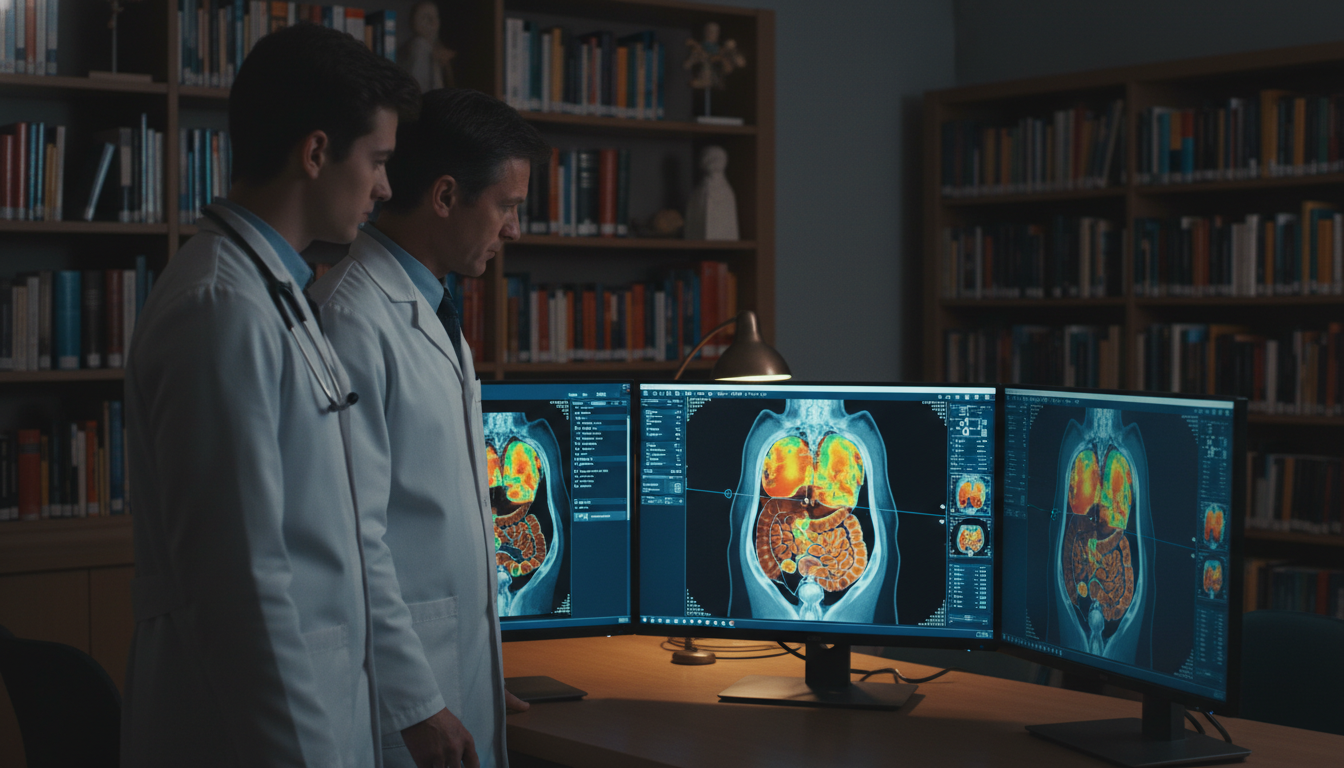
Showcasing Nuclear Medicine Interest: Research and Specialized Experience
5. Research, Publications & Presentations
Nuclear medicine is data-heavy and research-driven. Even small-scale projects demonstrate that you can think critically and engage with imaging science.
Break this section into:
- Peer-Reviewed Publications
- Abstracts & Posters
- Oral Presentations
- In-Progress Projects (if substantial)
Formatting tips:
- Use standard citation formats (e.g., AMA style)
- Bold your name in author lists
- Clearly indicate “Accepted,” “In Press,” or “Submitted”
Example:
Peer-Reviewed Publications
- Patel JM, Singh R, Lee A. Diagnostic performance of FDG PET/CT for early response assessment in Hodgkin lymphoma: A single-center retrospective study. J Nucl Med Technol. 2023;51(2):100–107.
Abstracts & Posters
- Patel JM, Alvarez M. Evaluating incidental thyroid uptake on PET/CT: Correlation with malignancy risk. Poster presented at: Society of Nuclear Medicine and Molecular Imaging (SNMMI) Annual Meeting; June 2022; Vancouver, Canada.
If you don’t have nuclear medicine-specific research:
- List any clinical research where you used statistics, imaging endpoints, or worked with oncology/cardiology patients.
- Include quality improvement projects related to imaging ordering, radiation exposure, or report turnaround times.
Residency CV tip: Even if you were “just a data collector,” describe your specific role and what you learned in one short bullet under each project.
6. Nuclear Medicine & Imaging-Specific Experience
This section is where you spotlight direct nuclear medicine engagement beyond standard rotations. Create a dedicated heading:
Nuclear Medicine and Imaging Experience
Include:
- Shadowing with nuclear medicine physicians
- Longitudinal electives or scholarly concentrations in imaging
- Participation in nuclear medicine journal clubs
- Attendance at SNMMI, RSNA, or other relevant conferences
- Nuclear medicine-related student interest group leadership
Example:
Nuclear Medicine and Imaging Experience
Longitudinal Nuclear Medicine Scholar, Academic Medical Center, Chicago, IL | 2021 – 2023
- Completed a two-year imaging scholar track with quarterly seminars on nuclear medicine physics, radiopharmaceuticals, and theranostics.
- Attended weekly PET/CT case conferences and tumor boards involving nuclear medicine.
Nuclear Medicine Shadowing, Dr. Karen Li, MD | 40 hours | 2021
- Observed SPECT, PET/CT, and bone scan interpretation in a community hospital setting.
- Discussed imaging appropriateness criteria and radiation dose considerations.
If you have access to a nuclear medicine department, ask to:
- Attend tumor boards (oncology, endocrine, neuro-oncology)
- Volunteer in QI projects (e.g., reducing repeated scans, improving scheduling efficiency)
- Help with case series or retrospective reviews
These experiences translate well to the nuclear medicine match because they show you understand the specialty’s day-to-day reality.
Leadership, Service, and Osteopathic Identity: Turning “Generic” Sections into Strengths
7. Leadership, Teaching & Professional Involvement
Nuclear medicine departments are usually small, meaning each resident is highly visible. Leadership and teaching experiences signal that you can be a reliable, proactive team member.
Include:
- Class leadership roles
- Student organizations (especially radiology/nuclear medicine/oncology)
- Osteopathic student association roles
- Peer teaching (anatomy TA, OMM lab assistant)
- Informal teaching (tutoring, exam review sessions)
Example:
Leadership & Teaching Experience
President, Radiology & Nuclear Medicine Interest Group, XYZ College of Osteopathic Medicine | 2021 – 2022
- Organized 6 faculty-led lectures on nuclear cardiology, PET/CT, and radiation safety.
- Coordinated 3 student shadowing opportunities in nuclear medicine departments.
OMM Anatomy Teaching Assistant, XYZ COM | 2020 – 2021
- Led weekly small-group sessions reviewing osteopathic structural exam and clinical correlations.
DO-specific opportunity:
Use leadership roles in osteopathic organizations to emphasize that you bring a holistic lens to patient care, which is increasingly important as nuclear medicine expands in theranostics and longitudinal cancer care.
8. Honors, Awards & Scholarships
Awards help your CV stand out in a small competitive field. Include:
- Academic honors (Dean’s List, AOA, Sigma Sigma Phi)
- Research awards (best poster, travel grants)
- Leadership or service awards
Example:
Honors & Awards
- Sigma Sigma Phi Osteopathic Honor Society, Inducted 2021
- Outstanding Student in Radiology, XYZ COM, 2022
- Travel Grant, SNMMI Trainee Award, 2022
If you lack nuclear medicine-specific awards, that’s acceptable—just list any recognition that shows diligence, scholarship, or leadership.
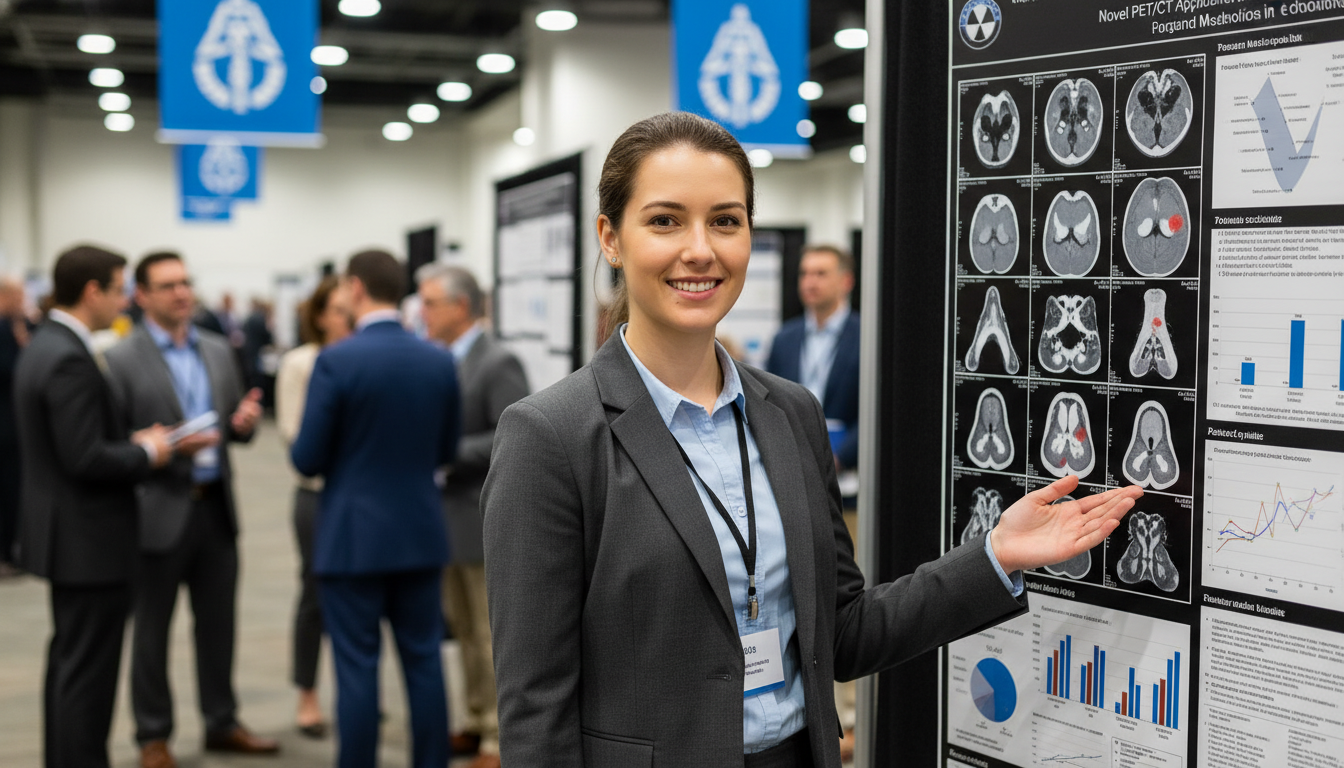
Technical Skills, Osteopathic Training, and Tailoring for the Nuclear Medicine Match
9. Technical Skills & Languages
This section is often underutilized but can be highly strategic for nuclear medicine.
Valuable technical skills include:
- Experience with DICOM viewers (e.g., OsiriX, Horos, RadiAnt)
- Familiarity with PACS/RIS
- Basic image processing knowledge (e.g., MATLAB, Python, ImageJ, 3D Slicer)
- Data analysis (Excel, SPSS, R)
- Radiation safety courses or dosimetry training
- Introductory experience with AI or machine learning in imaging (if applicable)
Example:
Technical Skills
- Imaging: Familiar with DICOM viewers and basic PET/CT and SPECT image navigation in PACS systems.
- Data Analysis: Proficient in Microsoft Excel; beginner-level R and SPSS for clinical data analysis.
- Radiation Safety: Completed 20-hour radiation safety training course for medical personnel, 2022.
Residency CV tip: Don’t exaggerate. Instead of “proficient” in programming, consider “working knowledge” or “beginner-level” for transparency.
10. Volunteer & Community Service: Show the Whole-Person DO Perspective
Nuclear medicine can appear very technical; your CV should remind programs that you are also a compassionate clinician.
- Hospice or oncology-related volunteer work aligns well with theranostics and cancer imaging.
- Health fairs or screening events demonstrate commitment to community health.
- OMM clinics or integrative medicine experiences highlight your osteopathic identity.
Example:
Volunteer & Community Service
Volunteer, Oncology Support Program, City Cancer Center | 2020 – 2022
- Provided support and education to patients undergoing chemotherapy and radiation therapy.
- Collaborated with multidisciplinary teams to address patient concerns about imaging and radiation exposure.
Connect these experiences (in your later personal statement or interviews) to how you will support patients who face complex imaging and therapy decisions.
11. Professional Interests (Optional)
A brief “Professional Interests” line at the end can reinforce your alignment with nuclear medicine without duplicating the personal statement.
Example:
Professional Interests
Nuclear oncology imaging, theranostics, PET/MR, imaging informatics, and medical education.
Keep this section to one or two lines.
Formatting, Style, and Common Pitfalls for a DO Graduate’s Nuclear Medicine CV
Formatting Best Practices
- Length: 2–4 pages is typical for a residency CV with research; do not artificially inflate.
- Font: Professional (e.g., Times New Roman, Garamond, Calibri, 11–12 pt).
- Consistency: Uniform bullet style, dates, and headings.
- File name:
LastName_FirstName_CV_NuclearMedicine.pdf.
Common mistakes to avoid:
Mixing CV and personal statement
- Don’t include narrative paragraphs or career goals; keep it factual.
Vague bullets
- Replace “Worked with doctors and patients on scans” with specific descriptions:
- “Observed interpretation of 10–15 PET/CT studies per day, focusing on oncology staging and treatment response.”
- Replace “Worked with doctors and patients on scans” with specific descriptions:
Overloading high school achievements
- Unless exceptionally prestigious or directly relevant (e.g., national science competition), omit pre-undergraduate details.
Unclear DO identity
- Make sure your DO degree is visible and your osteopathic training experiences are not buried.
Not nuclear medicine–focused enough
- Do not let nuclear medicine–related items be hidden; use headings that explicitly say “Nuclear Medicine” or “Imaging.”
How to Strategically Evolve Your CV Over Time (If You’re Early in Training)
If you’re still a 2nd or 3rd year DO student, you can use your CV as a planning tool:
Map the gaps
- Do you lack nuclear medicine exposure? Seek electives, shadowing, or virtual rotations.
- Minimal research? Pursue a small retrospective study or QI project in imaging or oncology.
Set short-term goals
- Present at least one poster at SNMMI, RSNA, or a regional radiology/nuclear medicine meeting.
- Attend departmental conferences regularly and ask for a small role.
Leverage osteopathic strengths
- Develop a project linking osteopathic care and imaging outcomes (e.g., patient-centered communication about radiation risk).
Revisit CV quarterly
- Update new experiences and refine phrasing with each revision.
- Ask a mentor in nuclear medicine to review your CV annually.
By the time you apply to the nuclear medicine match, your CV will show an organic, consistent trajectory rather than a last-minute pivot.
Frequently Asked Questions (FAQ)
1. How is a CV for nuclear medicine residency different from a general residency CV?
For nuclear medicine, your CV should:
- Emphasize imaging and quantitative skills.
- Highlight nuclear medicine and radiology rotations as separate, clearly labeled experiences.
- Feature research, QI, or scholarly projects with imaging, oncology, or cardiology connections.
- Note any technical skills (PACS, image analysis, radiation safety) more prominently than you might for other specialties.
The underlying structure is similar to other residency CVs, but the content emphasis is different.
2. As a DO graduate, do I need USMLE scores on my CV for the nuclear medicine match?
Not necessarily—but it can help:
- If you have USMLE scores: List them alongside COMLEX. Many programs are familiar with USMLE and like direct comparisons across applicants.
- If you only have COMLEX: That is acceptable, especially since nuclear medicine is a niche field that often values overall profile and interest. Just make sure scores are clearly listed and that you explain the COMLEX scale if directly asked in interviews (not on the CV).
3. I don’t have nuclear medicine research. Will that hurt my CV?
Not automatically. You can still be a strong candidate if you:
- Show clear interest in nuclear medicine through rotations, shadowing, and conferences.
- Have research or QI experience in related areas (radiology, oncology, cardiology, internal medicine).
- Demonstrate curiosity and follow-through—even a small retrospective chart review or QI project in imaging appropriateness criteria can be compelling.
Your goal is to show that you understand academic processes and can contribute to a data-driven specialty.
4. Should I include osteopathic manipulative medicine (OMM) experiences on my nuclear medicine CV?
Yes—but strategically:
- Include OMM experiences under Clinical Experience or Teaching/Leadership to showcase your osteopathic identity, teaching skills, and patient-centered approach.
- You do not need to overemphasize OMM techniques, but you should show that your DO background shapes how you think about pain, function, and whole-patient care—important in oncology, palliative care, and chronic disease imaging.
By approaching your medical student CV as a living document and intentionally shaping it for nuclear medicine, you’ll present yourself as a technically capable, research-aware, and holistically minded DO graduate—exactly the combination many nuclear medicine residency programs seek.