Understanding the Role of Your CV in the Obstetrics & Gynecology Match
For a DO graduate pursuing OB GYN residency, your CV is more than a list of experiences—it is a strategic tool that tells program directors, “I understand your specialty, and I’m ready to train in it.”
In the osteopathic residency match (now combined into a single NRMP Match), DO applicants are increasingly successful in OB GYN, but competition remains strong. Your CV must:
- Demonstrate authentic interest in women’s health and obstetrics
- Highlight osteopathic strengths (holistic care, communication, continuity)
- Show progressive responsibility, reliability, and professionalism
- Align with what OB GYN program directors actually look for
This article focuses on how to build a CV for residency that is tailored to Obstetrics & Gynecology, with special emphasis on the DO graduate experience. We’ll walk through structure, content, and strategy, and connect these choices to what matters in the obstetrics match.
Core Principles of an Effective OB GYN Residency CV
Before diving into sections, anchor your approach with these core principles.
1. Clarity over creativity
Program directors and selection committees review hundreds of applications in a short window. Your CV must be:
- Easy to scan: clear headings, consistent formatting, bullet points
- Chronological and logical: most recent items first within each section
- Straightforward: no dense paragraphs; use concise, factual statements
Avoid elaborate graphics, colors, or creative layouts. ERAS will standardize most formatting; your job is to organize and word content clearly.
2. Specialty alignment: Show you are an “OB GYN person”
Your CV should clearly reflect:
- Sustained interest in women’s health (not just last-minute)
- Exposure to labor & delivery, gynecologic surgery, ambulatory women’s health
- Activities that show you work well under pressure and in teams
- Patient-centered work with diverse populations
If an OB GYN program director looked only at your CV (no personal statement, no letters), they should still be able to say, “This applicant genuinely fits OB GYN.”
3. Strategic highlighting of DO strengths
As a DO graduate, you bring distinctive strengths:
- Emphasis on holistic, patient-centered care
- Familiarity with osteopathic structural assessment (valuable in pregnancy-related musculoskeletal complaints, chronic pelvic pain, etc.)
- Strong background in communication and rapport-building
Your CV should incorporate these strengths in clinical experiences, leadership, and teaching, not just in an “OMM/Osteopathic” subsection.
4. Consistency across CV, ERAS Application, and Personal Statement
Program directors commonly cross-reference:
- Your CV / ERAS experiences
- Your personal statement
- Your letters of recommendation
- Your interview narratives
If you highlight an activity on your residency CV, expect to talk about it. Don’t inflate roles or hours. Consistency builds trust; inconsistencies are easy to spot.
Structuring Your CV: Sections that Matter for OB GYN
Your ERAS application functions as a structured CV, but you should still maintain a master medical student CV document. Use that master CV to:
- Keep everything organized and updated
- Tailor details for different opportunities (sub-internships, away rotations, scholarships, research positions)
A recommended structure for a DO graduate targeting OB GYN:
- Contact Information & Education
- Board Exams & Certifications
- Clinical Experience (including OB GYN-focused rotations)
- Research & Scholarly Activity
- Leadership & Professional Involvement
- Teaching & Mentorship
- Volunteer & Community Service
- Honors, Awards, and Scholarships
- Skills (Languages, Technical, EMR)
- Interests (brief and purposeful)
Let’s go through each with OB GYN–specific and DO-specific tips.
1. Contact Information & Education
Contact Information
Include:
- Full name and degree (e.g., “Jane A. Smith, DO”)
- Professional email (not a nickname)
- Mobile phone
- City, state (full address is optional)
- LinkedIn profile if it is updated and professional
You do not need a photo in your CV; ERAS handles photos separately.
Education
List:
- Medical school (with “DO” clearly indicated)
- City, state
- Dates attended (e.g., 2020–2024)
- Optional: GPA or class rank only if it is clearly favorable and verifiable
Include prior degrees (BS, BA, MS) below, with majors and honors.
For a DO graduate aiming at OB GYN, you can optionally include a thesis title or capstone project if it is related to women’s health, reproductive health, or health equity.
2. Board Exams & Certifications
For DO graduates, this section is especially important due to the dual exam pathways.
Board Exams
List:
- COMLEX Level 1, Level 2-CE (and Level 2-PE if applicable in your year)
- USMLE Step 1, Step 2 CK, if you took them
Format example:
- COMLEX Level 1 – Passed, 2022
- COMLEX Level 2-CE – Passed, 2023
- USMLE Step 1 – 23X, 2022 (if you choose to include scores outside ERAS)
- USMLE Step 2 CK – 24X, 2023
In the current landscape, many OB GYN programs are comfortable with COMLEX alone, but having USMLE can broaden your options. Whichever exams you took, list them clearly and honestly.
Certifications
Include:
- BLS, ACLS, NRP (Neonatal Resuscitation Program – highly relevant for OB)
- ALSO (Advanced Life Support in Obstetrics), if you completed it—this is a strong OB GYN signal
- Fetal Monitoring courses, if applicable
- Any ultrasound courses related to women’s health or pregnancy
These certifications help programs see you are ready for the acuity of OB GYN from day one.

Clinical Experience: Making Your OB GYN Fit Obvious
This is the heart of your CV for an obstetrics match. Program directors want clear evidence of:
- Strong performance on OB GYN rotations
- Sustained exposure to women’s health
- Increasing responsibility over time
3. Clinical Experience Section
Order your experiences strategically:
- OB GYN Sub-internships / Acting Internships
- Core OB GYN Clerkship
- OB GYN Electives (e.g., Gyn Oncology, MFM, REI)
- Related rotations: Family Medicine with robust women’s health, NICU, ultrasound
- Other core rotations (Internal Medicine, Surgery, Pediatrics, etc.)
For each experience, include:
- Site Name, Department
- City, State
- Dates
- Role (e.g., “Sub-Intern,” “Third-Year Clerkship Student”)
- 2–4 bullet points highlighting responsibilities and skills
Example: OB GYN Sub-Internship Entry
Department of Obstetrics & Gynecology, XYZ Medical Center – Sub-Intern
City, State | July–August 2023
- Managed 6–10 antepartum and postpartum patients daily under supervision, presenting on rounds and updating plans based on evolving clinical status.
- Assisted in vaginal deliveries and cesarean sections; performed cervical exams, fetal heart rate interpretation, and contributed to intrapartum decision-making.
- Participated in outpatient prenatal visits, counseling on prenatal screening options and postpartum contraception.
- Collaborated with nurses, anesthesiology, and pediatrics during high-risk deliveries and emergencies, strengthening team-based communication.
Highlight DO-specific contributions
You might include bullets like:
- Applied osteopathic structural exam and treatment techniques to help manage pregnancy-related low back and pelvic pain, with positive patient-reported outcomes.
- Integrated holistic, patient-centered counseling about social determinants of health, breastfeeding, and postpartum mental health.
This explicitly uses your osteopathic training in an OB GYN context, framing you as a DO graduate residency candidate with added value.
Core OB GYN Clerkship
For your core rotation, emphasize:
- Volume and variety of cases
- Exposure to L&D, gynecologic surgery, clinic
- Any honors/commendations (e.g., “Received outstanding evaluation”)
If your clerkship grade was Honors, reflect that subtly in your bullets or note it where appropriate on ERAS.
Research & Scholarly Activity: Tailoring for OB GYN
You don’t need multiple first-author OB GYN publications to match, but relevant and credible scholarly work strengthens your application, especially in competitive programs.
4. Research & Scholarly Activity
Organize this section as:
- Peer-reviewed publications
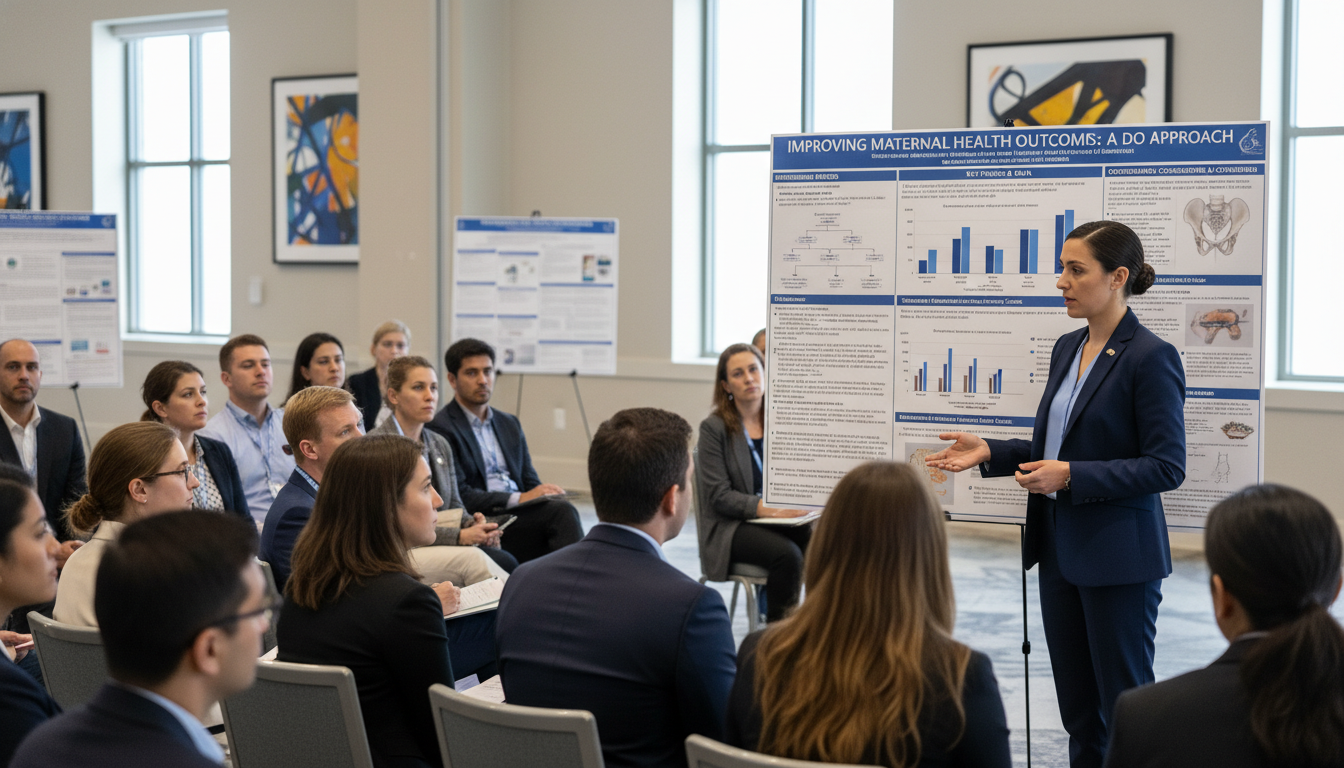
- Abstracts and presentations
- Posters
- Quality improvement (QI) projects
- OMM or osteopathic education projects relevant to women’s health
For each, list:
- Authors (bold your name)
- Title
- Journal/Conference
- Date
- Status (Published, In press, Submitted)
Prioritize OB GYN and women’s health topics
Examples:
- Contraception access
- Maternal morbidity/mortality
- Health disparities in prenatal care
- Cervical cancer screening
- Pelvic pain, endometriosis, PCOS
- Breastfeeding support
If your research is in another field (e.g., cardiology), you can still frame it to highlight:
- Methodological skills (statistical analysis, data collection)
- Experience with human subjects research and IRB processes
- Commitment to evidence-based medicine—critical in OB GYN
Example: OB GYN-focused QI Project Entry
Quality Improvement Project – “Improving Postpartum Depression Screening Rates in a Resident OB Clinic”
XYZ DO College of Osteopathic Medicine | 2022–2023
- Led a multidisciplinary QI initiative to implement standardized EPDS screening at 6-week postpartum visits, incorporating EMR prompts and nursing workflows.
- Analyzed pre- and post-implementation data showing an increase in screening completion from 40% to 85% within six months.
- Presented findings at the state ACOOG conference; project adopted as a clinic standard.
This directly signals to programs that you improve systems of care in women’s health settings.
Leadership, Teaching, and Service: Showing You Are a Future OB GYN Resident
OB GYN is a team-oriented specialty with high acuity, emotional intensity, and continuity of care. Program directors look for resilience, leadership, and communication.
5. Leadership & Professional Involvement
Include:
- ACOOG or ACOG student membership and positions
- OB GYN interest group leadership
- Class officer roles
- Committee work (curriculum, diversity & inclusion, wellness)
Examples:
OB GYN Interest Group – President, 2021–2022
- Organized skill workshops on pelvic exams, suturing, and fetal heart rate interpretation with OB GYN faculty.
- Developed a mentorship program pairing pre-clinical students with OB GYN residents.
ACOOG/ACOG Student Member, 2020–Present
- Attended annual meetings; engaged in educational sessions on maternal morbidity and contraception access.
These entries emphasize that you are already part of the OB GYN professional community.
6. Teaching & Mentorship
Residents in OB GYN teach constantly—students, interns, patients, and other team members. Highlight:
- Peer tutoring (especially in anatomy, OMM, women’s health)
- Teaching assistant roles
- Simulation lab teaching (e.g., pelvic exam, ultrasound)
- Patient education initiatives (prenatal classes, breastfeeding support)
Example:
- Peer Tutor – Women’s Health & Reproduction Module
- Led weekly small-group review sessions for 10–12 first-year DO students, focusing on normal pregnancy physiology and common OB emergencies.
- Received consistently high evaluations for clarity and approachability.
This aligns your skills with what an OB GYN resident does daily.
7. Volunteer & Community Service
OB GYN is rooted in advocacy and care for vulnerable populations. Your service should reflect:
- Work in free clinics or women’s shelters
- Reproductive health education in the community
- Outreach to underserved populations
- Health fairs focusing on cervical cancer screening, contraception, prenatal care
Example:
- Volunteer Clinician – Women’s Health Free Clinic
- Conducted well-woman visits under supervision, including Pap smears, contraception counseling, and STI testing.
- Counseled patients in both English and Spanish, ensuring understanding of follow-up plans.
Program directors in obstetrics value applicants who already show commitment to patient advocacy and equity.
Honors, Skills, and Interests: The Details that Differentiate You
8. Honors, Awards, and Scholarships
Include any:
- OB GYN departmental awards
- Clerkship “Student of the Month/Year”
- Scholarships for leadership, service, or academic merit
- National honor societies (e.g., Sigma Sigma Phi)
For each, indicate:
- Name of award
- Granting institution
- Year
- Brief context, if not self-explanatory (e.g., “Awarded to top 5% of class for clinical performance during third-year clerkships.”)
OB GYN-specific recognition (even a strong rotation evaluation) can be mentioned in your CV or brought out in your letters of recommendation.
9. Skills: Make Them Relevant and Honest
Include:
- Languages: with realistic proficiency (fluent, proficient, basic). Bilingual abilities are highly valuable in OB GYN.
- Technical Skills:
- Pelvic and breast exams
- Fetal heart rate interpretation (basic)
- Ultrasound exposure (if applicable)
- Basic suturing and knot-tying
- EMR Experience: (Epic, Cerner, etc.)
Frame skills with OB GYN in mind:
- “Basic interpretation of fetal heart rate tracings (Category I–III).”
- “Exposure to first-trimester obstetric ultrasound in clinic setting.”
Never exaggerate procedural competence; instead, show you have exposure and a foundation.
10. Interests: Strategic but Authentic
List 3–5 concise interests that:
- You can speak about comfortably in interviews
- Reflect personal resilience, teamwork, or diversity of experience
- Are specific (e.g., “long-distance running” vs. “exercise”)
Interestingly, OB GYN interviews often use hobbies to gauge personality and fit; be ready to discuss how these interests help you manage stress and maintain balance.
Practical Steps: How to Build CV for Residency as a DO Targeting OB GYN
Bringing this together, here is a practical roadmap for DO students and recent graduates.
Step 1: Start Early (MS1–MS2)
- Create a living medical student CV as a simple Word/Google doc.
- Join your school’s OB GYN interest group and national organizations (ACOG/ACOOG).
- Seek women’s health–related service opportunities (health fairs, free clinics).
- Begin shadowing on L&D or in an OB GYN clinic to confirm your interest.
Step 2: Be Intentional During Clinical Years (MS3–MS4)
- During your core OB GYN clerkship:
- Ask for feedback early.
- Request letters from faculty who can comment on your work ethic, team skills, and compassion.
- Plan at least one OB GYN sub-internship at your home institution and consider an away rotation if you are targeting a specific geographic region or more academic programs.
- Join or initiate a QI or research project in OB GYN or women’s health.
Step 3: Document As You Go
- After each rotation or major project, add bullet points to your CV immediately.
- Use strong action verbs and concrete responsibilities: “coordinated,” “managed,” “counseled,” “assisted in,” “collected data for,” etc.
- Update your skills section as you gain exposure (e.g., fetal monitoring, ultrasound).
Step 4: Align with ERAS and the Obstetrics Match
- Translate your master CV content to the ERAS experiences section:
- Prioritize OB GYN and women’s health experiences as “Most Meaningful” when appropriate.
- Use ERAS descriptions to show insights and impact, not just tasks.
- Make sure your medical student CV and ERAS entries tell the same story: committed, competent future OB GYN physician with a DO background.
Step 5: Seek Feedback from OB GYN Mentors
- Ask an OB GYN faculty member or resident to review your CV:
- “Does my CV clearly convey that I’m a strong fit for OB GYN?”
- “Are there gaps or areas I could strengthen this year?”
- Use their feedback to adjust not just wording, but also future actions (e.g., taking on a leadership role, joining a QI project).
Common Pitfalls for DO Graduates in OB GYN CVs—and How to Avoid Them
Generic CV not tailored to OB GYN
- Fix: Re-order sections and experiences so that OB GYN stands out clearly.
Overemphasis on osteopathic identity without clinical connection
- Fix: Explicitly tie your OMM and holistic approach to obstetric and gynecologic care.
Weak or vague bullet points
- Fix: Use specific verbs and measurable responsibilities (patient volume, types of visits, procedures observed or assisted).
Incomplete or outdated CV
- Fix: Set a quarterly reminder to update your CV and reconcile it with ERAS.
Inflated responsibilities
- Fix: Be accurate. Program directors know what a student can and cannot do; credibility matters more than sounding impressive.
FAQs: CV Building for DO Graduate in Obstetrics & Gynecology
1. As a DO graduate, do I need OB GYN–specific research to match?
Not strictly, but it helps—especially for more academic or competitive programs. If you don’t have OB GYN research, try to ensure at least one scholarly activity relates to women’s health (QI project, case report, poster). Emphasize your ability to engage in evidence-based practice and highlight any analytical or leadership skills built through research in other fields.
2. How many OB GYN rotations should appear on my CV?
Ideally, you should have:
- 1 core OB GYN clerkship
- 1 OB GYN sub-internship (home or away)
- 1 additional OB GYN or women’s health elective (e.g., MFM, Gyn Onc, Family Planning, high-volume women’s health clinic)
If your schedule is limited, ensure at least a strong core rotation and one sub-I. Use related rotations (Family Medicine with OB, NICU, women’s health clinics) to support your narrative.
3. Should I highlight my osteopathic manipulative medicine experience on my OB GYN CV?
Yes, but thoughtfully. Don’t create a long, isolated “OMM” section that appears disconnected from clinical OB GYN. Instead, show how you used OMM for pregnancy-related musculoskeletal complaints, chronic pelvic pain, or postpartum back pain. One or two targeted bullet points in clinical and teaching sections can effectively showcase your osteopathic training as an asset.
4. How long should my CV be for residency applications?
A residency-focused CV for OB GYN is typically 2–4 pages. For the ERAS application, the system structures content rather than measuring page count. Focus on relevance and clarity rather than length. Avoid including pre-college activities unless they are exceptionally significant or clearly linked to your current path (e.g., long-standing work in women’s health or leadership).
A well-constructed CV positions you as a DO graduate residency candidate who is ready to thrive in Obstetrics & Gynecology. When each section is purposeful, aligned with women’s health, and honest about your training and strengths, your CV becomes a powerful advocate for you in the obstetrics match.