Understanding the Role of Your CV as a DO Applying to Preliminary Medicine
For a DO graduate targeting a Preliminary Medicine year, your CV is more than a list of positions and dates. It is a strategic document that tells program directors:
- You can function safely and effectively on an inpatient medical service
- You understand the unique nature of a prelim IM position (high workload, 1-year commitment, strong team dynamics)
- You have the professionalism and work ethic to represent the program well
- As a DO graduate, you’ve built a foundation in osteopathic principles and can integrate them into modern hospital-based care
Unlike categorical applicants who must show long-term commitment to Internal Medicine, your DO graduate residency application for a prelim year must demonstrate:
- Reliability and adaptability
- Comfort with acute care and hospital workflow
- The potential to excel in another specialty after your prelim year
- Respect for both allopathic and osteopathic perspectives
Your CV (along with your ERAS application) often receives only seconds of initial review. A well-structured, targeted CV that highlights relevant strengths can be the difference between a quick rejection and an interview invite.
Structuring a Strong CV for a Preliminary Medicine Application
Your CV should be clean, consistent, and easy to scan. Think of it as the offline, expanded version of your ERAS profile. Below is a suggested order tailored for a DO graduate targeting a preliminary medicine year.
1. Contact Information and Professional Header
Include:
- Full name exactly as it appears in ERAS
- Professional email (e.g., firstname.lastname@domain.com)
- Mobile number
- City, state (no full address needed)
- LinkedIn URL (if polished and up to date)
Example:
Jane A. Smith, DO
Email: jane.smith.do@gmail.com | Phone: (555) 123-4567
City, State | LinkedIn: linkedin.com/in/janesmithdo
Avoid nicknames and unprofessional emails. Make sure your voicemail greeting is clear and professional.
2. Education
List in reverse chronological order:
- Doctor of Osteopathic Medicine (DO)
- Undergraduate degree
- Additional graduate degrees or certificates (if relevant)
Include:
- Institution name, city, state
- Degree and major
- Graduation month and year
- Honors (e.g., cum laude, Alpha Omega Alpha, Sigma Sigma Phi)
For a DO graduate residency application, you may also briefly include:
- OMM/OPP leadership roles
- Osteopathic honors or scholarships
Example:
Doctor of Osteopathic Medicine (DO)
Midwestern University Arizona College of Osteopathic Medicine, Glendale, AZ
May 2025 | Sigma Sigma Phi Honor Society
Bachelor of Science in Biology, Minor in Chemistry
University of XYZ, City, State
May 2020 | Magna Cum Laude
3. USMLE/COMLEX Scores (Optional on CV but Common for DOs)
ERAS already captures this, but some applicants include it on a separate line in the Education section or under a short “Examinations” heading.
If you include scores:
- Be accurate and consistent with ERAS
- Do not list failed attempts; that will show in ERAS anyway
Example:
Examinations
COMLEX-USA Level 1: Pass | Level 2-CE: Pass
USMLE Step 1: Pass | Step 2 CK: 243
Including both COMLEX and USMLE can reassure osteopathic residency match committees that you are comfortable crossing training environments.
4. Clinical Experience (Core and Elective Rotations)
For a preliminary medicine year, this section is crucial. Program directors want to know:
- You have robust Internal Medicine and inpatient exposure
- You have done sub-internships or acting internships in IM or hospital-based specialties
- You have performance evidence in environments similar to their program
Organize by:
- Core Clinical Rotations
- Sub-Internships / Acting Internships
- Elective Rotations (especially in IM, ICU, cardiology, heme/onc, etc.)
For each, include:
- Rotation title and setting (e.g., Internal Medicine Inpatient, Sub-Intern)
- Institution, city, state
- Dates (month and year)
- 2–4 concise bullet points highlighting responsibility and skills, not just tasks
Example bullets for an Internal Medicine sub-I relevant to prelim IM:
- Managed 8–10 patients daily as primary provider under attending supervision, including admissions, daily notes, discharge summaries, and family discussions.
- Presented patients on morning rounds, formulated assessment and plan, and adjusted management based on attending feedback.
- Coordinated care with consultants, nursing staff, and case management; demonstrated strong communication and follow-through.
- Participated in night-float coverage, practicing cross-cover management of acute issues (e.g., chest pain, altered mental status, sepsis).
This is how you move beyond a basic medical student CV and present yourself as near-intern-ready.

5. Work Experience (Clinical and Non-Clinical)
Differentiate between:
- Clinical Employment (e.g., scribe, MA, EMT, RN, paramedic)
- Non-Clinical Employment (e.g., teacher, engineer, manager, research assistant)
For a prelim IM application, clinical work showing comfort with acutely ill patients or high-volume environments is especially valuable.
Example:
Emergency Department Scribe
City General Hospital, City, State | 2017–2019
- Documented histories, physical exams, and procedures for up to 20 patients per shift in a high-volume ED.
- Gained familiarity with acute medical presentations and ED workflow, improving efficiency in clinical documentation.
- Collaborated with physicians and nursing staff to track lab results, imaging, and patient disposition.
Even non-clinical jobs show reliability, time management, and resilience—qualities programs value in a one-year preliminary medicine year intern.
6. Research and Scholarly Activity
You do not need to have a long research portfolio to be competitive for a prelim year, but:
- Any scholarly activity (posters, QI projects, case reports) is a plus.
- Focus especially on Internal Medicine, hospital medicine, quality improvement, or patient safety.
List:
- Project title
- Your role
- Institution
- Faculty mentor (optional but helpful)
- Outcomes: publication, abstract, poster, oral presentation
Example:
Impact of Early Mobility Protocols on Length of Stay in a Community Hospital Medical Ward
Research Assistant, Department of Internal Medicine
City Medical Center, City, State | 2023–2024
- Collected chart data on 250 patients admitted with pneumonia or CHF.
- Contributed to data analysis and assisted with drafting manuscript sections.
- Poster presented at American College of Physicians (ACP) State Chapter Meeting, 2024.
This section reinforces your understanding of inpatient medicine and your ability to engage in quality and safety initiatives—highly relevant to a prelim IM role.
Highlighting Your Osteopathic Training on a Residency CV
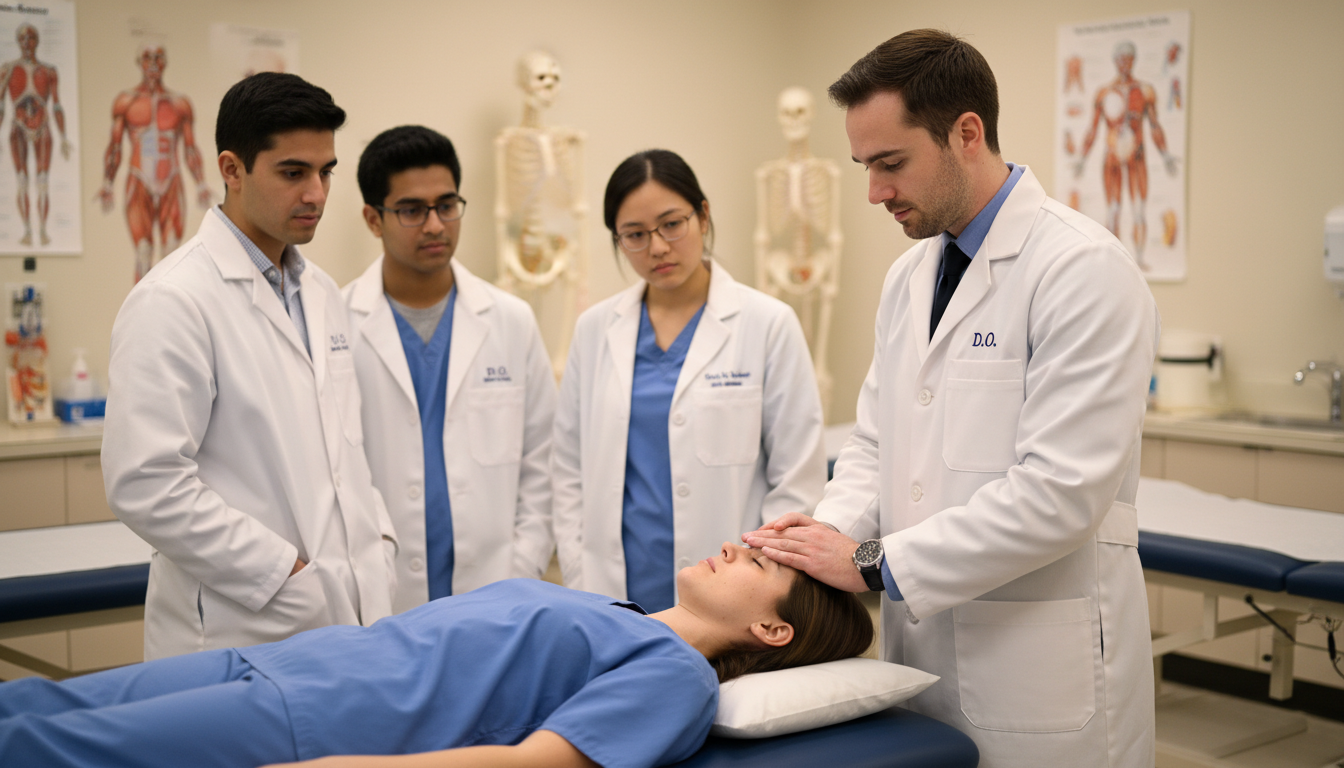
As a DO graduate, you bring additional strengths that can make your osteopathic residency match or ACGME programs take notice when done thoughtfully.
Emphasize Osteopathic Principles Without Overdoing It
You want to show:
- Comfort with holistic, patient-centered care
- Awareness of structure-function relationships
- Expertise in musculoskeletal and functional complaints
But avoid:
- Over-framing yourself as only outpatient/MSK-focused while applying to a high-acuity inpatient prelim role
- Long lists of OMM techniques without clinical context
Strategies:
- Add selective bullet points under clinical rotations where OMM was used appropriately for inpatients or complex medical patients.
- Avoid copy-paste lists of osteopathic manipulative treatments that seem detached from actual clinical scenarios.
Example bullet demonstrating osteopathic integration:
- Utilized OMT for hospitalized patients with rib dysfunction and postoperative atelectasis in coordination with the medical team, focusing on safe, evidence-informed use in the inpatient setting.
Osteopathic-Specific Leadership and Activities
Include:
- OMM/OPP teaching assistant roles
- Leadership in DO-specific organizations (e.g., SOMA, SGA, OMM fellows)
- Osteopathic-focused outreach or community events
This is particularly important for DO graduate residency applications where programs value your potential to teach DO and MD peers about OMT and holistic care.
Example:
OMM Teaching Fellow
College of Osteopathic Medicine, City, State | 2023–2024
- Led weekly small-group sessions for OMS-I and OMS-II students, teaching foundational OMT techniques and clinical reasoning.
- Assisted faculty in OSCE design and grading, emphasizing safe application of OMT and integration with allopathic medical management.
Content Priorities: What Matters Most for a Prelim Medicine CV
A strong residency CV for a preliminary medicine year highlights a specific set of qualities. When you think about how to build CV for residency in this niche, focus on these elements:
1. Evidence of Inpatient Responsibility
Programs want interns who can:
- Handle high patient volumes
- Write thorough but efficient notes
- Communicate reliably with nurses and interdisciplinary teams
- Show up, follow through, and own their patients
Tips:
- In every inpatient rotation entry, include at least one bullet emphasizing patient load, typical responsibilities, and any cross-coverage or night duties.
- Use active verbs: “managed,” “coordinated,” “presented,” “led,” “triaged,” “escalated.”
Example bullet:
- Managed a census of up to 8 patients during IM sub-internship, including admissions, daily progress notes, order entry under supervision, and discharge planning.
2. Time Management and Work Ethic
The prelim IM year is intense. Program directors look for:
- Multiple responsibilities balanced successfully (clinical, research, leadership)
- Longitudinal commitments rather than one-off experiences
- Employment during school or college that demonstrates resilience
Show this with:
- Clear timelines showing overlapping responsibilities (without appearing chaotic)
- Activities sustained for a year or more
- Progressive responsibilities (e.g., promotion from member to leader)
3. Communication and Teamwork
Preliminary interns integrate into existing IM teams and often move on to advanced specialties the next year. Programs want interns who:
- Communicate clearly with colleagues and consultants
- Respect team roles
- Do not create interpersonal friction
Ways to highlight:
- Leadership positions (club officer, committee roles, team captain)
- Teaching roles (tutor, TA, OMM fellow)
- Interprofessional work experiences (collaborating with nursing, PT, social work)
Example bullet under leadership:
- Collaborated with nursing leadership during monthly quality meetings to implement a standardized handoff tool for student and intern sign-out.
4. Alignment With Future Goals (Especially If You’re Advanced-Match Bound)
If you are entering an advanced specialty (e.g., anesthesiology, radiology, PM&R, derm), your preliminary medicine year is part of your pathway, not the end. You do not need to hide your long-term specialty, but:
- Make it clear you still take the prelim year seriously as a clinical foundation
- Show specific reasons why a strong IM year will make you better in your advanced field
Example personal statement and CV alignment:
- On CV: List an elective in cardiology or ICU that supports both IM and your advanced specialty (e.g., anesthesiology).
- In bullets: Emphasize procedural comfort, hemodynamics, acute care decision-making.
This reassures IM programs that although you’re moving on after one year, you’re fully invested in that year and its responsibilities.
Residency CV Tips: Formatting, Style, and Common Pitfalls
Knowing how to build CV for residency is partly about content and partly about presentation. Program directors skim quickly; your job is to make their scan easy.
Formatting Essentials
- Font: Simple (e.g., Arial, Calibri, Times New Roman), 10–12 pt
- Margins: 0.5–1 inch
- Length: Typically 2–4 pages for a DO graduate; avoid bloated 8–10 page CVs
- Consistency: Same date format, bullet style, and capitalization throughout
- Headings: Clear H2/H3 equivalents (e.g., EDUCATION, CLINICAL EXPERIENCE, RESEARCH, LEADERSHIP)
Use bolding and italics sparingly to guide the eye:
- Bold: roles, degrees, institutions
- Italics: positions or clarifying details
Stylistic Best Practices
- Write in the past tense for completed experiences, present tense only for current roles.
- Use concise bullet points (1–2 lines each) with clear action verbs.
- Avoid personal pronouns (“I,” “my”)—bullets start with verbs and are descriptive.
- Prioritize relevant experiences; you can truncate or omit very old or unrelated roles.
Common Pitfalls for DO Graduates Applying to Prelim Medicine
Overemphasizing OMM without clinical context
- Fix: Show where OMM improved patient comfort or function within medical management.
Listing every shadowing experience in detail
- Fix: Briefly summarize or omit routine shadowing once you have robust clinical rotations.
Under-describing inpatient experiences
- Fix: Show patient load, call responsibilities, and concrete responsibilities.
CV not matching ERAS
- Fix: Cross-check dates, titles, and roles carefully. Inconsistencies raise red flags.
Typos and spacing errors
- Fix: Print and proofread your CV; ask a mentor or advisor to review.
No tailoring to the prelim IM context
- Fix: Move the most relevant items (inpatient IM rotations, ICU, ED, QI projects) higher in the document.
Putting It All Together: Example CV Strategy for a DO Prelim IM Applicant
Imagine you are a DO graduate applying for a preliminary medicine year before entering anesthesiology. Here’s how your CV strategy might look:
Header & Education:
- DO degree with graduation date
- COMLEX and USMLE scores (optional line)
- Mention Sigma Sigma Phi and any honors
Clinical Experience (Most Important for Prelim IM):
- Internal Medicine Inpatient (Core) – highlight patient load and roles
- Internal Medicine Sub-I – emphasize near-intern responsibilities
- ICU elective – stress ventilator management exposure, hemodynamics, teamwork with critical care teams
- ED rotation – triage skills, acute presentations, rapid decision-making
Research/QI Activity:
- A QI project on sepsis bundle adherence in the medical ward
- Poster at ACP or ASA (if relevant for anesthesia)
Leadership & Teaching:
- OMM Teaching Assistant – shows teaching ability
- Class officer or SOMA officer – shows responsibility
Work Experience:
- ED scribe and EMT work – shows comfort in acute care
The result: a cohesive medical student CV tailored to a prelim IM audience that subtly reinforces your future anesthesiology goals without making IM feel like an afterthought.
FAQs: CV Building for DO Graduates Applying to Preliminary Medicine
1. Should I create a separate CV if I’m already filling out ERAS?
Yes. ERAS serves as a standardized application, but a well-crafted, up-to-date CV is useful for:
- Networking with faculty and program directors
- Sending as an attachment when programs or mentors request it
- Interviews, where some faculty still reference a traditional CV
- Future fellowship or job applications
Ensure that your CV and ERAS remain consistent.
2. How much should I emphasize my osteopathic training on a prelim IM CV?
Highlight your osteopathic background in a way that:
- Demonstrates added value (e.g., musculoskeletal expertise, holistic care, teaching ability)
- Fits naturally within inpatient, evidence-based practice
Avoid making OMM the centerpiece if most of your prelim work will be hospital-based internal medicine. Mention OMM where it improved patient comfort or complemented standard care, especially in musculoskeletal or pain presentations.
3. Is research necessary for a competitive prelim medicine application?
Not strictly. Many strong prelim applicants have limited research. However:
- Any quality improvement, patient safety, or inpatient medicine project is a plus.
- Even a single poster or case report shows academic curiosity and follow-through.
If you lack research, compensate with strong inpatient evaluations, robust clinical experience, and clear leadership or work history.
4. What’s the biggest difference between a general medical student CV and one tailored to prelim IM?
A general medical student CV lists experiences more broadly. For a targeted prelim IM CV, you should:
- Prioritize inpatient internal medicine, ICU, and ED rotations
- Emphasize teamwork, reliability, and patient-load management
- Highlight experiences that show you’re “intern-ready” for a busy medicine service
In other words, your residency CV tips for this path boil down to: show that you will function as a safe, hardworking, low-drama intern who contributes to both patient care and team culture during a demanding preliminary medicine year.