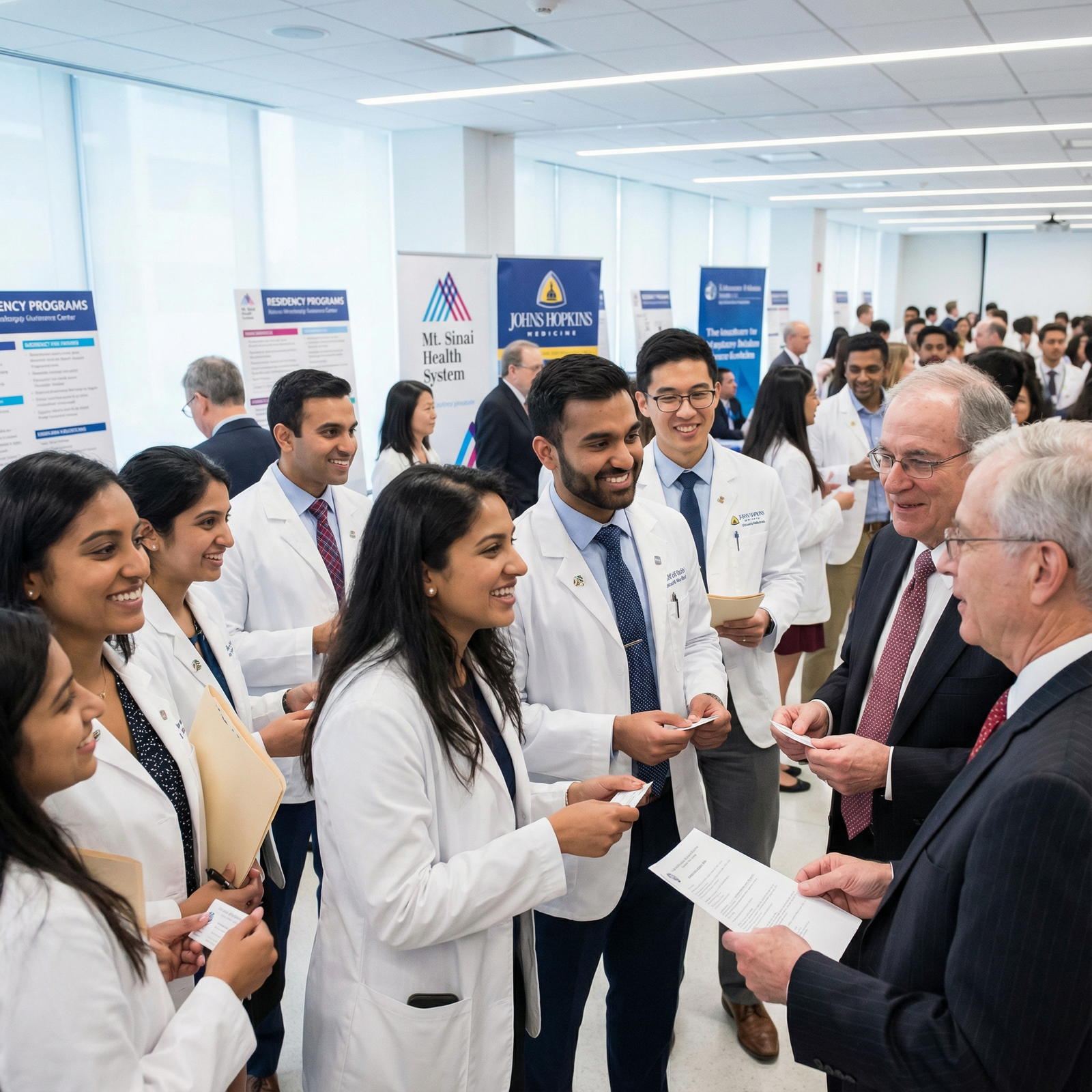
Crafting a standout CV is one of the most high‑yield steps you can take as an MD graduate targeting a nuclear medicine residency. Programs often receive far more applications than they can read in depth, so your CV must quickly communicate who you are, what you’ve done, and why you are a strong fit for an imaging‑driven, technology‑intensive specialty.
Below is a detailed, practical guide to building a powerful medical student CV specifically tailored to the nuclear medicine match.
Understanding the Role of the CV in the Nuclear Medicine Match
For MD graduates from allopathic medical schools, the CV is more than a list of experiences—it is a strategic document that supports your entire nuclear medicine residency application.
How your CV is actually used
Program directors and selection committees typically use your CV to:
- Screen for baseline qualifications and training
- Confirm consistency with your application (ERAS, CaRMS, etc.)
- Identify evidence of genuine interest in nuclear medicine
- Spot red flags (gaps, abrupt changes, professionalism issues)
- Select candidates for interview and tailor interview questions
In a highly specialized field like nuclear medicine, your CV helps answer three central questions:
Does this MD graduate understand what nuclear medicine actually is?
(Not just “I like radiology” but awareness of PET/CT, theranostics, dosimetry, functional imaging, etc.)Have they taken concrete steps to explore or contribute to this field?
(Electives, research, quality improvement, imaging‑related projects.)Do they bring skills and attributes that predict success in a technical, data‑intensive specialty?
(Analytical ability, attention to detail, collaboration with other specialties, comfort with imaging and radiation safety.)
If your CV doesn’t make those points clear, the rest of your file has to work much harder.
Core CV Structure for MD Graduates in Nuclear Medicine
A well‑organized CV makes it easy for committees to find what they need quickly. For an MD graduate residency applicant in nuclear medicine, a standard and effective structure looks like this:
- Contact Information & Professional Summary (optional but useful)
- Education & Training
- Examinations and Licensure
- Clinical Experience
- Nuclear Medicine & Imaging‑Related Experiences
- Research, Publications & Presentations
- Quality Improvement & Leadership
- Teaching & Mentoring
- Honors, Awards & Scholarships
- Professional Memberships
- Skills (technical, language, software)
- Volunteer Work & Extracurricular Activities
1. Contact Information & Optional Professional Summary
Include:
- Full name (as it appears on official documents)
- Professional email (avoid casual addresses)
- Phone number
- City and country (full address is optional)
- LinkedIn or professional website (if well‑maintained and up to date)
Professional summary (2–4 lines)
This is optional but valuable if tailored to nuclear medicine. Example:
MD graduate from an allopathic medical school with strong interest in nuclear medicine residency, PET/CT imaging, and theranostics. Clinical experience includes dedicated electives in nuclear medicine and radiology, with research in PSMA PET for prostate cancer staging. Seeking to contribute strong analytical skills, collaborative approach, and commitment to imaging‑driven patient care.
This helps frame the rest of the CV and signals clearly that you’re not casting a completely generic net.
2. Education & Training
List in reverse chronological order:
Medical school (allopathic medical school name, city, country)
- Degree (MD)
- Dates (e.g., 2019–2023)
- Notable distinctions: honors, class rank (if strong), thesis
Undergraduate degree(s)
- Degree, major, institution, dates
- Thesis or capstone (if relevant to imaging, physics, or data analysis)
If you did a transitional year, preliminary year, or prior residency, include it clearly and be transparent. Nuclear medicine programs will ask about it.

Highlighting Nuclear Medicine–Relevant Experiences
This is where you differentiate yourself from applicants applying broadly to imaging specialties. When thinking about how to build a CV for residency, your goal is to present a coherent, nuclear‑medicine‑oriented story—even if your experiences are limited.
3. Examinations and Licensure
This section is straightforward but viewed carefully:
USMLE Step 1, 2 CK, 3 (or other national exams equivalent)
- Scores (if strong and you choose to disclose)
- Pass/fail status and dates
Licensure (if applicable)
- State/province license, training license numbers (if programs expect it)
Certifications relevant to nuclear medicine or imaging:
- Basic Life Support (BLS), Advanced Cardiac Life Support (ACLS)
- Radiation safety courses (if completed)
- Good Clinical Practice (GCP) for research
Residency CV tip: If you completed any radiation safety, radiopharmacy, or imaging physics modules, list them here or under a separate “Certifications & Specialized Training” subsection—this immediately signals nuclear medicine–relevant preparation.
4. Clinical Experience: Make Imaging Stand Out
Under “Clinical Experience,” you can list:
- Core clinical clerkships (internal medicine, surgery, pediatrics, etc.)
- Sub‑internships or acting internships
- Electives (especially imaging-related)
For each experience, include:
- Title (e.g., “Sub‑Internship in Internal Medicine”)
- Institution and department
- Dates
- 2–4 concise bullet points focusing on responsibilities and specific achievements
For nuclear medicine and radiology electives, be explicit:
Example:
Elective in Nuclear Medicine, Department of Radiology
Academic Medical Center, City, Country | 4 weeks, 2023
- Observed and assisted in interpretation of PET/CT, SPECT, and bone scans under direct supervision of faculty.
- Participated in multidisciplinary tumor boards discussing PET‑guided management decisions.
- Assisted in protocoling FDG PET/CT studies and understanding dosing, uptake times, and radiation safety measures.
These concrete details demonstrate that your exposure is not superficial.
5. Nuclear Medicine & Imaging‑Specific Section (Highly Recommended)
If you have more than one nuclear medicine or radiology experience, create a dedicated section:
Nuclear Medicine & Imaging‑Related Experiences
Include:
- Nuclear medicine electives
- Radiology electives with significant nuclear component
- Shadowing or observerships in nuclear medicine
- Work with PET/CT, SPECT/CT, dosimetry, theranostics clinics
- Participation in imaging‑related tumor boards
Example entry:
Observer, Theranostics Clinic (Lutetium‑177 PSMA Therapy)
Nuclear Medicine Department, University Hospital | 2022
- Observed patient selection, counseling, and consent process for Lu‑177 PSMA therapy.
- Familiarized with activity calculation, radiation safety instructions, and post‑therapy imaging.
- Assisted with collection of clinical outcome data for ongoing departmental registry.
This kind of detail signals to programs that you understand the evolving theranostics landscape, which is highly valued.
Research, QI, and Academic Productivity: High‑Yield for Nuclear Medicine
Nuclear medicine is research‑intensive. Demonstrating academic productivity strongly boosts your nuclear medicine match competitiveness, especially as an MD graduate from an allopathic medical school.
6. Research, Publications & Presentations
Organize this section carefully:
- Peer‑reviewed publications
- Manuscripts under review or in preparation (clearly labeled)
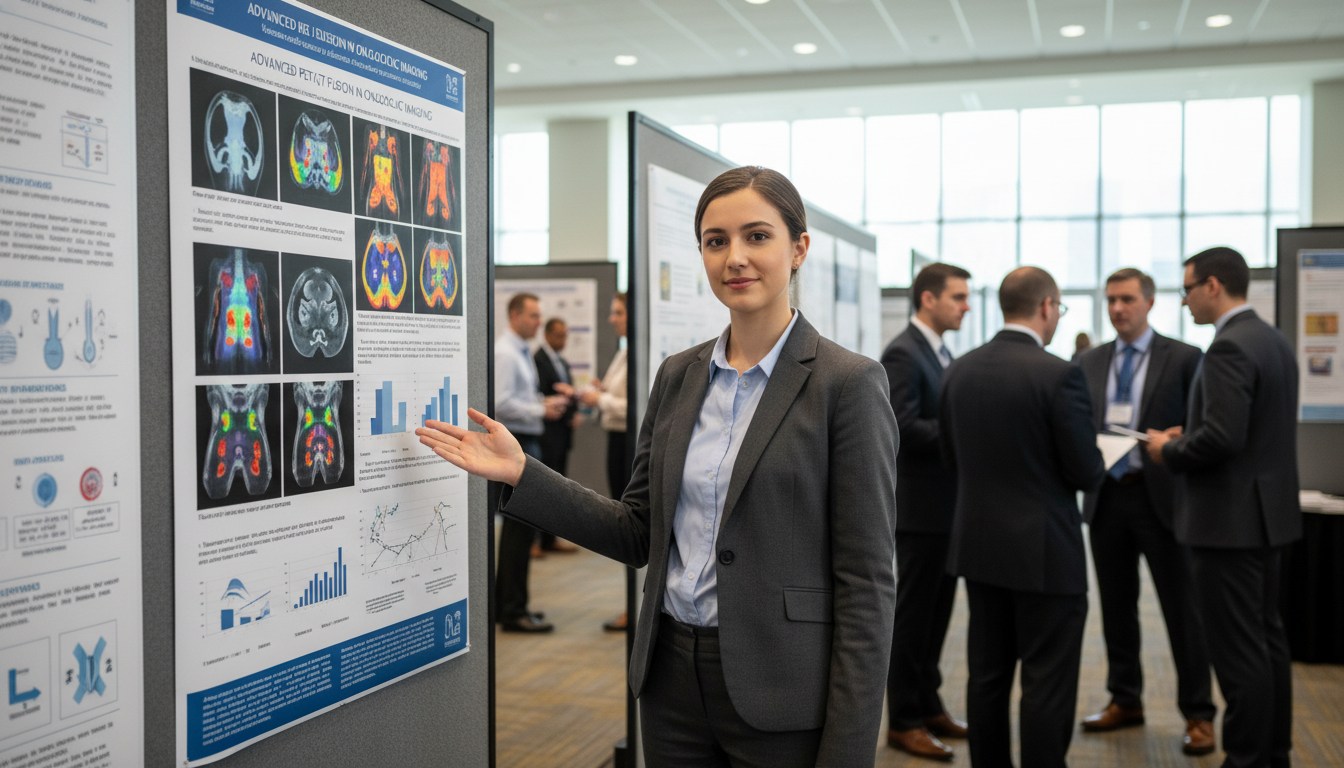
- Conference abstracts and posters
- Oral presentations (local, national, international)
Use a consistent citation format (e.g., AMA). Bold your name in multi‑author works.
Prioritize nuclear medicine–relevant topics, such as:
- PET/CT in oncology (FDG, PSMA, DOTATATE, etc.)
- SPECT/CT in bone, infection, or cardiac imaging
- Novel radiotracers or radiopharmaceuticals
- Dosimetry, image reconstruction algorithms
- AI or machine learning in imaging analysis
- Radiation safety, workflow optimization, or quality control
Example:
Publications
Doe J, Smith A, et al. Impact of PSMA PET/CT on management of biochemically recurrent prostate cancer. J Nucl Med. 2023;64(2):123–130.
Abstracts & Posters
Smith A, Lee K, et al. Comparison of FDG PET/CT and cardiac MRI in sarcoidosis: A single‑center experience. Poster presented at: Society of Nuclear Medicine and Molecular Imaging (SNMMI) Annual Meeting; June 2023; Chicago, IL.
If your research is not directly in nuclear medicine, draw out the relevance in your bullet points:
- Data analysis, statistics, imaging, AI, radiation, oncology, cardiology, or endocrinology all have nuclear medicine connections.
Residency CV tip: Even a small project can be powerful if clearly described. Don’t undersell posters, local presentations, or departmental research days.
7. Quality Improvement (QI) & Systems‑Based Projects
Nuclear medicine departments are deeply integrated with hospital systems, imaging workflows, and radiation safety protocols. QI experience is highly relevant.
Examples of nuclear medicine–relevant QI topics:
- Reducing wait times for PET/CT scans
- Optimizing patient preparation for cardiac SPECT studies
- Improving handoff between nuclear medicine and oncology clinics
- Standardizing imaging protocols for thyroid carcinoma
- Enhancing radiation safety signage or patient instruction materials
Sample CV entry:
Quality Improvement Project: Reducing Non‑Diagnostic FDG PET/CT Scans
Department of Radiology, University Hospital | 2022–2023
- Analyzed 200 PET/CT scans to identify common causes of non‑diagnostic studies.
- Implemented standardized pre‑scan fasting and blood glucose protocol.
- Achieved a 30% reduction in non‑diagnostic scans over 6 months.
These kinds of experiences show you understand real‑world workflow and systems issues in imaging.
Leadership, Teaching, and Professional Identity
Programs are not only choosing future imagers—they are choosing future colleagues, educators, and leaders.
8. Leadership Roles
Leadership can come from:
- Student interest groups (nuclear medicine, radiology, oncology, cardiology)
- Class or committee positions
- Hospital or medical school committees
- Community or non‑medical organizations (if substantial)
Make sure at least some leadership roles align with your interest in imaging or technology.
Example:
Co‑Founder & President, Nuclear Medicine & Molecular Imaging Interest Group
Allopathic Medical School, 2021–2023
- Organized lectures on PET/CT, SPECT/CT, and theranostics with faculty and alumni speakers.
- Coordinated shadowing opportunities for 20+ students in the nuclear medicine department.
- Established an annual imaging research workshop in collaboration with radiology residents.
This not only shows leadership but also reinforces your long‑standing interest in nuclear medicine residency.
9. Teaching & Mentoring
Nuclear medicine physicians often teach residents, fellows, technologists, and medical students. Teaching experience strengthens your profile.
Include:
- Small‑group teaching sessions
- Anatomy or imaging teaching assistant roles
- Peer tutoring
- Ultrasound teaching, if applicable
- Any radiation or imaging‑related education initiatives
Example:
Teaching Assistant, Anatomy with Radiologic Correlation
Allopathic Medical School, 2020–2022
- Led weekly sessions using CT and MRI images to teach cross‑sectional anatomy to first‑year medical students.
- Developed teaching materials emphasizing key imaging landmarks relevant to nuclear medicine hybrid imaging.
Even if not strictly nuclear medicine, this demonstrates comfort with imaging education.
10. Professional Memberships
For a nuclear medicine residency applicant, relevant memberships include:
- Society of Nuclear Medicine and Molecular Imaging (SNMMI) or national equivalents
- Radiological societies (RSNA, national radiology societies)
- Oncology, cardiology, endocrinology societies (given overlap with nuclear medicine)
List:
- Organization name
- Membership type (student, resident, full)
- Dates
If you were active (committees, working groups, trainee sections), add short bullets.
Skills, Formatting, and Common Pitfalls
This is where many otherwise strong CVs lose ground. Attention to detail, organization, and clarity matter greatly in a specialty that demands precision.
11. Skills Section: Go Beyond Generic
Categories that are particularly relevant to nuclear medicine:
Technical / Imaging Skills
- Basic familiarity with PACS and RIS
- Experience reviewing PET/CT or SPECT/CT images
- Introductory knowledge of DICOM, image reconstruction, or segmentation (if applicable)
- Basic radiation safety principles
Software & Data Skills
- Statistical software (R, SPSS, Stata, SAS)
- Programming (Python, MATLAB) for image analysis or research
- Image processing tools (3D Slicer, FIJI/ImageJ, OsiriX, etc.)
Language Skills
- Multiple languages can be a plus, especially in diverse patient populations.
Residency CV tips for skills:
- Be honest—do not overstate your proficiency. Programs may ask about this in interviews.
- Emphasize skills you have actually used in a project, elective, or research.
12. Honors, Awards & Scholarships
Highlight awards that reflect academic excellence, professionalism, or commitment to research.
Examples:
- Radiology or nuclear medicine–specific prizes
- Research day awards
- Scholarships for imaging electives
- Merit‑based medical school scholarships
Include:
- Name of the award
- Institution and date
- One short bullet if the award is not self‑explanatory (e.g., “Top 5% of class”)
13. Volunteer Work & Extracurriculars
Volunteer experience shows humanity, communication skills, and work ethic. Your involvement does not need to be imaging‑related, but you can draw thematic links:
- Palliative care → oncology and theranostics patients
- Cardiac rehabilitation → nuclear cardiology
- Diabetes clinics → FDG PET/CT patient preparation and counseling
Describe substantial roles with 1–3 bullets focusing on impact rather than just listing activities.
Strategic CV Building Timeline for MD Graduates in Nuclear Medicine
Thinking about how to build a CV for residency should start at least 1–2 years before you apply, especially for something as specialized as nuclear medicine.
Early Medical School (Preclinical Years)
- Join or found radiology/nuclear medicine interest groups.
- Seek shadowing in nuclear medicine early to confirm interest.
- Attend departmental conferences or tumor boards if allowed.
- Start small research projects—case reports, literature reviews, or data collection on imaging topics.
Clinical Years
- Plan at least one dedicated nuclear medicine elective (more if possible).
- Add a diagnostic radiology elective with exposure to PET/CT and SPECT/CT.
- Ask to participate in imaging‑related QI projects.
- Present at local research days or regional meetings.
Final Year / Application Year
- Convert ongoing projects into abstracts, posters, or papers before you apply.
- Solidify leadership and teaching roles and update your CV accordingly.
- Ask mentors in nuclear medicine to review your CV and provide specialty‑specific feedback.
- Ensure all dates, details, and titles are accurate and consistent across your CV and application systems (ERAS, etc.).
Formatting Essentials and Errors to Avoid
Nuclear medicine residency programs are detail‑oriented. Your CV should reflect that.
Formatting Essentials
- Length: 2–4 pages is typical for an MD graduate residency CV; longer is acceptable if you have substantial research, but avoid padding.
- Font: Professional, readable (e.g., 11–12 pt Times New Roman, Calibri, Arial).
- Consistency: Uniform use of dates, dashes, bullet styles, and citation formats.
- Order: Reverse chronological order within each section.
- File name: “Lastname_Firstname_CV_NuclearMedicine.pdf” or similar—looks professional and organized.
Frequent Pitfalls
Cluttered CV with no clear structure
Solve: Use headings, subheadings, and consistent bullets.Vague descriptions
Replace “Helped with research” with clearer statements: “Collected and analyzed clinical and imaging data for a PET/CT outcomes study.”Unexplained gaps
If you had a leave or non‑clinical year, briefly and honestly account for it.Typos, inconsistent dates, or inaccuracies
Programs notice. Proofread multiple times; ask mentors or peers to review.Overloading with irrelevant detail
High school activities, minor one‑day events, and unrelated hobbies should be minimized unless exceptional or clearly relevant.
Putting It All Together: Example Nuclear Medicine–Oriented CV Highlights
To visualize how a strong MD graduate residency CV might present a coherent nuclear medicine story, here is how the “top third” of your CV might read:
- Professional summary clearly stating interest in nuclear medicine residency, PET/CT, and theranostics.
- Education: MD from an allopathic medical school with honors in radiology or imaging‑related electives.
- Examinations: Completed required exams on schedule; any imaging or radiation safety certifications listed.
- Clinical Experience:
- Dedicated nuclear medicine elective with detailed bullets about PET/CT, SPECT/CT, and tumor boards.
- Radiology elective highlighting cross‑sectional imaging and collaboration with nuclear medicine.
- Nuclear Medicine & Imaging‑Related Experiences:
- Observership in theranostics clinic.
- QI project on PET/CT workflow or radiation safety.
- Research & Presentations:
- At least one nuclear medicine or imaging‑adjacent project or poster.
- Clear citation list with your name highlighted.
This immediately reassures the selection committee that you are a serious nuclear medicine applicant with a track record, not just exploring multiple unrelated paths at the last minute.
FAQ: CV Building for MD Graduates Applying to Nuclear Medicine
1. I don’t have much nuclear medicine experience. Can I still build a competitive CV?
Yes, but you must be strategic. Emphasize:
- Radiology electives with any exposure to nuclear imaging.
- Oncology, cardiology, or endocrinology experiences with imaging components.
- Research involving imaging, AI, radiation, or relevant diseases.
- Early involvement in imaging interest groups and conferences.
Pair this with a strong personal statement and letters from faculty who can speak to your interest in imaging. Use your CV to show a trajectory toward nuclear medicine, even if it started later.
2. Should I include non‑nuclear medicine research on my CV?
Absolutely. All meaningful research should be included. For each project, clarify:
- Your specific role (study design, data collection, analysis, writing).
- Any transferable skills (statistics, coding, database management, critical appraisal).
- Clinical relevance, especially if related to oncology, cardiology, neurology, or endocrinology.
You can still present a nuclear medicine–oriented identity by foregrounding imaging or radiation‑related research and placing others afterward.
3. How is a medical student CV different from a standard resume?
A medical student CV for residency:
- Is more detailed and longer (usually 2–4 pages).
- Emphasizes academic, clinical, and research experience over brief employment histories.
- Includes sections like clinical rotations, research, presentations, and QI projects that are not typically on a corporate resume.
- Serves as a comprehensive academic record, not just a summary.
Nuclear medicine programs expect this level of detail. A one‑page, corporate‑style resume is generally not appropriate.
4. How often should I update my CV during medical school?
Update it:
- At the end of each semester or major rotation block.
- Immediately after significant milestones: publications, presentations, new leadership roles, or completed electives.
Keeping a living CV prevents rushed, error‑prone editing right before you submit your allopathic medical school match applications. It also makes it easier to spot gaps early and plan experiences to strengthen your nuclear medicine residency application.
Building a strong residency CV as an MD graduate in nuclear medicine is an iterative process. Focus on clarity, relevance, and evidence of sustained interest. If you align your clinical experiences, research, leadership, and skills around nuclear medicine and imaging themes, your CV will clearly support your goal of succeeding in the nuclear medicine match.