Understanding the IR-Specific CV Landscape as a Non-US Citizen IMG
Interventional Radiology (IR) is one of the most competitive and rapidly evolving specialties in the United States. For a non-US citizen IMG or foreign national medical graduate, the expectations for an interventional radiology residency CV are even higher because program directors often use the CV to quickly gauge:
- Whether you understand what IR actually is (beyond “minimally invasive procedures”)
- If you can function in a high-acuity, team-based, procedure-heavy environment
- Whether your trajectory shows consistent interest in IR despite geographic and visa barriers
- How you compare to US graduates in terms of productivity, initiative, and reliability
Your CV is not just a list of what you’ve done; it is a narrative that must answer one question clearly:
“Is this applicant prepared, serious, and realistic about a career in Interventional Radiology in the US?”
Because the specialty is small and high-risk (procedurally and medico-legally), IR program directors pay close attention to:
- Evidence of real IR exposure (shadowing, electives, rotations, IR call, conferences)
- Research and scholarly output with at least some radiology/IR connection
- Technical skills and comfort with procedures or procedure-like environments
- Professionalism, leadership, and reliability in stressful situations
- Visa and immigration status clarity (for non-US citizen IMG applicants)
Before you start formatting, you should map what you already have and what you need to build.
Baseline IR CV Expectations
A strong IR-focused medical student CV for residency typically includes:
- IR exposure: electives, observerships, shadowing, case logs (if available)
- Research: publications, abstracts, posters, quality improvement (QI) projects, particularly in IR or diagnostic radiology
- Academic strength: strong exam performance, class rank, awards
- Clinical readiness: robust core clinical rotations, preferably with US experience
- Professional and leadership roles: organizations, teaching, committees
- Commitment to IR: conferences, memberships (SIR), IR interest group roles
Your challenge as a non-US citizen IMG is to show all of that plus demonstrate you can navigate extra barriers (visa, distance, fewer built-in opportunities) and still produce outcomes.
Core Structure of an IR-Focused CV for IMGs
The good news: the basic structure of a strong medical student CV is similar across specialties. The difference is how you prioritize and frame sections for interventional radiology residency and the IR match.
Below is a recommended structure tailored to a foreign national medical graduate aiming for IR.
1. Contact & Personal Information
Place this at the top, clean and minimal:
- Full name (consistent with ERAS)
- Current location (city, country)
- Email (professional address)
- Phone (WhatsApp-compatible if abroad)
- Citizenship and Visa Status (for non-US citizen IMG, this should be explicit)
- A link to a professional LinkedIn or a simple academic website/Google Scholar profile (optional but helpful)
Example (condensed):
- Citizenship: Indian
- Current Location: New Delhi, India
- Visa: Requires J-1 / Open to both J-1 and H-1B sponsorship
This small line helps US programs quickly categorize your visa needs.
2. Education
List in reverse chronological order:
- Medical school name, city, country
- Degree (e.g., MBBS, MD), dates attended (month/year)
- Class rank or percentile (if favorable)
- Honors, distinction, or awards linked to your degree
Tip: If your school does not provide an official rank, you can note:
“Top 10% of class (unofficial, based on internal exam performance across 5 years).”
For IR, strong academic background is reassuring due to the complexity of procedures and imaging interpretation.
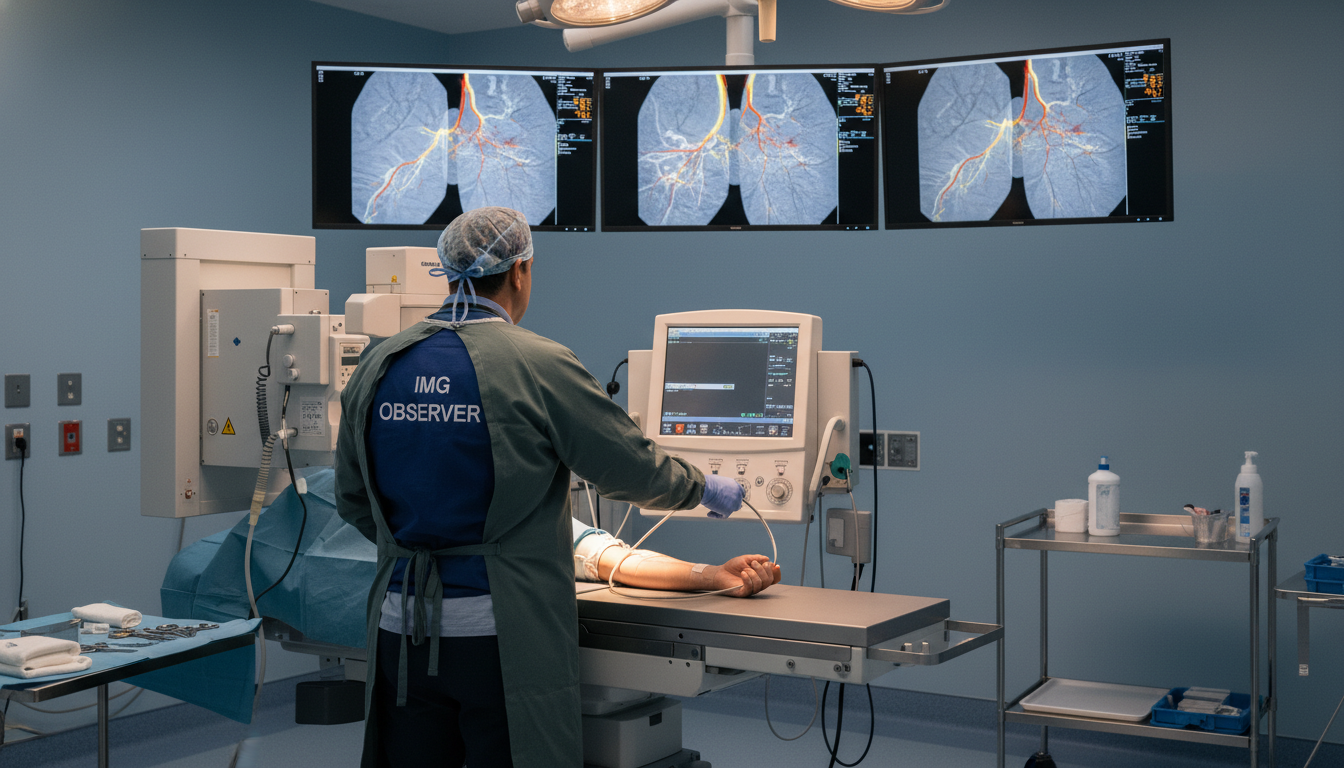
3. US Clinical and IR Exposure
For a non-US citizen IMG, tangible US clinical experience is crucial, and for IR, that means documented exposure to IR practice in the US whenever possible.
Create a dedicated section such as:
“US Clinical & Interventional Radiology Experience”
Include:
- Elective or observership title and type (IR, Diagnostic Radiology, ICU, Surgery, Vascular Surgery)
- Institution and location
- Dates (month/year)
- Supervisor(s) – ideally IR attendings or radiologists
- 2–4 concise bullet points focusing on:
- Procedural exposure (participated in pre-/post-procedure care, observed specific procedures)
- Clinical decision-making (indication discussions, multidisciplinary meetings)
- Professional attributes (teamwork, communication, patient counseling)
Example bullets:
- Observed >60 IR procedures including TACE, Y-90 planning, IVC filter placement, and complex venous access.
- Assisted in pre-procedure assessment and post-procedure follow-up for IR clinic patients, focusing on anticoagulation management and consent discussions.
- Participated in weekly tumor board where IR, oncology, and surgery collaboratively planned locoregional therapies.
These kinds of details reassure program directors that your interest in IR is based on real-world exposure.
4. Research & Scholarly Work (With IR Emphasis)
IR loves applicants who are curious, evidence-based, and research-friendly. Even if you don’t have IR-specific papers, you can strategically frame your existing work.
Create subsections:
- Peer-reviewed Publications
- Abstracts & Posters
- Oral Presentations
- Quality Improvement & Audit Projects
- Online/Non–peer-reviewed pieces (if relevant and professional)
Prioritize IR and radiology-related work first, then other clinical projects.
For each item:
- Authors (use consistent formatting; bold your name)
- Full title
- Journal or conference
- Year
- Status (Published, In Press, Submitted, In Preparation – only list “in preparation” sparingly and truthfully)
- Brief one-line description if the title is not self-explanatory
Example (IR-related):
Doe J, Patel R, Singh A. Ultrasound-Guided Percutaneous Drainage in Resource-Limited Settings: A Tertiary Center Experience. Journal of Vascular and Interventional Radiology. 2024; In Press.
– Retrospective review of 120 procedures; analyzed complication rates and cost-effectiveness in low-resource environments.
If your IR research is limited, highlight transferrable topics:
- Vascular surgery, cardiology (PCI, structural heart)
- Critical care procedures (central lines, chest tubes)
- Oncology (tumor boards, locoregional therapies)
- Imaging-heavy specialties (neurology, orthopedics with MSK imaging correlation)
The key is to show comfort with data, imaging, and procedural thinking.
5. Clinical Experience in Home Country
For many non-US citizen IMGs, most of your hands-on experience is outside the US. Still valuable—especially if it includes:
- Emergency or ICU work
- Procedural exposure (lumbar punctures, central lines, biopsies)
- Imaging-guided procedures (even ultrasound-guided IVs, paracentesis, thoracentesis)
Create a section: “Clinical Experience (Home Country)” and provide:
- Position (Intern, Junior Resident, Medical Officer, etc.)
- Department, Institution, Country
- Dates
- Bullet points emphasizing:
- Procedural tasks
- Team leadership or coordination
- Multidisciplinary collaboration
Example:
Intern – Internal Medicine
XYZ Government Hospital, Pakistan | 2022–2023
- Performed >30 ultrasound-guided paracenteses and thoracenteses under supervision.
- Participated in weekly radiology rounds reviewing CT and ultrasound findings for complex inpatients.
These experiences show that you’re not starting from zero in a procedure-based environment.
6. Leadership, Teaching, and Professional Involvement
IR attendings function at the intersection of many teams—surgery, oncology, ICU, emergency medicine. Show that you handle leadership and teamwork well.
Relevant subcategories:
- Medical student organizations (especially IR or radiology interest groups)
- SIR (Society of Interventional Radiology) membership and roles
- Teaching roles (tutor, demonstrator, workshop instructor)
- Committees (research, ethics, curriculum)
Highlight IR-relevant involvement:
- Co-founder, Interventional Radiology Interest Group – [Medical School Name]
– Organized 3 IR career webinars with US-based IR attendings.
– Coordinated simulation workshops on vascular access and basic fluoroscopy principles.
This signals initiative and long-term commitment to IR.
7. Certifications, Skills, and Technical Competencies
IR programs appreciate applicants who already:
- Are BLS/ACLS certified
- Have basic procedural skills
- Understand radiation safety principles
- Are comfortable with imaging software and EMRs
Include:
- BLS, ACLS (American Heart Association, with year)
- NIHSS, ATLS (if applicable)
- PACS usage (if you have real experience)
- Any formal training in ultrasound, vascular access, or simulation
Example:
- Completed 20-hour ultrasound-guided procedures workshop (vascular access, thoracentesis, paracentesis) – Simulation Center, [Institution].
How to Build CV for IR Residency as a Non-US Citizen IMG: Stepwise Strategy
Many foreign national medical graduates worry that they “started IR interest too late.” What matters more is what you do from now until application.
Step 1: Clarify Your IR Trajectory Early
Before you chase random activities, define:
- Are you aiming for Integrated IR residency (direct IR from PGY-1)
or - Independent IR residency after Diagnostic Radiology?
As a non-US citizen IMG, many match into diagnostic radiology first, then IR independent. Your CV should show openness to both paths without looking unfocused.
CV Tip: Phrase your goals like this in your personal statement, not your CV:
“Pursuing a career in Interventional Radiology, including the integrated or diagnostic radiology-to-IR pathway.”
But on your CV, simply make sure IR-related activities are prominent.
Step 2: Secure Credible IR Exposure (US If Possible)
Program directors want to see proof that you have seen US-style IR practice:
- Apply early for IR electives or observerships (6–12 months ahead)
- Use contacts: alumni from your school, LinkedIn, SIR medical student section
- Consider a combination: 1–2 months IR, 1–2 months diagnostic radiology or ICU
If US IR exposure is impossible:
- Do IR observerships in your home country with modern IR practice
- Attend virtual IR tumor boards and document them as scholarly/educational activity
- Participate in IR case-based webinars and note them under “Conferences & Courses”
In your CV, clearly label experiences:
- “Interventional Radiology Observership (Virtual), SIR Medical Student Section, 2024”
- “Interventional Radiology Elective, Department of Radiology, [Hospital], [Country], 2023”
Step 3: Targeted Research: High-Yield, Not Just High Volume
Because IR is competitive, a solid research footprint is one of the most powerful ways to stand out.
Focus on:
IR or Radiology Projects
- Retrospective imaging studies
- Outcome analysis after IR procedures
- QI projects in radiation dose reduction, contrast nephropathy, procedural efficiency
Feasible Projects in Limited Settings
- Chart reviews with existing IR/vascular data
- Case series (e.g., “Experience with TIPS in Cirrhotic Patients”)
- Case reports that link imaging and intervention
Remote/Collaborative Research
- Reach out to US-based IR residents/fellows or faculty with a concise email + CV
- Offer help with literature review, data cleaning, abstract drafting
Residency CV Tips for Research:
- Use consistent citation format
- Avoid listing “planned” or “idea stage” projects—programs can tell
- Prioritize quality and clarity over padding your CV with weak items

Step 4: Translate Non-IR Activities Into IR-Relevant Skills
Many non-US citizen IMGs worry that their experience is “not IR enough.” The key is translation.
For example:
- ICU experience → Shows comfort with acutely ill patients, lines, drains, hemodynamic monitoring.
- General surgery → Demonstrates procedural mindset, sterility, anatomy.
- Internal medicine → Strong for pre-/post-IR care (anticoagulation, AKI, infection).
In your CV bullet points, emphasize aspects that align with IR:
Instead of:
- “Managed patients with decompensated cirrhosis.”
Use:
- “Co-managed decompensated cirrhosis patients undergoing TIPS evaluation; collaborated with radiology and hepatology teams.”
Show the IR connections clearly so that program directors can see you already think in interdisciplinary, procedure-linked terms.
Step 5: Demonstrate Professionalism and Reliability
IR attendings worry about:
- Residents missing early-morning cases
- Poor follow-up on post-procedure issues
- Unreliable handovers with ICU/ED
In your CV, you cannot write “I am reliable,” but you can show it through roles:
- “Chief intern” or “Rotation leader”
- Committee roles with deliverables (organizing conferences, workshops)
- Long-term commitments (>1 year) in organizations or projects
Example CV bullet:
- Coordinated logistics for a 150-participant ultrasound workshop, managing scheduling, faculty communication, and participant materials.
This implies planning, follow-through, and responsibility under pressure.
CV Formatting Essentials: Making It IR-Ready and US-Friendly
Even excellent content can be overlooked if your CV is chaotic. For interventional radiology residency, clarity and precision reinforce the image of a careful, detail-oriented applicant.
Length and Layout
- 2–4 pages is typical for a non-US citizen IMG with research and experiences
- Use reverse chronological order within each section
- Keep margins and font professional (e.g., 10–11 pt, simple fonts like Calibri, Arial, Times New Roman)
Consistency and Precision
- Uniform date format (e.g., Aug 2022 – Jul 2023)
- Consistent bullets and indentation
- Standardized role descriptions (Intern, Research Assistant, Observer)
Language and Style
- Use action verbs: “Led,” “Assisted,” “Conducted,” “Analyzed,” “Coordinated”
- Keep bullets concise and outcome-focused
- Avoid exaggeration; IR is detail-oriented and skeptical of vague claims
Example transformation:
Weak:
- Helped with research projects.
Strong:
- Collected and analyzed data for a 200-patient retrospective study on post-embolization syndrome following uterine artery embolization.
Addressing IMG and Visa Status Appropriately
As a foreign national medical graduate / non-US citizen IMG, you should:
- Clearly state your citizenship and visa requirements once at the top
- Avoid apologetic wording; this is a neutral fact
- Not overemphasize visa in every section—once is enough
Common Pitfalls for Non-US IMGs Applying to IR (and How to Avoid Them)
1. CV That Looks Like a Generic “Radiology” CV With Minimal IR Focus
Solution:
- Move IR experiences, IR research, and IR courses toward the top of relevant sections
- Explicitly include IR in titles and bullet descriptions when accurate
2. Overcrowded CV With Low-Impact Activities
Programs prefer a focused, meaningful set of activities over endless lists.
Solution:
- Remove unrelated high school items and minor participation certificates
- Combine small roles into “Other Activities” with minimal space
- Highlight 2–3 major projects/roles per section
3. Listing Irrelevant Non-Medical Jobs Without Context
If non-medical jobs (e.g., tutoring, part-time work) were essential or developed transferable skills:
- Keep them but frame professionally (time management, responsibility, communication)
- Do not over-emphasize them at the expense of clinical/academic content
4. Misrepresenting or Inflating Roles
IR is small; faculty talk. Misrepresentation can destroy your credibility.
- Be completely honest about your role in research (e.g., “data collection,” “literature review,” “co-author”)
- Do not claim independent performance of procedures when you only observed or assisted
FAQs: CV Building for Non-US Citizen IMGs in Interventional Radiology
1. As a non-US citizen IMG, is it realistic to target an Integrated Interventional Radiology Residency?
It is challenging but not impossible. Integrated IR is highly competitive, and many foreign national medical graduates match first into diagnostic radiology, then pursue independent IR. If your CV shows:
- Strong US clinical and IR exposure
- Competitive scores and academic record
- IR-focused research or meaningful scholarly work
you can apply to both integrated IR and diagnostic radiology. Your CV should demonstrate that you understand and are open to both realistic pathways.
2. How much IR-specific research do I need on my CV to be competitive?
There is no fixed number, but aim for at least a few IR or imaging-related scholarly activities (poster, abstract, case report, or QI project). Quality matters more than volume. Even one solid IR project plus a few imaging/vascular/oncology-related works can be enough if paired with strong clinical and US IR exposure.
3. I don’t have US IR electives. Can I still build a credible CV for the IR match?
Yes, but you must compensate strategically:
- Show strong IR exposure in your home country (IR observerships, rotations)
- Engage with virtual IR opportunities (SIR webinars, online tumor boards, conferences)
- Emphasize IR-relevant clinical work (ICU, surgery, vascular medicine)
- Build IR or imaging-related research where you are
Then clearly document these activities on your CV so program directors see sustained IR engagement despite geographic limitations.
4. Should I include non-medical achievements on my IR residency CV?
Include non-medical achievements if they demonstrate traits valuable in IR:
- Leadership (team captain, event organizer)
- Discipline and resilience (sports, arts at a high level)
- Communication (debate, public speaking)
Keep these in a separate “Other Achievements” or “Extracurricular Activities” section and limit them so they do not overshadow clinical and academic content. The primary focus should remain your readiness and commitment to interventional radiology.
By structuring your CV with IR emphasis, strategically building experiences, and clearly presenting your story as a non-US citizen IMG, you can transform your residency CV from a generic document into a compelling case for your place in interventional radiology.