
Understanding the CV Needs of a US Citizen IMG in Anesthesiology
As a US citizen IMG (international medical graduate) aiming for anesthesiology residency, your CV must do more than list experiences. It needs to bridge three gaps simultaneously:
- Demonstrate you can perform at the level of a US medical graduate
- Show clear, committed interest in anesthesiology (not just “any residency”)
- Reassure programs that your training abroad has prepared you for US practice
Program directors making anesthesia match decisions often spend less than 2 minutes scanning each CV on first pass. Your goal is to make their job easy: a clean, well-structured, anesthesiology-focused CV that instantly answers:
- “Who is this applicant?”
- “What makes them prepared for training in anesthesiology?”
- “What evidence do I see of reliability, work ethic, and teamwork?”
- “Would I be comfortable putting this person in my OR at 3 AM?”
This guide focuses on how to build a CV for residency in anesthesiology as an American studying abroad, with concrete residency CV tips tailored to your situation.
Core Structure of an Anesthesiology Residency CV
Before adding content, you need a clear, predictable structure. Most US programs expect something close to this order:
- Contact Information & Personal Data
- Education
- USMLE (or COMLEX) Scores & Licensing Exams
- Clinical Experience (US and international)
- Research & Scholarly Activity
- Work Experience (non-clinical, if relevant)
- Leadership & Extracurricular Activities
- Volunteer Experience / Community Service
- Honors, Awards & Scholarships
- Professional Memberships
- Skills (languages, technical skills)
Your ERAS application already collects a lot of this, but you still need a standalone CV for:
- Direct emails to programs or faculty
- Away rotations / observerships
- Research positions
- Letters of interest
- Backup if someone asks, “Can you send me your CV?”
General Formatting Rules
- Length: Typically 2–4 pages for a US citizen IMG with some research and clinical experience
- Font: 11–12 pt, professional (Calibri, Arial, Times New Roman)
- Margins: 0.5–1 inch
- File name:
LastName_FirstName_MD_AnesthesiaCV_2025.pdf - Style: Consistent bullets, date formats, and headings throughout
Key anesthesia-specific rule:
Any experience in the OR, ICU, emergency care, sedation, pain, or critical care should be highly visible and prioritized.

Section-by-Section: What to Include & How to Tailor for Anesthesiology
1. Contact Information & Personal Data
Include at the top:
- Full name, degree (e.g., John A. Doe, MD Candidate)
- US phone number (with country code if abroad)
- Professional email (e.g., [email protected])
- LinkedIn (optional, only if updated and professional)
- Current location (City, Country while abroad; permanent US address if applicable)
Do NOT include:
- Photo
- Age, marital status, religion
- Visa information (you’re a US citizen; mention that only if relevant in a brief profile or ERAS, not as a CV heading)
2. Education
List in reverse chronological order:
- Medical school (full official name, city, country), degree, expected graduation date
- Undergraduate institution, degree, major, graduation year
- Any graduate degrees (MS, MPH, etc.)
For American studying abroad:
Example:
Medical Education
MD Candidate, 2020–2025
Charles University, Faculty of Medicine in Prague, Prague, Czech Republic
US Citizen IMG; ECFMG Certification in progress (expected June 2025)
Undergraduate Education
B.S. in Biology, Magna Cum Laude, 2016–2020
University of Florida, Gainesville, FL, USA
Highlight academic performance if strong (honors, Dean’s list, class rank percentile if available).
3. Board Exams & Certification
Programs want to see USMLE performance clearly and early, especially for IMGs:
- USMLE Step 1 – Score, date
- USMLE Step 2 CK – Score, date
- USMLE Step 3 – if taken
- ECFMG status – certified or anticipated date
- English proficiency exams (if relevant to your school/region; usually not needed for US citizen IMG)
Example:
Licensing Exams
USMLE Step 1 – Passed, 2023
USMLE Step 2 CK – 245, September 2024
ECFMG Certification – Anticipated July 2025
Don’t hide a lower score; instead, strengthen clinical and anesthesiology experiences to show competence.
4. Clinical Experience: Make It Anesthesia-Focused
This is the core of an anesthesiology residency CV.
A. US Clinical Experience (USCE)
For a US citizen IMG, high-quality US CE is critical. Prioritize:
- Anesthesiology electives
- ICU rotations (medical, surgical, neuro, cardiac)
- Emergency medicine
- Internal medicine sub-internships (if strong hands-on responsibility)
- Perioperative medicine rotations
Format example:
Clinical Electives – United States
Visiting Student, Anesthesiology
University of Michigan Health System, Ann Arbor, MI
July–August 2024
- Completed 4-week elective in general anesthesiology
- Participated in pre-operative assessments and intraoperative management for 20+ ASA III–IV patients under supervision
- Observed and assisted in airway management including mask ventilation, laryngoscopy, and LMA placement
- Presented case-based talk on “Hemodynamic Management in Septic Shock in the OR” at resident teaching conference
Your bullets should:
- Be action-based (what you did, not just what you saw)
- Emphasize teamwork, communication, and reliability
- Show specific anesthesiology skills/exposure (airways, monitoring, sedation, perioperative evaluation)
B. International Clinical Experience
Don’t undersell your home school rotations. For anesthesia match committees, this still shows:
- Exposure to surgery/ICU
- Responsibility levels
- Comfort with acutely ill patients
Example:
Core Clinical Clerkships – International
Anesthesiology & Intensive Care (Core Rotation)
Charles University Hospital, Prague, Czech Republic
February–March 2024
- Completed 6-week clerkship in anesthesiology and critical care
- Assisted with pre-op evaluations, pain control plans, and post-op monitoring for surgical patients
- Participated in daily ICU rounds emphasizing ventilator management and sedation strategies
- Logged 12 case discussions including trauma, obstetric, and neurosurgical anesthesia
For non-anesthesia rotations, highlight relevant cross-over skills:
- Internal medicine: perioperative optimization, medically complex patients
- Surgery: OR workflow, sterile technique, surgical indications
- Pediatrics: pediatric airway, dosing, communication
C. Observerships vs. Hands-On Rotations
If some of your experiences are observerships only:
- Clearly label them “Observership”
- Still emphasize:
- Systems familiarity
- Documentation exposure
- OR team dynamics
- Communication skills
Never exaggerate the clinical role; programs are very sensitive to this, especially with IMGs.
Research, Quality Improvement, and Scholarly Work in Anesthesiology
Anesthesiology values evidence-based practice, patient safety, and protocol-driven care. Your research and scholarly work can make your CV stand out, even if not all of it is anesthesia-specific.
1. Prioritize Anesthesia or ICU-Related Work
If you have any of the following, they should be high in this section:
- Anesthesiology research projects
- Critical care or perioperative medicine research
- Quality improvement (QI) projects in OR/ICU/ED
- Case reports/posters related to anesthesia, airway, pain, or resuscitation
Format example:
Research Experience
Student Research Assistant – Department of Anesthesiology
University of Pittsburgh Medical Center, Pittsburgh, PA (remote and on-site)
January 2023–Present
- Retrospective chart review studying postoperative respiratory complications in obese patients undergoing general anesthesia
- Abstract accepted for presentation at ASA Annual Meeting 2024 (co-author)
- Responsible for data extraction, REDCap entry, and preliminary statistical analysis in R
2. Not Published? Still Include the Work
For US citizen IMGs, demonstrating engagement is often more important than having dozens of publications. Include:
- “Manuscript in preparation” (only if actively in progress with a realistic path to submission)
- Poster presentations (local or national)
- Oral presentations (departmental, institutional)
- Student research projects with supervisors’ names
Example formatting:
Publications & Presentations
- Doe J, Smith R. “Postoperative Hypoxia in High-Risk Surgical Patients: A Single-Center Experience.” Poster presentation, American Society of Anesthesiologists Annual Meeting, Philadelphia, 2024.
- Doe J. “Perioperative Management of the Geriatric Patient: Case-Based Review.” Invited oral presentation, Department of Anesthesiology Student Conference, Charles University, 2023.
3. Quality Improvement (QI) Projects
QI is highly valued in anesthesiology because it directly affects:
- OR efficiency
- Safety protocols
- Postoperative outcomes
Examples:
Quality Improvement Project – Pre-op Checklists
- Designed and implemented a simplified pre-operative checklist for elective surgical patients on a general surgery ward
- Monitored adherence rates over 3 months (n=120 patients)
- Reduced missing pre-op labs by 30% and late OR starts by 12%
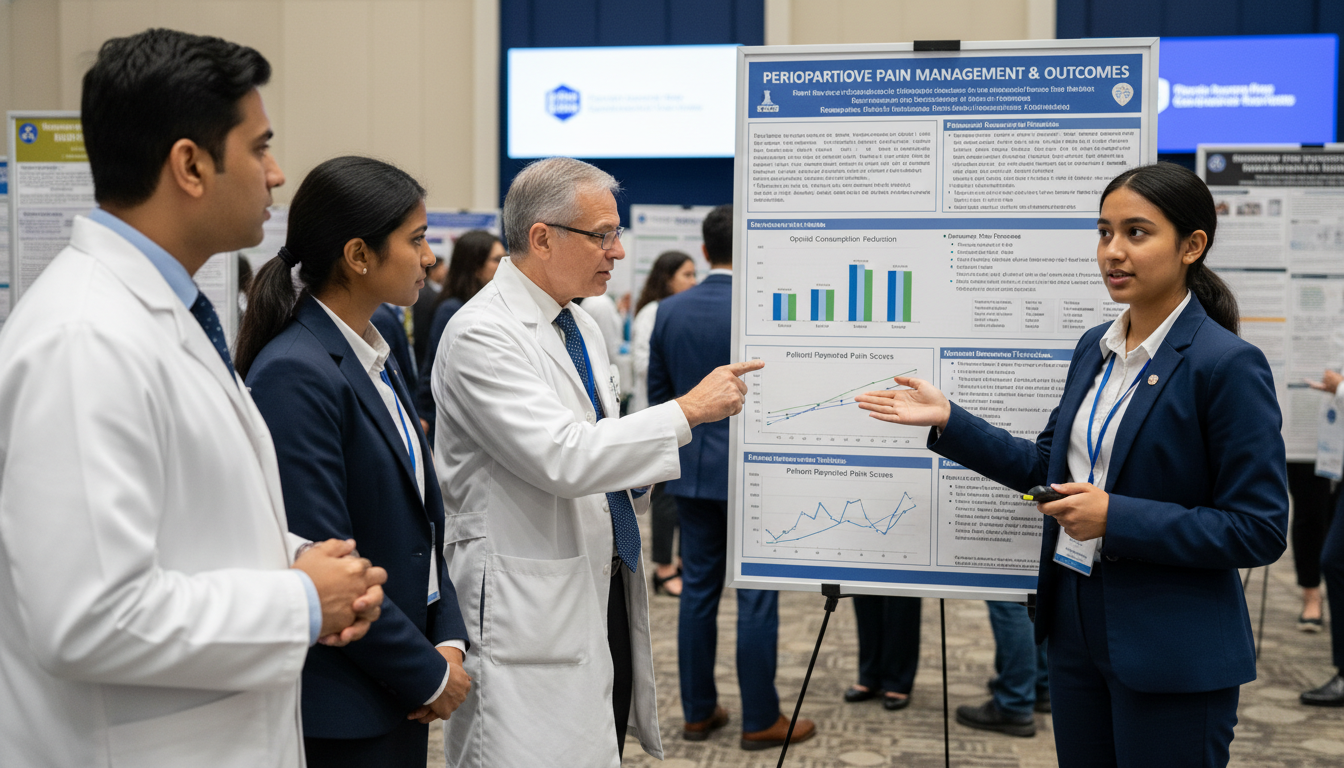
Even a small, well-documented QI project shows initiative and safety-consciousness—both major pluses for anesthesia match.
Non-Clinical Sections That Impress Anesthesiology Program Directors
1. Work Experience (Clinical-Adjacent and Other)
Not every line has to be clinical. Work that demonstrates:
- Responsibility under stress
- Teamwork and communication
- Attention to detail
- Reliability and time management
…all translates well into anesthesiology.
Examples particularly valuable for anesthesia:
- EMT/paramedic work
- ICU nursing assistant
- Surgical tech
- Scribe in ED or ICU
- Tutoring in physiology/pharmacology
- Leadership roles in simulation labs
When listing non-medical work (e.g., campus jobs, customer service), emphasize transferable skills:
Front Desk Associate, Campus Recreation Center
- Managed high-volume customer interactions during peak hours
- Resolved conflicts and triaged urgent facility issues
- Reinforced ability to remain calm, organized, and professional in busy environments
2. Leadership & Extracurricular Activities
Anesthesiology relies heavily on team leadership in crisis situations. Your involvement can reflect that potential.
Examples:
- Founding a student anesthesiology interest group at your international school
- Organizing a simulation workshop on airway management
- Leading a peer tutoring program in physiology
- Serving as class representative or committee member
Format sample:
Leadership Experience
President, Anesthesiology and Critical Care Interest Group
Charles University Faculty of Medicine, 2023–2024
- Organized 6 educational events with visiting anesthesiologists from the US and EU
- Coordinated OR shadowing for 25 medical students
- Developed a peer-led simulation series on perioperative emergencies
3. Volunteer & Community Service
A strong anesthesia match CV also shows empathy and commitment to service. For US citizen IMG applicants, US-based volunteer work can subtly reinforce your US connection and cultural familiarity.
Examples to highlight:
- Health fairs in the US (blood pressure, diabetes screening)
- Community CPR training
- Patient education programs
- Volunteering with underserved populations (homeless shelters, refugee clinics)
Focus on longitudinal involvement rather than one-off days.
4. Honors, Awards & Scholarships
These can reassure programs about your academic and professional reliability:
- Dean’s list, graduation honors
- Scholarships for academic merit
- Awards for teaching, research, or service
- Any anesthesiology or critical-care-related recognitions
Example:
Awards & Honors
- Best Student Presentation, Annual Research Day, Charles University Faculty of Medicine, 2023
- Academic Merit Scholarship, University of Florida, 2017–2020
5. Professional Memberships
Anesthesiology is a specialty with strong professional communities. List:
- American Society of Anesthesiologists (ASA) – Medical Student Member
- Specialty or subspecialty societies (e.g., Society of Critical Care Medicine – Student Member)
- Local anesthesiology societies if you’ve joined during electives
This signals early professional identity formation in anesthesiology.
Strategic CV Tips Specifically for US Citizen IMGs in Anesthesiology
This section ties together residency CV tips that are especially relevant when you’re an American studying abroad and targeting an anesthesia match.
1. Make Your “US Citizen IMG” Story Work for You
You don’t need a separate heading, but your CV and broader application should subtly answer:
- Why anesthesiology?
- Why did you study abroad?
- How did you maintain connection to US medicine?
Ways to embed this in your CV:
- US-based shadowing or research before/during med school
- Summer electives in US hospitals
- Volunteer work in the US between terms
- Tele-research or remote collaboration with US anesthesiology faculty
2. Prioritize US Anesthesiology Exposure
To stand out among US citizen IMG applicants:
- Aim for at least 1–2 US anesthesiology electives at academic centers if possible
- If limited spots, then:
- One anesthesiology elective
- One ICU or perioperative medicine elective
- Reach out early (12–18 months before application cycle) to secure positions
On your CV, ensure these are among the first clinical experiences listed.
3. Align Your CV with Your Personal Statement and LoRs
Program directors will compare:
- CV
- ERAS experience descriptors
- Personal statement
- Letters of recommendation
Inconsistencies are red flags. Make sure:
- Dates are identical across documents
- Titles and roles are consistent
- “Anesthesiology interest” is visible in each component
For example:
- If your personal statement emphasizes perioperative medicine, include experiences related to pre-op evaluation, postop management, and OR workflow in your CV.
- If a letter writer mentions your role in an ICU QI project, ensure that project is clearly listed in your CV.
4. Avoid Common IMG CV Pitfalls
Common mistakes for US citizen IMGs:
- Overcrowded CV with every minor experience since high school
- Vague or inflated responsibilities (e.g., “managed ICU patients” when you were a student)
- Irrelevant details (GPA from high school, numerous unrelated part-time jobs without highlighting transferable skills)
- Typos, inconsistent formatting, or unprofessional email addresses
As an anesthesia applicant, you must project the image of someone who is:
- Detail-oriented
- Systematic
- Reliable under pressure
Your CV’s formatting and clarity are the first real test of that.
5. Use Action-Oriented, Measurable Bullet Points
Whenever possible, include:
- Numbers: “assisted with perioperative assessment of ~40 patients”
- Scope: “coordinated schedule for 20 volunteers”
- Outcome: “reduced pre-op delays by 10%”
Examples tailored to anesthesiology:
- “Participated in pre-op evaluations and risk stratification for 50+ patients undergoing major abdominal surgery.”
- “Co-led simulation session on difficult airway algorithms for 15 junior classmates, using ASA guidelines.”
6. Tailor Your CV for Different Uses
You might keep several versions of your CV:
- General Anesthesiology CV for Programs
- Broad overview, 2–4 pages
- Research-Focused CV
- Expanded research section; useful for emailing academic anesthesiologists
- Rotation/Observership CV
- Slightly shorter, emphasizing clinical and relevant experiences
Keep a master document with everything, then trim and focus depending on the use case.
Putting It All Together: A Brief Example Layout
Here’s a high-level example of how a strong anesthesiology CV for a US citizen IMG might look (headings and ordering):
- Name & Contact Information
- Education
- Licensing Examinations & ECFMG Status
- Clinical Experience – United States
- Clinical Experience – International
- Research & Scholarly Activity
- Quality Improvement Projects
- Work Experience (Clinical-Adjacent)
- Leadership & Extracurricular Activities
- Volunteer & Community Service
- Honors & Awards
- Professional Memberships
- Skills & Interests (languages, relevant non-clinical skills)
When someone scans this, they should instantly understand:
- You are a US citizen IMG
- You have meaningful anesthesiology and ICU exposure in the US
- You have invested in research/QI or scholarly work
- You demonstrate professionalism, teamwork, and service consistent with anesthesiology culture
If your CV can communicate all of this quickly and clearly, you will be well-positioned in the anesthesia match as an American studying abroad.
FAQs: CV Building for US Citizen IMG in Anesthesiology
1. How long should my anesthesiology residency CV be as a US citizen IMG?
For most US citizen IMG applicants, 2–4 pages is appropriate. Less than 2 pages may look thin if you have multiple rotations and research; more than 4 can appear unfocused. Use space wisely:
- Focus on medical school and recent experiences
- Drop or minimize high school activities unless they are truly exceptional or directly relevant
- Prioritize anesthesiology, ICU, perioperative, and research experiences
2. Should I include non-anesthesia research or activities on my CV?
Yes, but prioritize. Include:
- All significant peer-reviewed publications
- Meaningful research where you contributed substantially, regardless of field
- Non-anesthesia experiences that demonstrate discipline, leadership, or analytical skills
Just be sure anesthesiology-related items appear higher in the section or are clearly labeled, so your interest in the specialty is obvious.
3. Is it necessary to create a separate CV if I’m using ERAS?
While ERAS collects much of the same information, a standalone CV is still important. You will need it for:
- Emailing faculty about research or mentorship
- Applying for US electives, sub-internships, or observerships
- Networking at conferences
- Responding to program or coordinator requests
Make sure your CV and ERAS entries are consistent in dates, roles, and descriptions.
4. How can I make my CV stand out in a competitive anesthesia match?
As a US citizen IMG, you can stand out by:
- Highlighting US-based anesthesiology rotations with strong responsibilities
- Demonstrating longitudinal interest in anesthesiology (interest groups, research, QI projects, conferences)
- Showing you’re comfortable with critical decision-making environments (ICU, ED, OR)
- Presenting a CV that is immaculately formatted, error-free, and easy to read
Combined with solid USMLE performance, strong letters, and a coherent story across your application materials, a thoughtful, anesthesiology-focused CV can significantly improve your chances of a successful anesthesia match.