Understanding the Cardiothoracic Surgery Landscape as a US Citizen IMG
Cardiothoracic surgery (CTS) is one of the most competitive and demanding surgical fields. For a US citizen IMG (American studying abroad), the challenge is steeper: program directors have limited slots, and they often prefer applicants from US allopathic schools or well-known integrated (I‑6) programs.
That doesn’t mean it’s impossible—but it does mean your CV must be surgical-grade: precise, strong, and strategically constructed. Thinking carefully about how to build a CV for residency is one of the most high-yield things you can do during medical school.
This article focuses on CV building for US citizen IMG applicants interested in cardiothoracic surgery residency (both integrated I‑6 and the traditional general surgery → CT pathway). You’ll learn how to:
- Translate your “American studying abroad” background into strengths
- Build a differentiated medical student CV with limited home‑institution resources
- Prioritize experiences that matter most to CTS program directors
- Format and present your accomplishments clearly and professionally
Throughout, we’ll treat your CV not as a static document but as a strategic roadmap guiding your decisions from now until Match Day.
Step 1: Know What Cardiothoracic Surgeons Look for
Before you invest time in activities, you need to understand the selection logic program directors use—especially for applicants outside US MD schools.
Core priorities for cardiothoracic surgery programs
For CTS (integrated or fellowship), programs usually look at:
Academic excellence
- Strong USMLE/COMLEX scores (especially Step 2 for IMG applicants)
- Honors in surgery and medicine clerkships
- Evidence you can master complex material
Technical potential and surgical exposure
- Substantial exposure to the OR, ideally in cardiac or thoracic cases
- Demonstrated manual dexterity (simulation, wet labs, suturing courses)
- Strong letters of recommendation from surgeons
Research and academic productivity
- CTS-specific or at least surgery-related research
- Publications, abstracts, and presentations
- Evidence of persistence in long-term projects
Professionalism and team compatibility
- Leadership, reliability, and resilience
- Ability to function in high-stress, team-based environments
- Strong interpersonal skills and professionalism noted in letters
Demonstrated commitment to cardiothoracic surgery
- Longitudinal interest, not a last-minute decision
- CTS shadowing, electives, research, societies, and mentoring
- A coherent narrative that justifies your choice of such an intense field
Specific considerations for a US citizen IMG
Being a US citizen IMG can be both a limitation and an advantage:
Challenges:
- Some PDs equate IMG status with variable training or documentation quality.
- Less automatic access to CTS faculty, mentorship, and structured research.
- Possible bias or unfamiliarity with your school’s grading and reputation.
Advantages:
- No visa sponsorship issues; you’re easier to onboard than non-US IMGs.
- Often more flexible in choosing away rotations in the US.
- “American studying abroad” can signal adaptability, independence, and cross-cultural experience.
Your residency CV tips must therefore focus on:
- Reducing any “unknowns” about your training by being clear and organized.
- Demonstrating US-based clinical and research experience.
- Making your CTS commitment unmistakably strong.
Your CV isn’t just a list—it’s evidence that, despite IMG status, you function at the level of top US MD applicants.
Step 2: Structuring a High-Impact Medical Student CV
A cardiothoracic surgery CV must be sharply organized. Program directors read dozens quickly; clutter and inconsistency are red flags.
Below is a structure you can adapt:
- Header / Contact Information
- Education
- Examinations & Certifications
- Honors & Awards
- Research Experience
- Publications & Presentations
- Clinical Experience & Electives
- Leadership & Professional Activities
- Teaching & Mentorship
- Community Service & Volunteer Work
- Skills (technical, languages, software)
- Interests (optional but recommended)
Order can be tweaked to highlight your strengths: for a research-heavy applicant, place Research and Publications higher; for one with strong electives, emphasize Clinical Experience near the top.
General formatting principles
- Length: 1–3 pages is typical for a medical student CV. For CTS, 2–3 pages is very common due to research.
- Font & layout: Simple fonts (Times New Roman, Arial, Calibri, 10.5–12 pt), generous white space, consistent bullet style.
- Chronology: Reverse chronological (most recent first) within each section.
- Consistency: Uniform date format, location format, and citation style for publications.
Example header (no need for full address in modern CVs):
Jane A. Doe, MS4
US Citizen IMG – American University of the Caribbean School of Medicine (Antigua)
Email: jane.doe@email.com | Phone: (555) 123‑4567 | LinkedIn: /in/janedoe | ORCID: 0000‑0002‑XXXX‑XXXX
Include “US citizen IMG” clearly in your ERAS profile; it doesn’t need to be in the title of your CV, but it can appear in education or summary if desired.

Step 3: Building Each Section Strategically for Cardiothoracic Surgery
Education: Clarify your IMG status and strengths
For a US citizen IMG, clarity about your medical school and clinical training is essential.
Include:
- Medical school name, country, city
- Degree and anticipated graduation date
- Class rank or percentile (if available)
- US clinical campus or affiliate sites for core rotations
Example entry:
American University of XYZ School of Medicine, Dominica / US Clinical Sites
Doctor of Medicine (M.D.), Expected June 2026
– Clinical rotations conducted at: St. Michael’s Hospital (Chicago, IL), Brookside Medical Center (NYC, NY)
– Top 20% of class; High Pass in Surgery, Honors in Internal Medicine
If your school has recognized affiliations with US teaching hospitals, include them—this reassures programs about the quality of your clinical training.
Examinations & Certifications: Demonstrate readiness
For a competitive cardiothoracic surgery residency:
- USMLE Step 1 & 2 CK: List scores if solid (typically ≥ 230–240+ range is more favorable for competitive surgery programs; higher is better).
- COMLEX if applicable.
- BLS / ACLS certifications.
- If you’ve taken ABSITE during a research year or preliminary position later, list that too.
Format example:
USMLE Step 2 CK – 252 (July 2025)
USMLE Step 1 – Pass (March 2024)
ACLS & BLS Certified – American Heart Association (Valid through 2027)
If your scores are weaker, you don’t need to list numbers on the CV—ERAS will include them—but focus on academic improvement and strengths elsewhere (e.g., research, letters, honors).
Honors & Awards: Signal excellence and reliability
Cardiothoracic surgery demands high reliability; honors and awards validate that you consistently perform.
Include:
- Dean’s list, scholarships, academic excellence awards
- Alpha Omega Alpha (AOA) or similar, if applicable
- Surgery clerkship honors
- Research awards or best-presentation prizes
When you’re an American studying abroad, awards show you maximized opportunities at your institution.
Example:
Honors & Awards
– Honors, Core Surgery Clerkship – Brookside Medical Center (2025)
– Dean’s List (Top 10% of class), 2023–2025
– Best Oral Presentation, Student Research Day – “Outcomes After Minimally Invasive Mitral Valve Repair” (2024)
Research Experience: The backbone of a CTS-focused CV
For many US citizen IMG applicants, research is the single most powerful equalizer. CTS, in particular, is academically heavy; program directors look for sustained scholarly engagement.
Priorities for CTS research
- Subspecialty relevance: Cardiac surgery, thoracic surgery, vascular surgery, critical care, cardiology, pulmonary, outcomes research, or biomechanics.
- Longitudinal involvement: 1–2+ years on a project or at a US research institution is very valuable.
- Productivity: Manuscripts, abstracts, conference posters, QI projects with measurable outcomes.
If possible, consider a dedicated research year in the US at a reputable CTS center. For a US citizen IMG, this is often a high-yield step that:
- Gives you US-based mentors
- Generates strong letters of recommendation
- Adds CTS-specific work to your CV
How to list research roles
Separate Research Experience from Publications/Presentations:
Research Experience
Clinical Research Fellow, Division of Cardiothoracic Surgery
University Hospital of Midwest, Department of Surgery – Chicago, IL
June 2024 – June 2025
– Coordinated a prospective registry of patients undergoing CABG and valve surgery (n=350).
– Performed data extraction, REDCap management, and basic statistical analyses (SPSS, R).
– Co-authored 2 manuscripts and 3 abstracts focused on postoperative atrial fibrillation and ICU length of stay.
Then, in Publications & Presentations, use standard citation style:
Publications
- Doe J, Smith R, Patel A, et al. Postoperative atrial fibrillation and length of stay after valve surgery: A single-center experience. Journal of Thoracic and Cardiovascular Surgery. 2025;160(4):1234–1242.
- Doe J, Kim L, Sanchez P, et al. Early outcomes of minimally invasive CABG in obese patients. Annals of Thoracic Surgery. In press, 2025.
Presentations
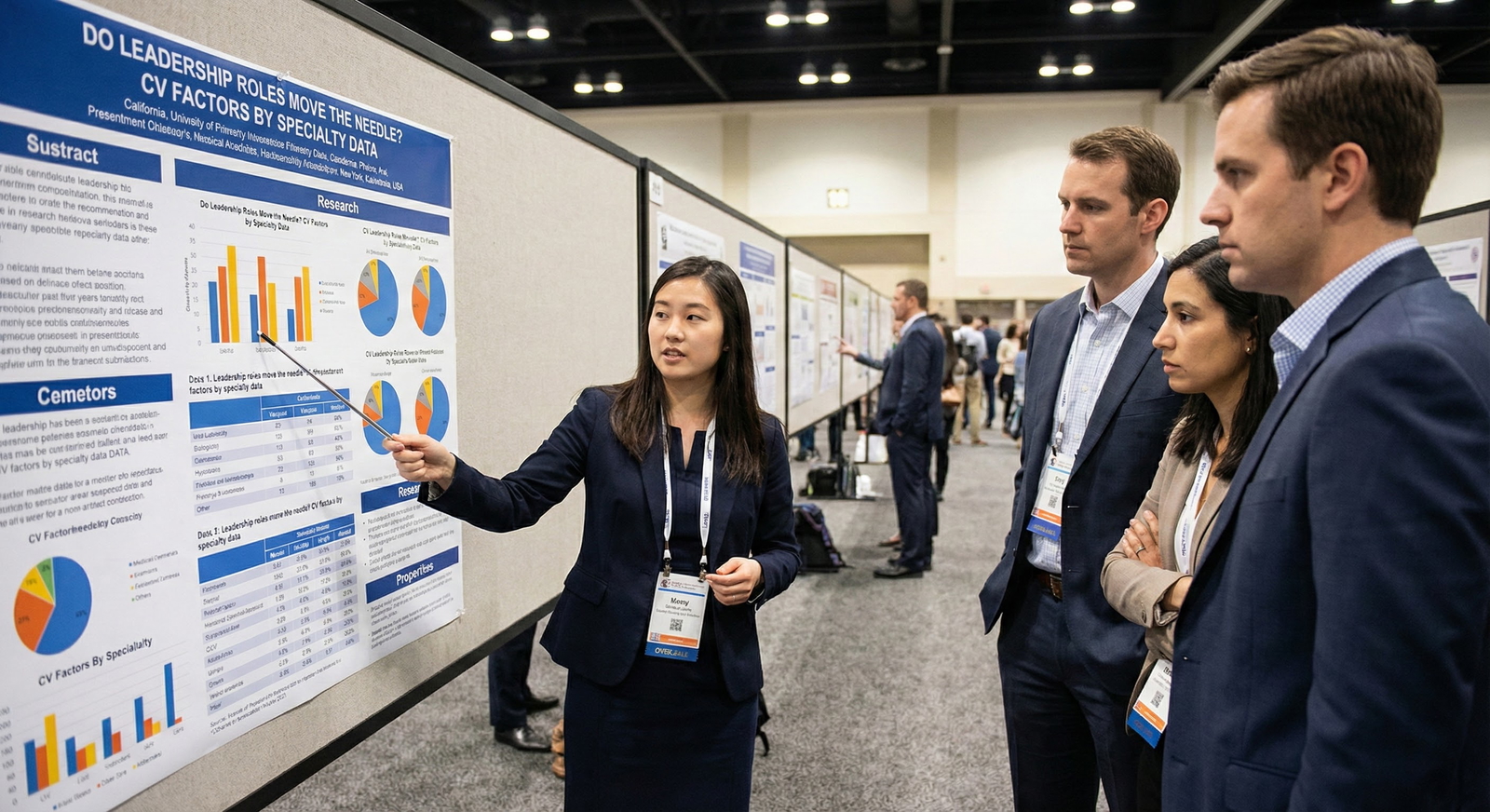
- Doe J, et al. “Predictors of Prolonged ICU Stay After CABG Surgery.” Oral presentation, Society of Thoracic Surgeons (STS) Annual Meeting, San Diego, CA, 2025.
Even one strong first- or second-author CTS paper can significantly boost your residency CV.

Step 4: Clinical, Leadership, and Skills Sections Tailored to CTS
Clinical Experience & Electives: Proving your fit in the OR
Your clinical section should make it obvious that you:
- Excel in surgical environments
- Have US clinical experience (USCE)
- Specifically sought out cardiac/thoracic exposure
For a US citizen IMG targeting cardiothoracic surgery residency, away rotations and sub-internships at US hospitals are critical. Aim for:
- At least one general surgery sub-I at a US academic center
- If possible, a cardiothoracic surgery elective or sub-I at a program you’re interested in
Sample entry:
Sub-Intern, General Surgery
St. Michael’s Teaching Hospital – Chicago, IL
August–September 2025
– Managed 6–8 inpatients daily, wrote progress notes, and developed operative plans under supervision.
– Assisted in the OR for laparoscopic cholecystectomies, colectomies, and emergent cases.
– Recognized by attending surgeons for strong work ethic and team communication (informal mid-rotation feedback).
Cardiothoracic Surgery Elective
Heart & Lung Institute – University Hospital of Midwest, Chicago, IL
October 2025
– Observed and assisted in CABG, valve replacements, and VATS lobectomies.
– Participated in pre-op and post-op rounding, ICU management discussions, and M&M conferences.
– Delivered a short presentation on “Anticoagulation Strategies in Mechanical Valve Patients.”
Showing alignment between clinical exposure and your stated interest in CTS strengthens your narrative.
Leadership & Professional Activities: Signaling future faculty potential
Cardiothoracic surgery programs often produce future academic surgeons and leaders. Leadership roles demonstrate that you can grow into that.
Relevant examples for your medical student CV:
- Founder or president of Surgery Interest Group or Cardiothoracic Surgery Interest Group
- Roles in national organizations: STS, AATS student/trainee groups, etc.
- Representative on curriculum or quality improvement committees at your school
- Organizer of skills workshops (e.g., suturing, knot tying, simulation lab sessions)
Sample entry:
Founder & President, Cardiothoracic Surgery Interest Group
American University of XYZ School of Medicine
2023–2025
– Organized monthly seminars with US-based CTS faculty (virtual) on topics including congenital heart surgery and ECMO.
– Coordinated a peer suturing workshop attended by 40+ preclinical students.
– Led a year-long QI poster project on perioperative beta-blocker use.
For a US citizen IMG, creating or revitalizing organizations can demonstrate initiative and compensate for limited institutional resources.
Teaching & Mentorship: Highlight your ability to develop others
Teaching is central to academic surgery. Include:
- Near-peer teaching (e.g., anatomy review sessions, OSCE prep)
- Formal TA roles (if any)
- Mentoring of junior students or premeds, especially in surgery-oriented programs
Example:
Small Group Tutor, Anatomy & Physiology
American University of XYZ School of Medicine
2023–2024
– Led weekly review sessions for 20 first-year students, emphasizing thoracic and cardiovascular anatomy.
– Developed practice questions and review handouts, improving average quiz performance by 15%.
These experiences reassure programs that you can handle teaching expectations during residency and beyond.
Community Service & Volunteer Work: Show humanity and resilience
Cardiothoracic surgery is intense; programs want compassionate people, not just technicians. Thoughtful service work—especially longitudinal—can distinguish you.
Consider:
- Long-term involvement in community clinics, cardiac health outreach, or global health projects
- Volunteer roles demonstrating resilience and service (disaster relief, refugee clinics, homeless shelters)
Focus on consistency over volume. One well-developed volunteer activity over several years is better than many one-off events.
Skills Section: Be precise and honest
Avoid generic “hard-working, team player” language here; that belongs in letters or personal statement. Use this section to document concrete competencies:
- Technical: Basic suturing (interrupted, running), knot tying, tissue handling with instruments, using FLS box trainer, basic laparoscopic skills (if any).
- Software: REDCap, SPSS, R, Stata, MATLAB, EndNote, Zotero.
- Language: Spanish (conversational), Arabic (basic), etc.
Example:
Technical Skills
– Suturing: simple interrupted, running, mattress, subcuticular, with 2‑0 to 5‑0 suture on skin and synthetic models.
– Simulation: Regular practice on laparoscopic box trainer (intracorporeal knot tying, peg transfer).
– Research: Proficient in REDCap, SPSS, and basic R for data analysis.
Ensure every technical claim is defensible if an attending tests you during a sub-I or interview.
Step 5: Strategic Planning – Turning Your Timeline into a CTS-Focused CV
Your CV is not just a snapshot; it’s a project plan. As a US citizen IMG, you must be especially deliberate with time.
If you’re preclinical (Years 1–2)
Focus on:
- Top academic performance and early board prep
- Joining or founding a Surgery/CTS Interest Group
- Shadowing cardiac or thoracic surgeons during breaks in the US (if possible)
- Learning basic suturing and OR etiquette
- Starting small research projects or QI work, even if not yet CTS-specific
CV action items:
- Add early research roles as “Research Assistant” with clear responsibilities.
- Document shadowing under “Additional Clinical Exposure” (short entries).
If you’re in clinical rotations (Years 3–4)
Priorities:
- Honors in Surgery and Internal Medicine
- Secure strong surgical mentors for letters (preferably US-based)
- Plan US electives/sub-Is early (especially general surgery and CTS)
- Pursue 1–2 dedicated CTS-oriented projects with a clear publication path
CV action items:
- Move CTS-related experiences higher in the CV structure.
- Update clinical sections with detailed responsibilities and impact.
- Refine research section for clarity; pursue manuscript submissions aggressively.
Considering a research year or surgical preliminary year
For many US citizen IMG applicants targeting cardiac or thoracic surgery, a research year at a major US center is often the most realistic path to a strong application. Alternately, some applicants:
- Match to general surgery first, then pursue CT fellowship later.
- Or take a preliminary surgical year then reapply.
In either case, your CV must document progression:
- Increasing responsibility
- More sophisticated research involvement
- Strong letters from US faculty
Before committing to a research year or prelim year, discuss with mentors and ask:
- What have previous IMGs from this pathway achieved?
- How many residents from here match into CTS?
Use your CV draft in those conversations to identify gaps and target them.
Frequently Asked Questions (FAQ)
1. As a US citizen IMG, do I have a realistic chance at integrated cardiothoracic surgery residency (I‑6)?
It’s challenging but not impossible. Integrated CT spots are limited and often go to US MD students with stellar scores, research, and mentorship. As a US citizen IMG, your chances improve significantly if you:
- Have very strong USMLE scores,
- Complete a US-based CTS research year with resulting publications,
- Obtain excellent letters from well-known CT surgeons, and
- Demonstrate a long-standing, well-documented commitment to heart surgery training.
Many US citizen IMGs ultimately pursue the general surgery → CTS fellowship route, which is more common and often more realistic.
2. How many publications do I need on my CV to be competitive for cardiothoracic surgery?
There is no fixed number, but for a competitive cardiothoracic surgery residency application:
- Aim for at least 2–3 meaningful CTS- or surgery-related projects.
- Having 1–2 first- or second-author papers in relevant journals can be impactful.
- Supplement with abstracts and poster/oral presentations at surgical meetings (e.g., STS, AATS, general surgery conferences).
Quality and relevance matter more than raw count. A single high-quality, well-discussed project with strong mentorship can outweigh many superficial abstracts.
3. How should I list non-CTS experiences that don’t directly relate to surgery?
Include them if they demonstrate core competencies: leadership, perseverance, teaching, service, or academic skill. For example, internal medicine research or volunteer work in a diabetes clinic can still be valuable—just:
- Place CTS- and surgery-related experiences higher in each section.
- Write descriptions emphasizing transferable skills (data analysis, teamwork, patient communication, QI).
Your CV should show a coherent trajectory toward CTS but doesn’t need to be CTS-exclusive.
4. What are the biggest CV mistakes US citizen IMGs make when applying to surgical specialties?
Common pitfalls include:
- Disorganized formatting, making it hard for PDs to see key strengths quickly.
- Overstating technical skills that can’t be backed up on rotation or at interviews.
- Listing every minor activity equally, instead of elevating high-impact, CTS-relevant achievements.
- Neglecting to obtain US-based experiences and letters, relying only on home-country or offshore-school credentials.
- Failing to show longitudinal interest in cardiothoracic surgery (e.g., no early CTS activities, sudden interest only in MS4).
Avoid these by curating your CV intentionally, revising it often, and discussing it with mentors experienced in US residency applications.
By treating your CV as a strategic roadmap—not just a document—you can transform the limitations of being a US citizen IMG into a story of resourcefulness, resilience, and clear commitment to cardiothoracic surgery. Start early, seek out CTS-focused opportunities, and let every section of your CV answer the same question:
“Why should we trust this person with the privilege and responsibility of heart surgery training?”