Understanding the CV Landscape for US Citizen IMGs in Global Health
If you are a US citizen IMG or an American studying abroad and aiming for a global health–focused residency, your CV must do two things extremely well:
- Prove that you are a strong, reliable clinical trainee who can function in a US system.
- Demonstrate a credible, sustained commitment to global health and international medicine that fits a residency’s mission.
Residency programs—especially those with a global health residency track—see many applications claiming an interest in international medicine. What separates successful applicants is a CV that is focused, consistent, and evidence-based.
This guide focuses on how to build a competitive medical student CV as a US citizen IMG, with an emphasis on global health pathways, practical strategies, and residency CV tips you can start using immediately.
Section 1: What Program Directors Look for in a Global Health–Oriented CV
Before you decide how to build your CV for residency, you need to understand what readers on the other side are scanning for.
1. Core Clinical Readiness Comes First
Even for global health–oriented programs, your clinical fundamentals are the non-negotiable foundation. Program directors need to see that you can:
- Handle the workload of residency
- Take good care of complex patients
- Communicate clearly in a US hospital environment
On your CV, this translates to:
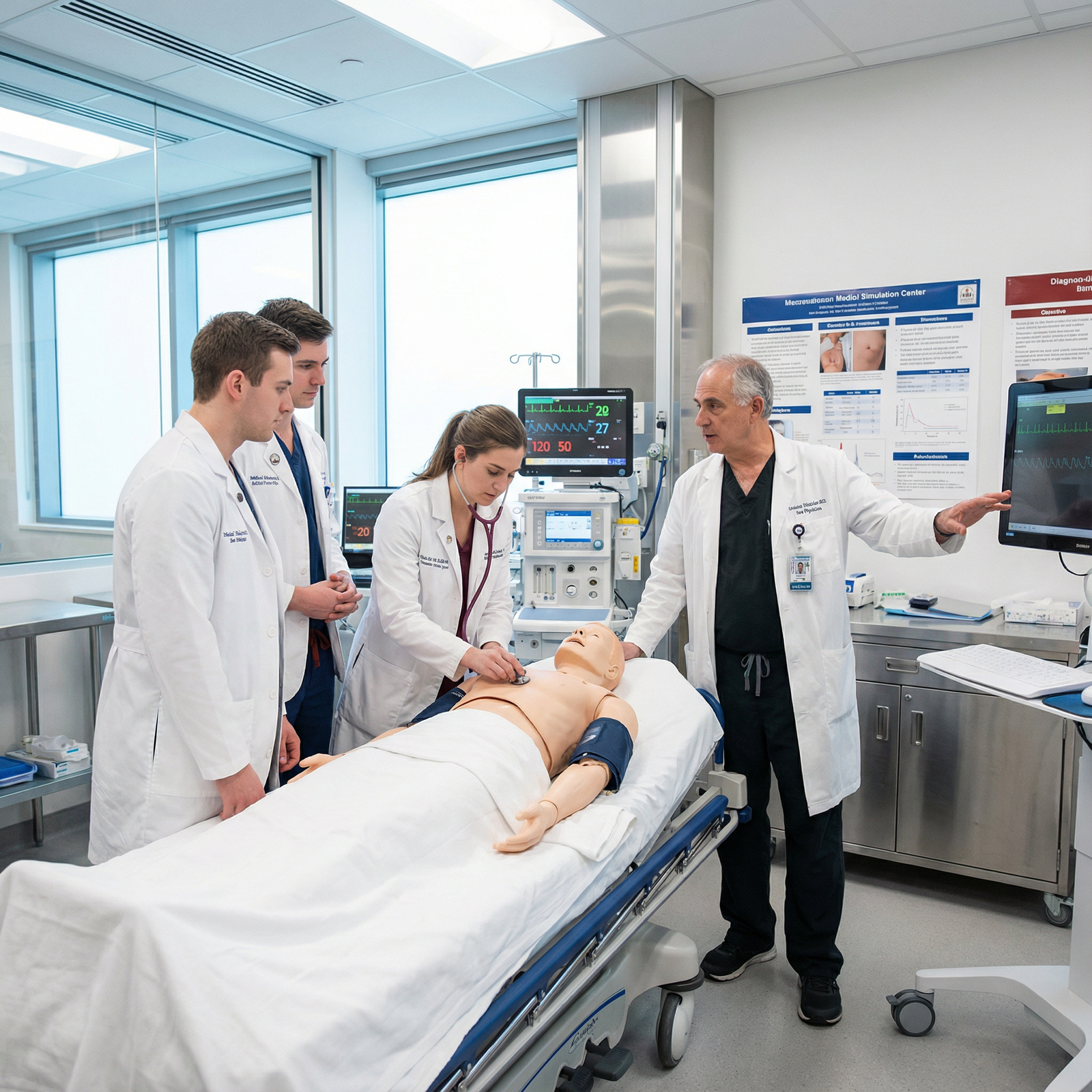
- Strong US clinical experience (USCE) – especially supervised, hands-on electives, sub-internships, or clerkships
- Evidence of performance – honors, positive comments in evaluations, class rank (if available), or strong letters (which your CV should support)
- Licensing exam performance – USMLE/COMLEX scores where allowed to be mentioned, or at least the timing and completion
No amount of global health experience can compensate for major gaps in basic clinical readiness.
2. Credible, Sustained Interest in Global Health
Programs are overwhelmed by generic statements like “I love global health” or “I want to help underserved communities.” What they look for is longitudinal engagement:
- Multiple experiences over time, not just one short trip
- Progression of responsibility (volunteer → coordinator → project lead)
- Evidence that you understand global health as systems, equity, and partnerships, not just “medical tourism”
Indicators on your CV that carry weight:
- Global health electives with defined learning goals
- Long-term involvement with a student global health organization
- Research or quality improvement in international medicine or health disparities
- Language skills and cross-cultural experience
3. Fit With a Global Health Residency Track
Programs with a global health residency track often look for applicants who will:
- Fill a defined role in the track (e.g., research, education, community engagement)
- Stay productive and committed over multiple years
- Potentially continue into academic or leadership roles in global health
On your CV, this means highlighting:
- Scholarly productivity – abstracts, posters, manuscripts, especially on global topics
- Leadership in global health initiatives – conferences organized, curricula developed, partnerships maintained
- Evidence of follow-through – projects that led to outputs (e.g., a guideline, a teaching module, a published paper)
Your goal: make it easy for a reviewer to say, “This applicant is exactly the kind of person who will thrive in our global health track.”
Section 2: Structuring Your CV for a Global Health–Focused Application
A strong structure ensures that the most relevant information for residency programs and global health is immediately visible.
Suggested CV Sections for a US Citizen IMG
You can adapt, but this general order works well for most American studying abroad applicants:
- Contact Information
- Education
- Medical Licensure & Exams
- Clinical Experience (US and international, clearly separated)
- Research Experience
- Publications & Presentations
- Global Health & International Medicine Experience
- Leadership & Extracurricular Activities
- Teaching & Mentoring
- Honors & Awards
- Skills (Languages, technical skills, etc.)
- Volunteer & Community Service
- Professional Memberships
You don’t need all of these, but this framework gives you a roadmap for how to build your CV for residency in a way that highlights both clinical and global health strengths.
1. Contact Information
Include:
- Full name
- Email (professional)
- Phone (US number if possible, even via VoIP)
- Current mailing address
- Optional: LinkedIn or professional website if well-maintained
Avoid photos, birthdate, or personal identifiers not relevant to US applications.
2. Education
List in reverse chronological order:
- Medical school (with country and city)
- Degree and anticipated or actual graduation date
- Undergraduate degree(s)
- Relevant graduate degrees (MPH, MSc in Global Health, etc.)
Example:
Doctor of Medicine (MD), University of XYZ School of Medicine, Dublin, Ireland
Expected Graduation: June 2026Bachelor of Science in Biology, Minor in Global Health, University of ABC, Boston, MA, USA
Graduated: May 2020, Magna Cum Laude
If you are a US citizen IMG, clearly showing your undergraduate education in the US helps programs quickly understand your background.
3. Medical Licensure & Exams
For each:
- USMLE Step exams – include status and dates (and scores if appropriate and allowed for the document’s use)
- ECFMG certification status (if applicable)
- Any other relevant licensure
Focus on clarity rather than embellishment.

Section 3: Showcasing Clinical Experience as a US Citizen IMG
For an American studying abroad, your clinical experience section is a central part of your residency CV. It needs to reassure reviewers that you understand both international and US health systems.
1. Separate US Clinical Experience (USCE) from International Clinical Experience
Use distinct subheadings:
- US Clinical Experience
- International Clinical Experience
For each entry:
- Site name and location
- Dates (month/year)
- Role (e.g., Clinical Elective Student, Sub-Intern, Observer where applicable)
- Specialty
- 2–3 bullet points focusing on responsibilities and skills
Example – USCE:
Sub-Intern, Internal Medicine
University Hospital, New York, NY, USA | Aug–Sep 2025
- Managed 5–8 inpatients daily under supervision, including admissions, daily notes, and discharge planning
- Participated in multidisciplinary rounds, coordinating care with nursing, pharmacy, and social work
- Presented new admissions at morning report and developed assessments and plans with senior residents
Example – International Clinical Experience:
Clinical Elective Student, Internal Medicine & Infectious Diseases
University of XYZ Teaching Hospital, Dublin, Ireland | Jan–Mar 2025
- Evaluated patients with HIV, tuberculosis, and chronic hepatitis in inpatient and outpatient settings
- Collaborated with consultants and registrars in adapting evidence-based protocols within local resource constraints
- Observed coordination between hospital and public health services for contact tracing and follow-up
2. Highlight Transferrable Skills That Matter for Global Health
You can emphasize aspects that overlap with global health competencies:
- Managing infectious diseases and tropical medicine cases
- Working in resource-limited or safety-net hospital settings
- Coordinating care with social services, NGOs, or community partners
- Communicating across language or cultural barriers
Example bullet:
- Managed patients in a safety-net clinic serving a large immigrant population, using interpreters and adapting counseling to diverse cultural contexts
3. Avoid Common US Citizen IMG Pitfalls in Clinical Sections
- Overemphasis on observational roles: If something is an observership, label it honestly. Don’t inflate the role.
- Too many short, scattered experiences: PDs prefer a few substantial, well-described rotations over dozens of 1–2 week experiences.
- No outcomes: When possible, mention a concrete result: “Created a patient education handout,” “Contributed to clinic workflow improvement that reduced wait times.”
Section 4: Building and Presenting Global Health Experience
This is where you differentiate yourself as an applicant for a global health residency track. Residency CV tips for global health all come back to one theme: depth over “mission trip tourism.”
1. What Counts as Genuine Global Health Experience?
Global health and international medicine are broader than traveling abroad. Relevant experiences include:
- Longitudinal work with migrant, refugee, or underserved communities in the US
- Research on global disease burdens, health systems, or implementation science
- Participation in WHO, PAHO, CDC, or NGO-associated projects
- Development projects (e.g., telemedicine links, quality improvement in LMIC clinics)
- Health systems, policy, or advocacy work focused on structural determinants of health
- Domestic rotations at FQHCs or clinics serving global populations (e.g., asylum seekers, refugees)
You do not need to have worked in multiple countries. A meaningful, sustained engagement with one site or one population can be more impressive.
2. How to Create a Distinct “Global Health & International Medicine” Section
If you have multiple relevant experiences, add a dedicated section:
Global Health & International Medicine Experience
For each entry:
- Organization and location (country if outside the US)
- Role title (e.g., Student Researcher, Project Coordinator)
- Dates
- 2–4 bullets focusing on scope, context, and outcomes
Example:
Student Project Lead, Community-Based Hypertension Screening Initiative
Rural Health NGO & District Hospital, Western Kenya | Jun–Aug 2023 (remote follow-up through 2024)
- Led a team of 4 medical students to develop a community hypertension screening protocol adapted to local resources
- Collaborated with local nurses and community health workers to create culturally appropriate counseling materials
- Co-authored a quality improvement abstract on screening uptake, presented at the 2024 Global Health Consortium Conference
3. Show Longitudinal Commitment
Programs want to see that global health is not a one-time adventure. On your CV, indicate continuity:
- Note ongoing roles with “Aug 2023 – Present”
- Add multiple entries that relate to the same site or partner organization
- Show progression: volunteer → coordinator → project lead → first-author abstract
Example path on a CV:
- 2022: Volunteer, Student Global Health Interest Group
- 2023: Coordinator, Refugee Clinic Tutoring Program
- 2024: Student Lead, Refugee Clinic Diabetes Education Project
- 2025: First-author poster, “Culturally Tailored Diabetes Education for Newly Resettled Refugees”
4. Include Domestic Work With Global Populations
Global health residency programs value work with:
- Refugee resettlement agencies
- Legal aid clinics for asylum seekers
- Community organizations serving migrant farmworkers
- Urban clinics with large immigrant populations
On your CV, clearly contextualize these as global health–relevant:
Student Volunteer, Refugee Health Navigation Program
Boston, MA, USA | Sep 2022 – May 2024
- Assisted newly arrived refugees from Syria, Afghanistan, and Eritrea with healthcare navigation, appointment scheduling, and medication access
- Collaborated with interpreters and social workers to coordinate care and address social determinants of health
- Developed a resource guide in collaboration with local NGOs for mental health and social support services

Section 5: Research, Scholarship, and Leadership in Global Health
For many global health residency tracks, your academic and leadership potential is as important as your travel history.
1. Research Experience
In your Research Experience section, include both clinical and global health research.
For each:
- Project title or topic area
- Institution and mentor name (where appropriate)
- Dates
- 2–4 bullets: methods, responsibilities, outcomes
Example:
Student Researcher, Barriers to TB Treatment Adherence in Urban Slums
University of XYZ / Partner NGO, Mumbai, India | Jan 2023 – Present
- Conducted literature review and contributed to development of a mixed-methods study design
- Assisted in adapting survey instruments for local languages and contexts in collaboration with local investigators
- Analyzed preliminary quantitative data and co-authored an abstract submitted to the American Society of Tropical Medicine & Hygiene (ASTMH) 2025 meeting
Prioritize:
- Global health–relevant topics: infectious diseases, NCDs in LMICs, health systems, implementation science, maternal-child health, etc.
- Methods that show analytical skills: regression analysis, qualitative coding, implementation frameworks, etc.
2. Publications & Presentations
Separate these into subsections:
- Peer-reviewed publications
- Abstracts/posters
- Oral presentations
- Other scholarly products (e.g., toolkits, curricula, online modules) if notable
Use a consistent citation style (e.g., AMA). For global health residency programs, highlight when work is:
- Internationally collaborative
- Presented at global health conferences
- Focused on vulnerable or underserved populations
Example:
Smith J, Doe A, et al. Community health worker–led hypertension screening in rural Kenya: A pilot implementation study. Global Health Action. 2024;17(3):e123456.
Even if you don’t yet have first-author papers, multiple abstracts or posters in global health can strongly support your stated interests.
3. Leadership and Teaching
Leadership roles are critical for residency CVs, particularly for global health tracks that expect you to coordinate projects or mentor others.
Relevant roles:
- President/Officer of a Global Health Interest Group
- Coordinator of a student-run free clinic with immigrant or refugee focus
- Organizer of a global health symposium, seminar series, or advocacy campaign
- Liaison between your international medical school and a US institution on a joint project
For teaching roles:
- Peer tutoring in global health–related courses or epidemiology
- Teaching standardized patients or junior students about cultural competency
- Developing educational materials for community health workers abroad
Example leadership entry:
Co-President, Global Health Interest Group
University of XYZ School of Medicine | Sep 2023 – May 2025
- Organized a 6-part seminar series on global surgery, refugee health, and health systems strengthening, averaging 60+ attendees per event
- Coordinated with faculty and local NGOs to establish a new longitudinal elective at a community clinic serving asylum seekers
- Mentored first- and second-year students interested in pursuing global health research projects
Section 6: Strategic CV-Building Roadmap for US Citizen IMGs in Global Health
If you are still early in your training or in the middle of your international medical education, you can still shape your future residency CV. Use this as a phased roadmap.
Pre-Clinical / Early Medical School (Years 1–2)
Focus on:
- Joining or founding a Global Health Interest Group
- Volunteering with organizations serving immigrant or refugee populations (in your current country or remotely with US-based organizations)
- Building basic research skills (epidemiology, biostatistics, qualitative methods)
- Identifying mentors with experience in global or international medicine
Actionable steps:
- Seek a summer research project with a global or health disparities theme.
- Take electives in global health, health policy, or medical anthropology if available.
- Start a simple tracking document listing all activities with dates and bullet points—this will later feed directly into your CV.
Clinical Years (Years 3–4)
Focus on:
- Securing high-quality US clinical experience (at least a few months if possible)
- Choosing electives with global relevance: ID, HIV, TB, maternal-child health, emergency medicine, primary care in safety-net settings
- Undertaking one or two substantial global health projects, rather than many superficial experiences
Actionable steps:
- Plan an away elective at a US institution that has a global health residency track, so you can network and get letters.
- If doing an international elective, ensure it is educationally structured, ethically sound, and tied to local partners.
- Try to produce at least one poster or abstract in a global health topic by the time you apply for residency.
Application Year
Focus on:
- Polishing and standardizing your CV formatting (consistent fonts, headings, dates, and bullet style)
- Emphasizing alignment with the missions of the programs you apply to
- Preparing to discuss any global health experience in depth during interviews
Actionable steps:
- Have mentors—especially US faculty—review your CV and give honest feedback.
- Adapt the order of your CV sections slightly depending on the type of program:
- For a broad internal medicine or pediatrics program: emphasize clinical and research first, global health as a clear but secondary focus.
- For a formal global health residency track: pull global health sections higher in the document (e.g., right after Clinical Experience or Research).
- Make sure everything on your CV is verifiable and that you can speak about specific details, context, and ethical considerations during interviews.
Common Mistakes for US Citizen IMGs to Avoid
- “Voluntourism” style entries without context or sustained follow-up.
- Vague descriptions like “helped doctors in clinic” instead of specific tasks.
- Overcrowding the CV with minor, unrelated activities; focus on those that build a coherent narrative of medicine + global health.
- Typos, inconsistent formatting, or unprofessional email addresses—these undermine credibility quickly.
FAQs About CV Building for US Citizen IMGs in Global Health
1. I’m a US citizen IMG with only one short international trip. Can I still apply to a global health residency track?
Yes, but your CV should show broader, sustained commitment to global or underserved populations, not just one trip. Emphasize:
- Long-term work with local immigrant or refugee communities
- Research on global diseases or health equity
- Leadership in global health interest groups or projects
You can absolutely be competitive if your overall profile shows consistent interest and maturity in approaching international medicine, even if travel has been limited.
2. How important is it to have publications for a global health residency?
Publications are helpful but not an absolute requirement. Program directors look at your trajectory and potential. At minimum, you should aim for:
- A few abstracts or posters (especially if global-health focused)
- Demonstrated ability to complete projects and disseminate results
A strong medical student CV for global health may include:
- One or two peer-reviewed articles (even as co-author)
- Several abstracts/posters on global health topics
- Involvement in data collection, analysis, or implementation science
3. Should I include non-medical international experiences on my residency CV?
If they are substantial and relevant—yes. For example:
- Peace Corps service
- Long-term work or study abroad
- NGO or development work
Brief tourism or short cultural trips typically don’t belong unless they had a structured, health-related component. When you do include international experiences, frame them in terms of competencies gained, such as language fluency, cross-cultural communication, or community engagement.
4. How can I make my CV stand out as an American studying abroad?
As a US citizen IMG, you can stand out by:
- Combining solid US clinical experience with your international training background
- Demonstrating thoughtful reflection and maturity about working in different health systems
- Building a coherent narrative: your undergraduate, international medical school, research, and global health activities all point toward a focused goal in international medicine
- Showing adaptability—language skills, leadership in diverse teams, and success in multiple educational environments
Your CV should make it clear that your path as an American studying abroad has strengthened your capacity for global health–oriented residency training, not just made you “different.”
By approaching your medical student CV strategically and early, you can present yourself as a clinically strong, globally engaged US citizen IMG who is ready to contribute meaningfully to a global health residency track and to the broader field of international medicine.