Understanding the IR Landscape as a US Citizen IMG
Interventional Radiology (IR) is one of the most competitive residency pathways in the United States. For a US citizen IMG (American studying abroad), this competitiveness is amplified by program preferences that often favor US MD students, followed by US DOs, then IMGs. That does not mean you cannot match—many US citizen IMGs successfully enter interventional radiology residency programs—but it does mean your CV must be strategically built and polished.
A strong IR-focused CV does three critical things:
- Proves you can handle the rigor of US training (scores, clinical performance, professionalism).
- Signals authentic, sustained interest in IR (exposure, research, mentorship, and activities).
- Makes you easy to advocate for (clear, organized, and aligned with what PDs are looking for).
This article will walk you through how to build a CV for residency—specifically tailored to the IR match and to the realities of being a US citizen IMG / American studying abroad.
Core Principles of a Strong IR Residency CV
Before diving into specific sections, it helps to understand the guiding principles behind an effective medical student CV for IR.
1. IR-Specific Interest Must Be Undeniable
For a competitive, niche field like interventional radiology, generic “I like procedures and imaging” is not enough. Your residency CV should demonstrate:
- Longitudinal interest in IR (not just a last-minute choice)
- Concrete exposure: shadowing, electives, observerships in IR
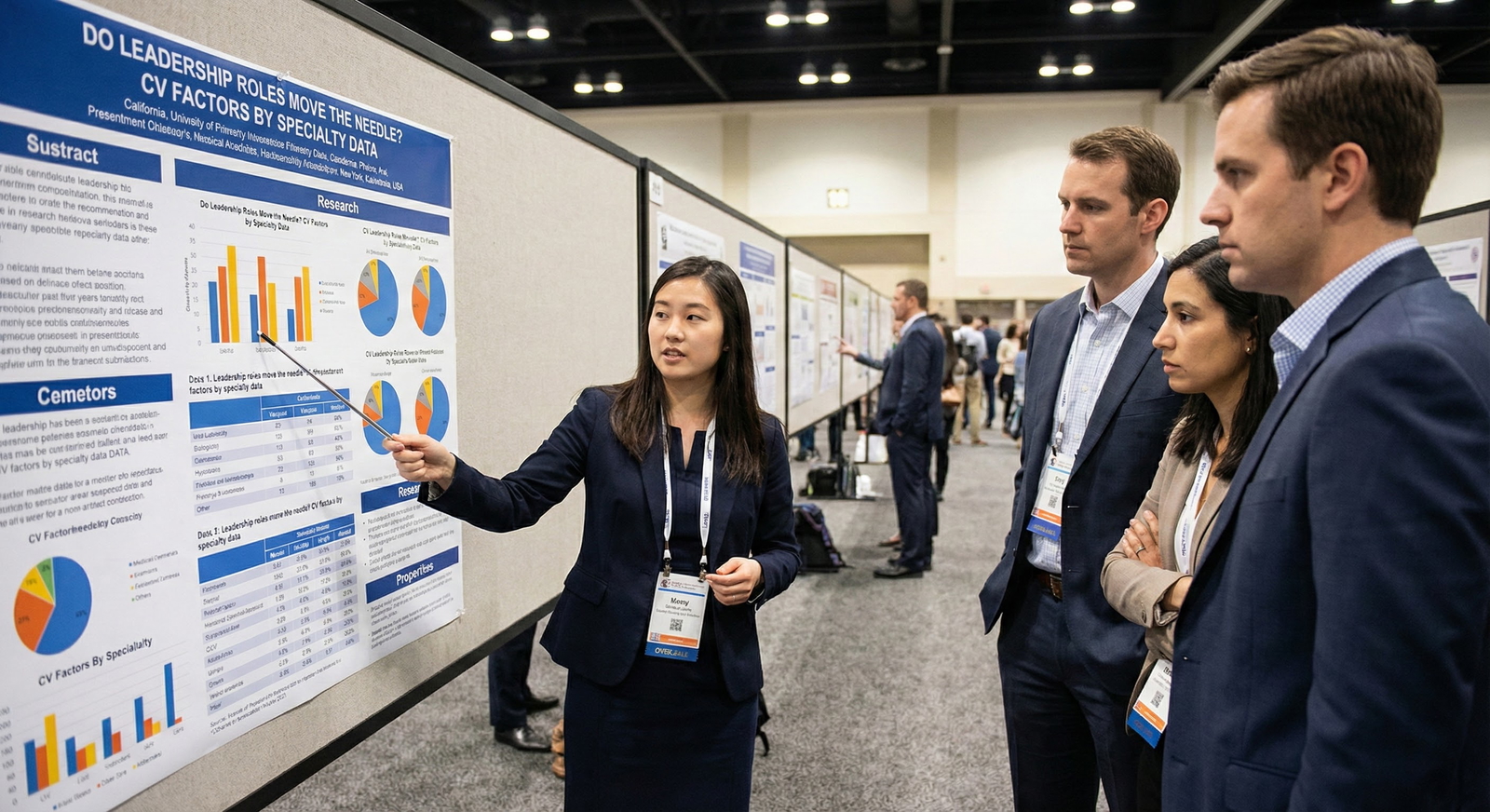
- IR-related scholarly work: case reports, QI projects, research posters
- Active engagement with IR communities: SIR (Society of Interventional Radiology), local IR interest groups, webinars
When a program director scans your CV, they should quickly see: This applicant has clearly pursued IR for some time and understands what the specialty entails.
2. IR Programs Want Evidence You Can Thrive in Procedural, Team-Based Care
Interventional radiology combines:
- Imaging expertise
- High-stakes procedures
- Inpatient and outpatient care
- Close collaboration with surgery, oncology, vascular, and critical care teams
Your CV should highlight:
- Teamwork and communication roles (committee work, leadership, teaching)
- High-responsibility clinical roles (sub-internships, night float, ED exposure)
- Procedural comfort (not necessarily IR-specific; any procedural specialty exposure helps—surgery, anesthesiology, EM, critical care)
3. IMG Status Means the Bar for Documentation Is Higher
As a US citizen IMG, you don’t have to deal with visa sponsorship—but you still must overcome:
- Concerns about clinical training standards at your school
- Questions about your familiarity with the US healthcare system
- Tighter filters on applications from IMGs in many programs
Your residency CV must clearly document:
- US clinical experience (USCE), especially in radiology/IR, medicine, surgery, or ICU
- Excellent exam performance (Step 2 CK, since Step 1 is pass/fail)
- Adaptability and professionalism in diverse settings
Structuring Your Interventional Radiology Residency CV
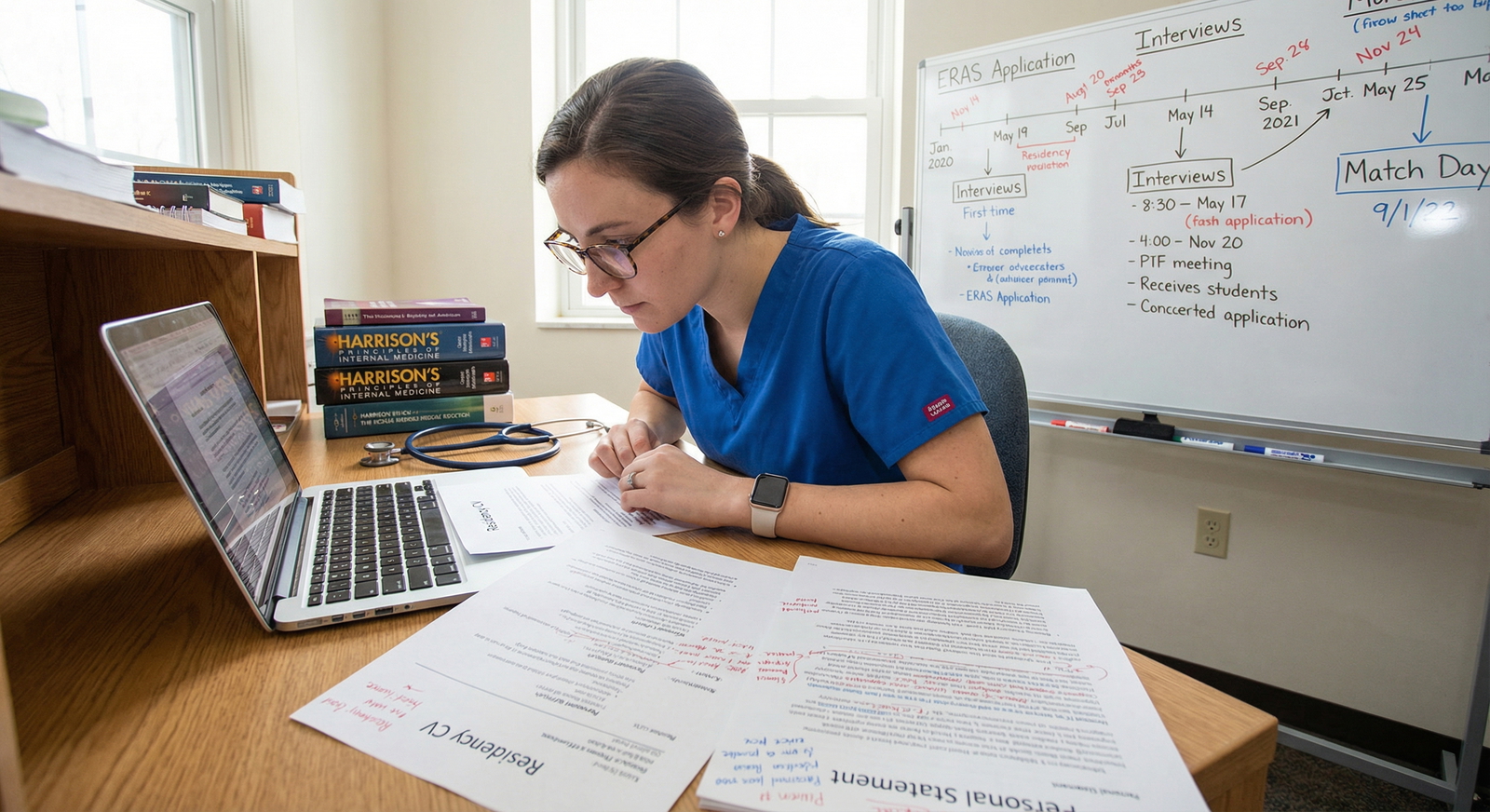
While ERAS has its own structure, you should still maintain a master medical student CV in standard academic format (1–3 pages). You will adapt this content when entering it into ERAS.
Below is a recommended structure, with residency CV tips and IR-specific guidance for each section.
Contact & Identification
Keep it simple and professional:
- Full name (matching medical school and exam registrations)
- Email (professional, e.g., firstname.lastname@)
- US cell phone number
- City/State of current residence (especially if in the US doing rotations)
- LinkedIn (optional but recommended if well-maintained)
Do not list visa status if you are a US citizen; that is implicit. However, if relevant, you may specify: “Citizenship: United States” in a brief personal details line.
Education
List in reverse chronological order:
- Medical school (name, country, dates, degree expected/obtained)
- Undergraduate degree (major, institution, graduation date)
- Significant prior graduate degrees if applicable (e.g., MPH, MS)
For US citizen IMG applicants, it helps to:
- Briefly include any distinctions (Honors, Dean’s List, rank quartile if strong)
- Clarify language if your school uses unfamiliar grading systems (e.g., ECTS, narrative evaluations)
Example:
MD Candidate, Class of 2025
University of X Faculty of Medicine, Country
– Top 10% of class (unofficial ranking)
– Distinction in Radiology and Internal Medicine
USMLE/COMLEX & Examinations
Even though scores are usually entered in ERAS, your CV should summarize:
- USMLE Step 2 CK score (if strong; only list Step 1 if helpful beyond “Pass”)
- OET or other English proficiency exams if relevant
- Any honors distinctions (e.g., “High Pass on NBME Clinical Exams” if applicable)
For IR, a strong Step 2 CK score helps, especially for US citizen IMGs. If your score is not outstanding but solid, you don’t have to list the numeric score on the standalone CV—but you must still report it accurately in ERAS.
Clinical Experience (Core & Elective Rotations)
For US citizen IMGs, this is one of the most important sections.
Divide into:
- US Clinical Experience (USCE)
- Home Country / School Clinical Experience
For each, include:
- Rotation type (e.g., “Sub-internship in Internal Medicine – Inpatient”)
- Institution and location (especially US hospitals)
- Dates and duration
- 1–3 bullet points describing your role and responsibilities
For IR Applicants, prioritize:
- US electives in interventional radiology, diagnostic radiology, or procedural specialties
- Sub-internships in Internal Medicine, Surgery, ICU, EM (demonstrate acute care comfort)
Example for an IR elective:
Clinical Elective in Interventional Radiology
XYZ Medical Center, New York, NY | 4 weeks | 08/2024
– Assisted in pre- and post-procedure patient evaluations under supervision
– Observed and participated in procedure preparation for angiography, TACE, and biliary interventions
– Completed a QI project on reducing post-biopsy complication documentation errors
These descriptions support your IR match narrative and give letter writers more to draw from.
Research Experience
IR is a procedure- and imaging-heavy field, and programs appreciate applicants with a scholarly mindset. However, you do not have to have basic science or advanced imaging physics research to be competitive. For US citizen IMGs, even well-executed clinical or QI projects are valuable.
List for each research experience:
- Project title or topic
- Institution / department
- Mentor(s)
- Your role (be specific: data collection, chart review, statistical analysis, manuscript drafting)
- Outputs: abstracts, posters, oral presentations, manuscripts (under review/accepted)
IR-Specific Opportunities:
- Case series or case reports on IR procedures (e.g., embolization, drain placement, novel access techniques)
- Retrospective chart reviews on outcomes after IR procedures
- QI projects in radiology (e.g., report turnaround times, radiation dose reduction)
- Collaborations with oncology, vascular surgery, hepatology where IR plays a key role
If you have limited access to IR research locally:
- Reach out to US IR attendings or residents you meet during observerships and electives
- Connect with mentors via SIR or institutional email
- Offer to help with chart review, data entry, or literature reviews remotely
Important CV Tip:
For every project, clearly indicate where it stands: “In progress,” “Submitted,” “Accepted,” “Published.” Never exaggerate status.
Publications, Presentations, and Abstracts
This is where you convert research and academic work into visible output.
Divide into categories:
- Peer-reviewed journal articles
- Abstracts and posters
- Oral presentations
- Book chapters or online modules (if substantial)
Use standard citation format (e.g., AMA or similar). Emphasize IR-related work by:
- Ordering IR-related items first within each category
- Bold your name in author lists
Example:
Doe J**, Smith A, Lee K. Safety and efficacy of ultrasound-guided PICC line placement by resident physicians. J Vasc Interv Radiol. 2024;35(6):123–130.
If you lack IR publications, that’s not fatal. Show a pattern of productivity in clinically relevant areas: internal medicine, surgery, ICU, radiology, or QI.
Leadership, Teaching, and Extracurricular Activities
IR is team-based, and procedural work requires leadership, organization, and calm under pressure. Use this section to demonstrate those qualities:
- Leadership roles (class representative, student society, SIR medical student council)
- Teaching (tutor for anatomy, physiology, Step 1/Step 2, radiology interest groups)
- Event organization (conferences, workshops, ultrasound skills sessions)
For each activity, use 1–3 strong, outcome-focused bullets:
– Organized a student-led IR interest webinar series with >120 attendees across 6 medical schools
– Coordinated cadaveric ultrasound-guided procedure workshop, collaborating with radiology and anesthesia departments
These entries signal initiative and communication skills—valued heavily in IR.
Highlighting IR Interest as a US Citizen IMG
Simply listing “Interventional Radiology” as your intended specialty is not enough. Programs see many applicants who claim interest but lack substance. You must build a visible IR identity in your CV.
1. IR Exposure and Shadowing
Even if your home school abroad has limited IR, you can:
- Arrange IR shadowing during US observerships or electives
- Seek out radiology/IR departments at affiliated hospitals
- Attend IR procedure days during surgery or ICU rotations
On your CV, list:
Shadowing in Interventional Radiology
ABC Hospital, City, State | 2 weeks | 06/2023
– Observed angiography, IVC filter placement, and image-guided biopsies
– Discussed case selection and procedural planning with attending physicians
Short experiences are still valuable if they align with the rest of your application.
2. SIR and IR Interest Groups
Membership and active involvement in IR organizations show professional commitment:
- Society of Interventional Radiology (SIR) – student or trainee membership
- Local or school IR interest group (if none exists, founding one is a strong leadership point)
List specific contributions, not just memberships:
– Co-founded Interventional Radiology Interest Group at University of X; organized 4 career panels and 2 skills workshops for pre-clinical students
3. IR-Related Skills and Courses
Highlight skills relevant to IR practice and research:
- Basic ultrasound skills or ultrasound-guided procedures
- Radiation safety or imaging physics courses
- Data analysis/statistical software (R, SPSS, Stata)
- Image analysis tools (OsiriX, Horos, or similar)
Summarize them under a “Technical & Clinical Skills” section:
– Basic ultrasound-guided vascular access on simulation models
– Familiarity with PACS systems and structured radiology reporting
4. Aligning Your CV with the IR Match Pathway
Most IR-bound applicants match into:
- Integrated IR residencies (categorical IR/DR)
- Diagnostic Radiology (DR) with an Early Specialization in IR (ESIR) pathway
Your CV should demonstrate that you are competitive for at least DR, with clear indication you aim for IR. That means:
- Strong academic performance suitable for DR
- IR activities layered on top of a solid DR-relevant profile
Even if you don’t end up in integrated IR on Match Day, a strong IR-oriented DR CV leaves the door open for ESIR or independent IR later.

Practical Strategies: How to Build Your IR-Focused CV as a US Citizen IMG
Below are concrete, stepwise residency CV tips tailored to your situation as an American studying abroad.
Step 1: Secure High-Quality US Clinical Experience Early
Aim to complete at least 2–3 months of US clinical rotations in your later years (ideally 4th and 5th if on a 6-year curriculum, or 3rd/4th on a 4-year curriculum):
Priority rotations:
- Interventional Radiology (if available) – even 2–4 weeks is valuable
- Diagnostic Radiology – to show imaging exposure
- Internal Medicine / ICU / Emergency Medicine / Surgery – shows you can manage complex patients
From each rotation, aim to gain:
- Strong Letters of Recommendation (ideally from US faculty, IR or DR if possible)
- At least one activity or mini-project (case presentation, QI project, mini literature review) you can list on your CV
Step 2: Develop At Least One IR-Focused Research or QI Project
If your home institution has IR:
- Approach IR attendings or residents and ask about ongoing projects where you can contribute
- Offer to do chart reviews, data management, or preliminary analysis
If IR is limited locally:
- Partner with radiology, vascular surgery, hepatology, or oncology faculty on imaging-guided interventions
- Use remote collaboration: ask US IR contacts if you can support retrospective projects
Even a small-scale project can be turned into:
- A case report
- A poster at a regional or national meeting (e.g., SIR, RSNA, local radiology societies)
This adds both research and presentation lines to your CV.
Step 3: Structure Your Activities to Tell a Cohesive Story
Your CV should read as a coherent narrative:
- Pre-clinical: curiosity about imaging, early radiology exposure, anatomy, simulation
- Clinical years: rotations that emphasize acute care and procedural medicine
- Parallel tracks: IR interest group, SIR involvement, research or QI projects
- Leadership and teaching: roles that show maturity and collaboration
Avoid scattering random, unrelated activities without context. For example, if you did global health or primary care outreach, frame it in terms of:
- Patient-centered communication
- Procedural screening workflows (e.g., ultrasound camps)
- Coordination with hospital-based services
This way, even non-IR activities still support your overall profile.
Step 4: Optimize Presentation and Formatting
No matter how strong your content, poor formatting can undermine your application.
Key formatting guidelines:
- Length: 1–3 pages for a medical student/residency CV
- Font: Clean, professional (e.g., 11–12 pt Calibri, Times, or Arial)
- Organization: Clear headings, consistent bulleting, reverse chronological order
- Avoid dense paragraphs—use short bullets starting with strong action verbs
Examples of effective bullet phrasing:
- “Led…” instead of “Responsible for leading…”
- “Analyzed data on 200+ patients…” instead of “Helped with data…”
- “Co-authored manuscript on…” instead of “Involved in writing…”
For an IR match, this kind of clarity signals professionalism and detail orientation—both critical in procedural specialties.
Step 5: Remove Noise and Strengthen the Signal
Many US citizen IMGs overload their CVs with every minor detail from the last 10 years. Instead, focus on relevance and impact.
You can safely minimize or omit:
- Very short or trivial high school achievements (unless truly exceptional)
- Unrelated extracurriculars that do not demonstrate transferable skills
- Repetitive entries (e.g., listing similar volunteer activities separately without distinct impact)
You should prioritize:
- IR and radiology-related content
- Leadership, teaching, and research
- Robust US clinical exposure
Ask yourself: “If an IR program director only spends 45 seconds on my CV, what will they remember?” Then ensure that your headings and ordering make those elements unavoidable.
Common Mistakes US Citizen IMGs Make on IR Residency CVs
Being aware of common pitfalls can help you avoid easy disqualifiers.
1. Vague or Inflated Descriptions
Programs are very experienced at reading CVs. Overstatement hurts your credibility.
- Don’t claim “authorship” if you only briefly helped collect data. Use “contributor” or describe your specific task.
- Don’t label a submitted paper as “in press” unless it’s formally accepted.
When in doubt, understate rather than overstate.
2. Weak or Generic IR Interest
Listing “Interventional Radiology” in your intended specialty field but having zero IR activities, research, or exposure undermines your story.
If you discovered IR later in training, that’s fine—but then:
- Seek accelerated exposure: shadowing, electives, online SIR resources
- Quickly join or create IR-related student activities
- Develop at least one IR or imaging-focused project
3. Not Highlighting US Citizen Status Strategically
As a US citizen IMG, you have one major advantage over non-US IMGs: no visa issues. While you don’t need to write this in flashing letters, you can:
- Make sure your US citizenship is clearly indicated in personal info or ERAS
- Highlight your long-term commitment to practicing in the US in your broader application materials (personal statement, interviews)
Programs sometimes use filters for visa requirements; your status lets them consider you more flexibly.
4. Disorganized or Inconsistent Formatting
Sloppy formatting signals sloppy thinking, which is not what you want in a field that places catheters in tiny vessels near critical organs.
Double-check for:
- Consistent date formats
- Uniform bullet styles
- Correct spelling of institutions and journals
- Accurate capitalization (e.g., “Interventional Radiology,” “Society of Interventional Radiology”)
Final Checklist: IR-Focused Residency CV for the US Citizen IMG
Use this checklist as you finalize your medical student CV for IR applications:
- Education section clearly lists your medical school abroad and any honors
- Step 2 CK score is competitive and appropriately displayed or de-emphasized
- US Clinical Experience is clearly separated, with at least 2–3 months total
- At least one IR elective, DR elective, or IR-shadowing experience is included
- You have some combination of IR or imaging-related research/QI/academic work
- SIR membership or IR interest group involvement is mentioned
- Leadership and teaching roles demonstrate communication and teamwork
- Activities and bullets are concise, action-focused, and honest
- Formatting is clean, consistent, and professional (1–3 pages)
- Your overall CV tells a coherent story: US citizen IMG committed to a career in IR, with the academic and clinical foundation to succeed in a demanding residency.
If you can confidently check most of these boxes, you’re positioning yourself well—even in a competitive specialty like interventional radiology.
FAQs: CV Building for US Citizen IMG in Interventional Radiology
1. As a US citizen IMG, how many IR-specific activities do I need on my CV to be competitive?
There is no fixed number, but aim for multiple signals of IR interest:
- At least one IR or DR elective (US-based if possible)
- One or more IR-related projects (research, QI, or case reports)
- Active involvement with SIR or an IR interest group
Programs want to see that IR is not a last-minute choice. Two to four well-developed IR experiences are more valuable than a long list of superficial ones.
2. What if I cannot get an IR elective in the US as an IMG?
If IR electives are unavailable:
- Secure US rotations in Diagnostic Radiology, ICU, Emergency Medicine, or Surgery
- Try to arrange informal IR shadowing during those rotations
- Build your IR profile through research, case reports, and SIR activities
On your CV, emphasize how these experiences exposed you to imaging-guided procedures and multidisciplinary care that aligns with IR.
3. How do I balance IR and DR content on my CV if I’m applying to both?
Use your CV to show that you are a strong radiology candidate with specific interest in IR:
- Maintain robust DR-relevant foundations: academic performance, imaging exposure, research
- Layer IR elements: electives, research, interest group work, SIR membership
In ERAS, you can adjust your personal statement and program list to match either integrated IR/DR or DR with intent for ESIR, while keeping the same core CV.
4. Is it better to have more research or more clinical experience on my CV for IR?
For most US citizen IMGs, strong US clinical experience is the priority—especially with good evaluations and letters. However, having some research or academic output significantly strengthens an IR application.
Aim for:
- Minimum: Robust USCE + at least one small scholarly project
- Ideal: USCE + multiple projects/posters (IR or imaging-related if possible)
Programs rarely reject someone solely for having “only a few” research items, but lack of US clinical exposure or evidence of IR understanding is harder to overcome.
By building your CV intentionally—aligning your experiences with the needs of interventional radiology programs and clearly documenting your journey as a US citizen IMG—you significantly increase your chances of a successful IR match and a fulfilling career in this dynamic specialty.