
Understanding the CV Landscape for US Citizen IMGs in Radiation Oncology
Radiation oncology is one of the most competitive specialties, and as a US citizen IMG (American studying abroad), you start with a perceived disadvantage compared with US MD seniors. The good news: a strategically built CV can significantly narrow that gap.
Program directors in radiation oncology look for three overarching signals on your medical student CV:
- You understand the specialty (shadowing, electives, rad onc research).
- You can succeed in an academic, research-heavy environment (posters, publications, projects).
- You are reliable, professional, and easy to work with (leadership, longitudinal commitments, teaching).
For an American studying abroad, your residency CV also has to do extra work:
- Reassure programs about your clinical training quality.
- Clarify your US ties and intent to practice in the US.
- Demonstrate proactive effort to overcome structural barriers (e.g., lack of home rad onc department).
Think of your CV not as a list of everything you’ve ever done, but as a targeted, rad-onc-focused narrative: “I am a US citizen IMG who understands this specialty, has already functioned in US systems, and will thrive as a resident in your program.”
In this guide, we’ll walk through how to build a CV for residency in radiation oncology, step by step, with specific advice tailored to US citizen IMGs.
Core Structure of a Strong Radiation Oncology Residency CV
Even though ERAS will ultimately “format” your application, you should still maintain a master CV (Word/Google Doc) and update it regularly. This master document is your source for ERAS entries, emails to mentors, and future fellowship applications.
1. Essential Sections for a Radiation Oncology CV
A typical, effective structure:
- Contact Information
- Education
- USMLE / COMLEX Scores (optional on the CV; mandatory in ERAS)
- Clinical Experience
- US clinical experience (USCE)
- Radiation oncology electives & observerships
- Research Experience
- Especially oncology and rad onc–related
- Publications, Abstracts, and Presentations
- Leadership and Extracurricular Activities
- Teaching and Mentoring
- Honors, Awards, and Scholarships
- Professional Memberships
- Skills and Certifications
- Languages, technical skills, radiation/software tools (if applicable)
- Personal Interests (brief)
For radiation oncology, the middle of that list (clinical exposure + research + scholarly output) is particularly critical.
2. Formatting and Style Basics
Your medical student CV should be:
- Concise and organized: 2–4 pages is common for a rad onc applicant with research.
- Consistent: Same date format, same style for bullet points, same order of information.
- Professional:
- No photos.
- No colored fonts or graphics.
- Use a clean font (e.g., Calibri, Arial, Times New Roman) at 11–12 pt.
Use reverse chronological order in each section (most recent first).
Write achievement-oriented bullets, not job descriptions:
- Weak: “Assisted with patient care in oncology clinic.”
- Strong: “Conducted focused histories and counseling for 10–15 oncology patients per week under supervision; presented cases at weekly multidisciplinary tumor board.”
As a US citizen IMG, assume programs may be less familiar with your school and system. Use your bullets to translate your experience into US-relevant terms (e.g., “equivalent to a 3rd-year core rotation,” “similar to a US sub-internship”).
Highlighting Your Radiation Oncology Fit
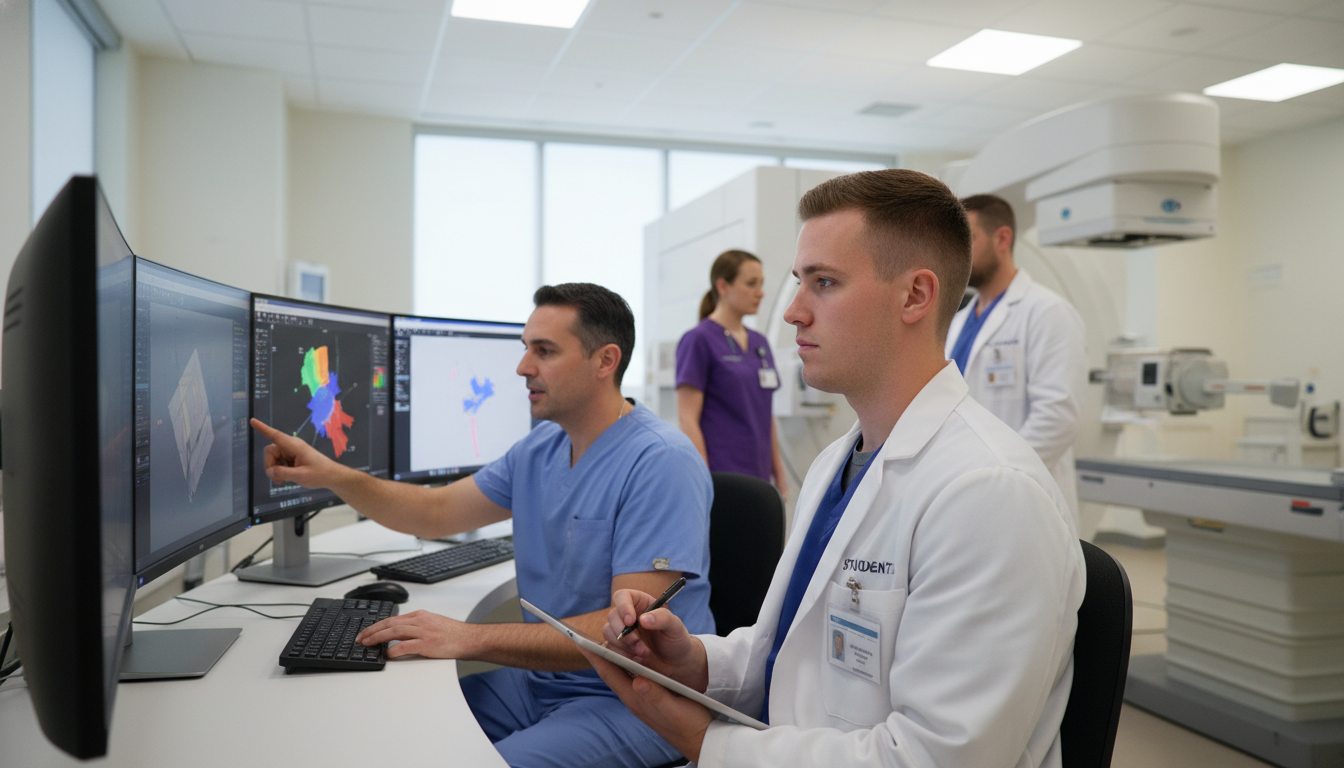
A common mistake for US citizen IMGs is submitting a generic medical student CV that could belong to someone applying to internal medicine or pediatrics. For a radiation oncology residency, your CV must clearly show:
- Specialty exploration: You’ve tried it, you like it, and you know the lifestyle and content.
- Oncology literacy: You are comfortable with cancer biology, staging, and multidisciplinary care.
- Quantitative/analytic mindset: Radiation oncology is physics-heavy and data-driven.
1. Clinical Exposure: Building and Showcasing It
If your medical school does not have radiation oncology, you must be creative and proactive:
Actionable ways to build rad onc clinical experience:
- US-based electives (“away” rotations) in rad onc
- Aim for at least 1–2 rotations at US academic centers.
- Schedule these as early as possible (often during your final year), ideally before ERAS submission so they appear fully on your CV.
- Observerships and shadowing
- Even if limited, list them; they demonstrate initiative.
- Emphasize any structured components: did you attend tumor boards, journal clubs, patient simulations?
How to list on your CV:
Clinical Experience
Radiation Oncology Visiting Student Elective – 4 weeks
Department of Radiation Oncology, [Institution Name], [City, State]
MM/YYYY – MM/YYYY
- Participated in the care of 8–12 patients per day in clinic, including breast, prostate, and head and neck cancers.
- Presented 3 new consults at daily attending rounds and discussed contouring and planning decisions.
- Attended weekly chart rounds and multidisciplinary tumor boards with medical and surgical oncology.
For observerships (which are less hands-on), be transparent but still specific:
Radiation Oncology Observership
[Private Practice / Institution Name], [City, State]
MM/YYYY – MM/YYYY
- Observed patient consultations, simulation, and on-treatment visits for a wide range of solid tumors.
- Shadowed treatment planning sessions including contouring and IMRT planning discussions.
- Gained exposure to practical aspects of outpatient cancer care, including patient counseling and toxicity management.
2. Oncology and Physics Fluency
You don’t need to be a physicist, but you should signal comfort with technical content:
- If you completed courses in radiation biology, medical physics, or imaging, list them under Education or Skills (especially if not standard in your curriculum).
- If you used software (e.g., Eclipse, ARIA, MOSAIQ, MIM, or even R/Python for radiomics projects), mention under Skills or Research Experience.
Example bullet under Research:
- Utilized R and Python for survival analysis and feature extraction in a small radiomics dataset of 120 patients with head and neck cancer.
3. Tying It All Together in the Summary (if you use one)
While ERAS doesn’t include a traditional “summary,” your master CV can start with a 2–3 line professional summary used in networking emails and adapted for your personal statement:
- US citizen IMG with strong interest in radiation oncology, extensive oncology research, and multiple US-based clinical electives.
- Particularly interested in head and neck and CNS malignancies, with experience in outcomes research and basic survival analysis methods.
This is optional on a CV but very useful as your “elevator pitch” with mentors.
Research and Scholarly Work: The Anchor of a Competitive Rad Onc CV
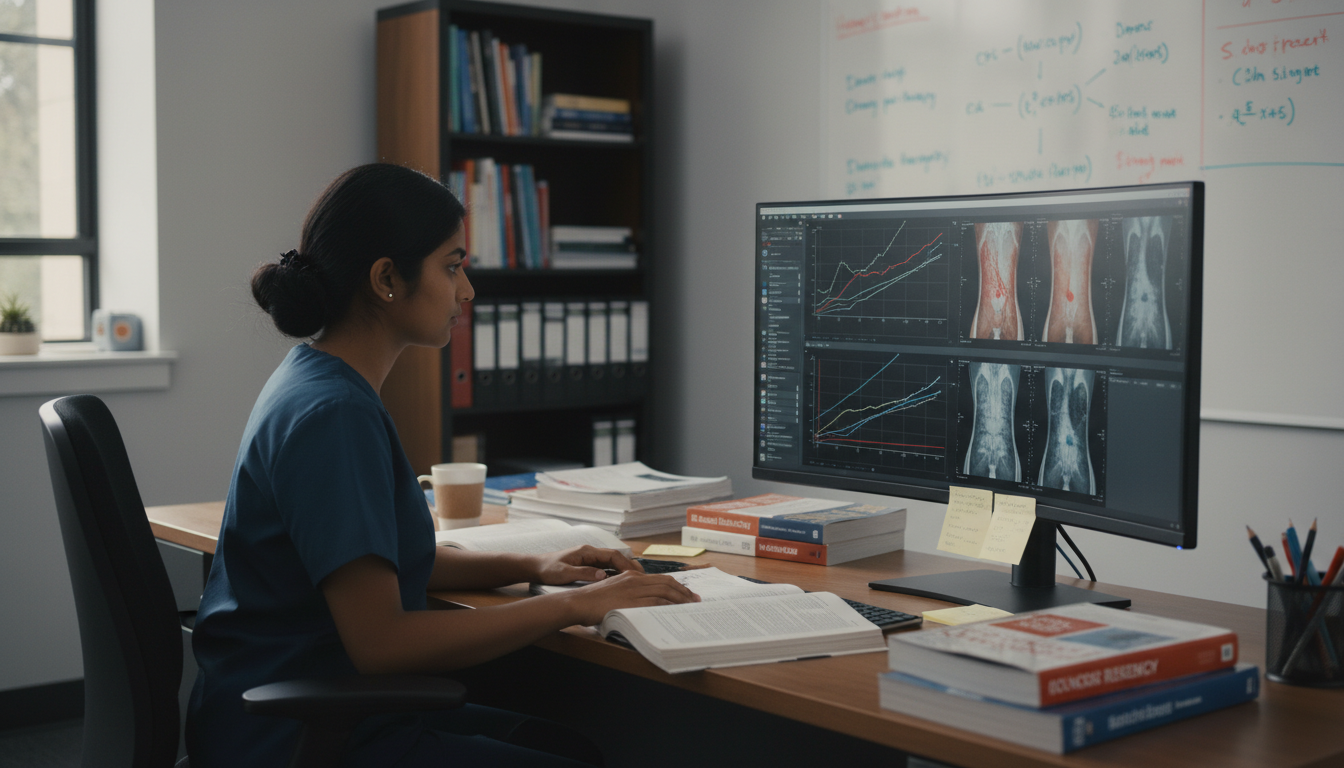
Radiation oncology places heavy emphasis on research. Even for a US citizen IMG, strong research can partially offset other disadvantages in the rad onc match.
1. Prioritizing the Right Types of Research
Any research is better than none, but certain types are more valuable for your residency CV:
Highest impact (for rad onc):
- Radiation oncology clinical outcomes projects
- Oncology-related quality improvement projects
- Cancer epidemiology, health services research, disparities research
- Imaging/radiomics projects with clear clinical relevance
Moderate impact:
- General oncology research (medical or surgical oncology)
- Radiology or medical physics with potential links to rad onc
- Prospective or retrospective clinical research, even outside oncology
Still useful but lower impact:
- Basic science unrelated to cancer
- Non-oncology clinical research
As a US citizen IMG, if your home institution lacks research infrastructure, consider:
- Remote collaboration with US faculty (many are open to motivated students).
- Short research stints in the US (e.g., 3–12 month research fellowships before or during your application cycle).
2. How to Present Research Experience on Your CV
Separate Research Experience from Publications/Presentations. For each research position, include:
- Project title or topic
- Institution and supervisor
- Dates
- Your role (clearly stated)
- 2–4 bullets describing methods, skills, and outcomes
Example:
Research Experience
Clinical Research Fellow – Radiation Oncology
Department of Radiation Oncology, [US Institution], [City, State]
Supervisor: [Name, MD, PhD]
MM/YYYY – Present
- Conducted retrospective analysis of 320 patients with localized prostate cancer treated with IMRT, focusing on biochemical control and toxicity outcomes.
- Extracted and curated clinical and dosimetric data from electronic medical records and treatment planning systems.
- Performed statistical analysis using R, including Kaplan–Meier survival curves and multivariable Cox regression.
- Co-authored 1 submitted manuscript and 2 abstracts (ASTRO 2024, ASCO 2025).
3. Publications, Abstracts, and Presentations
Radiation oncology program directors like to see a trajectory of scholarly productivity:
- Peer-reviewed publications (especially as first or second author).
- Conference abstracts and posters at ASTRO, ASCO, RSNA, or regional meetings.
- Oral presentations at institutional or national meetings.
Organize this section with clear headings:
- Peer-Reviewed Publications
- Abstracts and Conference Presentations
- Other Publications (book chapters, non–peer-reviewed work)
Use a standard citation format (e.g., AMA). For works accepted but not yet published, indicate “In press” or “Epub ahead of print.” For submitted works, clearly label as “Manuscript under review” and avoid exaggerating.
Example entry:
Peer-Reviewed Publications
- Smith AB, Jones C, Lee R, et al. Outcomes of hypofractionated radiotherapy for early-stage breast cancer: A single-institution experience. Int J Radiat Oncol Biol Phys. 2024;118(2):345–353.
Abstracts and Presentations
- Jones C, Smith AB, Lee R, et al. Dosimetric predictors of xerostomia in head and neck IMRT. Poster presented at: ASTRO 65th Annual Meeting; MM YYYY; San Diego, CA.
(Your name bolded or italicized helps readers locate you.)
Non-Research Elements That Strengthen a Radiation Oncology CV
Beyond research and clinical rotations, program directors want to see evidence that you are professional, collaborative, and well-rounded—something especially scrutinized for IMGs.
1. Leadership and Longitudinal Involvement
Radiation oncology departments value residents who can teach, manage projects, and collaborate across disciplines.
Examples to highlight:
- Leadership in oncology interest groups or student radiation oncology societies.
- Organizing cancer screening or survivorship events.
- Serving as a class representative, curriculum committee member, or student government leader.
- Leading a quality improvement initiative at your clinical site.
When listing leadership roles, emphasize impact and continuity:
- Organized 4 annual cancer screening events over 2 years, reaching more than 500 community members and coordinating 30 student volunteers each time.
- Co-founded an Oncology Journal Club for clinical students, facilitating monthly discussions with oncology faculty and residents.
2. Teaching and Mentoring
Radiation oncology is highly academic. Your ability to teach medical students, residents, and allied professionals is important.
Examples:
- Formal roles: anatomy tutor, OSCE instructor, teaching assistant in anatomy/physiology/pathology.
- Informal roles: mentoring junior IMGs on USMLE preparation or US residency pathways.
Frame your teaching in terms of structure and outcomes:
- Taught weekly small-group anatomy review sessions (8–10 students) for 2 years; created original question sets that were later adopted by the department.
3. Honors, Awards, and Distinctions
As a US citizen IMG, some evaluators may be unfamiliar with your grading system. This section lets you translate excellence clearly:
- Academic scholarships.
- Top decile or dean’s list (if available).
- Research awards, best poster/oral presentation awards.
- Leadership and service awards.
Be precise and, if needed, briefly contextualize:
- Awarded “Outstanding Clinical Student in Internal Medicine” (1 of 120 students) based on clerkship evaluations and exam performance.
4. Languages and Cross-Cultural Skills
Radiation oncology involves extensive patient counseling. For an American studying abroad, cross-cultural experience is a strength, not a liability.
Include:
- Languages (with proficiency levels: fluent, conversational, basic).
- International experience that demonstrates adaptability, communication skills, and cultural humility.
For example:
- Fluent in Spanish; used Spanish daily during clinical rotations in [Country], including patient counseling and discharge planning.
- Studied and trained in [Country], gaining experience in resource-limited oncology care settings.
Tailoring Your CV as a US Citizen IMG: Strategic Considerations
As a US citizen IMG targeting radiation oncology, you must anticipate concerns and answer them within your CV.
1. Making Your Training and Grades Legible
Clarify:
Curriculum structure: If your school uses pass/fail or narrative assessments, consider a brief “Education Notes” line explaining:
- “Clinical years utilize a pass/fail system with detailed narrative evaluations; I received ‘Honors’ level comments in [X] rotations.”
Class rank / percentile, if available.
Any US-style shelf exams you took (e.g., NBME subject exams).
2. Emphasizing US Clinical Exposure (USCE)
Programs often worry IMGs may struggle to adapt to US systems. Your CV should counter this by showing:
- Multiple US clinical rotations, ideally including internal medicine and another core field, plus radiation oncology.
- Concrete bullets showing:
- Direct patient contact.
- Documentation in EMR (if allowed).
- Functioning at a sub-internship level (if applicable).
Example bullet:
- Managed 4–6 inpatients daily during internal medicine sub-internship; wrote daily progress notes in EPIC (reviewed by residents/attendings) and presented on ward rounds.
3. Showing Commitment to Practicing in the US
As a US citizen IMG, your citizenship status helps; still, programs want reassurance that you’re committed to a US-based career in radiation oncology:
- Membership in ASTRO as a student member (list under Professional Memberships).
- Attendance at US conferences (even virtual).
- US-based mentors or research supervisors listed clearly.
Putting It All Together: Practical Residency CV Tips and Common Pitfalls
1. Residency CV Tips Specific to Radiation Oncology
Frontload rad onc content: In ERAS, your specialty focus emerges through experiences and personal statement, but in your master CV and networking emails, place:
- Radiation oncology rotations.
- Rad onc research.
- Oncology publications. closer to the top of their respective sections.
Use cancer-specific terminology correctly: Show comfort with staging terms (TNM), disease sites, and treatment modalities (IMRT, VMAT, SBRT, brachytherapy) in research and clinical bullets—but avoid overusing jargon.
Quantify whenever possible:
- “Included 200 patients in retrospective cohort”
- “Led 3 journal club sessions”
- “Co-authored 2 abstracts presented at national meetings”
2. Common Mistakes for US Citizen IMGs—and How to Avoid Them
Mistake 1: Overcrowding with irrelevant experiences
- Long lists of unrelated volunteer roles (e.g., short-term high school activities) dilute your rad onc narrative.
- Solution: Prioritize clinical, research, teaching, and leadership from medical school onward; selectively keep only the most meaningful pre-med or early experiences.
Mistake 2: Under-describing international experiences
- Simply writing “Clinical clerkship, Internal Medicine – [Foreign Hospital]” doesn’t convey your level of responsibility.
- Solution: Add 2–3 bullets explaining what you did, in US-recognizable terms.
Mistake 3: Inflating roles or mislabeling observerships as hands-on electives
- Program directors are very attuned to this and it can backfire.
- Solution: Be scrupulously honest; emphasize observation plus learning, not direct patient care, if that was the reality.
Mistake 4: Inconsistent timelines or unexplained gaps
- Gaps in education or research are not automatic red flags if clearly and honestly explained (e.g., dedicated research year, family reasons).
- Double-check dates across all sections for internal consistency.
Mistake 5: Not proofreading or getting external review
- Spelling or grammar mistakes matter more than you think in competitive specialties.
- Ask:
- A radiation oncology mentor to review for content relevance.
- A US-trained physician or advisor to review for clarity and US expectations.
FAQs: CV Building for US Citizen IMGs in Radiation Oncology
1. How much research do I need on my CV to be competitive for the rad onc match as a US citizen IMG?
There is no fixed number, but for such a research-heavy specialty, aim for:
- At least 1–2 substantial oncology or radiation oncology projects, AND
- Ideally several abstracts/posters and at least one publication (not necessarily first-author).
If you don’t have this yet, consider a dedicated research year in the US. Your medical student CV should then highlight your role (data collection, analysis, manuscript writing) and concrete academic outputs.
2. Can I still be competitive if my school doesn’t have a radiation oncology department?
Yes, but you must compensate with:
- US-based rad onc electives/aways (ideally 1–2).
- Rad onc or oncology research through remote or in-person collaboration with US institutions.
- Clear demonstration of understanding the specialty via tumor boards, journal clubs, and structured shadowing.
Your CV should tell the story: “I lacked a home department but actively built rad onc exposure in other ways.”
3. Should I include non-radiation-oncology experiences on my residency CV?
Yes, but selectively. Internal medicine, surgery, palliative care, radiology, and basic science experiences are all relevant and can:
- Show broad clinical competence.
- Demonstrate skills that translate to rad onc (e.g., communication, procedural skills, imaging interpretation).
Keep the emphasis on how they build skills useful in an oncology career. Drop minor or brief roles that don’t add to your narrative once the CV becomes too long.
4. How should I adapt my CV for networking emails and away rotation applications?
Maintain a master CV, then create focused versions:
For networking with rad onc faculty:
- Move radiation oncology rotations and research higher.
- Highlight ASTRO membership and oncology presentations.
For away rotation applications:
- Emphasize clinical competence (USCE, core rotations) and relevant research.
- Include a brief 1–2 line summary at the top tailored to radiation oncology.
In both cases, keep it to 2–3 pages, and ensure formatting is clean, with your name and contact information on every page.
By intentionally shaping your medical student CV around radiation oncology and highlighting your strengths as a US citizen IMG—international perspective, adaptability, and proactive pursuit of US experience—you can present yourself as a compelling candidate in a very competitive match. Your CV is your structured narrative; make sure every section supports the story you want residency programs to see.