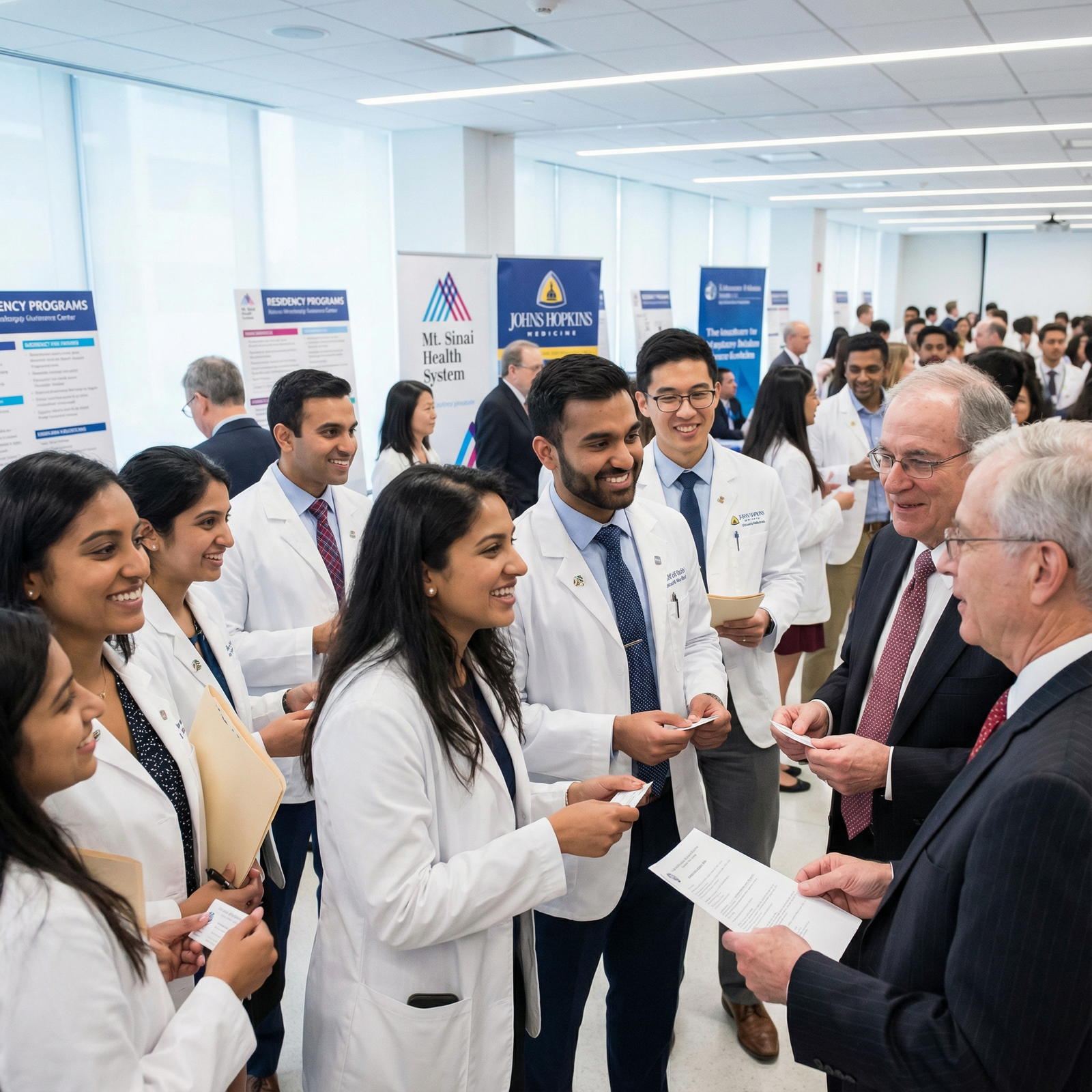
Understanding the Vascular Surgery Residency Landscape as a US Citizen IMG
Vascular surgery is one of the most competitive surgical subspecialties, and that reality shapes how your CV must look. As a US citizen IMG (American studying abroad), you sit in a nuanced position: you have the advantage of US citizenship but face the same skepticism many international medical graduates encounter—especially in a surgical field that values intensive mentorship and strong institutional reputations.
Before you start writing your medical student CV, it helps to understand what vascular surgery program directors are looking for and how they may perceive an integrated vascular program application from a US citizen IMG.
What Makes Vascular Surgery Programs Competitive?
Most integrated vascular surgery residencies (0+5 programs) operate with:
- Very small class sizes (often 1–3 residents per year)
- High expectations for technical skill and resilience
- A strong culture of research and academic productivity
- Heavy emphasis on commitment to vascular as a long-term career
Program directors must be confident that the few spots they fill are going to trainees who will complete the program, progress reliably, and eventually become colleagues. That means your CV must show:
- Academic reliability – solid exam performance, consistent clinical evaluations.
- Technical and procedural interest – involvement in surgery, especially vascular exposure.
- Research maturity – ability to ask questions, complete projects, and publish or present.
- Professionalism and teamwork – leadership and service with evidence of follow‑through.
- Specific passion for vascular surgery – not generic “I like surgery,” but a track record.
Specific Challenges for US Citizen IMGs in Vascular Surgery
Compared with US MD seniors, US citizen IMGs often face:
- Less direct access to home vascular surgery programs.
- Fewer built‑in research infrastructures geared specifically toward vascular topics.
- Limited U.S. clinical experience (USCE) in surgical subspecialties early on.
- Stereotypes about training quality at certain international schools.
Your residency CV is one of the primary tools to counter these disadvantages. It must:
- Demonstrate that your education abroad has prepared you for US training.
- Show that you have sought out vascular exposure despite structural limitations.
- Make it easy for program directors to envision you thriving in their program.
The rest of this guide focuses on exactly how to build that CV, step by step.
Core Structure of a Strong Vascular Surgery Residency CV
Program directors want a CV that is clean, organized, and quickly scannable. The content matters, but the structure signals professionalism. A chaotic or overly creative layout can hurt you.
A typical medical student CV for vascular surgery should include:
- Contact Information & Summary (optional but useful)
- Education & Training
- Board Exams & Certifications
- Clinical Experience (with emphasis on USCE and vascular/surgery)
- Research & Scholarly Work
- Presentations & Posters
- Honors, Awards, & Scholarships
- Leadership & Professional Involvement
- Teaching & Mentorship
- Volunteer & Community Service
- Technical Skills & Interests (surgical relevant)
- Languages & Personal Interests (brief)
Below is how to build each section with a vascular surgery focus and tailored residency CV tips for a US citizen IMG.
1. Contact Information & Optional Summary
At the top:
- Full name (as it appears in ERAS)
- Email (professional, ideally your name)
- Phone
- City/State (US address if you have one)
- LinkedIn or professional website (if well developed)
An optional 2–3 line summary can help program directors contextualize you:
US citizen IMG educated at [School, Country] with a strong interest in vascular surgery. Extensive US clinical experience in surgery, multiple vascular-focused research projects, and active leadership in surgical interest groups.
Avoid over‑selling or buzzwords. Let your CV content back up the summary.
Education, Exams, and Demonstrating Academic Reliability
Program directors want reassurance that a US citizen IMG can handle the cognitive and workload demands of vascular surgery. Your Education and Exams sections should highlight that clearly.
2. Education & Training
Include:
- Medical school, country, and expected or actual graduation date
- Any prior degrees (BS, MS, MPH, engineering, etc.)
- If applicable, thesis titles or capstone projects related to cardiovascular science.
Example entry:
Doctor of Medicine (MD), Expected June 2026
St. George’s University School of Medicine, Grenada
- Basic science honors in Anatomy, Physiology, and Pathology
- Clinical clerkships completed in the United States (New York, New Jersey, Michigan)
For an American studying abroad, explicitly mentioning US-based clinical sites helps reassure programs that you’ve already worked within US systems.
3. Board Exams & Core Certifications
For integrated vascular program applications, exam performance is crucial. On your CV, you may include:
- USMLE Step 1 (Pass / Fail) and, if available, a score if it is strong and you are comfortable sharing.
- USMLE Step 2 CK score (include numerical score; this is heavily weighted).
- If applicable, Step 3 (for applicants taking a research/gap year or reapplying).
You may list:
USMLE Examinations
- Step 1: Pass (Date)
- Step 2 CK: 247 (Date)
If your Step 1 or Step 2 CK is not as strong, it is often better not to highlight the score on the standalone CV; programs will see it in ERAS. Use your CV to emphasize strengths: coursework distinctions, research, and clinical comments.
Also include:
- BLS/ACLS certifications and expiration dates.
- Any ultrasound or procedural workshops, particularly vascular ultrasound or point-of-care ultrasound, as they are relevant to vascular surgery practice.

Clinical Experience: Showing Commitment and Capability in Vascular Surgery
For a US citizen IMG in vascular surgery, your clinical experiences tell the story that may not be obvious from your school’s name. This is where you can demonstrate that, despite training abroad, you have proven yourself in US hospitals and in surgical environments.
4. US Clinical Experience (USCE)
On your CV, separate US clinical experience from international or home‑country rotations. Program directors reviewing US citizen IMG applications are particularly sensitive to USCE.
Organize as:
Clinical Experience – United States
Include for each entry:
- Rotation type (Core Surgery, Sub‑Internship in Vascular Surgery, Elective in Vascular Surgery)
- Institution name, city, state
- Dates
- Short bullet points describing your role and exposure
Example:
Sub‑Internship, Vascular Surgery
University Hospital, Department of Vascular Surgery, Chicago, IL
August–September 2025
- Participated in management of patients with peripheral arterial disease, aortic aneurysms, and carotid stenosis.
- Assisted in OR for endovascular and open vascular procedures under direct supervision.
- Independently presented new admissions and led preoperative discussions on daily rounds.
Use 2–4 bullets to highlight initiative, responsibility, and vascular relevance. Avoid generic bullets that sound like any student on any rotation.
5. International and Home‑School Clinical Rotations
After USCE, list other clinical experiences at your primary teaching sites abroad. Make them sound equivalent to US rotations by describing:
- Patient responsibility
- Case volume
- Exposure to critical illness and operative care
Example:
Core Surgery Clerkship
St. Mary’s Teaching Hospital, [City, Country]
January–March 2025
- Managed pre- and post-operative care for general and vascular surgical inpatients on a 30-bed ward.
- Assisted in over 40 operative cases, including 10 peripheral bypasses and 8 varicose vein procedures.
- Performed basic wound care, suturing, and bedside procedures under supervision.
6. Prioritizing Vascular Exposure
If you want to stand out, your CV should show that you’ve deliberately pursued vascular surgery. Look for opportunities to include:
- Vascular‑specific electives or sub‑internships
- OR case logs (if your school provides them)
- Time in vascular lab or noninvasive vascular imaging
You can optionally add a subsection like:
Selected Vascular Surgery Exposure
- Assisted or observed in >60 vascular cases including carotid endarterectomy, EVAR, open AAA repair, peripheral bypass, AV fistula creation, and endovascular interventions.
- Completed 2-week focused elective in noninvasive vascular lab, interpreting duplex studies of carotid, venous, and arterial systems.
Even if you don’t have those exact numbers, any concrete detail helps programs appreciate your specific interest in the field.
Research and Scholarly Work: Making an Academic Vascular CV
Vascular surgery is academically oriented. A strong research portfolio can help a US citizen IMG stand out, even from US MD seniors, particularly if you have vascular‑focused work.
7. Building and Presenting Research as a US Citizen IMG
If you’re still early in medical school or have time before applying, prioritize:
- Joining a vascular surgery research group at a US institution during summers or a research year.
- Seeking remote collaborations with vascular attendings (e.g., database or chart review projects).
- Doing case reports on interesting vascular cases from your rotations.
- Getting involved in quality improvement (QI) projects relevant to vascular outcomes: limb salvage, access site complications, time to revascularization, etc.
On the CV, distinguish clearly:
- Peer‑reviewed publications
- Manuscripts submitted or in preparation
- Conference presentations (oral and poster)
- Abstracts and non‑peer‑reviewed publications (blog posts for surgical societies, etc.)
8. Formatting Research Entries
For each publication or presentation:
- Use standard citation format (e.g., AMA) with your name bolded.
- Clearly specify whether it is “In press,” “Accepted,” “Submitted,” or “In preparation.”
Example:
Peer‑Reviewed Publications
- Smith J, Patel R, Chen A, et al. Outcomes of early endovascular intervention for critical limb ischemia in a resource-limited setting. Journal of Vascular Surgery. 2024;69(3):456–463.
Conference Presentations
- Smith J, Hernandez M, Gupta P, et al. Limb salvage outcomes after multidisciplinary vascular-diabetes foot clinic implementation. Oral presentation at: Society for Vascular Surgery Annual Meeting; June 2024; Chicago, IL.
If your research isn’t vascular‑specific, emphasize skills that matter in vascular surgery:
- Data analysis
- Longitudinal cohort design
- Outcomes research
- Quality improvement
9. How to Build CV for Residency When You Lack Publications
Not every US citizen IMG will have formal vascular publications, but you can still build a strong research section:
- Start with case reports from interesting vascular patients you’ve encountered.
- Join project teams doing retrospective chart reviews; these are often achievable within a year.
- Consider systematic reviews or well-structured narrative reviews on vascular topics.
- Work on posters for local/regional conferences if national ones are not yet accessible.
On your CV, be honest and avoid overstatement. Use “In preparation” only for projects where a near-complete manuscript exists and all authors are aware.
Leadership, Teaching, and Service: Proving You’re a Team Builder
Integrated vascular programs want residents who will be strong colleagues and leaders. Your CV should show that you contribute beyond the minimum—in education, leadership, and service.
10. Leadership Roles That Carry Weight
For a US citizen IMG, leadership can counter misconceptions about passivity or limited initiative. High‑impact examples include:
- Founder or president of a Vascular Surgery Interest Group (even at an international school).
- Officer roles in Surgery or Radiology Interest Groups.
- Committee roles in national organizations (e.g., student sections of SVS or other surgical societies).
- Organizing skills workshops, journal clubs, or M&M simulations.
On your CV, use bullets to emphasize outcomes:
President, Surgery and Vascular Interest Group
[Medical School], 2024–2025
- Expanded membership from 20 to 65 active members.
- Organized 8 skills workshops including suturing, knot tying, and basic endovascular simulation.
- Coordinated a 3-hospital vascular surgeon speaker series, averaging 40+ attendees per event.
Quantify when possible—numbers communicate impact quickly to busy reviewers.
11. Teaching and Mentorship
Vascular surgeons are educators; they want residents who can teach junior trainees and patients.
Include:
- Teaching assistant roles for anatomy, physiology, or surgical skills courses.
- Formal tutoring programs (USMLE prep, OSCE prep, etc.).
- Near-peer teaching for junior medical students or premeds.
Example:
Clinical Skills Teaching Assistant
[Medical School], 2023–2024
- Taught weekly small-group sessions on physical examination techniques and basic procedural skills to first-year medical students.
- Developed a focused teaching module on vascular examination and ankle-brachial index measurement.
This quietly reinforces your vascular orientation and your comfort instructing others.
12. Volunteer Work and Community Engagement
Vascular surgery overlaps heavily with chronic disease and underserved populations. On your CV, include volunteer work that aligns with:
- Vascular risk factors: diabetes clinics, smoking cessation programs, hypertension screening.
- Access to care: mobile clinics, free health fairs, telemedicine support for rural areas.
Example:
Volunteer, Diabetes Foot Screening Program
Community Health Center, [City, Country], 2022–2023
- Performed foot exams and vascular risk assessments at monthly community events.
- Educated patients on peripheral arterial disease warning signs and limb preservation strategies.
This not only looks good but also provides powerful narratives for your personal statement and interviews.
Technical Skills and Tailoring Your CV to Vascular Surgery
Vascular surgery is procedure-heavy and technology‑rich. A targeted skills section can underscore your readiness for that environment.
13. Technical and Procedural Skills
Rather than listing every minor exposure, focus on skills that matter for vascular practice:
- Vascular exam techniques (ABI, toe pressures, Doppler use)
- Basic suturing and knot tying
- Central line insertion (if you’ve performed as a supervised student)
- Ultrasound‑guided IV insertion or basic ultrasound exposure
- Familiarity with PACS, EMR systems, and imaging review
Example:
Technical Skills
- Proficient in sterile technique, basic suturing, and knot tying; assisted in >80 operative cases including vascular procedures.
- Experience performing bedside ankle-brachial index under supervision and interpreting basic results.
- Comfortable reviewing CT angiography and duplex ultrasound studies with attending guidance.
Don’t overstate competency; programs can spot exaggeration. Focus on exposure and supervised practice.
14. Languages and Personal Interests
This section should be brief but authentic. For US citizen IMG applicants, multiple languages can be an asset, especially in regions with large immigrant or underserved communities.
Example:
Languages
- English (native), Spanish (conversational), Arabic (basic medical phrases)
Interests
- Long-distance running and cardiovascular fitness
- 3D printing and surgical simulation models
- Mentoring premed students from underserved backgrounds
Select interests that portray discipline, resilience, or technical curiosity, all of which align with a surgical career.
Strategic Tips: How to Build a CV for Vascular Surgery Residency as a US Citizen IMG
Now that we’ve gone through structure and content, here are practical, high‑yield residency CV tips specific to your situation as a US citizen IMG aiming for an integrated vascular program.
15. Start Early and Plan Backwards
Ideally by the start of clinical rotations, you should:
- Identify at least one vascular surgery mentor (even if remote or through email).
- Map out a realistic plan for:
- 1–2 vascular‑related research projects
- 1–2 US vascular electives or sub‑internships
- Leadership in a surgery/vascular interest group
- A regular teaching or volunteer commitment
Think of your CV as a living document. Every semester, ask:
“What did I add that proves I’m serious about vascular surgery?”
16. Seek US Mentorship and Letters at Target Programs
Your CV and your letters of recommendation are intertwined. High‑impact CV entries often come from:
- Rotations where you are known well by vascular attendings.
- Research with surgeons at institutions where you’re applying.
- Longitudinal involvement in a vascular lab or clinic.
Strategically aim for USCE at institutions with integrated vascular programs. Even if they don’t end up interviewing you, names of well‑respected vascular surgeons on your CV and letters can increase credibility.
17. Addressing IMG Perception Through Your CV
As an American studying abroad, you can mitigate common concerns via your CV:
Concern: Training quality
- Response: Highlight US-based rotations, strong evaluations, USMLE scores, and exposure at reputable hospitals.
Concern: Lack of commitment to vascular
- Response: Multiple vascular electives, vascular-specific research, leadership in a vascular interest group.
Concern: Integration into US team culture
- Response: US-based volunteer work, leadership in multidisciplinary teams, teaching roles in US settings where possible.
18. Formatting and Polish: Small Details with Big Impact
Program directors may review dozens of CVs in a sitting. Make yours:
- One consistent font, clear headings, and logical order.
- Use bullet points, not large paragraphs.
- Keep tenses consistent: past tense for completed roles, present tense for current.
- Check spelling and grammar meticulously—errors are seen as red flags.
Have a US-based mentor (faculty, resident, or advisor) review your CV specifically as if they were a program director in vascular surgery. Ask:
- “What worries you about this CV?”
- “What parts make me competitive for integrated vascular programs?”
- “Is anything confusing, exaggerated, or missing?”
Their feedback is often more valuable than any generic template.
Frequently Asked Questions (FAQ)
1. How many vascular surgery–specific experiences do I need on my CV to be competitive?
There is no fixed number, but for an integrated vascular program, a strong US citizen IMG CV commonly includes:
- At least one sub‑internship or elective specifically in vascular surgery at a US institution.
- One or more research projects with clear vascular relevance (case report, retrospective study, QI project).
- Some form of vascular‑focused leadership or advocacy, such as starting or leading a vascular or surgery interest group, or running vascular‑related community screening programs.
What matters most is coherence: your CV should clearly tell a story of deliberate and sustained interest in vascular surgery, not last‑minute pivoting.
2. Do I need a research year to match into vascular surgery as a US citizen IMG?
A dedicated research year can help, especially if you start with little research background, but it is not mandatory for every applicant. You might consider a research year if:
- You have zero publications or meaningful projects.
- Your Step 2 CK is average and you need a clear academic differentiator.
- You can secure a research position at a well‑known vascular surgery program and potentially build strong letters of recommendation there.
If you do not take a research year, aim to integrate research longitudinally during medical school and focus on completing smaller, feasible vascular projects that still appear credibly on your CV.
3. Should I list all of my rotations or only the most relevant ones?
On a detailed medical student CV, it’s acceptable to list all core rotations, but for vascular surgery applications, highlight and provide more detail on:
- Surgery and vascular sub‑internships
- ICU rotations (since vascular surgery involves critical care)
- Cardiology or interventional radiology electives, if relevant
For very early or less relevant experiences (e.g., short shadowing in first year), you can either omit them or list them briefly under a “Selected Clinical Observerships” section. Emphasize depth of responsibility and relevance over sheer count.
4. How should I adapt my CV for ERAS vs. a standalone PDF?
ERAS has its own structured sections, but a polished PDF CV is still valuable for:
- Emailing potential mentors or research collaborators.
- Sharing with letter writers to help them understand your profile.
- Handing to interviewers if requested.
Align the structure and content of your standalone CV with ERAS categories (education, experiences, research, etc.), but the PDF may allow:
- A brief summary at the top.
- More flexible grouping (e.g., “Vascular-Specific Experiences,” “Selected Vascular Research”).
Keep the information consistent across both formats. If something appears on your PDF CV, it should be represented somewhere in ERAS, and vice versa.
By designing your CV thoughtfully—and intentionally aligning it with the expectations of integrated vascular programs—you can transform your status as a US citizen IMG from a perceived liability into a unique strength. Your training abroad, plus targeted US clinical, research, and leadership experiences, can paint a compelling picture of someone who is adaptable, driven, and genuinely committed to vascular surgery.
Use your CV not just as a list of experiences, but as a strategic narrative that answers one key question for every program director:
“Can I trust this person to thrive in a demanding, high‑stakes surgical specialty and become a future vascular colleague I’d be proud to work with?”