Understanding the Role of the CV for an MD Graduate in Clinical Informatics
For an MD graduate aiming at clinical informatics, your CV is more than a list of experiences; it’s a strategic document that tells a coherent story: you understand medicine, you understand systems and data, and you can bridge the two.
Whether you are:
- Applying as an MD graduate residency candidate with a strong interest in informatics
- Coming from an allopathic medical school match cycle and shifting towards informatics-focused roles
- Planning ahead for a clinical informatics fellowship or formal health IT training
your CV needs to highlight both your clinical foundation and your technical, data, and systems-thinking skills.
In this article, we’ll cover how to build a CV for residency or fellowship with a clinical informatics focus, including concrete residency CV tips, specific section examples, and how to translate technical or non-traditional experience into language that program directors and informatics faculty can easily appreciate.
Core Principles: What Makes a Strong Clinical Informatics CV?
Clinical informatics sits at the intersection of medicine, data science, and systems engineering. Competitive applicants tend to show a blend of:
Clinical Credibility
- Solid medical school performance or residency training
- Breadth of clinical experience (rotations, sub-internships, electives)
- Understanding of workflows and patient safety
Technical and Analytic Orientation
- EHR optimization, order set work, or documentation improvement
- Experience with data, analytics, or dashboards
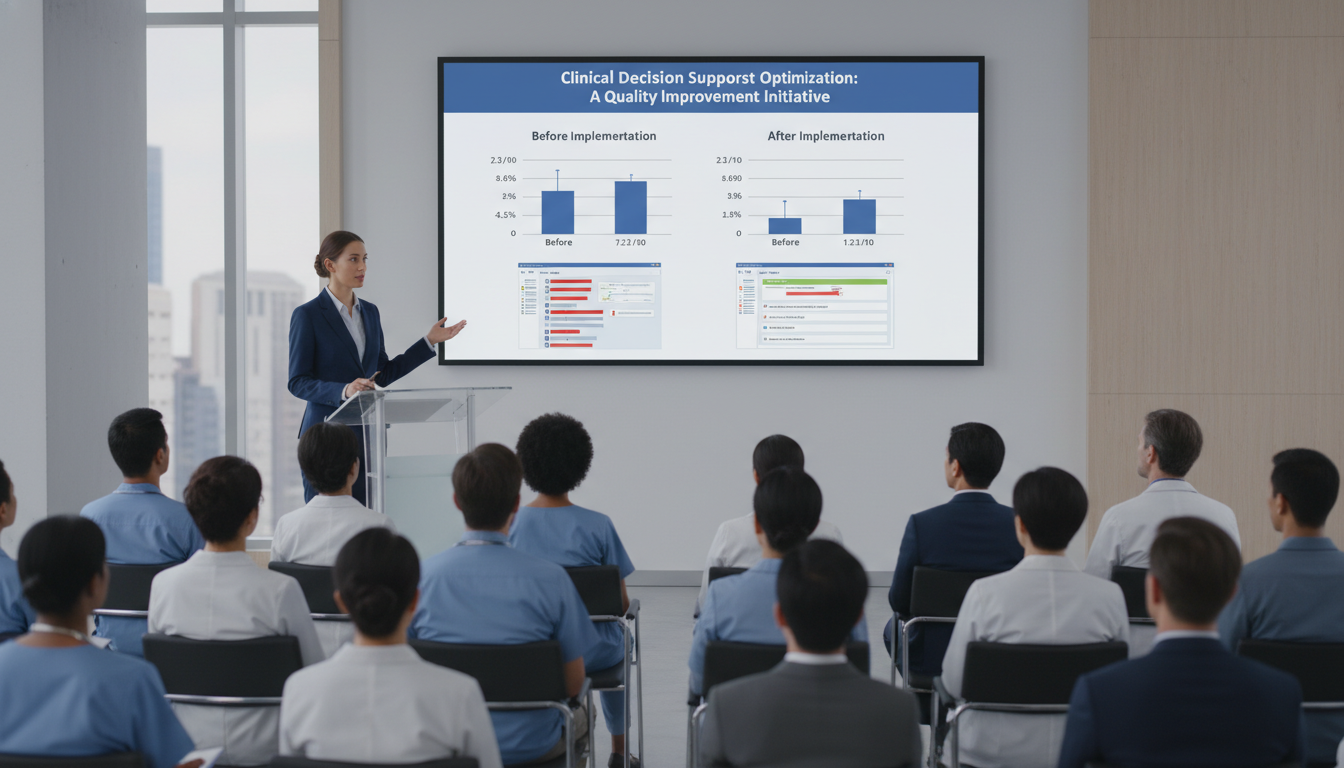
- Exposure to quality improvement (QI) and clinical decision support (CDS)
Systems and Leadership Mindset
- Involvement in committees, working groups, or task forces
- Projects that improved processes or outcomes
- Communication skills bridging clinicians, IT staff, and administrators
When you think about how to build CV for residency or informatics fellowship, aim for:
- Clarity: Easy to skim, consistent formatting, clear section headings
- Relevance: Emphasize informatics-related content without hiding your clinical strengths
- Impact: Whenever possible, show outcomes, numbers, or measurable improvements
The rest of this guide will walk through the major CV sections and how MD graduates can tailor them for a clinical informatics trajectory.
Structuring Your CV: Essential Sections for an Informatics-Focused MD
1. Contact Information and Professional Summary (Optional but Powerful)
At the top:
- Name (bold, slightly larger font)
- Degrees (e.g., MD, MS in Biomedical Informatics, MPH if applicable)
- Email (professional only)
- Phone
- LinkedIn and/or GitHub (if you have informatics, data, or coding projects)
- City, State (optional, depending on norms in your region)
A 2–3 sentence professional summary is optional but very valuable for an informatics-focused CV, especially if your trajectory is not linear (e.g., MD with prior engineering background). It should:
- State your level: “MD graduate,” “PGY-1 internal medicine resident,” or “recent MD graduate from an allopathic medical school”
- Highlight your informatics and systems interests
- Mention your short-term goal (e.g., “pursuing clinical informatics fellowship” or “interested in health IT training and EHR optimization projects”)
Example summary
MD graduate from an allopathic medical school with strong interest in clinical informatics and health IT training. Background in computer science and experience leading EHR efficiency and documentation quality projects during clerkships. Seeking residency training with opportunities in clinical informatics, data-driven quality improvement, and decision support design.
2. Education
List in reverse chronological order:
- Institution, City, State
- Degree (MD; BS, MS, MPH, etc.)
- Graduation month and year
- Honors (Alpha Omega Alpha, Gold Humanism, honors in major, etc.)
For the MD entry, you can optionally add 1–2 bullets to draw attention to informatics-related training:
- “Elective in clinical decision support and EHR usability”
- “Capstone project: Predicting 30-day readmissions using EHR data (Python/R)”
- “Certificate in Healthcare Informatics, XYZ University”
If you completed formal health IT training (certificates, workshops, Coursera/edX specializations in health informatics, etc.), you can:
- Place them under Education if substantial
- Or under a dedicated Additional Training / Certifications section
This matters for MD graduate residency applications where not all programs understand nontraditional credentials; a clear label like “Certificate in Health Informatics (12-credit graduate program)” helps.
3. Clinical Experience
For a medical student CV transitioning into a residency/informatics focus, or an early resident:
- Emphasize major clinical roles:
- Sub-internships or acting internships
- Clinical electives (especially those with an informatics, QI, or systems component)
- Any roles as EHR super-user, workflow champion, or note template designer
You do not need to list every core rotation, but you can highlight experiences that link naturally to informatics.
Examples of informatics-angled bullets:
- “Collaborated with the cardiology EHR optimization team to pilot a structured note template, reducing average documentation time by 20% while preserving guideline-based documentation elements.”
- “Identified redundant clinical decision support alerts during internal medicine clerkship and worked with informatics team to refine triggers, reducing alert fatigue on the unit.”
If you have post-graduate clinical work:
- Resident experiences (PGY-1, PGY-2, etc.)
- Hospitalist or urgent care roles with specific workflow or EHR responsibilities
- Telemedicine roles (helpful for demonstrating comfort with digital tools)
Always lead with clinical responsibilities, then show informatics contributions:
Internal Medicine Sub-Internship, XYZ University Hospital, City, State
Dates
- Managed a census of 6–8 patients under supervision, performing daily rounds, orders, and documentation.
- Collaborated with the unit-based QI team to track and report EHR-generated sepsis alerts; contributed to refinement of criteria to improve specificity.

Highlighting Informatics-Relevant Experience: Projects, Research, and QI
For clinical informatics, your projects and research often matter as much as your clerkship grades. This is where you show depth in data, systems, and technology.
1. Research Experience
Create a distinct section for Research Experience (before or after Publications, depending on how much you have).
For each position:
- Role (e.g., Research Assistant, Student Investigator, Co-Investigator)
- Project title or topic
- Institution, department, mentor name (if well known or relevant)
- Dates
- 2–4 bullets describing:
- Study aim and design
- Your contributions
- Tools and methods (EHR data extraction, SQL, R, Python, REDCap, etc.)
- Outcomes (posters, papers, implemented changes)
Informatics-focused examples:
Clinical Informatics Research Assistant, Department of Medicine, XYZ University
2023–2024
- Contributed to a project evaluating the impact of a new sepsis clinical decision support rule on ICU length of stay and mortality using EHR data.
- Extracted and cleaned patient-level data from the clinical data warehouse using SQL and R; developed reproducible data pipelines and documentation.
- Co-authored abstract presented at the American Medical Informatics Association (AMIA) Annual Symposium.
Student Investigator, “Improving Documentation Quality Using Smart Phrases”
- Designed and implemented standardized note templates and smart phrases for inpatient progress notes.
- Conducted pre/post intervention chart reviews (n=150) to assess inclusion of guideline-recommended elements.
- Findings supported broader adoption of the templates across the medicine service.
Use terminology that resonates with clinical informatics faculty:
- EHR data warehouse, data governance
- Clinical decision support (CDS), order sets, smart phrases
- NLP, predictive modeling, machine learning (if appropriate and accurate)
- User-centered design, usability testing, workflow analysis
2. Quality Improvement (QI) and Systems Projects
Many MD graduates underestimate how attractive QI and process improvement projects are to informatics programs. If you’re applying for clinical informatics fellowship or informatics-heavy residencies, QI is central.
Give QI its own section: Quality Improvement and Systems Projects or Informatics & QI Projects.
Use strong, outcome-oriented bullets:
- Define the problem
- Describe the intervention
- Show measurable results
Example QI section entries:
QI Project Lead, “Reducing Duplicate Lab Orders via EHR Modifications”
- Partnered with the hospital informatics team to analyze patterns of duplicate laboratory orders across medicine units.
- Helped design an EHR hard-stop for duplicate daily labs and an alert summarizing recent results.
- Duplicate orders decreased by 35% over 6 months, with estimated annual cost savings of $80,000.
Team Member, “Improving Medication Reconciliation Completeness”
- Conducted workflow mapping and interviews with nurses and residents to identify barriers in the medication reconciliation process.
- Proposed an EHR-based checklist and a simplified medication import feature; results informed vendor discussions and pilot implementation.
These examples tell a systems-thinking story: you don’t just practice medicine; you analyze and redesign how it’s delivered.
3. Technical and Data Skills
A short section titled Technical Skills or Informatics Skills is essential for anyone interested in health IT or clinical informatics. Keep it honest but specific:
- Programming / Data: Python, R, SQL, SAS, Stata, MATLAB
- EHR Systems: Epic, Cerner, Meditech (note any roles: “Epic physician builder,” “Epic super-user”)
- Data Tools: REDCap, Tableau, Power BI, Excel advanced functions
- Standards / Concepts (if applicable): HL7, FHIR, SNOMED CT, LOINC, ICD-10, CPT
- Other: Git/GitHub, basic web development (HTML/CSS/JavaScript), APIs
You don’t need to be a software engineer, but demonstrating comfort with data and digital tools is a major plus for clinical informatics.
If you have substantive technical projects, list them under Projects separately from QI:
Personal Project: Hospital Readmission Prediction Model
- Used de-identified public dataset to build a logistic regression and gradient boosting model predicting 30-day readmission.
- Implemented in Python (pandas, scikit-learn); evaluated model performance (AUC=0.78).
- Wrote documentation and shared code on GitHub; presented project at departmental journal club.
Publications, Presentations, and Professional Activities: Showing Academic and Systems Engagement
1. Publications
For MD graduates, even one or two publications in informatics, QI, or related areas can significantly strengthen your application.
Organize by type:
- Peer-reviewed journal articles
- Peer-reviewed abstracts
- Book chapters
- Other (non-peer-reviewed, blogs, white papers) if clearly labeled
Follow a standard citation style (e.g., Vancouver or AMA) and bold your name among co-authors:
Doe J, Smith A, Lee R. Impact of an EHR-based alert on venous thromboembolism prophylaxis: A quasi-experimental study. J Hosp Med. 2024;19(3):123–130.
If your work is still “in preparation” or “submitted,” list them under a separate subheading, such as Manuscripts Under Review / In Preparation, and be conservative and honest.
2. Presentations and Posters
Clinical informatics values conference engagement highly, especially AMIA, HIMSS, or specialty-specific informatics meetings.
Include:
- Oral presentations
- Poster presentations
- Webinar or virtual talks (if significant)
Order them in reverse chronological order and indicate the conference:
Doe J, Patel R. Designing user-centered EHR order sets: A pilot study. Oral presentation at AMIA Annual Symposium; San Francisco, CA; 2024.
Even local or institutional poster sessions can showcase your interest in systems and data; they belong on a serious medical student CV aimed at informatics.
3. Leadership, Committees, and Professional Involvement
To show readiness for a career in clinical informatics, highlight:
- Membership in informatics committees (EHR optimization, CDS, data governance)
- Membership in professional societies:
- AMIA
- HIMSS
- Specialty societies’ informatics sections (e.g., RSNA Informatics, ACC Informatics section)
- Student interest group leadership:
- Clinical informatics interest group
- Technology in Medicine club
- Quality improvement committee
Examples:
Student Representative, Hospital EHR Optimization Committee
- Represented medical student user needs during Epic upgrade planning meetings.
- Provided feedback on order set layout and note templates; helped pilot changes on teaching services.
Co-Founder, Clinical Informatics Interest Group, XYZ Medical School
- Organized monthly seminars on EHR safety, clinical decision support, and telehealth.
- Coordinated a hackathon with local health IT companies; 40+ students participated.
Programs like to see you as a bridge-builder—someone comfortable in both clinical and tech-centric environments.
Tailoring Your CV for Different Goals: Residency, Fellowship, and Health IT Roles
1. MD Graduate Residency with Informatics Focus
If you are applying to an MD graduate residency (e.g., internal medicine, pediatrics, family medicine) but want to stand out for informatics:
- Keep the classic residency CV structure:
- Education
- Clinical experience
- Research
- Publications
- Leadership
- Volunteer
- Interests
- Strategically highlight:
- EHR-related QI projects
- Health IT electives
- Data/technical skills
Residency CV tips for informatics-minded applicants:
- Avoid overwhelming the reader with too much technical jargon; contextualize each technical skill in clinical terms.
- Use a short professional summary that mentions your informatics interest; this can prime reviewers to see your experiences in that light.
- Ensure your CV still reads as that of a strong clinician-in-training, not solely a budding data analyst.
2. Transitioning From Allopathic Medical School Match to Informatics
If you have already gone through an allopathic medical school match and are:
- Switching specialties
- Pivoting towards a non-clinical or partially clinical path
- Taking a research or informatics year
You may need to reframe your experiences:
- Emphasize informatics/QI components in previous rotations.
- Add any health IT training you completed during the transition period.
- Include nontraditional roles:
- Clinical data analyst (if you took a job)
- Implementation specialist for an EHR vendor
- Telehealth program coordinator
Explain career shifts in your personal statement; in the CV, simply present a cohesive and chronological record of your activities.
3. Preparing for Clinical Informatics Fellowship
For those applying to clinical informatics fellowship (usually after completing primary specialty residency):
- Your CV should demonstrate:
- Robust clinical training and board eligibility in a primary specialty
- Substantial engagement with informatics concepts and tools
- Clear trajectory: QI, research, EHR projects, and leadership
Expand these CV elements:
- Informatics & QI Projects (more detailed)
- Technical Skills (well-developed)
- Publications/Presentations related to informatics
- Committee work in health IT and EHR governance
For fellowship applications, you can also add:
- A section on Teaching Experience, especially if you taught medical students/residents about EHR use, documentation, or data literacy.
4. Health IT and Non-Clinical Roles
If you are considering or exploring roles such as:
- Clinical informaticist in a hospital system
- Physician advisor for documentation and coding
- Health IT analyst or consultant
Your CV may start to resemble a hybrid of academic and industry resumes. Emphasize:
- Project outcomes and ROI
- Experience working with multidisciplinary teams (IT, nursing, finance)
- Implementation experience (e.g., EHR rollouts, telehealth expansion)
This can still fall under the broad goal of clinical informatics, and these roles are often stepping stones to future fellowship or leadership opportunities.
Common Mistakes and How to Avoid Them
Overcrowding the CV with non-relevant details
- Don’t list every short volunteer event or non-healthcare job unless it’s essential to your story.
- Focus on experiences that show clinical, technical, leadership, or systems thinking skills.
Underplaying informatics-related work
- Many students casually mention EHR template creation or CDS feedback in a single bullet or not at all.
- Explicitly label informatics and QI experiences so they stand out.
Using inconsistent or confusing formatting
- Use the same date format throughout (e.g., “Aug 2021 – Jun 2023”).
- Align headings, subheadings, and bullet styles; CVs are judged partly on readability.
Exaggerating technical skills
- If you’ve only completed a week-long online course in R, list it under Additional Training and be honest about your proficiency.
- Avoid listing advanced techniques (e.g., “deep learning”) unless you can discuss them confidently in an interview.
Overly generic descriptions
- Replace “Worked on quality improvement” with “Analyzed 300 EHR records to identify documentation gaps and implemented a new checklist that increased documentation completeness from 60% to 85%.”
Practical Steps to Build and Maintain Your Clinical Informatics CV
Start Early and Treat Your CV as a Living Document
- Begin in medical school and update quarterly.
- Keep a simple “CV log” file where you record activities, dates, mentors, and outcomes as they happen.
Create a Master CV, Then Tailor
- Maintain a long master version with everything.
- Create targeted versions:
- One tailored to residency
- One tailored to clinical informatics fellowship
- One tailored to health IT / industry roles
Track Metrics and Outcomes Proactively
- For each project, ask:
- How many patients were affected?
- What was the percentage change in the key outcome?
- Did we save time or money?
- Document this early, so you can write strong, impact-focused bullets.
- For each project, ask:
Ask for Feedback from Both Clinicians and Informaticians
- Have a residency program director or advisor review for clinical focus.
- Have an informatics mentor or IT leader review for technical relevance and clarity.
Align CV Content with Personal Statement and Letters
- If your CV lists several EHR and data projects, your personal statement should mention at least one of them meaningfully.
- Ensure your letter writers are aware of your informatics interests and relevant accomplishments.
Frequently Asked Questions (FAQ)
1. How is a CV for clinical informatics different from a standard residency CV?
A standard residency CV emphasizes clinical rotations, grades, and general research or leadership. A CV geared towards clinical informatics keeps all of that but adds emphasis on:
- EHR-related projects and QI
- Experience with data and analytics tools
- Systems-level thinking and workflow redesign
- Relevant training (certificates, electives) in health IT or informatics
The structure may be similar, but the emphasis and language are tailored to highlight informatics potential.
2. Do I need formal programming skills to be competitive for clinical informatics?
Not necessarily, especially at the MD graduate residency level. Many successful clinical informaticians begin with:
- Strong clinical skills
- Understanding of workflows and patient safety
- Interest in data and systems
However, some familiarity with data (e.g., R, Python, SQL) and comfort learning technical tools is increasingly valued. If you have these skills, feature them clearly in a Technical Skills section and in your Projects descriptions.
3. Where should I put short online courses or certificates in health IT or informatics?
If they’re substantial (multi-week, multiple courses), you can list them under Education or create an Additional Training and Certifications section:
Certificate in Health Informatics (Coursera specialization, 5 courses), 2023
Brief workshops or single webinars can be grouped in a single line under Professional Development. The key is clarity: indicate the scope and format so reviewers understand the level of training.
4. How long should my CV be as an MD graduate interested in clinical informatics?
There is no strict length limit for a CV, unlike a resume. For most MD graduate residency or early fellowship applicants:
- 2–4 pages is common and appropriate
- Focus on clarity and relevance; don’t artificially stretch or shrink
- As your publications, projects, and roles grow, your CV may become longer—this is acceptable for academic and informatics paths, as long as it remains well-organized and easy to skim
By thoughtfully structuring your CV, emphasizing your informatics-relevant strengths, and tracking measurable impact, you position yourself as a compelling candidate for residency, clinical informatics fellowship, and health IT roles. Your goal is to present a coherent story: an MD who understands clinical care and is ready to help design the digital systems that support it.