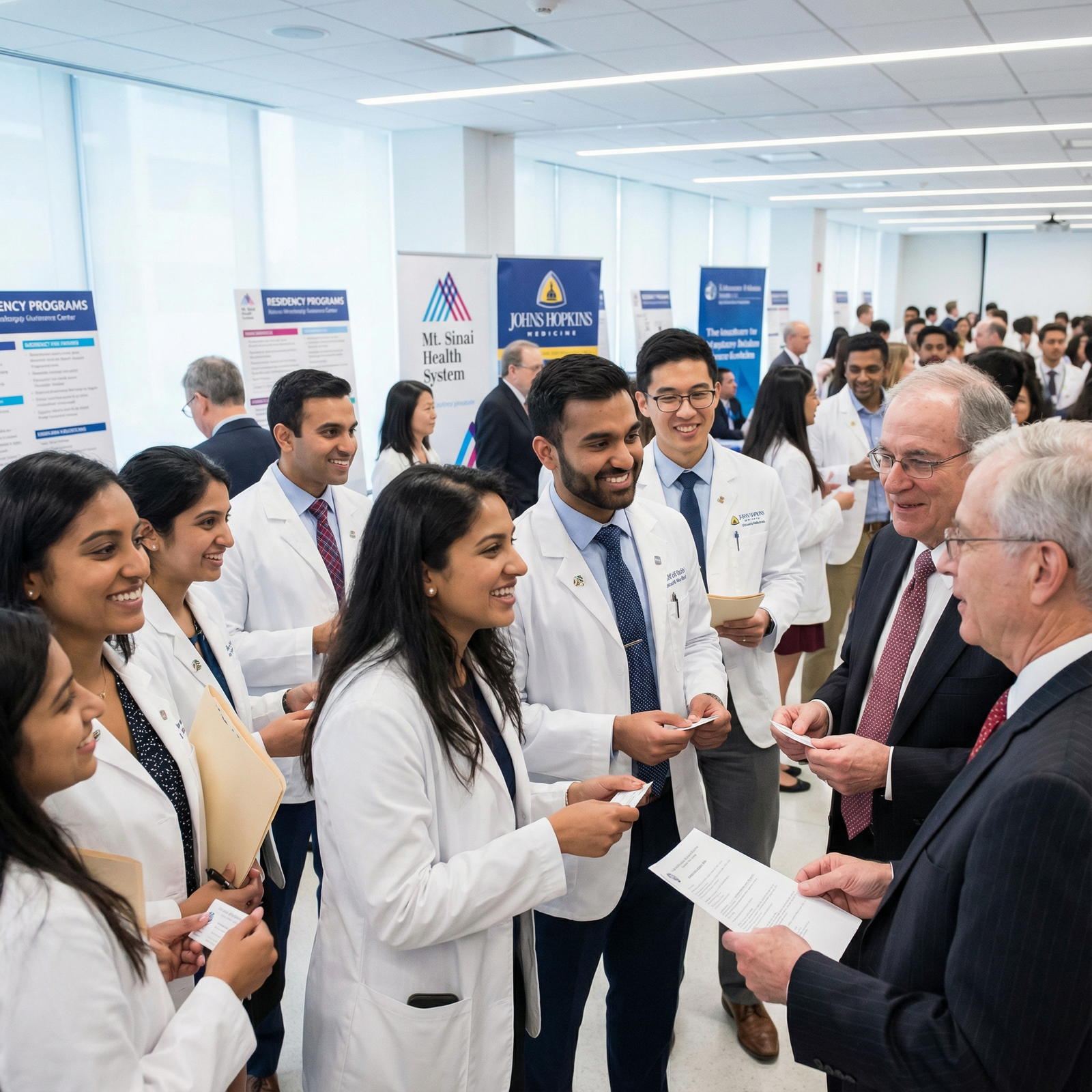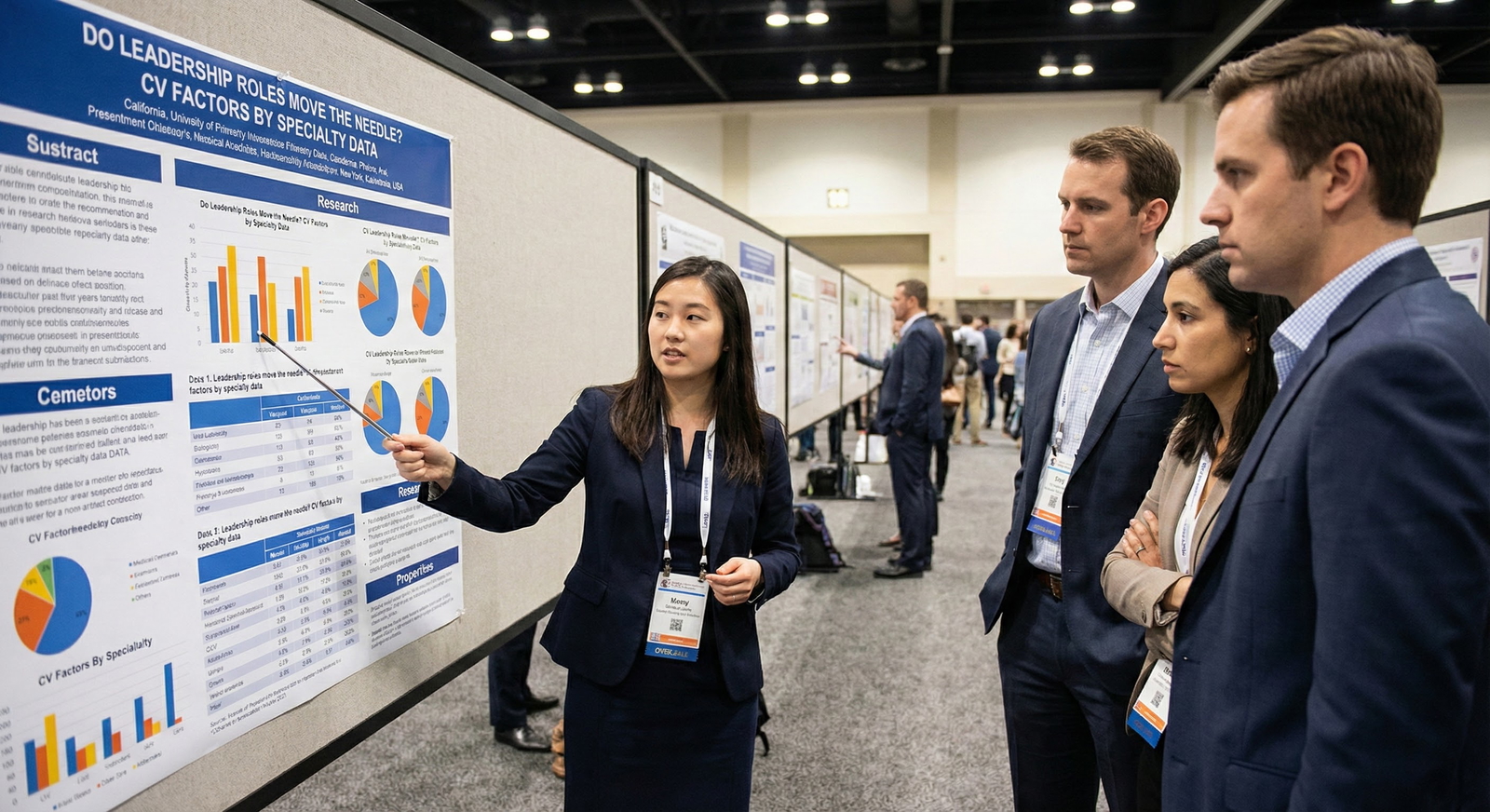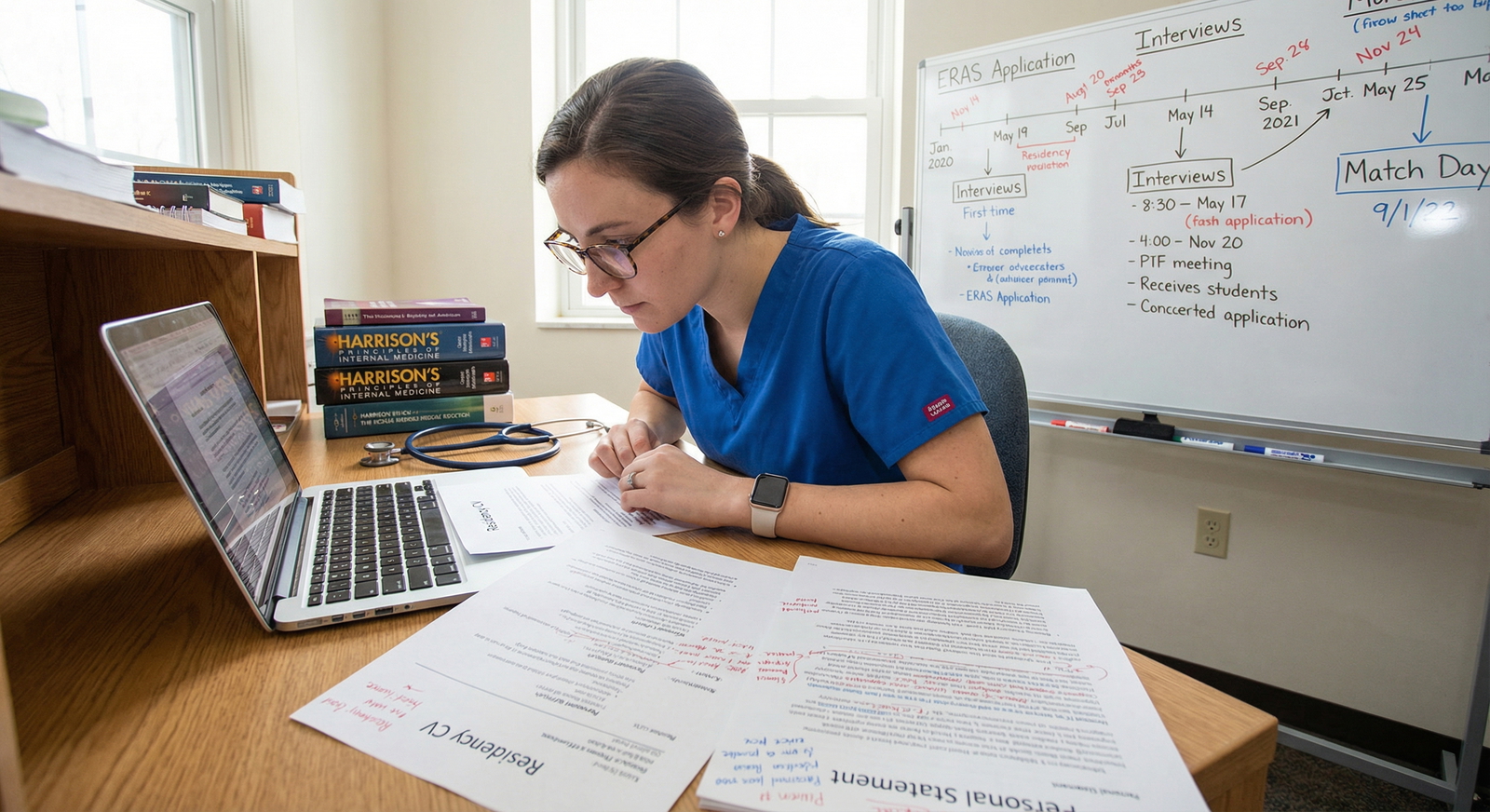
Why Your CV Matters So Much in Dermatology
Dermatology is one of the most competitive specialties in the Match. Programs receive hundreds of applications for a small number of spots, and your CV is often the first—and sometimes only—document that gets closely reviewed before interview decisions.
Unlike a generic resume, a dermatology residency CV must convey:
- A sustained interest in dermatology
- Academic rigor and intellectual curiosity
- Evidence of productivity (research, presentations, publications)
- Professionalism and reliability
- A coherent, believable story about who you are as a future dermatologist
Program directors often skim dozens of CVs at a time. They scan for signals: derm-related experience, scholarly work, leadership, and consistency. A strong CV won’t guarantee a derm match—but a weak or poorly organized one can quietly eliminate you from contention early.
This guide walks you step-by-step through how to build a dermatology-focused residency CV—from first year of medical school through application season—along with concrete examples, formatting guidance, and common pitfalls to avoid.
Core Principles of a Strong Dermatology Residency CV
Before diving into the sections, it helps to understand what makes a dermatology residency CV effective.
1. Derm-Focused, But Not One-Dimensional
You want your CV to clearly communicate: “I am genuinely committed to dermatology.” That doesn’t mean every line must say “derm”—but the overall pattern should unmistakably lean in that direction.
Think of a “dermatology narrative arc” that emerges from your:
- Clinical exposure (derm electives, clinics, shadowing)
- Research (case reports, QI projects, chart reviews, basic science)
- Extracurriculars (derm interest group, skin cancer screenings, advocacy)
At the same time, programs appreciate applicants who are grounded in general medicine, work well in teams, and can manage sick patients. Don’t hide your broader accomplishments—just frame them thoughtfully.
2. Clarity and Readability Over Flash
Program directors often have minutes per application. Your CV must be:
- Easy to scan: consistent headings, font, spacing
- Intuitively organized: most recent and most important material first
- Free of clutter: concise bullet points, no long paragraphs
Formatting rarely “wins” a derm match—but sloppy formatting can lose it.
3. Honest, Precise, and Verifiable
Dermatology is a small community. Exaggerations are risky.
- Never claim authorship or roles you did not hold
- Use “submitted,” “in preparation,” and “accepted” correctly
- Be ready to discuss any entry in detail at interviews
Your CV is a professional document; integrity is non-negotiable.
4. Strategic Rather Than Exhaustive
You don’t need to list every short-term volunteer event you attended for an hour in M1. Prioritize experiences that:
- Show progression over time (e.g., member → officer → president)
- Demonstrate responsibility and impact
- Support your dermatology or academic narrative
Everything on your CV should earn its space.
Structuring Your Dermatology Residency CV
There’s no universal “correct” structure, but the following framework works very well for dermatology residency applicants and aligns with common residency CV tips.
Recommended major sections:
- Contact Information & Education
- USMLE/COMLEX & Other Academic Metrics
- Honors and Awards
- Research & Scholarly Activity
- Clinical Experience (Including Dermatology-Specific)
- Teaching & Leadership
- Service & Community Engagement
- Professional Memberships
- Skills & Additional Information
Order within sections is typically reverse chronological (most recent first).
1. Contact Information & Education
Keep this clean and professional at the top of the first page.
Include:
- Full name (consistent with ERAS)
- Professional email (avoid nicknames; use school email if appropriate)
- Phone number
- City and state (full address optional)
Education Subsection:
List from most recent to oldest:
- Medical school: name, city/state, degree (MD/DO), expected graduation year
- Undergraduate institution: name, degree(s), major, month/year of graduation
- Optional: prior graduate degrees, post-bac programs
Example:
Education
Doctor of Medicine (M.D.), Expected May 2026
University of Midwest School of Medicine, City, StateBachelor of Science in Biology, May 2022
State University, City, State, summa cum laude
Avoid high school information—it’s no longer relevant.
2. USMLE/COMLEX & Academic Metrics
Programs will see your scores in ERAS, but a CV can summarize them for easy reference.
You can include:
- USMLE Step 1 / COMLEX Level 1 (not required if Pass/Fail, but you may list as “Pass”)
- USMLE Step 2 CK / COMLEX Level 2 scores once available
- Class rank or quartile (if reported)
- AOA or Gold Humanism status (or note “AOA eligible” if applicable)
Example:
Academic Metrics
USMLE Step 1 – Pass (April 2024)
USMLE Step 2 CK – 253 (July 2025)
Gold Humanism Honor Society, Inducted 2025
If your scores are lower than average for dermatology, you don’t need to highlight the numeric values here; ERAS will show them anyway. Focus more on your strengths in other sections.

Building the Most Important Sections for a Derm Match
3. Honors and Awards
Dermatology programs look for evidence of excellence and recognition.
Common entries include:
- AOA, Gold Humanism
- Dean’s list, scholarships, research grants
- Poster or oral presentation awards
- National or regional competition prizes
Format each entry with:
- Award name
- Institution/organization
- Month/year
- One brief line of context if the title isn’t self-explanatory
Example:
Honors and Awards
Alpha Omega Alpha (AOA) Honor Medical Society, Inducted 2025
University of Midwest School of Medicine, City, StateBest Clinical Research Poster – 1st Place, Annual Resident & Student Research Day, May 2024
“Incidence and Management of Biologic-Induced Psoriasis Flares”
If you lack many formal awards, don’t worry; you can still present smaller recognitions (e.g., “Dermatology Interest Group Research Scholarship”) clearly.
4. Research and Scholarly Activity: The Heart of a Dermatology CV
For dermatology residency, research and scholarly activity are often the most scrutinized part of your CV. Programs expect at least some engagement; many successful applicants have multiple dermatology-focused projects.
What Counts as “Research or Scholarly Activity”?
- Original research projects (clinical, translational, basic science)
- Case reports and case series
- Review articles, textbook chapters
- Quality improvement projects with data and analysis
- Educational projects (curriculum design, instructional materials)
- Abstracts, posters, and oral presentations at conferences
How to Organize This Section
You can break it down into subsections:
- Publications (Peer-Reviewed)
- Manuscripts Under Review or In Preparation
- Abstracts and Conference Presentations
- Research Experience / Projects
Order: usually peer-reviewed publications first, then other scholarly work.
Correct Citation Style and Status Labels
Programs want to know what’s actually published versus still in progress. Use standardized phrases:
- “Published” – Appears in print or online
- “Epub ahead of print” – Published online, not yet in print format
- “Accepted” – Fully accepted by a journal, awaiting publication
- “Under review” – Submitted, currently being reviewed
- “In preparation” – Draft being prepared, not yet submitted (use sparingly)
Example of a publication entry (Vancouver style is common, but consistency matters more than style):
Peer-Reviewed Publications
- Smith JM, Lee A, Patel R, et al. “Outcomes of Biologic Therapy in Moderate-to-Severe Psoriasis Patients at a Community Dermatology Clinic.” J Am Acad Dermatol. 2024;90(3):123–130.
For case reports under review:
Manuscripts Under Review
- Smith JM, Doe R. “Unusual Presentation of Cutaneous Sarcoidosis Mimicking Psoriasis.” Submitted to Int J Dermatol, under review.
Do not inflate your record by listing “in preparation” items that are speculative. Only list projects where you are actively involved and have a reasonable expectation of completion.
Research Experience / Ongoing Projects
For each project:
- Project title or topic
- Mentor (include titles when notable in dermatology)
- Institution
- Dates (month/year – month/year or “present”)
- 1–3 concise bullets describing your role and outcomes
Example:
Research Experience
Clinical Research Assistant, Psoriasis Outcomes Study
Mentor: Jane Doe, MD, Department of Dermatology, University of Midwest, City, State
June 2023 – Present
- Coordinated multi-center retrospective review of 450 patients treated with biologics for moderate-to-severe psoriasis
- Performed chart abstraction and statistical analysis using SPSS
- Co-authored one manuscript (under review) and two national conference abstracts
This shows: dermatology focus, sustained involvement, and tangible products—precisely what programs look for.
5. Clinical Experience: Highlighting Dermatology Exposure
Dermatology programs want reassurance that you understand what the specialty entails and are choosing it for the right reasons.
Include:
- Core clinical clerkships (you can summarize briefly)
- Dermatology electives (home and away rotations)
- Continuity clinics or long-term derm shadowing
- Relevant subspecialty experiences (rheumatology, oncology, immunology)
Format for dermatology-specific experiences:
Dermatology Electives
Sub-Internship in Dermatology
University of Midwest Medical Center, City, State
July 2025 (4 weeks)
- Managed inpatient consults and outpatient clinics under faculty supervision
- Performed shave and punch biopsies, cryotherapy, and basic procedural dermatology
- Participated in weekly dermatopathology conferences and journal clubs
If you have a longitudinal derm clinic:
Longitudinal Dermatology Clinic
Dermatology Department, County Hospital, City, State
August 2023 – May 2025 (Twice monthly)
- Followed panels of patients with chronic dermatologic conditions (psoriasis, atopic dermatitis, acne)
- Documented visits, formulated assessments and plans, presented to attending physicians
Also list key non-derm clinical experiences that build your credibility as a comprehensive physician, especially internal medicine, rheumatology, infectious disease, and oncology.
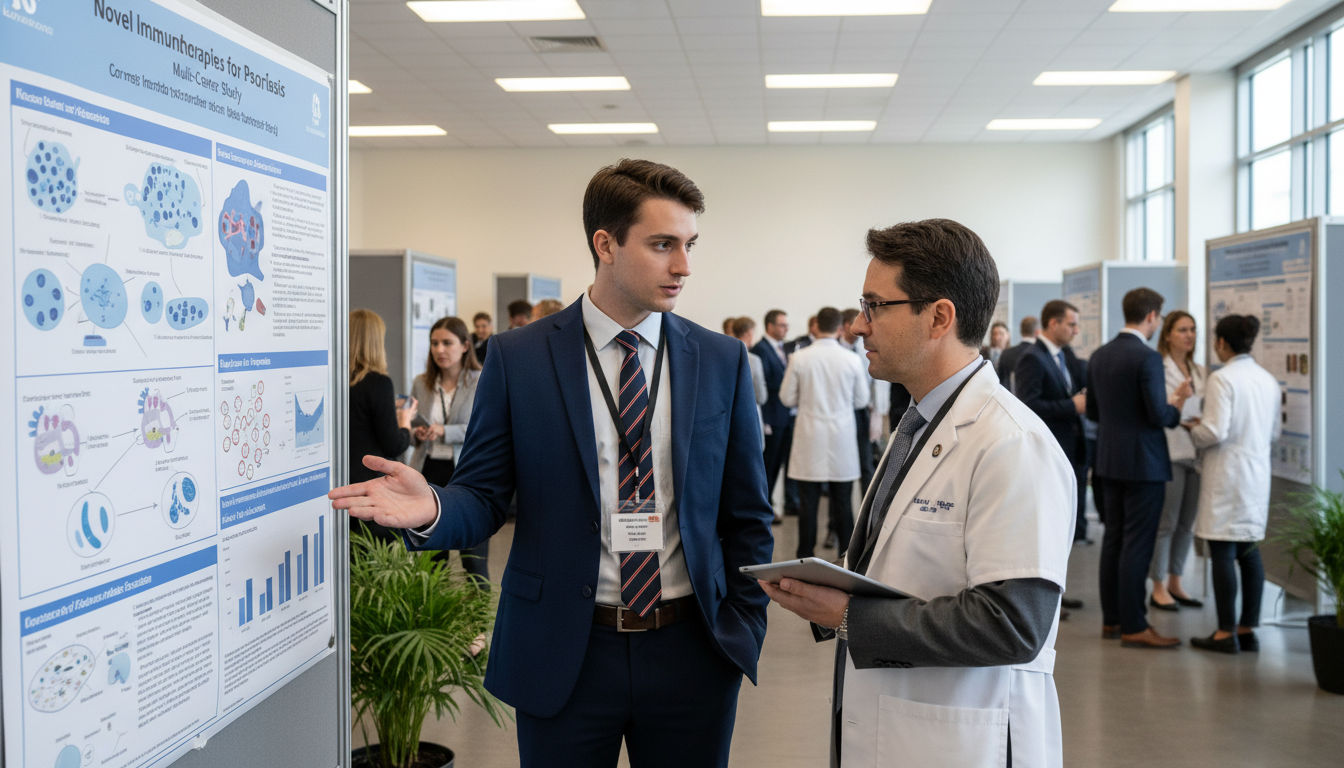
Leadership, Teaching, and Service: Showing You’re More Than Scores
Dermatology is highly collaborative. Programs value applicants who can teach, lead, and serve their communities.
6. Teaching & Leadership
Even small teaching roles matter if you present them clearly and concisely.
Include:
- Peer tutoring or TA positions
- Small-group facilitation
- Anatomy or histology teaching
- Simulation lab instruction
- Leadership roles in dermatology interest groups or other organizations
Example:
Teaching Experience
Small Group Facilitator, Dermatology Clinical Skills Workshop
University of Midwest School of Medicine, City, State
January 2024 – March 2024
- Led four 2-hour sessions for second-year medical students on skin lesion description and basic dermatoscopy
- Developed teaching materials and created standardized patient scenarios
Leadership example:
Leadership Experience
President, Dermatology Interest Group
University of Midwest School of Medicine, City, State
March 2024 – Present
- Organized monthly lectures and procedural workshops attended by 40–60 students
- Coordinated skin cancer screening events in partnership with local dermatologists
- Established a student-mentorship program linking M1–M2 students with dermatology residents
These entries strengthen your medical student CV by showing initiative, organization, and commitment to dermatology.
7. Service & Community Engagement
In dermatology, service often overlaps with access to care, skin cancer prevention, and care for underserved populations.
Examples that fit well on a residency CV:
- Free clinics (especially those including dermatologic care)
- Community skin cancer screenings
- Outreach to communities of color regarding skin of color dermatology
- Advocacy work related to sun safety, tanning bed legislation, or access to dermatologic medications
Format:
Service and Community Engagement
Volunteer, Annual Community Skin Cancer Screening Event
American Academy of Dermatology / City Hospital, City, State
May 2023, May 2024
- Assisted with patient intake, education on sun protection, and distribution of educational materials
- Supported dermatologists in documenting findings and arranging follow-up for suspicious lesions
Try to show continuity: repeated involvement over several years is stronger than many one-time events.
Skills, Professional Memberships, and “Extras” That Matter
8. Professional Memberships
Dermatology-specific memberships highlight early engagement.
Examples:
- American Academy of Dermatology (AAD), Medical Student Member
- Women’s Dermatologic Society
- Skin of Color Society
- Society for Pediatric Dermatology
Format:
Professional Memberships
American Academy of Dermatology, Medical Student Member, 2023 – Present
Dermatology Interest Group Association (DIGA), 2022 – Present
9. Skills & Additional Information
Use this section to efficiently summarize relevant abilities:
Possible subsections:
- Languages – Be honest about fluency; patient care language skills are a real asset.
- Technical / Research Skills – Statistical software (R, SPSS, Stata), REDCap, basic lab techniques.
- Dermatology-Relevant Skills – Dermoscopy basics, digital photography, teledermatology platforms (if substantial, not just one exposure).
- Personal Interests – Optional but can humanize your application and serve as interview conversation starters.
Example:
Skills and Additional Information
- Languages: Fluent in Spanish (used in clinical settings), basic conversational French
- Research: Proficient with REDCap and SPSS; experience with retrospective chart reviews and survey-based research
- Personal Interests: Outdoor photography, marathon running, teaching medical terminology to pre-med students
Avoid listing generic “skills” like “hard-working” or “team player.” Let your experiences show those.
How to Build a Strong CV for Dermatology Residency Over Time
You don’t “cram” for a derm CV in M4; you build it steadily. Here’s a phased approach.
Preclinical Years (M1–M2)
Focus on:
- Solid academic performance
- Joining the Dermatology Interest Group
- Shadowing dermatologists (clinic and OR if possible)
- Beginning a small research or case report with a derm mentor
Actionable steps:
- Attend derm interest group events and introduce yourself to faculty.
- Ask: “Are there any ongoing projects where a motivated student could help with data collection or literature review?”
- Document everything as you go—dates, your role, outcomes—so CV writing later is easy.
Clinical Years (M3–M4)
Priorities:
- Excel in core clerkships (especially internal medicine)
- Complete dermatology electives (home and away) strategically
- Increase research productivity—aim for at least a couple of abstracts or manuscripts
- Take on visible leadership/teaching roles where feasible
Actionable steps:
- During rotations, look for interesting cases—discuss possible case reports early with attendings.
- For away rotations, update your CV before you go; you may share it with new mentors or letter writers.
- After each rotated block, add experiences to your CV while details are fresh.
Strategic Polishing Before Application Season
As you prepare to submit ERAS:
- Tailor the order of sections to emphasize strengths (e.g., place Research earlier if strong).
- Update statuses of publications (submitted → accepted, etc.).
- Remove clutter—short, one-off experiences that don’t add much.
- Ask for feedback from a derm mentor or residency advisor on both content and readability.
Remember: your ERAS “Experiences” section and your CV must tell the same story, even if formatted differently.
Common Pitfalls to Avoid on a Dermatology Residency CV
Overstating Your Role in Research
- Avoid implying first authorship if you are middle author.
- Do not call a project “prospective cohort study” if it was a simple chart review.
Excessive “In Preparation” Projects
- A long list of speculative manuscripts can look worse than a shorter list of real products.
- Be conservative: only list items where you’re actively drafting or revising.
Derm Overload with No Breadth
- It’s possible to look too narrowly focused if you appear uninterested in general medicine.
- Maintain some balance in your narrative and highlight solid performance in core clerkships.
Disorganized Formatting
- Inconsistent font sizes, bullet styles, or date formats make your CV look rushed.
- Use one standard: e.g., “Jan 2024 – May 2024” throughout.
Typos and Grammatical Errors
- Dermatology is detail-oriented; errors are interpreted as lack of care.
- Print your CV and proofread; ask at least one other person to review it as well.
Overly Casual or Personal Details
- Avoid personal information that’s not relevant or could bias reviewers (e.g., political affiliations, excessive personal anecdotes).
- Hobbies are fine, but keep them brief and professional.
Frequently Asked Questions (FAQ)
1. How long should my dermatology residency CV be?
For most applicants, 2–4 pages is appropriate. If you have substantial research or a prior career, 4–5 pages may be acceptable. Depth of substance matters more than page count. Avoid padding with minor or redundant items just to make it longer.
2. What if I don’t have dermatology research—can I still match?
Yes, but your odds improve if you can show some dermatology-related scholarly activity. If you’re late to the field, emphasize:
- Strong performance on Step 2 CK and core rotations
- Solid letters from dermatologists based on clinical performance
- Other research experience (even outside derm) to show academic potential
Meanwhile, consider small, quickly executable projects like a case report or a clinical vignette for a local poster session.
3. How is a medical student CV different from a standard job resume?
A medical student CV is:
- Longer (not constrained to one page)
- Heavily focused on education, research, and scholarly work
- Structured to satisfy academic and residency expectations
You shouldn’t use a one-page college-style resume for residency. Your derm match application requires an academic CV that fully captures your professional development.
4. Should I tailor my CV differently for each dermatology program?
The core content should stay the same, but you can:
- Slightly adjust section order to highlight strengths (e.g., move “Research” up)
- Emphasize certain experiences in your personal statement or program-specific communications
In most cases, one well-designed, dermatology-focused CV works for all programs.
By building your dermatology residency CV intentionally—starting early, documenting consistently, and presenting your experiences with clarity—you create a compelling, coherent profile that supports your entire application. Your CV is not just a list; it is the structured narrative of who you are as a future dermatologist. Use it to show programs not only that you want dermatology, but that you are already working like a future colleague in the field.