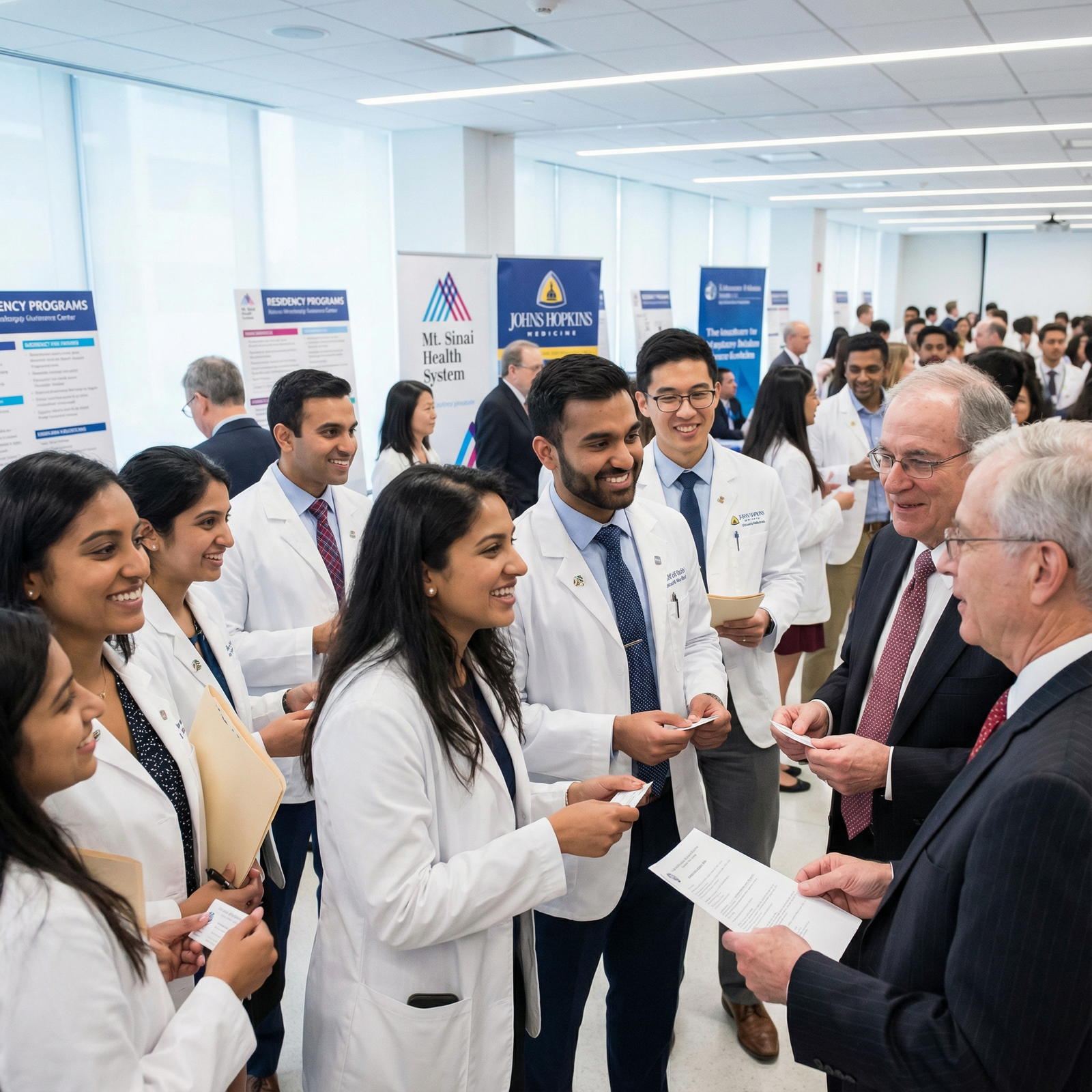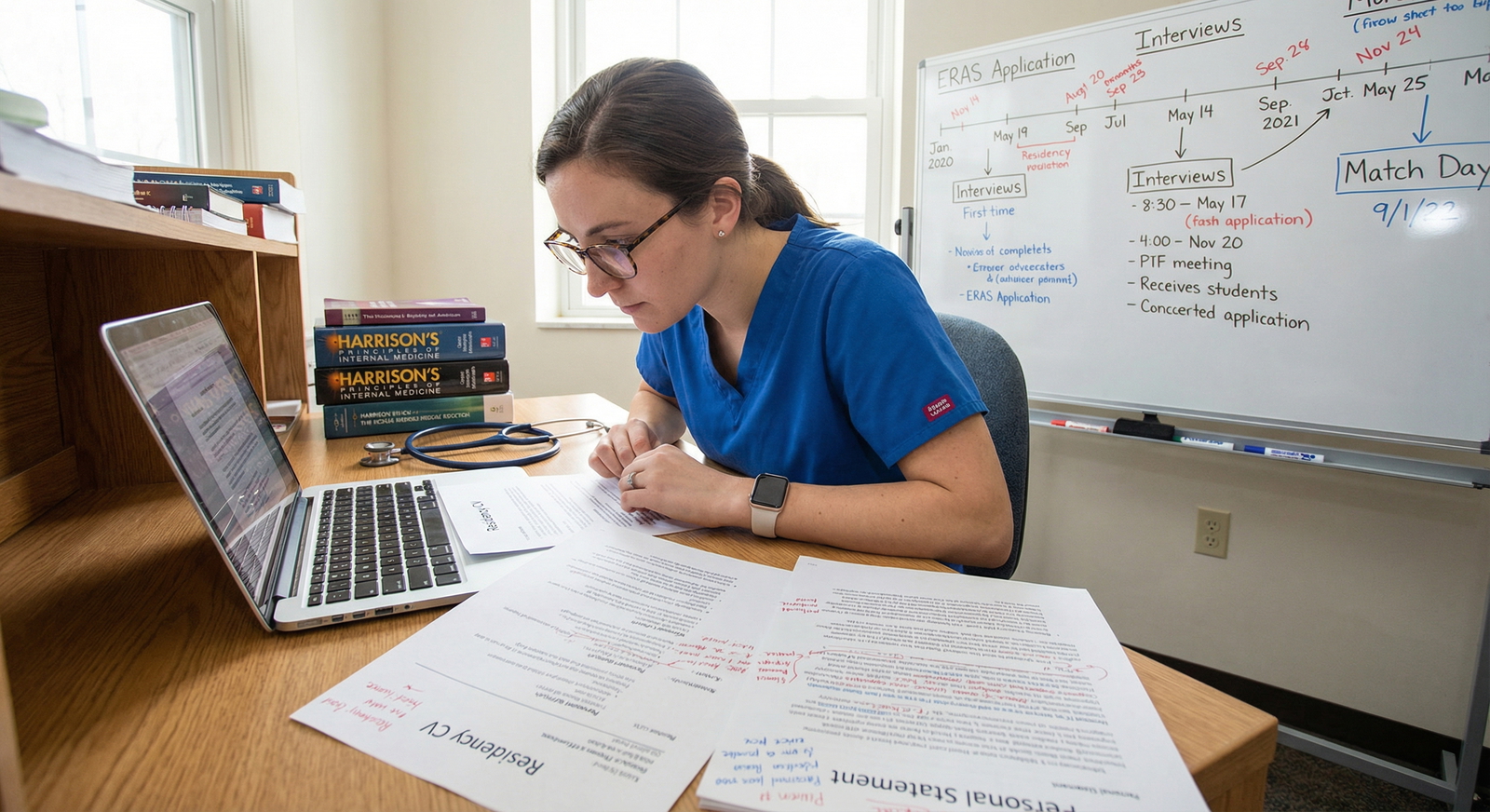
Family medicine is one of the most diverse and rewarding specialties—and program directors sift through thousands of applications every cycle. Your CV is often their first real snapshot of you as an applicant. Done well, it tells a coherent story: why you care about people and communities, how you’ve prepared for broad-spectrum clinical work, and why you’d be an asset to a family medicine residency.
This guide walks you through how to build, refine, and tailor a strong CV specifically for a family medicine residency application, from structure and content strategy to concrete, specialty‑focused examples.
Understanding the Role of Your CV in the FM Match
Your CV (curriculum vitae) is more than just a list of what you’ve done—it’s a strategic tool in the FM match. In family medicine, programs are not searching only for test scores; they’re looking for:
- Longitudinal commitment to patients and communities
- Breadth of clinical exposure
- Teamwork and communication
- Cultural humility and adaptability
- Interest in primary care, continuity, and prevention
- Evidence of reliability and follow‑through
A strong family medicine residency CV should:
- Align with FM values – continuity, community, primary care, whole‑person care.
- Highlight consistent engagement – longitudinal projects, community involvement, or leadership, not just one‑off activities.
- Show impact and reflection – briefly communicate what you did and why it matters.
- Be crystal clear and scannable – most PDs and faculty skim quickly. If they can’t understand it in 60–90 seconds, they move on.
Think of your CV as the narrative backbone of your application: your ERAS experiences, personal statement, and letters should all harmonize with it. The content you choose and how you frame it can significantly influence how program directors perceive your fit for family medicine.
Core Structure: What Belongs on a Family Medicine Residency CV
Even though ERAS structures much of what programs see, you should still maintain a formal CV for networking, away rotations, and faculty mentors writing letters. Use a clean, conventional order with clear headings.
1. Contact Information & Professional Summary (Optional)
Contact info (required)
At the top, include:
- Full name (in bold and slightly larger font)
- Current email (professional address)
- Mobile phone
- City/State (no full home address needed now)
- LinkedIn profile (optional but recommended if it’s up‑to‑date)
- ECFMG number (if applicable for IMGs)
Professional summary (optional but powerful)
A 2–3 line summary can help frame your application for family medicine:
Fourth‑year medical student with strong interest in full‑spectrum family medicine, including outpatient continuity, behavioral health, and underserved care. Brings 5+ years of community service leadership, robust teaching experience, and research in chronic disease management.
This is optional but can quickly orient the reader toward your strengths and FM focus.
2. Education
List in reverse chronological order:
- Medical school (Name, city, country if international, degree, expected or actual graduation date)
- Undergraduate institution (degree, major/minor, graduation date; include honors like cum laude)
- Additional graduate degrees (MPH, MBA, MSc, etc.)
Example:
Education
- MD Candidate, Expected May 2026
University of Midwest School of Medicine, Chicago, IL - BS in Biology, magna cum laude, May 2020
State University, Columbus, OH
Residency CV tips for this section:
- Include thesis titles or capstone projects in an extra line if they relate to primary care, public health, or communities.
- For IMGs, clearly indicate degree equivalence and ECFMG certification status.
3. Medical Licensure, Certifications & Exam Scores (if including)
In ERAS, most exam info is captured separately, but on a standalone CV you may add:
- USMLE/COMLEX Step scores and dates (if you feel they strengthen your application; otherwise “Available upon request” is acceptable for external CVs)
- Certifications: BLS, ACLS, PALS, NRP
- ECFMG certification (for IMGs; include number and year)
Example:
Certifications & Exams
- USMLE Step 1: Pass (January 2024)
- USMLE Step 2 CK: 245 (August 2025)
- BLS and ACLS, American Heart Association, valid through 2027
4. Clinical Experience: Building a Family Medicine‑Focused Story
This is where your CV can really differentiate you for a family medicine residency.
Include:
- Core clerkships (in ERAS, these are implicit, but in a separate CV you may highlight FM specifically)
- Sub‑internships / acting internships (especially in FM, IM, pediatrics, OB, EM)
- Family medicine electives (outpatient or inpatient)
- Away rotations in FM
Organize in reverse chronological order and highlight FM‑relevant experiences.
Example format:
Clinical Experience
Acting Internship, Family Medicine – Continuity Clinic
City Health Medical Center, Family Medicine Department, Chicago, IL
July–August 2025
- Managed panel of 8–10 patients per half‑day under supervision in a community clinic serving predominantly low‑income and immigrant populations.
- Performed adult wellness visits, chronic disease follow‑up (diabetes, hypertension, COPD), and acute visits.
- Coordinated care with behavioral health, social work, and pharmacy to address social determinants of health.
Core Family Medicine Clerkship
University of Midwest School of Medicine, Chicago, IL
January–February 2025
- Completed 6‑week rotation in a mixed urban–suburban family medicine practice.
- Conducted focused histories and physicals, presented patient plans, and educated patients on preventive care and lifestyle modifications.
Key residency CV tips for this section:
- Prioritize family medicine experiences at the top of the section when possible.
- Emphasize:
- Longitudinal continuity (following a patient over multiple visits)
- Care across the lifespan (peds, adults, geriatrics, prenatal care)
- Interprofessional collaboration
- Work with underserved or diverse populations
- Avoid listing only responsibilities; briefly capture skills + context + impact in 2–4 bullets.

Non‑Clinical Experiences: Showcasing Family Medicine Values
In a family medicine residency CV, non‑clinical experiences can be especially important because they reveal your commitment to people, communities, and systems—core FM priorities.
1. Research & Scholarly Projects
You do not need a PhD or numerous publications for family medicine, but you should present your scholarly work clearly and professionally. Focus on research that intersects with:
- Chronic disease management
- Health disparities and social determinants
- Preventive medicine and lifestyle interventions
- Quality improvement (QI) in primary care settings
- Behavioral health integration
- Medical education or community‑based projects
Format:
Research & Scholarly Work
Student Researcher – Diabetes Management in Community Clinics
Department of Family Medicine, University of Midwest, Chicago, IL
May 2023–Present
Mentor: Jane Smith, MD, MPH
- Conducted retrospective chart review of 300 patients with type 2 diabetes at an urban FQHC to evaluate impact of group education visits on A1c levels.
- Presented preliminary data at the Illinois Academy of Family Physicians annual meeting (poster).
- Manuscript in preparation for submission to Family Medicine.
Residency CV tips:
- Don’t hide smaller projects; well‑described QI work in a clinic is highly valued.
- Note your role clearly: designer, data collector, analyst, presenter, first author, etc.
- If you have limited research, focus on 1–3 projects that tie to FM themes instead of listing many unrelated tiny items.
2. Community Service & Advocacy
This is often a make‑or‑break section for family medicine residency applications. Programs care deeply about service and population health; this is where you can stand out if you’ve been intentional.
Include:
- Free clinics and student‑run clinics
- Community health fairs or preventive screening events
- Outreach programs (homeless shelters, refugee organizations, school‑based programs)
- Health advocacy campaigns, policy involvement, or leadership in service organizations
Example:
Community Service & Outreach
Volunteer & Student Leader – Student‑Run Free Clinic
Hope Community Health Center, Chicago, IL
August 2022–Present
- Provided weekly supervised primary care visits to uninsured adults, focusing on chronic disease management and preventive screenings.
- Developed a hypertension education handout in English and Spanish, now distributed to >300 patients annually.
- Coordinated scheduling for 40+ student volunteers and facilitated debriefs on cultural humility and trauma‑informed care.
How to build your CV for residency using service:
- Emphasize sustained, longitudinal service over one‑time events.
- Highlight population focus (urban underserved, rural communities, immigrants, LGBTQ+ populations, etc.).
- Show leadership, initiative, and tangible outcomes (number of patients reached, a new workflow you designed, etc.).
3. Leadership & Teaching Experience
Family physicians are teachers and leaders in communities, clinics, and healthcare systems. This section should show your ability to:
- Lead teams, projects, or organizations
- Mentor junior students or peers
- Teach patients or community members
- Contribute to curriculum or educational innovation
Examples:
Leadership & Teaching
Co‑Director – Family Medicine Interest Group (FMIG)
University of Midwest School of Medicine, Chicago, IL
March 2023–Present
- Organized monthly FM career panels, skills workshops (joint injections, dermatologic procedures), and community service events.
- Increased active membership by 40% by introducing mentorship pairings between students and family medicine residents.
Peer Tutor – Clinical Skills
University of Midwest School of Medicine, Chicago, IL
September 2023–May 2024
- Led small‑group sessions for first‑year students on history taking, physical exam skills, and patient communication.
- Received “Outstanding Tutor” recognition based on student evaluations.
In your residency CV, leadership in FMIG or primary care‑related groups is particularly powerful—it clearly demonstrates your specialty interest.
4. Work Experience (Clinical & Non‑Clinical)
Paid work that is not formal medical training can still strongly support your application to a family medicine residency, especially if it shows:
- Reliability and time management (balancing school and work)
- Direct patient contact (scribe, MA, EMT, CNA, etc.)
- Service‑oriented roles (teacher, social worker, community health worker)
Be honest about responsibilities and avoid inflating your role. Clarify if the position was held before medical school—this can show longstanding commitment to healthcare or service.
Example:
Medical Scribe – Primary Care Clinic
Sunrise Internal Medicine, Phoenix, AZ
June 2018–July 2020
- Documented patient encounters, lab results, and care plans in EMR for 3 internal medicine physicians in a busy outpatient setting.
- Observed chronic disease management and learned workflow for referrals, prior authorizations, and care coordination.

Publications, Presentations, and Professional Involvement
Even for family medicine—where research intensity can be variable—showing scholarly engagement and professional identity can strengthen your FM match profile.
1. Publications
Follow a consistent citation style (e.g., AMA). Separate into categories if needed:
- Peer‑reviewed journal articles
- Book chapters
- Online peer‑reviewed content / educational materials
Example:
Publications
- Lee A, Smith J, Nguyen T. Group visits for diabetes management in an urban FQHC: a retrospective review. J Community Health. 2024;49(3):210–217.
If a paper is accepted but not yet published, indicate:
- “In press” or “Epub ahead of print”
- “Accepted for publication in [journal], [month year]”
If it’s still being written:
- List under “Manuscripts in Preparation” and avoid overstating the status.
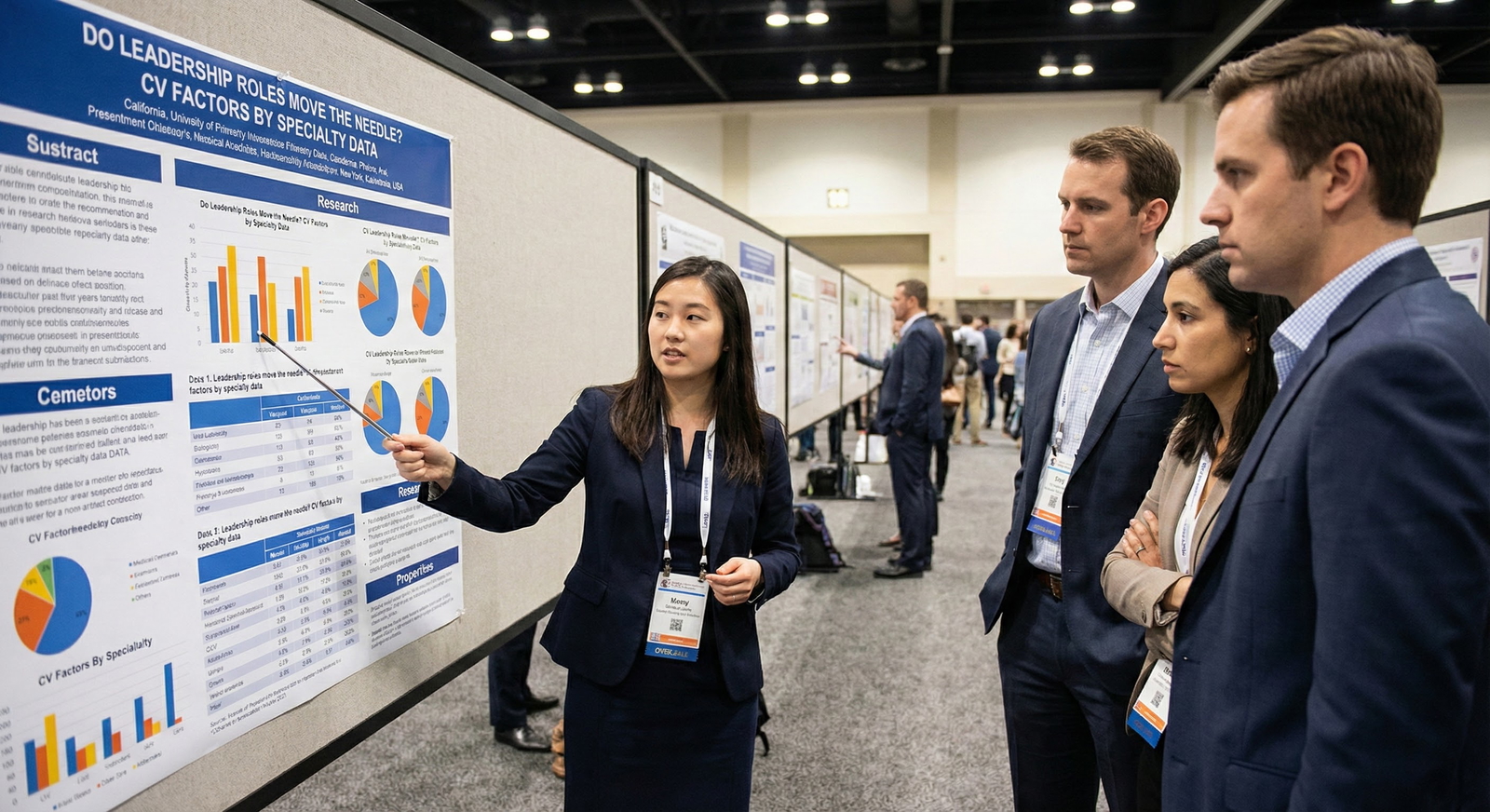
2. Abstracts & Presentations
Family medicine places value on local, regional, and national conference participation, including:
- AAFP National Conference
- STFM (Society of Teachers of Family Medicine)
- State Academy of Family Physicians meetings
- Institutional research days or QI fairs
Example:
Presentations
- Lee A, Smith J. Hypertension management in a student‑run free clinic: opportunities for quality improvement. Poster presented at: Illinois Academy of Family Physicians Annual Meeting; March 2024; Chicago, IL.
Even a single poster or oral presentation can enhance your residency CV, especially if it’s tied to a family medicine department or community‑based project.
3. Professional Memberships
This is often overlooked, but it’s a subtle way to convey specialty interest.
Examples to include:
- American Academy of Family Physicians (AAFP) – Student Member
- State Academy of Family Physicians – Student Member
- Family Medicine Interest Group (FMIG)
You can add a brief bullet if you were an active member (committee, conference attendance, project participation).
Crafting a Polished, FM‑Specific CV: Practical Strategies
Building content is only half the battle. The presentation of your residency CV significantly affects how program directors absorb your story.
1. Format and Layout
- Length: 2–4 pages is typical for medical student CVs applying to family medicine residency. Don’t artificially compress to one page if you have substantive experiences.
- Font: Legible, professional fonts (e.g., Calibri, Arial, Times New Roman, 10.5–12 pt).
- Headings: Use clear, consistent section headings with bold or slightly larger font.
- Margins & spacing: Aim for 0.5–1 inch margins; consistent spacing between sections and bullet points.
- Bullets over paragraphs: Use bullets for experiences, 2–4 per entry. Avoid walls of text.
While ERAS standardizes much of what programs see, when networking on rotations, sending your CV to mentors, or applying for scholarships, a polished standalone CV still matters.
2. Tailor Content to Family Medicine
To really optimize your FM match chances, don’t treat your CV as specialty‑neutral. Subtly emphasize:
- Continuity and longitudinal work: Explicitly say “followed panel longitudinally” or “sustained involvement since 2021.”
- Breadth of patient population: Highlight experience with pediatrics, adults, geriatrics, prenatal patients, and behavioral health.
- Community and systems focus: Note projects related to social determinants, community partnerships, or public health.
- Procedural exposure (if relevant): Laceration repairs, joint injections, women’s health procedures, etc., especially through FM rotations.
For example, instead of:
Volunteered at community clinic.
You might write:
Volunteered weekly at a community family medicine clinic providing primary care for uninsured adults and children, with focus on chronic disease management and preventive care.
3. Use Strong, Outcome‑Oriented Bullets
Improve your medical student CV by shifting from vague descriptions to concrete outcomes.
Weak:
- Helped with health fair.
- Participated in research.
- Assisted attending in clinic.
Stronger:
- Co‑organized community health fair providing blood pressure and diabetes screenings to 120+ residents; designed culturally appropriate education materials in English and Spanish.
- Collected and analyzed data on 300 patients with type 2 diabetes to assess the impact of group visits on A1c; findings led to expansion of the program at an FQHC.
- Independently conducted focused histories and physical exams on 6–8 patients per clinic session, presenting assessment and plan to attending in a busy family medicine continuity clinic.
4. Avoid Common Pitfalls
To keep your family medicine residency CV sharp and credible:
- No exaggeration or misrepresentation. Program directors and letter writers can often detect inflated roles.
- Don’t clutter with irrelevant items. High school activities and minor short‑term roles can generally be removed unless they clearly demonstrate long‑standing FM‑related commitments.
- Keep dates accurate and consistent. Mismatched dates are a red flag.
- Proofread multiple times. Typos suggest carelessness. Ask a mentor or advisor to review specifically for clarity and FM relevance.
- Avoid jargon and internal acronyms. Spell out program names or organizations if not universally known.
5. Aligning CV with ERAS and Personal Statement
As you think about how to build your CV for residency, always keep alignment in mind:
- The themes in your personal statement (e.g., rural health, underserved urban populations, behavioral health integration, OB‑heavy FM) should be visible in your CV experiences.
- Your top 3–5 experiences in ERAS should be clearly recognizable and elaborated in your standalone CV.
- Ask letter writers to highlight work that features prominently on your CV; send them an updated copy early.
This alignment reinforces your narrative and makes it easier for family medicine programs to see you as a coherent, purposeful applicant.
Timeline: When and How to Build Your Family Medicine CV
Early Medical School (MS1–MS2)
- Start a running document listing activities, dates, responsibilities, and outcomes.
- Get involved in FMIG, student‑run clinics, or community health projects.
- Attend introductory FM events or shadow family physicians; record these on your CV if they are substantial or recurring.
Clinical Years (MS3–MS4)
- After each rotation, especially in family medicine or primary care, add concrete details while they’re fresh.
- Seek out FM‑relevant research or QI projects—ask family medicine faculty about ongoing work.
- Take on leadership roles in FMIG or community projects when possible.
Pre‑Application (6–9 months before ERAS)
- Consolidate and clean up your CV; remove older, less relevant items.
- Arrange experiences in a way that clearly foregrounds your family medicine interest.
- Have at least one family medicine faculty mentor review your residency CV for content and emphasis.
During Interview Season
- Bring a current CV to interviews if requested or if you’re attending dinners and networking events.
- Update with new presentations, publications, or leadership roles as they arise.
FAQs: Family Medicine Residency CV
1. How long should my CV be for a family medicine residency application?
Most medical students applying to a family medicine residency will have a CV between 2–4 pages. It should be long enough to capture your education, clinical experiences, significant research/QI, community service, and leadership, but not padded with marginal items. Substance and clarity matter more than strict length limits.
2. I don’t have much research—will that hurt my chances in the FM match?
Not necessarily. Many family medicine programs value service, leadership, and community engagement as much as or more than traditional bench research. If you lack classic research, focus your CV on:
- Longitudinal community service and outreach
- Quality improvement projects in clinical settings
- Educational projects or advocacy work
Even a small QI project in a clinic or a well‑executed community program can be highly valued in FM.
3. Should I list all my high school achievements on my residency CV?
Generally no. For a medical student CV, high school activities are usually omitted unless they demonstrate a longstanding commitment highly relevant to family medicine (e.g., 8+ years volunteering at a rural clinic that continued into college and medical school). Focus instead on experiences from college and medical school that tell your current professional story.
4. What are the top residency CV tips specific to family medicine?
- Highlight sustained, longitudinal engagement in primary care, community work, and service.
- Make sure family medicine rotations, FMIG involvement, and primary care‑oriented projects are prominently featured.
- Emphasize breadth of patient populations and interprofessional teamwork.
- Use outcome‑oriented bullets that show impact, not just participation.
- Have a family medicine faculty mentor review your CV to ensure it reflects the values and strengths FM programs are seeking.
By approaching your CV not as a static list but as a strategic narrative aligned with family medicine’s core values, you’ll create an application that resonates with program directors and supports a successful FM match.