
Why Research Experience Matters on a Residency CV
When residency programs review applications, strong research experience can be a major differentiator—especially in competitive specialties or academic programs. Research is more than an academic requirement; it signals that you can ask good questions, analyze complex data, work in teams, and contribute to the advancement of medical knowledge. Those are qualities program directors actively look for.
Effectively showcasing your research experience on your residency CV is therefore a high‑yield Career Strategy. It can support your narrative of who you are as a future resident and physician, and it can reinforce your other application elements—letters of recommendation, personal statement, and interview talking points.
How Program Directors View Research Experience
From a Medical Education and selection standpoint, research experience helps residency programs:
Assess critical thinking and problem‑solving
Designing projects, analyzing data, and interpreting results all demonstrate higher‑order thinking beyond memorizing facts.Gauge perseverance and professionalism
Research often spans months or years. Seeing sustained involvement, even through setbacks, suggests resilience and follow‑through—key traits for residency.Identify future academic potential
Programs with a strong academic or research focus look for residents who can publish, present, and support the department’s scholarly output.Confirm genuine interest in a specialty
Specialty-specific projects (e.g., cardiology, orthopedics, psychiatry) can demonstrate early commitment and curiosity in that field.Evaluate communication and collaboration skills
Working with PIs, co-authors, statisticians, and other trainees showcases teamwork, leadership, and the ability to communicate complex ideas.
Your job is to present this Research Experience in a way that is clear, concise, and aligned with your residency goals. Your CV should help reviewers quickly understand not just what you did, but why it matters and how it prepared you for residency.
Building a Strong CV Structure for Residency Applications
Your CV is not just a list of activities; it is a strategic, organized summary of your professional development. A clean, predictable structure helps selection committees quickly locate your research contributions and evaluate them in context.
Essential Sections of a Residency CV
Most successful residency CVs include the following sections (in roughly this order):
Personal Information
- Full name (matching ERAS)
- Contact information (email, phone, address)
- Optional: A short professional profile or objective (1–2 lines) if it highlights your academic/research focus
Education
- Medical school (with expected or actual graduation date)
- Undergraduate institution and degree
- Advanced degrees (e.g., MPH, PhD, MS) if applicable
- Honors such as AOA, Gold Humanism, or Dean’s List
Research Experience
- A distinct section dedicated to projects and formal research roles
- May be subdivided by “Clinical Research,” “Basic Science Research,” or “Health Systems / Quality Improvement,” if extensive
Clinical Experience
- Clerkships (if relevant for non‑ERAS CVs)
- Sub-internships / acting internships
- Externships, observerships, or additional clinical roles
Publications, Abstracts, and Presentations
- Peer‑reviewed journal articles
- Conference abstracts and posters
- Oral presentations, invited talks, or grand rounds
Leadership, Teaching, and Volunteer Experience
- Roles that demonstrate initiative, mentorship, and community engagement
Skills and Certifications
- Research-related skills (stats software, lab techniques, QI tools)
- Language proficiency
- Relevant certifications (e.g., GCP, CITI, BLS/ACLS)
Honors and Awards
- Research awards, scholarships, travel grants, or poster prizes
References (if requested)
- Usually not required in the ERAS CV, but useful for printed or supplemental CVs
General CV Tips for Residency Application Success
- Prioritize relevance: Place sections that matter most for your target specialty near the top—often Research Experience and Publications for research-heavy programs.
- Be consistent: Use the same formatting for dates, locations, bullets, and fonts throughout. Consistent formatting signals professionalism.
- Keep it readable: Use clear headings, white space, and bullet points. Program directors may skim dozens of CVs in one sitting.
- Align with ERAS: Your standalone CV should match what appears in ERAS (titles, dates, roles) to avoid confusion or red flags.
Your CV is also a key part of your overall Career Strategy. Think of it as the “evidence” backing up the story you tell in your personal statement and interviews.
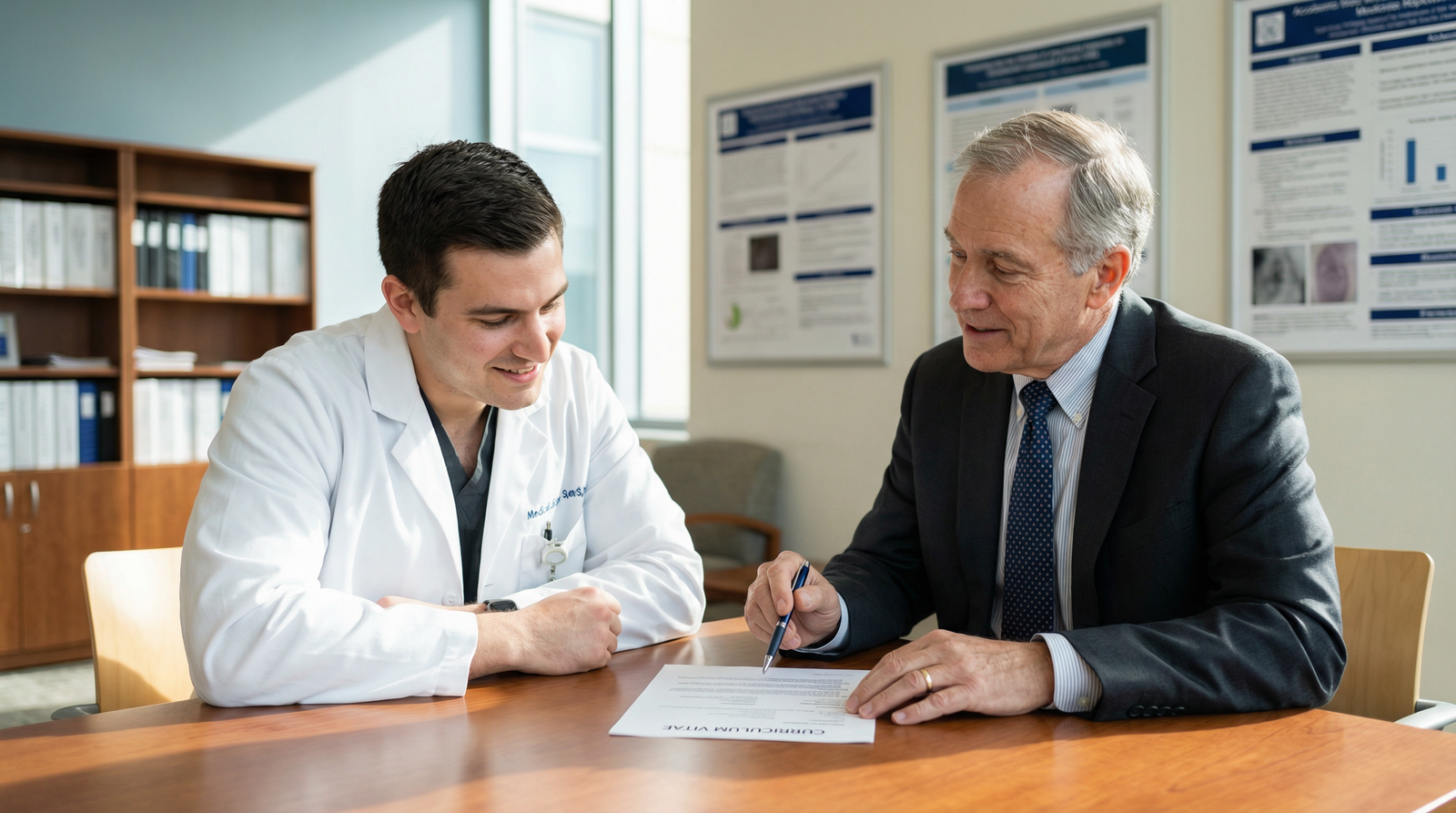
Designing a High-Impact Research Experience Section
Your Research Experience section should be easy to scan but rich enough in detail that a faculty reviewer can understand the scope and significance of your work within seconds.
1. Create a Clearly Labeled, Prominent Research Section
Use an unambiguous heading such as:
- “Research Experience”
- “Scholarly and Research Experience”
- “Clinical and Translational Research Experience”
List entries in reverse chronological order (most recent first). This highlights your current level of activity and progression.
Example of a Research Entry Heading:
Research Assistant, Department of Neurosurgery
XYZ University School of Medicine, City, State
June 2022 – Present
If you held multiple roles in the same lab (e.g., volunteer → paid assistant → sub-investigator), you can either:
- List them as one entry with evolving responsibilities in the bullets, or
- Use subheadings under a single lab listing.
Choose whichever is clearer and less repetitive.
2. Use Focused, Outcome-Oriented Bullet Points
Under each research role, use 2–5 bullet points that:
- Start with strong action verbs (e.g., “designed,” “analyzed,” “implemented,” “coordinated”)
- Specify your individual contribution
- Highlight outcomes, not just tasks
- Emphasize skills that are transferable to residency
Weak bullet:
- Helped with data collection for stroke outcomes project.
Stronger, high‑impact bullet:
- Collected and managed longitudinal outcome data for 210 patients enrolled in a prospective ischemic stroke registry, maintaining >98% follow‑up completeness.
This second version shows scale, complexity, and reliability—traits programs want in a resident.
3. Quantify Whenever Possible
Adding numbers makes your impact concrete and memorable. You might include:
- Sample sizes: “n=150 ICU patients”
- Time frames: “over 18 months”
- Performance metrics: “reduced data entry errors by 30%”
- Output: “resulted in 2 posters and 1 first‑author manuscript in progress”
Examples of quantification on a residency CV:
- “Performed chart review and data abstraction for 342 pediatric ED visits to identify predictors of return visits within 72 hours.”
- “Led a team of 4 students to complete a multi-center meta-analysis of 12 randomized trials on anticoagulation in atrial fibrillation.”
4. Highlight Research Skills and Tools Strategically
You can embed technical and analytical skills directly in your bullets or add a separate “Research Skills” subsection under your Skills section.
Examples of embedded skills:
- “Performed multivariable logistic regression using R to identify independent predictors of 30-day readmission.”
- “Implemented REDCap for secure data capture, including survey design and branching logic.”
Examples of a research‑oriented Skills section:
- Statistical software: SPSS, R, STATA, GraphPad Prism
- Data tools: REDCap, Qualtrics, Excel (advanced functions, pivot tables)
- Lab techniques: PCR, gel electrophoresis, Western blotting, cell culture
- Research methods: Systematic review methodology, qualitative interviewing, thematic content analysis, basic QI methodology (PDSA cycles, run charts)
These details strengthen the “Technical Skills” dimension of your CV and show that your Research Experience is more than just shadowing in a lab.
5. Emphasize Your Role in the Research Team
Residency is highly team-based, and programs want people who contribute reliably and communicate well. Use your CV bullets to clarify your role:
- “Coordinated weekly research meetings between PI, residents, and students; maintained project timelines and deliverables.”
- “Served as primary point of contact between the neurosurgery research team and the institutional review board (IRB), assisting with initial submission and continuing review documents.”
Explicitly documenting leadership, initiative, and communication builds a bridge between your research and your readiness for clinical teamwork.
Showcasing Publications, Abstracts, and Presentations
Your research section describes your process and contributions. Your Publications and Presentations section showcases your outputs and academic productivity—both are important for a strong Residency Application.
1. Decide How to Organize This Section
If you have multiple outputs, consider separate subsections:
- Peer‑Reviewed Publications
- Manuscripts Under Review / In Preparation
- Book Chapters
- Conference Abstracts and Posters
- Oral Presentations
If you have fewer items, a single section titled “Publications and Presentations” is fine.
Use a consistent citation format (e.g., AMA, Vancouver). Accuracy and consistency matter; selection committees often skim this section quickly.
2. Formatting Publication Entries
List authors in the order they appear, bolding your own name to make your role visible.
Example:
- Doe J, Smith A, Johnson K. Neuroprotective effects of Drug XYZ in traumatic brain injury models. Journal of Neuroscience Research. 2023;120(3):456–465. doi:10.xxxx/jnr.2023.12345
If a paper is accepted but not yet published, label it clearly:
- Doe J, Lee M, Chen R. Title. Journal Name. Accepted for publication, 2024.
If submitted or in preparation, be honest and specific:
- Submitted: Doe J, Patel N, Brown T. Title. Journal of General Internal Medicine. Submitted, October 2024.
- In preparation: Doe J, et al. Title. Manuscript in preparation.
Avoid exaggeration. Do not list something as “accepted” or “submitted” without verification.
3. Listing Abstracts, Posters, and Oral Presentations
These scholarly activities show that you can bring work to completion and engage with the academic community.
Poster example:
- Doe J, Nguyen P, Smith R. Innovative approaches in treating traumatic brain injuries. Poster presented at: Annual Neuroscience Conference; March 2023; Washington, DC.
Oral presentation example:
- Doe J. Implementation of a resident-led sepsis quality improvement initiative in the emergency department. Oral presentation at: XYZ Medical Center Research Day; May 2022; City, State.
If you have multiple posters at the same conference, list each separately; it demonstrates productivity and breadth.
4. Integrating Work “In Progress” on Your CV
Residency programs know many projects are midstream. It is acceptable—and often wise—to include:
- “Manuscript in preparation” if you are actively working toward submission
- “Data collection ongoing” for substantial ongoing projects
- “Planned submission to [Conference Name], [Year]” if reasonably expected
Be prepared to discuss these projects during interviews: your specific role, hypotheses, preliminary findings, challenges, and next steps.
Tailoring Your Research Experience to Your Target Specialty
Not every residency program values research equally, and not every research project is equally relevant to every specialty. Strategic tailoring can significantly increase the impact of your CV.
1. Emphasize Specialty-Relevant Research
If you are applying to a specific specialty, prioritize related projects:
- For Internal Medicine or subspecialties: Outcomes research, epidemiology, health services, QI in chronic disease management.
- For Surgery: Surgical outcomes, device innovation, anatomy or technique-related projects, perioperative care.
- For Radiology: Imaging-based projects, AI in imaging, diagnostic accuracy studies.
- For Psychiatry: Mental health outcomes, psychopharmacology, behavioral interventions, neuroimaging.
- For Emergency Medicine: Trauma, resuscitation, operations, ED flow, toxicology.
You can still include unrelated projects (e.g., basic science from college), but place the most relevant, recent work at the top of your Research Experience and Publications sections.
2. Align Research with Your Personal Statement and Interviews
Your CV should reinforce, not contradict, your overall narrative. If you describe yourself in your personal statement as passionate about academic cardiology, your CV should ideally show:
- Cardiology-related research or QI
- Presentations at cardiovascular or internal medicine meetings
- A track record of scholarly curiosity and follow‑through
During interviews, use your research entries as talking points to demonstrate:
- How you think through clinical problems
- How you manage time amid multiple responsibilities
- How you respond to setbacks (e.g., rejected manuscripts, failed experiments)
- How your research skills will translate into your future residency contributions
3. Making Non-Traditional or “Light” Research Count
Even if you don’t have traditional bench or clinical trials experience, related scholarly work can and should be included:
- Quality improvement (QI) projects (e.g., reducing catheter-associated infections)
- Curriculum development or educational research
- Chart reviews for small departmental projects
- Case reports and case series
- Systematic or scoping reviews
- Public health or community-based projects with evaluative components
Label these honestly (e.g., “Quality Improvement Project,” “Curriculum Evaluation Study”) and describe them using the same clear, impact-focused structure.
Practical Formatting and CV Tips Specific to Research
Research sections are especially vulnerable to clutter and redundancy. Refining your formatting can significantly improve readability and perceived professionalism.
- Avoid repetition: If a project appears under Research Experience, don’t repeat the same bullets under Publications. Instead, reference the associated publication succinctly.
- Keep project titles short but descriptive: Use a concise working title if the formal title is very long.
- Group related experiences: Multiple roles within one large project can be grouped under one heading to avoid fragmentation.
- Mind length: For residency, a 1–3 page CV is typical depending on your level of research involvement. Depth is good; excessive detail that buries your key points is not.
- Update regularly: Add new posters, submissions, and milestones as they occur, so your CV remains current for interviews and post‑interview communications.

Frequently Asked Questions: Research Experience on a Residency CV
1. Should I include every research experience I’ve ever had?
Not always. Prioritize quality and relevance over quantity:
- Include projects where your role was substantial (clear responsibilities, tangible outputs).
- Highlight experiences related to your target specialty or demonstrating strong research skills.
- Briefly mention earlier or less-relevant projects if they show continuity of academic interest, but avoid bloating your CV.
If in doubt, ask: “Does this entry add something meaningful to my story as a residency applicant?” If not, you may summarize it or omit it.
2. What if I have no publications yet—will that hurt my application?
Lack of publications does not automatically hurt you, especially for less research-intensive specialties or community programs. Focus on:
- Clearly describing your role and skills gained (e.g., data analysis, IRB processes, patient recruitment).
- Highlighting posters, abstracts, or presentations, even at local or institutional conferences.
- Emphasizing the status of projects: “Data collection complete; manuscript in preparation,” etc.
Programs value the process and your potential, not just the final output—especially at the medical student level.
3. How detailed should my research descriptions be on my CV?
Aim for 2–5 high-yield bullet points per experience:
- Enough detail to understand the project’s aim and your role.
- Focus on actions + outcomes (what you did + what came of it).
- Avoid overly technical jargon unless it’s central to the project and understandable to physicians outside your specific subspecialty.
Reserve deeper technical discussion for your interview, where you can gauge your interviewer’s familiarity and interest.
4. Should I separate basic science and clinical research on my CV?
If you have substantial experience in both, separating them can improve clarity:
- “Basic and Translational Research Experience”
- “Clinical and Outcomes Research Experience”
If your research portfolio is smaller, a single “Research Experience” section is usually sufficient. The goal is simplicity and readability, not complexity for its own sake.
5. How can I make my research stand out on a CV if I’m not applying to an academic program?
Even community or clinically focused programs appreciate the skills you gain from research. Emphasize:
- Transferable skills: Data-driven thinking, time management, teamwork, communication.
- Clinically relevant outcomes: QI projects, patient safety initiatives, workflow improvements.
- Professionalism and follow‑through: Finishing projects, presenting at conferences, responding constructively to feedback.
Frame your Research Experience as evidence that you are thoughtful, analytical, and committed to improving patient care—qualities valued in every residency setting.
By organizing your Research Experience strategically, quantifying your impact, and aligning your CV with your overall Residency Application narrative, you transform a list of projects into a compelling demonstration of your growth as a clinician‑scholar. Thoughtful presentation of your research can help you stand out in a competitive match cycle and set the stage for a successful, academically engaged residency career.