Understanding the IR Residency Landscape as an IMG
Interventional Radiology (IR) is one of the most competitive and rapidly evolving specialties in modern medicine. For an international medical graduate, breaking into an interventional radiology residency in the U.S. (or other highly competitive systems) requires not just strong exams but an exceptionally strategic curriculum vitae (CV).
Your CV is often the first filter programs use to decide whether you are “IR material” and whether to read your personal statement or offer an interview. For IMGs, a strong CV compensates for unfamiliar medical schools, differences in clinical systems, and limited personal connections in the U.S.
An effective IMG residency guide for IR starts with understanding what programs look for:
- Evidence of commitment to IR
- Clinical readiness for U.S. training
- Academic potential (research, QI, teaching)
- Professionalism and communication skills
- Adaptability to high-acuity, team-based care
Your residency CV must do more than list experiences; it needs to tell a coherent story that you are:
- A strong physician,
- A serious future interventional radiologist,
- Ready to contribute from day one.
This article will walk you through how to build a CV for residency in Interventional Radiology as an IMG—what to include, how to structure it, and how to strategically strengthen weaker areas before you apply.
Core Principles of a Strong IR-Focused Residency CV
Before diving into sections and formatting, anchor your approach in these guiding principles.
1. IR-Centric, Not Just “Radiology-Interested”
Programs want to see that you specifically understand and value interventional radiology, not just diagnostic radiology or “procedural specialties” in general.
On your CV, this means:
- Explicitly labeling experiences as “Interventional Radiology elective,” “IR research,” “IR observership,” rather than generic “radiology experience.”
- Highlighting your exposure to image-guided procedures, acute care, and longitudinal patient management.
- Showing familiarity with IR patient populations (oncology, vascular disease, trauma, dialysis, etc.).
2. Evidence Over Claims
Many applicants write “interested in IR” on their personal statement. Your CV must provide evidence of that interest:
- Publications or posters in IR or related fields (oncology, vascular surgery, hepatology, critical care, etc.).
- Documented IR shadowing/observerships or electives.
- IR-related quality improvement projects.
- Participation in IR societies (SIR, CIRSE, local IR interest groups).
If your evidence is thin now, you still have time to strategically build it before your IR match application.
3. U.S. (or Local) System Literacy
For an international medical graduate, programs want reassurance that you understand:
- The U.S. (or destination country’s) clinical environment.
- Communication and documentation standards.
- Team-based workflows (with surgeons, anesthesiologists, oncologists, etc.).
Your IMG residency guide–style CV should therefore highlight:
- U.S.-based (or target-country) experiences: observerships, externships, research fellowships, even non-IR rotations if they show system familiarity.
- Any experience in English-language clinical settings.
- Roles involving multidisciplinary teams.
Structuring Your CV for IR Residency Success
A well-organized structure ensures busy program directors can quickly assess your fit. Below is an optimized structure for an IR-focused residency CV.
Recommended Section Order
- Contact & Identification
- Education
- Examinations & Certifications
- Clinical Experience
- Interventional Radiology Experience
- Research & Scholarly Activity
- Teaching & Leadership
- Awards & Honors
- Volunteer & Outreach
- Professional Memberships
- Skills (Procedural, Technical, and Languages)
This order subtly emphasizes that you are clinically grounded with a strong IR focus and academic potential.
1. Contact & Identification
Keep this clean and professional:
- Full name (as on official documents)
- Current address (optional but helpful if in the U.S.)
- Professional email (avoid nicknames)
- Phone number with country code
- LinkedIn profile (if polished and updated)
- Optional: ERAS AAMC ID (when applicable)
Avoid:
- Personal details like age, marital status, or photo (unless required by specific country).
2. Education
List in reverse chronological order:
- Medical school: name, city/country, degree, graduation month/year.
- Class rank or GPA if favorable (and comparable).
- Postgraduate training (internship, residency) if you’ve already started in another country.
- Any additional academic degrees: MSc, MPH, PhD.
Practical example:
- MD, University of Example Medical School, Mumbai, India
Graduated: June 2021
Class Rank: Top 5% (5/210)
If you did a post-internship year in radiology, surgery, ICU, or cardiology, emphasize it; these are particularly relevant to IR.
3. Examinations & Certifications
For IMGs, exam performance provides an objective comparison with U.S. grads. Include:
- USMLE Step 1/2 CK/3 (or equivalent exams) with:
- Score (if competitive and you’re comfortable sharing).
- Pass date.
- English proficiency (IELTS/TOEFL) if applicable.
- Any additional board exams (PLAB, MCCQE, etc.).
This section reassures programs about your medical knowledge and language skills, allowing them to focus on the rest of your CV.
4. Clinical Experience
This is often under-optimized by IMGs. Tailor it to IR relevance.
Include:
- Internship/house job rotations:
- Highlight ICU, surgery, vascular medicine, oncology, hepatology, nephrology, emergency medicine.
- Externships or hands-on clinical experiences in the U.S. or other competitive systems.
- Responsibilities: procedural exposure, acute care, consults, follow-up.
Use concise bullet points emphasizing skills transferable to IR:
- Managed >20 patients daily on busy internal medicine ward, including anticoagulation management and coordination with vascular surgery for endovascular procedures.
- Assisted in central line placements, chest tubes, and paracentesis under supervision.
These experiences show that you are comfortable in procedure-heavy, sick-patient environments, exactly the IR setting.
Highlighting Interventional Radiology–Specific Experience
For IR match committees, this is where they look first to see if you are truly committed to IR.
5. Interventional Radiology Experience (Dedicated Section)
Create a separate IR-focused section even if experiences are short; this is one of the most effective residency CV tips for IR.
Subdivide into:
- IR Clinical Exposure
- IR Observerships/Shadowing
- IR-Focused Electives
- IR-Specific Courses & Workshops
IR Clinical Exposure
Include any hands-on or near-hands-on involvement:
- IR elective during internship or medical school.
- Rotations where you followed patients through IR procedures and post-procedure care.
Example entry:
Interventional Radiology Elective, XYZ Tertiary Hospital, São Paulo, Brazil
Jan–Mar 2022
- Observed image-guided procedures including TACE, biliary drainage, and peripheral arterial interventions.
- Participated in pre-procedure assessment and post-procedure follow-up under supervision.
- Assisted with data collection for an IR outcomes database.
IR Observerships/Shadowing (Especially in U.S./Europe/Canada)
Programs know IMGs often have limited access to hands-on IR training; well-documented observerships can still be powerful.
Include:
- Institution name and location.
- Dates and approximate duration (e.g., “4-week observership”).
- Scope: case types, conferences attended, multidisciplinary tumor boards.
Example:
Interventional Radiology Observership, ABC University Hospital, Boston, MA, USA
Jul–Aug 2023 (4 weeks)
- Observed >60 IR procedures including Y-90 radioembolization, TIPS, EVAR, and dialysis access interventions.
- Attended daily IR case review conferences and weekly multidisciplinary tumor board meetings (IR, oncology, surgery, hepatology).
- Completed a mini-project on documentation templates for outpatient IR clinics.
IR-Focused Courses & Workshops
Demonstrate proactive learning:
- SIR or CIRSE introductory IR courses.
- Ultrasound-guided procedure workshops.
- Radiation safety courses.
Briefly mention skills or concepts learned.
6. Research & Scholarly Activity (IR-Focused Where Possible)
A robust research section significantly strengthens your IR match profile, especially as an IMG.
Organize into subsections:
- Peer-Reviewed Publications
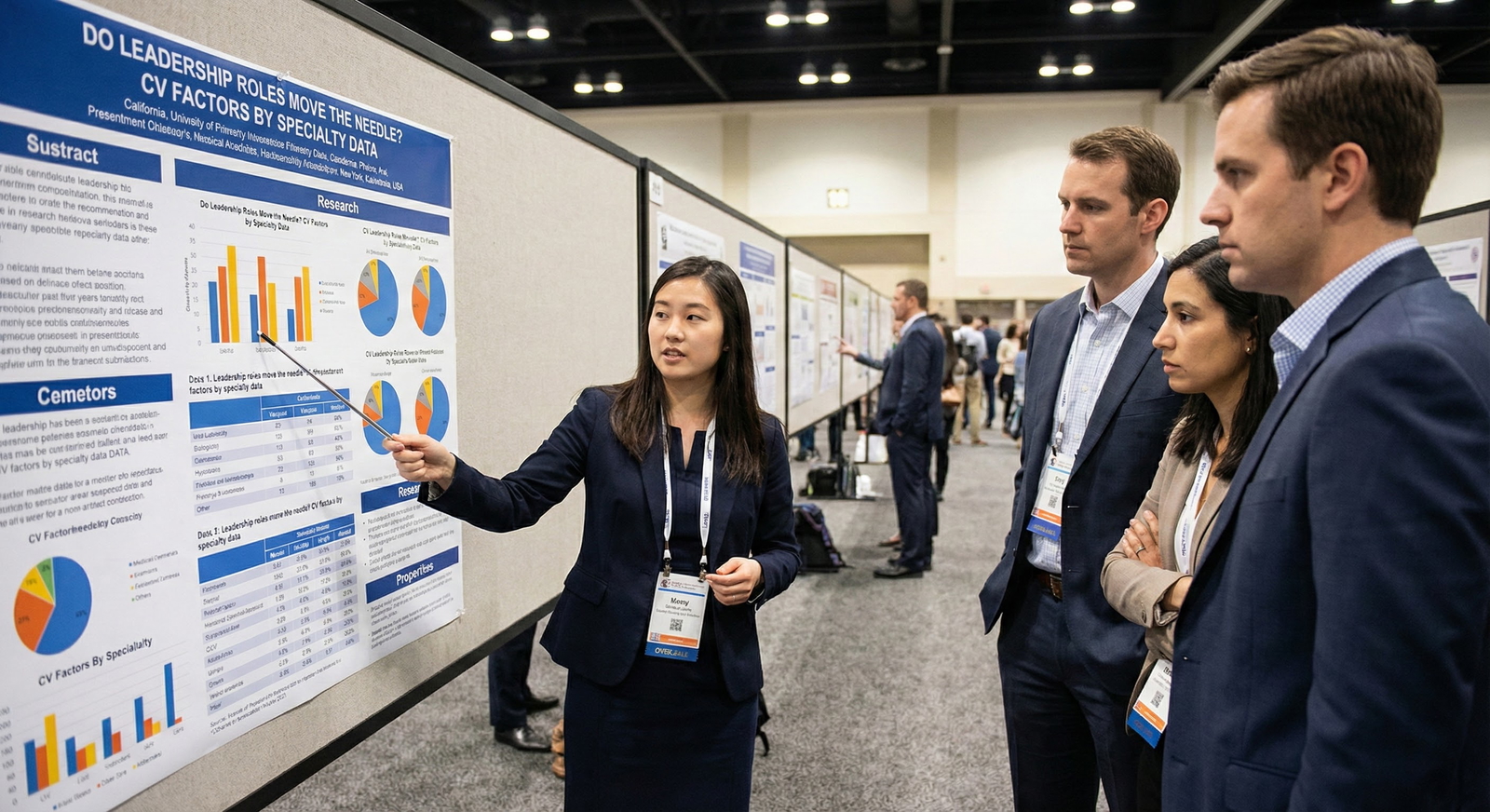
- Conference Presentations (Oral/Poster)
- Ongoing Projects
- Abstracts/Preprints/Book Chapters
IR and IR-Adjacent Topics
Even if not pure IR, emphasize related areas:
- Vascular disease
- Oncology (especially interventional oncology)
- Hepatology (portal hypertension, HCC)
- Critical care, sepsis, bleeding
- Nephrology (dialysis access, renal interventions)
Use bold formatting to highlight IR connectivity:
“Prospective analysis of outcomes after endovascular management of peripheral arterial disease in a resource-limited setting”
Add 1–2 bullet points to describe your role:
- Designed data collection forms and extracted imaging and outcome data for 120 patients.
- Performed basic statistical analysis (SPSS) and co-authored manuscript.
If You Have Limited Research
You can still build a credible scholarly profile:
- Case reports on patients undergoing IR procedures.
- Retrospective chart reviews in vascular or oncology wards.
- QI projects improving referral patterns or peri-procedural anticoagulation.
Start small but finish projects; programs care more about completed outputs than “ongoing” items that never materialize.
Authorship Order and Transparency
Be honest about authorship order and role. IR faculty often collaborate across institutions; misleading claims are easily uncovered and damaging.
Demonstrating Leadership, Teaching, and Professionalism
7. Teaching & Leadership
IR is team-based and increasingly outpatient-focused. Programs value residents who can teach, lead, and communicate.
Include:
- Teaching roles:
- Tutor for junior medical students.
- Anatomy or radiology small-group facilitator.
- Ultrasound or procedural skills workshops.
- Leadership roles:
- Founder or leader of a radiology/IR interest group.
- Chief intern or rotation leader.
- Organizer of journal clubs or case conferences.
Example:
Founder, Student Interventional Radiology Interest Group, University of Example Medical School
2019–2021
- Organized 6 IR-focused lectures with local interventional radiologists (average attendance: 60 students per event).
- Coordinated hands-on ultrasound and vascular access workshop using simulation models.
This supports the narrative that you are IR-committed and a future academic leader.
8. Awards & Honors
Awards show excellence and consistency. Highlight:
- Academic or exam-based awards (top-of-class, distinction).
- Research awards (best poster, oral presentation prizes).
- Teaching or leadership awards.
If any award is IR or radiology-specific, showcase it prominently.
Example:
- Best Clinical Poster, Radiology Residents’ Research Day, XYZ Hospital – “Outcomes of TACE in HCC Patients with Child-Pugh B Cirrhosis” (2023).
Even smaller recognitions matter for an IMG—together they create a pattern of high performance.

Volunteer Work, Professional Memberships, and Skills that Matter in IR
9. Volunteer & Outreach
Volunteer work shows empathy and alignment with patient-centered care, crucial in IR where longitudinal relationships (e.g., oncology, dialysis) are key.
Especially relevant experiences:
- Health camps with ultrasound or screening components.
- Palliative care involvement.
- Rural outreach dealing with vascular disease or chronic conditions.
- Patient education projects (e.g., explaining procedures, risks, and follow-up).
Include 1–2 bullets focusing on communication and patient interaction.
Example:
Volunteer, Palliative Care Outreach Program, City Cancer Center
2018–2019
- Provided education to patients and families about minimally invasive palliative procedures (e.g., nerve blocks, biliary drainage) in collaboration with anesthesiology and radiology teams.
This frames you as a doctor who understands IR beyond the procedure—through the patient’s experience.
10. Professional Memberships
For your medical student CV and early-career residency CV:
- International/Regional IR societies: SIR, CIRSE, APSCVIR, etc.
- Radiology societies: RSNA, ESR, ACR.
- National medical associations.
If you are part of committees, trainee sections, or working groups, mention them:
- SIR Resident, Fellow, and Student (RFS) Section – Member since 2023
- Volunteer, SIR RFS Mentorship Program (Mentee)
Memberships, especially IR-specific, send a clear signal of sustained interest in the specialty.
11. Skills: Procedural, Technical, and Languages
This section can enhance your IR match competitiveness if used thoughtfully.
Procedural Skills
Avoid exaggeration; focus on basic procedural confidence:
- Central venous catheter placement (number performed/assisted).
- Arterial blood gas sampling.
- Lumbar puncture.
- Paracentesis, thoracentesis, joint aspiration (if applicable).
- Point-of-care ultrasound (POCUS) skills.
Phrase skills realistically:
- “Assisted in 30+ ultrasound-guided central line placements; independently performed 10 under direct supervision.”
Technical and Data Skills
IR is data-rich and image-intensive. Highly relevant:
- PACS/RIS familiarity.
- Basic image processing (e.g., OsiriX, RadiAnt).
- Statistical software: SPSS, R, Stata.
- Basic programming (Python, MATLAB) – especially for imaging or outcomes research.
- Experience with REDCap or other data management tools.
Languages
As an IMG, multilingual skills are valuable, especially in diverse patient populations. List:
- Native language(s).
- English (specify proficiency or test scores).
- Any additional languages at conversational or professional level.
Strategic CV Building Timeline for IMGs Targeting Interventional Radiology
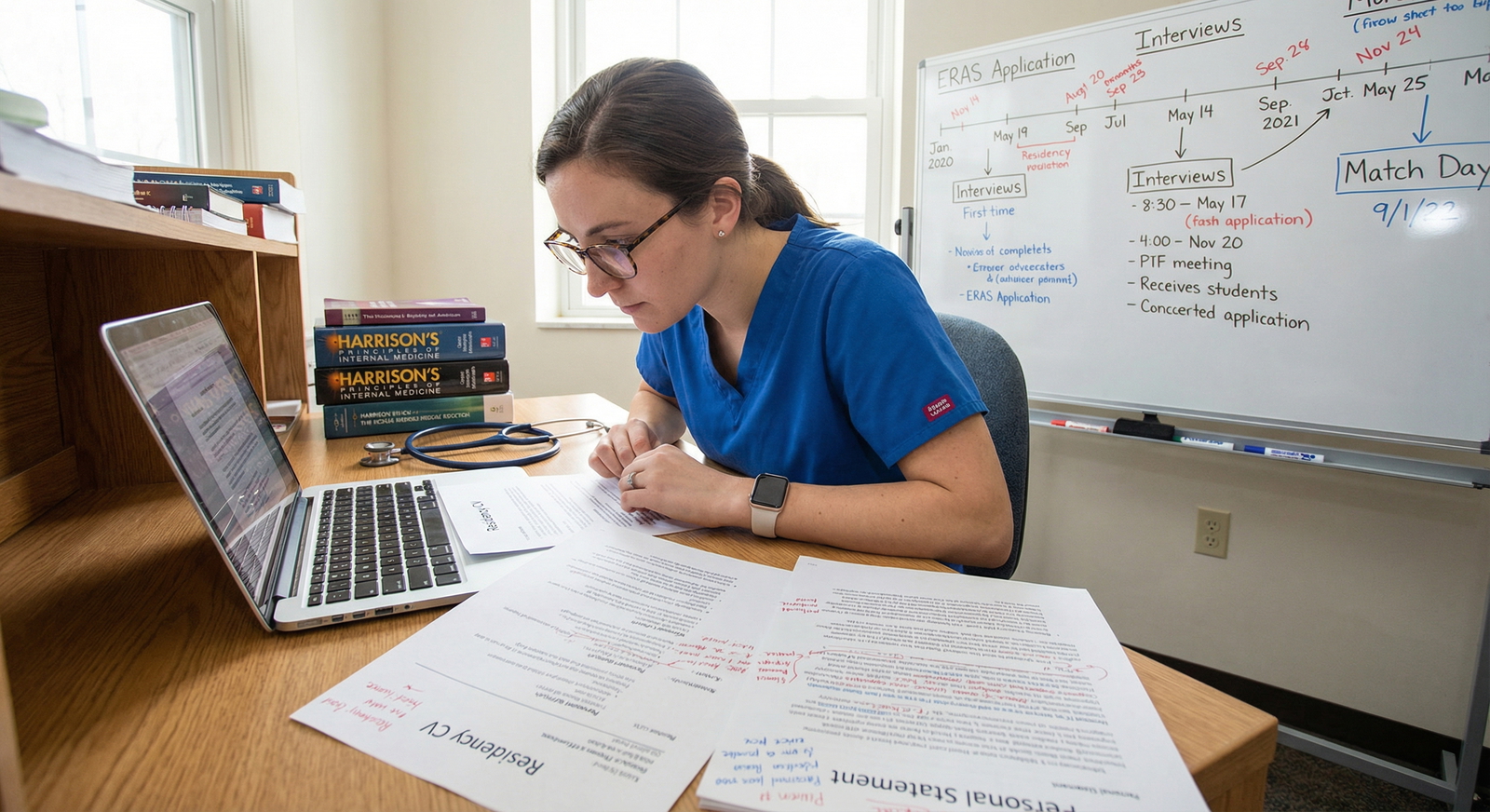
If you are 1–3 years from applying, you can still systematically build your IR-focused CV.
18–24 Months Before Application
- Secure USMLE (or equivalent) exam success – aim to complete at least Step 1/Step 2 CK early.
- Begin or join IR-related or vascular/oncology research (even if retrospective or single-center).
- Join IR societies (SIR/CIRSE) and their student or trainee sections.
- Start identifying potential IR mentors (especially in your target country).
12–18 Months Before Application
- Arrange IR observerships at academic centers, preferably 2–3 blocks of 2–4 weeks.
- Aim to submit at least one abstract to IR or radiology conferences.
- Take part in QI projects related to IR pathways, imaging protocols, or peri-procedural workflows.
- Sharpen English communication skills (present in journal clubs, prepare case discussions).
6–12 Months Before Application
- Finalize and submit manuscripts and conference presentations.
- Ensure you have strong, IR-focused letters of recommendation from your observerships or research mentors.
- Polish your residency CV with:
- Clear IR-dedicated section.
- Updated research and publications.
- Concise, outcome-focused bullet points.
0–6 Months Before Application
- Avoid adding low-value, last-minute activities just for “filling CV space.”
- Focus on:
- Completing existing projects.
- Demonstrating stability and continuity in IR involvement.
- Practicing how to discuss your CV in interviews (know your projects and experiences deeply).
By aligning your activities with this timeline, you transform your CV from a list of experiences into a strategic narrative of becoming an interventional radiologist.
Common CV Mistakes IMGs Make in IR Applications (and How to Fix Them)
Generic “Radiology” CV with Minimal IR Signal
- Fix: Create a dedicated Interventional Radiology Experience section; explicitly link research and electives to IR.
Overcrowded, Unstructured Entries
- Fix: For each role, limit to 2–4 high-yield bullet points emphasizing outcomes and responsibilities.
Unverifiable or Inflated Contributions
- Fix: Be conservative and accurate about procedures logged, authorship, and responsibilities. Integrity matters more than volume.
Weak or Missing U.S./Target-System Experience
- Fix: Prioritize observerships, research fellowships, or short clinical experiences to demonstrate system familiarity.
No Clear “Trajectory” Toward IR
- Fix: Use your section order and wording to create a visible pathway: clinical foundation → IR exposure → IR-related research → IR leadership/teaching.
FAQs: CV Building for IMGs in Interventional Radiology
1. How early should I start building my CV for an IR residency as an IMG?
Ideally 18–24 months before you apply. IR is competitive, so you need time to:
- Complete relevant exams.
- Arrange IR observerships in your target country.
- Participate in meaningful research and get at least one or two concrete outputs (abstracts, posters, or publications). Starting early allows your CV to show continuous, deepening involvement in IR rather than last-minute interest.
2. I don’t have access to IR in my home country. How can I still build an IR-focused CV?
You can still create a strong profile by:
- Doing research or QI in IR-adjacent fields (vascular medicine, oncology, hepatology, ICU).
- Arranging short-term IR observerships abroad (even 2–4 weeks per block).
- Joining IR societies and attending virtual conferences.
- Writing case reports on patients who eventually underwent IR procedures elsewhere.
- Highlighting procedural experience in surgery, ICU, and emergency medicine as your technical foundation for IR.
Frame this as: “Despite limited local IR resources, I proactively sought IR exposure through…”
3. How many publications do I need to be competitive for IR as an IMG?
There is no strict number, but for a competitive IR match as an IMG, aiming for:
- 1–3 IR or IR-related abstracts/posters and
- 1–2 publications (case reports or original research)
is helpful. Quality and relevance to IR or acute/procedural medicine matter more than raw quantity. A few well-done projects where you had a clear role are better than a long list of minimally involved co-authorships.
4. Should I include non-medical work or activities on my IR residency CV?
Include non-medical work if it demonstrates skills that translate to residency:
- Leadership (team manager, project coordinator).
- High-responsibility roles (e.g., airline pilot, engineer).
- Teaching or communication-heavy positions.
Present them briefly, emphasizing transferable professional skills (teamwork, time management, problem-solving). Avoid overemphasizing unrelated experiences that distract from your core medical and IR trajectory.
By applying these strategies and residency CV tips, you can transform your CV from a generic medical student CV into a focused, compelling profile that makes sense to IR program directors: an international medical graduate with clear commitment, relevant skills, and genuine potential in Interventional Radiology.