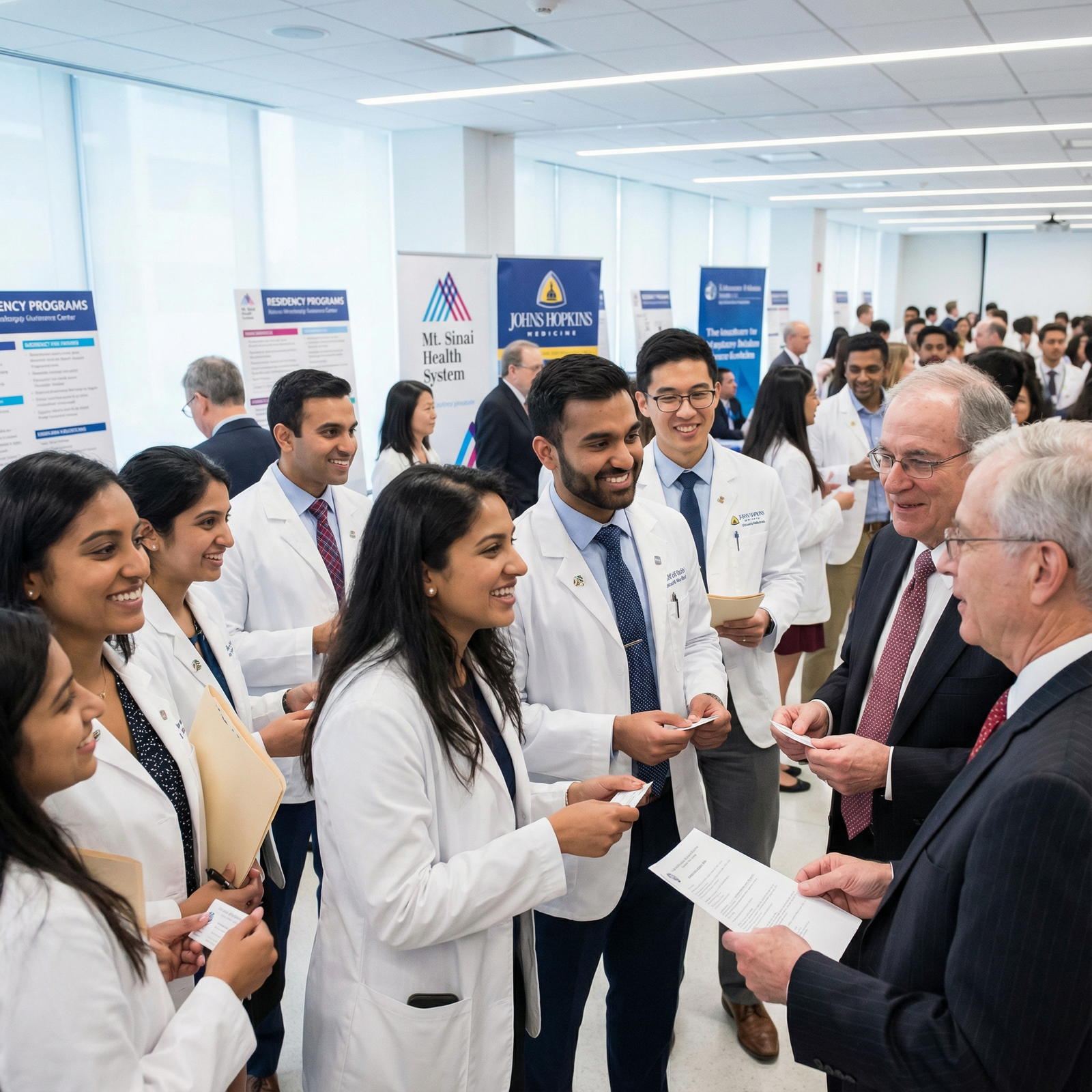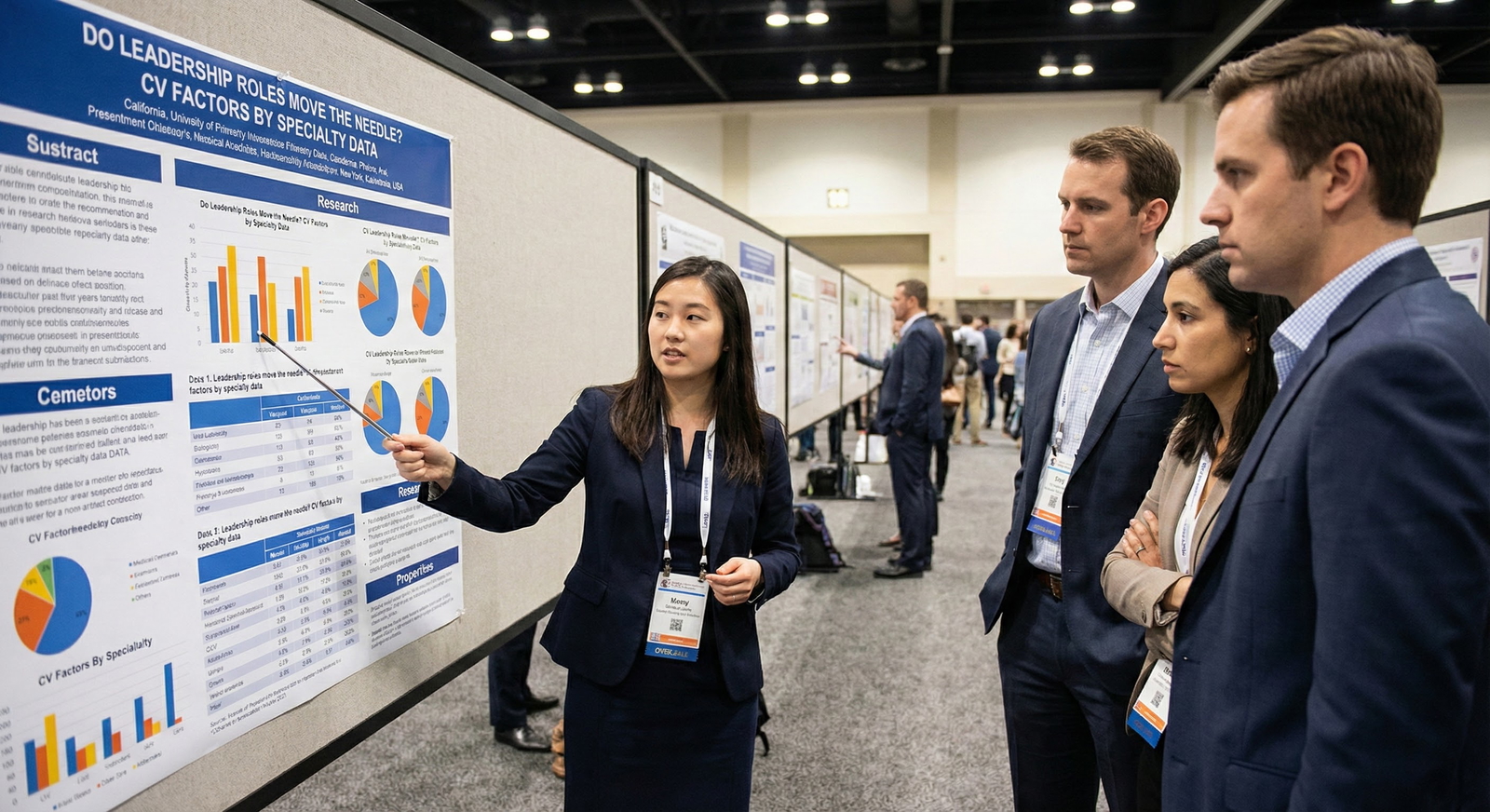
Understanding the Transitional Year Landscape as an IMG
A Transitional Year (TY) residency can be a powerful entry point into the U.S. system for an international medical graduate (IMG). It offers broad clinical exposure, time to strengthen your application for advanced specialties, and a chance to prove yourself in a new healthcare environment. However, because TY spots are relatively few and often competitive, your CV must be polished, targeted, and strategically crafted.
Most program directors will skim your medical student CV for less than a minute on the first pass. Your goal is to ensure that in those seconds, they can clearly see:
- You are a serious, motivated international medical graduate
- You understand the nature and purpose of a transitional year residency
- You will add value to their team from day one
- You have a trajectory that makes sense for a TY program (e.g., planning advanced training in anesthesia, radiology, dermatology, PM&R, neurology, etc., or still exploring)
This IMG residency guide focuses on how to build a CV for residency, specifically for Transitional Year programs, and tailored to the challenges and opportunities faced by IMGs.
Core Principles of a Strong TY CV for IMGs
Before diving into specific sections, anchor your residency CV tips around these core principles:
1. Clarity and Readability Come First
Program directors often review hundreds of applications. Your CV must be:
- Well-structured with clear headings and consistent formatting
- Easy to scan: short bullet points, not dense paragraphs
- Clean and professional: standard fonts, no graphics, no colors beyond basic black (or dark gray) text
Quick format checklist:
- Font: 10–12 pt (Calibri, Arial, Times New Roman)
- Margins: 0.5–1 inch
- Max length: 2–4 pages for most IMGs (longer education/training histories are acceptable, but avoid fluff)
- File name:
Lastname_Firstname_CV_2025.pdf
2. TY-Focused, Not Generic
A Transitional Year is distinct from categorical Internal Medicine or Surgery:
- It emphasizes broad-based clinical exposure
- It values adaptability, teamwork, and interdisciplinary collaboration
- Many TY residents are headed for advanced specialties and use TY to build strong clinical foundations
Your CV should reflect:
- Breadth of experience: rotations in multiple core disciplines
- Adaptability: evidence you can work in different settings, systems, and teams
- Future direction: a coherent plan for how TY fits your long-term goals
3. IMG-Specific Strategy
As an international medical graduate, your CV also needs to reassure programs about:
- Clinical readiness in the U.S. system (via observerships, externships, or U.S. clinical experience)
- Communication skills (highlight English proficiency, teaching, presentations)
- Reliability and professionalism (long-term commitments, leadership roles, consistent responsibility)
Where your background differs from U.S. graduates (e.g., older graduation date, non-clinical gaps, different grading systems), your CV should:
- Be transparent (no omission of graduation dates, degrees, or employment)
- Be explanatory but concise in how you frame experiences
- Focus on progress and growth rather than just listing positions
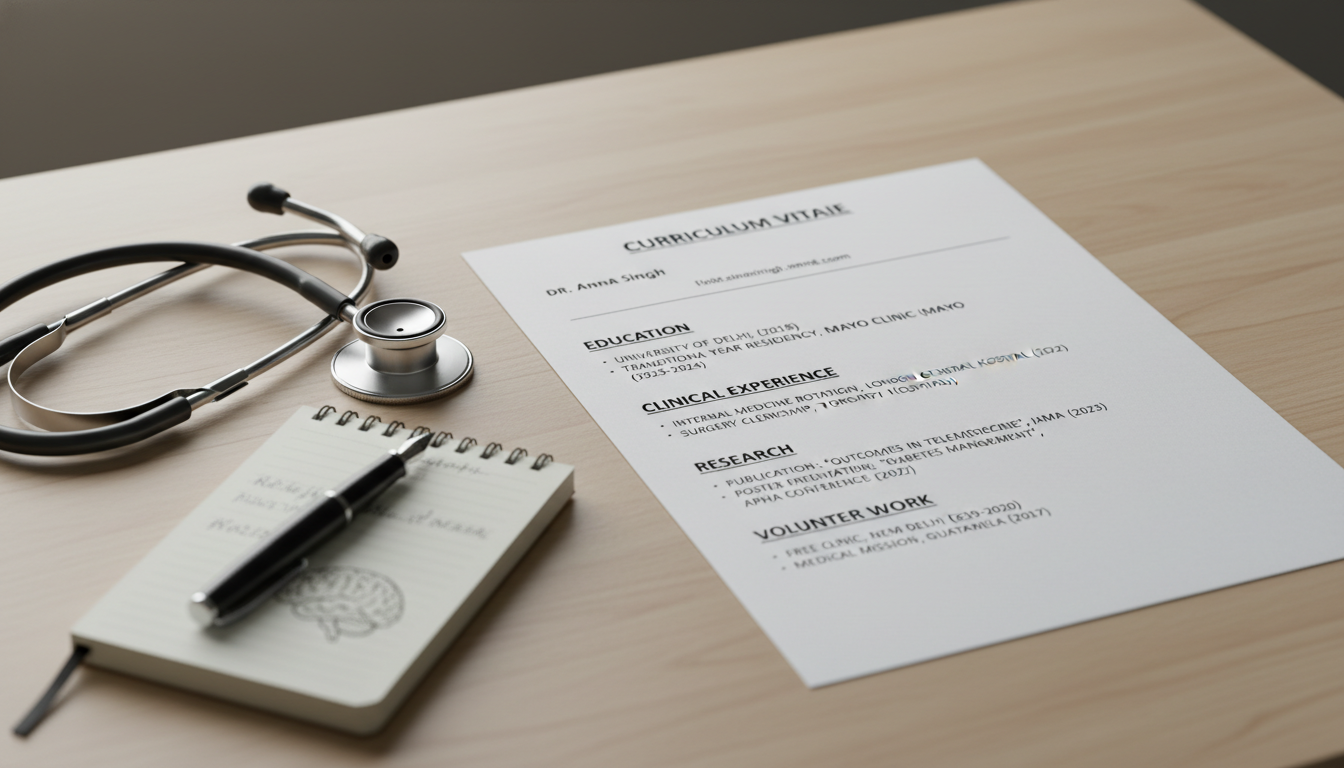
Essential Sections of a Transitional Year CV (and How to Optimize Them)
1. Contact Information and Professional Summary (Optional)
Contact Information (Must-Have):
Place at the very top:
- Full name (bold, larger font)
- Current address (U.S. address if you have one; if not, your home country)
- Email (professional: firstname.lastname@…)
- Phone (include country code)
- ERAS AAMC ID (when available)
- LinkedIn URL (optional, only if complete and professional)
Professional Summary (Optional but Useful for IMGs)
A 2–3 line summary can help contextualize your journey, especially if you:
- Have a non-linear path
- Are several years out from graduation
- Are pivoting from another specialty or research
Example summary for an IMG applying TY:
International medical graduate (Class of 2019) with two years of clinical experience and recent U.S. observerships in internal medicine and surgery. Interested in Transitional Year residency as a foundation for future training in anesthesiology, with a strong focus on patient safety, cross-cultural communication, and quality improvement.
2. Education
List in reverse chronological order:
- Medical school (full official name, city, country)
- Degree (e.g., MD, MBBS, MBChB)
- Graduation date (month/year)
- Class rank or distinctions if available (e.g., “Top 5% of class,” “First Class with Distinction”)
- Any post-graduate degrees (MSc, MPH, PhD) or diplomas
Residency CV tips for IMGs in education section:
- If your school uses non-standard grading, you can add a brief clarification:
“Graduated with First Class Honours (equivalent to high distinction).” - If you have an older graduation year, consider adding recent clinical/academic activities under Clinical Experience or Continuing Education/CME to show you are up to date.
3. USMLE and Licensure (If Applicable)
Though USMLE scores are often entered separately in ERAS, many CVs include:
- USMLE Step 1 (Pass / Score if you choose to list)
- USMLE Step 2 CK (Score and date)
- USMLE Step 3 (if taken)
- ECFMG certification status and date
- Any state limited licenses or trainee licenses (if already obtained)
For Transitional Year programs, strong Step 2 CK performance can be particularly reassuring for IMGs. If scores are a strength, list them. If not, you can simply note “Passed” where appropriate (if allowed by the application system; on a standalone CV, you have more flexibility than in ERAS).
4. Clinical Experience: The Heart of Your TY CV
This is your most important section for a Transitional Year application. Separate it into:
- U.S. Clinical Experience (USCE)
- International Clinical Experience (medical school rotations, internships, residency abroad)
A. U.S. Clinical Experience
For each position, list:
- Role: Clinical Extern, Sub-Intern, Observer, Research Assistant with Clinical Exposure, etc.
- Specialty and setting: e.g., “Internal Medicine – Inpatient Service”
- Institution and location: “ABC University Hospital, New York, NY”
- Dates (month/year – month/year)
- 3–5 focused bullet points highlighting:
- Patient care responsibilities
- Teamwork in interprofessional environments
- Exposure to U.S. healthcare system (EMR, multidisciplinary rounds, etc.)
- Any quality improvement (QI) or teaching you contributed to
Example bullets aligned with TY expectations:
- Participated in daily multidisciplinary rounds on a 20-bed internal medicine service, presenting 2–4 patients per day under supervision.
- Performed focused histories and physical exams, drafted admission and progress notes in the EMR, and presented assessment and plan to the attending.
- Observed and assisted with transitions of care, including discharge planning and coordination with social work and case management.
- Participated in morbidity and mortality conferences, identifying system-level issues in patient safety.
Tie experiences to skills important for a broad-based transitional year: communication, adaptability, collaboration across specialties, managing common inpatient conditions.
B. International Clinical Experience
Include:
- Internship/house job (if applicable)
- Mandatory rotations during medical school
- Any completed residency in your home country (be transparent if you started a specialty and are changing paths)
For each:
- Role and level: “Rotating Internship (Intern Physician)”
- Departments and main responsibilities
- Key achievements (e.g., awards, leadership, teaching junior students)
Avoid:
- Over-emphasizing highly subspecialized work that doesn’t relate to foundational clinical skills
- Long lists of minor procedures without context
Do:
- Highlight variety: internal medicine, surgery, emergency, pediatrics, OB/GYN
- Emphasize skills relevant to primary inpatient care and cross-disciplinary collaboration
Building Supporting Strengths: Research, Leadership, and Service
Transitional Year programs vary: some are more academic, others more community-based. A strong medical student CV for TY residency should present you as a well-rounded physician-in-training.

1. Research and Scholarly Activity
Not all TY programs demand research, but it can significantly strengthen your application, particularly if:
- You aim for a competitive advanced specialty (dermatology, radiology, anesthesiology, etc.)
- You have a research-oriented background or degree
List in order:
- Peer-reviewed publications (published or in-press)
- Abstracts and conference presentations (poster/oral)
- Book chapters or significant reports
Format each entry in standard citation style. Include:
- Authors (Last name, Initials; bold your name)
- Title
- Journal or conference name
- Year and volume/issue if applicable
- Status (Published, In-press, Submitted) — be honest
Emphasize TY-relevant themes when possible:
- Quality improvement
- Patient safety
- Medical education
- Systems-based practice
- Multidisciplinary care
If you lack formal publications, include:
- Ongoing projects
- Audit/QI projects from your clinical work
- Capstone or thesis projects
Example of a QI project entry:
Smith J, Kumar P, Lee A. Reducing 30-day readmissions for heart failure through standardized discharge education: a quality improvement project. Department of Internal Medicine, XYZ Hospital, 2023.
2. Teaching and Leadership Experience
Transitional Year residents are often valuable as educators and team organizers, especially on busy services. For IMGs, this section also shows communication skills and initiative.
Include:
- Teaching roles: small group facilitator, OSCE tutor, anatomy demonstrator, USMLE tutor
- Leadership positions: class representative, committee member, chief intern, organizer of student clubs or conferences
Each entry should include:
- Role/title
- Organization/institution
- Dates
- 2–3 bullets with concrete impact (numbers when possible)
Example bullets:
- Organized and led weekly clinical case discussions for 15 third-year medical students, focusing on differential diagnosis and management.
- Served as class representative for 120 students, mediating communication between students and faculty to resolve scheduling and assessment concerns.
3. Volunteer Service and Community Engagement
Programs value residents who understand service, especially in diverse or underserved communities. As an IMG, this can also demonstrate adaptability and cultural competence.
Examples:
- Free clinic volunteering
- Health fairs or screening camps
- COVID-19 vaccination or hotline work
- Mental health or public health outreach
Describe your role, not just the event:
- “Coordinated intake for ~30 patients per clinic session, assisting with history taking and education on chronic disease management.”
For a Transitional Year, community engagement shows:
- Willingness to work beyond minimum requirements
- Comfort interacting with patients from varied backgrounds
- Alignment with many TY programs’ mission to serve diverse populations
Tailoring Your CV Specifically for Transitional Year as an IMG
The biggest mistake many IMGs make is using a generic residency CV for every program. A strong IMG residency guide approach is to subtly tailor your CV—especially your experience descriptions and ordering—to what TY programs care about.
1. Emphasize Breadth and Flexibility
A TY program is not just internal medicine. Show that you:
- Have rotated in multiple core specialties (IM, surgery, ER, pediatrics, OB/GYN)
- Are comfortable moving between services and teams
- Enjoy variety and can adapt your communication to different disciplines
Actionable tip:
Group select experiences under subheadings like:
- “Broad Clinical Rotations”
- “Cross-Disciplinary Clinical Exposure”
This signals you understand what a transitional year residency is about.
2. Align With Your Target Advanced Specialty (Without Overshadowing TY)
Many TY programs know their residents are headed to specific specialties. If you have an advanced match in anesthesia, radiology, etc., or a strong interest, it can help them imagine your trajectory.
How to do this without undermining your fit for TY:
- Briefly reference your goal in your Professional Summary or Career Interests section.
- In research or electives, show some alignment with that specialty.
- Still emphasize your enthusiasm for the foundational clinical year and broad rotations.
Example “Career Interests” entry:
Career Interests: Transitional Year residency with subsequent advanced training in Anesthesiology. Long-term interest in perioperative medicine, patient safety, and simulation-based education.
3. Demonstrate Systems-Based and Interprofessional Skills
TY residents often interface with:
- Multiple departments (medicine, surgery, radiology, anesthesia, etc.)
- Case managers, social workers, pharmacists, and therapists
In your experience bullets, highlight:
- Participation in multidisciplinary rounds
- Discharge planning
- Coordination of care and interprofessional communication
- Use of EMRs and standardized protocols
This directly maps to ACGME competencies that TY programs evaluate.
4. Address IMG-Specific Concerns Subtly but Confidently
If you are:
- Several years out from medical school
- Changing specialties
- Coming from a system unfamiliar to U.S. faculty
Use your CV to show:
- Continuity of clinical or academic involvement (no unexplained long gaps)
- Recent upskilling (USCE, CME, recent exams, certifications like BLS/ACLS)
- Integration into the U.S. system (observerships, research positions at U.S. institutions, U.S.-based volunteering)
You do not need to justify everything in the CV itself—that is what your personal statement can do—but your CV should not raise unnecessary questions.
Practical Steps: How to Build Your CV for Transitional Year Residency
Step 1: Audit Your Existing Experiences
List everything relevant you have done since starting medical school:
- All rotations, internships, and residencies
- Externships/observerships (U.S. and elsewhere)
- Research projects and publications
- Volunteer and leadership roles
- Teaching and tutoring
- Certifications and courses (BLS/ACLS, ATLS, NIH GCP, HIPAA, CME)
Then assign each item a category:
- Strong clinical relevance for TY
- Secondary relevance (research, teaching, leadership)
- Low relevance (only include if needed for continuity or explanation)
Focus your CV space and detail on the strong clinical relevance experiences.
Step 2: Translate Duties into Competencies
For every position, use bullets that show:
- Clinical skills: patient assessment, management, procedures (within scope)
- Communication: presentations, handoffs, patient education
- Professionalism: reliability, responsibility, initiative
- Systems awareness: EMR use, protocols, QI projects
Rather than writing:
- “Worked in internal medicine ward.”
Write:
- “Managed a panel of 8–10 inpatients daily under supervision, including admission H&Ps, daily progress notes, and discharge summaries.”
Step 3: Remove Redundancy and Fluff
Residency program directors often complain about CVs that:
- Repeat the same duties with different wording
- List trivial tasks (e.g., “Observed doctor-patient interactions” as a main point)
- Overemphasize very short experiences
Condense:
- Combine similar minor experiences into a single “Additional Clinical Exposure” or “Additional Activities” section.
- Focus detail on 5–7 key roles that best demonstrate readiness and fit.
Step 4: Adapt for Different Program Types (Without Rewriting Completely)
You won’t create a different CV for every program, but you can slightly tailor for:
- Academic TY Programs: emphasize research, teaching, QI, conference presentations.
- Community TY Programs: emphasize hands-on clinical responsibilities, patient volume, work ethic, and community service.
Minor adjustments could include:
- Reordering sections (e.g., Research higher vs. lower)
- Adding or expanding a bullet related to QI or community work
Step 5: Proofread, Peer Review, and Standardize
Have:
- A mentor or senior resident (ideally someone familiar with U.S. applications) review your CV
- Someone check for English grammar and clarity
Use consistent formatting for:
- Dates (e.g., Aug 2021 – Jun 2022, not mixing with 08/2021–06/22)
- Bullet style (all full sentences vs. all fragments)
- Capitalization of headings and roles
Frequently Asked Questions (FAQ)
1. How long should my CV be as an IMG applying for a Transitional Year program?
Most IMGs will have 2–4 pages depending on:
- Length of training and graduation year
- Amount of research and scholarly work
- Prior residencies or degrees
Do not artificially limit yourself to one page (that’s common in other industries, not medicine), but also avoid including everything you have ever done. Prioritize relevant, recent, and impactful experiences, especially those that demonstrate clinical readiness and adaptability.
2. I have limited U.S. clinical experience. How can I still build a competitive TY CV?
You can strengthen your CV by:
- Maximizing detail and clarity about your home-country clinical responsibilities
- Highlighting any exposure to U.S. systems (even short observerships)
- Including online CME, U.S.-based case-discussion groups, and relevant certifications
- Emphasizing universal competencies: patient safety, teamwork, communication, QI, teaching
Whenever possible, try to obtain at least some meaningful USCE (even 1–3 months) before you apply, and ensure it is clearly described on your CV.
3. Should I list all of my publications and presentations, even if they are not clinically oriented?
List all legitimate, verifiable scholarly work, but prioritize relevance and clarity:
- Place clinically oriented or directly relevant research higher in the list
- For less relevant topics (e.g., basic science or non-medical), you can still include them in the same section, but avoid overemphasis
- If the list is very long, you can create a subsection like “Selected Publications and Presentations” to keep the CV manageable
Academic TY programs may value any demonstration of scholarly ability; community programs will care more about your clinical skills but still appreciate evidence of discipline and achievement.
4. How do I address gaps or career changes on my CV as an IMG?
On the CV itself:
- Be accurate with dates
- Include what you actually did during the gap (e.g., exam preparation, research assistant, family responsibilities, clinical observer roles)
If you had a non-clinical period, you can list it under an appropriate heading:
- “Research and Exam Preparation”
- “Clinical Research Fellowship”
- “Family Care Responsibilities (Full-Time)”
You don’t need to provide a long explanation on the CV; save that for your personal statement or interview. The key is to avoid unexplained blank years and demonstrate that you have regained or maintained clinical relevance since then.
By applying these structured strategies, you can transform your medical student CV into a targeted, persuasive document tailored to Transitional Year residency programs. As an international medical graduate, a thoughtful, well-organized CV is one of your strongest tools to communicate readiness, professionalism, and the value you will bring to a TY program—and to your future advanced specialty.