Understanding the Radiation Oncology Residency CV Landscape as an IMG
Radiation oncology is one of the most competitive specialties in the Match, and for an international medical graduate (IMG), the bar is even higher. Program directors receive hundreds of applications for just a few positions, and your CV is the structured narrative that tells them who you are, what you’ve done, and how you will contribute to their program.
Unlike a generic medical student CV, a strong radiation oncology residency CV must clearly show:
- Academic excellence and strong test performance
- Genuine, sustained interest in radiation oncology
- Research productivity (ideally with oncology or imaging relevance)
- Comfort with technology and data (e.g., dosimetry, treatment planning, informatics)
- Professionalism, communication, and teamwork skills
This IMG residency guide will walk you through how to build a CV for residency that is tailored to radiation oncology, with concrete residency CV tips designed specifically for international medical graduates.
CV vs. ERAS Application: What Really Matters?
In the U.S., program directors primarily review your ERAS application, which has a standardized structure. However:
- Many programs still request a separate PDF CV for away rotations, research positions, or preliminary program applications.
- Fellowship directors, mentors, and faculty you email will often read your CV first.
- A polished CV helps you organize your ERAS content and ensures consistency across all application materials.
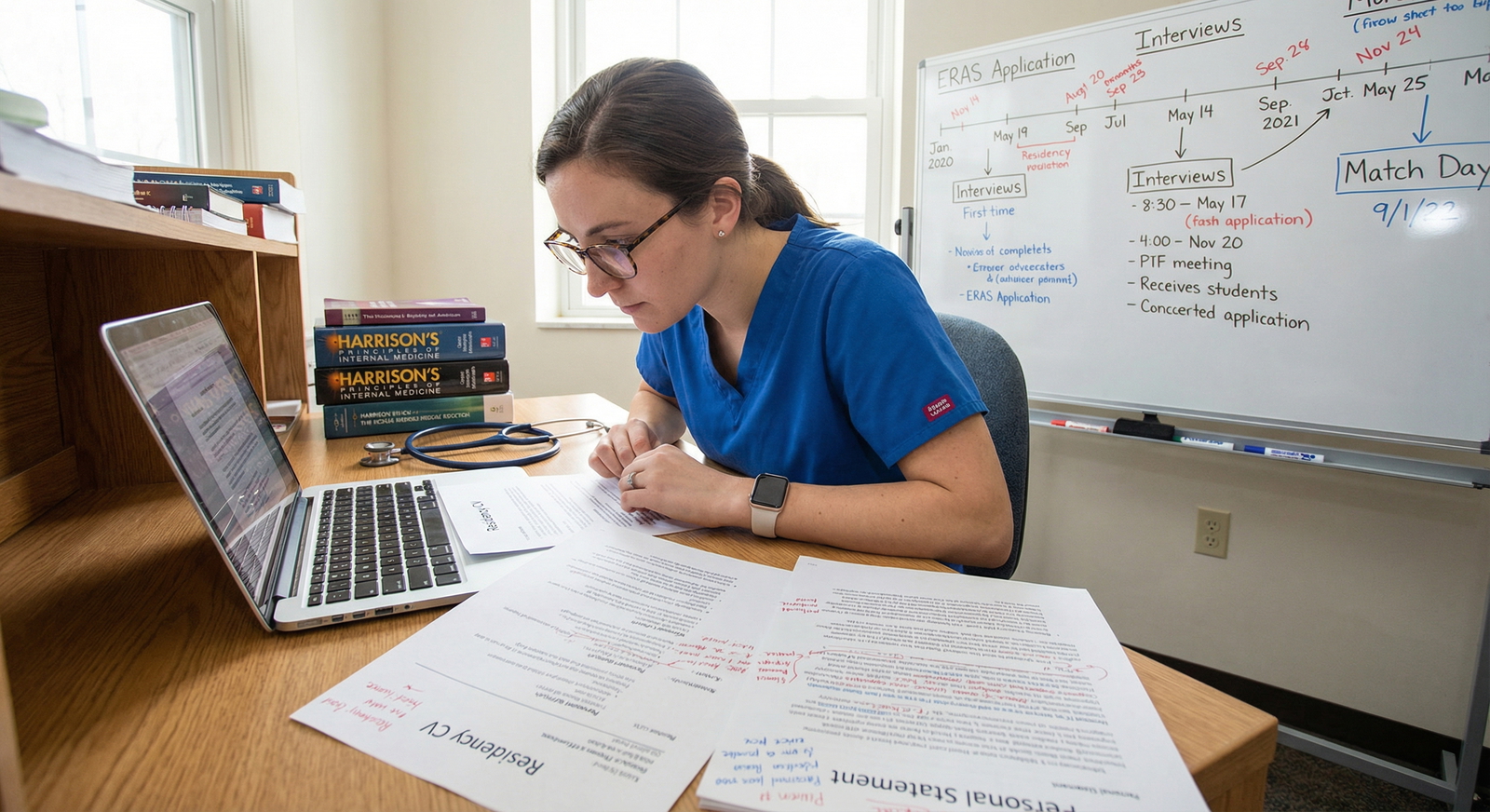
Think of your CV as your master document that feeds into ERAS, your personal statement, LinkedIn, and any emails or networking conversations.
Foundations: Structure and Formatting for a Strong IMG Residency CV
Essential Sections for a Radiation Oncology Residency CV
Most program directors and academic mentors expect the following order:
- Contact Information
- Education
- Medical Licensure & Exams
- Clinical Experience (including U.S. clinical experience)
- Research Experience
- Publications, Presentations & Abstracts
- Teaching & Leadership Experience
- Honors & Awards
- Professional Memberships
- Skills (technical, languages, software)
- Volunteer & Community Service
- Personal Interests (brief but purposeful)
For IMGs, it’s especially important to keep structure standard and intuitive so reviewers can quickly find what they’re looking for.
Formatting Principles That Signal Professionalism
- Length: 2–4 pages is typical for an IMG applying in a research-heavy field like radiation oncology.
- Font: Use a clean, readable font (e.g., Calibri, Arial, Times New Roman, 10.5–12 pt).
- Consistency: Dates, locations, and titles should follow the same format throughout.
- Reverse chronological order: Most recent entries first in each section.
- File naming: Use something professional like
Lastname_Firstname_CV_RadOnc.pdf. - No graphics or colors: Research and academic CVs should be conservative and text-based.
Tailoring for Radiation Oncology
When you think about how to build CV for residency in a technical specialty like rad onc:
- Highlight experiences with technology, imaging, physics, dosimetry, statistics, and coding.
- Emphasize longitudinal interest in oncology (even if not radiation-specific at first).
- Connect your previous work (e.g., general oncology, radiology, surgery, palliative care) to skills valued in radiation oncology: precision, multidisciplinary care, communication, data interpretation.
Crafting Each Section Strategically for the Rad Onc Match
1. Contact Information & Professional Identity
Include:
- Full name, medical degree (e.g., MD, MBBS)
- Email (professional, not casual), phone number
- Current address (optional)
- LinkedIn profile (if well-maintained and consistent with your CV)
- Optional: ERAS AAMC ID once assigned, if sending to U.S. faculty or programs
Do not include: marital status, age, photo, or personal identifiers beyond what’s standard in the U.S.
2. Education: Clarifying Your IMG Background
Radiation oncology program directors want to understand:
- Your medical school and graduation date
- Any additional degrees (MSc, PhD, MPH, etc.), especially research-focused
- If your medical school is lesser-known in the U.S., provide context through achievements.
Format example:
Doctor of Medicine (M.B.B.S.)
XYZ Medical College, Country
Graduation: Month Year | GPA: X.X/4.0 (if strong and convertible)Master of Science in Clinical Oncology (if applicable)
ABC University, Country
Thesis: “Title Related to Radiation, Imaging, or Cancer Care”
If your education system differs substantially:
- Avoid overwhelming detail; instead, emphasize graduating with distinction, class rank, or national exam performance where possible.
3. Medical Licensure & Exams: Building Trust in Clinical Competence
For an international medical graduate, exam performance is closely scrutinized. In your IMG residency guide, this is non-negotiable:
Include:
- USMLE Step 1, Step 2 CK, and (if taken) Step 3 with scores and dates.
- OET/IELTS/TOEFL scores if relevant to English proficiency.
- Any ECFMG certification or expected certification date.
Example:
- USMLE Step 1 – Passed, Month Year
- USMLE Step 2 CK – 2XX, Month Year
- ECFMG Certification – Completed Month Year
Even if scores appear in ERAS, they belong on a stand-alone CV used for research or networking. Radiation oncology is data-driven; numerically strong performance supports your application.
4. Clinical Experience: Highlighting Relevant and U.S. Exposure
Radiation oncology program directors will ask:
- Has this candidate worked in the U.S. system?
- Can they function on a multidisciplinary team?
- Do they understand oncology workflows?
Organize this section into:
A. U.S. Clinical Experience (If Available)
Include:
- Observerships in Radiation Oncology
- Electives/Sub-internships in Oncology or Related Fields (e.g., medical oncology, radiology, palliative care, surgical oncology)
- Any shadowing with a rad onc faculty member.
Example entry:
Clinical Elective – Radiation Oncology
Department of Radiation Oncology, University Hospital, City, State, USA
Month Year – Month Year
- Participated in contouring sessions and treatment planning discussions.
- Observed multidisciplinary tumor boards (breast, GI, and CNS).
- Assisted with literature reviews for patient cases and resident teaching sessions.
B. Home Country Clinical Experience
Organize by:
- Internship / House Officer rotations
- Residency-in-progress (if you trained in another specialty like internal medicine or radiology)
- Oncology-related work: cancer clinics, palliative care, radiation therapy units, etc.
Tailor descriptions to underscore rad onc-relevant skills:
- Precision, attention to detail
- Communication with complex patients
- Multidisciplinary collaboration
- Understanding of cancer staging, performance status, and prognosis
This is crucial for an IMG: show that your non-U.S. experience translates well to U.S. oncology practice.
Building a Research-Focused Rad Onc CV as an IMG
Radiation oncology is highly academic; program directors often prioritize applicants who have demonstrated research productivity and intellectual curiosity.
5. Research Experience: Making Your Work Legible and Impactful
For each research role, clearly define:
- Title/position: Research fellow, research assistant, clinical research coordinator, etc.
- Institution and department: Especially if it’s a well-known cancer center.
- Mentor: Name of supervising PI or attending (this helps networking).
- Dates: Month Year – Month Year.
- Focus: Identify the disease site or theme (e.g., prostate cancer, stereotactic radiosurgery, health outcomes, AI in radiotherapy).
Example:
Research Fellow – Radiation Oncology
Department of Radiation Oncology, XYZ Cancer Center, City, Country/USA
Supervisor: Dr. John Smith
Month Year – Present
- Retrospective analysis of outcomes in patients treated with hypofractionated radiotherapy for early-stage breast cancer.
- Collected and curated clinical and dosimetric data from institutional database.
- Co-authored abstract presented at ASTRO Annual Meeting (see below).
If your prior research is not in radiation oncology (e.g., cardiology):
- Emphasize research skills transferable to rad onc: study design, data analysis, R or Python coding, statistical modeling, imaging analysis, clinical trial work.
- Clearly show a trajectory: earlier generic research → later oncology-focused work.
6. Publications, Presentations, and Abstracts: Academic Currency
This section is critical in a radiation oncology residency CV. Organize it carefully:
- Peer-Reviewed Manuscripts (Published / In Press)
- Manuscripts Under Review (clearly labeled)
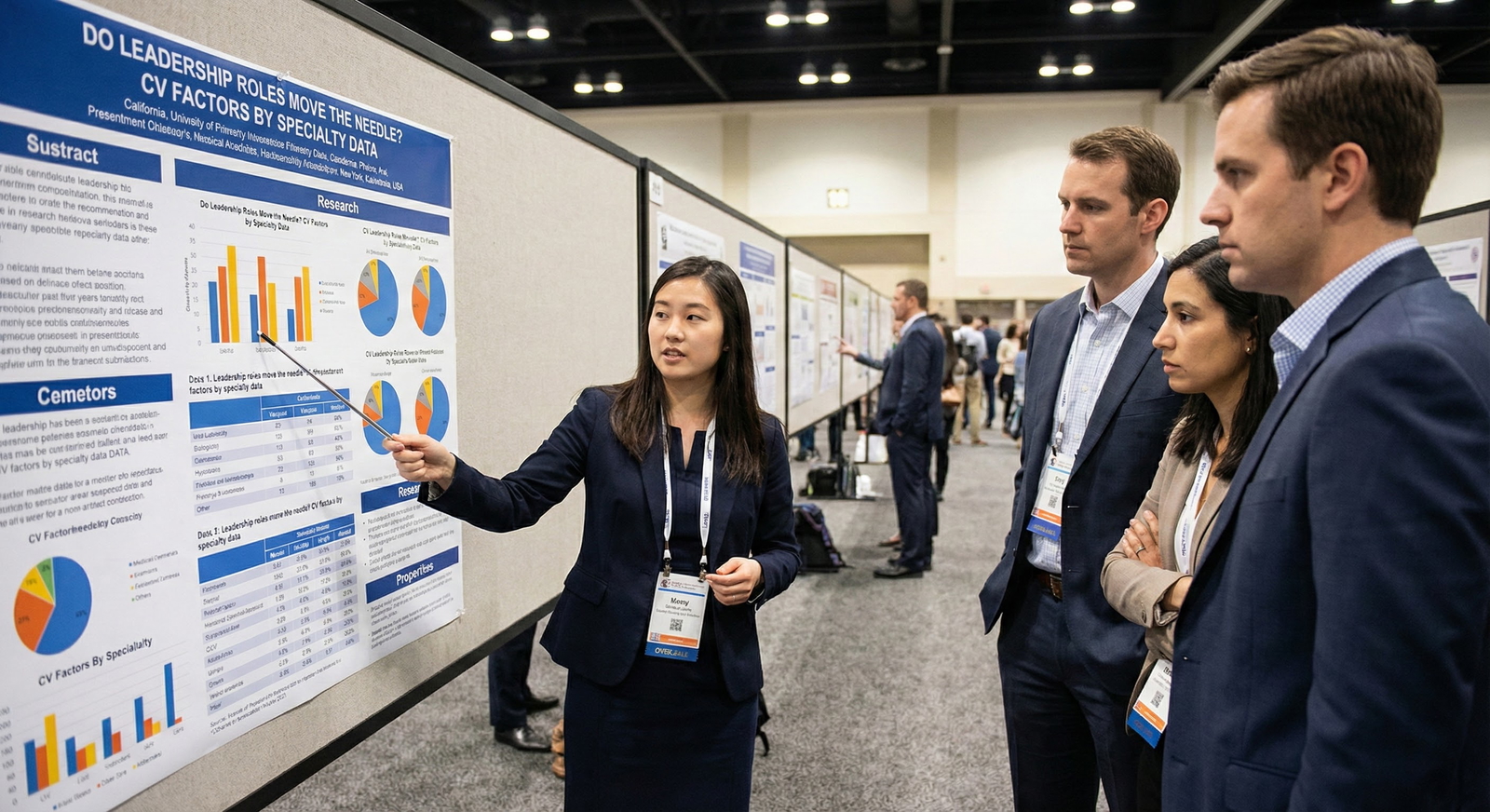
- Conference Abstracts & Posters
- Oral Presentations (invited talks, grand rounds)
Use a standard citation format (e.g., AMA) and highlight your name in bold.
Example:
- Doe J, Smith A, Ahmed R. Outcomes of hypofractionated whole breast radiotherapy in elderly patients: A single-institution experience. Int J Radiat Oncol Biol Phys. 2024;110(3):123–130.
For IMGs with less research:
- Start with case reports, review articles, or quality improvement projects.
- Even small contributions (poster at a national meeting) are valuable for the rad onc match.
- Be honest about authorship and status—do not list “submitted” unless truly submitted.
Demonstrating Leadership, Teaching, and Professionalism
Radiation oncology residents are expected to teach, lead, and communicate effectively—especially with anxious cancer patients and multidisciplinary teams.
7. Teaching & Leadership Experience
Radiation oncology involves constant teaching (to medical students, residents, therapists, nurses). As an international medical graduate, use this section to overcome any perceived communication barriers.
Examples:
Small Group Tutor – Anatomy and Radiology
XYZ Medical College
Month Year – Month Year- Led weekly sessions for 20 first-year medical students integrating anatomy and basic radiology.
- Developed visual aids and problem-based learning cases.
Chief Intern / House Officer
Department of Internal Medicine, ABC Hospital
Month Year – Month Year- Coordinated daily schedules for 10 interns, ensuring coverage for oncology and ICU services.
- Organized weekly case discussions and mortality review meetings.
Focus on:
- Communication skills
- Organization and time management
- Initiative in improving education or clinical systems
8. Honors, Awards, and Professional Memberships
Radiation oncologists are often academic leaders. Demonstrate that you have a similar drive.
Honors & Awards
Include:
- Class rank or “Top X%” distinctions
- Scholarships, exam medals, conference prizes
- Research awards, best poster/oral presentation, ASTRO or ASCO travel grants
Each entry should specify:
- Name of award
- Institution or organization
- Year and brief context (e.g., “Awarded to top 2 of 150 students”).
Professional Memberships
Memberships show commitment to the field:
- American Society for Radiation Oncology (ASTRO) – International Member
- American Society of Clinical Oncology (ASCO) – Member
- National or regional radiation oncology societies in your home country
If you have committee participation or leadership roles (e.g., in an oncology student group), list them here or under leadership.

Technical Skills, Volunteer Work, and Personal Interests: Differentiating Yourself
9. Skills: Showcasing a Tech-Savvy Cancer Doctor in Training
Radiation oncology is technologically intensive. This section is where IMGs can strongly differentiate themselves, especially if they have limited U.S. clinical exposure.
Break this into subcategories:
A. Clinical and Research Skills
- Contouring basics (if you have exposure)
- Familiarity with tumor staging systems (AJCC)
- Clinical trial coordination, REDCap, data management
- Interpreting CT/MRI/PET in oncologic contexts (as appropriate to your background)
B. Software and Technical Skills
Especially valuable:
- Statistical software: SPSS, R, Stata, SAS
- Programming: Python, MATLAB (particularly for imaging or dosimetry projects)
- Imaging tools: ImageJ, OsiriX, 3D Slicer
- Radiation oncology planning systems (only if genuine exposure): Eclipse, RayStation, Pinnacle, etc.
Be honest—do not list treatment planning software if you have not used them meaningfully. Instead, highlight your willingness to learn and your success with other complex tools.
C. Languages
As an international medical graduate, multilingual skills can be an asset:
- List language and proficiency level (fluent, native, professional working, basic).
- Emphasize utility for diverse patient populations (e.g., Spanish, Mandarin, Arabic, etc.).
10. Volunteer and Community Service: Humanism in Cancer Care
Oncology is emotionally demanding. Programs look for residents with empathy, resilience, and a service mindset.
Highlight:
- Hospice or palliative care volunteering
- Cancer support groups or patient navigation services
- Community screening or education campaigns (breast cancer awareness, tobacco cessation, HPV vaccination)
- Health education projects in underserved communities
Provide concise bullet points that show impact, not just hours:
- “Co-organized quarterly breast cancer awareness workshops reaching ~300 women in rural areas.”
- “Led patient education sessions on radiation side effects for breast and prostate cancer patients.”
This helps differentiate you from applicants with purely academic CVs.
11. Personal Interests: Strategic but Genuine
Residency program directors often look at this section to understand who you are as a person and whether you’ll mesh with their team.
Guidelines:
- Include 3–5 concise interests.
- Be specific (e.g., “Long-distance running (completed two half-marathons)” rather than “sports”).
- If possible, include interests that relate to resilience, discipline, or communication (e.g., endurance sports, performing arts, writing).
Avoid:
- Controversial topics (political activism, divisive issues).
- Overused clichés (“reading, traveling, music” without detail).
These interests often become great interview conversation starters, especially for IMGs who worry about cultural or conversational gaps.
Strategic Residency CV Tips Specifically for IMGs in Radiation Oncology
Show a Clear, Coherent Story
Program directors see many fragmented trajectories from international medical graduates. Your residency CV should tell a coherent story:
- Start: Strong medical school performance and early interest in oncology or imaging.
- Middle: Growing engagement with radiation oncology through electives, research, conferences.
- Now: Focused rad onc applicant with clear goals and mentor backing.
Check that:
- Your CV, ERAS application, and personal statement all reinforce the same narrative.
- There are no unexplained gaps—briefly account for any long breaks with neutral, factual descriptions (e.g., exam preparation, family reasons, research year).
Translate International Context into U.S.-Understandable Terms
Many reviewers will not know your school, grading system, or national exams. Use the CV to:
- Explain if you were in the top X% of your class.
- Reference nationally recognized achievements (“Ranked 15th of 10,000 candidates in national entrance exam”).
- Avoid jargon specific to your country (use “internship/house officer” instead of purely local titles).
Build U.S.-Recognized Radiaton Oncology Credentials
Even before you apply, use this IMG residency guide as a roadmap:
- Secure U.S.-based research in radiation oncology or related fields.
- Pursue observerships or electives at rad onc departments.
- Attend ASTRO or major oncology meetings—even virtually.
- Request letters from mentors who appear in your Research or Clinical Experience sections.
Make sure those mentors see a polished CV that effectively supports their recommendation letters.
Keep a Living Document
Your CV is not static. Throughout your journey:
- Update your CV every 3 months with new research, presentations, or teaching.
- Maintain a separate log of abstracts, posters, and talks, then integrate them into the CV in structured form.
- Before the rad onc match season, have mentors, especially those in U.S. academic centers, review and edit your CV.
Frequently Asked Questions (FAQ)
1. How long should my CV be as an IMG applying for radiation oncology?
For a research-heavy specialty like radiation oncology, a 2–4 page CV is acceptable and common for international medical graduates, as long as it is well-organized and free of filler. Aim for substance over length—every line should add value to your rad onc application.
2. I have limited radiation oncology research. How can I still build a strong CV?
Focus on:
- Any oncology-related experience (medical oncology, surgical oncology, palliative care).
- Research that shows quantitative or imaging skills (radiology, epidemiology, outcomes research).
- Starting with smaller projects: case reports, retrospective chart reviews, quality improvement projects.
Then, clearly show a trajectory in your CV—how your interests moved from general medicine to oncology and now specifically to radiation oncology.
3. Should I include non-medical work experience on my residency CV?
Yes, if it demonstrates leadership, responsibility, communication, or technical skills. For example, teaching roles, data analysis jobs, or technology-related positions can be relevant. Keep descriptions concise and highlight transferable skills that support your candidacy for a radiation oncology residency.
4. How different is a CV from my ERAS application for the rad onc match?
ERAS is a structured, standardized application, while your CV is a flexible, narrative document that you can send directly to mentors, research supervisors, and program coordinators. The content should be consistent, but your CV can:
- Provide more detailed descriptions.
- Group experiences in ways that highlight your radiation oncology focus.
- Include sections (like Skills or Personal Interests) that are less emphasized in ERAS.
Used together, a strong CV and ERAS profile significantly improve your chances in the radiation oncology residency match as an IMG.