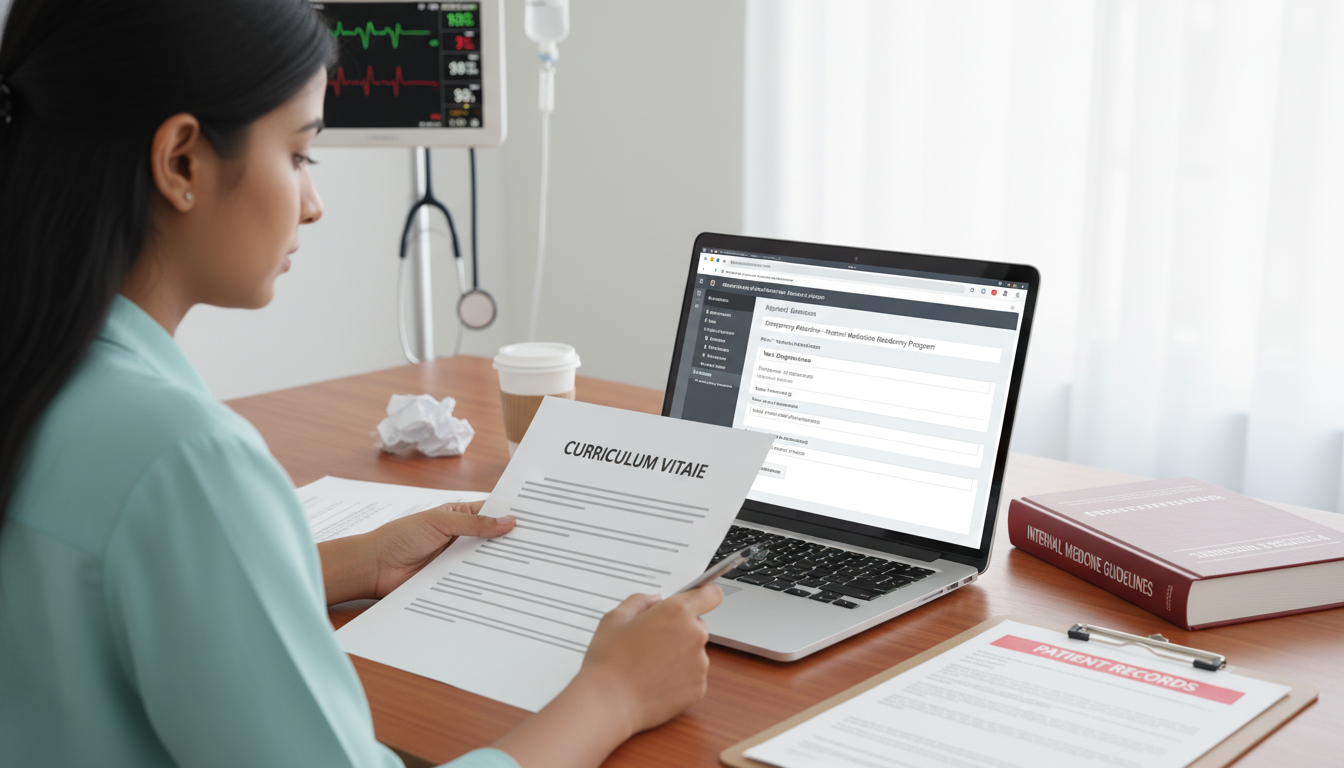
Understanding the EM–IM Landscape as an IMG
Emergency Medicine–Internal Medicine (EM–IM) combined residency is a demanding, five-year program that trains physicians to be competent in two distinct but complementary specialties. For an international medical graduate, breaking into this niche requires more than a standard medical student CV; it demands a deliberately crafted document that shows you understand both emergency medicine and internal medicine and that you have the maturity, resilience, and skills to thrive in a rigorous combined program.
Before you start drafting your CV, clarify three things:
Who is your audience?
- EM–IM program directors and faculty in the U.S.
- They are scanning for clinical readiness, adaptability, work ethic, and a genuine commitment to both acute care and longitudinal care.
How your profile is perceived as an IMG:
- Strengths: often strong clinical exposure, diverse patient care experience, multilingual skills, and resilience.
- Concerns programs may have: clinical currency, familiarity with U.S. healthcare, communication skills, and the ability to work in high-acuity, team-based settings.
What your CV must accomplish:
- Instantly communicate your fit for emergency medicine internal medicine (EM IM combined).
- Prove that you are current, competent, and coachable.
- Highlight concrete evidence of excellence: in clinical work, academics, leadership, and professionalism.
Throughout this IMG residency guide, you will see specific residency CV tips and examples tailored for an EM–IM aspirant, with a focus on how to build CV for residency if you are an international medical graduate.
Core Principles of a Strong IMG Residency CV
Before diving into sections, anchor your CV to a few core principles:
1. Accuracy, Honesty, and Verifiability
Every entry on your CV must be:
- Accurate in dates, titles, and roles.
- Verifiable by a supervisor, certificate, or official record.
- Honest in scope: never overstate your level of responsibility (e.g., do not write “attending” or “consultant” responsibilities for student-level work).
Programs frequently verify activities. Any doubt about your honesty can cost you interviews.
2. Relevance to EM–IM
Your CV is not a lifetime biography; it is a targeted professional snapshot.
Prioritize items that demonstrate:
- Comfort with acute care (ER, ICU, acute admissions).
- Strength in longitudinal internal medicine (wards, clinics, chronic disease, complex comorbidities).
- Capacity for systems thinking (quality improvement, triage systems, workflow improvement).
- Skills applicable to both fields: teamwork, communication, decision-making under pressure, and evidence-based practice.
When in doubt, ask: Does this help a program director trust me in an ED and an inpatient ward at 3 a.m.? If not, it should be lower on the page or omitted.
3. Clarity and Readability
Program directors review hundreds of applications. Your medical student CV should:
- Use clear section headings.
- Be consistently formatted.
- Use bullet points rather than dense paragraphs.
- Avoid slang, local abbreviations, and non-standard acronyms.
Think: easy to scan, impossible to misinterpret.
Structuring Your CV for EM–IM Residency
Below is a suggested structure tailored to an IMG applying to EM–IM programs in the U.S. This applies whether you submit via ERAS (which has its own fields) or are asked for a separate PDF CV.
1. Contact and Identification Information
Include:
- Full Name (consistent with ERAS/medical license/passport)
- Current Address (U.S. mailing address if possible)
- Phone (with country code if non-U.S.)
- Professional Email (e.g., firstname.lastname@…)
- A LinkedIn profile or professional website (optional but helpful if well maintained)
Do not include: marital status, religion, photo, date of birth, or national ID numbers. These are not needed and can introduce bias.
2. Education
List in reverse chronological order:
- Medical School: Name, city, country, degree, graduation month/year
- Optionally: overall ranking if objectively strong and verifiable (e.g., “Top 5% of class”).
- Postgraduate Degrees or Training: e.g., MPH, MSc, prior residency or internship.
- Undergraduate Degree: only if clearly relevant or from a recognized institution; still include but usually with fewer details.
For an international medical graduate, it is useful to briefly clarify:
- If your medical program is 5 vs 6 years.
- If you completed an internship or house officer year (commonly separate in many countries).
Example:
M.B.B.S., University of Lagos College of Medicine, Lagos, Nigeria
Graduated: July 2021
Completed one-year rotating internship (Internal Medicine, Surgery, Pediatrics, Obstetrics & Gynecology)
3. Medical Licensing and Examinations
This is critical for an IMG residency guide and should be highly visible.
Include:
- USMLE/COMLEX Scores and Dates (if complete and strong; otherwise simply list “Completed USMLE Step 1, Step 2 CK, Step 3” in the CV and let ERAS show scores).
- ECFMG Certification:
- “ECFMG Certified – Month Year” or “ECFMG certification in progress; all exams completed, awaiting certification.”
- Any local licensing (e.g., “Full Registration with the General Medical Council, UK” or “Permanent Medical License, India”).
For EM–IM programs, Step 2 CK and clinical currency weigh heavily. If Step 2 CK is significantly stronger than Step 1, you can place it first.
4. Clinical Experience: Make EM–IM Your Centerpiece
This is where you showcase why you belong in an emergency medicine internal medicine combined program.
Separate your clinical section into:
- U.S. Clinical Experience (USCE)
- International Clinical Experience
- Optional subheadings: Emergency Medicine–Focused Experience, Internal Medicine–Focused Experience, if you have enough entries.
A. U.S. Clinical Experience (USCE)
Programs heavily value U.S. hands-on experience. List:
- Role: Clinical Extern, Sub-Intern, Acting Intern, Observership (clearly distinguish observership vs hands-on).
- Institution & Location
- Dates (Month–Year to Month–Year)
- Supervisor (optional, especially if a recommender)
- 2–4 concise bullet points focusing on responsibilities and skills.
Example tailored to EM–IM:
Clinical Extern, Emergency Medicine
Saint Mary’s Hospital, Rochester, MN | Aug 2024 – Oct 2024
- Managed 10–12 patients per shift under supervision, including chest pain, trauma, sepsis, and acute neurologic presentations.
- Performed focused histories and physicals, formulated differential diagnoses, and presented succinctly in a fast-paced ED environment.
- Assisted with procedures including laceration repairs, splinting, and ultrasound-guided vascular access.
- Collaborated with internal medicine teams for admissions, optimizing handovers for complex, multimorbid patients.
Note how the bullets show:
- Comfort in acute care (EM).
- Interface with internal medicine admissions (IM).
- Teamwork and communication.
B. International Clinical Experience
For your home country or other non-U.S. settings:
- Emphasize recent, clinically relevant work (internship, residency, MO/SHO positions).
- Highlight acute and internal medicine exposure specifically.
Example:
House Officer, Internal Medicine (Rotating Internship)
University Teaching Hospital, Karachi, Pakistan | Jan 2022 – Jun 2022
- Managed 15–20 inpatients daily with a range of conditions, including heart failure, COPD, diabetic emergencies, and sepsis.
- Participated in daily multidisciplinary rounds and formulated management plans under consultant supervision.
- Coordinated care for admissions from the Emergency Department, gaining familiarity with triage priorities and admission criteria.
Link your experiences to EM–IM themes: complex medical problems, diagnostic uncertainty, management of decompensations, and transitions between ED and wards.

Academic and Scholarly Work: Targeted for EM–IM
Many international medical graduates worry they have “insufficient research.” EM–IM programs do not require everyone to be a high-volume researcher, but they value:
- Intellectual curiosity.
- Ability to read and apply evidence.
- Familiarity with quality improvement (QI) and systems-based practice.
1. Research Experience
Organize by project, in reverse chronological order:
- Title/Topic
- Institution
- Supervisor
- Your Role
- Dates
- 2–3 bullets explaining your contributions.
Example relevant to emergency medicine internal medicine:
Research Assistant, Sepsis Pathways in the Emergency Department
Department of Emergency Medicine, XYZ University, Boston, MA | Jan 2023 – Dec 2023
Supervisor: Jane Smith, MD
- Collected and analyzed data on door-to-antibiotic times and in-hospital mortality for ED sepsis patients.
- Contributed to development of a triage checklist to identify high-risk patients for early intervention.
- Co-authored abstract accepted for poster presentation at ACEP Scientific Assembly 2023.
If you lack formal research, consider:
- Audit projects you did as an intern.
- QI initiatives (e.g., reducing time to EKG for chest pain patients).
- Case reports from interesting EM/IM cases.
2. Publications and Presentations
Have separate subheadings:
- Peer-Reviewed Publications
- Conference Abstracts/Presentations
- Posters
- Case Reports or Letters
Use standard citation format and bold your name:
Kumar A, Lopez J, Smith J. Implementation of a Sepsis Bundle in a Resource-Limited Emergency Department. Journal of Emergency Medicine Quality. 2024;12(3):214–221.
If you have only a few items, combine them into a single “Publications and Presentations” section.
Leadership, Teaching, and Extracurricular Activities
EM–IM programs want residents who can lead teams, teach colleagues, and contribute to the culture of the residency.
1. Leadership Roles
Include:
- Student organization leadership (e.g., EM interest group, internal medicine society).
- Rotational leadership (e.g., chief intern of a rotation).
- Community projects where you led teams.
For each:
- Title, Organization, Institution
- Dates
- 2–3 bullets describing scope and measurable impact.
Example:
Coordinator, Emergency Response Training Initiative
Medical Student Emergency Medicine Interest Group, University of Belgrade | Sep 2019 – Apr 2020
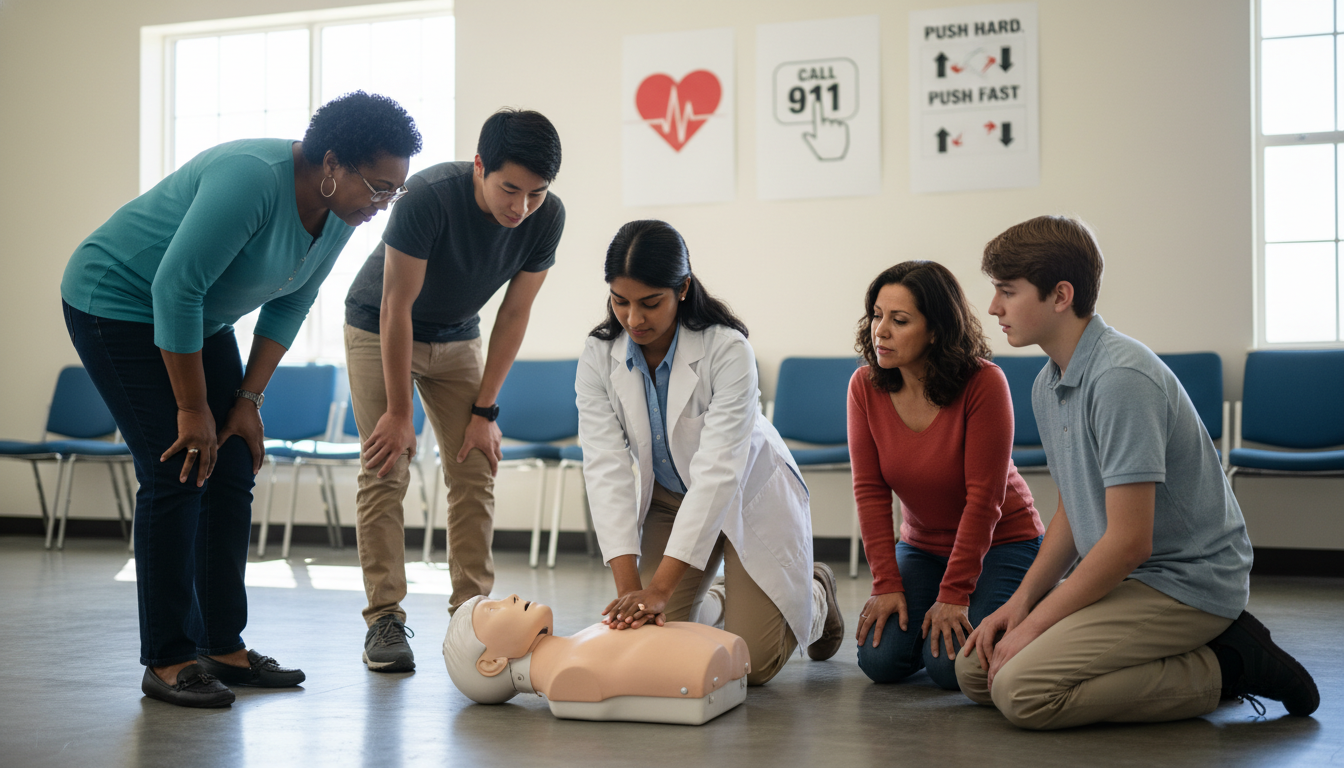
- Led a team of 10 students to organize monthly basic life support workshops for over 200 participants.
- Collaborated with local EMS to provide simulation-based sessions on cardiac arrest management.
- Improved participant skills as measured by pre- and post-workshop CPR performance checklists.
2. Teaching Experience
EM–IM residents teach constantly: students, interns, nurses, and patients.
Highlight any role where you:
- Taught medical students or peers (lectures, small groups).
- Led bedside teaching or skills workshops.
- Created educational materials.
Example:
Peer Tutor, Clinical Skills Program
College of Medicine, Cairo University | Oct 2018 – Jun 2019
- Facilitated weekly small-group sessions on history-taking and physical examination for second-year students.
- Developed OSCE-style practice cases focusing on chest pain, shortness of breath, and abdominal pain presentations.
Connect content to EM and IM whenever possible (e.g., chest pain assessment, dyspnea evaluation).
3. Volunteering and Service
For an international medical graduate, community engagement shows adaptation and empathy, especially if you volunteered in a U.S. setting.
Examples particularly relevant to EM–IM:
- Volunteering in free clinics or community health screenings (hypertension, diabetes).
- Disaster relief or emergency preparedness initiatives.
- EMS ride-alongs (if formally structured).
Keep bullet points practical and outcome-oriented.
Skills, Certifications, and EM–IM-Relevant Competencies
Programs want reassurance that you bring concrete skills to the table.
1. Certifications
List with full names and validity dates:
- ACLS (Advanced Cardiovascular Life Support)
- BLS (Basic Life Support)
- PALS (Pediatric Advanced Life Support) – particularly helpful for EM.
- ATLS (Advanced Trauma Life Support) – very valuable for EM-heavy CVs.
- Any course in ultrasound, ECG interpretation, or critical care.
Example:
Certifications
- Advanced Cardiovascular Life Support (ACLS), American Heart Association – Valid until May 2026
- Basic Life Support (BLS), American Heart Association – Valid until May 2026
- Emergency Ultrasound Course, 2-day hands-on workshop, XYZ Simulation Center – Completed Sept 2023
2. Technical and Clinical Skills
Instead of listing generic skills (“history taking, physical exam”), emphasize EM–IM aligned competencies:
- Procedural Skills (under supervision):
- Peripheral IV placement, arterial blood gas sampling, suturing, basic wound care, splinting, NG tube insertion, foley catheterization.
- Diagnostic Skills:
- ECG interpretation, chest X-ray basics, use of clinical decision rules (e.g., Wells score, HEART score).
- Ultrasound (POCUS):
- If applicable: FAST exam, cardiac echo views, lung ultrasound for B-lines/pleural effusion.
You can group them under headings like “Procedural Skills – Performed Under Supervision” and list only what you have genuinely done.
3. Languages and Communication
As an international medical graduate, your multilingual abilities can be very valuable.
List:
- Each language and proficiency level (native, fluent, professional working proficiency, conversational).
Example:
Languages
- English – Professional working proficiency
- Spanish – Conversational proficiency
- Arabic – Native speaker
If you have taken any formal communication courses or workshops—even in your home country—note them briefly.
Tailoring and Polishing: Practical Residency CV Tips for IMGs
Knowing how to build CV for residency is not only about content; it is also about presentation and strategy.
1. Align Your CV With EM–IM Program Values
Go through your draft and ask:
- Where have I shown interest in acute care/A&E/ER?
- Where have I shown interest in general internal medicine and chronic disease management?
- Do I show experience with transitions of care and communication across settings (ED → wards, wards → ICU, discharge planning)?
- Do my research/QI topics relate to quality, safety, or efficiency in acute and chronic care?
If EM content is heavy and IM content is light (or vice versa), consider:
- Adding a short internal medicine observership or U.S. inpatient experience.
- Joining or initiating a QI project on internal medicine wards.
- Highlighting IM-heavy content more explicitly in bullet points.
2. Emphasize Recency and Clinical Currency
Programs worry when there is a gap since graduation or lack of recent clinical work.
Strategies if you graduated >3 years ago:
- Highlight ongoing clinical work in your home country.
- If you took a non-clinical break (e.g., research, immigration process), show how you stayed engaged with medicine: CME, observerships, online courses.
- List continuing education in a “Continuing Medical Education / Courses” section (e.g., online EM or IM modules).
3. Formatting and Length
For an IMG residency guide, a common error is an overly long, unfocused CV.
- Ideal length:
- Early graduate (0–2 years post-grad): 2–3 pages.
- More experienced IMG: up to 4 pages if content is relevant and concise.
Formatting tips:
- Use one or two professional fonts, consistent size (11 or 12 pt).
- Use bullet points, not paragraphs.
- Maintain uniform date format (e.g., “Jan 2022 – Jun 2022”).
- Avoid colorful designs, tables that may not render well, or excessive graphics.
4. Common Pitfalls to Avoid
- Listing every single conference attended without selectivity; instead, emphasize those related to EM, IM, or core skills.
- Unclear roles: writing “Doctor at XYZ clinic” without specifying whether you were an intern, GP, or resident.
- Overloaded skills section: claiming procedures that you performed only once or observed.
- Typos and grammatical errors: especially concerning to EM–IM faculty who expect precision under pressure.
Ask a mentor, recent EM–IM resident, or a native English speaker to review your CV. Small language improvements can significantly improve professionalism.
5. Strategically Using Your CV Alongside ERAS
Even though ERAS structures your information, a well-built PDF CV can be:
- Uploaded as supplemental material when allowed.
- Sent to faculty writing letters of recommendation to better contextualize your background.
- Used during away rotations or networking at conferences.
Ensure that everything in your CV matches what you list in ERAS: dates, titles, supervisors. Inconsistencies can raise concerns.
Putting It All Together: Example EM–IM-Focused Profile
Here is a condensed example of how an international medical graduate might present a cohesive EM–IM narrative across the CV:
- Education: MBBS 2020, completed internship with strong EM and IM rotations.
- Licensing: ECFMG certified, USMLE Steps completed with stronger Step 2 CK.
- Clinical Experience:
- 2-month U.S. EM externship with significant ED exposure and EM faculty letters.
- 1-month U.S. IM sub-internship on general medicine wards.
- Ongoing work as a medical officer in a busy internal medicine ward with responsibility for acutely ill admissions.
- Research/QI:
- QI project on reducing door-to-antibiotic time for sepsis patients.
- Poster on heart failure readmissions presented at an internal medicine conference.
- Leadership/Teaching:
- Organized BLS workshops for medical students and community members.
- Peer tutor for clinical skills with emphasis on chest pain and dyspnea assessment.
- Skills/Certifications:
- BLS, ACLS, PALS certified; completed basic ultrasound course.
- Competent in common ED procedures under supervision.
- Languages:
- English fluent, native language plus one additional language.
On paper, this applicant clearly demonstrates readiness for the dual demands of an EM–IM program.
Frequently Asked Questions (FAQ)
1. How is a residency CV different from a medical student CV for an IMG?
A medical student CV often lists school activities broadly, while a residency CV for an IMG must be:
- More clinically focused and up to date.
- Structured to address U.S. program directors’ specific concerns (USCE, ECFMG, licensing).
- Selective and aligned with your target specialty—in this case, emergency medicine internal medicine.
Think of your residency CV as a specialized, targeted version of your broader CV.
2. How much U.S. clinical experience should I show for EM–IM programs?
More is usually better, but quality and relevance matter more than raw number of weeks. Aim for:
- At least one EM-focused and one IM-focused U.S. experience, ideally hands-on or sub-intern level.
- Experiences that yield strong, detailed letters of recommendation from U.S. EM/IM faculty.
If you lack EM or IM exposure specifically, prioritize arranging rotations or observerships before application season.
3. What if I do not have much research—will that hurt my EM–IM application?
Not having multiple publications is not fatal, especially for community or smaller academic programs.
However, your CV should show some evidence of:
- Engagement with quality improvement, patient safety, or clinical audit.
- Curiosity about evidence-based practice.
Even a small QI project or a case report can be valuable if clearly presented and relevant to EM–IM.
4. Should I include non-medical jobs or activities on my CV?
Include non-medical roles if they:
- Demonstrate leadership, teamwork, resilience, or communication (e.g., teaching, customer service, management).
- Are relatively recent and substantial.
Be selective—do not overcrowd your CV. Connect the skills to residency when possible (e.g., “Managed high-stress situations, resolved conflicts, and communicated with diverse clients,” which parallels ED teamwork).
By focusing on relevance, clarity, and honesty—and by deliberately highlighting both emergency and internal medicine experience—you can transform your CV from a generic medical student document into a compelling EM–IM–focused profile. As an international medical graduate, a well-crafted CV is one of the strongest tools you have to bridge the gap between your prior training and a successful combined emergency medicine internal medicine residency in the United States.