Understanding the Neurology Residency CV as an IMG
For an international medical graduate, your CV is often the first—and sometimes only—impression a neurology program has of you before deciding on an interview. Neurology is a data‑driven, academically oriented specialty; program directors scrutinize details. A polished, targeted CV can transform you from “just another IMG” into a serious neurology applicant.
This IMG residency guide will focus on how to build a CV for residency in neurology specifically, with step‑by‑step residency CV tips, examples, and common pitfalls to avoid. Think of your CV not as a static list of activities, but as a strategic document that:
- Shows evidence of genuine interest in neurology
- Demonstrates clinical readiness and professionalism
- Highlights academic and research aptitude
- Communicates clearly and concisely in professional English
In the context of ERAS, your “CV” is essentially the MyERAS application (Experience, Education, Publications, etc.), plus an optional separate CV document you may send via email or upload if requested. The structure and content are largely the same. Everything in this article applies to both.
Core Principles of a Strong Neurology CV for IMGs
Before breaking down each section, it helps to understand what neurology program directors are looking for and how your CV can speak their language.
1. Clarity and Professionalism
- Consistent formatting: Same font, size, date format, and style throughout
- Logical organization: Sections in a standard order (Education, Exams, Clinical Experience, etc.)
- Error‑free language: No spelling or grammar mistakes; professional tone
- No clutter: Avoid excessive colors, graphics, or long paragraphs
Actionable tip:
Ask a native English speaker (physician/mentor) to proofread. Even one spelling mistake in “neurology,” “residency,” or “United States” looks careless.
2. Neurology-Specific Focus
A generic medical student CV is not enough for a competitive neuro match. Your application should make it obvious that neurology is your first, well‑considered choice.
- Highlight neurology rotations and electives
- Emphasize neurology‑related research or quality improvement
- Include neurology case presentations, EEG/EMG exposure, stroke experience, and neuro ICU if any
- Show longitudinal commitment: multiple experiences over time, not a single short rotation
3. Strategic Honesty
Never exaggerate or fabricate. Programs do verify.
- Be truthful with dates, titles, and responsibilities
- Don’t label a 2‑week observership as a “fellowship”
- Don’t mark a manuscript “published” if it is only submitted
If you are caught misrepresenting, you risk losing interviews and even facing NRMP sanctions.
4. Impact Over Volume
For the neuro match, depth of engagement often matters more than sheer quantity.
- A few substantial neurology projects > dozens of unrelated, shallow experiences
- One prospective stroke quality project where you collected data, analyzed outcomes, and presented findings is more persuasive than many unstructured shadowing experiences
Ideal Structure: How to Build a CV for Neurology Residency
There is no single perfect format, but the following structure works well for most international medical graduates.
- Contact Information
- Professional Summary (optional, short)
- Education
- USMLE/Other Exams
- Clinical Experience (Neurology first, then other specialties)
- Research Experience
- Publications, Presentations & Posters
- Teaching & Leadership
- Volunteer & Extracurricular Activities
- Honors & Awards
- Skills (including languages, technical skills)
- Professional Memberships
Let’s walk through each section with neurology‑focused residency CV tips.
Section-by-Section Guide with Neurology Examples

1. Contact Information
Keep this clean and professional at the top of your CV.
Include:
- Full name (consistent with ERAS)
- Professional email (e.g., firstname.lastname.md@gmail.com)
- U.S. phone number if available (or WhatsApp for international)
- City, state, and country (no full postal address needed)
- LinkedIn profile (optional, only if updated and matching your CV)
Avoid:
- Casual email addresses (e.g., drcool123@…)
- Multiple phone numbers without indicating which is primary
- Photos, flags, or unnecessary personal details (marital status, religion, etc.) unless a country’s format requires them and you’re applying there
2. Professional Summary (Optional but Helpful for IMGs)
A short 2–3 line summary can frame your neurology interest and provide context, especially if you have a non‑linear path or a gap.
Example:
International medical graduate from Brazil with 2+ years of clinical neurology exposure, including U.S. observerships in stroke and epilepsy. Strong interest in vascular neurology and medical education, with first‑author research in post‑stroke outcomes and extensive teaching experience for medical students.
Use this to:
- State your neurology interest clearly
- Highlight key strengths (US experience, research, teaching, languages)
- Briefly mention a unique angle (e.g., prior neuro ICU work, global health)
3. Education
List in reverse chronological order (most recent first).
Include:
- Medical school name, city, country
- Degree (e.g., M.B.B.S., M.D., M.B.Ch.B.)
- Month/Year of graduation (or expected)
- Any relevant advanced degrees (MSc, MPH, PhD)
- GPA/Class rank if it is strong and meaningful
Example:
Doctor of Medicine (M.D.)
University of Belgrade School of Medicine, Belgrade, Serbia
Graduated: July 2021 | Class Rank: Top 10%
If you have a neurology‑related thesis or honors project, you may add one line:
- Thesis: “Cognitive Outcomes After Intracerebral Hemorrhage” (Neurology Department)
4. USMLE and Other Exam Scores
Programs scan this quickly. Make it easy to find.
Format them in a small, separate section:
United States Medical Licensing Examination
- Step 1: 235 (Pass, 2022)
- Step 2 CK: 248 (2023)
- Step 3: Scheduled for March 2025 (if applicable)
If exams are Pass/Fail only, you can state:
- Step 1: Pass (2023)
- Step 2 CK: 242 (2024)
If you took another licensing exam (e.g., PLAB, MCCQE), list it here or in a sub‑section called “Other Examinations.”
5. Clinical Experience: Make Neurology the Star
For neurology residency, this is one of the most crucial CV sections, especially for IMGs. Organize clearly:
- Neurology Clinical Experience – United States
- Neurology Clinical Experience – Home Country/International
- Other Clinical Experience
Under each, use reverse chronological order. For each experience include:
- Role (Observer, Extern, Research Assistant with clinical exposure, Junior Resident, etc.)
- Institution, city, state/country
- Dates (Month/Year – Month/Year)
- 2–4 concise bullet points of responsibilities/skills
Example (strong):
Clinical Observership, Neurology – Stroke Service
Department of Neurology, XYZ University Hospital, New York, NY
09/2023 – 11/2023
- Observed inpatient stroke and neuro ICU rounds, following 8–10 patients daily under attending supervision
- Participated in case discussions, reviewed neuroimaging (CT, MRI, CT perfusion) and EEG reports with residents
- Assisted with literature review for a quality improvement project on door‑to‑needle times in acute ischemic stroke
Avoid vague bullets like “Learned about neurology” or “Observed many patients.”
Prioritizing Experiences as an IMG
If you have many rotations, choose those that:
- Are most recent
- Are neurology‑focused
- Are with U.S. academic centers or well‑known institutions
- Involved direct clinical responsibilities (for non‑US settings where you had more hands‑on roles)
For home‑country neurology training or practice, clarify the system:
Neurology Resident (PGY‑1 equivalent)
ABC Teaching Hospital, Karachi, Pakistan
01/2022 – 12/2022
- Managed a daily census of 10–15 neurology inpatients under attending supervision
- Performed and documented full neurologic examinations; managed common conditions including stroke, seizure, meningitis, and neuropathies
- Participated in weekly neuroradiology and EEG reading conferences
This shows program directors your current level of clinical responsibility and familiarity with neurology patients.
6. Research Experience: Align with Neurology When Possible
Neurology is research‑intensive. Even if you are not planning a heavy academic career, programs like to see comfort with scientific thinking.
Create a separate Research Experience section, distinct from Publications.
For each research position include:
- Role (Research Assistant, Research Fellow, Data Collector, etc.)
- Project Title or Brief Description
- Institution and Department
- Dates
- 2–3 bullets describing what you actually did
Example:
Research Fellow – Epilepsy Outcomes
Comprehensive Epilepsy Center, XYZ University, Boston, MA
06/2022 – 05/2023
- Coordinated a retrospective cohort study evaluating seizure control after temporal lobectomy in adults
- Extracted and managed clinical data from 200+ patient charts using REDCap
- Performed basic statistical analyses (Chi‑square, t‑tests) with SPSS and assisted in manuscript preparation for submission
If your research is not neurology‑related (e.g., cardiology, internal medicine), keep it but highlight analytic and scholarly skills:
- “Designed data collection tools and maintained databases of 500+ patients”
- “Co‑authored abstracts presented at national conferences”
Programs know IMGs may have limited access to neurology research; they still value the process skills you learn.
7. Publications, Presentations, and Posters
This is where your academic productivity appears. Use clear subheadings:
- Peer‑Reviewed Publications
- Conference Abstracts and Posters
- Oral Presentations
- Other Publications (book chapters, online materials)
Format each entry in a standard citation style (e.g., AMA). Indicate your role (first author, co‑author). Make sure all status labels are accurate:
- Published
- In Press
- Accepted
- Submitted (optional; many programs weigh this cautiously)
Example:
Peer‑Reviewed Publications
- Ahmed S, Garcia L, Patel R. Predictors of early neurological deterioration in small vessel stroke: A retrospective cohort study. Journal of Stroke and Cerebrovascular Diseases. 2023;32(4):105412.
Conference Posters
- Garcia L, Nguyen T, Smith J. Cognitive impairment after intracerebral hemorrhage: A single‑center experience. Poster presented at: American Academy of Neurology Annual Meeting; April 2023; Boston, MA.
If your name is not obviously first author, bold it or underline it.
Avoid over‑inflating impact:
- Do not call a local poster “international” if it is not
- Do not list the same project in multiple categories
Teaching, Leadership, and Non-Clinical Impact
8. Teaching Experience
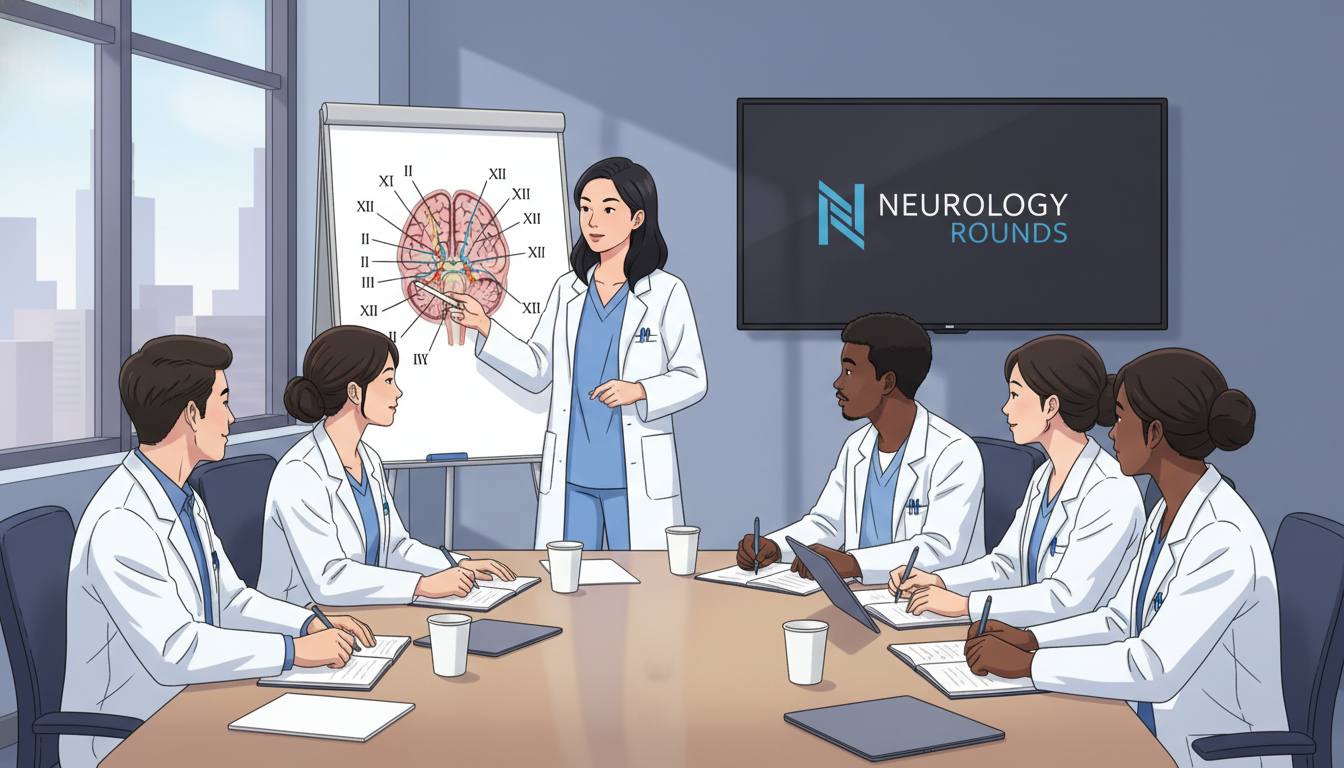
Neurology residencies value residents who can teach. IMGs often underestimate this.
List:
- Small‑group teaching of junior students
- Bedside teaching roles
- USMLE coaching or neurology board review tutoring
- Curriculum or workshop development
Example:
Neurology Tutor – Clinical Skills and Localization
University of Lagos College of Medicine, Lagos, Nigeria
09/2019 – 06/2021
- Led weekly 2‑hour small‑group sessions for 8–10 third‑year medical students on neurologic history‑taking and examination
- Developed simplified neuroanatomy diagrams and localization cases that improved students’ OSCE performance (pass rate from 68% to 85%)
Teaching shows communication skills, leadership, and depth of neurology understanding.
9. Leadership and Administrative Roles
Program directors want residents who can function as team leaders. For IMGs, this can also help offset concerns about “fitting into” U.S. team structures.
Examples to include:
- Chief intern or chief resident roles
- Student organization leadership (e.g., Neuroscience Society president)
- Committee membership (curriculum, quality improvement, ethics)
- Organizing conferences or journal clubs
Use bullets that emphasize:
- Responsibility (budgets, number of people supervised)
- Outcomes (events organized, improvements made)
Example:
President, Neurology and Neuroscience Student Interest Group
University of Belgrade School of Medicine
09/2018 – 07/2020
- Organized 10+ neurology‑focused events annually, including case discussions with local neurologists and virtual lectures with U.S. faculty
- Increased active membership from 15 to 45 students and initiated an annual “Stroke Awareness Week” on campus
10. Volunteer and Extracurricular Activities
These show who you are beyond scores and research. For neurology, community activities related to brain health are particularly valuable:
- Stroke awareness campaigns
- Epilepsy or multiple sclerosis support groups
- Dementia caregiver education workshops
- Rural health camps where you saw neurologic conditions
Example:
Volunteer Physician – Stroke Prevention Outreach
Nonprofit XYZ, São Paulo, Brazil
01/2021 – 12/2021
- Conducted blood pressure and diabetes screening for ~300 adults in underserved communities
- Delivered brief educational talks on recognizing stroke symptoms (FAST) and seeking immediate care
Non‑medical activities (sports, music, leadership in cultural groups) also matter, especially if they demonstrate discipline, teamwork, or long‑term commitment.
11. Honors and Awards
Include any recognition that differentiates you. For IMGs, this can counterbalance perceived disadvantages.
Relevant examples:
- Top 10% of class, Dean’s List
- Outstanding Neurology Student Award
- Best Research Poster (especially if neurology‑related)
- Scholarships for academic performance or leadership
Example:
Awards
- Best Student in Neurology, University of Nairobi School of Medicine (2020)
- First Place Poster, “Management of Acute Ischemic Stroke in a Resource‑Limited Setting,” National Medical Student Conference, Kenya (2019)
12. Skills and Professional Memberships
Skills
Focus on items useful to a neurology residency:
- Technical/Clinical: EEG interpretation exposure, EMG/NCS exposure, lumbar puncture experience, neuroimaging familiarity
- Research Tools: SPSS, R, Stata, REDCap, EndNote
- Languages: Especially if you speak languages common in the program’s catchment area
Example:
Skills
- Clinical: Neurologic examination, NIH Stroke Scale scoring, lumbar puncture (observed 30, performed 10 under supervision)
- Research: Data management with REDCap; basic statistical analysis using SPSS
- Languages: English (fluent), Arabic (native), French (conversational)
Be honest about proficiency; over‑stating language skills can create problems in patient care.
Professional Memberships
List memberships that signal commitment to neurology or medicine:
- American Academy of Neurology (AAN) – International or Student Member
- World Federation of Neurology sections
- National neurology societies in your home country
- General organizations: AMA International, IFMSA, etc.
Example:
Professional Memberships
- American Academy of Neurology – International Member (since 2022)
- Brazilian Academy of Neurology – Resident and Fellow Section (since 2021)
Tailoring Your CV Strategically as an IMG
Addressing Gaps and Non-Linear Paths
Many international medical graduates have:
- Gaps between graduation and application
- Time spent in non‑clinical roles (research, family responsibilities, immigration processes)
It is better to account for these periods in your CV than to leave unexplained time.
Examples of constructive descriptions:
- “Full‑time caregiver for family member with chronic illness; completed online neurology and clinical research courses through [platforms] during this period.”
- “Dedicated research fellow, full‑time, no clinical responsibilities, working on stroke outcomes registry.”
Briefly explaining context shows professionalism and intentionality.
Balancing “IMG Label” with Strengths
Your CV should quietly but clearly answer common program director questions about IMGs:
Can this applicant function safely and efficiently in U.S. hospitals?
- Evidence: U.S. neurology/medicine observerships or externships, strong letters, EMR exposure
Is neurology a well‑considered, genuine choice, not a backup?
- Evidence: Longitudinal neurology involvement, multiple neurology experiences, neurology publications or presentations
Will this person contribute academically and educationally?
- Evidence: Research productivity, teaching roles, leadership
Will language or communication be a barrier?
- Evidence: Clear, polished CV; teaching roles in English; U.S. presentations; strong interpersonal evaluations in letters
Each section of your CV is an opportunity to provide data points that reassure programs.
Common Mistakes IMGs Make on Neurology CVs
Avoid these pitfalls:
Overloading with irrelevant details
- Listing every minor workshop or 1‑day event as a full “experience”
- Overemphasis on non‑medical side jobs unless they show exceptional leadership or resilience
Non‑standard or confusing format
- Mixing date formats (e.g., 03/22 vs. March 2022)
- Inconsistent bullet styles or random font changes
Weak verbs and vague descriptions
- “Helped with patients” → “Assisted in the evaluation and daily monitoring of 8–10 neurology inpatients”
Under‑selling neurology focus
- Hiding neurology experiences within generic “clinical rotations”
- Not highlighting neurology‑related responsibilities in mixed rotations (e.g., internal medicine with heavy stroke exposure)
Misrepresenting titles or responsibilities
- Calling an observership an “externship” if there was no hands‑on patient care
- Claiming “independent” procedures when supervision was present
Putting It All Together: Practical Steps to Upgrade Your Neurology CV
If you already have a basic medical student CV, here is a concrete 5‑step plan to transform it into a robust neurology residency CV suitable for a strong neuro match.
Step 1: Reorganize for Neurology Emphasis
- Move Neurology Clinical Experience to the top of your clinical section
- Group all neurology‑related research and projects prominently
- Add a professional summary that clearly states a neurology focus
Step 2: Rewrite Bullets with Outcomes and Specifics
For each experience:
- Replace “Observed neurology rounds” with details:
- Patient volume
- Types of conditions
- Specific tasks (note writing, case presentations, literature searches)
- Add at least one bullet focusing on something quantifiable:
- “Reviewed 50+ EEGs with epilepsy fellow”
- “Abstracted data for 150 stroke patients”
Step 3: Identify and Fill Gaps
- Account for all time since medical school with at least a brief explanation
- If you lack neurology research, plan a small, feasible project (e.g., chart review, case series, quality improvement) with a mentor that could produce at least a poster
Step 4: Standardize Formatting and Language
- Use a simple, clean template (no colored borders or graphics)
- Consistent:
- Font (e.g., 11‑ or 12‑point, Calibri or Times New Roman)
- Date format (e.g., MM/YYYY – MM/YYYY)
- Bullet style and spacing
- Proofread for grammar and spelling—or ask a mentor or friend to help
Step 5: Get Feedback from Neurology-Focused Mentors
- Ask at least one U.S.-based neurologist (if possible) and one senior IMG who matched in neurology to review your CV
- Specifically request:
- “What is unclear?”
- “What seems weak or unnecessary?”
- “Where do I not look like a neurology applicant yet?”
Use their feedback to refine and prioritize.
FAQs about CV Building for IMGs in Neurology
1. Do I still need a separate CV if I am using ERAS?
ERAS functions as your primary neurology residency application and is the main “CV” programs will review. However, having a well‑formatted PDF CV is still useful to:
- Email to potential research mentors or preceptors
- Upload to residency program portals if they request “CV/Resume”
- Take to conferences and networking events
Ensure the information in your separate CV and ERAS application is fully consistent.
2. How far back should I go with experiences?
For neurology residency, focus primarily on:
- Medical school and later experiences
- Significant pre‑medical achievements (e.g., major national awards, high‑level research) may be included but kept brief
If you are several years out of graduation, older experiences can stay if they are:
- Directly relevant to neurology
- Demonstrate long‑term commitment or unique strengths
Avoid cluttering your CV with very old, minor items that dilute your profile.
3. What if I don’t have neurology research—will that hurt my neuro match chances?
Lack of neurology‑specific research does not automatically block you, but strong programs often favor applicants with some scholarly activity. To strengthen your residency CV quickly:
- Join a small project (case report, chart review) with a neurologist
- Aim at least for a local or regional poster
- Highlight any research, even in other specialties, emphasizing methods and analysis skills
Demonstrated ability to complete and present a project is more important than the exact topic, especially for IMGs with limited access to neurology labs.
4. Should I include hobbies and personal interests on my CV?
Yes, briefly. One line at the end is often enough, especially in your ERAS “Hobbies” section. For a separate CV, a small “Interests” subsection can humanize you and provide conversation points during interviews. Choose hobbies that:
- Reflect positive traits (discipline, teamwork, creativity)
- Are genuine and sustainable (not made up)
Examples: distance running, classical guitar, blog on neuroscience news for the public, volunteering with dementia caregivers.
A carefully structured, honest, and neurology‑focused CV can significantly improve your chances as an international medical graduate seeking a neuro match. Treat your CV as a living document: update it regularly, refine it with feedback, and let it tell a clear story of your path toward becoming a neurologist.