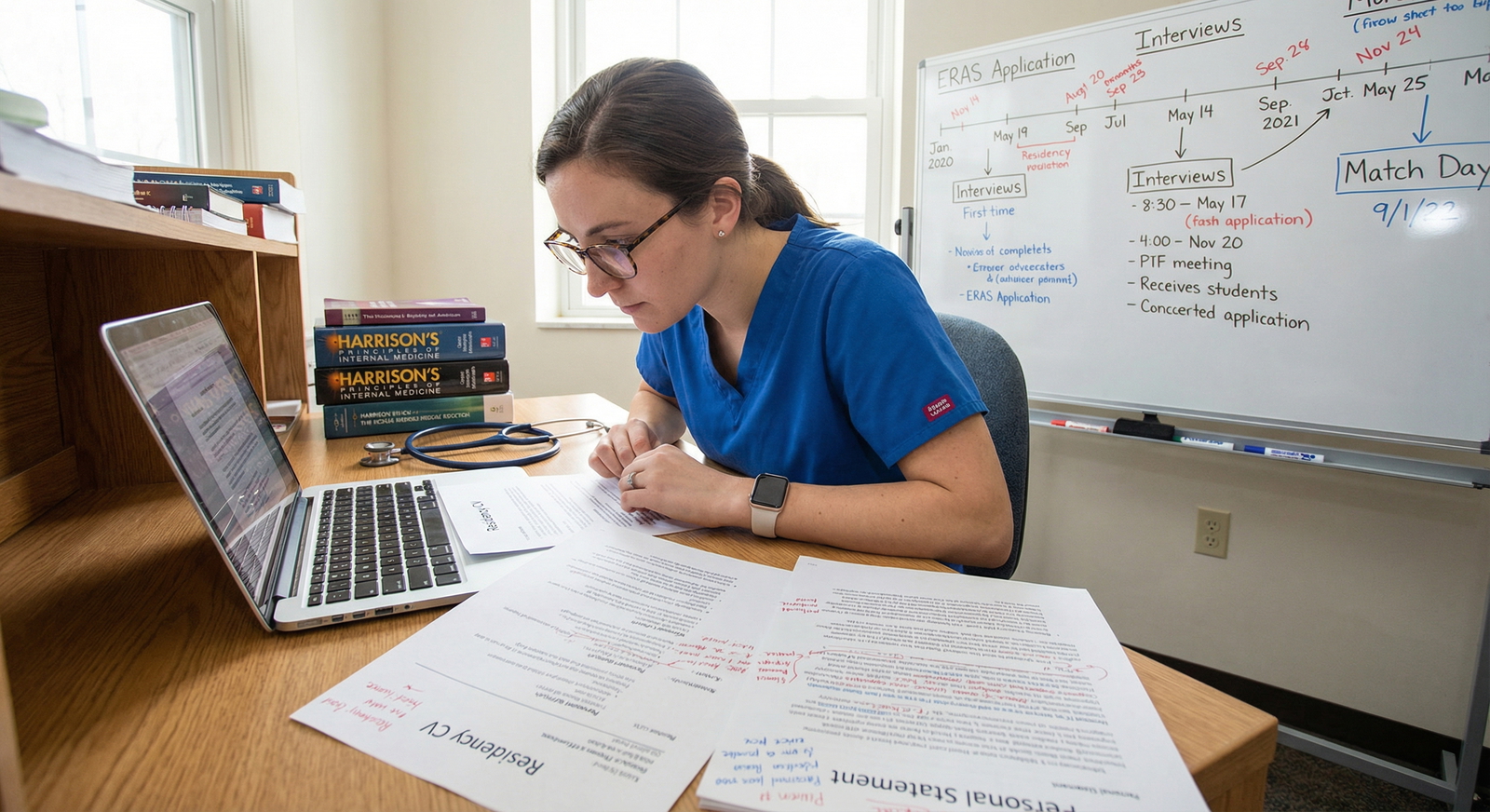
Understanding the Role of Your CV in the Pediatrics Match
For an international medical graduate, your CV is more than a list of experiences—it is often your first “interview” with a pediatrics program. Before anyone meets you on Zoom or in person, program directors, faculty reviewers, and coordinators will decide whether to offer you an interview based heavily on what is in your CV (and how it’s presented).
Within the context of the peds match, a strong CV helps you:
- Demonstrate clear and sustained interest in pediatrics
- Show that you understand and can function in the US clinical environment
- Communicate your professionalism, reliability, and attention to detail
- Highlight unique strengths you bring as an international medical graduate
This IMG residency guide focuses on how to build a pediatrics-focused CV that is strategically aligned to what US pediatric residency programs value most.
Key mindset: Your CV is not an autobiography; it is a curated, strategic document designed to answer one question:
“Why should we invite this applicant to join our pediatric residency program?”
Everything you include should help answer that question.
Core Structure of an Effective Pediatrics Residency CV
Think of your CV as a standardized structure that allows programs to quickly scan for what they care about. Most competitive pediatric applicants include the following sections, in roughly this order:
- Contact Information & Professional Summary (optional but recommended)
- Education & Medical Training
- Examination Scores & Certifications
- Clinical Experience (with emphasis on USCE and pediatrics)
- Research, Quality Improvement, and Scholarly Activity
- Teaching, Leadership, and Volunteering
- Honors, Awards, and Scholarships
- Professional Memberships & Conferences
- Skills (including languages, technical, and pediatric-relevant skills)
- Personal Interests (brief, strategic)
Your ERAS application has its own structure, but you should maintain a parallel, cleanly formatted standalone CV to:
- Send for away rotations or observerships
- Share with mentors, letter writers, and networking contacts
- Upload to institutional applications or attach as requested
1. Contact Information & Professional Summary
At the top of the CV, include:
- Full name (consistent with ERAS and ECFMG)
- Current address (US address if available)
- Professional email (avoid nicknames; use something like firstname.lastname@domain.com)
- Phone number (with country code)
- LinkedIn profile (optional, only if complete and professional)
Immediately below, consider adding a 2–3 line professional summary tailored to pediatrics.
Example:
International medical graduate with strong clinical experience in pediatrics and neonatal care, multiple US clinical rotations, and a growing record of child health quality improvement projects. Committed to a career in academic general pediatrics with a focus on immigrant and underserved families.
This short section frames the rest of your CV and quickly signals your pediatric focus.
2. Education & Medical Training
List your education in reverse chronological order:
- Medical school: full name, city, country
- Degree (e.g., MBBS, MD), dates attended and graduation date
- Class rank or GPA (if strong and comparable)
- Significant distinctions (e.g., “Graduated with Honors”)
Include earlier degrees (BSc, MPH, etc.) if relevant. For an IMG residency guide, this section is critical to show:
- Continuous education without unexplained large gaps
- Strong academic performance where possible
- Additional training relevant to child health (e.g., MPH with maternal-child health focus)
If you completed an internship or foundation program abroad, clarify:
Rotating Internship, XYZ Teaching Hospital, [Specialty Rotations], [Month Year – Month Year]
Specify pediatrics and neonatal rotations clearly; this underlines your exposure to core pediatric fields.
3. Examination Scores & Certifications
Although USMLE scores appear in ERAS, many mentors, faculty, and coordinators will skim your CV first.
Include:
- USMLE Step 1, Step 2 CK (and Step 3 if completed): list as “Pass” with score if you are comfortable sharing
- OET/IELTS/TOEFL if relevant for visa or language requirements
- ECFMG certification status and date obtained
- BLS, ACLS, PALS certifications: these matter specifically for pediatrics
Example:
- USMLE Step 2 CK – 24X, Pass (Month Year)
- ECFMG Certified (Month Year)
- Pediatric Advanced Life Support (PALS), American Heart Association, valid through Month Year
Your certifications can subtly reinforce your preparation for acute pediatric care and child emergencies.

Building the Clinical Experience Section for Pediatrics
For IMG applicants, the Clinical Experience section is often the single most scrutinized part of the CV. Program directors want to know:
- Have you worked in US clinical settings?
- Have you had direct patient exposure or only observerships?
- Is there clear, continuous engagement with pediatric practice?
- Are you clinically active or have there been long gaps?
Prioritizing Pediatric-Relevant Clinical Experience
Structure this section to highlight pediatrics early and clearly:
- US Pediatrics Experience (Subheading)
- US Non-Pediatrics Clinical Experience
- Home Country Pediatrics Experience
- Other Home Country Clinical Experience
For each entry, include:
- Position title (e.g., “Pediatric Extern,” “Clinical Observer – General Pediatrics”)
- Institution and department
- City, State, Country
- Dates (Month Year – Month Year)
- 2–4 bullet points emphasizing pediatric responsibilities and skills
Strong example entry:
Pediatric Extern, General Pediatrics
Children’s Medical Center, Department of Pediatrics – Dallas, TX, USA
July 2024 – September 2024
- Participated in daily rounds for 12–18 hospitalized children with common and complex pediatric conditions, including asthma exacerbations, bronchiolitis, and failure-to-thrive
- Performed focused pediatric histories and physical exams under supervision; presented succinct assessments and plans to the attending physician
- Collaborated with nurses, respiratory therapists, and social workers in developing discharge plans for medically complex children
- Observed and assisted with anticipatory guidance discussions on nutrition, immunizations, and safety for children and families
Note that the bullets are action-oriented, use pediatric-specific language, and highlight teamwork and communication with families, which are core to pediatrics.
Distinguishing Observerships, Externships, and Hands-On Roles
Be precise and honest about the level of involvement; misrepresentation is a major red flag.
- Observership: “Clinical Observer – Pediatric Cardiology”
- Externship/Clerkship (hands-on): “Clinical Extern – Inpatient Pediatrics”
- Residency/House Officer Role: “Pediatric House Officer” or “Pediatric Resident (PGY-1 equivalent)”
In bullets, make it clear if your role was:
- Hands-on with documentation and orders under supervision
- Primarily shadowing
- Focused on outpatient vs inpatient vs ICU vs ER pediatrics
Example of accurate observership entry:
Clinical Observer – Pediatric Endocrinology
XYZ Children’s Hospital – Boston, MA, USA
March 2024 – April 2024
- Shadowed pediatric endocrinologists in outpatient clinics for children with diabetes, thyroid disorders, and growth abnormalities
- Observed patient counseling on insulin therapy, glucose monitoring, and lifestyle modifications
- Attended weekly pediatric endocrine case conferences and journal clubs
Addressing Gaps and Non-Pediatric Clinical Experience
If you have gaps or non-pediatric-heavy experience:
- Present it chronologically, but emphasize transferable skills relevant to pediatrics: communication, teamwork, patient education, longitudinal care.
- For non-peds rotations (e.g., internal medicine, ER), add at least one bullet connecting that experience to child or family care when appropriate, or to systems-based practice that also applies in pediatrics.
Example:
Managed adult patients with chronic conditions, reinforcing skills in long-term care coordination and patient education that are directly applicable to adolescents with chronic pediatric illnesses.
This approach helps ensure that even “non-peds” experiences still support your pediatric narrative.
Research, Quality Improvement, and Scholarly Work in Child Health
You do not need multiple first-author publications to match into pediatrics, but having some scholarly engagement significantly strengthens your application and CV—especially as an IMG.
Types of Scholarly Activities That Matter for Pediatrics
Consider and highlight:
- Clinical research in pediatric conditions (asthma, obesity, infections, neonatology, etc.)
- Quality Improvement (QI) projects related to immunization rates, asthma action plans, safe prescribing, or reducing readmissions in children
- Case reports or case series involving pediatric patients
- Public health projects focused on child nutrition, vaccination campaigns, or early childhood development
- Educational projects (e.g., creating teaching modules for medical students or pediatric nurses)
Organize this section as:
- Publications (peer-reviewed, in press, submitted)
- Abstracts & Posters
- Presentations & Talks
- Ongoing Projects
Use consistent citation style (e.g., AMA or Vancouver) and bold your name in the author list.
Publication example:
Ahmed M**, Lee J, Garcia P.** Asthma action plan implementation and emergency visits among urban school-age children. Journal of Pediatric Health Care. 2024;38(2):123–130.
If you don’t yet have publications, you can still list:
- “Abstract accepted for poster presentation”
- “Manuscript in preparation” (only if genuinely underway and preferably with mentor confirmation)
Describing Your Role in Projects
For each major project, briefly state your role, especially when you are not first author:
- Data collection and patient recruitment
- Chart review and data entry
- Statistical analysis
- Manuscript drafting
- Designing patient/family education materials
Example:
Quality Improvement Intern – Outpatient Pediatrics Clinic
ABC Teaching Hospital – Karachi, Pakistan
January 2023 – June 2023
- Collected and analyzed data on missed pediatric appointments and vaccination delays
- Helped design and implement reminder phone calls and SMS messages for parents
- Contributed to a 15% reduction in missed well-child visits over 6 months
These details show programs you understand systems-based practice and improving care for children—core competencies in pediatrics.

Teaching, Leadership, and Service: Showcasing the “Pediatric Personality”
Pediatrics programs look for residents who are:
- Compassionate and patient with children and parents
- Excellent communicators
- Capable of teamwork
- Dedicated to community and child advocacy
Your CV is one of the main tools for demonstrating this profile.
Teaching and Mentoring Experience
Even as a medical student or IMG, you may have:
- Tutored junior students in pediatrics or basic sciences
- Led small-group teaching sessions
- Taught nurses or staff how to perform a specific procedure
- Participated in simulation teaching
CV entry example:
Peer Tutor – Pediatrics Clinical Skills
XYZ Medical College – Cairo, Egypt
September 2020 – June 2021
- Conducted twice-weekly small-group sessions (6–8 students) focused on pediatric history taking and physical examination
- Created case-based learning scenarios for common pediatric conditions such as pneumonia and gastroenteritis
- Received positive feedback from faculty and students for clarity of explanations and supportive learning environment
Leadership Roles and Child-Focused Volunteering
Leadership and service have particular weight in pediatrics, especially when connected to children, families, or communities.
Examples you might include:
- President or officer in a Pediatrics Interest Group
- Coordinator for child health camps or school-based screening programs
- Volunteer with NGOs working in child nutrition, vaccination, or refugee child support
- Organizer of health education sessions for parents and caregivers
Service entry example:
Volunteer – School Health Screening Program
Local Government School Health Initiative – Manila, Philippines
January 2022 – December 2022
- Participated in monthly on-site visits to public schools to screen children for vision and hearing problems, anemia, and malnutrition
- Provided basic health education to children and caregivers about hygiene, nutrition, and vaccination
- Coordinated referral pathways for children needing further evaluation at tertiary care centers
Such experiences strongly reinforce your commitment to child health and community pediatrics.
Honors, Awards, and Scholarships
Always list:
- Academic distinctions (e.g., top 10%, dean’s list)
- Pediatric-specific awards (best pediatric student, best case presentation in pediatrics)
- Scholarships, especially competitive or merit-based
- Recognition for service or leadership (e.g., “Best Volunteer,” “Outstanding Tutor”)
For residency CV tips, it is acceptable—and wise—to group minor awards together, but call out major ones distinctly.
Formatting, Style, and Common IMG CV Mistakes to Avoid
Even a strong content profile can be undermined by poor formatting or confusing structure. Attention to detail on your CV is often interpreted as a proxy for how carefully you will write notes and orders as a resident.
Formatting Best Practices
- Length: 2–4 pages is typical and acceptable for an IMG residency CV
- Font: Professional, readable (e.g., 11–12 pt Times New Roman, Calibri, or Arial)
- Headings: Use clear H2/H3 hierarchy and consistent bolding/underlining
- Spacing: One blank line between entries; keep bullet points aligned
- Date format: Use consistent Month Year – Month Year format throughout
- File name: “Lastname_Firstname_CV_Pediatrics_2025.pdf” (avoid generic “myCVfinal.pdf”)
Use bullet points, not paragraphs, to describe experiences. Each bullet should begin with a strong action verb and avoid wordy sentences.
Stylistic Tips Specific to Pediatrics
- Use child-centered language: “children,” “families,” “caregivers,” “guardians,” “adolescents.”
- Highlight communication, family counseling, and education.
- Emphasize interdisciplinary collaboration with nurses, social workers, dietitians, school counselors, etc.
- Note any work with vulnerable populations: premature infants, children with disabilities, refugee or migrant children, low-income communities.
Common CV Mistakes IMGs Make—and How to Fix Them
Cluttered or Overcrowded CV
- Problem: Tiny font, long paragraphs, and no clear sections make it hard to read.
- Fix: Use white space, bullet points, clear headings. Remove unnecessary details like complete addresses for every institution.
Unclear or Inconsistent Dates
- Problem: Month/Year missing or inconsistent, leading to questions about gaps or honesty.
- Fix: Standardize all dates (e.g., Jul 2020 – Jun 2021). If there is a gap, briefly explain it in your personal statement or interview, not by hiding it.
Weak or Vague Bullet Points
- Problem: “Worked in pediatric department” gives no concrete picture of your role.
- Fix: Be specific—what conditions, what responsibilities, what outcomes?
Irrelevant or Non-Professional Information
- Problem: High school achievements, very old awards, or controversial political activities unrelated to child health.
- Fix: Include only what supports your story as a future pediatrician. Some advocacy is welcome; excessive unrelated details are not.
Grammar and Spelling Errors
- Problem: These undermine your perceived professionalism, especially as a non-native English speaker.
- Fix: Run spell-check, ask a mentor to review, and consider having at least one US-based physician or senior resident proofread.
No Clear Pediatrics Focus
- Problem: Experiences are listed randomly, without showing a pattern or commitment to pediatrics.
- Fix: Order and describe experiences so that pediatrics and child health clearly dominate the narrative.
Strategy: How to Build and Strengthen Your CV for Pediatrics Over Time
If you are early in medical school or have a gap before applying, you can intentionally shape your CV. Here is how to build CV for residency in pediatrics as an IMG, step by step.
For Pre-Clinical or Early Clinical Students
- Join or start a Pediatrics Interest Group.
- Seek volunteer work with children, such as tutoring, school health programs, or vaccination drives.
- Shadow pediatricians when possible, even in your home country.
- Start basic research or QI projects with a pediatrician mentor.
For Final-Year Students and Recent Graduates
- Prioritize US clinical experience (USCE) in pediatrics: observerships, externships, sub-internships.
- Aim for at least 2–3 pediatrics-focused US rotations if feasible.
- Take on defined roles in research or QI, with achievable goals (e.g., poster presentation within 6–12 months).
- Strengthen teaching experience: organize review sessions for junior students, especially in pediatrics.
During a Gap Year or Before Match
- Maintain clinical engagement (locum pediatric work, supervised clinics, volunteering with child health NGOs).
- Complete or expand projects to convert them into posters, abstracts, or manuscripts.
- Attend pediatric conferences (local or virtual) and list these under “Conferences & Courses.”
- Secure strong, pediatrics-specific letters of recommendation—your CV will help your letter writers articulate your strengths.
Adapting Your CV for Different Contexts
You might prepare:
- A 1–2 page CV for quick networking or emailing a potential mentor
- A full 3–4 page CV for residency applications, research positions, or formal institutional uses
- A tailored pediatrics-only version emphasizing child health for pediatric electives and observerships
Keep a master document and then selectively trim or adjust sections for each use.
FAQs: Pediatric Residency CV for International Medical Graduates
1. How is my CV different from my ERAS application?
Your ERAS application has fixed sections and limited character counts. Your CV is more flexible and can:
- Be shared with mentors, letter writers, and program coordinators outside ERAS
- Allow clearer grouping of pediatric experiences together
- Present your history in a more narrative, logically organized way
Information should be consistent between the two, but your CV can provide more context and better formatting.
2. Do I need pediatrics-specific research to match into pediatrics as an IMG?
Not strictly—but it helps. Programs mainly want to see:
- Demonstrated interest in child health
- Ability to engage in scholarly work, problem-solving, and data interpretation
If you cannot find pediatric research, general internal medicine, public health, or QI projects are still valuable. However, try to have at least some activities clearly related to children, families, or adolescent health on your CV.
3. How much US clinical experience should I list on my pediatrics CV?
More is generally better, but quality and relevance matter more than raw quantity. For a strong peds match profile:
- Aim for at least 2–3 months of USCE, preferably with 2+ rotations in pediatrics (inpatient, outpatient, NICU, PICU, or subspecialties).
- Clearly distinguish hands-on vs observer roles.
- If you have non-peds USCE, still include it—it shows familiarity with US hospitals and systems.
4. Should I include non-medical jobs or experiences on my residency CV?
Yes, if they:
- Demonstrate meaningful skills (leadership, teamwork, teaching, communication)
- Are recent or significant
- Do not distract from your pediatric identity
For example, work as a teacher, camp counselor, or youth mentor is highly relevant. A brief, well-written entry on such experiences can strengthen your pediatrics narrative.
By deliberately curating your experiences and presenting them clearly, your CV can communicate a strong, coherent story: that you are an international medical graduate with genuine passion for children, solid preparation, and the maturity to thrive in a pediatrics residency. Use your CV not merely to list what you have done, but to show programs who you are as a future pediatrician.