Understanding the Purpose of a CV for an IMG in General Surgery
For an international medical graduate (IMG), your CV is often the first—and sometimes only—context a program director has for who you are as a candidate. Unlike U.S. graduates, IMGs face additional barriers: unfamiliar medical schools, different grading systems, and often non‑traditional career paths. A strong, tailored CV can bridge that gap and dramatically improve your surgery residency match chances.
In the context of general surgery residency, your CV is not a generic document. It is:
- A filter: Programs rapidly screen for applicant seriousness, trajectory, and suitability for surgical training.
- A storyboard: It shows your evolution from medical student to aspiring surgeon.
- A data sheet: It provides quick, structured evidence of your skills, productivity, and commitment.
- A conversation starter: It guides interview questions and frames how faculty perceive you.
Because of this, CV building is one of the most high‑yield tasks you can work on early. This IMG residency guide will focus on how to build CV for residency, specifically in general surgery, using concrete residency CV tips tailored to your unique background.
Core Principles of an Outstanding IMG Surgery CV
Before diving into sections and formatting, anchor your CV in these core principles:
1. Clarity and Readability Come First
Program directors skim hundreds of applications. They must grasp your strengths in seconds.
- Use clean, consistent formatting (same font, bullet style, date format).
- Avoid dense paragraphs; prefer concise bullet points.
- Organize experiences in logical categories with clear headings.
- Limit length to 2–4 pages for most IMGs; more is acceptable only if you have substantial research.
2. Surgical Relevance Is Key
General surgery programs care about:
- Technical aptitude and exposure to operative environments.
- Resilience, work ethic, and team function in high‑stress situations.
- Academic curiosity, especially research and quality improvement.
- Communication skills and ability to work in diverse teams.
Your CV should highlight surgically relevant experiences and skills early and often.
3. Accuracy and Consistency With ERAS
Your ERAS application is the official record; your PDF CV should mirror and expand it, not contradict it.
- Titles, dates, and positions must match exactly.
- Do not inflate roles or titles; discrepancies raise red flags.
- Use your CV as a polished, organized version of ERAS, not a different narrative.
4. Evidence of Progression
Programs love to see growth over time:
- Increased responsibility (e.g., from observer to research fellow).
- Academic output (abstracts → posters → publications).
- Leadership and teaching roles that expand each year.
When you design your CV, think of it as a timeline of progression toward surgery rather than a random list of activities.
Essential Sections of a Strong General Surgery CV for IMGs
Below is a recommended structure tailored for IMGs applying to general surgery. You can adapt order slightly, but keep it logical and consistent.
1. Contact Information & Professional Summary
Contact block:
- Full name (as on ERAS and USMLE documents)
- Email (professional; e.g., firstname.lastname@…)
- Phone number (with country code if abroad)
- Current address (U.S. address if you have one during application season)
- Optional: LinkedIn profile, professional website, or research profile (if well maintained)
Professional headline (optional but powerful):
A one–two line summary tailored to general surgery. This is not a generic objective; it’s a sharp snapshot.
Example:
International medical graduate with 2 years of U.S. general surgery research experience, 4 first‑author publications, and extensive exposure to trauma and acute care surgery, seeking general surgery residency position.
This immediately orients the reader to your profile.
2. Education & Training
List formal education in reverse chronological order (most recent first).
Include:
- Degree and field (e.g., MD, MBBS, MBChB).
- Institution, city, country.
- Graduation date (month/year).
- Class ranking or GPA only if favorable and clearly understood.
- Postgraduate training (surgical internships, house officer positions, preliminary years).
Example Entry:
Doctor of Medicine (MBBS)
XYZ Medical College, Mumbai, India
Graduated: April 2020
- Top 10% of class; Distinction in Surgery and Anatomy
- Final‑year elective rotation in General Surgery at ABC Tertiary Care Hospital
For IMGs with clinical experience before application:
Under “Postgraduate Clinical Training” or “Internship / House Officer Positions,” specify:
- Specialty focus (e.g., General Surgery, Emergency Medicine).
- Setting (teaching hospital, trauma center, community hospital).
- Duration and notable responsibilities.
This section establishes your baseline medical training and exposure to surgery.
3. US Clinical Experience and Observerships
For general surgery residency, U.S. clinical experience is especially valuable. Create a dedicated section:
Suggested title: U.S. Clinical Experience in General Surgery (or simply U.S. Clinical Experience)
For each position, list:
- Role: Clinical Observer, Visiting Medical Student, Extern, Research Fellow with clinical exposure, etc.
- Department and specialty: General Surgery, Surgical Oncology, Trauma Surgery, etc.
- Institution, city, state.
- Dates (month/year–month/year).
- Supervisor/preceptor (optional but often helpful for IMGs).
- 3–5 bullet points focusing on clinically and surgically relevant responsibilities and skills.
Strong example:
General Surgery Observership
Department of Surgery, University Hospital, Chicago, IL, USA
June 2023 – August 2023
Supervisor: John Smith, MD, FACS
- Observed daily general surgery cases including laparoscopic cholecystectomy, hernia repairs, and bowel resections.
- Participated in pre‑ and post‑operative patient assessments on ward rounds and in clinic under supervision.
- Attended weekly Morbidity and Mortality conferences and resident teaching sessions.
- Contributed to data collection for a retrospective study on postoperative surgical site infections.
Focus on:
- Team integration.
- Clinical reasoning.
- Familiarity with U.S. healthcare culture and documentation (if applicable).
- Exposure to operative workflow and perioperative care, even if you did not scrub in.

Highlighting Surgical Research and Academic Productivity
For a competitive general surgery residency match, research and scholarly work can be a major differentiator for an international medical graduate, especially when your medical school or country is less known to program directors.
1. Structure of the Research Section
Create a dedicated section, such as:
- Research Experience
- General Surgery Research Experience
- Surgical Research and Scholarly Activity
For each position:
- Title (Research Fellow, Research Assistant, Clinical Research Coordinator).
- Department and division (e.g., Division of Trauma and Acute Care Surgery).
- Institution, city, country.
- Supervisor/PI name (and title).
- Dates.
- 3–6 bullets highlighting responsibilities and outcomes.
Example Entry:
Research Fellow, Division of Colorectal Surgery
Department of Surgery, ABC University Medical Center, Boston, MA, USA
July 2022 – Present
Supervisor: Jane Doe, MD
- Designed and implemented retrospective cohort studies examining outcomes of minimally invasive colorectal procedures.
- Managed REDCap databases of over 500 patients, performing data cleaning and quality checks.
- Conducted statistical analysis using SPSS, generating tables and figures for abstracts and manuscripts.
- Co‑authored 3 abstracts presented at national surgical meetings; 1 first‑author manuscript under peer review.
Notice how this clearly links your work to surgical outcomes, methodology, and productivity.
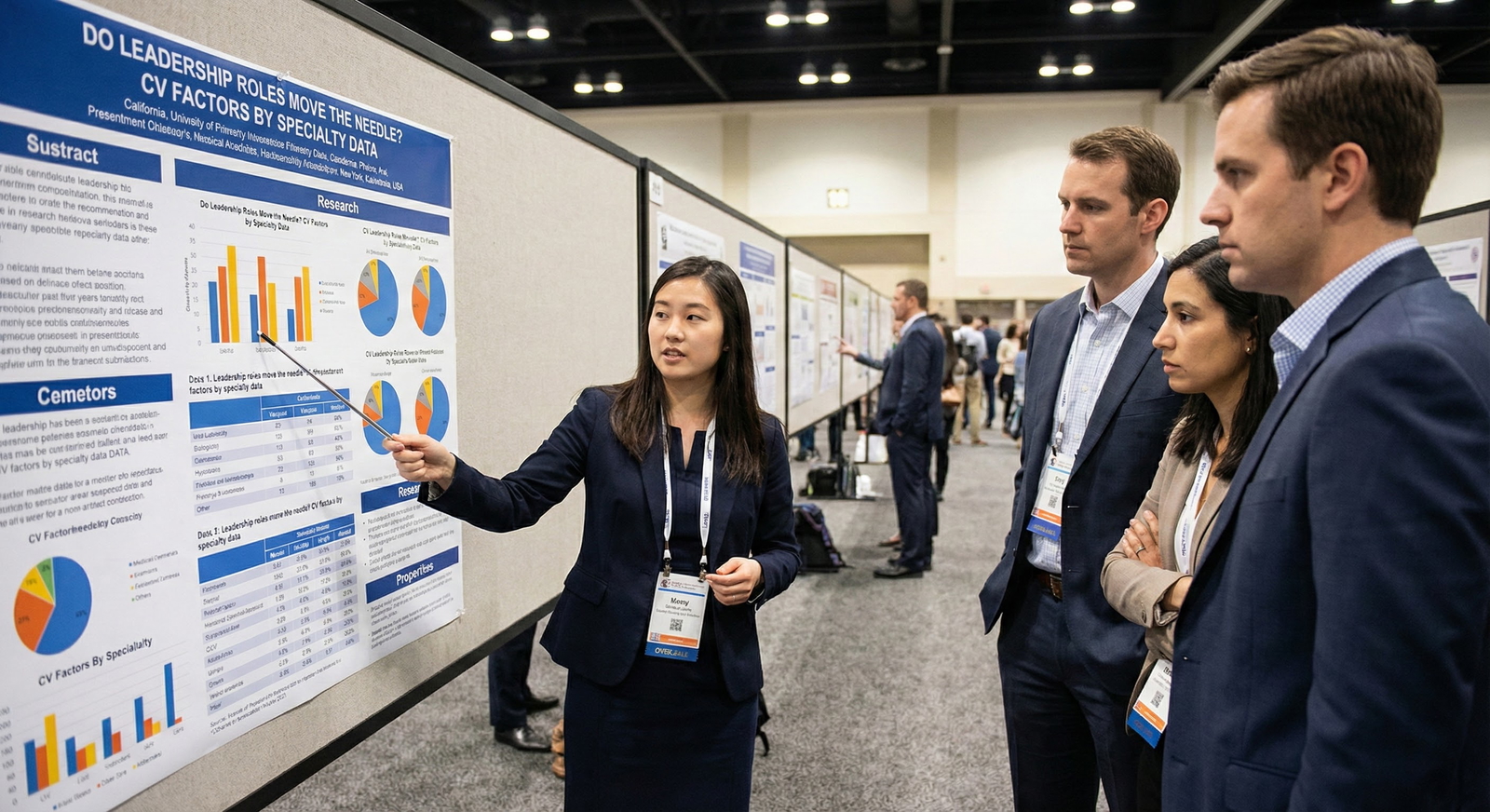
2. Listing Publications and Presentations
For an IMG residency guide, one of the most common questions is how to list research output effectively. Separate into:
- Peer‑Reviewed Publications
- Manuscripts Under Review / In Preparation (only if genuinely near submission)
- Conference Presentations (Oral and Poster)
- Book Chapters / Online Educational Resources (if relevant)
Use a consistent citation format (e.g., AMA or Vancouver) and bold your name in the author list so program directors can quickly see your involvement.
Example:
Peer‑Reviewed Publications
- YourLastName A, Smith B, Lee C. Laparoscopic vs open appendectomy in elderly patients: a single‑center retrospective cohort study. J Surg Res. 2023;275:45‑52.
- YourLastName A, Patel D, Nguyen T. Predictors of surgical site infection after colorectal surgery: development of a risk stratification model. Ann Surg. 2024; in press.
If you have many outputs, prioritize general surgery and surgical subspecialty work first, then other fields.
3. Even Without Formal Research Positions
If you lack traditional research fellowships, you can still strengthen this section:
- Include case reports, clinical audits, QI projects, or local hospital initiatives.
- Emphasize methods and skills: data collection, literature review, basic statistics, IRB experience.
- Demonstrate initiative: “Designed and led…” or “Initiated a chart review project on…”
This shows academic curiosity and growth potential, which are highly valued in general surgery.
Clinical Skills, Technical Abilities, and Surgical Identity
Beyond titles and publications, programs want to know: Can this applicant become a safe, capable surgeon? Your CV should subtly answer yes.
1. Clinical and Procedural Skills Section
For surgery, consider a “Clinical Skills and Procedures” or “Surgical Skills” section, but keep it honest and credible.
You may list:
- Surgical exposure: assisting in appendectomies, hernia repairs, cholecystectomies, etc.
- Bedside procedures: central line placement (if independently performed and documented in your home system), chest tube insertion, wound debridement, suturing, incision and drainage, basic ultrasound use.
- Perioperative skills: pre‑op evaluation, post‑op management, pain control, fluid management basics.
Important:
Distinguish between:
- Observed, Assisted, and Performed (under supervision).
Overstating your independence is dangerous and easily detected in interviews.
Example:
Surgical and Clinical Skills
- Assisted in >100 general surgery procedures including laparoscopic cholecystectomy, inguinal hernia repair, and exploratory laparotomy (home country).
- Independently performed bedside procedures under supervision: incision and drainage of abscesses, wound debridement, simple and mattress suturing.
- Participated in perioperative management: fluid resuscitation plans, venous thromboembolism prophylaxis, and postoperative wound care.
2. Building a Surgical Identity Through Experiences
Use your CV to show a coherent and convincing “surgical identity”:
- Multiple surgery‑focused experiences over time (rotations, electives, job roles).
- Progressive responsibility and commitment (e.g., starting as observer, later as research fellow and educator).
- Focused academic output in surgery.
For example, a trajectory that flows like:
Surgery electives → Home‑country surgery internship → US general surgery observership → 2‑year surgical oncology research fellowship → 5 related publications
is much more compelling than scattered, unrelated experiences.

Non‑Clinical Sections That Strengthen a General Surgery IMG CV
Even in a highly technical specialty like general surgery, non‑clinical sections significantly influence interview decisions.
1. Leadership and Teaching Experience
General surgery residents often lead teams and teach juniors. Show your ability to guide, organize, and communicate.
Examples of entries:
- Chief intern or house officer in a surgical unit.
- Organizing morbidity and mortality conferences.
- Teaching junior medical students clinical skills or anatomy.
- Leadership roles in student surgical societies or global surgery interest groups.
Example Entry:
Clinical Tutor in Anatomy and Surgical Skills
XYZ Medical College, Department of Anatomy
August 2018 – April 2020
- Led weekly small‑group teaching sessions on abdominal anatomy with emphasis on surgical relevance.
- Demonstrated basic suturing techniques and knot tying to pre‑clinical students.
- Received “Best Teaching Assistant” award based on student evaluations.
This tells programs you are already acting like the type of resident they want.
2. Volunteer Work and Community Engagement
Service orientation and empathy matter in surgery. Include:
- Health camps, rural surgical outreach, or screening clinics.
- Volunteer work in free clinics or patient education programs.
- Disaster relief or humanitarian missions.
Highlight skills gained relevant to residency:
- Working with limited resources and high volume.
- Communicating with diverse and vulnerable populations.
- Managing stress and uncertainty.
3. Awards, Honors, and Scholarships
This section helps programs quickly gauge your academic strength and recognition.
Include:
- Academic distinctions (especially in surgery, anatomy, physiology).
- Research awards or best poster/oral presentation prizes.
- Scholarships, dean’s list, or national exam honors.
Be specific:
“First place – Best Oral Presentation, National Surgical Residents Conference, 2023, for talk on ‘Enhanced Recovery After Surgery in Colorectal Patients’.”
4. Professional Memberships and Societies
Listing memberships signals engagement with the surgical community.
Examples:
- American College of Surgeons (ACS) – Resident and Associate Society (Candidate Member)
- Student/trainee membership in national or regional surgical associations.
- General surgery interest groups at your medical school or hospital.
Add dates and any active roles (committee positions, event organizing) if relevant.
5. Languages and Cultural Competence
For IMGs, language skills are often a strength, especially at diverse U.S. institutions.
List:
- Languages and proficiency levels (native, fluent, conversational, basic).
- Any experience using these skills in clinical settings (e.g., informal interpretation).
This can be particularly valuable for programs serving multilingual communities.
Formatting, Style, and Strategic Positioning: Practical Residency CV Tips
This section focuses on highly practical details—how to build CV for residency in a way that is polished and strategic.
1. Keep the Layout Simple and Professional
- Use a classic, readable font (e.g., Arial, Calibri, Times New Roman, size 10–12).
- Use 1.0–1.15 line spacing, with clear section headings in bold or small caps.
- Include page numbers and your name in the header or footer (e.g., “Your Name – CV – Page 2”).
Avoid:
- Photos (in most U.S. settings).
- Excessive color or graphics.
- Overly artistic templates that hinder readability.
2. Use Strong, Action‑Oriented Bullet Points
Each bullet should begin with a strong verb and, when possible, include scope and impact.
Weak:
- “Helped in data collection.”
- “Worked with patients.”
Stronger:
- “Collected and managed perioperative data for 200+ general surgery patients in a prospective database.”
- “Conducted pre‑operative counseling and post‑operative wound checks for 15–20 patients per week under attending supervision.”
This demonstrates both scale and responsibility.
3. Tailor the CV to General Surgery
Where possible, highlight the words:
- “General surgery,” “surgical,” “perioperative,” “operative,” “trauma,” “acute care,” “ICU,” etc.
Without forcing it, this subtly reinforces that your experiences are relevant to general surgery residency.
For example, rename a section from:
“Clinical Experience” → “Clinical and Surgical Experience”
if it accurately reflects your background.
4. Make Your Medical Student CV Evolve Into a Residency‑Ready CV
Many IMGs begin with a generic medical student CV. For residency, especially in general surgery, you must:
- Re‑order content so that surgery‑related experience appears early.
- Condense or remove less relevant activities (e.g., brief non‑clinical jobs from many years ago).
- Expand sections that demonstrate your readiness for an intense surgical environment (research, leadership, surgical skills).
This evolution from medical student CV to mature residency CV is part of convincing programs you are ready for their training.
5. Common Pitfalls for IMGs—and How to Avoid Them
- Overcrowded CV: Listing every tiny workshop or short‑term activity.
- Fix: Merge minor events under one bullet (e.g., “Attended multiple workshops on laparoscopic skills and trauma resuscitation between 2019–2022”).
- Inflated roles: Claiming you “performed” advanced procedures independently that are not credible for your level.
- Fix: Use “assisted” or “performed under supervision” and be honest.
- Disorganized timeline: Gaps and unclear dates.
- Fix: Use month/year formats consistently; briefly address major gaps in your personal statement or ERAS section, not necessarily on the CV.
- Poor English or grammatical errors:
- Fix: Have multiple reviewers (including native speakers or residents) proofread your CV.
Putting It All Together: Strategy for IMGs Targeting General Surgery
To translate this into an actionable plan:
Start Early (1–2 years before applying)
- Begin collecting data on every activity you do: dates, supervisors, responsibilities, and outcomes.
- Build a “master CV” with all details; later create a shorter, curated version for applications.
Center Your CV Around Surgery
- Seek rotations, observerships, and research specifically in general surgery or closely related fields (trauma, surgical oncology, vascular, etc.).
- Prioritize experiences that allow you to interact with surgical teams and learn perioperative management.
Invest in Surgical Research and Scholarly Work
- Even 1–2 well‑executed projects with quality outputs (e.g., posters at major meetings, one good publication) can transform your CV.
- If possible, pursue a formal research fellowship in a U.S. or high‑profile academic center.
Continuously Refine and Get Feedback
- Ask current general surgery residents and attendings to review your CV.
- Incorporate feedback, especially about what should be emphasized or trimmed.
Align Your CV With the Rest of Your Application
- Personal statement, letters of recommendation, and experiences in ERAS should reinforce the same narrative:
- You are an IMG with clear, sustained commitment to general surgery.
- You have progressively built clinical, academic, and leadership skills in this field.
- You understand the demands of surgical training and are prepared for them.
- Personal statement, letters of recommendation, and experiences in ERAS should reinforce the same narrative:
By doing so, your CV moves from a simple list of activities to a powerful, coherent argument that you belong in a general surgery residency program.
FAQs: CV Building for IMGs in General Surgery
1. How long should my CV be as an IMG applying to general surgery?
Most strong IMG CVs for general surgery are between 2–4 pages. If you have extensive research and many publications, going to 5 pages can be acceptable, but prioritize clarity and relevance. Shorter and focused is better than long and unfocused.
2. How important is U.S. clinical experience on my CV for surgery residency?
For many programs, especially in surgery, U.S. clinical experience is very important. It demonstrates:
- Familiarity with U.S. healthcare systems.
- Ability to function in a multidisciplinary surgical team.
- Communication skills in English in a real clinical environment.
Even observerships, if well described, help. Externships and hands‑on experiences are more valuable but less available to IMGs.
3. I have limited research. Can I still build a competitive surgery CV?
Yes, but you should try to develop at least some scholarly activity. Start with:
- Case reports.
- Simple retrospective chart reviews.
- Quality improvement or audit projects.
Highlight methodology, your role, and any output (posters, local presentations). While large research portfolios help, strong clinical performance, sincere commitment to surgery, and excellent letters can still make you competitive.
4. Should I customize my CV for each program?
You don’t need completely different versions for each program, but you may have:
- A general surgery–focused CV (for categorical surgery programs).
- A slightly broader version if you are also applying to preliminary surgery or related fields.
Within general surgery, minor tailoring (e.g., emphasizing trauma vs. oncology, depending on program strengths) can be done more in your personal statement and interview responses rather than changing the CV repeatedly. Ensure your core CV remains consistent with ERAS at all times.
By applying these structured strategies and specific residency CV tips, you can transform your medical student CV into a focused, compelling document that showcases you as a well‑prepared international medical graduate with a clear trajectory toward a successful general surgery residency match.