Understanding the Neurosurgery Residency CV Landscape
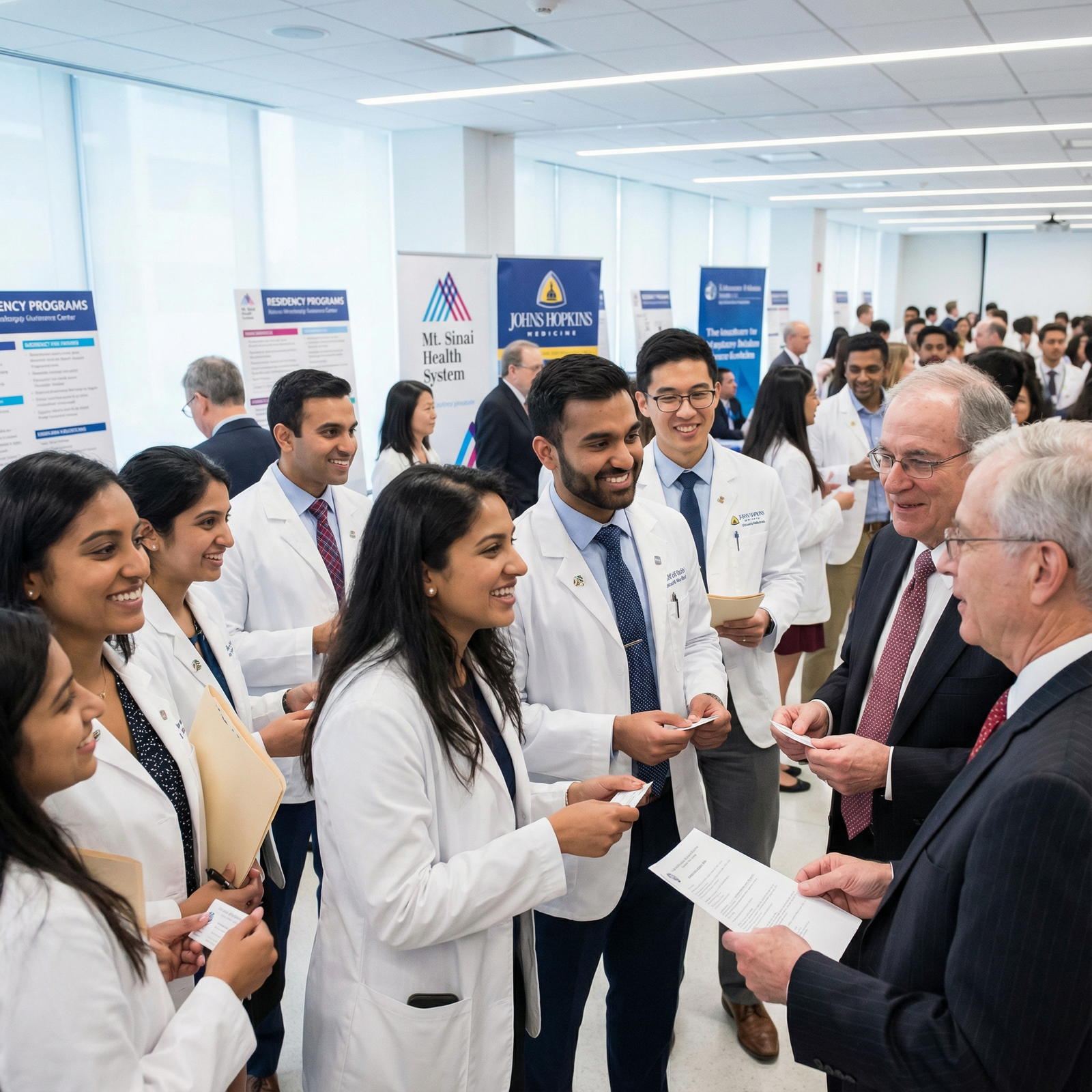
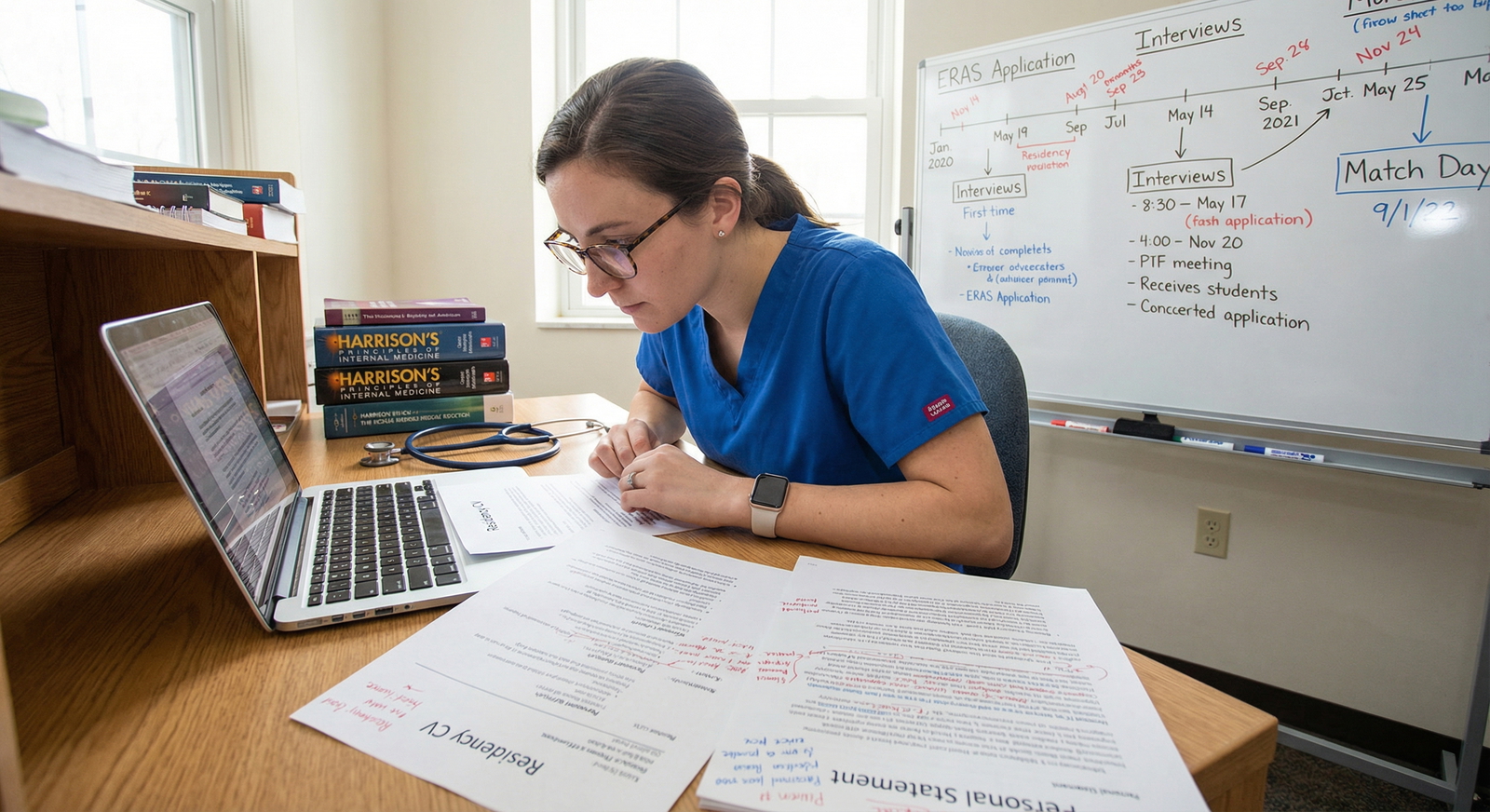
Neurosurgery is one of the most competitive specialties in the allopathic medical school match. As an MD graduate residency applicant, your CV is not just a formality—it is a strategic document that tells program directors, “I understand what neurosurgery demands, and I’ve been deliberately preparing for it.”
Before you start editing bullet points, it’s critical to understand what makes neurosurgery different and how that shapes expectations for a brain surgery residency CV.
What Neurosurgery Program Directors Look For
Program leadership in neurosurgery generally scans your CV for evidence in these domains:
Academic strength
- Strong medical school performance and USMLE scores
- Honors (AOA, Gold Humanism, clerkship honors)
- Rigorous coursework or additional degrees (MS, PhD, MPH)
Research productivity
- Neurosurgery or neuroscience-focused projects
- Peer-reviewed publications, especially PubMed-indexed
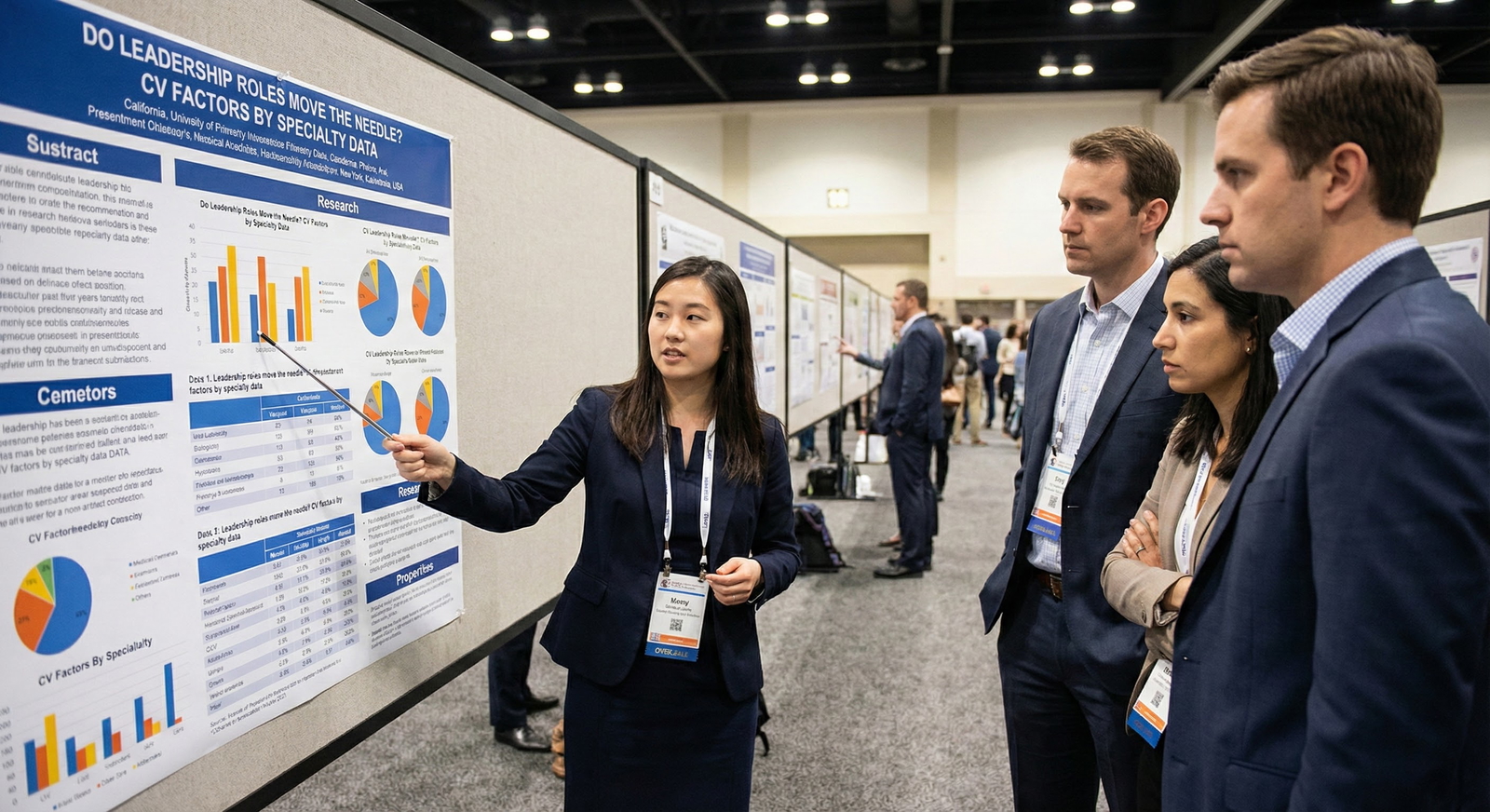
- Abstracts, posters, podium presentations at national meetings
- Continuity of research involvement over time
Technical and clinical exposure
- Sub-internships (Sub-Is) in neurosurgery
- Neurosurgery electives at home and away institutions
- Hands-on skills workshops or simulation experiences
Leadership and teamwork
- Positions in student organizations, especially neurosurgery-related
- Roles demonstrating responsibility (project leader, committee chair)
- Evidence of collaboration and the ability to work in teams
Commitment to neurosurgery
- Longitudinal involvement in neurosurgical research or interest groups
- Mentorship relationships with neurosurgeons
- Activities that show you understand the lifestyle, intensity, and demands
Professionalism and character
- Volunteerism, mentoring, and teaching
- Consistency (no large unexplained gaps)
- A narrative of grit, resilience, and ethical conduct
Your CV should make it easy for a neurosurgery PD to see all of these elements in under two minutes. The rest of this guide explains how to build a CV for residency that does exactly that.
Structuring a Neurosurgery Residency CV: Framework and Order
Think of your CV as a high-yield, visually organized snapshot of your professional identity. Neurosurgery faculty are busy—clear structure is not cosmetic; it’s strategic.
Recommended Section Order for an MD Graduate Neurosurgery CV
For a neurosurgery residency CV, a typical and effective order is:
- Contact Information & Professional Summary (optional, brief)
- Education
- Honors & Awards
- USMLE/COMLEX Scores (if program allows listing)
- Research Experience
- Publications
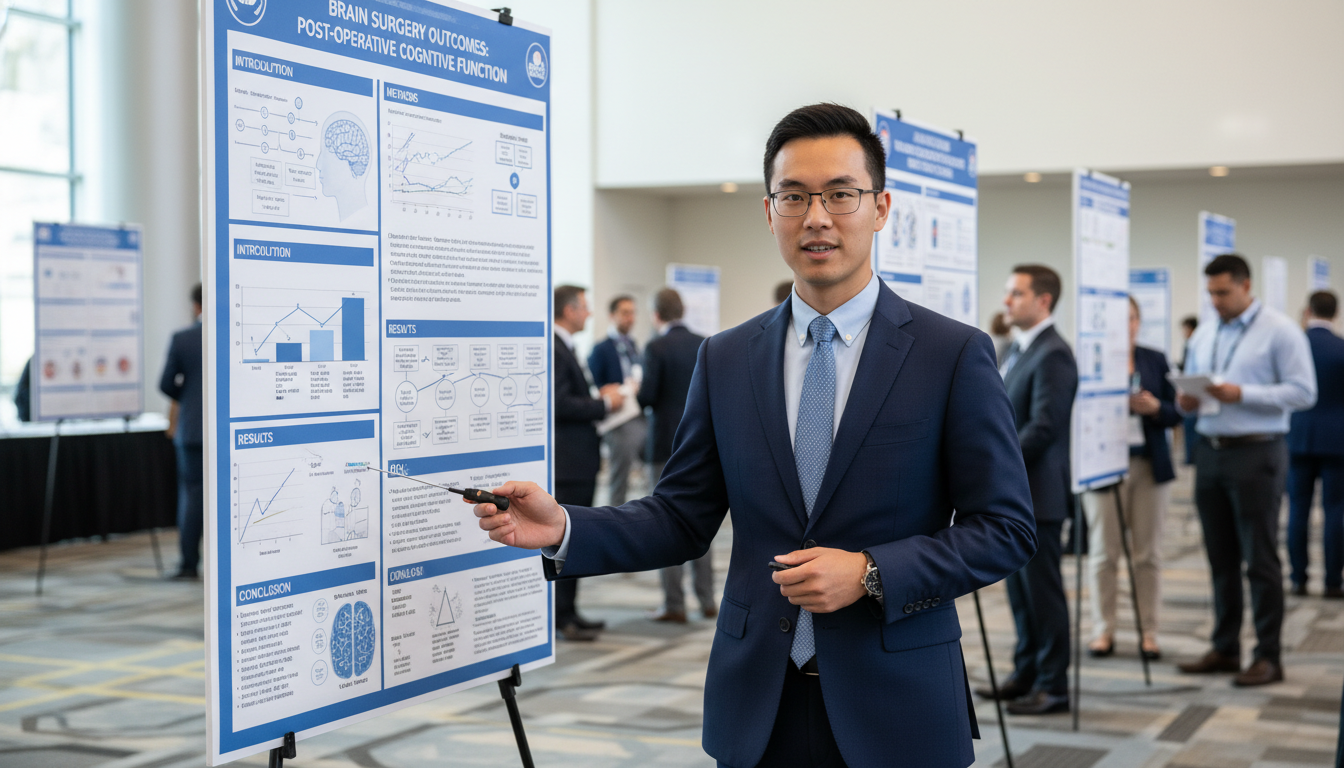
- Presentations & Abstracts
- Clinical Experiences (including Sub-Is and electives)
- Teaching & Mentorship
- Leadership & Professional Involvement
- Volunteer & Community Service
- Technical Skills & Certifications
- Professional Interests (optional but often helpful)
- Hobbies & Personal Interests (brief, curated)
If you are only a few months post-graduation or in a research fellowship gap year, you can still follow this framework, adding a short “Current Position” under Education or as its own section.
General Formatting Principles
- Length: 2–4 pages is typical for a neurosurgery residency CV; 5+ pages is common if you have substantial research.
- Font & layout: Use a clean, readable font (Calibri, Arial, Times New Roman, 11–12 pt). Use consistent margins and spacing.
- Chronology: Use reverse chronological order (most recent first) within each section.
- Consistency: Dates, locations, titles, and bullet point styles must be uniform.
- File name: Use a professional, clear label such as
LastName_FirstName_CV_Neurosurgery_2025.pdf.

Building Each Section of Your Neurosurgery CV
This section walks line by line through what to include, how to phrase it, and where neurosurgery-specific strategy comes in.
1. Contact Information & Optional Summary
Contact block (required):
Include at the top:
- Full name (bold, larger font)
- Professional email (e.g., firstname.lastname@…)
- Mobile phone
- Current city, state
- Optional: LinkedIn, professional website, or Google Scholar profile
Professional summary (optional, 2–4 lines):
This is not a personal statement. Think of it as your “headline” for neurosurgery.
Example:
MD graduate with three years of translational glioblastoma research, five neurosurgery-focused publications, and strong sub-internship evaluations seeking neurosurgery residency. Interests include brain tumor surgery and neurosurgical outcomes research.
Use this only if it adds clarity; if you have a strong ERAS application, it’s optional.
2. Education
List:
- Degree, institution, location
- Dates (month/year)
- Honors (e.g., “Graduated with Distinction,” “AOA Honor Medical Society”)
Example:
Doctor of Medicine, Allopathic Medical School, New York, NY
2019 – 2023
- AOA Honor Medical Society (elected 2022)
- Honors in Neurosurgery, Neurology, Internal Medicine
For MD graduates with additional degrees (PhD, MS, etc.), list them in reverse chronological order. Neurosurgery places particular value on advanced research training—make sure these are unmistakably visible.
3. Honors & Awards
This section is especially important for competitive specialties like neurosurgery.
Include:
- Medical school awards (AOA, clerkship awards, scholarships)
- Research awards (best abstract, young investigator award)
- National society recognitions
Format:
Award Name, Awarding Organization – Role/Context, Year
- 1-line description if not self-explanatory
Example:
Best Clinical Research Poster, National Student Neurosurgery Conference, 2022
- Awarded for first-author poster on outcomes after endoscopic endonasal pituitary surgery (n=120).
4. Exam Scores (If Listed)
Some applicants include USMLE Step 1 and Step 2 CK scores on the CV; others rely on ERAS alone. If you choose to include them:
USMLE Step 1: Pass
USMLE Step 2 CK: 255 (2023)
If your scores are lower than typical benchmarks for neurosurgery, you may choose to omit them from the CV and let ERAS handle this information without drawing extra attention.
5. Research Experience
For neurosurgery, this is one of the most heavily scrutinized sections. It should be:
- Organized by project or position, not by publication
- Clear about your role (data collection, analysis, first author, etc.)
- Aligned with neurosurgery or neurosciences when possible
Format per entry:
Research Position, Institution, Department, PI, City, State
Dates (month/year – month/year)
- 2–4 bullets describing what you did and your outcomes
Example:
Research Assistant, Department of Neurosurgery, University Hospital, Boston, MA
PI: Jane Smith, MD, PhD
2021 – 2023
- Conducted retrospective cohort study on functional outcomes after decompressive hemicraniectomy for malignant MCA infarction (n=86).
- Performed chart review and REDCap database entry; trained 3 new research assistants.
- Co-authored manuscript accepted in World Neurosurgery (2023).
- Presented preliminary findings at the CNS Annual Meeting (2022).
Residency CV tips for research:
- Use active, specific verbs (designed, analyzed, implemented, authored).
- Quantify where possible (sample size, number of projects, number of abstracts).
- Label clearly if the research is neurosurgery-focused; this matters.
- Include non-neurosurgery research if substantial, but emphasize neurology/neuroscience first.
If you did a dedicated research year (e.g., between MS3 and MS4 or post-MD), list it prominently:
Postdoctoral Research Fellow, Department of Neurosurgery, Institution
2023 – 2024 (Full-time research year)
- Then bullets as above.
6. Publications
This section is central to a neurosurgery residency CV, especially for an MD graduate with academic aspirations.
Break into subcategories if you have multiple items:
- Peer-reviewed manuscripts
- Book chapters
- Submitted/in preparation (optional, but be honest)
Use consistent citation style (e.g., AMA) and bold your name:
Peer-reviewed Publications
- LastName F, Coauthor S, Coauthor T. Title of article. Journal Name. 2024;13(2):123–130. doi:…
- Coauthor A, LastName F, Coauthor B. Title of second article. Neurosurgery. 2023;…
If you have many non-neurosurgery papers, consider grouping neurosurgery-related ones first or labeling them with “(neurosurgery)” at the end.
Be accurate: Never list “submitted” or “in preparation” as “published.” Program directors check PubMed.
7. Presentations & Abstracts
Neurosurgery places importance on your engagement with the specialty community.
Subdivide:
- Oral Presentations
- Poster Presentations
Include conference name and whether it is national, international, or regional.
Example:
Oral Presentations
- LastName F, Coauthor A. “Early versus delayed decompressive craniectomy after traumatic brain injury.” Oral presentation at: Congress of Neurological Surgeons Annual Meeting; October 2023; Washington, DC.
Poster Presentations
- LastName F, Coauthor B. “Microvascular decompression outcomes in trigeminal neuralgia.” Poster presented at: AANS Annual Scientific Meeting; April 2022; Philadelphia, PA.
If the same project appears under Research, Publications, and Presentations, that’s positive; it shows continuity and productivity.
Highlighting Clinical and Leadership Experiences Strategically
8. Clinical Experiences (Sub-Internships, Electives, and Observerships)
For brain surgery residency applications, your neurosurgery rotations are key markers of commitment and performance.
Subdivide where needed:
- Neurosurgery Sub-Internships / Acting Internships
- Neurosurgery Electives (Home and Away)
- Other Key Clinical Rotations (brief)
- Optional: Observerships (for international or additional exposure)
Example:
Sub-Internship, Neurosurgery, University Hospital, Department of Neurosurgery, Chicago, IL
July 2022
- Participated in preoperative planning and postoperative care for cranial and spinal neurosurgery patients.
- Assisted in operating room as first assist for lumbar laminectomies and microdiscectomies under supervision.
- Delivered weekly case presentations at resident teaching conference; received “Outstanding Sub-Intern” recognition.
Residency CV tips for clinical experience:
- Emphasize responsibility and initiative, not just passive observation.
- Mention neurosurgeon mentors if they are program leadership or known figures (but do not exaggerate your relationship).
- If you did away rotations at neurosurgery programs, highlight them—they are powerful signals of reciprocal interest.
9. Teaching & Mentorship
Neurosurgery values residents who can teach medical students, junior residents, and even patients’ families.
Include:
- Small-group teaching (anatomy, neuroanatomy, skills labs)
- Peer tutoring or Step prep teaching
- Curriculum development
Example:
Peer Tutor, Neuroanatomy, Allopathic Medical School, New York, NY
2020 – 2022
- Led weekly 2-hour review sessions for first-year students (10–15 students/session).
- Created structured dissection guides and practice quizzes; average exam scores improved by 10 points among attendees.
10. Leadership & Professional Involvement
This is where you demonstrate that you can navigate complex systems and assume responsibility—crucial for the neurosurgery environment.
Include:
- Positions in national neurosurgical student organizations
- Roles in your school’s neurosurgery interest group
- Leadership in research teams, student council, or quality improvement projects
Example:
President, Neurosurgery Interest Group, Allopathic Medical School
2021 – 2022
- Organized 8 neurosurgeon-led career talks and 3 skull base anatomy workshops per year.
- Established mentorship pairings between 20 students and 6 attending neurosurgeons.
- Coordinated an annual “Neurosurgery Day” with 100+ student attendees.
Neurosurgery program directors look for evidence that you can lead a team in the OR someday. Use this section to demonstrate early leadership skills.
11. Volunteer & Community Service
This section reflects your values and professionalism. Even in a high-technology field like neurosurgery, empathy and service matter.
Prioritize:
- Longitudinal commitments over one-off events
- Activities with a neurological or neurosurgical connection (if available)
- Work with underserved communities
Example:
Volunteer, Traumatic Brain Injury Support Group, City Rehabilitation Center
2020 – 2023
- Facilitated monthly support sessions for patients and caregivers recovering from TBI and stroke.
- Collaborated with multidisciplinary team (OT, PT, social work) to provide resources and education.
12. Technical Skills & Certifications
For neurosurgery residency, this section can help distinguish you, especially as an MD graduate who may have extra technical exposure.
Include:
- Surgical simulation experience (microsurgical lab, cadaver dissections)
- Relevant software (MATLAB, R, Python for data analysis, image analysis tools)
- Certifications (BLS, ACLS, ATLS, GCP for research)
- Specialized skills (stereotactic navigation exposure, basic neuroimaging analysis)
Example:
Technical Skills
- Microsurgical skills: completed 20-hour microanastomosis course using operative microscope and suturing 1–2 mm vessels (simulation lab).
- Neuroimaging: basic interpretation and segmentation of MRI/CT using 3D Slicer and OsiriX.
- Data analysis: proficient in R and SPSS for multivariate regression and survival analysis.
13. Professional Interests and Career Goals (Optional but Useful)
A brief section here helps create coherence across your CV.
Example:
Professional Interests
- Skull base and cerebrovascular neurosurgery
- Outcomes research in malignant brain tumors
- Global neurosurgery and capacity-building in low-resource settings
Keep this section concise and aligned with what appears in your research and experiences.
14. Hobbies & Personal Interests
This is often read more than applicants expect. Programs want to know if you are collegial, resilient, and interesting to work with for seven years.
Avoid clichés like “travel” or “spending time with friends.” Be specific and authentic.
Examples:
- Long-distance running (completed 3 half-marathons, personal best 1:38).
- Classical piano (12 years of study; performed in local recitals).
- Photography with focus on urban landscapes (Instagram portfolio with 2,000+ followers).
Strategic Residency CV Tips Specifically for Neurosurgery
Now that we’ve covered structure, here are higher-level residency CV tips tailored to MD graduate residency applicants in neurosurgery.
1. Make Neurosurgery Commitment Unmistakable
When someone skims your CV for 30–60 seconds, they should see:
- Neurosurgery in section titles (e.g., “Neurosurgery Research Experience”)
- Mentions of neurosurgery in project descriptions
- Leadership in neurosurgery-related groups
- Clinical experiences labeled as “Neurosurgery Sub-Internship” or “Neurosurgery Elective”
If a reader has to guess whether you are applying to neurosurgery or another specialty, your CV is not specific enough.
2. Craft a Research Narrative, Not Just a List
Program directors don’t only look for volume of research; they look for trajectory:
- Did you start early and build on projects over time?
- Did you move from assistant to leading your own projects?
- Are your publications, presentations, and research experiences interconnected?
To highlight this:
- Use consistent language across entries to signal continuity (e.g., same PI, same project).
- Avoid scattering related projects across different sections without clear labeling.
3. Be Honest but Strategic with “In Progress” Work
“How to build CV for residency” often triggers the temptation to inflate. Neurosurgery PDs are particularly sensitive to exaggeration.
Good practice:
- Label status clearly: “submitted,” “under review,” “in preparation.”
- Only list “in preparation” if a draft manuscript exists and you have author agreement.
- Don’t create separate sections for “planned” work.
4. Use Quantification to Stand Out
Whenever possible, encode scope and impact into your bullet points:
- “Reviewed 250+ neurosurgical cases for retrospective analysis.”
- “Mentored 8 first- and second-year students in neurosurgery interest group.”
- “Raised $5,000 for local TBI support foundation.”
Numbers help busy reviewers understand your contributions quickly.
5. Align Your CV with Your Personal Statement and Letters
Your CV should support, not contradict, the story told in your personal statement and LORs:
- If your statement emphasizes brain tumor surgery, your CV should show relevant research or electives.
- If a letter writer describes you as the “lead student” on a QI project, that project should appear clearly in your CV.
6. Tailor for Different Uses: ERAS vs. Standalone CV
In the allopathic medical school match, much of your information is in ERAS fields, but you will still need a standalone CV for:
- Emailing potential mentors or research PIs
- Submitting to visiting student programs or observerships
- Networking at conferences
- Applying for grants or travel awards
You can maintain one master CV and slightly tailor:
- Highlight research more for academic neurosurgery programs
- Highlight leadership and teaching for community-focused programs
Example: Translating Experiences into Strong CV Bullets
To make this concrete, here are side-by-side examples of weak vs. strong bullets:
Research Experience
- Weak: “Helped with research on brain tumors.”
- Strong: “Collected and analyzed clinical data from 95 patients with glioblastoma to evaluate predictors of progression-free survival; co-authored manuscript accepted in Journal of Neuro-Oncology (2023).”
Clinical Experience
- Weak: “Rotated with neurosurgery team.”
- Strong: “Managed daily notes and care coordination for 10–15 post-op neurosurgical patients per day, including ventriculoperitoneal shunts and craniotomy cases, under attending supervision.”
Leadership
- Weak: “Member of neurosurgery interest group.”
- Strong: “Coordinated monthly neurosurgery skills workshops (suturing, drilling, microdissection) attended by 30–40 students; partnered with 4 neurosurgery attendings to deliver hands-on teaching.”
The strong versions:
- Use action verbs
- Quantify scope
- Identify specific neurosurgical context
- Show outcomes or impact
This is the core of how to build CV for residency in a way that neurosurgery programs take seriously.
Frequently Asked Questions (FAQ)
1. How long should my neurosurgery residency CV be as an MD graduate?
For an MD graduate targeting neurosurgery, 2–4 pages is common. If you have significant research (multiple publications, presentations, and a dedicated research year), 5–7 pages is acceptable. There is no arbitrary page limit; clarity and organization matter more than length. Avoid padding with low-yield details—focus on experiences that demonstrate academic potential, neurosurgery commitment, and professionalism.
2. I have limited neurosurgery research. Can I still build a strong CV?
Yes, but you should be deliberate in how you present your experiences:
- Emphasize neuroscience, neurology, or critical care research you do have.
- Highlight clinical exposure to neurosurgery (Sub-Is, electives, observerships).
- Strengthen other areas: leadership, teaching, and community service.
- Consider a post-graduate research fellowship in neurosurgery or neuro-oncology to bolster your academic profile before applying.
Your CV should still read clearly as that of a neurosurgery-focused applicant, even if your research is broader.
3. Should I include non-medical work experience and hobbies on my neurosurgery CV?
Yes, selectively. Non-medical work can demonstrate transferable skills: time management, teamwork, resilience, and leadership. For example, prior engineering or computer science work can be particularly relevant for neurosurgical innovation. Hobbies should be concise and specific, and ideally reflect discipline, creativity, or teamwork (e.g., competitive sports, music, endurance activities), rather than generic interests.
4. How often should I update my CV during the residency application cycle?
Update your CV whenever there is a meaningful change:
- A manuscript is accepted or published
- You present at a new conference
- You start or complete a major role (e.g., new research fellowship, leadership position)
During the neurosurgery application season, it is reasonable to review and update your CV every 1–2 months. Keep a “living” master document so you can generate tailored versions rapidly when programs, mentors, or conferences request it.
By approaching your neurosurgery residency CV as a strategic narrative—rather than just a list—you position yourself as a serious, organized MD graduate residency candidate who understands the demands of brain surgery residency. Thoughtful structure, precise wording, and clear evidence of commitment can turn your CV into a powerful tool in the allopathic medical school match process.