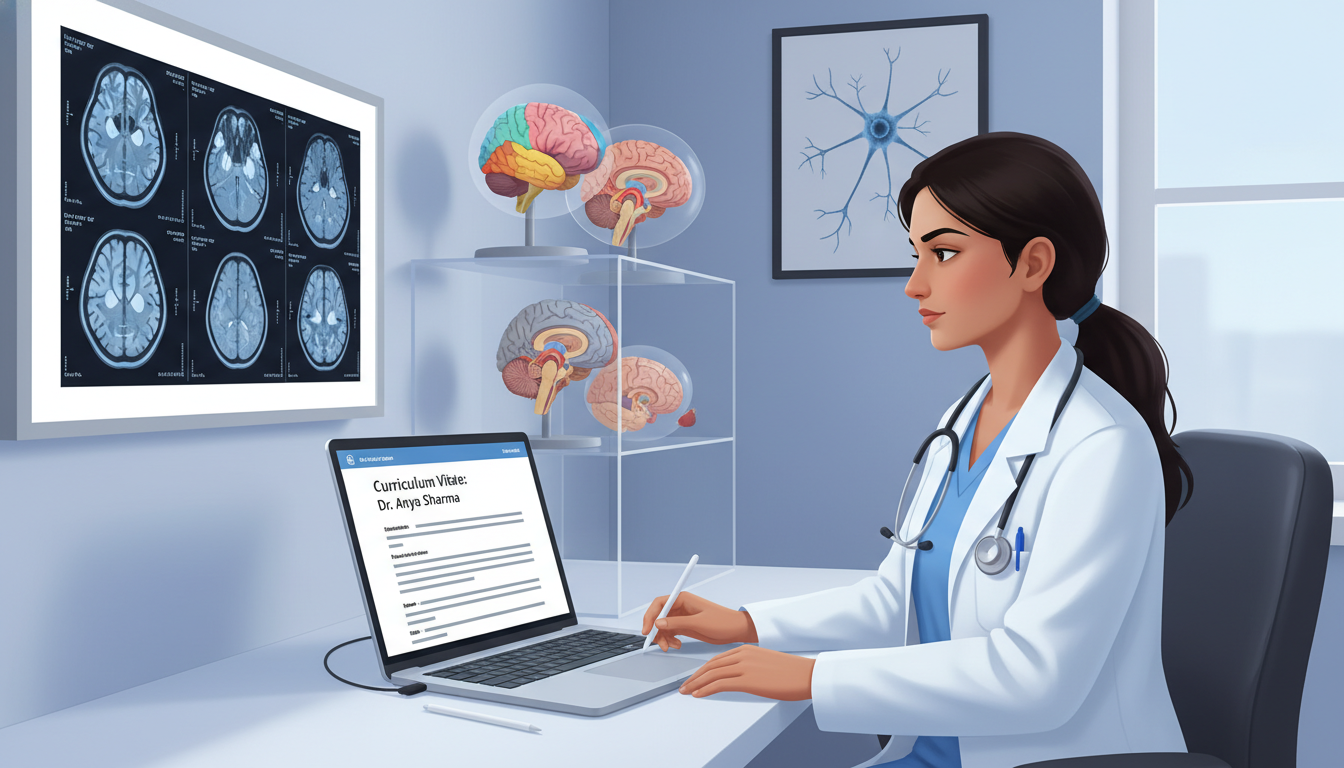
Understanding the Neurology Residency CV Landscape
For an MD graduate targeting neurology residency, your CV is more than a list of experiences—it’s a strategic document that tells a coherent story about why you belong in neurology. Program directors use your CV alongside ERAS to quickly assess:
- Your sustained interest in neurology
- The depth of your clinical experience
- Evidence of academic potential (research, presentations, publications)
- Professionalism and attention to detail
- Fit with the program’s priorities (clinical, research, community, or academic focus)
Even though ERAS collects much of your information in standardized fields, you should also maintain a polished, narrative CV. It will be needed for:
- Away rotations and sub-internships
- Research positions and lab applications
- Letters of recommendation requests
- Scholarships, grants, and travel funding
- Backup non-residency roles (e.g., research fellowships, clinical jobs)
A strong neurology-focused CV helps you stand out in a competitive allopathic medical school match and supports your overall “neuro match” strategy.
How the Neurology CV Differs From a Generic Medical CV
Compared with a general medical student CV, a neurology-focused CV should:
- Highlight neuro-specific clinical experiences early and clearly
- Emphasize neuro-related research, QI projects, and scholarly work
- Showcase cognitive strengths: analytical thinking, pattern recognition, longitudinal care
- Demonstrate comfort with complexity: multi-morbid patients, chronic disease management, neuro-ICU exposure
You are not just proving you are a capable MD graduate; you’re making the case that you are already behaving like an early neurologist.
Core Structure: How to Build a CV for Neurology Residency
Use a clean, consistent structure. A typical neurology residency CV for an MD graduate should include:
- Header & Contact Information
- Professional Summary (Optional but Recommended)
- Education
- USMLE / Licensing Exam Scores (Optional on PDF, Required in ERAS)
- Clinical Experience (Neurology-focused first)
- Research & Scholarly Activity
- Publications & Presentations
- Teaching & Leadership
- Honors, Awards, and Scholarships
- Professional Memberships
- Volunteering & Community Service
- Skills & Additional Information (Languages, Technical, Interests)
1. Header & Contact Information
This section must be professional and minimal:
- Full Name, MD
- Current Address (city, state acceptable)
- Professional email (e.g., firstname.lastname@domain.com)
- Mobile phone number
- LinkedIn profile (optional, if polished and updated)
Avoid:
- Personal photos on the CV (photo goes in ERAS, not on the CV)
- Casual emails (e.g., drcoolneuro@gmail.com)
- Excessive personal details (marital status, age, etc.)
2. Professional Summary (2–3 Lines)
While not mandatory, a short “Professional Summary” can help frame your neurology-focused story, especially for networking and opportunities outside ERAS.
Example:
MD graduate from an allopathic medical school with strong interest in vascular and critical care neurology. Experienced in conducting outcomes research in ischemic stroke and leading multidisciplinary quality improvement initiatives. Seeking neurology residency with robust clinical training and opportunities in academic neurology.
Use this to emphasize neurology-specific strengths, interests, and your long-term trajectory.
3. Education
List in reverse chronological order:
Medical School (Allopathic medical school)
- Institution, City, State
- Degree: MD
- Graduation month and year
- Honors: AOA, Gold Humanism, distinctions, or track (e.g., research track)
Undergraduate Degree
- Institution, major/minor, graduation year
- Honors (summa/magna cum laude, Phi Beta Kappa, etc.)
If you completed a master’s (e.g., MPH, MS in Clinical Research) or PhD, list it between your MD and undergraduate.
Neurology-specific tip:
If your medical school offered a neuroscience track, neurology concentration, or thesis, mention it concisely under your MD entry.

Highlighting Neurology-Relevant Experience
This is where your CV begins to distinguish you as a future neurologist rather than just a generic residency applicant.
4. Clinical Experience Section
Organize this to foreground neurology:
- Neurology Clinical Rotations (Core + Electives + Sub-I)
- Other Core Clerkships (Internal Medicine, Surgery, etc.)
- Additional Clinical Experience (externships, observerships, preclinical experiences)
For each entry, include:
- Title (e.g., “Sub-Intern, Adult Neurology”)
- Institution, Department, City, State
- Dates (Month/Year – Month/Year)
- 2–4 bullet points describing responsibilities and accomplishments
Example neurology Sub-I entry:
Sub-Intern, Adult Neurology – Stroke & General Service
XYZ University Hospital, Department of Neurology, City, State
07/2024 – 08/2024
- Managed 6–8 patients daily under supervision, performing focused neurologic exams and formulating assessment and plans.
- Presented new admissions during rounds and led daily case discussions for third-year medical students.
- Participated in acute stroke codes and contributed to tPA eligibility assessments.
- Collaborated on a small QI project to reduce delays in door-to-CT times in the ED.
Key residency CV tips for clinical sections:
- Use action verbs: “managed,” “coordinated,” “led,” “developed,” “initiated.”
- Emphasize complexity: neuro-ICU, stroke, epilepsy monitoring unit, neuro-oncology.
- Highlight any longitudinal neurology clinic exposure (MS clinic, movement disorders, etc.).
- If you had extra neuro exposure (shadowing, electives before core rotations), list selectively—focus on depth, not just volume.
5. Research and Scholarly Activity
Neurology is research-rich. Even for community programs, a research-friendly CV indicates academic curiosity and persistence.
Create a section called “Research Experience” and possibly a separate section for “Publications and Presentations” if you have enough items.
For each research role:
- Title: Research Assistant, Sub-Investigator, Student Investigator, etc.
- Project Title (brief and descriptive, especially if no publication yet)
- Institution, Department, Mentor (optional but recommended if they are known in neurology)
- Dates
- 3–5 bullet points describing your role and outcomes
Example entry:
Student Researcher, Vascular Neurology Outcomes Lab
ABC University Medical Center, Department of Neurology, Mentor: Dr. Jane Smith
06/2022 – 12/2023
- Conducted chart review of 500+ ischemic stroke patients to assess functional outcomes after thrombectomy.
- Extracted and cleaned data using REDCap, and performed basic statistical analyses in SPSS.
- Co-authored abstract presented at the American Academy of Neurology (AAN) Annual Meeting 2023.
- Contributed to manuscript draft under review for publication in a peer-reviewed neurology journal.
If you have limited research:
- Include QI projects from neurology rotations (e.g., improving EEG ordering practices).
- Include case reports, even if still in preparation—clearly label as “in preparation” or “submitted.”
- If research is non-neuro (e.g., cardiology), highlight transferable skills: data analysis, systematic review methods, collaboration.
6. Publications, Presentations, and Posters
This section adds academic weight to your neurology residency application.
Organize by category if you have multiple items:
- Peer-Reviewed Publications
- Abstracts and Conference Presentations
- Posters
- Book Chapters (rare but valuable)
Use standard citation format (e.g., AMA) and bold your own name in the author list.
Example:
Smith J, Doe A, Patel R, et al. Outcomes of thrombectomy in late-window ischemic stroke: A single-center retrospective study. Stroke. 2023;54(8):1234-1242.
If you are an MD graduate without publications, don’t panic. Many successful neurology residents match with strong posters and abstracts rather than formal papers. Focus on:
- Quality of work and reputable conferences (AAN, AES, ISC, local neurology society meetings).
- Clear description of your contributing role: “Co-authored abstract,” “Performed data analysis,” “Developed case report.”
Demonstrating Professionalism, Leadership, and Teaching
Neurology requires strong communication skills, patience, and the ability to teach patients, families, and colleagues. The next sections support that image.
7. Teaching Experience
Teaching demonstrates leadership and maturity. Include:
- Small-group facilitator roles (e.g., neuroanatomy, OSCE prep)
- Peer tutoring in neuroscience or neurology
- Teaching assistantships
- Informal roles (e.g., teaching medical students on rounds) if substantial and recurring
Example entry:
Peer Tutor – Neuroanatomy and Neurology Examination Skills
XYZ Allopathic Medical School, City, State
08/2022 – 05/2023
- Led weekly review sessions for 10–15 second-year medical students on neuroanatomy and neurologic exam techniques.
- Developed case-based learning materials and OSCE-style practice encounters.
- Received positive written feedback highlighting clarity of explanations and supportive mentorship style.
8. Leadership and Organizational Roles
Programs appreciate applicants who will contribute to residency culture. Include:
- Student Neurology Interest Group leadership
- Class officer roles
- Committee work (curriculum, wellness, diversity and inclusion)
- Event organization (stroke awareness days, epilepsy screenings)
Frame your leadership with impact, not just title.
Example:
Co-President, Neurology Interest Group
XYZ Medical School, City, State
05/2022 – 05/2023
- Organized 8 neurology-focused events including faculty panels, skills workshops (NIHSS training), and residency Q&A sessions.
- Increased member engagement by 40% through targeted outreach to preclinical students.
- Coordinated shadowing opportunities with the neurology department for 25+ students.

Honing Details That Matter: Awards, Memberships, Skills, and Interests
9. Honors, Awards, and Scholarships
This section can quickly convey excellence. Include:
- AOA membership
- Gold Humanism Honor Society
- Clerkship honors (particularly Neurology, Internal Medicine)
- Research awards or travel grants
- Community service awards related to neurology (e.g., epilepsy foundation work)
List entries as:
- Award name
- Granting institution/organization
- Date (Year/Month)
- Optional: brief explanation (1 line) if not self-explanatory
Example:
Neurology Clerkship Honors
XYZ Allopathic Medical School – Department of Neurology
04/2023
- Awarded for outstanding clinical performance and professional conduct during core neurology clerkship.
10. Professional Memberships
Memberships signal professional identity and early engagement with the field.
Common examples:
- American Academy of Neurology (AAN) – Student Member
- American Neurological Association (ANA) – Student Member
- Specialty sub-societies based on your interests (stroke, epilepsy, headache, movement disorders)
List:
- Organization name
- Membership type (Student / Resident-in-training, etc.)
- Years of membership
11. Volunteering and Community Service
Neurology intersects deeply with chronic disability, rehabilitation, and long-term care. Use this section to show empathy and dedication to vulnerable populations.
Prioritize:
- Work with stroke survivors, Parkinson’s support groups, epilepsy advocacy groups
- Activities supporting the elderly, people with disabilities, or cognitive impairment
- Telehealth initiatives, community education on stroke symptoms, etc.
When writing bullets, emphasize:
- Scope of involvement (weekly, monthly, one-time event)
- Leadership roles or initiative (did you design the program or just participate?)
- Outcomes or reach (number of participants, communities served)
12. Skills and Additional Information
This section is often underused but can strengthen your neurology profile.
Include:
- Languages: Especially if fluent or medically proficient (document as “native,” “fluent,” “conversational”).
- Technical skills: REDCap, SPSS, R, Python for data analysis, EEG interpretation basics if applicable.
- Certifications: NIHSS certification, BLS, ACLS.
- Interests: Keep them authentic and specific. These can be icebreakers during interviews.
Example:
Skills and Interests
- Languages: Fluent in English and Spanish; conversational in French.
- Technical: REDCap, SPSS, basic R for epidemiologic analysis.
- Certifications: NIH Stroke Scale (NIHSS) certified, BLS, ACLS.
- Interests: Long-distance running, classical piano, public science communication about brain health.
Residency CV Tips: Style, Formatting, and Strategy
Consistency and Clarity
Program directors may skim dozens of CVs. Help them by:
- Using one font throughout (e.g., 11–12 pt Times New Roman or Calibri)
- Maintaining consistent date format (e.g., MM/YYYY – MM/YYYY)
- Using bold or italics sparingly for emphasis (e.g., position titles, your name in citations)
- Aligning bullets and sections cleanly; no dense paragraphs
Tailoring for Neurology
Although your CV will remain largely constant, you can subtly adapt emphasis depending on context:
- For research-heavy neurology programs: Expand your research bullets, highlight methods and analytics skills.
- For community-focused programs: Highlight patient communication, community outreach, and diverse clinical exposure.
- For academic neuro match goals: Emphasize teaching, publications, and long-term academic career goals in your summary.
Integrating Your CV With ERAS
Your CV and ERAS application should tell the same story:
- Use consistent titles and dates between your PDF CV and ERAS entries.
- Make sure all major items in your CV are reflected somewhere in ERAS (experiences, publications).
- Use your CV to help draft ERAS experience descriptions and your personal statement.
Common CV Mistakes in Neurology Residency Applications
Avoid:
- Vague bullets: “Worked on stroke research project” says little. Instead: “Extracted clinical data from 300 stroke patients and co-authored abstract.”
- Overcrowding: Listing every one-day workshop or minor shadowing experience dilutes important content.
- Typos and formatting errors: These undermine your professionalism. Proofread carefully or have a mentor review.
- Inflating your role: Exaggeration is easily detected, especially when letter writers describe your actual contributions.
- Unclear project status: Always specify whether manuscripts are “published,” “in press,” “under review,” or “in preparation.”
Using Your CV for Networking and Mentorship
Your CV is not only for the allopathic medical school match; it’s also a tool for building your neurology career:
- Send an updated CV when you request letters of recommendation.
- Share it with potential research mentors to demonstrate your background and reliability.
- Bring (or have electronically ready) an updated CV when attending neurology conferences for networking.
Putting It All Together: A Strategic Approach for MD Graduate Residency in Neurology
To maximize your chances in neurology residency:
- Start early: Begin building your medical student CV in MS1 or MS2. Add to it every 3–6 months.
- Align experiences with neurology: Choose electives, research, and service that reflect genuine neuro interest.
- Document impact: For each experience, ask: “What changed because I was there?” and write bullets accordingly.
- Seek feedback: Have a neurology faculty member, advisor, or recently matched resident review your CV.
- Update before ERAS season: Ensure all dates, titles, and project statuses are current before applications open.
A well-crafted CV cannot compensate for very low scores or major red flags, but among applicants with similar metrics, it strongly influences interview invitations and ranking. It conveys professionalism, clarity of purpose, and readiness for the demands of neurology training.
FAQs: CV Building for MD Graduate in Neurology
1. How long should my neurology residency CV be as an MD graduate?
Most MD graduates applying to neurology will have a CV that is 2–4 pages. Length is less important than clarity and relevance. If you have extensive research, presentations, or prior careers, 4 pages can be appropriate. Avoid padding; every entry should add value to your neurology residency narrative.
2. Should my CV include USMLE scores if I’m applying through ERAS?
On ERAS, your exam results are already visible. On an external CV (for research positions, scholarships, or emails to programs), including USMLE Step scores is optional. If they are strong (e.g., above the neurology average) it can be beneficial to list them. If you prefer not to, that is acceptable—just be consistent with how you present this information across documents.
3. I have little neurology research. Can I still build a strong CV for neuro match?
Yes. Many neurology residents match successfully with minimal or no neurology-specific research. Emphasize:
- Strong performance and honors in neurology and internal medicine rotations
- Quality clinical experience and sub-internships in neurology
- Meaningful teaching, leadership, and community work
- Any research or QI in other specialties, framed around transferable skills (data analysis, critical thinking)
If time allows, seek at least one small neurology project (case report, chart review, QI) to demonstrate proactive interest.
4. How do I list “in progress” manuscripts or projects on my CV?
Create a clear subsection (e.g., “Manuscripts in Preparation” or “Projects in Progress”) or label items explicitly:
- Doe A, Smith J, et al. Hemorrhagic transformation after thrombectomy: A single-center review. Manuscript in preparation, expected submission 2025.
Do not list in-progress items under “Publications” or “Accepted” unless they have been formally accepted. Transparency is essential; mislabeling status can damage your credibility.
By approaching your CV as a strategic, neurology-focused document rather than a generic checklist, you can present yourself as a prepared, reflective, and committed future neurologist—positioning yourself strongly for the neurology residency match.