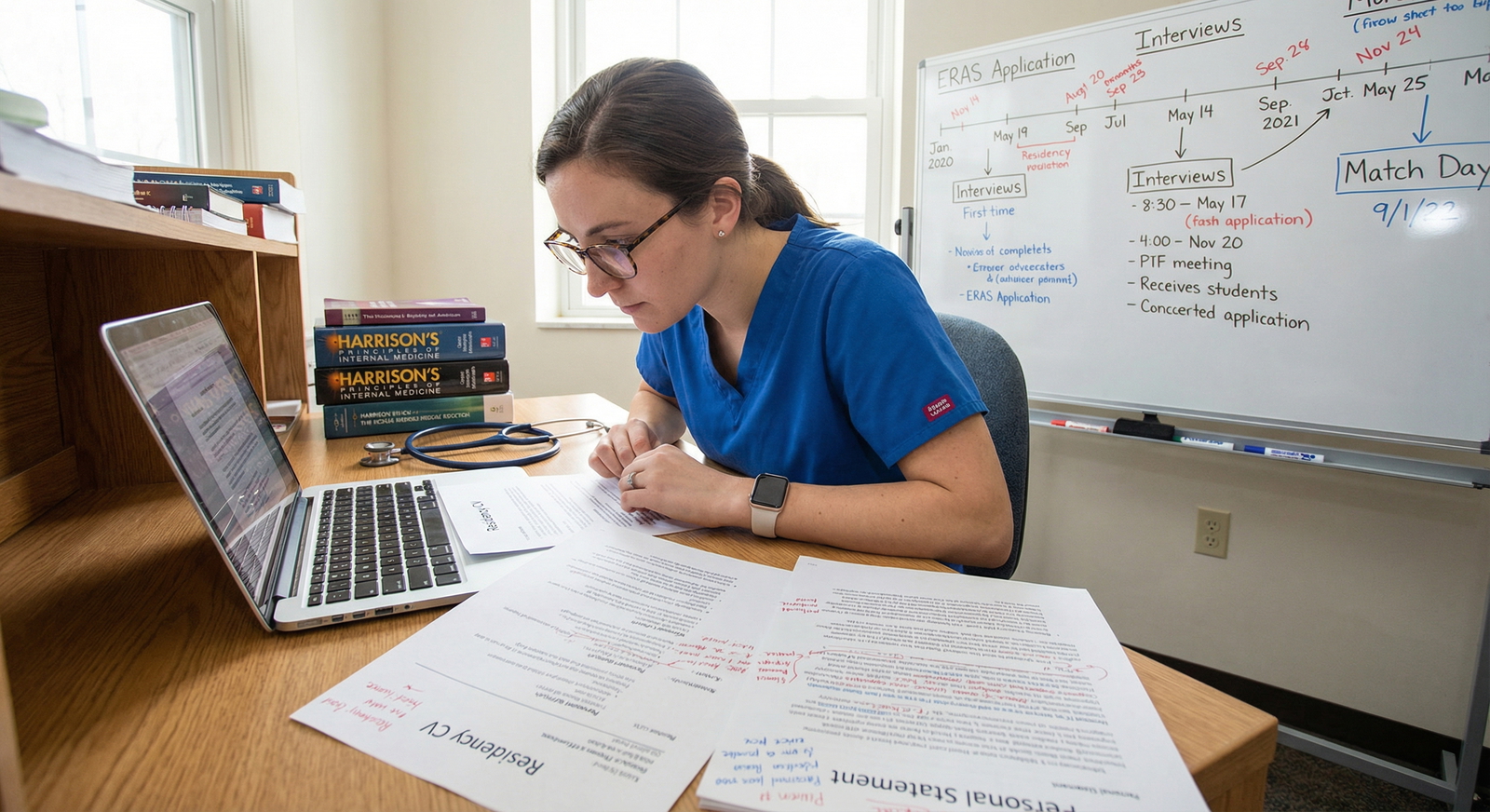
Understanding the Role of the CV in the Medicine-Pediatrics Match
For an MD graduate pursuing a med peds residency, your CV is more than a list of achievements—it’s a strategic document that tells program directors, “I am ready to train in a combined discipline and thrive in a dual-role career.” Unlike a generic medical student CV, a strong med peds CV highlights your commitment to both internal medicine and pediatrics, your adaptability, and your readiness for complex, longitudinal care across the lifespan.
In the allopathic medical school match process, your CV:
- Informs your ERAS application content and supports what you say in your personal statement.
- Guides interviewers on what to ask you about.
- Demonstrates patterns of behavior (longitudinal involvement, leadership, curiosity).
- Differentiates you from other MD graduate residency applicants—especially those with similar grades and scores.
This guide will walk through how to build a CV for residency specifically tailored to a Medicine-Pediatrics (Med-Peds) career path, with residency CV tips, examples, and structure recommendations.
Core Principles of an Effective Med-Peds Residency CV
Before diving into specific sections, it’s important to understand the qualities program directors look for in a med peds residency applicant and how your CV should reflect them.
1. Show Balanced Commitment to Both Medicine and Pediatrics
Med-Peds is not “internal medicine plus a bit of peds”—it’s an integrated identity. In your CV:
- Include clinical, research, or volunteer activities that span adult and pediatric populations.
- Avoid a CV that appears overwhelmingly adult-focused or entirely pediatric-heavy, unless you clearly explain your link to Med-Peds in your personal statement and interviews.
- Emphasize experiences in transitional care, chronic disease management, complex care, or systems-based practice, which naturally span age groups.
2. Demonstrate Longitudinal Engagement
Program directors value sustained involvement more than many short, scattered items. Aim to:
- Highlight activities that span at least 1 year, especially leadership roles, clinic involvement, or advocacy projects.
- Show continuity across phases of your training: preclinical, clinical, and MD graduate years.
3. Prioritize Clarity and Readability Over Volume
With hundreds of applications per program, faculty often skim CVs. To stand out:
- Use clear headings and consistent formatting.
- Place most relevant med-peds-related experiences higher within sections.
- Use concise bullet points demonstrating impact and outcomes, not just duties.
4. Align CV Content with Your Med-Peds Narrative
Your CV should naturally support:
- Your personal statement about why Medicine-Pediatrics.
- Your letters of recommendation (LORs), especially from Med-Peds or combined faculty if you have them.
- Your interview talking points, including key projects or leadership roles.
Think of your CV as the factual backbone behind your narrative.

Essential Sections of a Med-Peds Residency CV (And How to Optimize Each)
Below is a recommended structure for your MD graduate residency CV. This can be adapted for ERAS, program websites, or direct emails to faculty.
1. Contact Information and Professional Heading
What to include:
- Full name (as it appears on official documents)
- MD designation
- Current address (city, state is often sufficient)
- Phone number
- Professional email (avoid casual handles)
- LinkedIn profile (optional but increasingly common)
- If applicable: personal academic website or portfolio
Example:
Jordan A. Chen, MD
MD Graduate, Allopathic Medical School
Chicago, IL | (555) 555-1234 | jordan.chen@email.com
LinkedIn: linkedin.com/in/jordanchenmd
Tips:
- Don’t clutter this section with too many links.
- Ensure your email and voicemail greeting are professional.
2. Education
For MD graduate residency applications, your education section should be concise but complete.
Include:
- Allopathic medical school: name, location, degree, graduation date.
- Undergraduate degree: institution, major(s), graduation date.
- Additional degrees (MPH, MS, PhD), if applicable.
- Honors (e.g., Alpha Omega Alpha, Gold Humanism Honor Society) can be noted here or in a separate “Honors & Awards” section.
Example:
Education
Doctor of Medicine (MD)
University of X Allopathic Medical School, City, State
Graduated: May 2025Bachelor of Science in Biology, Minor in Public Health
State University, City, State
Graduated: May 2021, Summa Cum Laude
Med-Peds angle:
- If your undergraduate or additional degrees involved public health, child development, health policy, or chronic disease epidemiology, emphasize this either in a brief description or in a later section.
3. USMLE/COMLEX and Other Credentials (Optional on CV, Common on ERAS)
On a PDF CV (for emailing mentors, away rotation sites, or research supervisors), you may choose to include exam information. For the ERAS application, scores are entered separately, so this section is optional there.
Include, if desired:
- USMLE Step 1, Step 2 CK scores and dates
- Step 3 (if taken before application)
- ECFMG certification status (for IMGs, though this article targets MD graduates from allopathic medical schools, some may still be international)
- ACLS, PALS, BLS certifications can also be included here or under a separate “Certifications” section.
Med-Peds note:
- Including PALS can subtly reinforce your comfort with pediatric care, though it’s not required at the application stage.
4. Clinical Experience: Making Your Rotations Work for You
For an MD graduate, your core and elective rotations form a significant part of your clinical profile, especially if you lack a long professional history.
A. Required Rotations (Brief)
You do not need exhaustive detail on every core clerkship. However, you may highlight:
- Sub-internships (Sub-Is) in Internal Medicine or Pediatrics
- Med-Peds rotations (if your school has them)
- Acting internships or away rotations relevant to Med-Peds
Structure:
Clinical Experience
Sub-Internship, Internal Medicine – University Hospital, City, State
July–August 2024
- Managed a panel of 6–8 adult inpatients under supervision, including complex cases such as decompensated heart failure and COPD exacerbations.
- Led daily presentations on patient progress and management plans to the multidisciplinary team.
Pediatrics Sub-Internship (Inpatient) – Children’s Hospital, City, State
September–October 2024
- Provided direct care for infants and children with respiratory illnesses, sepsis, and chronic conditions such as CF and diabetes.
- Participated in family-centered rounds and multidisciplinary discharge planning.
B. Med-Peds-Specific or Transitional Care Rotations
If you had the chance to do:
- Dedicated Med-Peds elective or rotation
- Combined clinic seeing both adults and children
- Continuity clinic serving adolescents and young adults with childhood-onset chronic disease
Highlight these very clearly—they directly support your medicine pediatrics match narrative.
Example:
Medicine-Pediatrics Ambulatory Elective – Med-Peds Academic Clinic, City, State
January–February 2025
- Conducted continuity visits with patients ranging from age 14 to 35 with complex congenital heart disease, cystic fibrosis, and sickle cell disease transitioning from pediatric to adult care.
- Collaborated with social work and care coordinators to address insurance changes and psychosocial barriers during transition.
Tips:
- Use action verbs: “managed,” “coordinated,” “initiated,” “led.”
- Focus on complexity, communication, and systems-based practice—core Med-Peds attributes.
5. Research Experience: Highlighting Intellectual Curiosity and Dual-Interest Topics
You do not need a PhD-level research portfolio, but you should present any research clearly and professionally.
Include:
- Project title
- Role (e.g., student investigator, research assistant)
- Institution, mentor name (optional), dates
- 2–4 bullet points with your responsibilities and outcomes (abstracts, posters, manuscripts)
Med-Peds-Optimized Topics:
Even if your research isn’t explicitly med-peds, emphasize aspects that align with:
- Chronic disease across the lifespan (e.g., diabetes, asthma, congenital heart disease)
- Disparities in care (children vs. adults, transition issues)
- Preventive medicine, vaccination, adolescent health, or complex care
Example:
Research Experience
Student Investigator – Transitional Care in Sickle Cell Disease
Children’s Hospital & Adult Hematology Clinic, City, State | 2023–2024
- Conducted a retrospective chart review (n = 180) comparing hospitalization rates before and after transfer from pediatric to adult hematology care.
- Identified key gaps in communication and follow-up contributing to increased ED utilization within 12 months of transition.
- Co-authored an abstract accepted for poster presentation at the National Med-Peds Residency Association (NMPRA) annual meeting.
Residency CV tip: If you have Med-Peds-specific products (e.g., NMPRA presentations, combined clinic quality improvement projects), place them earlier within the research/scholarship section.

Additional Sections That Strengthen a Med-Peds CV
6. Publications, Presentations, and Posters
This is where you list your scholarly output, which is increasingly important in the allopathic medical school match, especially at academic med peds residency programs.
Organize as:
- Peer-reviewed publications
- Book chapters
- Abstracts and posters
- Oral presentations
Use standard citation format (e.g., AMA), and separate accepted/in press from submitted.
Med-Peds enhancements:
- Bold your name in each citation.
- If the work is clearly relevant to Med-Peds (e.g., transition medicine, primary care, chronic disease, multi-morbidity), you may add a brief parenthetical descriptor in your CV (e.g., “focus: adolescent-to-adult transition in type 1 diabetes”).
7. Leadership, Teaching, and Advocacy
This section is particularly valuable for med-peds applicants. Med-Peds programs value residents who can:
- Lead interdisciplinary teams
- Advocate for vulnerable populations
- Teach across age ranges and disciplines
Examples:
Leadership & Advocacy
Co-President, Med-Peds Interest Group – University of X Allopathic Medical School | 2023–2024
- Organized 5 faculty panel discussions on Med-Peds careers in primary care, hospital medicine, and subspecialties.
- Partnered with student-run free clinic to create a longitudinal “Transition to Adult Care” patient education series for adolescents with chronic conditions.
Volunteer Coordinator, Student-Run Free Clinic – City, State | 2022–2023
- Coordinated scheduling and training for 60+ medical student volunteers in adult and pediatric clinic sessions.
- Developed a basic quality improvement initiative to track vaccination rates in pediatric patients, increasing on-time immunizations by 12% over 6 months.
Teaching activities:
- Peer tutoring (especially in pediatrics or internal medicine)
- Clinical skills teaching for junior students
- Preclinical course small-group facilitator roles
8. Work Experience (Clinical and Non-Clinical)
Many MD graduates have jobs before or during medical school. Not all belong on a medical student CV, but those that showcase responsibility, teamwork, or communication are valuable.
Include:
- Clinical roles (e.g., scribe, medical assistant, EMT)
- Non-clinical roles with leadership, service, or teaching components
Med-Peds framing:
- Highlight any role dealing with diverse age groups, chronic disease management, or community engagement.
- Emphasize skills like multilingual communication, working with families, or navigating complex social needs.
9. Volunteer and Community Service
This section is particularly important in Med-Peds, given the specialty’s strong roots in primary care, underserved populations, advocacy, and systems-based practice.
Strengths to demonstrate:
- Longitudinal service commitments (e.g., 2+ years at a community clinic)
- Work with children, adolescents, adults, and/or families
- Engagement in public health initiatives (vaccination, nutrition, mental health)
Example:
Community Service
Volunteer, Refugee Health Program – Community Center, City, State | 2021–2024
- Assisted pediatric and adult patients during health screenings and vaccination drives.
- Provided health education on chronic disease management and preventive care using interpreters and translated materials.
- Helped coordinate follow-up visits for families with children transitioning from pediatric to adult services.
10. Honors, Awards, and Scholarships
Use this section to highlight recognition of excellence, especially those relevant to Med-Peds values:
- Humanism or professionalism awards
- Community service or advocacy awards
- Academic honors in internal medicine or pediatrics
Format:
Honors & Awards
- Gold Humanism Honor Society, Inducted 2024
- Pediatrics Clerkship Award for Clinical Excellence, 2023
- Outstanding Community Service Award, University of X Allopathic Medical School, 2022
11. Skills, Languages, and Interests
This section personalizes your CV and gives interviewers easy topics to start conversations. For Med-Peds, this can subtly reinforce your fit with diverse patient populations and team-based care.
Skills:
- Basic: Epic/Cerner electronic health record experience, QI methodology, basic statistics.
- Med-Peds-related: experience with developmental screening tools, motivational interviewing, chronic disease education, or transition-of-care protocols.
Languages:
- List languages and proficiency level: native, fluent, proficient, conversational.
Interests:
- Choose authentic interests you can talk about comfortably.
- If relevant, interests that connect to working with youth, families, or communities can align well with Med-Peds, but do not feel pressured to be overly “on theme.”
Practical Steps: How to Build a CV for Residency from Where You Are Now
Many MD graduates ask not just what a strong CV looks like, but how to get from their current CV to a stronger one in time for the medicine pediatrics match. Below are actionable steps.
Step 1: Audit Your Current Experiences
Create a table or spreadsheet and list:
- Clinical experiences (core rotations, Sub-Is, electives)
- Research projects
- Volunteer roles
- Leadership positions
- Work experience
- Skills and languages
Mark each one as:
- Strong for Med-Peds (clearly relevant)
- Neutral (valuable generally)
- Weak or unclear (not obviously helpful or too short-term)
This audit helps you identify gaps: perhaps few pediatrics experiences, no longitudinal involvement, or limited leadership.
Step 2: Add One or Two Med-Peds-Relevant Experiences Before Application Season
Even within a short time frame (6–12 months before applying), you can:
- Join or take on a role in your school’s Med-Peds interest group.
- Seek a Med-Peds mentor and join an ongoing QI or research project.
- Volunteer in a clinic or community program serving both adults and children (e.g., family health center, school-based health work, immunization outreach).
- Arrange a Med-Peds elective or shadowing rotation if your school offers it or through away rotations.
These experiences might be brief initially, but if genuinely meaningful and ongoing, they still demonstrate intentionality.
Step 3: Rewrite Your CV with a Med-Peds Lens
Return to each section and revise bullet points to:
- Clarify your role and level of responsibility.
- Highlight interactions with both adult and pediatric populations where applicable.
- Emphasize teamwork, communication with families, longitudinal care, and system navigation—pillars of Med-Peds practice.
Step 4: Have It Reviewed by Med-Peds Faculty or Residents
Seek feedback specifically from:
- A Med-Peds program director or associate program director (if accessible).
- Med-Peds residents at your institution or at a program where you rotate.
- Career advisors familiar with the medicine pediatrics match.
Ask them:
- Does this CV reflect a clear and authentic interest in Med-Peds?
- Are there major gaps or red flags I should address?
- Which experiences stand out as particularly strong?
Their perspectives can help you sharpen the document and your overall application strategy.
Formatting and Style: Residency CV Tips That Matter
To ensure your document is polished and professional:
- Length: 2–4 pages is typical for an MD graduate applying to residency. Avoid padding.
- Font: Use a clean, readable font (e.g., 11–12 pt Times New Roman, Calibri, or Arial).
- Consistency: Dates aligned on one side, same bullet style, same tense (past tense for completed roles, present for ongoing).
- Chronology: List items in reverse chronological order within each section (most recent first).
- File name: Use a professional naming convention like
Lastname_Firstname_CV_MedPeds.pdf.
Ensure there are no spelling or grammar errors—small mistakes can signal carelessness.
Frequently Asked Questions (FAQ)
1. How is a Med-Peds CV different from a standard Internal Medicine or Pediatrics CV?
While much of the structure is similar, a strong Med-Peds CV:
- Balances adult and pediatric experiences, rather than focusing almost exclusively on one.
- Highlights transition of care, chronic disease management, and family-centered care.
- Emphasizes versatility, leadership, and systems-based practice across the lifespan.
If your CV looks like it could easily be used for either an internal medicine or pediatrics application without change, consider adding or reframing experiences to make your dual-interest explicit.
2. Do I need Med-Peds-specific research to match into a med peds residency?
No. Many successfully matched applicants do not have Med-Peds-specific research. However:
- Any research in primary care, chronic disease, health disparities, pediatrics, internal medicine, or quality improvement can support your application.
- If you do have Med-Peds-focused work (e.g., transitional care, combined clinics), highlight it prominently.
- What matters most is demonstrating intellectual curiosity, follow-through, and at least some scholarly engagement.
3. How important is leadership and volunteer experience on my CV for the medicine pediatrics match?
Very important. Med-Peds programs often look for applicants who are:
- Team-oriented, able to collaborate across disciplines and settings.
- Committed to underserved or vulnerable populations.
- Ready to take on longitudinal projects and leadership roles.
You don’t need dozens of positions, but 2–4 meaningful experiences with clear impact can significantly strengthen your CV.
4. My CV is light on pediatrics experiences—can I still successfully apply to Med-Peds programs?
Yes, but you should intentionally bolster your pediatric exposure before and during application season if possible. Consider:
- A pediatrics Sub-I or away rotation if timing allows.
- Volunteer or community roles involving children or adolescents.
- Carefully reframing existing experiences to highlight any pediatric or family involvement you might have previously underemphasized.
Pair this with a personal statement and letters of recommendation that affirm your genuine commitment to caring for patients across the age spectrum.
By thoughtfully structuring and refining your CV, you can present yourself as a well-prepared MD graduate residency candidate who truly understands and is ready for the unique demands and rewards of a Medicine-Pediatrics career. Your CV is not just a record—it is a strategic, carefully curated reflection of your path and your future potential as a Med-Peds physician.