Understanding the Medical Genetics Residency Landscape
Medical genetics is a rapidly evolving specialty that sits at the intersection of clinical medicine, molecular biology, bioinformatics, and counseling. Because it is still a relatively small field, many applicants underestimate how strategic they must be about building a compelling medical student CV. Yet program directors are carefully looking for signals that you truly understand—and can contribute to—the future of genomic medicine.
Before you decide how to build a CV for residency, you need to understand what makes the medical genetics residency pathway unique:
- Training structure: Many applicants enter combined programs (e.g., Pediatrics–Medical Genetics, Internal Medicine–Medical Genetics) or complete a primary residency followed by a Medical Genetics and Genomics residency or fellowship.
- Applicant pool: Fewer positions than large fields like Internal Medicine, but also a smaller, highly motivated applicant pool. This means that focused interest can stand out clearly.
- Program priorities: Programs often emphasize:
- Long-term commitment to genetics/genomics
- Academic and research potential
- Comfort with complex, rare, and undiagnosed conditions
- Interdisciplinary collaboration (e.g., pediatrics, oncology, maternal-fetal medicine, lab medicine)
- Communication and counseling skills with patients and families
Your CV needs to clearly tell a story that fits this reality. It should show that you are not simply “CV padding” with a random genetics elective, but steadily building a foundation for a career in medical genetics.
Core Principles of a Strong Medical Genetics Residency CV
Before breaking down specific sections, it helps to frame some overarching principles that should guide every decision you make about your CV.
1. Demonstrate a Cohesive Genetics Story
Program directors reading hundreds of CVs are trying to answer: “Does this applicant genuinely understand and care about genetics, or did they add one elective to seem interesting?”
Aim for vertical consistency across your:
- Education and coursework
- Research and scholarly activity
- Clinical experiences and electives
- Teaching and leadership
- Volunteer and advocacy work
When multiple sections of your CV point toward genetics, genomics, or closely related fields (e.g., oncology, rare diseases, dysmorphology, prenatal diagnosis, bioinformatics), the cumulative effect is powerful.
Example of good cohesion:
- Genetics research in medical school
- Longitudinal experience in a genetics clinic
- Genetics interest group leadership
- Conference poster on a genetic disorder
- Elective in cancer genetics or prenatal genetics
Versus an applicant whose only genetics experience is “4th-year elective: Adult Genetics Clinic.”
2. Prioritize Depth Over Random Breadth
Programs prefer a candidate who has a few high-quality, sustained activities over someone who lists 40 brief, unrelated entries.
Ask yourself:
- Does each major CV entry contribute meaningfully to my genetics story or my development as a physician?
- Can I talk about this experience in depth during interviews?
- Did I make a measurable impact, or was I just passively present?
Sustained engagement—for example, 2 years in a genetics research lab or a leadership role in a rare disease advocacy group—is more impressive than dozens of one-off shadowing days.
3. Make Your CV Readable and Professional
Content matters most, but formatting and clarity matter too. The best residency CV tips often start with the basics:
- Use a clean, consistent structure
- Keep fonts and spacing uniform
- Use reverse chronological order within sections
- Avoid dense paragraphs; use concise bullet points
- Avoid jargon that only your home institution would understand
Your CV should make it easy for a tired faculty reviewer to see your strengths in 1–2 minutes.
Essential Sections of a Medical Genetics Residency CV
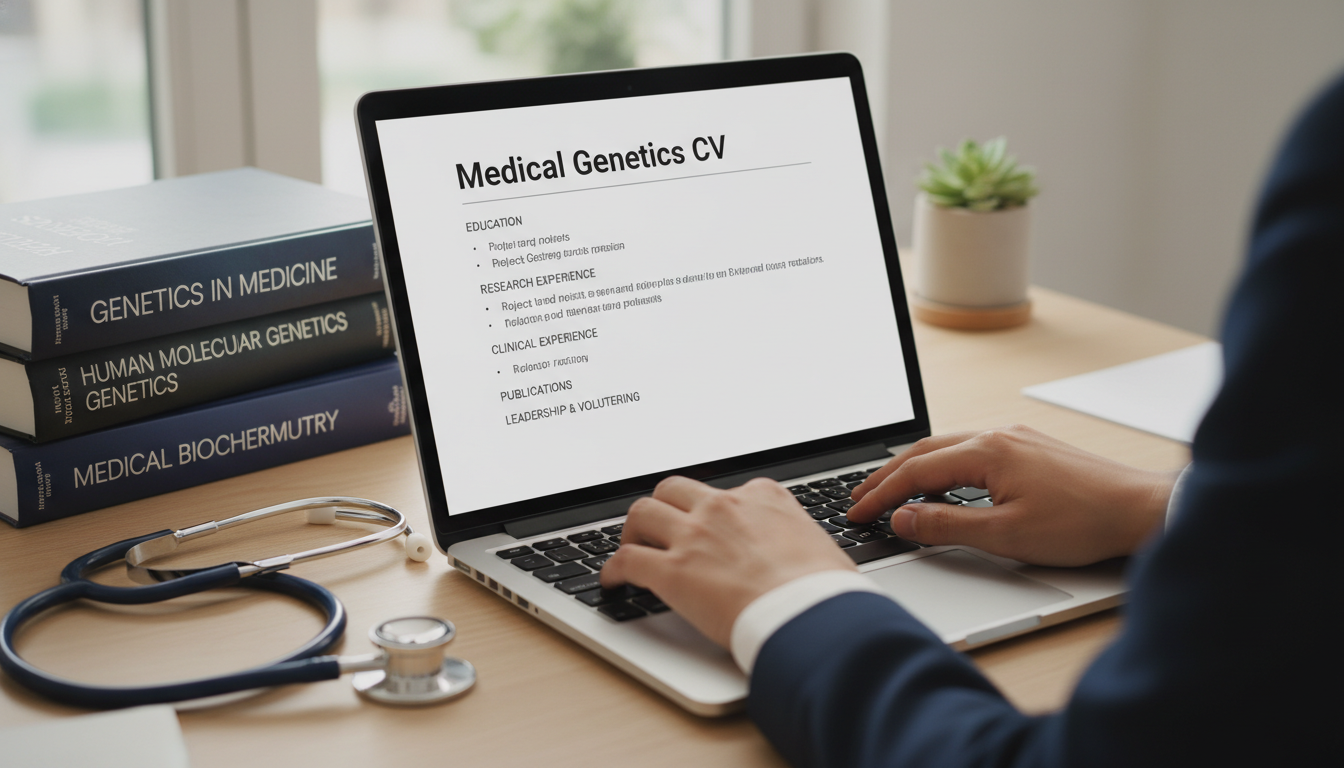
While formats vary slightly between schools and ERAS/online systems, the following key sections are typically expected. Think of this as the “master CV” you keep updated, which you can adapt to different contexts.
Contact Information and Professional Summary (Optional)
Most residency application systems pull your basic demographic details separately. However, if you are creating a standalone document (for email to mentors, research positions, or scholarships), include:
- Name
- Professional email (school email or a simple format like firstname.lastname@…)
- Phone number
- City, state, and country
- Optional: Link to a professional profile (e.g., institutional page, ORCID, research profile) if presentable
A “professional summary” is optional for residency CVs. If used, keep it to 2–3 concise sentences emphasizing your interest in medical genetics, core strengths, and career direction.
Example:
Senior medical student at X University with a focus on medical genetics and undiagnosed rare diseases. Experience in exome sequencing research and longitudinal follow-up of pediatric patients with suspected inherited conditions. Seeking a medical genetics residency to integrate clinical care, genomic diagnostics, and academic teaching.
Education
List your education in reverse chronological order:
- Medical school (include expected graduation date)
- Prior degrees (e.g., BS in Biology, MS in Genomics, MPH)
- Thesis titles if directly relevant to genetics
- Honors (e.g., AOA, Gold Humanism, Dean’s List) if allowed in this section
Emphasize education that supports your genetics foundation:
- Genetics, molecular biology, bioinformatics, or statistics coursework
- Dedicated tracks (e.g., “Scholarly Concentration in Genomics”)
Actionable tip:
If your undergraduate major or thesis was genetics-related, make that visible:
BSc in Molecular Biology, Thesis: “Whole Exome Sequencing in Pediatric Cardiomyopathy”
USMLE/COMLEX and Additional Certifications
Some programs review exam information in a centralized part of the application, but you may include:
- USMLE Step 1/2 CK or COMLEX scores (if allowed and strategic)
- ECFMG certification (for IMGs)
- Additional certifications (e.g., genetic counseling course certificates, bioinformatics workshop certifications, formal coursework in human genetics)
This section is not where most genetics-specific differentiation happens, so keep it brief and accurate.
Research and Scholarly Activity
For a medical genetics residency, research is often a major differentiator. Programs know genetics is intellectually demanding and evidence-driven; applicants who can engage with complex data and literature are valued.
List research experiences in reverse chronological order with:
- Project title
- Institution and department (e.g., “Department of Medical Genetics”)
- Mentor(s)
- Dates
- Your role and time commitment (e.g., 10 hrs/week for 18 months)
- Brief bullet points describing what you did and what came of it
Focus on genetics-related projects when possible:
- Genomic sequencing (exome, genome, panels)
- Cancer genetics and precision oncology
- Prenatal genetics and teratology
- Pharmacogenomics
- Population genetics or ethical/legal/social implications (ELSI)
- Variant interpretation, bioinformatics, or databases
- Rare disease case series or registries
Example entry:
Clinical Exome Sequencing in Undiagnosed Pediatric Neurometabolic Disorders
Department of Medical Genetics, University Hospital – Mentor: Dr. Smith | 2023–2025
- Screened and consented families for exome sequencing and collected phenotypic data
- Performed literature review and assisted in variant classification using ACMG guidelines
- Co-authored abstract accepted for platform presentation at the American College of Medical Genetics (ACMG) Annual Meeting
Even if your research is outside genetics (e.g., cardiology, neurology), describe the elements that show skills relevant to genetics:
- Data analysis
- Critical appraisal of literature
- Longitudinal follow-up
- Participation in multidisciplinary teams
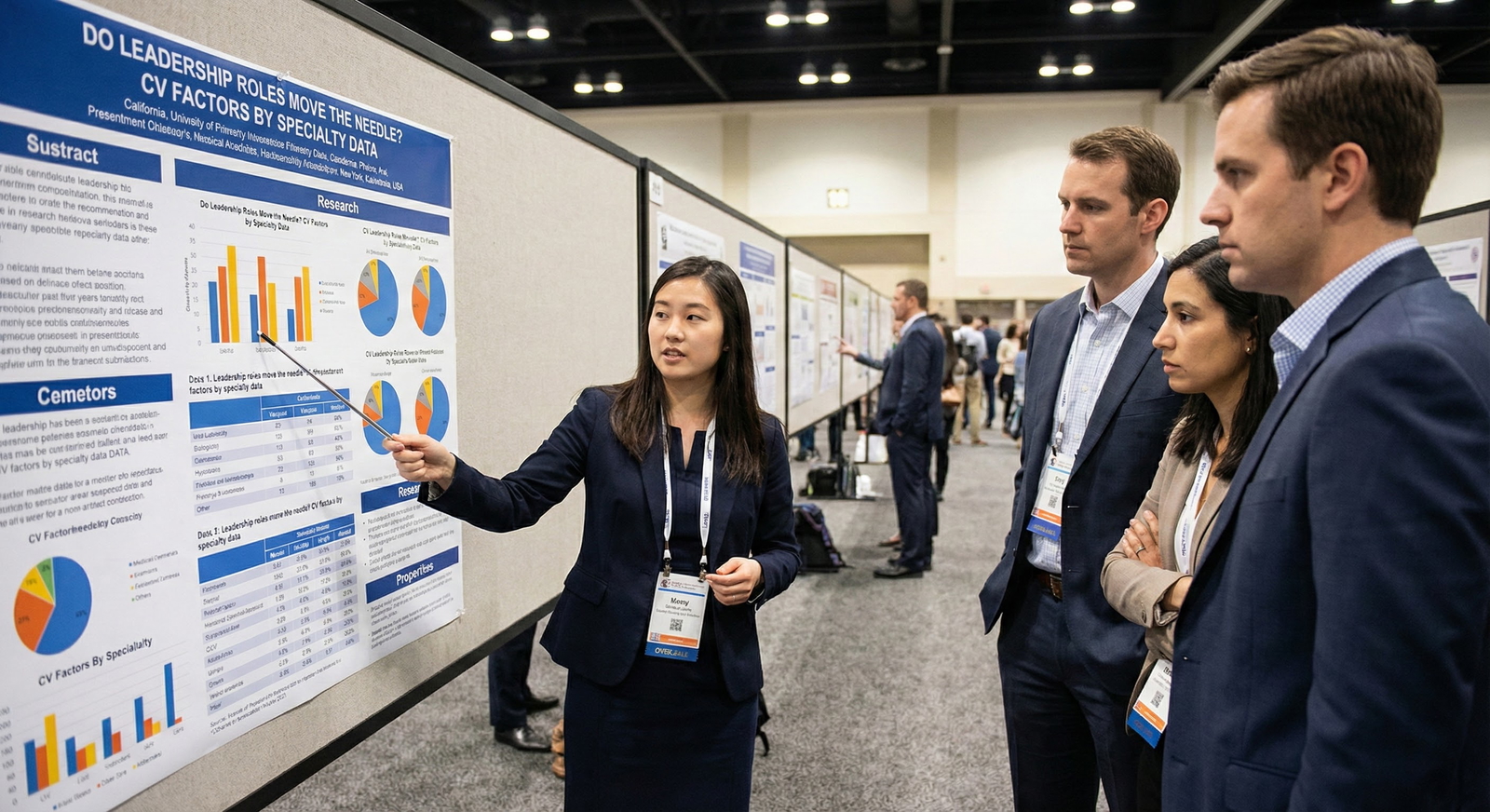
Publications, Posters, and Presentations
Your publications and presentations are core parts of a competitive medical student CV in medical genetics. Organize them into subsections if you have several:
- Peer-reviewed publications
- Manuscripts under review or in preparation (clearly labeled)
- Posters and oral presentations
- Book chapters or invited talks
Use standard citation format and bold your name:
Doe J, Smith A, Nguyen T. Genomic diagnostic yield in children with neurodevelopmental delay: A three-year single-center experience. Genetics in Medicine. 2024;26(5):123–131.
Include conference presentations explicitly, especially if at:
- ACMG
- ASHG (American Society of Human Genetics)
- Pediatric, oncology, neurology, or OB/Gyn meetings with genetics content
If you have limited formal outputs, maximize your smaller contributions:
- Local medical school poster day projects
- Case reports on rare genetic disorders
- Quality improvement projects involving genetic testing workflows
- Educational presentations about genetic counseling for peers
Clinical, Educational, and Leadership Experiences That Stand Out
Many students ask not just how to build a CV for residency but which experiences actually matter to genetics program directors. This is where you can shape your CV most strategically.

Clinical Experiences and Electives
Your formal clerkships appear as part of your academic record. On the CV, highlight:
- Sub-internships or acting internships in pediatric, internal medicine, or related fields where you saw genetics patients
- Elective rotations:
- General genetics clinics
- Dysmorphology clinics
- Inherited metabolic disease clinics
- Cancer genetics
- Prenatal or reproductive genetics
- Neurogenetics, cardiogenetics, or other subspecialty genetics clinics
- Undiagnosed disease programs or multidisciplinary rare disease clinics
For each significant elective or longitudinal experience, include brief bullets:
- Types of patients seen (e.g., congenital malformations, suspected syndromic conditions, hereditary cancer syndromes)
- Skills acquired (e.g., drawing pedigrees, ordering and interpreting chromosomal microarray or exome sequencing, counseling families about testing)
- Team interactions (e.g., genetic counselors, lab geneticists, subspecialists)
Example entry:
Clinical Elective – Medical Genetics and Genomics
Children’s Hospital, Department of Medical Genetics | 4 weeks, 2024
- Participated in evaluation of patients with suspected syndromic conditions and inborn errors of metabolism
- Observed and assisted with 3-generation pedigree construction, variant interpretation discussions, and pre-test genetic counseling
- Attended weekly case conferences and presented a case of suspected CHARGE syndrome
Teaching and Educational Activities
Medical genetics is an information-dense field where education is central—to patients, families, and colleagues. Programs value applicants who can teach clearly and compassionately.
Include:
- Small-group facilitation in genetics or molecular biology sessions
- Teaching assistant roles for genetics, biochemistry, or related subjects
- Sessions taught for junior medical students or undergraduates on topics like:
- Intro to medical genetics
- Interpreting genetic test results
- Ethical issues in genomic medicine
- Development of educational materials (e.g., brochures for families, digital modules on genetic testing)
Be specific:
Designed and delivered a 1-hour interactive session on “Basics of Genetic Testing in Primary Care” for 20 third-year medical students; received average evaluation score of 4.8/5.
Leadership and Professional Involvement
Leadership roles don’t have to be within strictly genetics organizations, but genetics-relevant roles are particularly powerful:
- Founder or president of a Genetics or Genomics Interest Group
- Leadership in rare disease or disability advocacy organizations
- Positions in student sections of ACMG, ASHG, or related societies (if available)
- Committee work on curriculum development for genetics content at your school
Demonstrate initiative:
- Did you start a journal club on genomic medicine?
- Did you organize a “Rare Disease Day” event?
- Did you establish a student research matching program for genetics labs?
Briefly quantify your impact:
Organized a campus-wide Rare Disease Day featuring 4 speakers and 120 attendees; coordinated collaboration with 3 patient advocacy groups.
Volunteer, Advocacy, and Community Engagement
Many patients in genetics have chronic, complex conditions and rely heavily on family, community, and advocacy networks. Experiences that show you can work empathetically in these contexts are highly relevant, including:
- Camps or support groups for children with genetic or developmental disorders
- Work with autism support organizations, neuromuscular disease groups, or Down syndrome associations
- Advocacy campaigns around newborn screening, access to genetic testing, or disability rights
- Patient navigator roles for families seeking complex care
Describe what you actually did and what skills you developed (communication, cultural humility, counseling basics).
Tailoring and Refining Your Medical Genetics CV
Once you have the main content, focus on optimization. Strong residency CV tips are less about adding more items and more about making your CV sharper, clearer, and more aligned with the genetics match process.
Align Your CV With Your Personal Statement and Letters
Your CV does not stand alone—it should align with:
- Your personal statement (the “why genetics” narrative)
- Letters of recommendation
- Your ERAS application entries
- Your interview talking points
If your CV shows significant genetics involvement but your personal statement barely mentions it, that inconsistency can raise questions. Conversely, if you claim deep passion for genetics but have no related activities on your CV, that also weakens your case.
Ask yourself:
- If someone read only my CV, what would they think motivates me?
- Does that match what I say in my personal statement?
Common Pitfalls in Medical Genetics Residency CVs
Avoid these frequent issues:
Generic, non-specialty-specific CV
- Fix: Highlight genetics experiences early and often. Move key genetics entries higher within sections if appropriate.
Overcrowded entries with vague descriptions
- Fix: Use 2–4 concise, strong bullet points per entry. Emphasize outcomes (posters, changes implemented, skills gained).
Unclear roles on research projects
- Fix: Specify your exact contributions (data collection, analysis, manuscript drafting, patient recruitment).
Inflated or misleading claims
- Fix: Be accurate with verbs like “led,” “coordinated,” “assisted.” You must be prepared to discuss all items in detail.
Missed impact opportunities
- Fix: Where appropriate, quantify (number of patients, sessions taught, event attendees, duration of involvement).
Updating Your CV Across the Application Timeline
Think of CV building as a longitudinal process, not a one-time event:
- Early medical school (MS1–MS2):
- Join or create a genetics interest group
- Seek research opportunities in genetics/genomics
- Attend relevant seminars and talk to potential mentors
- Clinical years (MS3–MS4):
- Choose electives in genetics and genetics-adjacent fields
- Aim for a project that can become a poster or publication
- Take on leadership or teaching roles as your schedule allows
- Residency application season:
- Polish formatting; remove outdated or minor items that clutter
- Update with recent presentations or acceptances
- Ask mentors for feedback specifically on your medical genetics residency suitability as shown in the CV
If you are an IMG or nontraditional candidate, you may need extra steps:
- Clarify how your previous degrees or roles relate to genetics
- Highlight any research or clinical experience in genomic medicine, even if gained post-graduation
- Use the CV to connect your background to a clear future trajectory in medical genetics
Frequently Asked Questions About CV Building in Medical Genetics
1. How much genetics-specific experience do I need for a competitive medical genetics residency CV?
You do not need your entire CV to be genetics, but you should have clear and repeated evidence of interest and engagement. As a rough guide, strong applicants often have:
- At least one substantial genetics research or scholarly experience
- One or more genetics-related clinical electives or longitudinal clinics
- Some combination of:
- Genetics interest group involvement
- Genetics-related teaching
- Rare disease/advocacy or disability-related volunteer work
- Presentations or posters on genetics topics
Programs also know that exposure opportunities vary by school, so they look at consistency, initiative, and depth rather than a fixed checklist.
2. What if I decided on medical genetics late and my CV is light on genetics?
You can still present a compelling profile by:
- Highlighting experiences that are translatable to genetics (oncology, neurology, pediatrics, maternal–fetal medicine, bioinformatics, research)
- Seeking a late but intensive genetics elective or sub-internship
- Completing a short, focused genetics-related research project or case report
- Engaging quickly and meaningfully with a genetics interest group or faculty mentor
- Using your personal statement to honestly describe your late discovery of the field and the steps you’ve taken to explore it
A late decision is less of a problem if your CV shows genuine follow-through once your interest emerged.
3. How should I list “in progress” publications or projects related to genetics?
Be transparent and accurate:
- Use subsections like “Manuscripts in Preparation” or “Work in Progress”
- Include your role and the anticipated venue if appropriate (e.g., “manuscript being prepared for submission to…”)
- Avoid implying that something is accepted or published if it is not
For example:
Doe J, Patel R, Nguyen T. Diagnostic utility of exome sequencing in adult-onset ataxia. Manuscript in preparation.
Programs understand the academic timeline; they mainly want evidence that you are engaged in scholarly work and can see projects through.
4. Is there a preferred format for a medical genetics residency CV?
There is no single mandated format, but for both ERAS entries and a traditional CV, aim for:
- Reverse chronological organization within sections
- Clear section headers (Education, Research, Clinical Experience, Teaching, Leadership, Volunteer, Publications/Presentations)
- Consistent date and location formatting
- Concise bullet points with action verbs and outcomes
For the genetics match, the content and clarity matter more than the exact stylistic template. However, a clean, professional format helps faculty quickly see why you are a strong match for their program.
By deliberately shaping your medical student CV around genetics-relevant experiences, you transform it from a generic application document into a clear narrative of your readiness for a medical genetics residency. Focus on depth, coherence, and honesty, and keep refining your CV as you grow; it should evolve in parallel with your development as a future leader in genomic medicine.