
Understanding the Role of Your CV in the Urology Match
For an MD graduate pursuing urology, your curriculum vitae (CV) is not just a document—it is your professional narrative. Urology is one of the more competitive surgical subspecialties, and your CV will be closely examined by program directors to assess your readiness, trajectory, and fit.
Unlike the one-page business résumé, a medical student CV for residency is a detailed, structured document that evolves over time. When it comes to the urology match, your CV:
- Summarizes your academic and clinical foundation from allopathic medical school
- Highlights your commitment to urology as a specialty
- Showcases your research productivity and scholarly potential
- Demonstrates professionalism, leadership, and teamwork
- Provides a framework for interviewers’ questions and discussion
A strong CV does not need to be perfect or “flashy,” but it must be:
- Clear
- Organized
- Evidence-based (no embellishments)
- Strategically aligned with urology residency expectations
You are writing for busy faculty who will scan dozens of CVs at a time. Your goal: make it easy for them to see that you are prepared, motivated, and likely to succeed in urology residency.
Core Structure of a Strong Urology Residency CV
For MD graduates applying to urology residency, the CV format should be familiar and easy to navigate. Think in terms of standard, clearly labeled sections.
Below is a common structure that works well for the allopathic medical school match in urology:
- Contact & Demographic Information
- Education
- Board Exams & Certifications
- Honors and Awards
- Research & Scholarly Activity
- Clinical Experience and Electives (including urology-specific)
- Presentations & Posters
- Publications
- Teaching & Mentoring
- Leadership & Professional Involvement
- Volunteering & Community Service
- Technical Skills (Procedural, Research, Language, Software)
- Personal Interests (brief and purposeful)
1. Contact & Demographic Information
This should be clean and minimal. Include:
- Full name, MD
- Professional email (e.g., firstname.lastname@…)
- Phone number
- City, State (full address optional)
- LinkedIn or professional website (optional but helpful if well maintained)
Avoid:
- Personal photo (unless specifically requested by a program or country)
- Irrelevant personal data (marital status, age, etc.)
Example:
Alex Martinez, MD
Email: alex.martinez@medschool.edu | Phone: (555) 123-4567
Boston, MA | LinkedIn: linkedin.com/in/alexmartinezmd
2. Education
List all degrees in reverse chronological order (most recent first):
- MD: Allopathic medical school, city, state, graduation year
- Undergraduate degree(s) with major, minor, institution, graduation year
- Additional degrees (MPH, MS, PhD, etc.)
Include:
- Graduation date or expected date
- Honors (e.g., cum laude) if relevant
- Thesis titles for advanced degrees (optional but helpful in research-heavy programs)
3. Board Exams & Certifications
For the urology match, program directors will quickly scan this area:
- USMLE Step 1 (score if your program allows inclusion or “Pass” if pass/fail)
- USMLE Step 2 CK (score and date taken/anticipated)
- Step 3 (if completed)
- ACLS, BLS, ATLS (if completed)
- Any other relevant medical certifications
Tips:
- Be accurate; misreporting scores is a serious professionalism violation.
- If scores are weaker, keep them factual—your personal statement and letters can contextualize; your CV is not the place to spin.
4. Honors and Awards
This section signals excellence and work ethic. Include:
- AOA or other honor societies (e.g., Gold Humanism)
- Medical school-specific awards (e.g., surgery clerkship honors, research awards)
- Scholarships and grants
- Undergraduate academic distinctions (e.g., Dean’s List, Phi Beta Kappa) if notable
Format each entry with:
- Award title
- Institution or organization
- Year(s)
- Brief clarifying phrase if not self-explanatory

Showcasing Urology-Relevant Experience and Research
Urology residency programs want evidence that you understand—and are invested in—the specialty. This is where MD graduate residency applicants can strongly differentiate themselves.
5. Clinical Experience and Urology Electives
For the allopathic medical school match, how you list clinical rotations can vary by school, but for a residency CV focused on urology:
Required Clerkships
Briefly list core rotations (Internal Medicine, Surgery, Pediatrics, OB/GYN, Psychiatry, etc.) with:- Institution
- Dates
- Honors (if received)
Sub-Internships / Acting Internships
Especially highlight surgery or urology sub-I:- “Sub-Internship, General Surgery – University Hospital, July 2024 (Honors)”
- “Sub-Internship, Urology – Academic Medical Center, August 2024”
Urology Electives & Away Rotations
These are critical for urology residency:- Name of institution
- Dates
- Very brief description (1–2 bullets) of scope and responsibilities, emphasizing:
- OR exposure
- Inpatient consults
- Clinic responsibilities
- Independent roles (pre-rounding, drafting notes, presenting on rounds)
Example entry:
Sub-Internship, Urology – University Medical Center, City, State
08/2024
- Managed 4–6 inpatients daily, performing pre-rounding, progress notes, and presentations on rounds
- Assisted in OR with cystoscopy, TURP, and robotic prostatectomy; performed basic procedural tasks under supervision
6. Research & Scholarly Activity
Because urology is research-heavy and academic by nature, your scholarly output is pivotal. Programs will assess your potential to contribute to the field.
Organize this section carefully into subheadings:
- Publications (peer-reviewed)
- Manuscripts in Progress or Submitted
- Abstracts, Posters, and Presentations
- Other Scholarly Work (book chapters, educational materials, QI projects)
Publications (Peer-Reviewed)
List in standard citation format (AMA or similar), in reverse chronological order. Distinguish clearly between:
- Published
- In press
- Epub ahead of print
Mark your name in bold to highlight your position in the author list.
Example:
Martinez A, Smith J, Gupta R. Outcomes of minimally invasive nephrectomy in obese patients: A single-center experience. J Urol. 2024;211(3):456–463.
If you have non-urology publications, include them. They still demonstrate research ability—even in other fields.
Manuscripts in Progress or Submitted
Be honest and precise:
- Use categories like “Submitted,” “Under Review,” or “In Preparation”
- Do not list something here without significant work completed
- Never claim “accepted” unless you have written confirmation
Example:
Martinez A, Lee S. Racial disparities in prostate cancer screening: A systematic review. Manuscript in preparation.
Posters and Presentations
List conference presentations, emphasizing:
- Urology-specific conferences (AUA, SUO, regional Urology meetings)
- Institutional research days
- National medical conferences
For each:
- Authors (with your name in bold)
- Title
- Meeting name and sponsoring organization
- Location
- Date
- Type (oral or poster)
Example:
Martinez A, Brown K, Chen Y. Trends in minimally invasive stone surgery among elderly patients. Oral presentation at: American Urological Association Annual Meeting; Chicago, IL; May 2024.
Quality Improvement and Educational Projects
Urology programs value applicants who can improve systems of care:
- List QI projects (e.g., improving perioperative catheter care, optimizing stone surgery workflow)
- List curriculum development projects, OSCE design, patient education guides
Emphasize measurable outcomes when possible:
- “Reduced postoperative catheter-associated infections by 20% over 6 months.”
How to Build a CV for Urology Residency: Strategy and Priorities
If you are an MD graduate planning for the urology match—whether still in medical school or in a research or transitional year—your main questions likely include “how to build CV for residency?” and “Which experiences matter most?”
Below are strategic residency CV tips tailored to urology.
Prioritize Urology Exposure Early and Deliberately
Urology residency programs want clear evidence that you:
- Understand the specialty
- Have seen urology in action
- Can articulate why urology is your future
Actionable steps:
Secure a home urology rotation
Complete this early enough that strong letters can be written in time for the application cycle.Plan 1–3 away rotations (if feasible)
Especially if your home institution has a small or no urology program, away rotations:- Provide letters from known faculty
- Help programs “test-drive” you
- Expand your network
Engage deeply during rotations
- Volunteer for consults
- Show up early to the OR
- Read about each case the night before
- Ask for feedback and implement it visibly
These clinical experiences become core anchors in your CV and narratives.
Make Research Work for You (Even if You Start Late)
Many MD graduate residency applicants worry that it’s “too late” to build a urology research portfolio. It’s not—if you’re strategic.
If you’re early in medical school:
- Join a urology lab or clinical research team early (MS1 or MS2)
- Aim for 1–2 substantial projects rather than 8 superficial ones
- Ask to be involved in tasks that lead to authorship (data analysis, writing sections of the manuscript)
If you’re an MD graduate in a research year:
- Clarify expectations with your mentor: How many papers? Abstracts? What timeline?
- Seek projects that can realistically be submitted before application season
- Track all contributions carefully for your CV
If your research is in another field:
- It still matters. Emphasize:
- Skills: data analysis, manuscript writing, presenting
- Generalizable content: surgical outcomes, oncology, health disparities, imaging—all relevant to urology
In your CV, organize research intelligently so urology-related work is easy to see, but do not hide non-urology research.
Advanced Residency CV Tips: Polishing, Positioning, and Common Pitfalls
Beyond listing experiences, the way you present them influences how program directors perceive your readiness.
Tailoring Your CV for Urology (Without Rewriting it Completely)
Unlike a targeted résumé, your medical CV should remain truthful and comprehensive. But you can optimize it for urology residency by:
Ordering sections strategically
If you have strong urology research or major awards, place Research/Scholarly Activity and Awards higher on the document.Highlighting urology-related roles
Use bold text selectively for key words:- “Urology Sub-Internship, Academic Medical Center”
- “Research Assistant, Urologic Oncology Lab”
Connecting the dots in brief descriptions
In one bullet, clarify how non-urology work still built relevant skills:- “Led surgical QI project improving perioperative checklist adherence in general surgery—experience applicable to operative safety in urology.”
Writing Effective Bullets: Show Impact, Not Tasks
Weak bullets:
- “Assisted with patient care on the urology service.”
- “Helped collect data for research project.”
Stronger bullets:
- “Managed daily care for 4–6 urology inpatients, including pre-rounding, progress notes, and presentations to attending surgeons.”
- “Designed REDCap database and performed statistical analysis (SPSS, logistic regression) for a 150-patient study on stone surgery outcomes.”
Use this formula where possible: Action verb + What you did + How/with what + Outcome or scale
Length and Formatting: How Long Should a Urology Residency CV Be?
For an MD graduate residency applicant, it’s normal for a urology CV to be longer than one page. Typical ranges:
- 2–4 pages: Very common and acceptable
5 pages: Reasonable if you have extensive prior careers, advanced degrees, or a robust publication record
Guidelines:
- Avoid dense blocks of text; use bullet points
- Use consistent fonts and heading styles
- Ensure margins and spacing make it easy to scan
Common Pitfalls to Avoid
1. Inflating Roles or Titles
- Don’t call yourself “Principal Investigator” if you were a student researcher.
- Use accurate titles: “Student Researcher,” “Research Assistant,” “Co-Investigator.”
2. Mixing Published and Unpublished Work
- Clearly separate “Published” vs. “In Progress.”
- Do not list “planned” work as if it were completed.
3. Including Irrelevant or Outdated Material
- Old high school honors or non-substantial activities can distract from your current strengths.
- A brief exception: highly significant national or international pre-medical achievements (e.g., Olympiad medal) can still be worth including.
4. Overly Personal or Unprofessional Interests Section
Personal interests are helpful—they humanize you and often spark interview conversation—but keep them:
- Concise
- Specific
- Professional
Examples:
- “Distance running (completed 3 half-marathons).”
- “Spanish language learning (intermediate level; weekly conversation group).”
- “Amateur photography (portrait and street; published in university arts magazine).”
Avoid:
- Controversial or very sensitive topics
- Vague clichés (“travel, movies, reading”)
Step-by-Step Roadmap: Building Your Urology CV Across Training Stages
MS1–MS2 (Preclinical Years)
Focus:
- Strong academic foundation
- Early exposure to urology
- Relationship-building
Action items:
- Attend urology interest group events
- Shadow a urologist; keep a record of meaningful experiences
- Ask about research opportunities; join a project early
- Start a basic CV document and update periodically
Core Clerkships (MS3)
Focus:
- Honors in key rotations (especially surgery)
- Professional reputation
- Initial urology rotations if possible
Action items:
- Seek feedback and mentorship from surgery and urology faculty
- Document specific responsibilities and achievements as you go (so you don’t forget later when writing your CV)
- Begin structuring research output—aim for at least an abstract or poster
MS4 / MD Graduate Year (Application Cycle)
Focus:
- Clear urology narrative
- Maximizing scholarly output
- Final CV polish
Action items:
- Complete urology sub-I and away rotations; request letters from faculty who know you well
- Update your CV after every new presentation, manuscript submission, or award
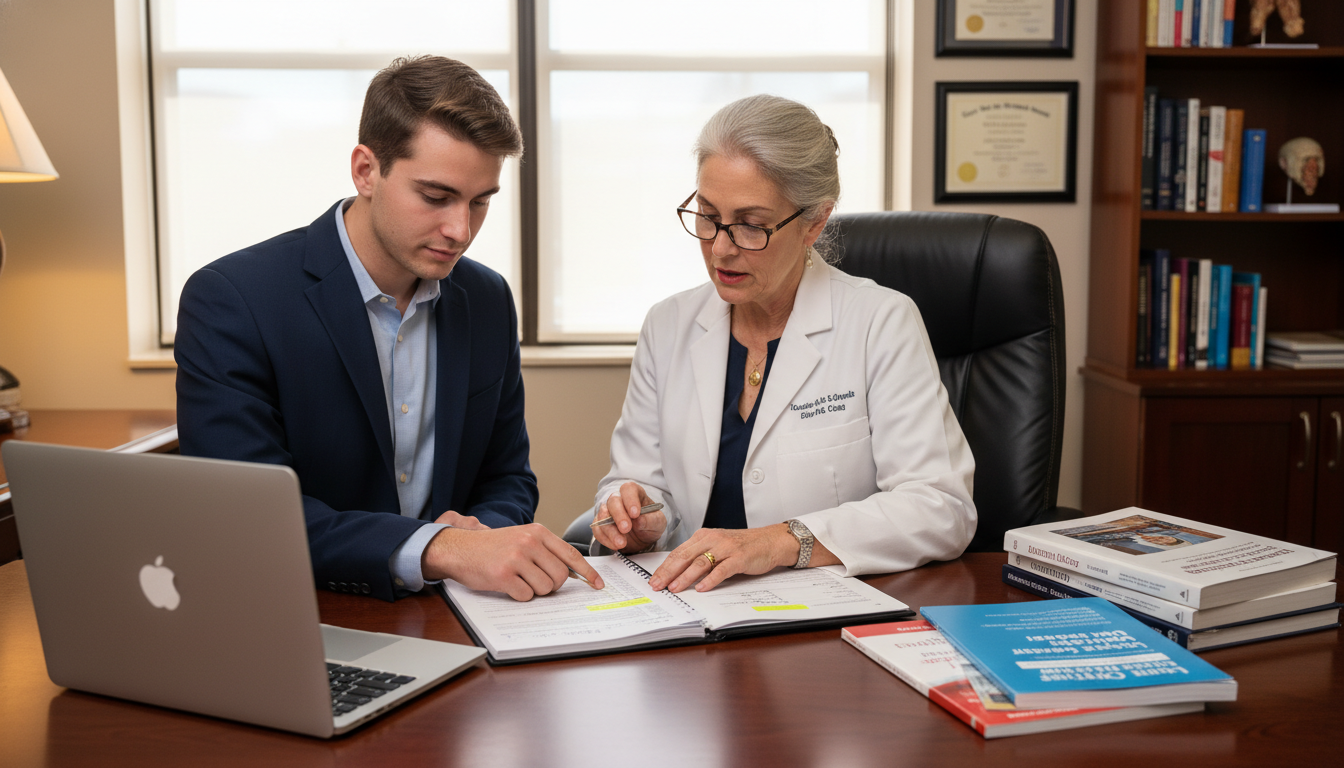
- Ask a trusted mentor or program director to review your CV for clarity, depth, and alignment with urology expectations
- Ensure your CV and ERAS application contents are consistent (dates, titles, publications)
Final Checklist: Is Your Urology Residency CV Ready?
Before submitting your application for the urology match, run through this checklist:
- Name and contact info are current and professional
- Education and degrees are accurate and in reverse chronological order
- USMLE/board exam information is accurate and appropriately labeled
- Honors and awards are clearly described and relevant
- Urology sub-internships and electives are clearly highlighted
- Research is separated into publications, in-progress work, and presentations
- Authorship is correctly formatted, with your name clearly visible
- Leadership, volunteering, and teaching are listed with concise, impact-focused bullets
- Technical skills (procedural, languages, software/statistics) are honest and current
- Personal interests are specific, professional, and conversation-worthy
- Grammar, spelling, and formatting have been proofread (ideally by at least one mentor)
- CV content matches your ERAS application and personal statement
A well-constructed CV will not, by itself, guarantee a match—but it does substantially strengthen your application and ensure that your best accomplishments are visible and credible.
FAQ: CV Building for MD Graduates in Urology
1. How is a CV for the urology match different from a general residency CV?
The core structure is similar to any medical student CV, but for urology:
- Urology-specific electives, sub-internships, and away rotations are emphasized
- Urology-related research is particularly valued and often more prominent
- Operative and procedural exposures, QI projects, and surgical skills are more relevant
- Networking and letters from urology faculty (reflected in your rotations and projects) carry extra weight
Your CV should make it immediately obvious that you are oriented toward urology, not undecided about specialty.
2. Is lack of urology research a deal-breaker for urology residency?
Not necessarily, but it is a disadvantage at many academic programs. If you lack urology-specific research:
- Highlight any surgical, oncology, or outcomes research you have completed
- Emphasize robust clinical performance, strong letters, and demonstrable commitment to urology through rotations and mentorship
- Consider taking a dedicated research year if you are still early enough in training and aiming for top-tier or heavily academic programs
You can still build a compelling CV for MD graduate residency in urology if other components (grades, Step scores, letters, clinical performance) are strong.
3. How do I decide what to leave off my residency CV?
Use relevance and recency as your guides:
- Remove outdated items that no longer reflect your current capabilities (e.g., minor high school awards)
- Consolidate similar or low-impact entries (e.g., multiple short-term activities) into a single bulleted item
- Keep substantial, meaningful experiences that shaped your skills or trajectory, even if they’re not urology-specific, but avoid clutter
If an item does not help a program director understand your potential as a urology resident, consider cutting or condensing it.
4. Should my CV exactly match what’s in ERAS?
The content should be consistent, but the formatting and organization can differ:
- ERAS has rigid categories and character limits; your CV does not
- Your CV allows you to group experiences and show your trajectory more clearly
- Dates, titles, authorships, and roles must match to avoid any impression of inconsistency or dishonesty
Think of ERAS as a structured database of your experiences and your CV as the polished, narrative version that faculty may use alongside your application during the interview.
By approaching CV building for urology residency as a strategic, long-term project rather than a last-minute document, you maximize your chances of standing out in a competitive field. Start early, seek feedback often, and ensure that every line of your CV supports the story you want to tell: that you are a prepared, motivated, and coachable future urologist.