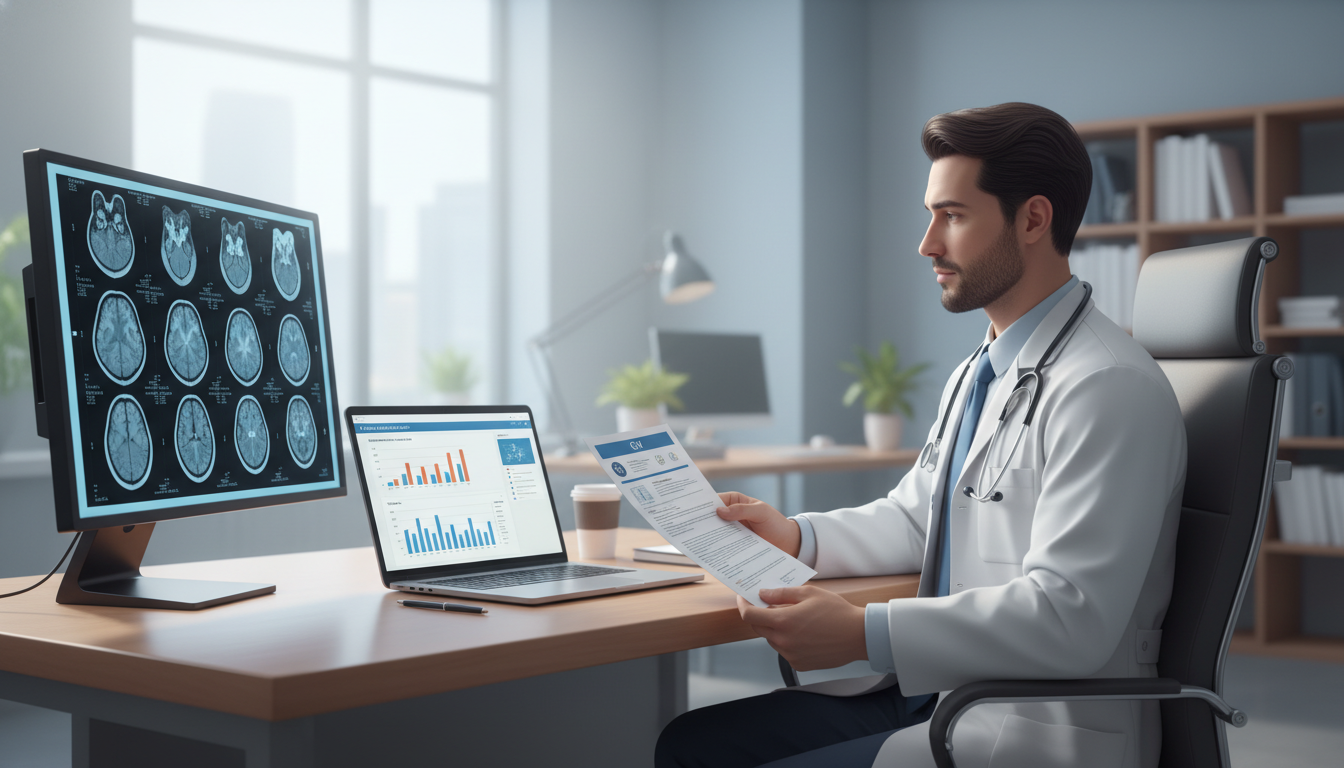
Neurology is one of the most rapidly evolving and competitive specialties in medicine. A strong, well-structured CV can be the difference between an interview invitation and a silent rejection—especially in the neuro match. This guide will walk you through how to build a powerful, neurology-focused medical student CV, what neurology program directors care about, and practical residency CV tips you can implement today.
Understanding the Purpose of a Neurology Residency CV
Your neurology residency CV is more than a list of accomplishments; it’s a narrative tool that:
- Communicates who you are as a future neurologist
- Highlights the trajectory and consistency of your interests
- Makes it easy for a reviewer to say: “We should interview this applicant.”
How Programs Actually Use Your CV
In many application systems (like ERAS), you’ll upload experiences piecemeal. However, programs often print or digitally view a consolidated version that functions like a traditional CV. They use it to:
- Cross-check your application and personal statement
- Quickly scan for neurology-specific engagement (rotations, research, electives)
- Assess productivity & follow-through (longitudinal activities, leadership)
- Identify unique strengths (language skills, niche interests, advocacy, teaching)
In neurology, reviewers often look for:
- Evidence of interest in neuroscience/neurology early and consistently
- Research in neurology, stroke, epilepsy, neuroimmunology, movement disorders, etc.
- Clinical exposure to neurology beyond required clerkships
- Professionalism and attention to detail (typos, formatting, clarity)
Your goal: Make your CV scannable in 30–60 seconds while also providing enough depth for readers who want to dive in.
Core Structure: What Belongs in a Neurology Residency CV
Though formats vary, a strong neurology residency CV generally includes:
- Contact Information & Professional Profile (optional but useful)
- Education
- USMLE/COMLEX and Other Exams
- Clinical Experience (including neurology-specific)
- Research & Scholarly Activity
- Publications, Presentations & Posters
- Leadership & Extracurricular Involvement
- Teaching & Mentoring
- Honors & Awards
- Professional Memberships
- Skills & Certifications (including language and technical skills)
- Interests (brief, curated)
1. Contact Information & Optional Professional Profile
At the top of your CV:
- Full name (bold, larger font)
- Email (professional address), phone number
- Current institution & city
- LinkedIn or professional website (optional, if well-maintained)
Optional: 1–2 sentence professional profile summarizing your interest in neurology.
Example:
Final-year medical student with a strong interest in stroke and vascular neurology, combining research experience in cerebrovascular imaging with longitudinal clinical work in underserved communities.
Use this only if it adds clarity and focus; don’t copy your personal statement.
2. Education
List in reverse chronological order:
- Medical school: name, city, country, attendance dates, expected graduation date
- Undergraduate institution and degree(s)
- Graduate degrees (if any: MPH, PhD, MS)
Include:
- Major/minor
- Honors (e.g., cum laude, Dean’s List if significant and consistent)
- Thesis title (if neuroscience- or neurology-related)
Neurology-focused tip: If you completed a neuroscience or psychology major, or a thesis on brain-related topics, state that clearly and consider a one-line description under the entry.

Tailoring Clinical & Research Experience to a Neurology Narrative
This is where you transform a standard medical student CV into a neuro match–ready document.
3. Clinical Experience: Beyond “Completed Neurology Rotation”
Program directors want to see depth in your neurology exposure:
Required Clerkships
Briefly list:
- “Core Neurology Clerkship, [Institution], [Dates] – [Honors/High Pass/Pass]”
- You do not need bullet points for every required rotation.
If you received Honors or special recognition in neurology, highlight it:
Core Neurology Clerkship, [University Hospital], July–August 2024
Grade: Honors (Top 10% of class)
Electives, Sub-Internships, and Away Rotations in Neurology
These deserve more detail. Under “Clinical Experience” or a subsection “Neurology Clinical Experience,” include:
- Rotation type (e.g., Sub-Internship in Inpatient Neurology)
- Institution and department
- Dates
- 1–3 bullets to highlight responsibility and skills
Effective bullet examples:
- Managed 4–6 neurology inpatients daily under supervision, including acute stroke, status epilepticus, and neuromuscular disease workups.
- Participated in code stroke calls, contributed to NIHSS assessments, and assisted with tPA eligibility discussions.
- Performed focused neurologic examinations in outpatient memory and movement disorder clinics, presenting patients to attending with succinct summaries.
Focus on autonomy, neurology-specific skills, and complexity of cases.
Non-Neurology Experiences (Keep Them, But Curate)
Don’t remove your internal medicine, psychiatry, or ICU experiences—they’re highly relevant to neurology.
Instead:
- Emphasize facets that translate to neurology: delirium management, seizure recognition, ICU exposure, end-of-life care.
- Keep bullets concise.
Example:
Medical ICU Sub-Internship, [Hospital], [Dates]
– Managed critically ill patients with sepsis, respiratory failure, and altered mental status; frequently collaborated with neurology for stroke and status epilepticus consultations.
4. Research & Scholarly Activity: Neurology’s Heavy-Hitter Section
Research carries substantial weight in neurology, though it’s not mandatory to match. Still, even modest engagement—case reports, chart reviews, QI projects—enhances your medical student CV.
Break this section into:
- Research Experience
- Publications
- Presentations & Posters
Research Experience
For each project:
- Project title/area (e.g., “Stroke Outcomes Research Assistant”)
- Institution & department
- Mentor(s)
- Dates
- 2–4 bullets describing role, methods, and outcomes
Strong neurology-focused bullet examples:
- Collected and analyzed clinical data from 250 acute ischemic stroke patients to evaluate time-to-thrombolysis and functional outcomes.
- Performed chart review and data entry for study examining predictors of seizure recurrence post first unprovoked seizure.
- Prepared IRB submission and research protocol for a prospective study on cognitive impairment in MS patients.
Even if work is in progress or not yet published, list it with an “In Progress” label.
Publications
Use a consistent citation style (e.g., AMA). Separate into:
- Peer-reviewed journal articles
- Submitted / under review (clearly labeled)
- Non-peer-reviewed pieces (blog posts, educational articles—optional)
Example:
- Smith J, Doe A, Patel R. Clinical predictors of hemorrhagic transformation after ischemic stroke. Stroke. 2024;55(3):456–463.
If you’re not first author, that’s fine—just make sure your name is bolded for quick scanning.
Presentations & Posters
Neurology residency programs appreciate local, regional, and national presentations alike.
List:
- Poster/oral presentation title
- Authors (bold your name)
- Conference name, sponsoring organization
- Location and date
- Poster vs. platform/oral
Example:
Doe A, Nguyen L, Brown T. Patterns of EEG abnormalities in pediatric autoimmune encephalitis. Poster presented at: American Academy of Neurology Annual Meeting; April 2024; Denver, CO.
Even student research days and institutional symposia are worth listing.
Building and Presenting Non-Research Strengths: Leadership, Service, and Teaching
Neurology is a team-oriented, communication-heavy specialty. Many applicants will have similar grades and exams; your leadership, service, and teaching can differentiate your residency CV.
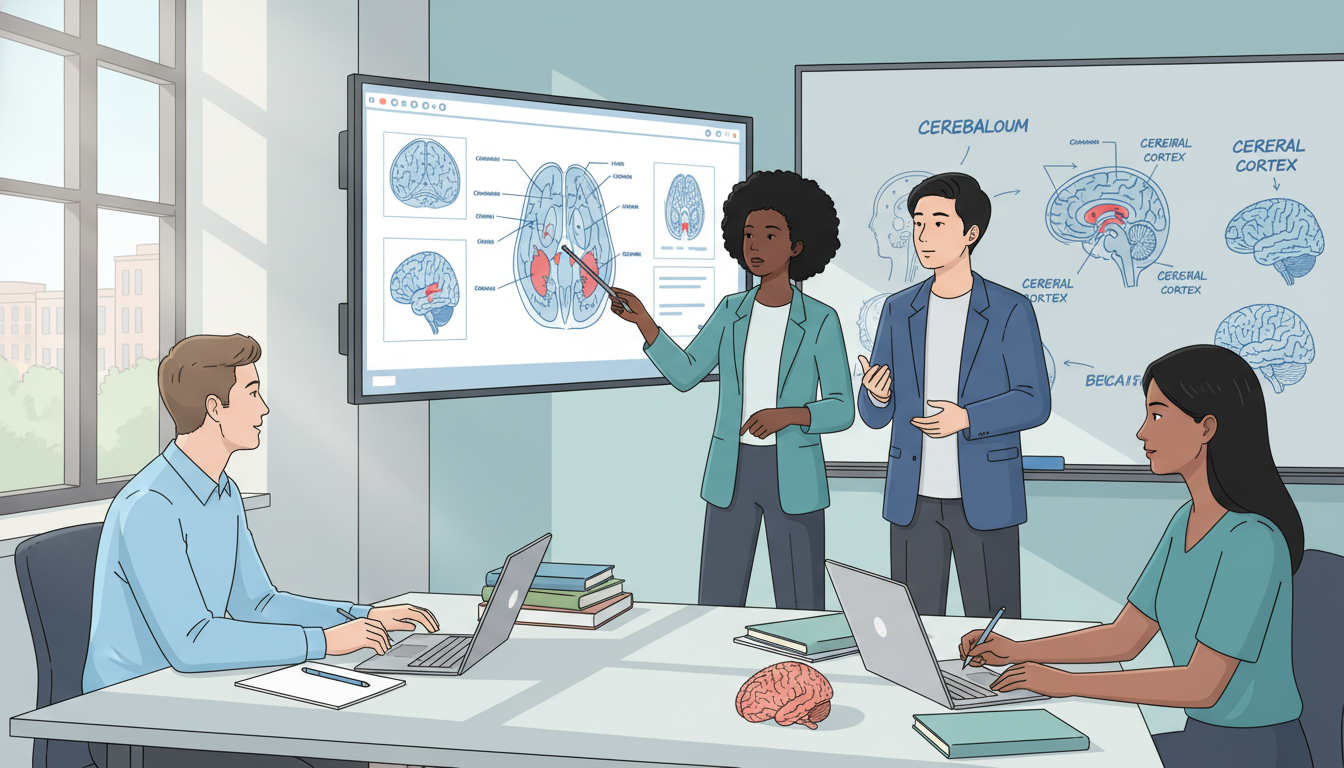
5. Leadership & Extracurricular Involvement
Group these under one heading, or separate “Leadership” and “Activities” if extensive.
Examples of impactful entries:
Neurology Interest Group President, [Medical School], 2023–2024
– Organized monthly neurology case conferences with faculty, averaging 40+ student attendees.
– Coordinated shadowing opportunities in stroke, epilepsy monitoring unit, and neuro-ICU for 25+ students.Student Representative, Neurology Department Education Committee, [Institution], 2023–2024
– Collected and synthesized student feedback to improve delivery of the core neurology clerkship.
Bullet tips:
- Lead with action verbs: organized, led, developed, implemented, coordinated.
- Quantify impact: number of attendees, duration, frequency, outcomes.
6. Teaching & Mentoring
Neurologists teach constantly—to patients, families, trainees. Highlight:
- Peer tutoring (especially neuroanatomy, neuroscience, or clinical neurology)
- Teaching assistant roles
- OSCE/preclinical skills facilitation
- Near-peer mentoring programs
Example:
Peer Tutor, Neuroanatomy, [Medical School], 2022–2024
– Led weekly small-group review sessions (8–12 students) covering neuroanatomy and neurophysiology, resulting in improved exam performance and high course evaluations.
If you supervised junior students on clinical rotations, you can add:
Informal mentor to third-year students on inpatient neurology rotation, focusing on neurologic exam skills and case presentations.
7. Service, Advocacy & Community Engagement
List activities that demonstrate empathy, advocacy, and service—core attributes in neurology, where chronic and disabling illnesses are common.
Examples:
- Free clinics, especially those serving patients with neurologic conditions or disabilities
- Stroke awareness campaigns, community education sessions
- Volunteer work in rehabilitation/long-term care facilities
Example:
Volunteer, Stroke Education Initiative, [Hospital/Community Group], 2022–2023
– Delivered community talks on stroke recognition (FAST), blood pressure control, and lifestyle modification to more than 120 participants in underserved neighborhoods.
Even if not neuro-specific, your service can be framed around communication, empathy, and continuity of care.
Technical Sections: Exams, Skills, and Formatting Mastery
Once your content is strong, how you present it becomes crucial. Program directors skim dozens of CVs in a sitting—your formatting and clarity directly affect how your application is received.
8. Exams & Licensure
Include:
- USMLE Step 1, Step 2 CK (and Step 3 if taken), or COMLEX equivalents
- Pass/fail notation, or scores if you choose to include them (note: follow current match norms and your advisor’s guidance)
- Dates taken
- ECFMG certification status (for IMGs)
Example (USMLE now pass/fail for Step 1):
USMLE Step 1 – Pass (April 2023)
USMLE Step 2 CK – 252 (August 2024)
Be accurate; do not round or misrepresent.
9. Skills & Certifications
This is often underused but can help in neurology.
Include:
- Languages: especially if fluent or medically proficient
– “Spanish (advanced – able to conduct medical interviews)” - Technical skills: basic EEG interpretation exposure, neuroimaging familiarity, statistical software (R, SPSS, Stata, Python), EEG/EMG data analysis, REDCap, Qualtrics
- Certifications: BLS/ACLS, NIHSS certification, human subjects research training (CITI)
Example:
Skills & Certifications
– Languages: Spanish (advanced, medical interview capable), French (conversational)
– Research Tools: REDCap, SPSS, basic R for statistical analysis
– Certifications: NIHSS Certified (valid through 2026), BLS, ACLS
In a neurology residency, familiarity with NIHSS, stroke scales, and neuroimaging concepts is a plus, even as a student.
10. Interests: Small Section, Strategic Value
Keep this to 1–3 lines, comma-separated. Include genuine interests that may serve as conversation starters and reflect traits relevant to neurology (patience, precision, creativity, resilience).
Examples:
Interests: Classical piano, medical illustration of neuroanatomy, distance running, teaching high school science outreach.
Avoid clichés like “reading, traveling” without specifics. Avoid controversial or polarizing topics.
How to Build CV for Residency: Strategy and Timelines for Medical Students
Many students ask not just what to put on a neurology residency CV, but how to build towards it starting early in medical school.
Preclinical Years (M1–M2)
Focus on:
- Strong academic foundation, especially in neuroanatomy and neuroscience
- Early exposure to neurology through:
- Neurology interest group
- Shadowing neurologists (outpatient and inpatient)
- Attending grand rounds
Start small with research:
- Reach out to neurology or neuroscience faculty:
– “I’m interested in neurology and would love to get involved in a small project or case report.” - Consider simple, feasible projects:
– Case report of an interesting neurology patient
– Retrospective chart review you can join as a junior member
– QI project in stroke or seizure management
Document all activities contemporaneously: maintain a running “CV document” and update it monthly.
Core Clinical Year (M3)
Now you’re positioning yourself directly for the neuro match:
- Excel on your neurology clerkship: this yields strong narrative evaluations and potential letters.
- Request feedback early to improve your performance and build relationships with neurologists.
- Seek opportunities to:
- Present at case conferences
- Help with a case report from an interesting patient
- Join ongoing clinical research projects
Keep your CV updated with:
- Dates and details of completed rotations
- New teaching or leadership roles
- Any poster submissions or abstract acceptances
Application Year (M4)
Now you convert your work into a polished medical student CV tailored to neurology residency.
Action steps:
Refine the neurology narrative
- Reorder sections to put neurology-related clinical and research experiences higher.
- Group entries that show a coherent interest (e.g., stroke research, stroke rotation, stroke awareness volunteering).
Seek feedback
- Have at least two people review your CV:
– One neurology faculty member (content and focus)
– One person skilled in formatting/writing (clarity, style)
- Have at least two people review your CV:
Align CV with personal statement
- Your CV shows the “what”; your personal statement explains the “why” and “how.”
- Ensure there are no inconsistencies in dates, roles, or listed experiences.
Adapt for each use
- ERAS entries follow its structure. Your consolidated CV is still essential for:
– Directly emailing programs or faculty
– Scholarship or award applications
– Away rotation packets
– Mentors writing you letters
- ERAS entries follow its structure. Your consolidated CV is still essential for:
Common Residency CV Tips (And Mistakes to Avoid)
To stand out in neurology residency applications, focus on the quality and clarity of your CV.
High-Yield Residency CV Tips
- Be specific and outcome-oriented: “Organized a neurology case conference series with average 35 attendees” is more powerful than “Involved in neurology events.”
- Use consistent formatting throughout: same font, date format, bullet style, and citation style.
- Place your best neurology content early: Neurology rotations, neuro research, and related leadership should be easy to find in the first 1–2 pages.
- Quantify when possible: number of patients seen, attendees, hours, or duration of roles.
- Show longitudinal commitment: multi-year involvement in a neurology interest group or research project says more than a list of one-off activities.
- Keep it professional and readable: 10–12 point font, clear headings, ample white space.
Common Mistakes to Avoid
- Overstuffing with minor activities
– If an activity lasted only a few hours and adds no clear value, it can probably be omitted. - Inflating your role
– Do not overstate “co-investigator” when your role was data entry. Describe your true contribution; faculty see through embellishment. - Redundant or vague bullets
– “Improved my clinical skills” or “Worked well with the team” adds nothing. Focus on what you did and achieved. - Typos and formatting errors
– These are particularly damaging in a detail-oriented specialty like neurology. - Including irrelevant personal information
– Avoid marital status, age, photo (unless specifically required by a system), or political affiliations.
FAQs: Neurology Residency CV and Neuro Match
1. How long should my neurology residency CV be?
For a typical US medical student applying to neurology:
- 2–4 pages is common and acceptable.
- Quality > quantity: a crisp, 3-page CV is better than a cluttered 6-page document.
- International graduates with extensive prior training or publications may have longer CVs, but still prioritize clarity and structure.
2. I don’t have neurology research. Can I still match into neurology?
Yes. Neurology is research-friendly but not research-exclusive.
To strengthen your application:
- Maximize clinical neurology exposure (sub-I, away electives, neuro-ICU experience).
- Highlight:
- Strong performance and narrative comments in neurology rotations
- Leadership roles in neurology interest groups or related advocacy
- Any scholarly work you do have—even if not strictly neurology (QI, general medicine)
Your CV should demonstrate genuine interest in neurology, even without research.
3. Should I tailor different versions of my CV for different programs?
The core content should remain the same, but you may emphasize different elements depending on context:
- For programs with strong stroke focus: highlight stroke projects, neurovascular electives, and NIHSS certification higher on the page.
- For research-heavy academic centers: elevate your research section, list works-in-progress, and make citations easy to scan.
However, sending drastically different CVs to different programs can create confusion. Maintain consistency in facts and dates.
4. How do I handle “works in progress” on my CV?
You can include:
- “Manuscript in preparation”
- “Manuscript submitted” (if officially submitted)
- “Under review” (only if confirmed)
Format example:
Doe A, Smith B. Cognitive outcomes after pediatric autoimmune encephalitis. Manuscript in preparation.
Do not list a work as accepted or in press until you receive official confirmation. Misrepresentation is a serious professionalism concern.
A well-crafted neurology residency CV doesn’t simply record what you’ve done—it tells a coherent, credible story of your development into a future neurologist. If you focus on clarity, honesty, and a neurology-centered narrative, your CV will effectively support your application and help you stand out in the neuro match.