Understanding the Neurosurgery Residency CV as a US Citizen IMG
Applying for neurosurgery residency as a US citizen IMG (American studying abroad) is uniquely challenging and competitive. Program directors know you had options to study in the United States but chose (or needed) to train abroad; they will look closely at your application to see evidence of:
- Academic excellence despite being outside the U.S.
- Strong commitment to neurosurgery specifically (not just “surgery”)
- Ability to function in a demanding, academic environment
- Clear communication and professionalism
Your CV is the backbone of that story. It’s the structured, objective evidence that you can succeed in a high‑stakes brain surgery residency. For a US citizen IMG, your CV needs to do three things:
- Neutralize perceived disadvantages of studying abroad
- Highlight neurosurgery‑specific strengths and commitment
- Align with U.S. residency expectations in format, content, and professionalism
This guide walks through how to build, organize, and optimize a medical student CV specifically tailored for neurosurgery, including concrete residency CV tips and examples at each step.
Core Principles of a Strong Neurosurgery CV
Before diving into sections, you need the right mindset. A strong neurosurgery residency CV for a US citizen IMG is built on these principles:
1. Evidence > Claims
Vague statements like “passionate about neurosurgery” mean very little. Program directors want quantifiable evidence:
- “Completed 3 first‑author neurosurgery manuscripts (1 published, 2 under review)”
- “Logged 120+ neurosurgical operative cases as student observer/assistant”
- “Presented 4 neurosurgery abstracts at national meetings (AANS/CNS, regional conferences)”
Wherever possible, use numbers, roles, and outcomes.
2. Neurosurgery Focus Throughout
Because neurosurgery is so competitive, the bar for “sincere interest” is high. Your CV should reveal a coherent narrative of interest in brain and spine surgery:
- Neurosurgery electives and sub‑internships (especially in the U.S.)
- Neuroanatomy and neuroscience projects
- Neurosurgery mentors and letters
- Research tied to CNS pathology, neuro‑oncology, vascular, spine, functional, pediatric neurosurgery, etc.
Scattered, non‑neurosurgical achievements are still valuable but should not overshadow a clear neurosurgery identity.
3. US‑Relevant Context for an International Pathway
As an American studying abroad, you must bridge two systems:
- Show that you understand and can operate within the U.S. clinical environment
- Translate foreign achievements into a context U.S. faculty will understand
That means:
- Emphasizing US clinical experience (USCE) when possible
- Listing US mentors/letter writers prominently in research and electives
- Using standard U.S. terminology (e.g., “sub‑internship,” “acting internship,” “third‑year medical student”) rather than local terms
Essential CV Structure for a Neurosurgery Applicant
There’s no single mandatory format, but for a neurosurgery residency applicant—especially a US citizen IMG—the following structure is both familiar and effective.
Recommended section order:
- Header & Contact Information
- Education & Training
- USMLE / Exams
- Clinical Experience (Clinical Rotations & Sub‑Internships)
- Research & Publications
- Presentations & Posters
- Honors & Awards
- Leadership & Service
- Teaching & Mentorship
- Technical Skills & Languages
- Interests (brief, curated)
1. Header & Contact Information
Keep it clean and professional:
- Full name (matching ERAS exactly)
- Email (simple, professional)
- U.S. phone number (if available; consider a VOIP U.S. number if abroad)
- Address (current; if abroad, you can list a “Permanent Address” in the U.S.)
- LinkedIn (optional, only if well‑maintained and consistent)
Do not include:
- Photo (ERAS handles this separately if needed)
- Date of birth, marital status, or social security number
- Any informal email such as “drneurosurgeryguy@…”
2. Education & Training
As a US citizen IMG, this section is scrutinized to understand why and where you trained abroad.
Include:
- Medical school name, city, country
- Degree (MD or equivalent), expected graduation date
- Class rank or percentile if favorable and available
- Thesis title (if applicable), especially if neuro‑related
- Undergraduate degree (major/minor, honors)
Example (strong for a US citizen IMG):
Doctor of Medicine (MD), University of X Faculty of Medicine – [City], [Country]
- Expected Graduation: June 2026
- Class Rank: Top 10% (8/92 students)
- Thesis: “Cerebral Microvascular Changes in Early Traumatic Brain Injury”
B.S. in Neuroscience, University of Y – [State], USA
- Magna Cum Laude, Dean’s List all semesters
Notice how this immediately frames you as academically strong with a neuro‑relevant background.
3. USMLE and Exam Performance
For neurosurgery, exam performance gets a lot of attention. As a US citizen IMG, this is one of the quickest ways to demonstrate you can compete at a U.S. academic level.
List:
- USMLE Step 1 (Pass/Fail; if you have the numerical score, keep it for internal reference but do not list it if it’s not officially reported in ERAS)
- USMLE Step 2 CK (include numerical score if strong)
- USMLE Step 3 (if taken)
- Any relevant exams from your country only if they help (e.g., top decile in national licensing exam)
Example:
- USMLE Step 1: Pass (First Attempt)
- USMLE Step 2 CK: 254 (First Attempt, June 2025)
If there are red flags (failures, low scores), your CV won’t hide them, but you can:
- Show a trend of improvement via later exams
- Counterbalance with strong research, USCE, and letters elsewhere in the document

Building the Clinical Experience Section Strategically
For a brain surgery residency application, “Clinical Experience” is not just a list of rotations; it’s proof that you can function in U.S. neurosurgical environments.
4. Clinical Experience & Sub‑Internships
Split this section if helpful:
- Core Rotations (Home Institution)
- Elective / Visiting Sub‑Internships (U.S. and Abroad)
- Additional Shadowing / Observerships (particularly in neurosurgery)
Prioritize U.S. neurosurgery experiences at or similar to programs where you’ll apply.
Example structure:
Visiting Sub‑Internships (U.S.)
- Sub‑Internship in Neurosurgery – XYZ University Hospital, [State], USA
- Dates: Aug–Sep 2025 (4 weeks)
- Supervisors: Dr. A. Attending (Program Director), Dr. B. Faculty
- Responsibilities: Participated in daily rounds, assisted in pre‑op and post‑op care of 15–20 inpatients; observed/assisted in 30+ cranial and spine cases; presented 4 neurosurgical topics at resident teaching conference.
Core Rotations (Home Institution)
- Neurology, Internal Medicine, Surgery, etc. – Brief, factual listing
Neurosurgery‑specific Observerships (if no full rotations are available)
- Neurosurgery Clinical Observership – ABC Medical Center, [State], USA
- Dates: Jan–Feb 2025 (4 weeks)
- Observed daily in OR and clinic; documented more than 45 operative cases (aneurysm clipping, lumbar fusion, tumor resections); completed literature review on postoperative delirium in elderly spine patients.
As a US Citizen IMG, prioritize:
- At least 1–2 neurosurgery rotations in the U.S. if at all possible
- Strong performance with documented responsibilities, not just “observed”
- Clear links to potential letter writers (attending names visible)
If you have limited neurosurgery exposure, highlight:
- Neurosurgery‑adjacent experiences in trauma, ICU, neurology, radiology
- Any neurosurgery‑focused time during general surgery or ICU rotations
Research, Publications, and Presentations: The Neurosurgery Edge
For neurosurgery residency, research often separates interviewees from non‑interviewees—especially for IMGs. As a US citizen IMG, neurosurgery‑related research is your opportunity to prove you belong in academic neurosurgery.
5. Research Experience
Separate Research Experience from Publications and Presentations for clarity.
Include:
- Project title and short description
- Institution and mentor (especially if U.S. neurosurgeon)
- Your role (clearly defined)
- Outcomes (published paper, poster, abstract, or at least “manuscript in preparation”)
Example:
Research Experience
- Research Fellow, Department of Neurosurgery – XYZ University Hospital, [State], USA
- Mentor: Dr. John Smith, MD, PhD (Professor of Neurosurgery)
- Dates: Jul 2024 – Jun 2025
- Projects:
- Prospective cohort study of early mobilization after lumbar spine surgery (n=180); responsible for protocol design, data collection, and preliminary analysis.
- Retrospective review of surgical outcomes in glioblastoma patients over 10 years; co‑designed data extraction form and managed database of >400 patients.
Emphasize neurosurgery departments and neurosurgeon mentors. Even if your role seems minor, make your contributions concrete and specific.
6. Publications
Program directors look beyond just “how many.” They want to know:
- Is any of it in neurosurgery, neurology, or neuroscience?
- Are you first or second author on anything?
- Is the journal reasonable and peer‑reviewed?
Format example:
Use standard citation style and bold your name.
- Smith J, Doe A, Lee C. Early mobilization after lumbar fusion: A prospective cohort study. Journal of Neurosurgery: Spine. 2025;32(4):123–131. (In press)
Group your publications:
- Peer‑reviewed journal articles
- Manuscripts under review
- Manuscripts in preparation (only include those genuinely near submission)
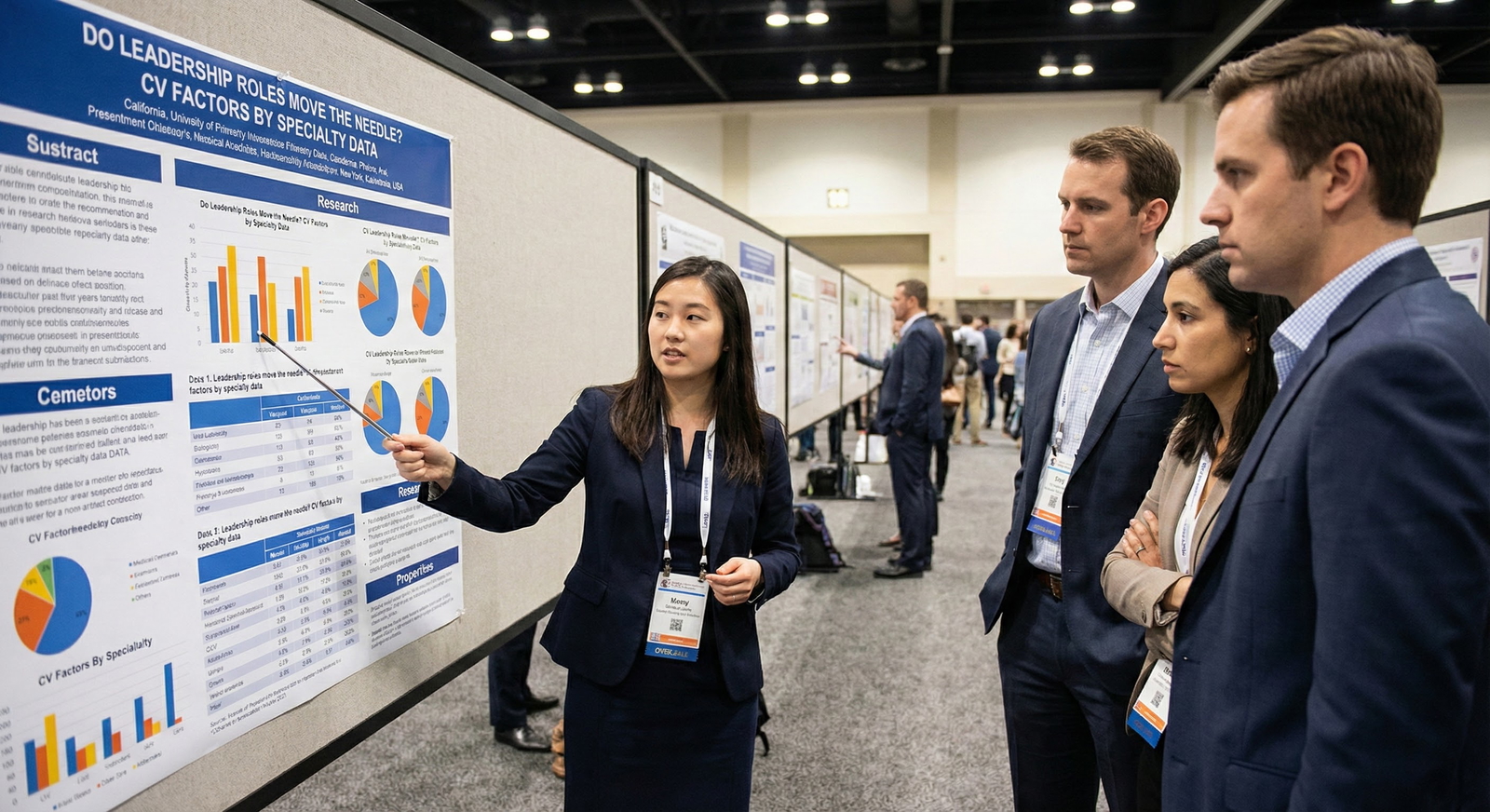
7. Abstracts, Posters, and Oral Presentations
Neurosurgery values conference activity, especially AANS/CNS, regional neurosurgery societies, trauma/critical care meetings, and major international neurology/neurosurgery congresses.
List:
- Poster and oral presentations separately (if enough)
- Meeting name, year, and location
- Your role (presenting author vs co‑author)
Example:
- Doe A, Smith J. “Early Mobilization After Lumbar Fusion: Effects on LOS and Complications.” Oral presentation at the American Association of Neurological Surgeons (AANS) Annual Meeting, Chicago, IL, 2025.
For a US citizen IMG, even a few strong, neurosurgery‑focused presentations can significantly enhance your credibility.

Leadership, Service, and Teaching: Showing You’re More Than Scores
Neurosurgery residents must function as team leaders, teachers, and advocates. These aspects of your medical student CV help distinguish you once you pass the initial filter.
8. Leadership and Organizational Roles
As a US citizen IMG, leadership shows you sought impact even in a foreign system.
Examples that work well:
- Founder or president of your medical school’s neurosurgery interest group
- Leadership in a neuroscience or surgery society
- Class representative or curriculum committee member
- Organizer of workshops (suture skills, neuroanatomy, journal clubs)
Example entry:
- Founder & President, Neurosurgery Interest Group – University of X Faculty of Medicine
- Dates: Sep 2023 – Present
- Organized monthly neurosurgery case conferences (average attendance 40+ students); invited international neurosurgery faculty for virtual grand rounds; coordinated 3 student research projects with the neurosurgery department.
Use bullet points to show impact, not just title.
9. Community Service and Global Health
For a “brain surgery residency” applicant, service experience is compelling when:
- It reflects empathy and resilience
- It shows consistent commitment rather than a single short mission trip
- It relates to neurological patients, trauma care, or underserved communities
Examples:
- Volunteering in rehab centers for stroke or spinal cord injury patients
- Running health education programs that include head injury prevention
- Long‑term involvement with homeless shelters, free clinics, etc.
Keep it concise but specific.
10. Teaching and Mentorship
Neurosurgery relies on strong peer and junior teaching. Program directors like applicants who already teach.
Examples to include:
- Small‑group neuroanatomy tutor
- Peer mentor for first‑year medical students
- TA for neuroscience or physiology courses
- Teaching sessions for nursing or paramedical staff during rotations
Example:
- Neuroanatomy Small‑Group Tutor, University of X
- Led weekly sessions (6–8 students) reviewing neuroanatomy cases; created and distributed practice questions; received average 4.8/5 rating on anonymous evaluations.
For a US citizen IMG, teaching also signals communication skills in English, which is crucial.
Technical Skills, Languages, and Interests: Polishing the Final Impression
These sections are short but can subtly strengthen your profile—especially in a high‑stakes neurosurgery context.
11. Technical and Clinical Skills
Avoid generic skills like “IV placement” unless directly relevant to your major strengths. Instead:
- Highlight neuro‑related or research‑related skills
- Avoid implying competence beyond what a student should claim
Possible items:
- Familiarity with neuroimaging interpretation (CT/MRI basics)
- Use of research tools (SPSS, R, Python, REDCap)
- Basic surgical skills (knot tying, suturing; if taught in structured courses)
Example:
Technical Skills
- Research: SPSS, R, REDCap, Excel (advanced data analysis, logistic regression, survival analysis)
- Clinical: Basic neuro exam, NIH Stroke Scale certification, focused spine and cranial exam (student level)
- Imaging: Basic interpretation of brain CT and MRI (trauma, hemorrhage, mass lesion)
Be honest; neurosurgeons will quickly detect exaggeration.
12. Languages
If you speak multiple languages, this can be an asset, especially for programs serving diverse populations.
List:
- Language
- Proficiency (Native, Fluent, Professional Working, Conversational)
For example:
- English (Native)
- Spanish (Conversational)
- Arabic (Professional Working Proficiency)
13. Interests
This is not fluff if used well. Interests can:
- Humanize you
- Provide interview talking points
- Subtly reflect traits like perseverance, discipline, and teamwork
Keep it 1–2 lines of genuine interests:
- Long‑distance running (completed 3 half‑marathons)
- Classical piano (10+ years of training, local recitals)
- Amateur photography of cityscapes and nature
Avoid controversial or overly vague items.
How to Build Your CV for Neurosurgery Residency Over Time
If you’re early in medical school—or have some time before applying—here is a strategic timeline for how to build a CV for residency in neurosurgery as a US citizen IMG.
Pre‑Clinical Years (M1–M2 Equivalent)
Focus on:
- Strong grades and class rank
- Building a foundation in neuroanatomy and neuroscience
- Joining or starting a neurosurgery interest group
- Finding at least one neurosurgery or neuro‑related research mentor (preferably U.S.-based or collaborating with U.S. faculty)
Actionable steps:
- Email neurosurgeons at potential U.S. institutions for remote research collaboration
- Start a small project: case report, retrospective review, or systematic review
- Attend online neurosurgery grand rounds or conferences when possible
Core Clinical Years (M3 Equivalent)
Focus on:
- Excelling in core clinical rotations
- Securing strong evaluations to support future letters
- Spending any elective time in neurosurgery and neurology
- Beginning to plan U.S. neurosurgery electives/sub‑internships
Actionable steps:
- Ask to present cases in neurosurgery or neurology conferences
- Look for opportunities to collect data for ongoing neurosurgery projects
- Keep a log of operative and clinical neurosurgery cases you’ve been involved in
Application Preparation Phase (M4 Equivalent / Final Year)
Focus on:
- U.S. neurosurgery sub‑internships and/or research fellowships
- Finalizing and updating your neurosurgery‑specific CV
- Strategic networking with U.S. neurosurgery faculty
- Translating your achievements into clear, concise bullet points
Actionable steps:
- Ask mentors to review your CV with a neurosurgery lens
- Tailor your CV (and ERAS entries) to emphasize U.S. experiences and neurosurgery identity
- Confirm all dates, titles, and facts; neurosurgery faculty expect meticulous accuracy
Formatting and Presentation: Residency CV Tips That Matter
The content of your medical student CV is the priority, but presentation affects how that content is perceived.
Keep It Clean, Consistent, and Easy to Scan
- Font: Use a standard professional font (e.g., Times New Roman, Arial, Calibri) in 10–12 pt
- Length: 2–4 pages is typical for neurosurgery applicants with research; more is acceptable only if content is meaningful (research heavy)
- Headings: Clear, bolded section titles (Education, Research, etc.)
- Bullets: Use bullet points for responsibilities and achievements—avoid dense paragraphs
- Dates: Align to the right; use consistent date format (e.g., Aug 2024 – Jun 2025)
Use Strong, Specific Action Verbs
Neurosurgery program directors read dozens of CVs. Vague verbs blend together; specific ones stand out:
- “Led,” “coordinated,” “developed,” “designed,” “analyzed,” “implemented,” “authored,” “presented”
Avoid over‑selling with words like “pioneered” or “revolutionized” unless truly justified.
Eliminate Redundancy and Weak Entries
- Combine small, similar activities under one heading
- Remove very minor, old items (high school awards) unless exceptional
- Focus on quality and relevance, not just quantity
Ensure Perfect Grammar and Spelling
As a US citizen IMG, written English is assumed to be fluent. Typos or grammar errors can be more damaging because they seem avoidable.
- Use spell check with U.S. English settings
- Ask at least one native English‑speaking mentor to review
- Double‑check all institution names and journal titles
FAQs: CV Building for US Citizen IMG in Neurosurgery
1. How is a US citizen IMG’s neurosurgery CV evaluated differently from a non‑US IMG?
You are often held to a similar academic standard as U.S. MDs because you are an American who trained abroad by choice or circumstance. Programs may ask: “If this applicant wanted neurosurgery, why didn’t they train in the U.S. initially?” Your CV should therefore emphasize:
- Top performance at your international school (rank, honors)
- Strong USMLE scores and US clinical experiences
- Consistent neurosurgery focus through research, electives, and mentorship
Compared with non‑US IMGs, you may be expected to have more U.S. exposure and better English fluency, which must be obvious from your CV.
2. How many neurosurgery publications do I need for a competitive brain surgery residency application?
There is no fixed number, but for neurosurgery:
- Having 0 neurosurgery‑related publications is a disadvantage, especially as a US citizen IMG
- 1–3 solid neurosurgery or neuroscience publications (particularly with you as first/second author) can significantly strengthen your application
- A mix of abstracts, posters, and ongoing projects also matters
Quality, relevance, and clear neurosurgery connection are more important than raw quantity. A small number of high‑impact, CNS‑focused works is better than many unrelated or low‑quality papers.
3. Should I list observerships in neurosurgery on my CV if I didn’t have hands‑on responsibility?
Yes, but with accurate terminology and appropriate expectations. For a US citizen IMG, neurosurgery observerships at reputable U.S. centers still demonstrate:
- Exposure to U.S. neurosurgery practice
- Initiative and networking
- Potential relationships for letters or research
Be honest: state “observed,” not “assisted,” unless you had defined responsibilities, and describe what you learned or contributed (e.g., participating in case discussions, helping with data collection).
4. How can I make my residency CV stand out if my exam scores are average?
If your USMLE scores are not exceptional, your neurosurgery residency CV can still be compelling if you:
- Build strong, sustained neurosurgery research with tangible outputs
- Secure excellent clinical evaluations and letters from U.S. neurosurgeons
- Demonstrate robust leadership, teaching, and service that highlight maturity and work ethic
- Present a coherent story: neuro‑focused undergraduate work, neurosurgery interest group leadership, multiple neurosurgery electives, and a clear commitment to the specialty
For a US citizen IMG, this narrative and neurosurgery‑specific depth can sometimes overcome borderline scores, especially at programs that know you personally from rotations or research.
By approaching your CV as the structured story of your neurosurgery journey—rather than just a list—you give program directors confidence that you’re not only capable of surviving a brain surgery residency, but of contributing meaningfully to their department as a US citizen IMG trained abroad.