
Understanding the Purpose of Your OB GYN Residency CV
Your CV is more than a list of achievements—it’s a strategic document that tells a clear, cohesive story about why you are ready for an OB GYN residency. Program directors use your CV to:
- Rapidly assess your background and potential
- Screen for core competencies (clinical, academic, professional)
- Identify experiences that align with their program’s mission
- Generate talking points for your interview
In the context of the obstetrics match, your CV should accomplish three things:
Demonstrate commitment to women’s health and OB GYN
Show a logical progression of interest: early exposure → sustained involvement → leadership or scholarship.Highlight strengths that matter in OB GYN
This specialty values:- Comfort with acute, high-stakes situations
- Teamwork in multidisciplinary settings
- Procedural aptitude and technical skills
- Compassionate, longitudinal patient care
- Advocacy for reproductive and maternal health
Differentiate you from dozens of applicants with similar metrics
Your classmates may have similar scores and grades. What sets you apart—global health work, QI projects in L&D, leadership in a women’s health organization—needs to be immediately visible and well-framed.
When thinking about how to build a CV for residency, especially in OB GYN, keep this guiding question in mind:
“If a program director has 90 seconds to review my CV, what are the 3–4 key messages I want them to remember about me as a future obstetrician-gynecologist?”
You will build everything else around those core messages.
Core Structure: What an OB GYN Residency CV Must Include
A strong medical student CV for the obstetrics match uses a clear, conventional structure so busy reviewers can quickly find what they need. The exact headings can vary, but the following framework works well for OB GYN residency applications:
- Contact Information & Professional Profile
- Education
- USMLE/COMLEX Scores (if including in CV)
- Honors, Awards, and Distinctions
- Research & Scholarly Activity
- Clinical Experience & Clerkships
- Teaching & Mentorship
- Leadership & Extracurricular Activities
- Volunteer & Community Service
- Professional Memberships
- Presentations & Publications
- Skills & Certifications
- Personal Interests (Optional, but recommended)
Let’s walk through each section with OB GYN–specific residency CV tips and examples.
1. Contact Information & Professional Profile
Keep this clean and professional:
- Full name, degrees (e.g., “Jane Doe, MS4” or “Jane Doe, M.D. Candidate”)
- Professional email (not a casual nickname address)
- Phone number (with voicemail set up and professional greeting)
- City, State (optional, but often included)
- LinkedIn profile (optional, if strong and updated)
- For some CVs, a single-line professional tagline can help:
“Senior medical student with strong interest in high-risk obstetrics and health equity in underserved communities.”
Avoid including: photo, age, marital status, or other personal identifiers not relevant to the application.
2. Education
List in reverse chronological order:
- Medical school: name, city, state, dates.
- Undergraduate institution and major/minor.
- Graduate degrees (if applicable).
Example:
Education
M.D. Candidate, Expected May 2026
XYZ University School of Medicine, City, State
B.S. in Biology, summa cum laude, May 2020
ABC University, City, State
If you did a master’s in public health, women’s studies, or global health and it’s relevant to OB GYN, highlight that clearly—it reinforces your focus on women’s health and population-level care.
3. USMLE/COMLEX Scores (If Included)
Depending on your school’s guidance, you may or may not list scores on your CV (ERAS will already contain them). If you do:
- Use a simple format: “USMLE Step 1: Pass; Step 2 CK: 248”
- Avoid commentary; let the numbers stand on their own.
If you have a weaker score, focus the CV on compensating strengths—outstanding clinical evaluations, research, leadership, or service in OB GYN.
4. Honors, Awards, and Distinctions
This is where you show academic excellence and recognition of your work, particularly if any awards relate to women’s health or surgery.
Common examples:
- AΩA or Gold Humanism Honor Society
- OB GYN clerkship honors or “Student of the Year”
- Awards for research, teaching, or community outreach
- Scholarships related to women’s health, diversity, or leadership
Format example:
Honors & Awards
OB GYN Clerkship Honors, XYZ University SOM – 2025
Gold Humanism Honor Society Inductee – 2024
Student Research Day: Best Clinical Science Poster – “Hypertensive Disorders of Pregnancy in Urban Populations”, XYZ University – 2023
Place the most prestigious or OB GYN–specific awards near the top.
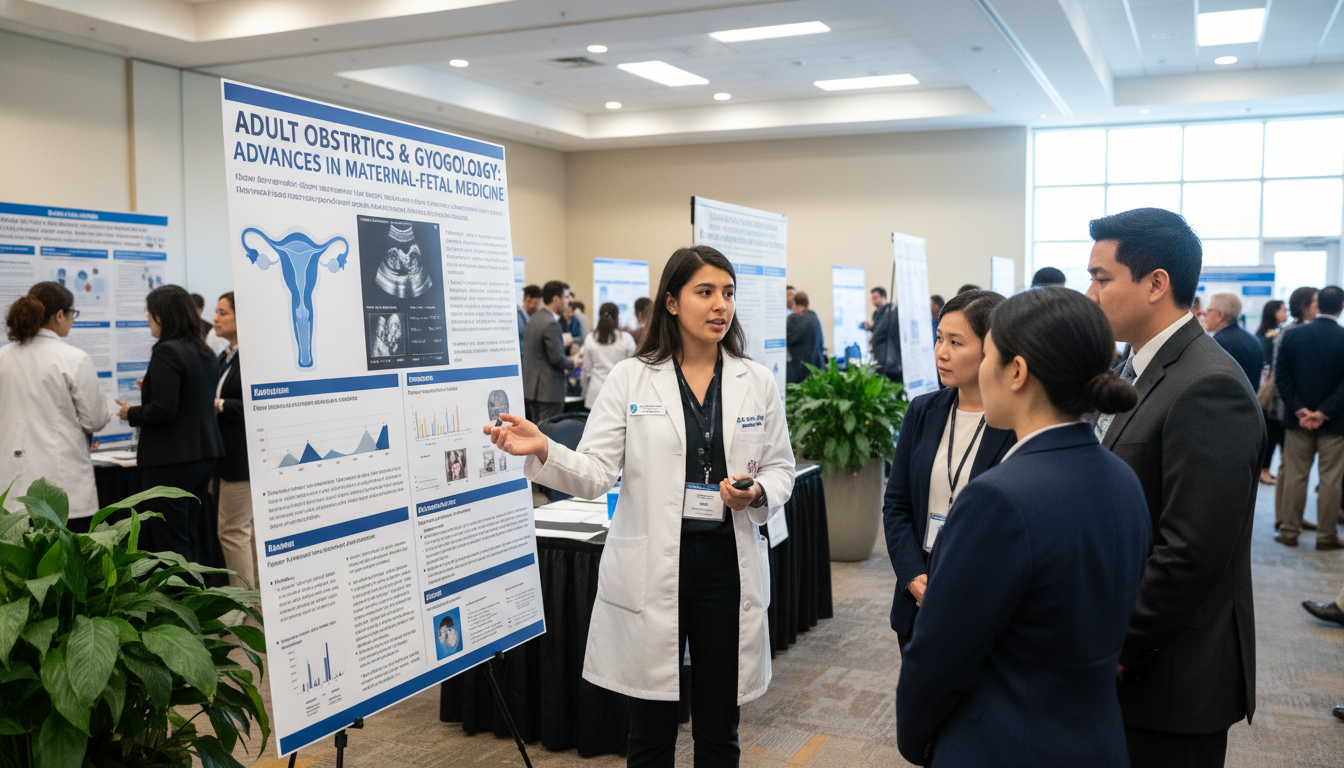
Showcasing OB GYN Commitment: Research, Clinical Experience, and Activities
Your obstetrics & gynecology–relevant experiences should be the spine of your residency CV. Program directors want to see evidence of genuine, sustained interest that goes beyond a single clerkship.
5. Research & Scholarly Activity
Research is not mandatory for every OB GYN applicant, but it significantly strengthens your profile—especially for academic or competitive programs.
What “counts” as research for OB GYN residency?
- Clinical research in obstetrics, gynecology, reproductive endocrinology, gynecologic oncology, maternal-fetal medicine, family planning, or related fields
- Quality improvement (QI) projects on L&D, postpartum care, surgical outcomes, etc.
- Public health or epidemiologic studies focused on women’s health, reproductive health, maternal mortality, contraception
- Case reports or case series involving OB GYN patients
- Systematic reviews, narrative reviews, or book chapters on OB GYN topics
How to list research on your CV
Use a consistent structure:
- Title of the project or manuscript
- Your role (e.g., “Student Investigator,” “Co-author”)
- Institution/department and mentor
- Dates
- Brief description (1–2 lines)
- Outcome (poster, abstract, publication, manuscript in progress)
Example:
Research Experience
Student Researcher, Department of Obstetrics & Gynecology
XYZ University SOM, City, State | 2023–Present
Mentor: Jane Smith, MD, MFM
- Project: “Predictors of severe preeclampsia among multiparous women in an urban safety-net hospital”
- Analyzed EMR data for 350 patients; performed multivariable logistic regression.
- Resulted in podium presentation at ABC Regional OB GYN Conference (2024); manuscript under review.
Actionable tips to build research for your OB GYN CV
- Start early: Ask OB GYN faculty after your rotation if they have ongoing projects you can join.
- Prioritize completion and dissemination: A published paper or presented poster is more valuable than multiple unfinished projects.
- Align with your narrative: If you are passionate about global maternal health, seek projects in that domain.
6. Clinical Experience & Clerkships
ERAS captures your clerkship grades, but your CV can emphasize depth and context, especially for OB GYN experiences.
Essential elements to highlight
- OB GYN core clerkship (grade, if allowed)
- Sub-internship/acting internship in OB GYN
- Electives: maternal-fetal medicine, family planning, reproductive endocrinology & infertility (REI), gynecologic oncology, ultrasound
- Away rotations / visiting student rotations in OB GYN
- Longitudinal clinics (especially continuity OB, prenatal clinics)
Example:
Clinical Experience
Sub-Internship in Obstetrics & Gynecology
XYZ University Hospital, City, State | July–August 2025
- Functioned at intern-level responsibility on labor and delivery, managing 8–10 patients per shift under supervision.
- Assisted with vaginal deliveries, cesarean sections, D&Cs, and colposcopy procedures.
- Led daily pre-rounds and presented on inpatient antepartum and postpartum patients.
OB GYN Core Clerkship (Honors)
XYZ University SOM, University Hospital & County Hospital | Jan–Mar 2025
- Completed 6 weeks on labor & delivery and 6 weeks on gynecology and clinic.
- Performed pelvic exams, first-assisted in surgery, and counseled patients on contraception and prenatal care.
Practical clinical CV-building tips
- Ask for defined roles: On rotations, seek specific responsibilities (e.g., “Can I be responsible for all postpartum checks on this team?”). These translate into stronger bullet points.
- Document procedures and cases: Keep a log of deliveries, surgeries, and procedures; this can help with both your CV and interviews.
- Use active, outcome-oriented bullet points: Describe what you did and what impact it had (e.g., “Streamlined discharge education for postpartum patients, improving nurse-reported clarity of instructions”).
7. Teaching & Mentorship
OB GYN is a teaching-heavy specialty: residents constantly educate patients, students, and interprofessional teams. Show that you can teach.
Possible experiences:
- Peer tutoring in reproductive physiology or pelvic anatomy
- Small-group facilitator for first- or second-year students
- Student organizer for simulation labs (e.g., shoulder dystocia drills)
- Mentor for undergraduate premeds interested in women’s health
Example:
Teaching Experience
Small-Group Facilitator, Reproductive Physiology Course
XYZ University SOM | 2024–2025
- Led weekly case-based discussions for 10 first-year students on menstrual cycle physiology, pregnancy, and contraception.
- Received 4.8/5 average student evaluation score for clarity and engagement.
On your CV, emphasize the OB GYN relevance wherever possible, such as teaching pelvic exams, prenatal counseling topics, or labor management principles.

Leadership, Service, and Professional Identity in OB GYN
Program directors look for residents who will be future leaders in the field—whether in clinical practice, research, advocacy, or education.
8. Leadership & Extracurricular Activities
Leadership is particularly meaningful in the context of OB GYN’s values: advocacy, multidisciplinary collaboration, and system-level thinking.
Relevant leadership examples:
- President or officer of the OB GYN interest group
- Organizer of a maternal health conference, skills workshop, or advocacy day
- Committee membership (LCME, diversity & inclusion, wellness, curriculum)
- Leadership positions in surgical societies, women’s health organizations, or global health initiatives
Example:
Leadership Experience
Co-President, Obstetrics & Gynecology Interest Group
XYZ University SOM | 2023–2025
- Organized 12 skills workshops, including knot-tying, suturing, and LARC insertion simulations, attended by over 80 students.
- Coordinated a panel of OB GYN subspecialists to discuss career paths; event feedback averaged 4.9/5 from attendees.
- Initiated a “Shadow an OB Night” program pairing MS1–MS2 students with on-call residents.
When describing leadership roles, emphasize:
- Scale (how many people, how often, how long)
- Initiatives you started or improved
- Measurable outcomes when possible
9. Volunteer & Community Service
Service is central to the culture of OB GYN. Strong volunteering experiences can offset weaker academic metrics if they clearly show:
- Commitment to underserved or marginalized groups
- Engagement with reproductive justice, maternal mortality, or access to care
- Longitudinal involvement and increasing responsibility
Examples to include:
- Volunteering at women’s shelters, prenatal clinics, or free OB clinics
- Sexual education workshops in schools or communities
- Doula work, breastfeeding support groups, or postpartum home visits (where appropriately supervised)
- Advocacy for reproductive rights or maternal health policy
Example:
Volunteer Experience
Student Volunteer, Women’s Health Free Clinic
City Free Clinic, City, State | 2022–Present
- Provided intake assessments, vitals, and health education for uninsured women seeking gynecologic and family planning services.
- Developed a bilingual patient handout on postpartum warning signs and contraception options, now standard at the clinic.
10. Professional Memberships
Demonstrate that you already see yourself as part of the OB GYN professional community.
Include memberships such as:
- ACOG (American College of Obstetricians and Gynecologists), Junior Fellow
- AMSA, APGO, or other relevant national organizations
- State or local OB GYN societies (if available to students)
Format example:
Professional Memberships
Junior Fellow, American College of Obstetricians and Gynecologists (ACOG) – 2023–Present
Member, XYZ State OB GYN Society – 2024–Present
Mention any active involvement—committee work, conference attendance, or poster presentations.
Crafting High-Impact CV Entries: Style, Formatting, and Common Pitfalls
Even the strongest experiences can be weakened by poor presentation. Your residency CV tips should include not just content but style.
Use Clear, Consistent Formatting
- Choose a simple, professional font (e.g., Times New Roman, Calibri, Arial, 10–12 pt).
- Use bold for section headings and positions; use italics sparingly.
- Maintain consistent date formatting (e.g., “Jan 2024–Mar 2024” throughout).
- Align dates to the right margin for easy scanning.
- Keep margins reasonable (0.5–1 inch) so the document is readable.
Write Strong Bullet Points
Each bullet should answer:
- What did you do?
- How did you do it?
- What was the impact or outcome?
Weak:
- “Volunteered at OB clinic.”
Strong:
- “Provided patient education on breastfeeding and postpartum depression to 5–7 patients per shift in a resident-run OB clinic, reinforcing discharge instructions and improving patient-reported understanding.”
For OB GYN–specific roles, incorporate relevant clinical and procedural language: “triage,” “L&D,” “gynecologic surgery,” “prenatal counseling,” “emergent management,” etc.
Tailor to the Obstetrics Match
While your CV may serve multiple purposes, when you’re applying for OB GYN residency, ensure:
- OB GYN experiences are not buried—place them high in each section.
- Titles and descriptions make the OB GYN relevance unmistakable.
- Non-OB GYN experiences highlight transferable skills: teamwork in the OR, acute care, advocacy, long-term follow-up, procedural comfort.
Example transfer framing:
Instead of:
- “Volunteered at a student-run internal medicine clinic.”
Use:
- “Provided longitudinal care to underserved patients with chronic conditions in a student-run clinic, strengthening communication skills and experience with complex, multidisciplinary care—skills directly applicable to high-risk obstetrics.”
Avoid Common CV Mistakes
- Typos and inconsistent formatting: These suggest carelessness—double-check or have someone proofread.
- Overly dense text: White space is your friend; avoid giant paragraphs.
- Inflated titles or responsibilities: Be accurate; OB GYN faculty will notice exaggeration.
- Irrelevant or outdated items: Old high school achievements are usually unnecessary unless truly exceptional and clearly relevant.
- Jargon without explanation: If using local program names or acronyms, briefly clarify.
Strategic CV Building Over Time: MS1 to Application Season
CV building is a long game. Thinking ahead will give you a stronger, more coherent application when it’s time for the obstetrics match.
MS1–MS2: Laying the Foundation
Focus on:
- Joining the OB GYN interest group and attending events.
- Shadowing in labor and delivery or gynecology clinics.
- Starting a small research or QI project with an OB GYN mentor.
- Building a track record of community service, especially in women’s health.
Action items:
- Keep a running CV document from day one.
- Record dates, roles, mentors’ names, and outcomes after each experience.
- Seek summer experiences: women’s health research programs, global health, maternal health projects.
MS3: Leveraging the Core Clerkship
During your OB GYN rotation:
- Ask for feedback early and implement it.
- Express interest in returning for a sub-I or research.
- Identify a potential letter writer and demonstrate reliability and initiative.
- Take notes on interesting cases you might later transform into case reports or presentations.
Add to your CV:
- OB GYN clerkship grade and brief experience description.
- Any mini-projects or presentations you completed (e.g., “Topic talk on VBAC”).
MS4: Refining and Showcasing
By application time, you should be able to show:
- A clear arc of interest and commitment to OB GYN.
- At least one or two OB GYN–related scholarly outputs (poster, abstract, paper).
- Meaningful leadership or service with relevance to women’s health.
Action items:
- Complete sub-I and, if applicable, away rotations; add them to your CV promptly.
- Update research entries with final outcomes (accepted, presented, published).
- Seek feedback on your CV from an OB GYN advisor who knows the match process.
Frequently Asked Questions (FAQ)
1. How long should my OB GYN residency CV be?
For most medical students, a CV of 2–4 pages is appropriate. Focus on quality and relevance, not length. A slim but tightly curated CV can be more compelling than a long, unfocused one. Include all major educational, clinical, research, leadership, and service experiences that tell your story as a future obstetrician-gynecologist.
2. Do I need OB GYN research to match into OB GYN residency?
You can absolutely match into OB GYN without extensive research, especially in community-based programs. However, some scholarly activity helps, and it becomes more important for academic, research-heavy, or competitive programs. If you lack formal research, emphasize:
- QI projects on L&D or gynecology services
- Case reports or clinical vignettes
- Education or curriculum projects related to women’s health
Even a single well-executed project with a poster or publication can meaningfully strengthen your medical student CV.
3. How do I list “in progress” research, manuscripts, or presentations?
Be honest and specific. For example:
- “Manuscript in preparation” (only if actively being written)
- “Manuscript under review at [Journal Name]”
- “Abstract accepted for poster presentation at [Conference], upcoming [Month, Year]”
Avoid giving the impression that something is more complete than it really is. Program directors understand that students often have works in progress.
4. Should I include non-medical jobs or activities on my residency CV?
Yes, if they demonstrate transferable skills or are a meaningful part of your story. For example:
- Work as an EMT → acute care and teamwork skills
- Employment during school to support yourself → resilience and time management
- Leadership in non-medical organizations → organizational and people skills
Briefly frame these roles in terms of competencies that will serve you in OB GYN (communication, leadership, reliability, problem-solving).
By approaching CV building in obstetrics & gynecology as a strategic, longitudinal process, you can create a document that not only lists your experiences, but clearly communicates who you are as an applicant and why you are ready to thrive in an OB GYN residency program. Use your CV to highlight your evolving commitment to women’s health, your readiness for the demands of labor and delivery and gynecologic surgery, and your potential to grow into a compassionate, skilled, and impactful obstetrician-gynecologist.