Understanding the Unique CV Needs of Preliminary Surgery
Preliminary surgery is a distinct pathway with its own expectations and realities, and your CV should reflect that. Whether you are applying for a one-year preliminary surgery residency as a bridge to categorical surgery, another specialty, or to strengthen a future match attempt, program directors look for specific signals in your application.
Unlike categorical positions, a preliminary surgery year is often:
- Shorter (one year, occasionally two)
- More service-heavy, with a strong emphasis on reliability and work ethic
- Used by applicants with less traditional paths (reapplicants, international graduates, or those transitioning specialties)
This means your medical student CV must answer three core questions for program leadership:
Can we trust you with heavy clinical responsibility on day one?
Evidence: strong clinical evaluations, clerkship honors, sub-I performance, letters.Will you be a low-drama, high-output team member?
Evidence: consistent work history, leadership in teams, longitudinal commitments, lack of red flags.Are you using this year purposefully (and do you know where you’re going next)?
Evidence: coherent narrative in experiences, research or activities aligned with surgery or your intended ultimate specialty, clear progression over time.
This guide will walk you through how to build a CV for residency in the context of preliminary surgery, with targeted residency CV tips that reflect what surgical educators actually look for.
Core Structure: What a Strong Preliminary Surgery CV Should Include
Think of your CV as a structured, logical map of your development. A typical, well-organized prelim surgery CV should include:
- Contact & Identification
- Education
- Exams & Certifications
- Clinical Experience
- Research & Scholarly Activity
- Leadership, Teaching & Service
- Honors & Awards
- Professional Memberships
- Skills (clinical and technical)
- Personal Interests (optional but recommended)
1. Contact & Identification
This should be clean and minimal:
- Full name (as it appears in ERAS and official documents)
- Professional email (ideally institutional or FirstLast@…)
- Phone number with voicemail set up professionally
- Mailing address (optional but standard)
Avoid:
- Personal photos (unless regional norms require them)
- Informal email handles
- Multiple phone numbers or excessive contact detail
2. Education
List in reverse chronological order:
- Medical school: name, city, country, dates (start–expected/actual graduation)
- Degree(s): MD, DO, MBBS, etc.
- Prior degrees: BS, BA, MS, etc., with majors, institutions, locations, years
- Optional: thesis titles for advanced degrees
For international graduates, education is closely scrutinized; clarity and completeness are crucial.
Example (strong):
- Doctor of Medicine (MD), University of X School of Medicine, City, State, 2020–2024
- Bachelor of Science, Biology (Honors), University of Y, City, State, 2016–2020
3. Exams & Certifications
For surgery programs, exam performance is an early filter but not the whole story. Include:
- USMLE Step 1, Step 2 CK (or COMLEX equivalents): score and date (if you choose to disclose scores; follow current ERAS/program norms)
- ECFMG certification (for IMGs): include certification number and date
- ACLS, BLS, ATLS (if you have it), PALS
Programs value readiness for acute care. For a preliminary surgery residency, ATLS is particularly relevant, even if not required.
Example:
- USMLE Step 2 CK: 245, 07/2023
- USMLE Step 1: Pass, 05/2022
- ACLS & BLS, American Heart Association, valid through 06/2026
Tailoring Content to Preliminary Surgery: Clinical and Procedural Emphasis
4. Clinical Experience: Highlighting Readiness for a Heavy Intern Year
Clinical experience is where your CV shows that you can function as an intern rapidly.
Organize this section to emphasize:
- Core clerkships (especially Surgery, Internal Medicine, ICU)
- Sub-internships / Acting Internships (Surgery, Trauma, ICU)
- Away rotations relevant to surgery
You don’t need to list every clerkship with granular detail. Instead, highlight:
- Rotations with higher responsibility (sub-Is, early acting-intern roles)
- Settings with relevant acuity (trauma centers, safety-net hospitals)
- Measurable or distinctive contributions (initiated QI project, developed sign-out checklist)
Example entry:
Sub-Internship in General Surgery
University Hospital, City, State | 08/2023
- Functioned at intern level in a busy academic general surgery service (35+ patients/day)
- Performed initial assessments, wrote daily notes, managed orders under supervision
- Participated in minor procedures (wound debridement, drain management, bedside I&Ds)
- Received above-expected evaluations in professionalism, reliability, and teamwork
For a preliminary surgery year, programs particularly value:
- Comfort in the operating room (even at a basic level)
- Exposure to postoperative care and acute surgical illness
- Evidence that you’ve thrived in high-volume, high-stress environments
What if your clinical grades aren’t stellar?
Use the CV to highlight trajectory:
- Emphasize later rotations where you improved
- Highlight sub-Is or electives where you received strong feedback
- Add brief, concrete bullet points that reference intern-level tasks and responsibility
Avoid:
- Overinflated language (“essential member,” “indispensable”) without specifics
- Listing every rotation with identical generic bullets

5. Procedural and Technical Skills: Be Accurate and Modest
Prelim interns are often expected to be technically versatile relatively quickly. You can include a Skills subsection emphasizing:
- Basic procedures: IV placement, arterial blood gas collection, Foley insertion, NG tube placement, wound care
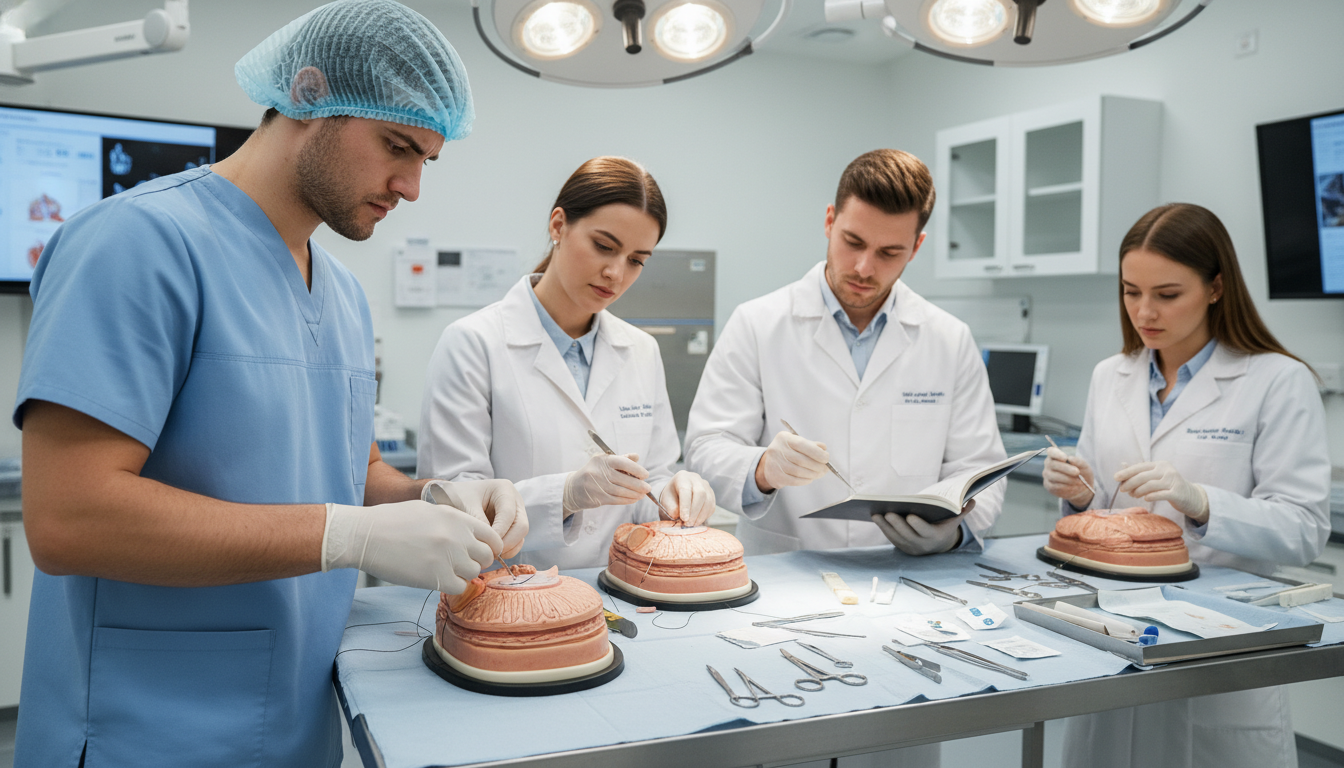
- OR experiences: assisting in laparoscopic cases, suturing, skin closure, stapling
- ICU-related skills (if applicable): central line observation/assistance, ventilator basics, chest tube management (only if truly done)
Use graded language:
- “Observed”
- “Assisted with”
- “Performed under supervision”
Example:
Clinical Skills
- Performed under supervision: simple suturing and skin closure for minor procedures, bedside I&D, basic wound debridement
- Assisted with: laparoscopic cholecystectomy, appendectomy, ventral hernia repair
- Comfortable with: NG tube and Foley catheter placement, basic wound care and dressing changes
Inflating this section can seriously damage your credibility during interviews, especially when a surgical faculty member starts probing. When in doubt, understate rather than exaggerate.
Research and Scholarly Work: Quality Over Quantity for Prelim Applicants
6. Research & Publications: How Much Does It Matter?
For many prelim surgery residency positions, research is a bonus, not a primary requirement, especially at community and service-heavy programs. That said, in academic centers where prelim positions are integrated with categorical programs, scholarly productivity can be a differentiator.
Include in separate subheadings:
- Peer-reviewed publications
- Abstracts and conference presentations
- Posters
- Book chapters
- Quality improvement projects
- Ongoing research projects
Each entry should be complete and in standard citation format. For ongoing projects, label clearly as “In progress” or “Submitted.”
Example:
Peer-Reviewed Publications
Doe J, Smith A, Lee R. Postoperative Outcomes in Elderly Patients Undergoing Emergency Laparotomy. Journal of Surgical Outcomes. 2023;15(2):123–130.
Abstracts & Presentations
Doe J, Patel S. Reducing Foley Catheter Duration in General Surgery Patients: A Resident-Led Initiative. Poster presented at: American College of Surgeons Clinical Congress; 10/2023; Boston, MA.
If you lack formal publications, highlight:
- Meaningful QI work (e.g., decreasing postoperative infections, standardizing ERAS protocols)
- Departmental presentations (M&M, grand rounds contributions)
- Data collection roles in surgical projects
Strategic Research Choices for Prelim Applicants
If you have time before submitting applications:
- Prioritize small, finite projects likely to yield a poster or abstract within months (retrospective chart reviews, QI projects).
- Align projects with your anticipated long-term path:
- If you ultimately want categorical surgery: general surgery, trauma, surgical oncology.
- If you plan to transition to another field (e.g., anesthesia, radiology, EM): research in those areas, but maintain a link to acute or procedural care when possible.
A single, well-executed project with clear ownership (your role is obvious) is better than five vague “research assistant” lines.
Leadership, Teaching, and Service: Showing You’ll Be a Strong Team Player
7. Leadership & Teaching: Underrated but Crucial for Surgery
Surgery is a team sport. Preliminary year interns often:
- Help orient rotating medical students
- Coordinate care with nursing, PT, case management
- Run sign-out with off-service teams
Use your CV to show you can handle these responsibilities.
Potential leadership roles:
- Surgical Interest Group officer
- Organizer of student-run clinics
- Class representative or committee member
- Lead for simulation workshops or skills labs
Teaching roles:
- Near-peer teaching of junior students (formal or informal)
- Anatomy or clinical skills tutor
- Small-group facilitator roles (documented)
Example:
Vice President, Surgery Interest Group
University of X School of Medicine | 2022–2023
- Organized monthly skills workshops (suturing, knot-tying) for 40+ medical students
- Coordinated resident and faculty panels on surgical careers and work-life balance
Clinical Skills Tutor
University of X | 2021–2022
- Taught first-year medical students basic physical exam techniques in weekly sessions
- Received consistently positive feedback on clarity and organization
These roles show:
- Reliability (longitudinal commitments)
- Comfort working in hierarchical teams
- Willingness to invest in others—highly valued in surgical culture
8. Service and Volunteer Experience: Choose What Matters
You don’t need to list every short-term volunteer effort. Instead, focus on:
- Longitudinal involvement (≥6–12 months)
- Activities related to acute care, underserved communities, or surgical outreach
- Roles that demonstrate resilience, empathy, and professionalism
Example entries:
Student-Run Free Clinic Volunteer
City Free Clinic | 2020–2023
- Conducted patient intake and counseling for uninsured adults
- Coordinated referrals to surgical services for patients with hernias and gallbladder disease
Hospital Volunteer, Surgical Waiting Room Liaison
Regional Medical Center | 2018–2020
- Communicated updates from surgical teams to families in waiting areas
- Helped families navigate postoperative recovery expectations and resources
This type of service can be especially meaningful for preliminary surgery year applicants who need to convey maturity, communication skills, and compassion in a high-stress environment.
Making Your CV Cohesive: Narrative, Formatting, and Practical Tips
9. Building a Coherent Narrative for a Prelim Year
Your CV doesn’t stand alone; it supports the story you tell in your personal statement and interviews. For a prelim surgery residency, some common narratives include:
- “I am committed to a surgical career and seeking preliminary training while I continue to strengthen my application for a categorical position.”
- “I am interested in a procedural/acute-care field (e.g., anesthesia, EM, radiology) and using a preliminary surgery year to build robust clinical skills.”
- “I am an international graduate or reapplicant demonstrating my ability to perform in a U.S. academic environment.”
Check if your CV supports your chosen narrative:
- If you say you’re committed to surgery but have zero surgical research, leadership, or electives, there’s a mismatch.
- If you aim for anesthesia after prelim surgery, your CV might show:
- Anesthesia or ICU electives
- OR-based research or QI
- Strong internal medicine and surgical rotations
Programs are less concerned with whether you remain in surgery forever and more concerned with whether your choices are deliberate and honest.
10. Formatting and Organization: Look Like a Colleague, Not a Student
Your CV should visually resemble what faculty use professionally:
- Use clear section headings (Education, Clinical Experience, Research…)
- Maintain uniform dates (MM/YYYY or YYYY format, consistent throughout)
- Use reverse chronological order within sections
- Keep fonts simple and professional (if submitting as PDF outside ERAS)
Best practices:
- 1–2 pages is typical for early medical trainees; 3 pages may be reasonable with substantial research or experience, but avoid padding.
- Use bullet points, not paragraphs, for descriptions.
- Lead each bullet with a strong verb (Managed, Assisted, Organized, Developed).
- Avoid first person (“I”) in CV entries.
Residency CV tips specific to preliminary surgery:
- Place Clinical Experience and Skills higher than you might for research-heavy specialties.
- Feature any trauma, ICU, or acute-care exposure prominently.
- If you have a publication directly related to perioperative care, trauma, or surgical outcomes, list it among the first research items.
11. Addressing Gaps, Red Flags, and Nontraditional Pathways
Preliminary programs often see applicants with:
- Exam failures or step-wise progression
- Time off or leaves of absence
- Career transitions (e.g., former engineers, nurses, or military service members)
Your CV should be honest and neutral. Don’t hide gaps; simply list chronological experiences accurately. You can explain context in your personal statement or interviews.
Example:
Leave of Absence
University of X School of Medicine | 05/2021–02/2022
- Approved personal leave; returned in good standing and completed curriculum without further interruption
For non-medical prior careers (e.g., engineering, military, paramedic), include them. These can be strong positives if framed as sources of maturity, systems thinking, or crisis management skills—all valued in surgery.
Common Mistakes to Avoid on a Preliminary Surgery CV
Overstuffing the CV with short-term or low-yield items
- Ten different one-day volunteer experiences dilutes your narrative. Prioritize depth.
Inflating procedural skills
- You will be tested on day one. Overstating will backfire.
Vague, generic bullet points
- Replace “participated in patient care” with specifics: “wrote daily progress notes and formulated initial management plans for postoperative patients.”
Mixing up roles and responsibilities
- Clearly distinguish between observer, assistant, and primary roles.
Neglecting professionalism in contact details and layout
- Typos, inconsistent formatting, and unprofessional email addresses create a poor first impression.
Not tailoring CV emphasis to prelim surgery
- If surgery and acute care are peripheral in your CV, programs may doubt your fit and motivation.
Action Plan: How to Build Your CV for a Strong Prelim Surgery Application
If you are 12–18 months before applying:
- Secure at least one strong surgical sub-internship.
- Pursue a small, achievable surgical or QI project.
- Take on a longitudinal leadership or teaching role related to surgery or clinical education.
- Build comfort with basic procedural skills (skills labs, workshops, simulation).
If you are 6–12 months before applying:
- Polish and consolidate: identify your strongest experiences.
- Seek feedback on your CV from a surgery mentor or advisor.
- Make sure you have at least one strong surgical letter writer who can vouch for your clinical performance.
If you are actively applying now:
Review your CV for:
- Clarity and consistency
- Alignment with your stated goals (surgery vs future specialty)
- Evidence of reliability, maturity, and teamwork
Tailor the way you talk about your CV (personal statement, interviews) to emphasize:
- Why a preliminary surgery year is the right next step for you
- How your past experiences prepared you
- What you hope to contribute to the team over that year
FAQ: CV Building in Preliminary Surgery
1. How important is research for a preliminary surgery year compared to categorical surgery?
Research is generally less critical for many prelim positions, especially in community or service-focused programs. Clinical performance, reliability, and positive evaluations carry more weight. However, for prelim spots at academic, research-oriented centers, some scholarly work (even small-scale QI or a poster) can help distinguish you, particularly if you’re aiming to transition into a categorical surgical position.
2. Should I list every minor procedure I’ve ever seen or done on my CV?
No. Focus on common, clinically meaningful skills you can perform with reasonable comfort under supervision (e.g., suturing, basic wound care, Foley/NG tube placement). Overlong lists of marginal or rarely performed procedures can appear inflated. Accuracy and honesty are far more important than volume.
3. I’m planning to go into anesthesia/radiology after a preliminary surgery year. How should my CV reflect that?
Your CV should show:
- Serious engagement with surgery and acute care (sub-Is, strong evaluations, OR exposure)
- Some alignment with your target specialty (electives, research, or shadowing in anesthesia/radiology)
Your narrative becomes: “I value the rigorous clinical training of a preliminary surgery year as foundational preparation for my procedural/acute-care specialty.” Ensure the CV supports that balance rather than leaning entirely away from surgery.
4. How long should my residency CV be as a prelim surgery applicant?
For most applicants, 2 pages is ideal. One page may be too constrained if you have research, leadership, and multiple clinical highlights. More than 3 pages is rarely necessary at this stage and risks diluting your key strengths. Focus on clarity, relevance, and impact rather than length.
By approaching your prelim surgery residency CV as a coherent, honest narrative of your readiness for a demanding year—rather than a simple list of activities—you’ll signal to program directors that you understand the expectations of a preliminary surgery year and are prepared to contribute from day one.