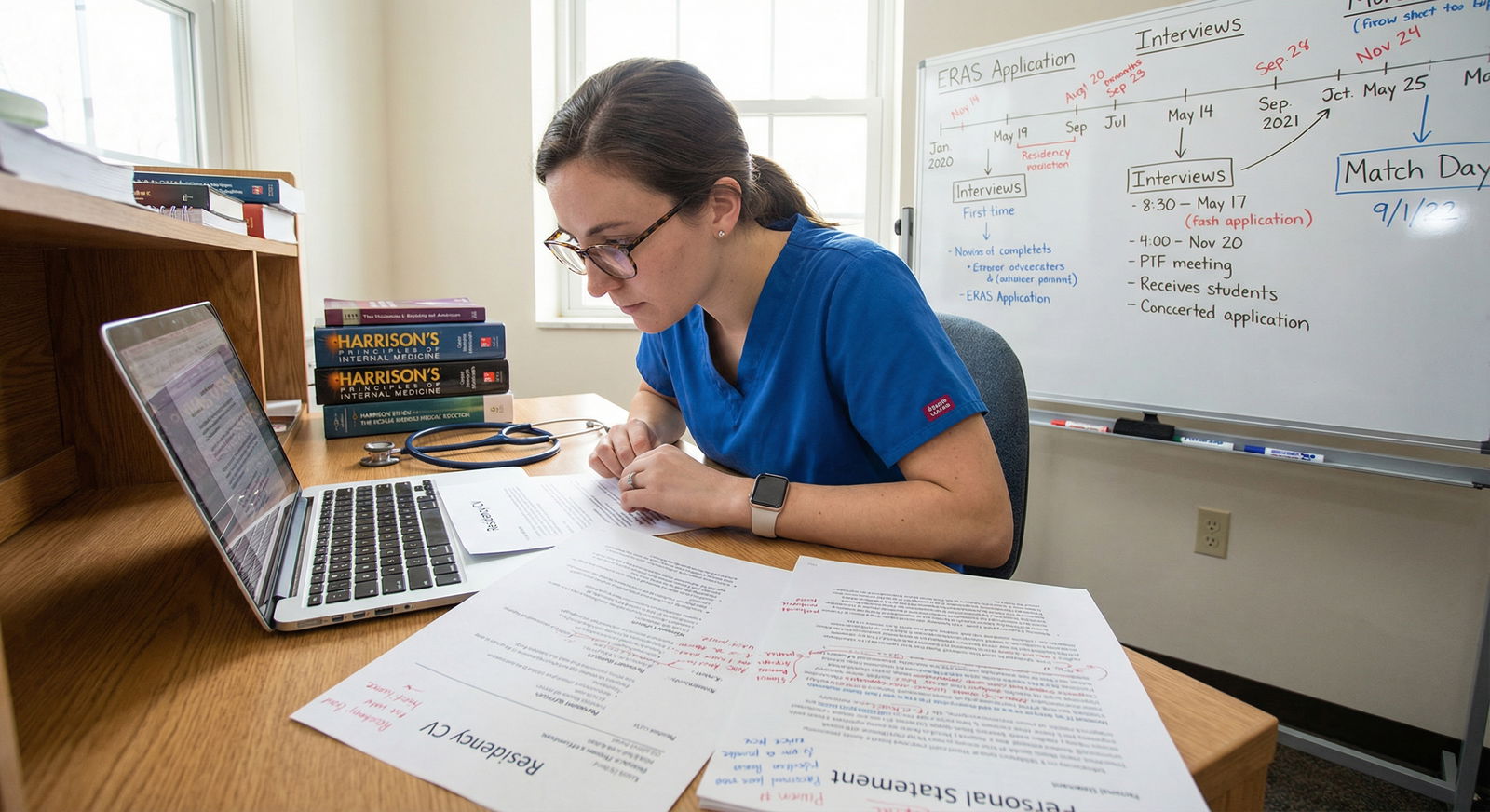
Introduction: Why Your Residency CV Deserves Serious Attention
Residency applications are increasingly competitive in every specialty. In this environment, your Curriculum Vitae (CV) is much more than a formality—it is a strategic document that communicates your readiness for residency and your trajectory as a future physician.
For program directors and selection committees, your CV is often:
- The first document they scan when reviewing your application
- The framework for interview questions
- A quick reference during ranking discussions
Investing time in CV enhancement is one of the most high-yield steps you can take in your residency application strategy. This guide will help you transform a basic list of experiences into a compelling, well-structured document that supports your overall physician career development.
You’ll learn:
- The key components of a strong residency CV
- How to tailor and organize content for different specialties
- Specific, actionable strategies to make each section more impactful
- Common pitfalls to avoid
- How to keep your CV aligned with your long-term medical education and career goals
Understanding the Strategic Role of Your Residency CV
Your CV is not just a chronological record; it is a marketing tool and a professional snapshot of who you are as a physician-in-training.
How Program Directors Use Your CV
Selection committees use your CV to:
- Screen for basic eligibility
- Graduation year, exam status, visa needs, red flags
- Assess academic and clinical foundation
- School, honors, clerkship performance, key rotations
- Gauge depth and focus of interests
- Research topics, electives, leadership roles related to the specialty
- Identify “value adds” to the residency class
- Teaching experience, quality improvement, community work, leadership
Your CV should make it easy for them to conclude:
“This applicant has the background, skills, and potential to succeed in our program and contribute meaningfully to our residency community.”
Core Principles of an Effective Residency CV
Regardless of specialty, a strong residency CV should be:
- Clear: Easy to skim, with logical sections and consistent formatting
- Relevant: Focused on experiences that matter for residency applications
- Accurate: Factually precise, with dates, locations, and roles correct
- Honest: No inflation of responsibilities or achievements
- Defensible: You can confidently discuss every line during an interview
Essential Components of a Strong Residency CV
Think of your CV as a structured narrative of your medical education and physician career development to date. While formats vary slightly by country and institution, most residency CVs should include the following sections.
1. Contact Information and Professional Identity
This goes at the top and should be clean and simple.
Include:
- Full name (as it appears on official documents)
- Current mailing address (or city/state if space is limited)
- Professional email address
- Phone number with country code (if applicable)
- Optional: LinkedIn profile or professional website (only if current and polished)
Avoid:
- Personal nicknames
- Multiple email addresses
- Excessive social media links
Example (US-style):
Jane A. Smith, MD Candidate
Email: jane.smith@university.edu | Phone: (555) 123-4567 | LinkedIn: linkedin.com/in/janesmithmd
2. Professional Objective or Profile (Optional but Powerful)
A brief 2–3 sentence professional profile can orient the reader, especially if you are applying to a specific specialty or are a non-traditional applicant.
Example (Internal Medicine):
“Senior medical student with a strong interest in academic internal medicine and medical education. Extensive experience in clinical research and peer-teaching, with a track record of leadership in student-run free clinics. Seeking an Internal Medicine residency program that values scholarship, mentorship, and patient-centered care.”
Keep it:
- Specific but not overly narrow
- Positive and forward-looking
- Aligned with the specialty you’re targeting
3. Education and Medical Training
List in reverse chronological order (most recent first).
Include:
- Medical school name, city, country
- Degree (e.g., MD, DO, MBBS)
- Expected or actual graduation date
- Honors (e.g., AOA, Gold Humanism, Dean’s List)
- Relevant pre-medical degrees (BSc, BA, Master’s) with majors/minors
Tip: For international medical graduates (IMGs), briefly clarifying the nature of your program or adding ECFMG certification status (once obtained) can help.
4. Clinical Experience and Rotations
This is central for residency applications.
Include:
- Required core clerkships (usually summarized)
- Sub-internships/acting internships
- Elective rotations (especially in your chosen specialty)
- Observerships or externships (particularly important for IMGs)
- Notable community or global health experiences with substantial clinical exposure
For each, list:
- Institution and location
- Specialty and rotation type
- Dates
- Optional: a brief bullet or two highlighting distinctive responsibilities or accomplishments, especially for sub-internships or specialized electives.
5. Research Experience and Scholarly Activity
Residency programs increasingly value applicants who engage in scholarly work.
Include:
- Basic science, clinical, educational, or quality improvement research
- Roles (e.g., research assistant, co-investigator, project lead)
- Output: abstracts, poster presentations, oral presentations, publications
Organize this section clearly:
- Research Experience (roles/projects)
- Publications
- Presentations
List publications in standard citation format (e.g., AMA or journal style), and be transparent about status (published, in press, accepted, under review).
6. Teaching, Leadership, and Extracurricular Activities
These experiences showcase interpersonal skills, initiative, and long-term potential.
Examples:
- Peer-teaching or tutoring roles
- OSCE or skills-lab teaching assistant
- Committee membership (curriculum, wellness, diversity)
- Leadership positions in student organizations
- Community service and outreach projects
- Student government roles
Include:
- Role/title
- Organization
- Dates
- 1–2 bullets describing scope and impact
7. Professional Skills and Additional Qualifications
This section helps highlight what sets you apart.
Consider including:
- Languages (with proficiency level)
- Technical skills (e.g., data analysis tools, statistical software, EHR systems)
- Relevant certifications (BLS, ACLS, PALS, ATLS, ultrasound courses)
- Quality improvement or patient safety training
- Teaching or coaching certifications related to medical education
8. Honors, Awards, and Scholarships
Showcase recognition of your performance and potential:
- Academic honors
- Research awards
- Service or leadership awards
- Scholarships and grants
Include organization, date, and brief context if not self-explanatory.
9. Professional Memberships and Organizations
Demonstrate your engagement with the medical community:
- National groups (e.g., AMA, ACP, AAFP, AAP, ACS, specialty societies)
- Local or regional chapters
- Interest group memberships (particularly if you held roles)
Highlight leadership or committee work here or cross-reference in your leadership section.
10. References (Depending on Format)
In some contexts, you may:
- List “References available upon request”
- Or include a separate reference sheet (name, title, institution, email/phone)
For ERAS-style applications, letters are uploaded separately, but having a reference list is useful for non-ERAS uses of your CV (networking, research positions, fellowships).

Advanced Strategies to Enhance Your Residency CV
Once the basic structure is in place, the real optimization begins. These strategies will help your CV stand out in competitive residency applications.
1. Tailor Your CV to Each Specialty and, When Possible, Each Program
Your overarching document can be master version, but strategic tailoring is crucial.
Align with Specialty Priorities
Different specialties naturally emphasize different elements:
Surgical fields:
- Technical aptitude, manual skills, surgical electives, anatomy teaching
- Operating room exposure, research in surgical outcomes or techniques
Internal Medicine / Pediatrics:
- Longitudinal patient care, critical thinking, research or QI projects
- Interest in subspecialty or academic medicine
Emergency Medicine / Anesthesia:
- Ability to function under pressure, procedural skills, pre-hospital care, acute care exposure
Psychiatry / Neurology / Family Medicine:
- Communication, continuity of care, community mental health, psychosocial involvement
Tailor by:
- Moving the most relevant experiences higher in each section
- Emphasizing specialty-related rotations, research, and leadership
- Adjusting your objective/profile statement to reflect the specialty’s values
Use Program-Specific Signals (When Appropriate)
Review program websites and mission statements:
- Identify themes (e.g., underserved care, research productivity, rural health, diversity, medical education)
- Subtly reflect these in:
- How you sequence experiences
- Which bullets you highlight
- The language you choose (e.g., “community-engaged care,” “health disparities research”)
2. Write Impactful Bullets: Be Concise Yet Descriptive
Every bullet point should answer: “So what?”
Use a structure: Action verb + What you did + How you did it + Outcome/impact (if possible)
Weak:
“Worked on diabetes education project.”
Strong:
“Developed and delivered a 4-session diabetes self-management curriculum for 30 underserved clinic patients, resulting in improved average HbA1c by 0.8% over 6 months.”
Tips:
- Start with strong verbs: led, designed, implemented, analyzed, mentored, coordinated, advocated, initiated
- Avoid repetition—vary verbs across bullets
- Quantify where possible: number of patients, sessions, participants, improvements, hours
3. Highlight the Experiences That Best Demonstrate “Residency Readiness”
Residency programs are asking:
“Can this applicant handle the responsibilities of a resident and grow in our program?”
Prioritize experiences that show:
- Responsibility and ownership
- Acting internships/sub-internships
- Night float or cross-coverage exposure
- Teamwork and communication
- Interdisciplinary projects
- Leadership roles in student-run clinics
- Professionalism and reliability
- Longitudinal commitments (multi-year leadership or volunteering)
- Scholarly curiosity
- Continuity in research or QI projects over time
Move “high-yield” experiences higher in sections, and be selective about what you include if space is tight.
4. Maintain Clean, Professional Formatting
Your CV should be easy to skim in 30–60 seconds.
Formatting guidelines:
- Use a single, professional font (e.g., Calibri, Arial, Times New Roman, 10–12 pt)
- Consistent date alignment (right margin or left margin—pick one)
- Uniform structure for entries:
- Role/Title
- Organization, Location
- Dates
- Bullets
Avoid:
- Dense paragraphs—use bullets for clarity
- Overuse of bold, italics, underlining
- Colors, graphics, or non-standard fonts
A visually clean CV sends a message of professionalism and attention to detail.
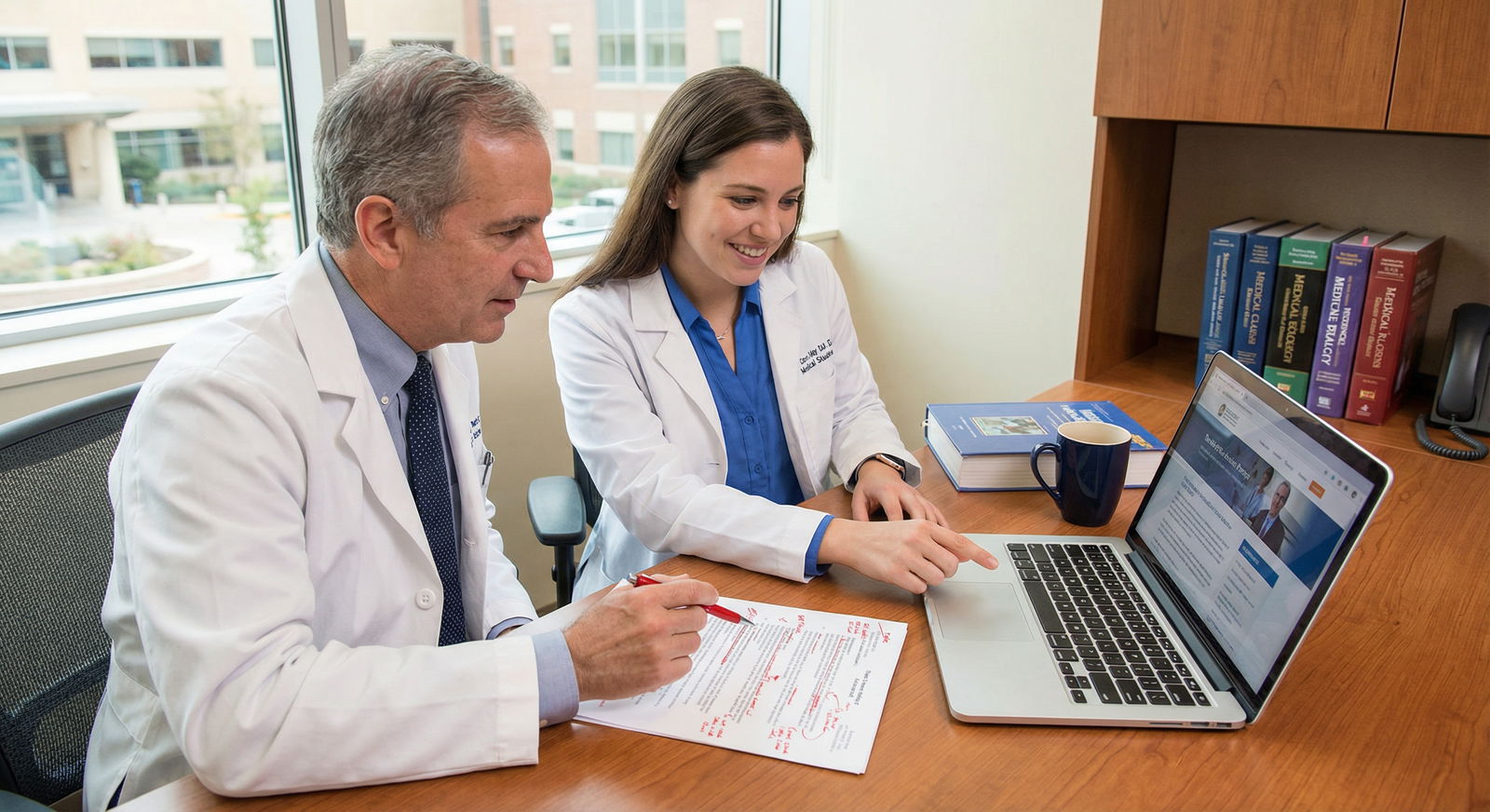
5. Seek Feedback, Then Revise Relentlessly
Fresh eyes are invaluable.
Who to ask:
- Faculty advisor or mentor
- Residents in your target specialty
- Career services or academic affairs staff
- Peers who have successfully matched
Ask specifically:
- “What’s missing that you would expect to see?”
- “Where do you get confused?”
- “What parts feel less relevant for my target specialty?”
Then:
- Incorporate feedback that aligns with your goals
- Re-check for consistency and grammatical accuracy
- Use digital tools (spellcheck, grammar check) but don’t rely on them alone
6. Keep Your CV Updated as a “Living Document”
CV enhancement is not a one-time event; it’s ongoing physician career development.
Best practices:
- Update your CV every 3–6 months
- Add new roles, presentations, and projects as they occur
- Keep a “CV log” document or spreadsheet where you jot down:
- Project titles
- Dates
- Mentors
- Outcomes (e.g., poster, publication, QI metrics)
This prevents forgetting details when it’s time to finalize your residency CV.
7. Be Fully Prepared to Discuss Every Line in Interviews
Your CV will be a central reference point during interviews. Many questions will start with:
- “Tell me more about this experience…”
- “I see you did research in…”
- “What did you learn from your role as…?”
Prepare by:
- Reviewing your CV in detail before interview season
- Identifying 8–10 “anchor experiences” you can discuss with depth and reflection
- Practicing concise narratives that cover:
- Context
- Your role
- Challenges
- Outcomes
- What you learned (and how it prepared you for residency)
If you cannot confidently discuss an item, reconsider whether it belongs on your CV.
Specialty-Specific Considerations and Common Pitfalls
Tailoring for Different Applicant Profiles
For International Medical Graduates (IMGs)
Prioritize:
- US clinical experience (USCE): observerships, externships, US-based electives
- Clear explanation of gaps or non-clinical periods (brief and factual)
- ECFMG certification status once obtained
- Research or QI work, especially if done in North American or European institutions
For Non-Traditional or Career-Change Applicants
Highlight:
- Transferable skills from prior careers (leadership, communication, project management)
- Longitudinal commitment to medicine (shadowing, volunteering, formal post-bacc work)
- How previous professional experiences enrich your approach to patient care
Frequent CV Mistakes to Avoid
- Inconsistencies in dates or titles
Raises questions about accuracy or honesty. - Overly long CVs with marginally relevant content
Focus on residency-relevant material; most applicants should be within 2–3 pages. - Vague descriptions (“Helped with research,” “Participated in clinic”)
Specify your role and contribution. - Unprofessional email address or formatting issues
These are small but memorable red flags. - Exaggerated responsibilities
Program directors and residents can quickly spot inflated claims.
Frequently Asked Questions About Residency CVs
1. How long should my residency CV be?
For most residency applications:
- US MD/DO seniors: 1–2 pages is usually sufficient and preferred
- IMGs or applicants with substantial prior careers or research: 2–3 pages may be appropriate
Focus on relevance and clarity over sheer length. If you exceed 3 pages, carefully assess whether every section meaningfully contributes to your candidacy.
2. How is my CV different from the ERAS “Experiences” section?
Your CV:
- Is a cohesive, formatted document you can use for:
- Networking
- Emailing programs
- Research positions
- Scholarship and fellowship applications
- Provides a more traditional academic snapshot of your career
The ERAS application:
- Breaks down experiences into standardized fields and text boxes
- Limits characters for descriptions
- Asks for “most meaningful experiences”
Information should be consistent between the two, but the format and level of detail will differ. Build your master CV first, then adapt content for ERAS.
3. Should I include hobbies or personal interests on my residency CV?
Yes, in most cases a brief “Interests” or “Personal Interests” section is beneficial. It can:
- Humanize your application
- Provide easy conversation starters in interviews
- Highlight traits like discipline, teamwork, or resilience
Keep it:
- Brief (1–3 lines or bullets)
- Authentic (don’t list activities you don’t actually do)
- Specific (e.g., “Marathon running (3 completed), classical piano, hiking national parks” rather than just “sports, music, travel”)
Avoid controversial or polarizing topics unless clearly relevant and thoughtfully framed.
4. How important are publications and research on my CV?
The importance of research varies by specialty and program:
- Highly valued in academic and competitive specialties (e.g., Dermatology, Radiology, Neurosurgery, some Internal Medicine programs)
- Still helpful—but not mandatory—in primary care–oriented specialties
If you have publications:
- Include them in a clearly labeled “Publications” section
- Use consistent citation format
- Distinguish between published, in press, and submitted
If you do not:
- Emphasize other scholarly activities: QI projects, case reports, presentations, journal clubs
- Highlight clinical excellence, leadership, teaching, and service
5. How often should I update my CV, and when should I start preparing it for residency?
Ideal timeline:
- First/second year of medical school: Create a basic CV and start tracking activities
- Third year: Update after each major rotation, add early research/teaching roles
- Early fourth year: Refine and tailor for residency applications; seek feedback from mentors
- Ongoing: Update every 3–6 months as your physician career develops
The earlier you build good CV habits, the easier it will be to present a polished, accurate document when residency applications open.
By treating your residency CV as a strategic, living document rather than a last-minute task, you position yourself as a thoughtful, organized, and residency-ready applicant. Use the structure and strategies in this guide to refine your CV, align it with your specialty goals, and ensure it supports your broader journey in medical education and physician career development.