
The belief that “if a program sponsors visas, it must be IMG‑friendly” is flat-out wrong—and dangerously so.
Visa sponsorship is a checkbox. IMG support is a culture, a track record, and a power structure. Those are not the same thing, and confusing them is how applicants end up in toxic programs they could have avoided.
Let me walk through what the data and real-world patterns actually show, not the fantasy version you see on forums.
Visa Sponsorship ≠ IMG Support
Programs sponsor visas for one of three main reasons:
- They genuinely value IMGs and need them to run a solid service.
- They are chronically unfilled and need someone to show up July 1.
- They’re in a region or specialty where US seniors simply do not apply in sufficient numbers.
Only the first category is reliably “IMG friendly.” The others can be neutral at best—or openly exploitative.
Here’s the key myth:
“If they go through the trouble to sponsor visas, they must care about IMGs.”
Reality: The program’s incentives usually have nothing to do with your well-being. They need bodies for call, ward coverage, and clinic. Visa sponsorship is a logistical cost they accept because the alternative is unfilled positions—huge political and financial trouble with the hospital.
You see the mismatch clearly whenever a program:
- Lists “J-1 and H-1B accepted” on FREIDA
- Has no IMG leadership, no IMG faculty, and no IMG chiefs
- Has zero institutional support for exams, licensing, or immigration questions
That’s not IMG-friendly. That’s “we will file your DS-2019 and then you’re on your own.”
What the Numbers Actually Show
Let’s ground this in some structure.
| Factor | What Applicants Assume | What It Actually Means |
|---|---|---|
| Program sponsors J-1 | They like IMGs | They accept ECFMG-certified grads; may be neutral or worse |
| Program sponsors H-1B | They strongly support IMGs | They really want high-score, exam-complete applicants; may still treat residents poorly |
| High IMG % in program | Very IMG friendly | Could be supportive or could be a workhorse IMG-heavy service with poor conditions |
| Low IMG % but sponsors visas | Not IMG friendly | Could be highly selective but very supportive to the few they take |
Visa sponsorship is a filter. It changes who can apply. It does not tell you how you will be treated once you’re inside.
There’s also a selection bias problem:
Many IMGs, desperate for any sponsoring program, apply broadly and interpret any interest as “friendly.” Then they arrive and discover:
- No time off to handle visa renewals or immigration appointments
- No support for Step 3 timing despite H-1B requirements
- Threats about “your visa status” used as leverage in conflicts
I’ve heard variations of this unpleasant line way too many times:
“If you’re not happy here, remember you’re on a visa. There are no guarantees another program will pick you up.”
That’s not IMG support. That’s using your immigration vulnerability as a control mechanism.
How Programs Actually Decide to Sponsor Visas
Let’s demystify how this works on the program side.
They look at:
- Historical fill rate: Do they fill all spots with US MD/DOs? If yes, they often stop sponsoring or restrict visas.
- Service needs: County hospitals and safety-net systems with high patient volume often depend on IMGs.
- Institutional policy: Some GME offices restrict H-1Bs because of cost/compliance risk; others do not.
- Specialty competitiveness: Primary care programs are more likely to sponsor than competitive surgical fellowships.
This is why:
- A mid-tier community internal medicine program might sponsor J-1 and some H-1B, have 60–80% IMGs, and still be mediocre to abusive in culture.
- A strong academic program might take 1–2 highly filtered IMGs per year on J-1, treat them very well, but look “less IMG friendly” at first glance because the overall IMG percentage is low.
“IMG-friendly” lists and visa-sponsoring filters completely fail to capture this nuance.
The Dark Side: Visa as a Control Tool
Here’s the part nobody likes to talk about publicly.
Your visa is not just a document. It is a dependence structure.
Programs and hospitals know:
- Changing programs as a J-1 is extremely hard and risky.
- H-1B transfer is possible, but complicated and time-dependent.
- Losing your job can mean losing your legal right to stay.
So when a program’s culture is bad—bullying, racism, unsafe workloads—what do vulnerable residents do? Often nothing. They stay. They endure. They wait for graduation because the alternative looks worse.
That’s exactly why visa-sponsoring but unsupportive programs can function for years without imploding. Complaints don’t escalate. Residents don’t walk out. Everyone knows the stakes.
Indicators of a visa-using-but-not-supporting culture:
- PD or coordinator treats visa questions as “annoyances” instead of part of their core responsibilities.
- Residents report needing to chase GME repeatedly for DS-2019 renewals or H-1B documentation.
- Any mention of mental health, leave, or reduced schedule is met with: “We have to think about your visa. It might not be possible.”
A genuinely IMG-supportive program has the opposite posture: “We understand visa needs, we plan for them, and we don’t weaponize them.”
Step Scores, ECFMG, and the “You’re Replaceable” Dynamic
Another myth:
“If they go through the trouble to process visas, they must want to keep you long-term.”
No. Many programs see IMGs as plug-and-play labor. High Step scores get you in the door because:
- They’re a proxy for passing boards and keeping accreditation metrics.
- For H-1B, Step 3 must be done—so they want applicants who’ve already proved they can clear standardized exams.
But once you’re in?
If their culture is “we can easily replace you with the next IMG from abroad,” then visa sponsorship did nothing for you except get you into a potentially unsupportive environment.
You see this especially in heavily IMG-saturated internal medicine and family medicine programs at overworked community hospitals:
- 80–100% IMGs
- Very high call burden
- Minimal teaching, mostly service
- High attrition or transfer rates (which they rarely advertise)
These programs sponsor visas because they must to survive. That does not turn them into nurturing environments.
Spotting Genuine IMG-Friendly Programs
You’re not powerless here. There are concrete, observable signs that a program is actually, not theoretically, IMG supportive.
IMGs in leadership
Chiefs, associate PDs, or PDs who trained as IMGs themselves. Not token representation—actual decision-making power.Transparent, specific answers about visas
During interviews, they clearly explain:- Who handles J-1/H-1B paperwork
- Typical processing timelines
- How they coordinate with GME and legal
- What happens if exams are delayed or there are immigration hiccups
Evasive or generic answers? Red flag.
Structured support for licensure and exams
For example:- Protected time or explicit support to take Step 3 (if H-1B)
- Guidance on state licensing, ECFMG status, and documentation
- Past experience helping residents transition to fellowship or jobs on visas
Track record of success for IMGs
Ask specifically (or research via LinkedIn/ program alumni pages):
Where did IMGs from this program go in the last 3–5 years?If the answer is:
- Strong fellowships
- Academic or hospitalist jobs on visas
- Stable career progression
That’s real-world evidence of support.
Reasonable workload and humane culture
Listen carefully to current residents on interview day. You’ll hear giveaways:- “We’re really busy, but leadership is approachable and helpful.” Good.
- “We’re busy, and it’s hard to get changes approved.” Caution.
- “We’re incredibly short-staffed, but we make it work.” Translation: service machine. Danger.
Here’s a quick comparison layout:
| Feature | Program A | Program B |
|---|---|---|
| Visa Types | J-1 only | J-1 + H-1B |
| IMG % of Residents | 75% | 25% |
| IMG Leadership | None | APD and chief are IMGs |
| Step 3 Support | No official time | 2–3 days protected |
| Alumni Outcomes | Mostly community jobs, unclear visa status | Multiple IMGs in fellowships and academic jobs |
Program A looks more IMG-heavy. Program B is clearly more IMG-supportive.
Data Patterns: Specialty & Competitiveness
Some broad trends help frame expectations. Not perfect, but directionally useful.
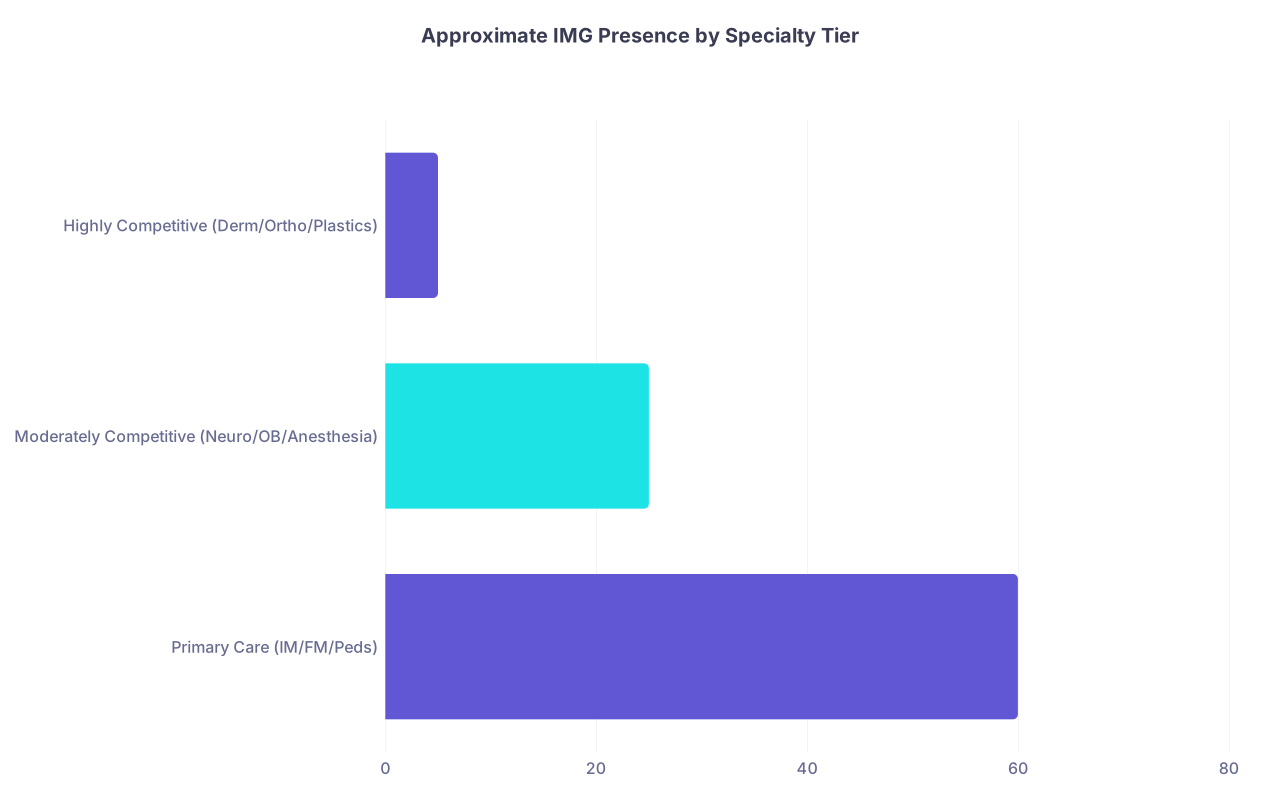
| Category | Value |
|---|---|
| Primary Care (IM/FM/Peds) | 60 |
| Moderately Competitive (Neuro/OB/Anesthesia) | 25 |
| Highly Competitive (Derm/Ortho/Plastics) | 5 |
Interpretation:
- Primary care specialties have high IMG presence; many of these programs sponsor visas because they need to. The range of culture quality is massive—from fantastic to predatory.
- Moderately competitive specialties sometimes sponsor visas, but often with tight filters (scores, graduation year, research).
- Highly competitive specialties may sponsor visas for rare, exceptionally strong IMGs. Being sponsored here generally signals strong institutional backing—but still check culture.
Application Strategy: Stop Treating “Visa” as the Only Filter
IMGs often build their lists like this:
- Filter on FREIDA for “J-1 and/or H-1B”.
- Cross-reference with “IMG friendly” lists (aka: lots of IMGs).
- Apply broadly and assume any invite from these programs = good.
This is how people walk into disaster.
A smarter, more reality-based strategy:

| Step | Description |
|---|---|
| Step 1 | Start |
| Step 2 | Filter by visa sponsorship |
| Step 3 | Check actual IMG % and leadership |
| Step 4 | Research alumni outcomes |
| Step 5 | Look for red flag reviews or gossip |
| Step 6 | Decide priority tier for each program |
| Step 7 | Apply and prepare targeted questions |
You still start with visa filters because you must. But you do not stop there. You use:
- Alumni data (LinkedIn, program websites, PubMed for former residents’ publications)
- Word-of-mouth from seniors and recent grads
- Social media and anonymous review sites (not gospel, but useful smoke detectors)
Ask targeted questions on interview day, especially to current IMG residents, privately if possible:
- “How has the program supported you with visa/Step 3/licensing?”
- “Did anyone have serious visa issues, and how did leadership respond?”
- “If you could change one thing about how IMGs are treated here, what would it be?”
The hesitation before they answer will tell you more than whatever words they use.
Common Red Flags in “Visa-Sponsoring” Programs
I’ve seen a pattern of recurring horror stories from IMGs trapped in supposedly “friendly” places. Spot these early:
Ambiguous answers about exams:
“Residents usually find a way to do Step 3 on their own time” = No institutional support.Chronic unfilled positions:
Multiple SOAP entries or mid-year hires year after year. People leave. Ask why.High PGY-2/PGY-3 transfer rate:
Residents escape once they get US experience. That’s not a great sign.No written policy on time off for consulate visits or immigration emergencies:
Means you will negotiate case by case—with all the power on their side.Defensive tone when you ask visa questions:
“We do what we can, but at the end of the day it’s your responsibility.”
Translation: Expect zero proactive support.
This is where you need to be brutally honest with yourself:
Is any visa-sponsoring spot worth three years of misery and stalled career progression? Sometimes yes, often no.
Use Data, Not Hope
Let’s anchor this with a simple mental model.
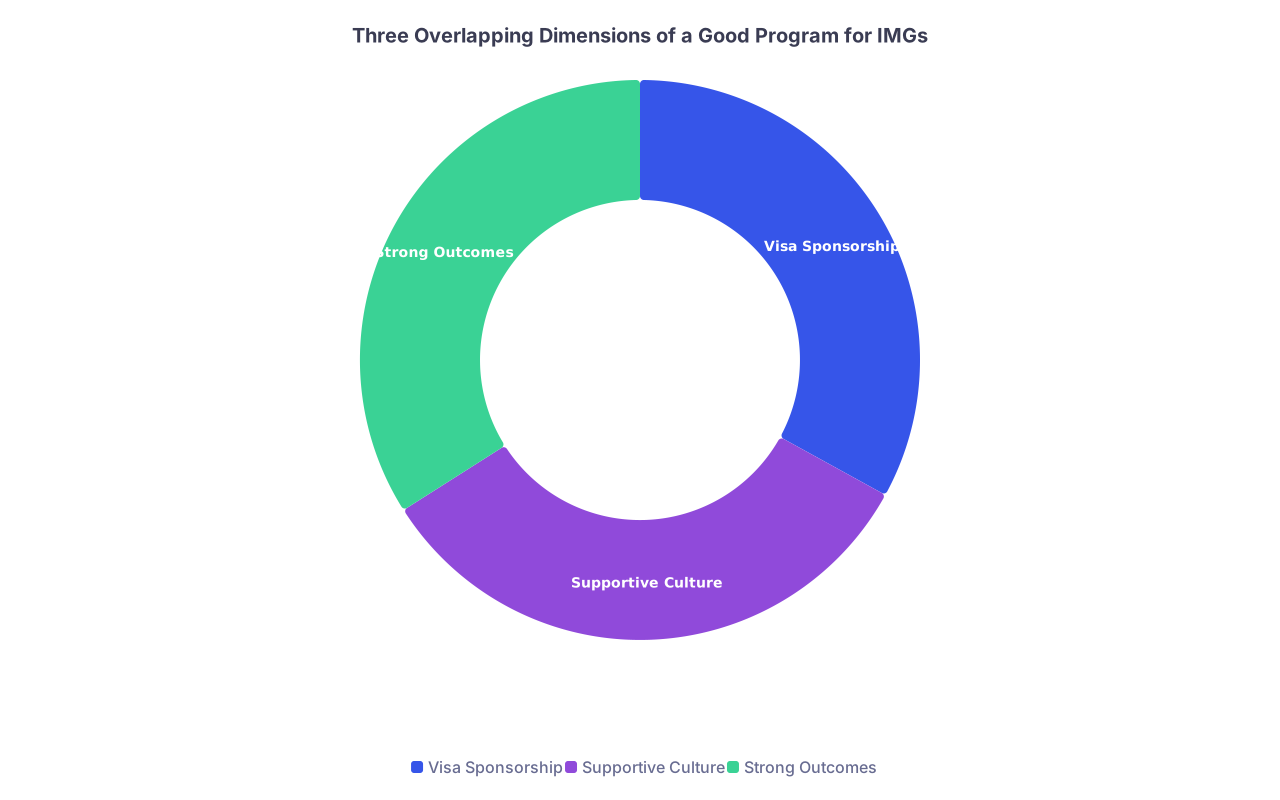
| Category | Value |
|---|---|
| Visa Sponsorship | 33 |
| Supportive Culture | 33 |
| Strong Outcomes | 34 |
The ideal program for you checks all three:
- Visa Sponsorship – J-1 or H-1B aligned with your long-term plans.
- Supportive Culture – Leadership that understands and respects IMG challenges.
- Strong Outcomes – Graduates getting fellowships, jobs, and viable immigration paths.
Most programs you’ll see only clearly offer the first. Your job is to screen ruthlessly for the other two.
Quick Reality Check: Key Takeaways
- Visa sponsorship is a minimum requirement, not a sign of kindness or respect. Plenty of visa-sponsoring programs are hostile, exploitative, or indifferent to IMGs.
- “IMG-friendly” should mean: IMG leadership, clear visa processes, Step/licensure support, and strong alumni outcomes—not just a high percentage of IMGs on the roster.
- Your application strategy must move beyond “they sponsor visas” to “they sponsor visas and have a proven track record of treating IMGs well and advancing their careers.”