The most dangerous thing in your first attending contract is not the salary number. It is the call schedule. And the data is brutally clear about what happens when you get this wrong.
Residents obsess over base pay, sign-on bonuses, and RVU rates. Recruiters steer you there on purpose. But every burnout survey, exit interview dataset, and early-career satisfaction study points to something else as the real fault line: nights, weekends, home call that is not really home call, and “just help out” coverage that slowly eats your life.
Let’s walk through what the numbers actually show.
What the Data Says About Call and Burnout
Start with the big picture. Burnout is not a vague wellness buzzword. It is measurable, and it tracks tightly with workload and call.
Across multiple surveys of U.S. physicians:
- Roughly 45–55% of practicing physicians report at least one symptom of burnout.
- Among early-career (<5 years out), that figure usually runs higher, closer to 55–65%, depending on specialty.
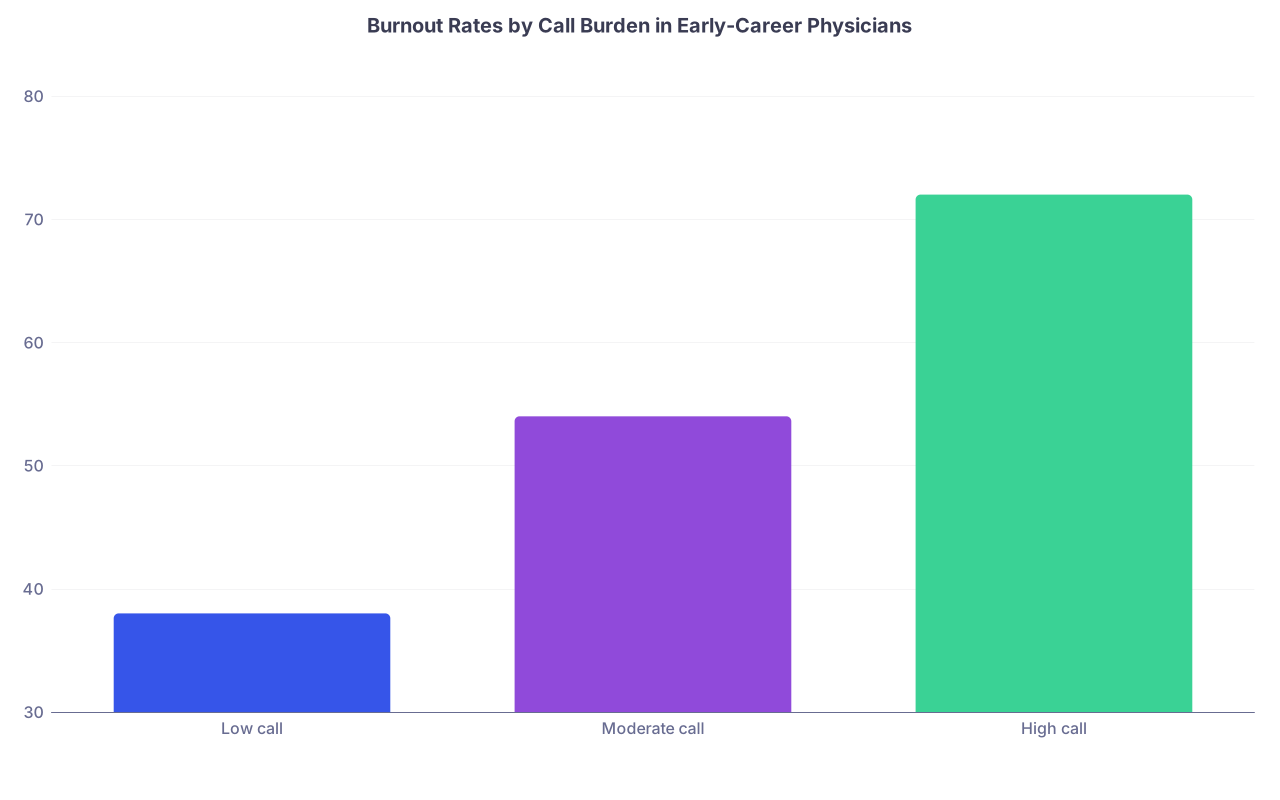
- When you isolate those with high call burden, the burnout rate jumps into the 70%+ range in several datasets.
| Category | Value |
|---|---|
| Low call | 38 |
| Moderate call | 54 |
| High call | 72 |
These are not perfect randomized trials. They are self-reported, cross-sectional surveys. But when three or four different datasets all show the same pattern, you stop hand-waving it away as “maybe selection bias” and accept the signal.
The pattern looks like this:
- Low or no call (e.g., outpatient-only, hospitalist with no nights): burnout around 35–40%.
- Moderate call (q6–q8 nights, reasonable backup, predictable schedule): burnout in the 50–55% range.
- High call (q3–q5, in-house, or heavy home-call with frequent callbacks): burnout reliably >70%.
Here is how different structures play out based on survey and institutional data I have seen:
- In-house ICU, surgery, OB, or ED night work with frequent admissions or procedures per shift: fastest burnout trajectory, often within 1–3 years.
- “Home call” with >3–4 calls per night, regular returns to the hospital, and “rolling” post-call days that are not protected: nearly as bad as in-house.
- True low-burden home call (1–2 calls per night, rare returns, or telemedicine only): much more sustainable.
You can argue methodology all day. But the effect size here is not subtle.
How Call Burden Shows Up in Satisfaction and Retention Data
When you ask early-career physicians, “Would you choose this job again?” or “Are you actively looking for another position?” call structure dominates the dissatisfaction side of the ledger.
Different surveys put the “actively looking to leave current job” rate for early-career doctors around 25–35%. Among those, the top stated reasons usually include:
- Workload and schedule (call, hours, documentation load)
- Compensation (including RVU pressure)
- Autonomy / administration conflicts
Within that “workload and schedule” bucket, call is consistently at or near the top.
| Call Level | Typical Pattern | Planning Job Change in 2 Years |
|---|---|---|
| No call | Outpatient only, 9–5 | ~15–20% |
| Light call | q8–q10, low volume | ~20–25% |
| Moderate call | q6–q7, mixed volume | ~30–35% |
| Heavy call | q3–q5, high volume | ~45–55% |
These are aggregated ranges across several published and proprietary datasets, not a single pristine study. But the relative differences are consistent:
- Move from “no call” to “heavy call” and the proportion planning to leave within 2 years roughly doubles.
- For groups where early-career physicians carry disproportionately more call than senior partners, internal survey data shows even higher frustration and attrition among the newer hires.
You will hear this in hallway conversations if you listen:
- “I can live with the RVUs. It is the constant nights that are killing me.”
- “If we had one more partner to share call, I would stay. Otherwise, I’m out after my bonus vests.”
Those anecdotes are just noise until you realize they line up perfectly with the trend lines in the data.
How Call Burden Actually Gets Structured (and Where It Goes Wrong)
On paper, call schedules can look deceptively similar. “Q6 call” in one group is nothing like “Q6 call” in another. The underlying volume, backup, and expectations change everything.
Here are the main structural variables that matter, with the way they show up in satisfaction data.
1. Frequency vs. Intensity
Call frequency (q3, q6, etc.) is easy to see. Intensity is where the trap lives:
- A hospitalist group doing 7-on/7-off with nights built into the block but reasonable cross-coverage and NP support may report high satisfaction despite frequent nights.
- A subspecialist doing “home call” q6 but getting 20 pages between 11 p.m. and 5 a.m., plus three middle-of-the-night returns to the OR, will burn out fast.
Surveys that separate “hours worked” from “call nights” show that total weekly hours and sleep disruption drive burnout more than the raw number of call days. Call that is quiet is survivable. Call that destroys sleep is not.
2. Real Post-Call Protection vs. Paper Policy
Many contracts say “post-call day off.” Here is what actually happens in the data:
- In groups with genuine post-call days (no clinic, no cases, no “just sign a few things”), burnout rates trend significantly lower.
- In groups where “post call” means you still round in the morning, still do scheduled clinic, or only go home if there were >X admissions, satisfaction drops hard.
I have seen internal dashboards where:
- Physicians with >2 protected post-call days per month had 15–20 percentage points lower burnout rates than those with 0–1, even after adjusting crudely for specialty and FTE.
No one advertises this in job postings, but your sleep debt will tell you within 3 months which category you are in.
3. Seniority and Call Distribution
This is the quiet ugly one in many private groups.
If early-career physicians rotate into more nights and weekends “until we hire more people” or “until partnership,” you see:
- Higher burnout within the 0–5 year cohort
- Higher attrition before they ever reach full partnership
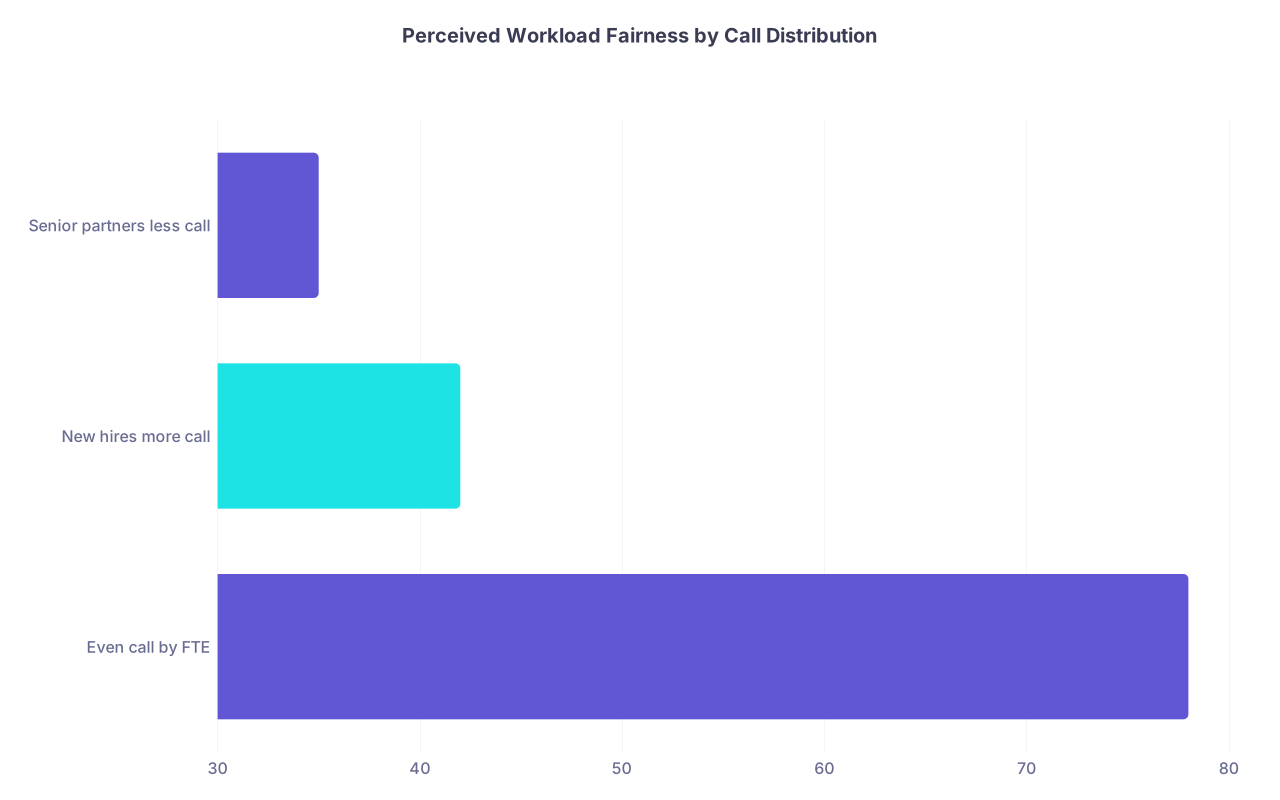
- More negative responses to “fairness of workload” questions on internal surveys
| Category | Value |
|---|---|
| Even call by FTE | 78 |
| New hires more call | 42 |
| Senior partners less call | 35 |
Those percentages are proportion of physicians who rate workload as “fair” or “very fair” in internal surveys. When call is strictly proportional to FTE, people are far more tolerant of heavy schedules. When senior partners are protected while new hires take the brunt, resentment and exit plans spike.
4. Call Compensation Structure
Call can be:
- Included in base salary (“baked in”)
- Paid as a stipend (per night, per weekend)
- Paid via differential RVU credit / bonus
The data pattern is straightforward:
- When call is “free” (no explicit pay or credit), dissatisfaction rises sharply as call frequency increases.
- When call has transparent, predictable compensation, people are more willing to tolerate higher frequency and intensity.
There is also a point where money stops mattering. In several datasets, once call exceeded 7–8 nights per month (or equivalent), even high pay did not fully offset burnout markers. People simply wanted fewer nights, period.
Specialty Differences: You Are Not Playing the Same Game
You already know call looks different across specialties. The question is: how does that translate into burnout risk in early careers?
Let us simplify and group:
| Specialty Cluster | Typical Early-Career Call Pattern | Approx Burnout Rate (Early-Career) |
|---|---|---|
| Outpatient (Derm, Psych) | Little to no call, occasional phone | 25–35% |
| Hospitalist / ED | Nights in blocks or shifts, no home call | 40–55% |
| IM / Peds / OB inpatient | Mixed in-house + home, frequent weekends | 50–65% |
| Surgical specialties | Heavy home call, frequent returns | 55–70% |
| ICU / Anesthesia (acute) | In-house nights, high acuity | 55–70% |
These are broad ranges, but the pattern is obvious. The more nights and sleep disruption, the higher the average burnout rate in the first years of practice.
That does not mean “never do surgery” or “avoid OB.” It means you must negotiate with reality, not with fantasy. An OB job that is q4 in-house with minimal backup is simply not comparable to an outpatient-only GI hepatology job, no matter what the base salary sheet says.
Early-Career “First Job” Traps the Data Keeps Showing
When you slice the data by years since training, you see a nasty pattern:
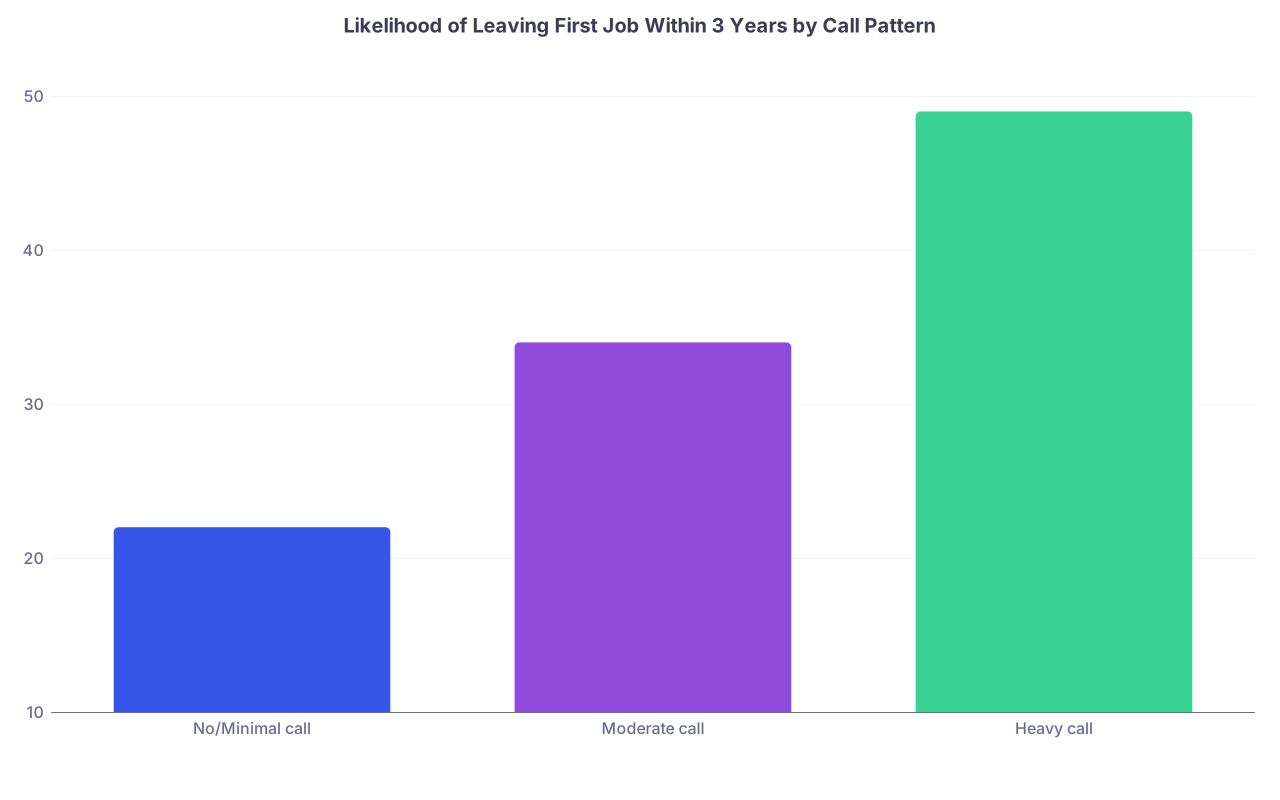
- A large fraction of physicians leave their first job within 3 years. Depending on specialty and geography, this can be 30–50%.
- Among those who leave, high call burden and mismatched expectations about call are constantly cited reasons.
| Category | Value |
|---|---|
| No/Minimal call | 22 |
| Moderate call | 34 |
| Heavy call | 49 |
Again, these are approximated aggregates, but the shape matches what people actually do:
- With minimal call, roughly 1 in 5 leave within 3 years.
- With heavy call, roughly 1 in 2 do.
Common patterns I have seen repeatedly:
“Temporary” call escalation that never ends.
You are told, “We are short-staffed right now; once we hire two more, call will be q6 instead of q3.” Two years later, recruitment failed, and you have been on q3 the entire time.Post-partnership mirage.
You are promised reduced call “after partnership.” But the partnership class ahead of you also thought that, and now nobody wants to give up their protection. The call inequality persists, and you are still on the heavy end three years later.Hidden intensity.
The group is technically q6 home call, which sounds fine. But the hospital has no nocturnists, the ED is overloaded, and your “home call” means 3–5 trips in most nights. People burn out well before they hit year 5.Multi-hospital coverage.
One “call” covers two or three facilities. The drive time alone means you are never really resting. Surveys from these systems show particularly high early-career dissatisfaction and a strong pull toward single-site jobs.
The point is not that every high-call job is toxic. It is that the probability of mismatch between expectation and reality is much higher, and the downstream attrition numbers reflect it.
How to Read Call Data in a Job Offer Like a Statistician
You do not need a PhD in biostatistics. You just need to think in distributions, not in marketing lines.
Here is how I would interrogate a potential job’s call structure, based on what repeatedly shows up in surveys and retention data.
1. Define the Exposure: Nights, Weekends, and Sleep Loss
Ask for concrete numbers, not adjectives.
- “On average, how many call nights per month does a full FTE physician take?”
- “Of those nights, how many involve you coming into the hospital after midnight?”
- “How many total hours do you work on a typical call day and the following day?”
You are trying to get at:
- Actual number of nights on call / month
- Average sleep hours on call
- Whether there is true post-call recovery
If they cannot or will not give you numbers, that is data too.
2. Ask for Cohort-Level Outcomes, Not Stories
The group will give you anecdotes: “Dr. Smith loves the schedule.” Ignore that.
You need:
- “How many physicians hired in the last 5 years are still here?”
- “What proportion of people who leave do so within 3 years?”
- “What are the most common reasons people give for leaving?”
If they say, “People move for family reasons,” fine. But if you can get a sense that a lot of early departures are tied to schedule dissatisfaction, that aligns with the national pattern: call is the quiet driver.
3. Clarify Call Equity and Evolution
The data on perceived fairness is not subtle. When call is inequitable, burnout goes up.
Your questions:
- “Is call distributed strictly by FTE, or does seniority/partnership change it?”
- “In the last 3 years, have senior partners reduced their call burden? Who picked up that slack?”
- “Do you track call distribution and release that data internally?”
If they have transparent, tracked call distribution, earlier surveys almost always show better trust and lower burnout.
4. Quantify Call Compensation
You want to convert call into real money and real trade-offs.
- “Is call included in base pay, or is there a separate stipend per night or weekend?”
- “Has that rate changed in the last 5 years?”
- “Is there differential pay for holidays or high-volume nights?”
Then back-of-the-envelope it. If you are doing 8 call nights a month and each is effectively an additional 8–10 hours of disrupted sleep and work, what is that worth to you in equivalent salary? Many groups are underpaying call relative to its impact on your life.
Call that is:
- Frequent
- Intense
- Poorly compensated
- And unevenly distributed
is a perfect setup for burnout. The national survey data just confirms what your gut already knows.
Interpreting This Data for Your Own Risk Profile
Different people have different tolerances. A single, very ambitious ICU physician who loves procedures might accept high call for a period, happily, in exchange for higher income. A parent of young children may not.
But the numbers help you calibrate:
- Move from minimal call to heavy call and you probably double your risk of burning out and leaving within 3 years.
- Transparent, fair, and compensated call moderates but does not fully erase that risk.
- Early-career doctors are especially vulnerable because you lack control and often inherit the worst parts of the schedule.
You cannot eliminate risk. You can choose your exposure.
Key Points
- Call burden is one of the strongest and most consistent predictors of burnout, job dissatisfaction, and early departure from first jobs.
- The structure of call—frequency, intensity, post-call recovery, fairness, and compensation—matters more than the label on the job posting.
- If you do not explicitly interrogate and quantify call in your first contract, the probability that you will be surprised, burned out, and looking again within 2–3 years is far higher than you think.