It’s June. You are PGY-3 in internal medicine, or a CA-1 in anesthesia, or a chief in family med. You are post-call, scrolling job boards on your phone, and you keep seeing the same fantasy in your head: working from home part of the week, maybe fully remote, actually seeing your kids while the sun is up, not living in a hospital.
You are trying to answer one basic question:
Can I realistically get a remote or hybrid physician job right out of training?
Let me be blunt: for most specialties, a fully remote job day one out of residency is not realistic. A hybrid role? Sometimes. A path to mostly-remote within 1–3 years if you choose the right lane? Very possible.
But it depends heavily on your specialty and how you position yourself.
Let’s go specialty by specialty and spell out what actually happens in the real world.
The Short Answer: What’s Actually Realistic
Here’s the core reality:
- Fully remote clinical roles right out of training: rare, but possible in specific niches (telepsych, tele-urgent care, tele-derm review) if you plan aggressively.
- Hybrid (mix of in-person and remote) roles right out of training: possible in a limited set of specialties and practice models.
- Traditional procedural and hospital-heavy fields (surgery, EM, OB/GYN, anesthesia): remote is essentially a fantasy clinically, at least early in your career.
If you want the most lifestyle-friendly path with remote/hybrid potential straight out of training, you are usually looking at:
- Psychiatry
- Family medicine / internal medicine (especially primary care, urgent care, or hospital at home programs)
- Dermatology (select roles)
- Radiology (with tradeoffs)
- Pathology
- PM&R in some sub-niches (esp. tele-pain, remote consults)
Now let’s get serious and break this down.
Which Specialties Actually Lend Themselves to Remote or Hybrid Work?

1. Psychiatry – The Current Remote King
If you want a realistic shot at fully remote work right out of training, psychiatry is your best bet. Hands down.
Why it works:
- Most encounters are conversational and observation-based.
- Physical exams are limited and can often be done visually.
- Regulations and payers have largely accepted telepsych as real care.
Typical options right out of residency:
- Telehealth companies (Amwell, Talkiatry, Headway-type platforms)
- Large health systems hiring telepsych for crisis, consults, or outpatient
- Multi-state telepsych groups targeting underserved or rural areas
What’s realistic fresh out:
- Full-time tele-outpatient psychiatry at 1.0 FTE is absolutely happening right now for new grads.
- Hybrid setups like 2–3 days home / 2–3 days clinic are even more common.
Catch:
- You’ll need to be okay with high volume and sometimes assembly-line care if you join the big telehealth mills.
- Malpractice and multi-state licensing can get complicated, but employers often help.
If someone told me, “I want remote clinical work day one,” my first honest answer is: then you should be in psychiatry.
2. Primary Care (FM/IM) – Hybrid-Friendly, Remote-If-You-Plan-It
Family medicine and general internal medicine are the next tier of realistic.
Can you be 100% remote day one? Rare. But:
Hybrid is very achievable:
- Many systems now run “virtual primary care” tracks:
- 2–3 days video visits from home
- 1–2 days in-person clinic for physicals, procedures, higher acuity
- Urgent care telehealth platforms hire new grads to cover:
- Minor infections
- Rashes
- Medication refills
- Simple triage
The limiting factor:
You still need some in-person work because:
- You cannot do physicals, Pap smears, vaccines, joint injections, etc., through a screen.
- Many insurers still require a certain percentage of in-person encounters or a physical exam for things like panel assignment.
The realistic path:
- First job: “Virtual-first primary care” with a major system or insurer (Kaiser, Optum, One Medical-style practices).
- Structure: maybe 50–80% telehealth right away if you negotiate well and pick the right employer.
If you are in FM/IM and want this, do not just randomly apply to generic outpatient jobs. Look specifically for:
- “Virtual primary care”
- “Telehealth-focused primary care”
- “Digital health physician” roles
That wording matters.
3. Dermatology – Limited but Real Remote Work
You are not doing Mohs from your kitchen. Let’s be adults.
But derm does have:
- Store-and-forward telederm: reviewing images, asynchronous consults.
- Video follow-ups for acne, psoriasis, med management.
Day-one remote options:
- Some telederm startups hire new grads for image review and consults.
- Bigger systems may have derms doing a mix of clinic + telederm.
Realistically:
- Expect mostly in-person clinical work early, with 10–30% of your time telederm/remote if you join a forward-thinking group.
- 100% telederm right out of fellowship is possible but niche and often pays less than traditional practice.
Derm is lifestyle-friendly overall, but if your primary metric is “I want to be at home 4 days a week,” derm is not the top option compared to psych or virtual primary care.
4. Radiology – Remote-Heavy, But… Not Always Lifestyle-Friendly
Radiology is interesting. Remote work is common. But lifestyle? Depends how you define it.
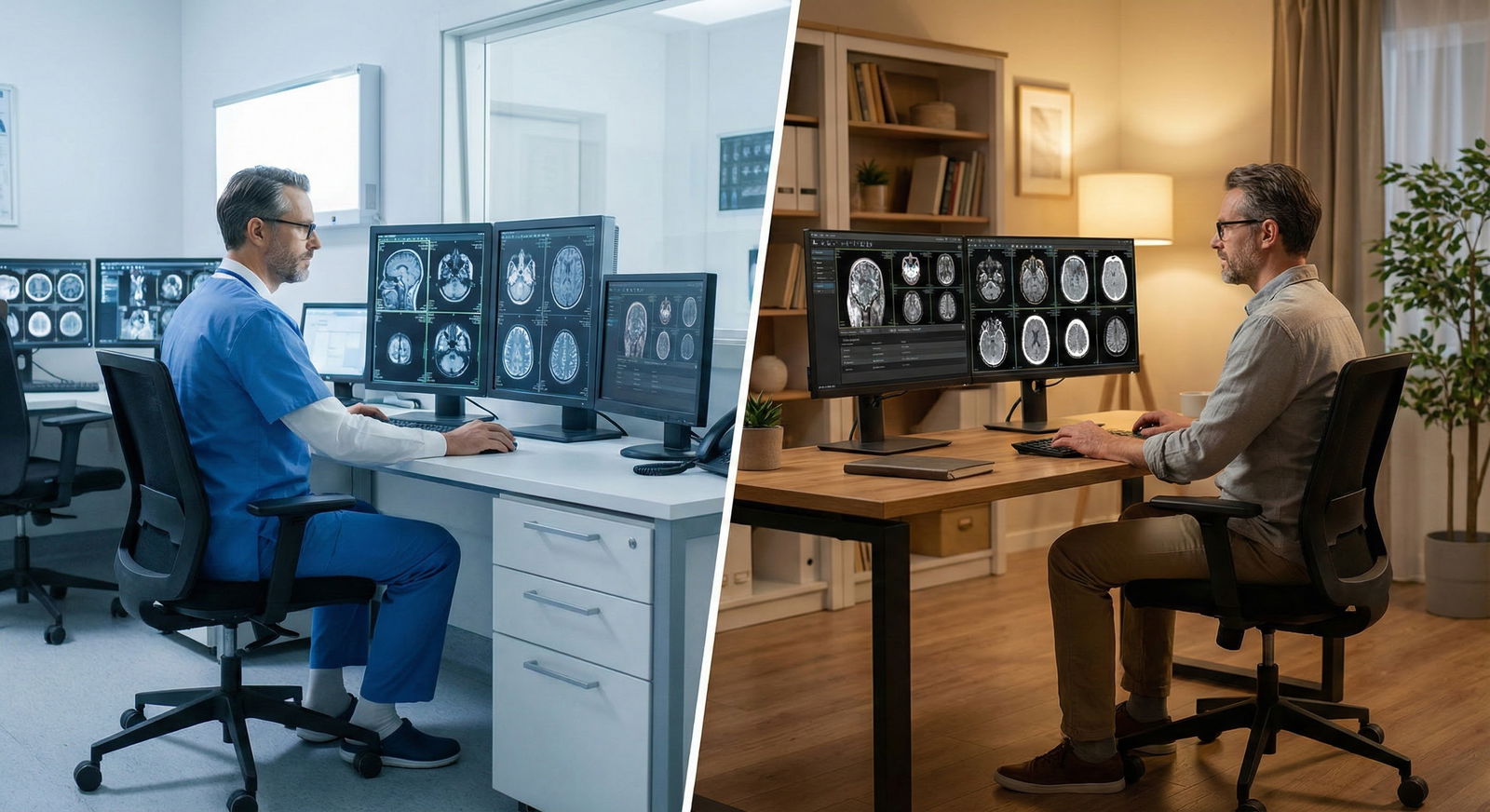
Radiology lends itself to remote:
- Images can be read anywhere with a secure PACS connection and decent bandwidth.
- Lots of teleradiology groups exist and absolutely hire new grads.
What’s realistic out of training:
- Hybrid: on-site hospital/body imaging + some remote reads for home call or evening work.
- Fully remote telerad roles: you sit at home, read high volume for a national group.
Tradeoffs:
- Telerad work can be high pressure, high volume, and very metrics-driven.
- Nights and weekends are common for remote roles if you are the new person.
So yes, radiology is “remote realistic.” But if by “lifestyle friendly” you mean gentle pace and predictable daytime hours, choose carefully.
5. Pathology – Quiet Remote Potential
Path and remote work don’t get talked about enough.
Pathology can support:
- Digital pathology (remote slide review for certain systems).
- Telepathology consults, second-opinion reads, QA work.
Realistically:
- Most first jobs are still mostly on-site because of grossing, tumor boards, frozen sections, and lab leadership duties.
- But some groups will allow 1–2 days per week of remote slide review once you are established and trusted.
Less “day one remote,” more “year three hybrid” if you angle for it.
6. PM&R – Some Remote-Friendly Sub-Niches
Physical medicine & rehab is mostly in-person: clinics, procedures, inpatient rehab.
But there are subareas where you can carve out partial remote work:
- Chronic pain tele-consults
- EMG interpretation + tele-consults (for certain setups)
- Remote functional assessments and follow-up visits
Out of fellowship:
- You are usually building a practice, doing procedures, and in-person assessments.
- Remote may be 10–20% of your work at best, increasing with seniority and niche development.
PM&R can be lifestyle-friendly, yes. But not primarily remote as a new grad, clinically.
7. Specialties Where Remote Is Basically a Non-Option Clinically
Let’s not waste time pretending otherwise. For these, remote or hybrid roles are either nonexistent or fringe immediately out of training:
- Surgery (all flavors)
- OB/GYN
- Emergency Medicine (aside from minor side tele-urgent work)
- Anesthesiology
- Orthopedics
- Most procedural subspecialties (GI, interventional cards, IR, etc.)
Can you do some remote work?
- Admin roles (quality, informatics, utilization review) – usually later in your career.
- Teaching, content creation, consulting – side gigs, not base salary.
But if your dream is “3 days a week at home, 2 in the hospital” as a brand-new trauma surgeon or OB? Forget it.
Clinical vs Non-Clinical Remote: You Need to Decide Which Game You’re Playing

So far, I’ve been talking about clinical remote work. There’s another path: non-clinical remote or hybrid roles.
These include:
- Utilization review / chart review (insurance, hospital systems)
- Clinical documentation improvement (CDI)
- Medical affairs / pharma
- Informatics roles
- Telehealth leadership / medical director positions
- Education / content / test prep
Can you land these right out of training? Sometimes, but it’s not a slam dunk.
Realistically:
- Most non-clinical employers still prefer 2–3+ years of clinical experience.
- Some startup or health-tech roles will take a new grad if you bring something special: coding skills, prior start-up experience, strong research/informatics background.
If you want non-clinical remote as fast as possible:
- You need to deliberately build that profile in residency/fellowship.
- That means projects, networking, maybe moonlighting in utilization review or informatics if your program allows.
But do not bank on skipping straight from fellowship graduation to full-time, cushy pharma-remote without strategic work ahead of time.
How “Lifestyle-Friendly” Really Plays Out Across Specialties
Let’s stack a few specialties on two axes: remote potential early, and lifestyle friendliness.
| Specialty | Early Remote Potential | Lifestyle Friendliness (Typical) |
|---|---|---|
| Psychiatry | High | High |
| FM/IM (PC) | Moderate-High | Moderate-High (job dependent) |
| Dermatology | Low-Moderate | High |
| Radiology | High | Variable |
| Pathology | Low-Moderate | Moderate-High |
| EM | Very Low | Variable-Low |
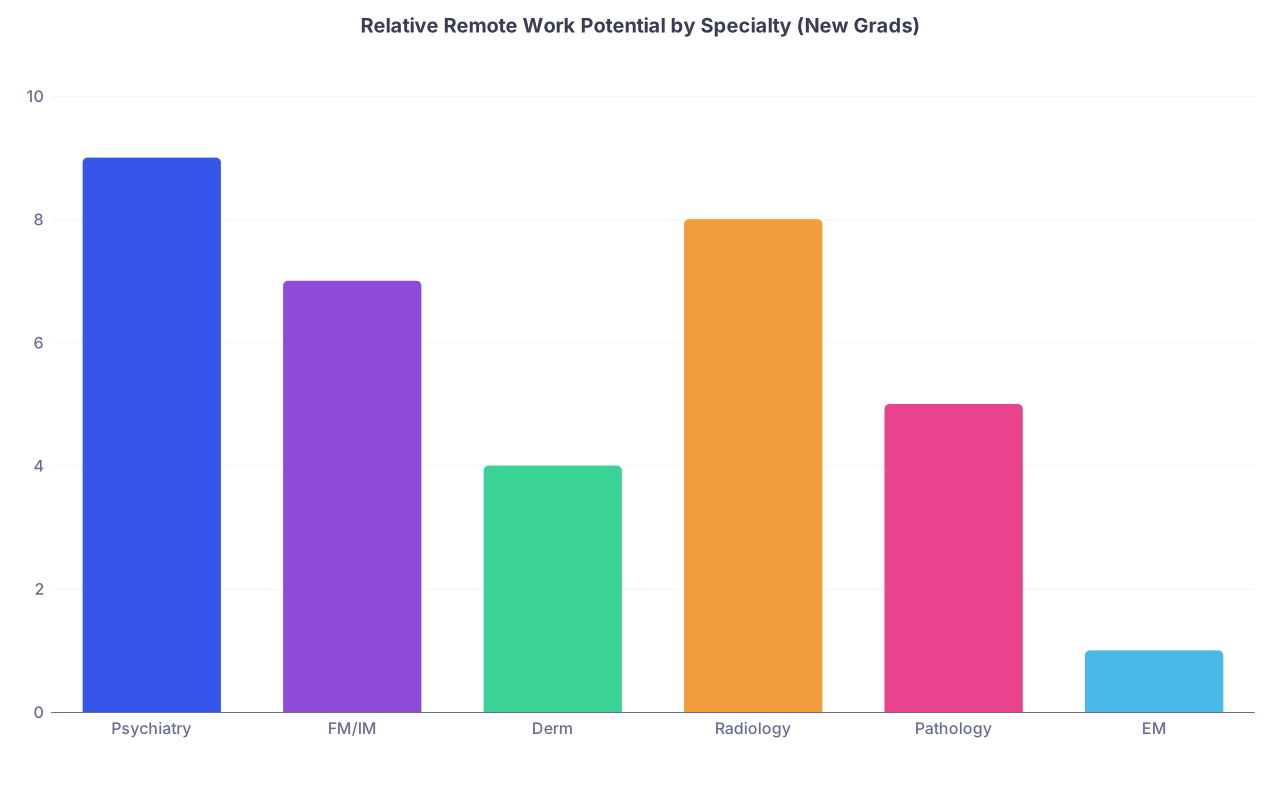
| Category | Value |
|---|---|
| Psychiatry | 9 |
| FM/IM | 7 |
| Derm | 4 |
| Radiology | 8 |
| Pathology | 5 |
| EM | 1 |
Scale 1–10. Is this exact science? No. Is it directionally correct from what I’ve seen? Yes.
Key takeaways:
- If lifestyle to you = “time control + home flexibility,” psychiatry and virtual primary care sit at the top of the realistic stack.
- Dermatology is great lifestyle, but not mainly because of remote work. It’s because of clinic hours and control.
- Radiology/pathology are remote-friendly structurally, but actual lifestyle depends heavily on group culture and call structure.
How to Position Yourself During Training if You Want Remote/Hybrid

| Step | Description |
|---|---|
| Step 1 | Residency or Fellowship |
| Step 2 | Target Remote-Friendly Roles |
| Step 3 | Focus on Lifestyle Practice Not Remote |
| Step 4 | Telehealth Electives or Rotations |
| Step 5 | Experience with Virtual Visits |
| Step 6 | Network with Digital Health Employers |
| Step 7 | Apply to Remote or Hybrid Jobs Early |
| Step 8 | Pick Specialty |
If you are still in training and serious about post-grad remote or hybrid, stop being passive. You need receipts.
Concrete moves you can make now:
Choose the right electives
- Telepsychiatry if in psych.
- Virtual primary care check-ins if in FM/IM.
- Any digital health or telemedicine track your institution offers.
Actually run virtual visits
- Ask attendings to let you lead telehealth days.
- Get comfortable examining through a screen, documenting clearly for telehealth billing codes.
Document your telehealth experience in your CV
- “Completed >300 telepsychiatry visits over PGY-3 year.”
- “Led virtual chronic disease management group visits via telehealth.”
Employers care about this. It’s not fluff; it lowers their onboarding anxiety.
Network specifically with remote/hybrid employers
- Go to digital health conferences or webinars (even if virtual).
- Reach out to physicians on LinkedIn who have “Virtual Care” in their title; ask how they got it.
Be honest with recruiters
When they ask what you’re looking for, say clearly:
“I am specifically seeking roles with at least 50% telehealth or hybrid home/clinic structure.”
If you do none of this, you will default into a traditional full-time onsite role. Not because remote is impossible, but because systems are built to funnel you there.
Red Flags and Traps in “Remote” Job Ads

You’ll see a lot of job posts throwing the word “remote” around very loosely. Things I’ve seen:
- “Remote” = 1 day per month charting from home.
- “Hybrid” = you can answer emails from home after your 10-hour clinic shift.
- “Telehealth” = they expect you to log back in from home in the evening to clear the queue.
When evaluating:
Ask these concrete questions:
- “How many days per week are physicians actually working from home?”
- “What percentage of total patient encounters are virtual vs in-person?”
- “Is remote work guaranteed in my contract or at leadership discretion?”
- “Are there metrics/volume expectations that differ for remote days?”
If they cannot answer transparently, or if they dodge, that is your sign.
FAQ: Remote & Hybrid Physician Roles Right Out of Training
1. Is it realistic to have a fully remote clinical job immediately after residency or fellowship?
Yes, but only in specific fields and with planning. Psychiatry and some virtual primary care or tele-urgent care roles are the main realistic options. Radiology telerad is also possible but often with night/weekend heavy schedules. For most other specialties, 100% remote clinical work on day one is not realistic.
2. Which specialties are best if I want a lifestyle-friendly, mostly-remote job?
Psychiatry is at the top, followed by family medicine/internal medicine in virtual-first primary care models. Radiology offers strong remote potential but not always gentle lifestyle. Dermatology and pathology can add some remote work, but their “lifestyle” advantages are more about hours and call than working from home.
3. Can surgeons, anesthesiologists, or OB/GYNs work remotely in a meaningful way?
Not clinically, at least not early in their careers. Those fields are inherently hands-on. They may do some tele-consults or follow-ups, but the bulk of their time is in an OR, L&D, or procedural suite. Any substantial remote work for these specialties tends to be non-clinical (admin, consulting, utilization review) and usually comes later.
4. Do telehealth companies hire brand-new grads, or do I need years of experience?
Many telepsych and tele-urgent care companies do hire new grads, especially if you trained recently with strong telehealth exposure. That said, some prefer 1–2 years of independent practice. For non-clinical or leadership roles in digital health, 2–3 years of experience is often expected unless you bring extra skills or project history.
5. How do I make myself a strong candidate for remote or hybrid roles during residency?
Get real telehealth experience and document it. Choose telehealth-heavy electives, lead virtual visits, and track your numbers. Pursue projects in digital health, informatics, or telemedicine quality. Network intentionally with physicians working in remote roles. And be very explicit with programs and recruiters that hybrid/remote work is a priority for you.
6. Are remote jobs always more lifestyle-friendly?
No. That’s a myth. Many remote roles are high volume, metric-driven, and can easily bleed into nights and weekends because your “clinic” is always available. A well-structured in-person derm or cushy outpatient IM job can be far more lifestyle-friendly than a call-heavy, high-RVU telerad position done from your basement.
7. What is one concrete step I can take this month if I want remote or hybrid work after training?
Identify three physicians in your specialty who are already in remote or hybrid roles (use LinkedIn, your alumni network, or program contacts). Message them and ask for a 15–20 minute call to hear how they got there and what they’d do differently. That single step will give you real-world data and usually at least one actionable path you can start building toward now.
Today, do this: open your CV and add a section called “Telehealth Experience.” If it is empty, you have your marching orders for the rest of residency. Fill it.